

Weather Guard Lightning Tech

Chinese Cable-Cutting Patent, Blades in Coal Mines, LNG Ruling
This week we discuss Wyoming’s plan to bury blades in sealed coal mines, a Chinese patent that seems linked to subsea attacks, and a ruling that threw out the possibility of train-transported liquified natural gas in the US.
Fill out our Uptime listener survey and enter to win an Uptime mug! Register for Wind Energy O&M Australia! https://www.windaustralia.com
Sign up now for Uptime Tech News, our weekly email update on all things wind technology. This episode is sponsored by Weather Guard Lightning Tech. Learn more about Weather Guard’s StrikeTape Wind Turbine LPS retrofit. Follow the show on Facebook, YouTube, Twitter, Linkedin and visit Weather Guard on the web. And subscribe to Rosemary Barnes’ YouTube channel here. Have a question we can answer on the show? Email us!
Pardalote Consulting – https://www.pardaloteconsulting.com
Weather Guard Lightning Tech – www.weatherguardwind.com
Intelstor – https://www.intelstor.com
Allen Hall: Wyoming gets creative with turbine blade recycling while concerns mount over submarine cable security in European waters. Plus, a federal ruling on LNG transport poses new challenges for East Coast energy plants. This is the Uptime Wind Energy Podcast.
You’re listening to the Uptime Wind Energy Podcast, brought to you by BuildTurbines.
com. Learn, train, and be a part of the clean energy revolution. Visit BuildTurbines. com today. Now, here’s your hosts, Allen Hall, Joel Saxum, Phil Totaro, and Rosemary Barnes.
Allen Hall: This is your last chance, everybody, if you’re planning on attending Wind Energy O&M Australia, which will be February 11th and 12th in Melbourne.
You better get your tickets and do it fast, because you need to go to WindAustralia. com. Now, Phil, you want to give us an update of who all is going to be at that conference?
Phil Totaro: We have currently more than 100 attendees representing more than 50 different companies, and we’ve got more than 40 speakers, um, who are, or panelists who are going to be talking about a diverse array of topics, including, uh, things like lightning, Uh, damage and detection and prevention, uh, damage prevention, um, uh, insurance, uh, implications of, uh, operations maintenance in Australia, um, uh, leading edge erosion.
Remote inspection technologies, uh, condition monitoring systems, uh, as well as some advice and, and some interesting dialogue that’s kind of emerging around, um, the operators and how do you really, uh, get a grip on your O& M budget and in particular, how do you handle the fact that you’ve got, uh, uh, Windturbine OEM that you may have signed a long term agreement with that may or may not be living up to their obligations.
So we’re going to have a fantastic event. Um, a lot of people, there’s going to be at least like nine or 10 different operators, owners or operators there. Um, and plenty of other people to talk to. So, uh, tickets are limited, uh, by the way, and we are running out. So register today. Uh, if you want us, um, meet up in, uh, in Australia in a few more days.
Allen Hall: PES Wind, Europe’s leading wind energy publication, has joined forces with the Uptime Wind Energy podcast to create the industry’s largest combined audience. That’s a big announcement, right? With PES Winds millions of quarterly readers and uptimes 700, 000 plus YouTube and audio platform subscribers Advertisers now have unprecedented access to the decision makers across the entire wind energy sector from site managers to CEOs Your message will reach the right people through print digital and audio platforms all under one partnership So if you want to get your message out quickly to the world, particularly the wind energy world, reach out to us.
You can just contact me, Allen Hall on LinkedIn, or Stefann Perrigot on LinkedIn, and we’ll get you hooked up.
Unlock your wind farm’s best performance at Wind Energy O& M Australia, February 11th to 12th in sunny Melbourne. Join industry leaders as they share practical solutions for maintenance, OEM relations, and Discover strategies to cut costs, keep your assets running smoothly, and drive long term success in today’s competitive market.
Register today and explore sponsorships at www. windaustralia. com.
Allen Hall: Well, before the Biden administration left office, they approved decommissioned wind turbine power. Blades as fill material in coal mine reclamation. Uh, that approval came after nearly a four year review within the state’s proposal. So the state of Wyoming had a proposal to do this, but it needed to get, uh, reviewed by the federal government.
That. The Wyoming proposal had already passed in the Wyoming legislature in about 2020. So it’s been sitting in quite a while for the feds to make a decision. So they made a decision before they left office. This solution, uh, addresses both mine reclamation needs and obviously the challenge with what to do with all the wind turbine blades.
So it kind of goes like this, uh, you can fill the hole essentially where the Coal mine was, I think there’s a maximum limit as to the height that you can fill there, but it has to be all above groundwater, right? So you can’t put wind turbine blades in someplace where it’d be in the groundwater. And you have to note it, mark it.
There’s a bunch of paperwork things that happen there, but there’s a lot of blades can fill a mine, Joel, because those mines in Wyoming are huge.
Joel Saxum: I think this is a good use of, uh, of Uh, of that facility simply because there’s a lot of rules in place EPA environmental protection wise for these reclaimed coal mines because they don’t want anything that’s in that mine or as a part of that mining operation to leach out, leak out, move out, either way.
So putting wind turbine blades in as a part of this process, like what we know about turbine blades is they’re, you know, mainly inert. There’s not a whole lot of things that can leach into the ground anyways. But there, if there was, they’re being basically put into a base in a bowl. That’s there where nothing can get out of it anyways.
So I think it’s a good use. We have a lot of wind turbine blades. We know we’re working on all kinds of cool projects within the industry to recycle these blades, but capacity is limited, right? We know that we can’t run 200, 000 tons of blades, you know, in a year through all the capacity that we have out there to chip them up and use them.
So. If we got to put them somewhere, why not put them in, into these, uh, reclaimed coal mines? I think it’s a great use. Um, I mean, Phil, have you ever been around a coal mine? Have you ever seen these things? So
Phil Totaro: yeah, I, I haven’t been, um, uh, directly involved in, in coal mining, uh, or extraction, but, um, I, back in 2018, I first had a conversation with somebody about this kind of a proposal to, uh, store disused blades in coal mines.
And I think a lot of people have the incorrect impression that we’re just going to like toss these things into some kind of, you know, tunnel or something, um, and, and bury over them, uh, and just forget about them and, and leave them there indefinitely. And the reality is when what we’re talking about with coal mines is we have more open cast mines than, than anything else.
And so we can use these open cast mines just as temporary storage for the blades, um, until we do develop that Um, physical capacity to do the blade shredding, uh, where we repurpose it for, for things like concrete or other materials. Um, and we’re starting to get some chemical processes developed now where you can actually chemically decompose some of the polymers in, um, these, you know, legacy fiberglass blades where they weren’t developed with, uh, uh, recyclable resin, uh, material.
And we’re, we’re gonna have, you know, within the next five years or so, we’re going to have the ability to chemically decompose a lot more blades than what we have the ability to do today. So, um, using mines as temporary storage for disused blades, not a bad idea. I, I like this one.
Allen Hall: Yeah. Seamus Gamesa just had an announcement about that, Phil, where they are using some sort of process to pull fiber out of old blades and reuse it.
I don’t know if you saw that, but it was probably a week or so ago that I saw the first news of it, and I think you’re right, I don’t think it had anything to do with recyclable resin. I think they were using existing resin systems and breaking them down. Which is interesting, right? And I think that’s a cool technology.
So a lot of things happening right now.
Joel Saxum: I think at the end of the day, the most important thing here is that we know we want to dispose of blades in a proper way, but we have to do it economically. And all of these new processes are great, but do they make sense economically and financially? This one of putting blades in the, in the coal mines does.
I don’t know if. Heating liquids and chemical processes and stuff for each blade does make sense right now.
Allen Hall: Yeah, the Siemens Gomezza process is a pyrolysis process. So you’re heating the blade up to remove the resin.
Joel Saxum: Energy intensive, slow.
Phil Totaro: And that’s the thing, Joel, is at least we’ve got the ability to have some place for storage of the blades until that chemical process can be made cheap enough where we can, we can do it.
So I don’t, You know, I don’t see that being a problem either way. You know, once, once we’ve got enough cost, um, enough, uh, economies of scale with the chemical decomposition process, um, then, you know, we, we know where the blades are, we, we stuck them over there in this open cast mine. So, you know, it’s, I think it’s, uh, an easy enough conversation to have.
Joel Saxum: As busy wind energy professionals, staying informed is crucial. And let’s face it, difficult. That’s why the Uptime Podcast recommends P. E. S. Wind magazine. P. E. S. Wind offers a diverse range of in depth articles and expert insights that dive into the most pressing issues facing our energy future. Whether you’re an industry veteran or new to wind, P.
E. S. Wind has the high quality content you need. Don’t miss out. Visit PESwind. com today.
Allen Hall: A federal appeals court has struck down a Trump era rule from the previous Trump administration that would have allowed the transport of liquefied natural gas by rail. The U. S. Court of Appeals for the District of Columbia Circuit sided with environmental groups in 14 states.
States who challenged the rule, citing insufficient safety evaluations. Uh, the court’s decision comes as the regulation was under temporary suspension by the Biden administration until June of this year. So Joel, I think this is a huge problem. on the east coast in certain parts of the United States. Uh, recently in the northeast has pretty much stopped pipeline development for natural gas.
And the way I assumed that was going to be, if there’s not gonna be pipelines, they’re gonna have to do it either by ships or by Trains, trains being the easier of them, I would assume, uh, or trucks, I guess. So if trains is off the table now, isn’t it harder to get liquefied natural gas into some of these northeastern locations combined with the fact that they’re trying to electrify?
How are they going to do
Joel Saxum: it? You, we as a, as a nation, we can’t keep shooting ourselves in the foot with all, all the regulations and rules around this stuff. Like you’ve got to pick and move, right? You can’t. You can’t say we want to electrify, but we’re not going to build offshore wind, or we’re going to put all kinds of hurdles in place of offshore wind, and we’re not, we can’t have onshore wind here, because we don’t have the space for it.
Okay, so you’ve, you’ve shot wind in the foot. Um, you don’t want to drill, uh, so you, you don’t have geothermal, you can’t do that either. Um, and now you’re saying we don’t want pipelines because we don’t want, you know, to, to put pipelines through here. It’s, it’s difficult or whatever you, you think it’s an, it could be an ecological disaster.
Okay. No pipelines. All right. Well, what about power lines? Okay. We can maybe put some HVDC, but now that gets a bunch of opposition from the local people as well, of being putting these big overhead lines in. So now you don’t want power lines. Okay. We got to put something in here to try to electrify our society is what the goal is.
Well, the next step is, um, let’s put an LNG fired power plant. Okay, if you want to run an LNG fired power plant, you need a steady supply of a lot of liquefied natural gas. The way to get that is either a pipeline, which you’ve canceled, uh, or a train, which you’re saying you can’t do, so you’re left to trucks or shipping it and having a port facility offloading it there and then having a, I don’t know, a short pipeline to, to whatever the facility may be.
But if you’re, if you’re going to move this all by trucks, think about all the diesel you’re putting into these pickups. So you’re, you’re, you’re, you’re counterintuitively doing this to yourself. If you’re not going to do the cleaner energy, you’re going to put roadblocks in front of that. You can’t put roadblocks in front of everything.
Otherwise we’re going to end up with brownouts and blackouts and no power.
Allen Hall: Right. Because a lot of the old cold fire generation plants were along the shorelines, right? And that’s why a lot of these offshore wind sites were feeding the electrification, the substations that were connected to old coal.
Coal fired factories and coal fired generation plants, right? So all that infrastructure on the power grid is still there so that we’re trying to feed that with offshore wind. You remove offshore wind, you really can’t put LNG in there because it becomes difficult. Like you mentioned, you got to have a bunch of ships coming in and out of there and The gentrification of those areas, by the way, uh, makes it really hard to put a gas fire plant in those old coal fire plant locations.
It becomes impossible. The logic of this doesn’t make any sense. Like there’s no planning about how they’re going to power the East Coast right now.
Joel Saxum: Add to this the, the, every, everything that’s being used for LNG for large ocean going ships. Most of that LNG capacity is leaving the United States out of the Gulf Coast, right?
It’s, a lot of it’s coming out of Texas, the port facilities down here. Those large LNG ships, to triage for market, they’re not, if they’re going all the way around Florida and da da da, they’re not going to go up to the East Coast. They’re shooting over to Europe where it’s three times the price. Because it doesn’t make sense to go up and around and sell back at the same price you got it for onshore in Texas.
Phil Totaro: Well, guys, let’s also keep in mind who we’re actually dealing with here. So, we’re certainly in the wind industry familiar with people called NIMBYs, the Not In My Backyards. But there’s another acronym that is typically applicable for these type of people. Which is bananas. And that is build absolutely nothing anywhere near anyone or anything.
And that is, I think, entirely accurate to what these people are talking about. I mean, you can’t have modernization or electrification without doing something. So we have to do the thing that is going to be the least impactful, and actually offshore wind would end up being the least impactful, because as we’re talking about, first of all, you’re putting the power generation out on, you know, offshore, you know, upwards of potentially 30 miles offshore, um, and all you’re doing is running cables back to the existing electrical infrastructure that we already have, and we might have to modernize it a little bit, upgrade it a little bit, to be able to handle the, the new power capacity that we got, but um, That’s a lot more environmentally friendly and cost effective than any other solution that you’ve got.
So the fact that we’re we’re being blocked on both the extreme right and the extreme left from doing something that Is a reasonable and sensible solution. I don’t know where where that leaves us.
Joel Saxum: Phil, I think you touched on something well there and it was the fact that you’re looking to we’re looking to bolster What’s for the future?
Right? The idea, even if you’re like, we’re going to put LNG into these places, if you’re going to truck LNG, how are you scaling for the future of what it, of what, what’s happening? Because the way our society works, it’s like when, um, this is something I’ve always said about drone technology. You can get on board with it.
Or fight against it. But like, if you, unless you get on the train, you’re going to get run over by the train, that’s what’s going to happen within 10, 15 years. We’ll be going to be delivering pizzas and stuff by drones. If you haven’t received one already or packaged, like it’s going to happen. So you can either get on board with it or get out of the way.
And that’s, what’s going to end up happening is you’re going to have these fight, fight, fight, fight, fights. And we’re in this stuck middle ground of, we have to do something. We’re trying to modernize for the future, spend money efficiently. Um, at the, at the state level, federal level, uh, at an, uh, you know, an operating grid level.
We’re trying to, trying to do things as efficiently as possible, but if you keep putting roadblocks to every dang thing we try, what are we going to do? We’re not, we’re not setting ourselves up for success in the future.
Allen Hall: Yeah, imagine New York City deciding to put a gas fired electrification facility in anywhere around New York City.
There would just be huge protests about it, right? I think I’m reading the room correctly there. But, Vernova plans on creating or building about 20 gigawatts worth of gas turbines. a year starting in 2027. So there’s a big demand for it, but it’s not going to go to the East Coast. It’s going to go in places in the Midwest, which can handle it.
Phil Totaro: Which is also G. E. Vernova, it’s G. E. Vernova hedging their bets, though, that You know, they’re either going to build it out through natural gas, uh, which the current administration wants to do, or it’s going to get built out through renewables, in which point, in which case you’re going to need both power generation, which they have with wind, and, uh, electrification and, and, uh, transmission lines, and which is another business unit they’ve got.
So they’ve got all their bases covered.
Allen Hall: Dealing with damaged blades? Don’t let slower pairs keep your turbines down. Blade platforms get you back up and running fast. Blade Platform’s truck mounted platforms reach up to 100 meters, allowing for a quick setup, improved safety, and efficient repairs. Book soon to secure your spot and experience a difference in blade access, speed, and efficiency.
Visit BladePlatforms. com and get started today. If you’ve been following the news recently, you’ve seen a number of articles talking about the Chinese university that filed a patent about three or four years ago for a device to cut underwater cables. Now, that seems a little bit ironic that there was a patent for that device when, just a couple of weeks ago, there were a couple of cables damaged by a dragging anchor up by Finland and Germany, and this has set the Internet afire in certain countries.
Parts of it, because the, the way that that played out with, uh, Yiping 3 damaging those cables was, oh, it’s just an innocent accident. It just happened. And then you start looking around a little bit. Oh, there is some invention related to this. I wonder what the anchor looks like off the Yiping 3. I haven’t seen a picture of it, Joel, and I wonder why I haven’t seen a picture of it.
Because you’d think someone’s going to pull that up or go take a look at it to see if it is designed to cut cables.
Joel Saxum: Yeah, you’re not going to see a picture of that one. I can almost guarantee you that. When we’re looking at this patent here, and you Lishui University, The Chinese government has a history of weaponizing university knowledge, right?
Of using it for military power. What I see this is like, oh, this is a thing we’re going to use in case someone illegally puts a cable here, so we have this now. But what it looks like to me is a Push or a play for some military superiority because at the end of the day nobody’s laying illegal cables in water And if they do you can you can see the vessel that’s doing it and you can track them And if they did and you really wanted to get rid of this thing you’d send down like you would send on an ROV A work class ROV with a cable cutter, like they make those.
There’s thousands of those out in the world and you would go down there. You’d look at it with a video and you’d be like, you know what, that’s the cable. This is the one that’s illegal. It doesn’t look like anything we know should be here, cut and then remove it. Like that’s what you would do. Um, this indiscriminate way of, we’re going to just drag an anchor through here.
What have you hit other things? What, like. It doesn’t track. These things, this, this doesn’t, this doesn’t play well, uh, at least in my mind, um, for what it’s being
Allen Hall: touted as. Well, it just seems like a stupid move. And you think the Chinese government’s a little smarter than that, and they tend to be pretty overbearing about releases like this, something that could look bad.
It was just shocking that it took someone on the internet a couple of minutes to pull this out, and then, you Correlated to what’s been happening all around the world because it’s not just up in northern Europe It’s been happening off the coast of Taiwan too and other places. So Cutting a cable is a huge problem as NATO has mentioned like they are really looking into it and how to prevent it and how To manage it, but it’s a really simple device.
You got to give the inventor credit It’s not particularly complicated to to get an anchor that kind of bores under the the top layer of sediment and then get down on those cables and pull them and yank them and eventually cut them. In fact, one of the discussions in the patent was you know what it works because you can take a look at the anchor after you’ve drugged this cable and snapped it that there be some residue of copper on it from the cable.
Like, well, yeah, you would, right? But that that just indicates that the what the intent is here. You would know it’s cut because there’s no communication, right? Nothing’s going through it, right? Would you have to check for copper on the anchor? I don’t think so. The whole thing is just preposterous. Which is the frustrating bit.
And why, why is that E ping 3, which I think is returned back to its original destination, Why is it, why did that happen? Where is the European Union and NATO stepping in to go, Hey guys, this ship is no longer yours. It’s ours.
Joel Saxum: Yeah. What is the bo I mean, I guess I would have to ask, I’m not a, I’m not going to ever claim to be a, um, maritime political law expert, but what is the, what’s the body that would control that, right?
Because in my mind, if you, if it’s just someone, it has, there has to be a sanctioning body. I don’t know who it is. We’ll just grab control of that ship. I would, I, you could see that es I think why it didn’t happen is you could see it escalating at a national level pretty high, pretty fast. Like if the, if, if, if the UN went and grabbed this thing, you would see, I think, the Chinese military, Chinese government going, Hey, that’s our ship, don’t touch it.
Well, and then all of a sudden you’re like, it’s almost like an admission of guilt. Like, um, okay, well then tell us what happened here because something’s not aloof, right? It’s, it’s odd to me and almost a little bit angering that we haven’t heard anything about this
Allen Hall: since. You want to get angered about it?
You really want to get angry about it? Read the discussion about the inspection that was conducted on the ship by sort of NATO personnel. It was cursory. Okay. Yes, absolutely. Like, oh, let’s take a look around and see what we see, which the Chinese government officials, it sounded like, were on board to make sure nothing was divulged.
However, do you really need to do that at this
Joel Saxum: point? I don’t think so. You don’t need to get on that vessel. You can see what it did and how. You can watch the tracks. And if you, and if the AIS system was turned off. We’ve got satellite tracking of all these things anyways, like it’s not a big deal. And I want to iterate this to people that may not know, if you’ve never been on one of these big vessels, the power that these things have.
is crazy to be able to drag and cut and move things. Like I’ve, I’ve had seismic spreads. I’ve been on crews. We had seismic spreads of cables out over a course of 10, 12 miles and just had like in the Gulf and just had shrimp boats catch a cable and them shrimp boats will pull a whole cable spread that’s miles wide for 10 or 12 miles before they realize they have it.
And the whole spread, you’re millions of dollars of equipment gone. And it’s just destroyed. So, and that’s just a shrimp trawler, right? So a big boat like this, like there’s no, there’s no problem. It’s not like, Oh, can we pull this cable? Can we cut it? It’s just finding as long as that anchor comes across that cable on the bottom, it’s cut, that’s it.
They have the power to do it.
Allen Hall: How do you stop it? If we, if we’re unable, and I say we, I mean the greater we in terms of NATO, if a vessel comes through and starts dragging this anchor and cutting cables and you have no way of punishing the ship at all or the crew or the country that was engaged in it or let it happen or oversaw the activity, then why would it stop?
What’s going to make that stop? There is no rationale to stop, just keep going. And I think that’s just what happened recently. It feels like, and I’m sure my European brethren will disagree with this. It feels like China got away with it and Russia has been getting away with it and nobody’s stopping it.
And I don’t see that happening in a Trump administration. I think there’s going to be an escalation really quick about it. That you can’t start cutting cables anymore. We’re not going to let it happen. And
Joel Saxum: the Taiwan one is the one that scares me because we’ve had a soft spot for Taiwan as a country.
And if they start messing with them, if more cables are getting cut over there. There’s going to be a couple of plane flights first, and then there’s going to be something else if it doesn’t change.
Lightning is an act of God, but lightning damage is not. Actually, it’s very predictable and very preventable.
Strike Tape is a lightning protection system upgrade for wind turbines made by WeatherGuard. It dramatically improves the effectiveness of the factory LPS, so you can stop worrying about lightning damage. Visit WeatherGuardWind. com to learn more, read a case study, and schedule a call today.
Allen Hall: You may have seen that there was another Trump inauguration recently and I’m following my friends on LinkedIn particularly over in Europe and there’s a lot of freak out going on and I want to just have everybody take a deep breath just breathe in breathe out inhale It’s going to be okay.
Uh, because I think a lot of the things we’ve seen, even in the first 24 hours of a Trump administration would be unsettling if I’m from Europe and I’m trying to avoid reading too much news about it, but in the American system, there’s only so much power that a president has. Much of the power lies with the states.
So there’s things that the federal government can do, particularly to offshore wind, and that is in process at the minute. But onshore wind, really nothing. And there’s actually part of offshore wind where the feds can’t touch, which is within three miles of shore, which is what’s going to happen in Louisiana.
So there’s, I think, a deeper thought process needed when we start thinking about the Trump administration and what they’re going to be able to do and what they are not able to do. And we just need to calm down on the freak out. I’m with you. I’m pushing back on policy and those sort of things, which we’ll gladly promote on the podcast.
The world is not ending. It’s just not ending. And I’ve just seen too many people being really frantic about it. It’s going to be okay, everybody. Yeah. If you, I mean,
Joel Saxum: if you read into the, some of the things that were happening, executive order on offshore wind, the language in them speaks. pause until we can review what’s going on.
It doesn’t say all stop, no more projects, this, that, the other thing. And I mean, Phil, correct me if I’m wrong. Did you, did you read into that?
Phil Totaro: Yeah, I, I read the, I read the order, but concerningly, it also says that The Secretary of the Interior and Attorney General can go back and review any of the lease auctions that have already been held and potentially rescind the results of the lease, which is why I think, frankly, the, the Europeans might be entitled to a little bit of a freak out because if I’ve sunk hundreds of millions of dollars into this lease and now this new administration is going to tell me my lease is illegal, where’s my money back?
Plus interest, and I’m getting the hell out of Dodge and never doing business with the United States again.
Allen Hall: There is a court system in the United States, there’s no way you’re gonna pull those leases back without huge payments to the, the companies and the organizations that purchased those. That would not happen in my lifetime.
And if you think about it, if they try to do it, uh, it’d be in court for four years, then it’d be over. I just don’t think it’s gonna happen. I would be interested
Joel Saxum: to see how many of How many lawsuits have been filed since Monday? against the federal government. There’s,
Phil Totaro: yeah, there’s going to be lawsuits no matter what.
Allen Hall: Right. And states would sue, right? It’s not, and not just the individual corporations. It would be the states that would be suing. So it’d be tied up in court. And I just don’t see it. Uh, you can’t wipe away someone’s private property at that point or that ability to have a lease based on what? America moves slowly, right?
That’s one thing we know. Having watched a couple of administrations, it’s that things move really, really slowly. Uh, there’s certain areas in which they can move quickly, but anything that has to do with bills that have passed Congress, legislation, the IRA bill, for example, was one I see a lot on LinkedIn.
People are worried about that one. To undo that would be
Joel Saxum: dang near impossible. I think at the end of the day, it’s Alan, you and I’ve talked about this many times, but it’s, if you were to squash the wind industry, the solar industry, renewables, whatever it may be, There’s just way too many jobs and too much financial economy stuff tied up in that to squish it.
Phil Totaro: I mean, not for nothing, but the wind turbine technician is still one of the top three growing jobs in the United States. And for somebody to come out who is responsible for creating, you know, Wealth, security, prosperity in this country and basically say that the people who have their boots on the ground are doing a job that is basically totally worthless.
That’s, that’s effectively what you’re saying when you’re blocking, you know, projects from being developed on federal lands, you’re blocking offshore wind leases from, from happening in favor of declaring an emergency over electricity, which we don’t even have, or energy, which we don’t even actually have, uh, and drill, baby, drill.
I mean, that is just irresponsible.
Allen Hall: But again, Phil, the federal government doesn’t drill. Corporations, people drill. And there’s a marketplace there. And they get the permission to
Phil Totaro: do it
Allen Hall: from the government. Sure, but they’re not going to drill, as Joel well knows, they’re not going to drill when the price is low.
And the price is pretty low right now. And they’re not going to be able to start drilling in the U. S. unless the price comes up quite a bit, which it’s not going to do. So, you can say a lot of things, it just doesn’t make it happen.
Phil Totaro: Look, as, as I’ve already predicted, and I will reiterate, this problem is going to solve itself in about six months when we end up having a scenario where corporations want interest rates down, and in order to drive interest rates down, they start massive layoffs, which is gonna, you know, more to necessarily drop interest rates.
And then that’s actually, even though a lot of people are going to be unemployed, that’s going to foster an environment in which more people are willing to invest in renewables because we have such a competitive cost profile when interest rates are low. But that’s the only time we can take advantage of it.
So, you know, not for nothing, if. If anybody wants to do anything, you know, we could, there’s a way to lower interest rates without laying off tons of people. And so, let’s get on top of that as, as a way to actually foster investment.
Allen Hall: That’s what I think too, Phil. The interest rates are killing the industry.
Killing it. Many industries, not just wind or solar, it’s killing a lot of them. For sure.
Joel Saxum: So, so think of, this is a, this is a thing if you, if you’ve ever been a part of anything in the oil and gas industry that, A lot of executives follow. A lot of people follow as just, it’s the pulse. This is the pulse of the industry.
This is where how many you can follow job, outlooks and all these different things. But there’s one number that you can follow every day that will show you the pulse of the oil and gas industry in North America. And it’s the rig count. And you can, and you can Google rig count, go Baker Hughes. A bunch of other people have been following this forever.
The horizontal drilling rig count and the rig count today. It’s down 40 rigs from last year on this same day. And that has to do with pricing.
Allen Hall: That’s right. Yeah. There’s not going to be more rigs out there drilling because the price isn’t right. Yeah. And that’s the reality, right? A lot of things would be said in Washington, D.
C. or a lot of different parts of the United States. The reality is on the ground, they’re not going to be producing more oil and not going to be producing more natural gas instead of place to offload it, which as Joel has pointed out in this episode, it’s going to be Europe. Right. Right. Most likely.
Joel Saxum: This week for the Wind Farm of the Week, we’re gonna, we’re gonna tip our hat to a different place.
Uh, and this is in honor of the snowstorms coming across Texas all the way to Florida. The eight inches of snow on the beaches in Pensacola and all of the kids that had snow days. We’re gonna look at a Wind Farm of the Week from Hawaii because that sounds like a better place to be right now. Uh, this is AES’s wind farm in Hawaii called Napua Makani.
It’s eight Vestas V136 machines. Uh, there was Commissioned in 2020 in the town of Kahuku on Oahu’s North Shore. So it’s on the opposite side of the island of Honolulu. Uh, there’s great wind resource out there. If you look around the islands of Hawaii, you’ll see kind of dotted wind farms all around the outskirts of almost every island there.
Um, What AES has done here is really good. There’s a great website devoted to the information around this wind farm asking, answering a lot of questions, uh, that locals may have about it. Um, but they’ve given two and a half million dollar payments of a one time contribution to the community. Right as the commercial operations began, um, they’re giving money to the schools up there.
Um, 80, 000 in an annual contribution to the hometown opportunities. Uh, they’ve got jobs into the island, um, done a lot of great things. So there’s eight wind turbines. It’s the V 136 from Vestas, 24 megawatts, uh, regularly generated there, 20 years of a PPA. Uh, and this power 16, 000 homes, which there’s not a lot of homes in Hawaii.
So, uh, wind is powering quite a few of them. So our wind farm of the week this week is the Napua Makani wind farm from AES over in Hawaii.
Allen Hall: That’s going to do it for this week’s Uptime Wind Energy Podcast. Thanks for listening, and please give us a five star rating on your podcast platform and subscribe in the show notes to Uptime Tech News, our sub stack newsletter.
And we’ll see you here next week on the Uptime Wind Energy Podcast.
https://weatherguardwind.com/cable-cutting-coal-lng/

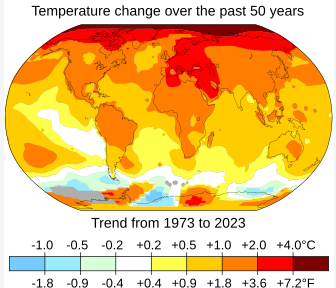 A judge has ruled that New York State’s climate “superfund,” modeled after laws that provide money to clean up toxic waste, runs counter to federal law and is therefore invalid.
Eventually, we will have laws that force companies whose actions are ruining the planet to pay for the remediation that must happen to avert environmental collapse. In the meanwhile, we need to expect the fossil fuel industry to continue its ruthless legal attack such legislation.
Climate “Superfund” Will Require Legislation at the Federal Level
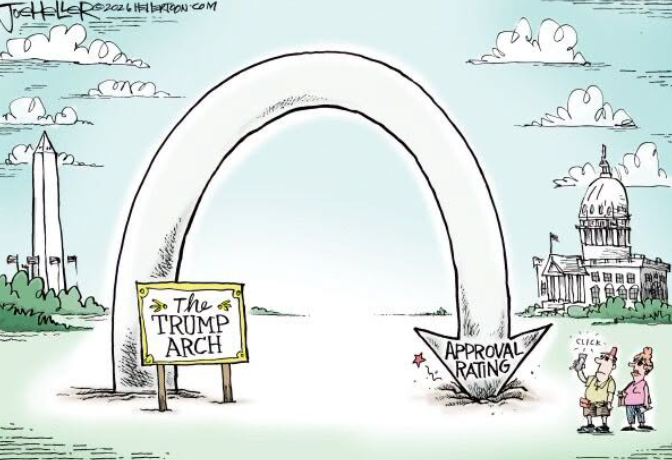 The idea expressed at left, i.e., that Trump’s arch–or any single action Trump has taken towards self-aggrandizement is causing is approval rate to plummet–is fallacious.
Sure, a great many of his similar efforts, e.g., putting his name on the Kennedy Center, or issuing coins with his image on them, rankled our souls as Americans.
But let’s face facts, Trump’s approval rating is hovering at just above 30%, meaning that about one-third of U.S. voters don’t care that he’s a petty, spoiled child, a convicted felon, and one of the most despicable people in the history of humankind.
There Is No Single Act that Would Crash Trump’s Approval Rating
 Here’s proof (as if any were needed) that Trump understands that he’s despised and knows that his claims that he’s “respected around the world” are total bullshit.



-
Climate Change1 year ago
Guest post: Why China is still building new coal – and when it might stop
-

 Greenhouse Gases2 years ago
嘉宾来稿:满足中国增长的用电需求 光伏加储能“比新建煤电更实惠”
-
Greenhouse Gases1 year ago
Guest post: Why China is still building new coal – and when it might stop
-

 Climate Change2 years ago
嘉宾来稿:满足中国增长的用电需求 光伏加储能“比新建煤电更实惠”
-
Climate Change2 years ago
Bill Discounting Climate Change in Florida’s Energy Policy Awaits DeSantis’ Approval
-

 Renewable Energy11 months ago
Sending Progressive Philanthropist George Soros to Prison?
-
Greenhouse Gases1 year ago
嘉宾来稿:探究火山喷发如何影响气候预测
-

 Carbon Footprint2 years ago
US SEC’s Climate Disclosure Rules Spur Renewed Interest in Carbon Credits