

kWh Analytics is set to continue phase two work on a $2M award from the U.S. Department of Energy (DOE) under the Increasing Affordability, Reliability and Manufacturability of PV Cells, Modules and Systems award.
The initiative, under the department’s Solar Energy Technologies Office, is aimed at extending the lifespan of PV systems.
This award enables the continuation of research the company began in 2022 into building a program for insurers to incent solar asset owners for reliability measures. Over the past 24 months, kWh Analytics has been developing ways to identify points of solar PV equipment failure and understand the resolution outcomes that bring sites back online quickly and efficiently with the end goal of creating a “safe driver discount” for reliable assets.
To achieve this, the company says it used natural language processing of O&M service logs to learn what makes solar assets reliable. These field insights inform upstream stakeholder decisions, such as O&M preventative maintenance and spare parts strategies, thus developing a feedback loop.
“As an insurance stakeholder, we are continuously collecting and analyzing data, and looking for opportunities to incentivize reliable and resilient behavior,” says Jason Kaminsky, CEO of kWh Analytics.
“We are grateful to the Department of Energy for enabling us to share important findings that will impact how the industry designs and operates solar PV facilities and reward those reliability measures, as we collectively work to build a reliable clean energy future.”
As kWh Analytics enters the second phase of the DOE project, the company will explore ways in which field data can inform insurers’ decisions to incent asset owners for putting reliability measures into practice.
The company plans to publish the results of its research project next year.
The decision to further fund kWh Analytics’ research in this area is the latest milestone in the company’s strong and enduring relationship with the DOE. Most recently, kWh Analytics was awarded $2.4 million by the DOE’s Materials, Operation, and Recycling of Photovoltaics Funding Program in September.
The post DOE Gives kWh Analytics Permission to Continue PV Reliability Award appeared first on Solar Industry.
DOE Gives kWh Analytics Permission to Continue PV Reliability Research

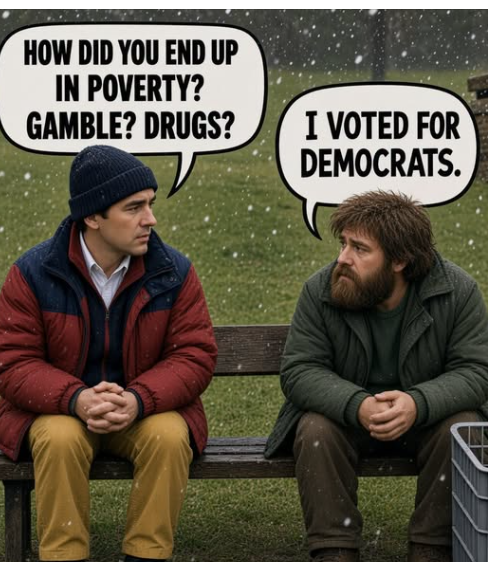 Consider the meme here, and then remember that the nine of the ten poorest states in the U.S. (Mississippi, Louisiana, West Virgina, Kentucky, Arkansas, Alabama, Oklahoma, Tennessee, and South Carolina) are all bright red.
How do they get away with stupidity like this?
Well, there’s the bottom of the state rankings for education:
- 46. Mississippi
- 47. Kentucky
- 48. Louisiana
- 49. Arkansas
- 50. West Virginia
Do you see any correlation?
Republican Operatives Are Tenacious as Messaging–And Truth Has No Bearing on It
 Good question here at left.
To me, it depends.
If the person seems intelligent enough to be able to hold a thought in his head that opposes his current beliefs, I’d actively encourage the discussion. Otherwise, I’m out. No need to raising someone’s temper for no reason or gain.
 To the jackass who sent me the meme here: What about the 5 million Americans who moved to Canada? What about the steady flow of Americans expatriating to Costa Rica, New Zealand, Australia, Iceland and Northern Europe?
My wife and I have two kids and a grandchild in the States, and we have a gaggle of medicos to address the various health conditions associated with aging. If that weren’t the case, I’d be writing this from Stockholm or Aukland.
I wouldn’t be looking for a “utopia,” just an escape from the frustration, anger, and sadness that I feel every day, as I watch the country I love deteriorate into authoritarianism.



-
Climate Change1 year ago
Guest post: Why China is still building new coal – and when it might stop
-
Greenhouse Gases1 year ago
Guest post: Why China is still building new coal – and when it might stop
-

 Greenhouse Gases2 years ago
嘉宾来稿:满足中国增长的用电需求 光伏加储能“比新建煤电更实惠”
-

 Climate Change2 years ago
嘉宾来稿:满足中国增长的用电需求 光伏加储能“比新建煤电更实惠”
-
Climate Change2 years ago
Bill Discounting Climate Change in Florida’s Energy Policy Awaits DeSantis’ Approval
-

 Renewable Energy10 months ago
Sending Progressive Philanthropist George Soros to Prison?
-
Greenhouse Gases1 year ago
嘉宾来稿:探究火山喷发如何影响气候预测
-

 Carbon Footprint2 years ago
US SEC’s Climate Disclosure Rules Spur Renewed Interest in Carbon Credits