

Weather Guard Lightning Tech

Updates from ACP 2024, Thoughts on Vestas Q1 Financial Loss
Allen, Joel, and Phil record their thoughts on the show floor of American Clean Power 2024 in Minneapolis, Minnesota. Which companies are in attendance? What seems to be the industry direction? And they also discuss Vestas’ Q1 financial results which show a loss.
Sign up now for Uptime Tech News, our weekly email update on all things wind technology. This episode is sponsored by Weather Guard Lightning Tech. Learn more about Weather Guard’s StrikeTape Wind Turbine LPS retrofit. Follow the show on Facebook, YouTube, Twitter, Linkedin and visit Weather Guard on the web. And subscribe to Rosemary Barnes’ YouTube channel here. Have a question we can answer on the show? Email us!
Pardalote Consulting – https://www.pardaloteconsulting.com
Weather Guard Lightning Tech – www.weatherguardwind.com
Intelstor – https://www.intelstor.com
Allen Hall: Welcome to the special edition of the Uptime Wind Energy Podcast. I’m your host, Allen Hall, and I’m here with Phil Totaro, the CEO of IntelStor and Joel Saxum, the chief commercial officer of Weather Guard. And we are in Minneapolis today for the opening of American Clean Power 2024. And we wanted to get everybody’s thoughts on what we have seen today, what the feeling is, what the number of people we’ve seen bouncing around, what the business atmosphere has been like, and, give everybody an update who couldn’t be here.
Obviously there’s a number of people out in the field fixing wind turbines right now. the people actually keeping wind turbines operating. give us a sense of what’s happening with some of the new technology we’ve seen today and what to expect on the remainder of the week. And Joel, I know early on this morning, it seemed like it was going to be pretty busy.
Joel Saxum: Yeah, absolutely. So I walked in here, the agenda said 10 30, they opened. I walked in at 10 31 and it was already. Packed in here. I tried to get a cup of coffee. There’s 200 people in line. so I know Phil, you were saying that you, were the only one of us able to actually take a lap so far today around the show floor and saw a ton of people.
Alan and I have been basically in conversations back to back since we got here with whether it’s talking about podcast stuff or strike tape or fixing any other kinds of problems with everybody from the insurance industry, asset owners, ISPs all the above. So it has been swamped here at our booth.
Philip Totaro: Unfortunately, I got here late. I arrived because of some weather in Denver, at about 2. o’clock this afternoon. And so I’ve been here about, two hours now, three hours now as we record this, and I think I’ve already closed about three deals. So this is probably the, most productive I’ve seen an ACP event in, a long time.
which I guess is, good news. but just based on my walking around, I’d conservatively say there’s at least about 10, 000, if not maybe 12, 000 here, at this event. So it’s got a much better tenor to it, much better mood. people are, really quite engaged. so it’s, overall, I, think, better, better than everybody might have expected.
Joel Saxum: Yeah, Minneapolis, the Minneapolis Convention Center, that’s where we’re at. The weather’s great right now. but the Minneapolis Convention Center is huge. I’ve been in this, when I was a kid, we were, we’d come down here for sports shows and they’d have this whole thing full of boats and all kinds of stuff.
I remember it as a kid, I don’t remember it being this big. but it is, from end to end, we talked with Armando from Earthwind, our friend, and he’s Dude, we walked up and down every aisle basically just to check everything out. And it took them almost four hours. Yeah. There’s
Allen Hall: a lot of vendors here.
It’s a lot. And I think some of the feeling I got just talking to people who walked up to the booth and running into people we’ve had on the podcast is there’s more activity. the operators are focused. On getting their assets up and running and to, get to the solutions and the ones that I had talked to specifically have been trying different solutions, evaluating them over the last couple of years and are ready to start moving.
It’s no longer trial phases. We want to get going and deploy useful ideas, useful solutions fleet wide.
Joel Saxum: Yeah, absolutely. Absolutely. And, Not only is it the asset owners that are looking at these things, the ISPs are asking, right? So what that means to me is that their clients, the asset owners, have been telling them, Find us a solution, or we’re looking for this solution.
I had an ISP come up and just say We’ve been tasked by our clients to find things to solve problems. When we came to this show, I said, you’re talking to the right people, lightning wise. that, I think is a, It’s real and it’s moving, right? People want to get their assets up and running and they want them to be running smoothly.
and they’re willing to spend money right now that people are allocating budgets to, to get things done and you can feel it.
Allen Hall: Yeah. Excited. I think the feeling on the OEM side and GE Vernova is here, but I haven’t seen Vestas. not to me, they haven’t been here, but I haven’t seen them and I haven’t seen, Siemens Gamesa.
Joel Saxum: No, I heard, of some people having meetings with people from Siemens Gamesa, but they don’t have a booth. Okay. Yeah. So I know there’s definitely representation here, but, not necessarily in a booth. I haven’t seen any Vestas. what do you call these things? Badges? I haven’t seen any Vestas badges walking around though.
Allen Hall: So that, that’s an interesting point because Vestas announced their first quarter results and they came to a loss of about 75 million, right? Which in the bigger scheme of things is, a small drop in the bucket. I think the bigger story there is the number of sales that they had is down.
And I attribute that, Phil, to the increase in prices. everybody’s talking about the OEMs increasing prices and looking to recover the money they lost over the last couple of years. that necessarily, I would assume, is going to drop the quantity of megawatts purchased, right?
Philip Totaro: to an extent, yes. there’s a couple of things at play here.
Number one, Vestas normally has a down first quarter anyway. but that’s something that a lot of equity analysts already price in and that sort of thing. so that’s been a part of it. Obviously, there’s year to year fluctuations. The other thing is, yes, to an extent, raising prices theoretically means less, demand.
But it’s, there’s been a consolidation in the U. S. market to an extent because Siemens Gamesa is not really offering turbans for sale, which is why any of the folks from Siemens Gamesa that are here are probably service, and the Nordex, while they’re, they’ve obviously got a presence in the U.
S. market with the N149, and now they’re trying to get the N163 product in here, and we have these, hints about, The fact that they’re going to be launching, probably a lower power rated version of the N163 to compete with the, Vestas V163, later this summer. that’s, reason to, be interested for them.
But I, I think it, it really has to do with interconnection cues. if I go, if I point the, indicator anywhere, it’s interconnection cues. Piling up are causing a slowdown in deal closures. That is then having a result of an impact on Vestas, not being able to, close deals and recognize as much revenue in, quarter by quarter as they, they otherwise would.
Allen Hall: So why is solar going so heavy right now? They’re in the same interconnection queues, right?
Philip Totaro: Yeah. And, that’s a great point because they’re actually taking up more space in the queue with a lot of projects that are never going to get built. than wind. However, the projects that are getting built, it’s still more capacity than what wind is doing.
and so for an IPP, for every dollar that they can spend on solar or storage, it’s one less dollar they have to spend on wind. grand scheme, I think this is not emblematic of a, industry wide issue. Or anything Vestas specific to be concerned about. Again, I think it’s one bad quarter that it’s not really that concerning.
If it starts showing, another quarter and by the third quarter, if it’s also down, then we worry that raising prices has resulted in lower sales. But for one quarter, I’m not that concerned about it.
Allen Hall: But Vestas, as seen by a lot of operators at the moment, is the number one choice. So if, Vestas is having a decrease in sales in Q1, I would assume GE and then Siemens Gamesa, who knows, but it’s going to be a pinch on GE, right?
Philip Totaro: to be honest with our order tracking that we’re doing at Intel store, it’s, that’s not necessarily the case there. So keep in mind that Vestas only receives revenue when projects go COD. And it’s commissioned and it’s, they’re online and operating, or at least the bulk of what they get paid.
there’s usually an upfront and et cetera, et cetera. Based on orders right now, Vestas didn’t have such a great quarter, but GE actually did in the U. S. Nordex also got a few orders, that they’ve closed in, the U. S. as well in the first quarter. But, it’s, everybody’s having to accept a higher price because even the Project CapEx cost is going up, which means the cost of finance is up, interest rates are still high, so everybody’s paying more.
And, especially when an OEM’s gotta pass on the cost of raw materials and increased, labor and overhead rates and all these other things that they have to incur, that’s necessarily gonna push the prices up for everybody.
Allen Hall: So is that a marker now that we need to focus on in terms of what to expect the remainder of this year?
If GE is starting to see a little bit of a, if GE is starting to see a little bit of a turnaround, which they have to, they have to be profitable this year. And Investus is obviously going to be profitable. I think by the end of the year, the full four quarters, they’ll be going to be profitable.
But GE is making
Joel Saxum: moves outside of sales efforts to be profitable. Yes, they are. They’re making a lot of internal changes. process changes, they’re, dumbing down their order or their order capability book and some other things as well, let alone getting rid of people.
Allen Hall: So does that then foretell of profitable GE by third quarter?
Joel Saxum: I think so. I think if you, I think GE’s, GE, the GE Vernova split right now looks great. If you watch the stock trackers and you want to listen to the street, again, of course now that, Wall Street is not always, a direct indicator of how the health of a company, right? But they, see it as we want to put money in here.
We want to invest in here because they looking good for the future. So since they split, it looks great.
Philip Totaro: and to be blunt, even Siemens energy, which is the parent of Siemens Gamesa, they’re even had, a great quarter in, the first quarter, but Siemens Gamesa is obviously still suffering.
So overall the power generation industry is doing well. Wind. Has been a bit impacted, but again, I don’t think it’s a long term problem. I think, even, with Vernova and the aerospace split, aerospace is now doing very well. And Vernova is actually also doing very well outside of the wind business, which they still have some work to do.
The onshore business is okay. Not as healthy as they want it to be. The offshore business, we’ve talked about ad nauseum on the show and, that needs to improve, but should happen if we can get, more of these, projects through a consenting and interconnection queue, which really comes down to market efficiency, companies signing corporate PPAs, utilities signing PPAs and transmission availability.
If we can get those things resolved, that’s going to start opening up more of the queue. More companies like GE, Vestas, Siemens, and Nordex are going to start closing deals and we’re going to see a much more, robust and healthy market. I think it hinges on transmission availability.
Allen Hall: But the DOE just announced a week ago about making that process faster to get the turnaround and get rid of some regulatory pieces there to turn it on.
But I’m not sure That is a short term fix, right? In a
Philip Totaro: year and a half when that happens, I’ll be excited about it.
Allen Hall: Okay, so from, I haven’t heard anybody mention that today. Or this week even, that hey, they’re going to open up the transmission lines and boom, here we go. That’s not the, that’s not the feeling.
But the feeling I’m getting, I talk to a lot of operators today, is we’re trying to produce the power we were asked to produce. How do we do that? Efficiently, yeah. It has really changed from, I would say, two years ago, where it was, we don’t really need to get too deep into some of these solutions that are out there today.
I think they have a lot of blade issues and turbine issues. They have bearing issues. They have blade issues.
Joel Saxum: Let’s think about one of the, what could be a macro reason for this. IRA Bill went through, two years ago now? Two years, year and a half. Two years ago in August, right? So that extended PTC credit.
So a lot of these wind farms are being PTC repowered. There’s been a lot of repowers go on in the last few years. Now that we’ve done those repowers and they’re finished, those farms are quote unquote new, right? they’re at that one, two years since COD of, repower. So now is the time when you want to spend money on upgrades and things like that for the life of that turbine, because it doesn’t make sense.
If you’re going to repower that thing at the end, at year eight to go, Strike tape on or something like that. Like you’re just going to read, but now all of those IRA bill driven PTC or, PTC fund repowers are fresh and there’s more of them coming down the pipeline. So at this point in time, maybe when you want to put some money into that wind farm, some capex to make sure that it’s running smoothly,
Allen Hall: but they’re not going for little percentage gains.
They’re going for big wins. Have you noticed that? if you mentioned we can make an a one or 2 percent increase in AEP, everybody’s just sloughs it off like. Yeah, we’re looking for 20 percent today because of bearing issues, because of blade issues, because of the operational issues that
Joel Saxum: they don’t Less AEP percentage gain and more just uptime availability.
Availability.
Philip Totaro: and I’ll tell you what too, based on the data that we’ve got at Intel Store, where we analyzed the delta between the old site and the repowered site, on average for the 105 or so sites that have been repowered in the U. S. so far, It’s only about a 3. 6 percent increase in AEP. Whoa. and there are actually some sites that have gone down.
Because they’ve had issues with the new turbines that they repowered the site with.
Joel Saxum: Yeah,
Philip Totaro: And teething issues. So the reality is, you’re right Joel, they’re not getting the AEP that they need necessarily out of the repower. The PTC is driving the repower. And availability. With that PTC is what they want because they want to eke out as much revenue as they can.
That’s going to have this extra 26 or 26. 80 or whatever it’s indexed to now. I forget. but that’s what they want. They want the PTC revenue. So availability and PTC farming is, the, industry we’re in. I coined that term, I think about a year and a half ago that we’re not wind farmers anymore.
We’re PTC farmers.
Allen Hall: You can
Philip Totaro: hear
Allen Hall: it. Phil, now you say it, it was clearly identified today to me by multiple operators that it’s availability. And it used to be AEP. Two, three years ago it was AEP. If we get another percent or two out of the turbines we have, it’s certainly fine.
Joel Saxum: With these newer, some of these newer turbine models that they’re running, like we talked with one operator today, we know what their wind farms are and what they run.
And they’re, six of their seven wind farms in the United States are the exact same wind turbine model. And that wind turbine model has specific issues to it. So they’re looking, so if you are having issues with that model, it’s not affecting one of your wind farms for those guys. It’s affecting every single wind farm they have.
So they need the solutions because it’s a plaguing issue that’s fleet wide.
Allen Hall: That opens up a number of doors here. What are those top three items that they’re going to be looking for this week? I think one of the big items that’s going to happen this week is the 3S lift climb auto system. because The adoption rate, from what I can understand, is increasing rapidly.
It improves availability, right? Getting a technician up and down is an availability answer. the CLI model system, boom, easy one, right? Leading edge erosion, I think people today were asking about leading edge erosion, what’s out there, and there’s a lot of different applications. We talked to Bergelin, obviously, but there’s others that, they think leading edge protection is the way to keep my availability up.
Then it comes to lightning, right? It comes to the lightning issue. Hey, we have turbines down because we have holes in our blades. So we gotta fix the holes before we can turn the turbine on. Again, back to Phil’s point, availability. If we’re in that availability mode, then who are the winners this week?
Who are gonna be the losers?
Philip Totaro: We’re actually, happen to be sitting next to one of the winners, potentially, which is, NextAir is actually here exhibiting at an ACP event. which for those of you who’ve been in the industry a long time, that’s pretty rare. They sponsor and, are usually a, title sponsor, but they almost never exhibit.
And what they’re doing is they’re actually offering their asset management platform now, for sale to other asset owners. they took their data analytics platform where they’re doing a lot of, analysis on, as least for O& M, on that side of the business, the work order prioritization, they also have, energy trading, tools built into this capability.
it’s actually quite impressive and, quite robust. And given, the, pedigree that they have as a company, that’s, definitely one. to, maybe answer a broader question, there’s, the, asset owners that are here that are in need of solution providers, it’s really matchmaking those, those companies together.
It’s, there are plenty of people that would be capable of providing, an asset owner better availability, depending on what they have. there are some asset owners that are dependent on. an OEM service contract and they’re not getting the OEM to fulfill their obligations under the contract.
is there a way that they can potentially supplement that OEM arrangement with, something else? and whether that’s an independent service provider, whether that’s a data analytics company, anybody that’s got information, data answers on, and Joel, you’ve brought this up before on the show, just tell me what to do.
Like, how do I run my asset? Those are the people that have answers to those questions. They’re the ones that are going to be winners. Alan. So the next era
Joel Saxum: three 60 platform that we’re, right next to them. I’m staring at their booth right now. The real winner here, to be honest with you is all of the other IPPs
Philip Totaro: who benefit, who
Joel Saxum: can benefit from that solution.
Because we’ve talked to Alan, you and I personally talked to people that are trying to develop some stuff like that. Like we’ve got to figure out a more efficient way to manage our assets better. Here you go. It’s in a box now next year. We’ll give it to you after the learnings from there. What are they?
12, 000 turbines or something like that?
Philip Totaro: Oh yeah. It’s, 20 gigawatts of wind. I forget precisely how much solar and the amount of energy storage that they’re deploying is insane because even if they’re going to just operate it on behalf of a financial focused asset owner, those asset owners that want energy storage, particularly in either Southwest Power Pool or air cot.
To take advantage of the arbitrage play with energy trading, it’s insane. California, Texas, they’re, they are seeing a significant amount of interest in deployment. And, again, it’s, next there is one company, and as I said, with the pedigree they’ve got, that’s gonna, attract a lot of interest and attention, I’m sure.
But really anybody that, we’ve talked on the show about, Onyx Insight, we’ve talked about Windesco, we’ve talked about, any number of companies that actually have that type of, asset management platform capability. Power Factors is still out there, Spark Cognition, et cetera, et cetera, just to name, a few.
Allen Hall: Okay, so that, that’s really interesting, because we have not really seen that until now. So even a next era, the next era thing is fascinating in multiple levels, right? Next era doesn’t need to sell any product. They have a pretty good system set up internally. They’re profitable. They have a lot of projects.
They know how to run their business. But now they’re offering to help others run their business. So like we saw this week with Elite, right? Elite is possibly being sold or maybe in the process of being sold. There’s a lot of regulatory hurdles there. We’ll Is that indicative of, hey, outside money coming in saying, Elite runs a pretty tight ship from what I’ve seen, operationally.
It’s looking at CPP as an investor,
Joel Saxum: right?
They’re just, cash. Yeah, but then why would they go
Allen Hall: after an asset like Elite?
Joel Saxum: Because it’s run well.
Allen Hall: Exactly. And,
Philip Totaro: and, GIP too, keep in mind, because they, both of them, okay, let’s talk about the, CPP investment board. They are invested in assets globally now, not just in, Canada where they’re, headquartered, but, this is potentially if this, deal for elite gets approved, this expands their, footprint in the U.
S. They’ve got assets in Brazil. They’ve got assets over in Europe. They set up a whole platform, to go invest in projects just for Scandinavia. so they’ve got a huge interest in. asset ownership while they may not have the requisite expertise in operations. That’s the play is they do want something that they can get hold of.
And, we even did some, on the spot analysis when this deal was announced Monday afternoon or morning, where, they’ve spent elite spent just on their wind portfolio, about three, a little over 3 billion, in CapEx. And the deal that was announced was, I think, for about 2. 2, 2.
3 billion, to acquire it. taking into account the, the depreciation of those assets and the, operating revenue. but they’ve got a fleet that, I, I wanna say something like 52%, operates at or above, a P50 energy yield. Based on, again, the Intel store analysis of the, IPP provided data to, FERC and the Energy Information Administration.
Thank you. they’ve got a pretty robust and healthy portfolio. Even their net profit per megawatt installed is 877, 000 per megawatt. So that’s right there at about the industry average. So if you were controlling the purse strings at CPP, that’s a good investment? Yeah, it’s a solid, it’s not Above average, but it is at least average.
And it’s also giving them access to a fleet that has an average, asset age of, something just below 10 years, which means that for the projects that are already 10 years, they gotta be looking at repowering. And for the ones that are six, seven, eight years, they’re in the queue to, to be repowered.
I
Joel Saxum: know they do
Philip Totaro: have
Joel Saxum: some, ripe for the repower opportunities where they will take the towers down because they’ve got some Zond Z 50s and stuff down in like Bentonville. So they’ll there’s definitely room for growth within that as well
Philip Totaro: yeah, and it’s well just one one thing on this is Companies like I mean look CPP investment board and GIP as Examples of infrastructure companies we and we’ve talked ad nauseum about that on the show as well that they’re plowing money into renewables at this point But the It’s funny because they’re not even necessarily looking at, this is so PTC driven, they’re not even necessarily looking at the financial performance and health and operational performance of the elite portfolio.
yeah, obviously they did their due diligence and that was a factor, but the fact that they can just get their hands on an asset portfolio that they can repower and capture PTC revenue from, that is the most lucrative thing right now. And so if you’re looking to sell a project, you’re going to have a pretty easy time of it.
Or if you’re a company that’s going to sell your company or sell a portfolio of projects, there are buyers out there. There are people that want that because the we’re finally Joel, to your point earlier, we’re finally seeing the impact of the IRA bill in this PTC extension that again, we’ve got 10 years worth of certainty on the PTC at this point.
the industry is starting to open the spigot.
Allen Hall: So what does GE Vernova do and Vestas do to fill that void?
Philip Totaro: They gotta get their game together with their factories and make sure that they don’t have more than, an 18 to 24 month order backlog. Which means factories, which means jobs, which is good.
But it also means partnerships and contract manufacturing opportunities. Which frankly might be good for LM Wind Power. and it’s definitely going to be good for TPI. and certainly other companies that are, supply chain companies to both GE Vernova and, and Vestas. The other thing it potentially does is, and again, this is why it’s so concerning for Siemens Gamesa not to be, offering a product for sale at this point.
I really wish they would Announce what they’re going to do and when they’re going to do it. Nordex will benefit. And here’s the real question. Is there another player who feels that now is the right time to plow some money into re establishing or reinvigorating or creating a presence in the U. S.
market? As An alternative to GE Investus.
Allen Hall: It can’t be a Chinese manufacturer. That just is not happening. The political atmosphere right now is going to be the worst time to do it. Okay, so there’s more to hear about during ACP 2024. We’re going to continue to check out all the vendors and all the new technology here this week and when we get back to our regular studio offices, we’re going to inform everybody about what’s happening and keep you up to date.
Thanks for joining the Uptime Wind Energy podcast. We appreciate all the listeners. Our numbers have been extraordinarily high the last couple of weeks and we appreciate all the new listeners to the program. So we’ll see everybody next week.
https://weatherguardwind.com/updates-from-acp-2024-thoughts-on-vestas-q1-financial-loss/

Weather Guard Lightning Tech
Nordex Outsells Vestas, GE Vernova Rebuilds Wind Team
Nordex closes in on Vestas in onshore orders, GE Vernova rebuilds its wind team, Nexxis buys BladeBug, and wooden blades draw doubts.
The Uptime Wind Energy Podcast is brought to you by Weather Guard Lightning Tech, creators of the StrikeTape Ultra LPS retrofit. Subscribe to Uptime’s Substack newsletter. And check out Rosemary’s “Engineering with Rosie” Youtube channel. Have a question we can answer on the show? Email us!
Weather Guard Lightning Tech
Siemens Gamesa Builds Hornsea Blades, NEMS Invests in Perth
Siemens Gamesa starts Hornsea 3 blade production in Hull, Germany approves an Offshore Wind Act amendment, and Nexxis buys BladeBUG.
The Uptime Wind Energy Podcast is brought to you by Weather Guard Lightning Tech, creators of the StrikeTape Ultra LPS retrofit. Subscribe to Uptime’s Substack newsletter. And check out Rosemary’s “Engineering with Rosie” Youtube channel. Have a question we can answer on the show? Email us!
Episode Transcript
Uptime News Flash
September 7, 2026
Happy Monday, everyone. Well, let’s talk about the biggest wind farm on earth. It doesn’t exist yet, but its blades are being built right now. Over in Hull, England, Siemens Gamesa just started making blades for Ørsted’s Hornsea 3 offshore wind farm. That’s two point nine gigawatts, one hundred and ninety-seven turbines. Each blade is longer than a football pitch. Fourteen hundred workers build blades in that factory, turning raw materials into finished product. When complete, Hornsea 3 will power more than three million British homes. It’s the single largest offshore wind farm in the world.
And if we slide over to Germany for a moment, the German cabinet just approved an amendment to the Offshore Wind Act, the WindSeeG. It’s headed to the Bundestag next. The goal? New rules by January first, twenty twenty-seven. But the Offshore Wind Energy Foundation says the draft does not go far enough. Sixteen gigawatts of awarded projects are still waiting on final investment decisions. Sixteen — that’s quite a few. The foundation wants a new way for developers to hand back sites they can’t build, so those sites can be re-tendered quickly under conditions that actually work. Sort of a use-it-or-lose-it approach. That’s the idea.
We’ll head a little further east to India. India ranks fourth in the world for installed wind power, but probably not for long. A government official said this week that India will overtake Germany and become the world’s third-largest wind energy nation by twenty thirty — one hundred seven gigawatts of installed capacity. India added a record six gigawatts last year alone, shattering their previous record of a little over four gigawatts. And twenty-eight more gigawatts are under construction right now. Impressive.
Let’s head down to Western Australia, because a company called National Electric Motor Services, NEMS for short, is building a one million dollar facility in Perth to test and repair wind turbine generators. Right now, Australian wind farm operators ship their broken generators overseas for repairs, and that takes months. NEMS is the only authorized service center for ELIN Motoren in all of Western Australia. This is the fifth project funded through Australia’s Wind Energy Manufacturing Co-investment program. Local repair, faster turnaround, and homegrown capability — that’s all good.
And staying in Australia, Perth-based Nexxis Technology just bought a British robotics company, BladeBUG. BladeBUG is a robot that uses suction cups to crawl across wind turbine blades. Nexxis already has a robot called Magneto that uses electromagnetic adhesion to climb steel structures. If you put the two together, you can inspect almost any surface on a turbine, or about anything else. Add AI and machine vision, and you have robots that can see what human eyes might miss, from places human hands shouldn’t have to reach. It’s safer, faster, and it’s going to be a lot smarter.
One more story before we finish today. Siemens Gamesa has now installed more than 300 recyclable blades in six countries. The secret is a new resin. Unlike conventional resins, this one lets you separate the blade components at end of life, so you can separate the fabric from the resin. Cool stuff. Jonas Pagh Jensen, head of sustainability at Siemens Gamesa, says the technology is ready for full-scale use. And Siemens Gamesa has already installed 36 GreenerTower units — steel towers with 63% lower carbon emissions. So although sustainability may have faded from the headlines, it’s still in tender documents, and it’s showing up more than ever. In Denmark, the Netherlands, and France, buyers are all asking about recyclability and decarbonization before they award contracts.
So what should you be watching this week? Recyclability is no longer a nice-to-have — it’s a must-have, and it’s showing up in tender scoring. If your blades can’t be recycled at end of life, you may not win the contract to begin with. And a lot of supply chains are going local. Australia doesn’t want to ship generators overseas anymore. India is building its own turbine factories. The countries buying wind power want it built at home. For professionals in the wind industry, the competitive edge is shifting — it’s not just who can build the best turbine, it’s who can build it locally, recycle it fully, and inspect it without putting a person in a harness.
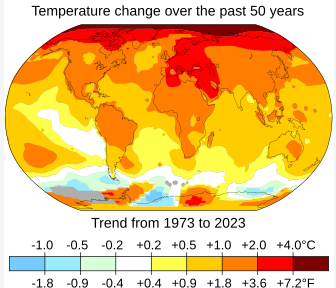 A judge has ruled that New York State’s climate “superfund,” modeled after laws that provide money to clean up toxic waste, runs counter to federal law and is therefore invalid.
Eventually, we will have laws that force companies whose actions are ruining the planet to pay for the remediation that must happen to avert environmental collapse. In the meanwhile, we need to expect the fossil fuel industry to continue its ruthless legal attack such legislation.
Climate “Superfund” Will Require Legislation at the Federal Level


-
Climate Change1 year ago
Guest post: Why China is still building new coal – and when it might stop
-

 Greenhouse Gases2 years ago
嘉宾来稿:满足中国增长的用电需求 光伏加储能“比新建煤电更实惠”
-
Greenhouse Gases1 year ago
Guest post: Why China is still building new coal – and when it might stop
-

 Climate Change2 years ago
嘉宾来稿:满足中国增长的用电需求 光伏加储能“比新建煤电更实惠”
-

 Renewable Energy11 months ago
Sending Progressive Philanthropist George Soros to Prison?
-
Climate Change2 years ago
Bill Discounting Climate Change in Florida’s Energy Policy Awaits DeSantis’ Approval
-
Greenhouse Gases1 year ago
嘉宾来稿:探究火山喷发如何影响气候预测
-

 Carbon Footprint2 years ago
US SEC’s Climate Disclosure Rules Spur Renewed Interest in Carbon Credits