

One of the hurdles to adopting electric vehicles (EVs) is the perceived lack of charging stations to support the technology.
In order to increase consumer confidence and offer Americans more freedom in purchasing an EV, Congress, through the Bipartisan Infrastructure Law, allocated $7.5 billion for the buildout of a nationwide charging network. Expanded accessibility to charging stations increases the choice for Americans to drive the vehicle type they want. This is especially critical to our region for several reasons. First, the Southeast lags at 0.40 charging stations per 1,000 people compared to the national average of 0.53 per 1,000 people. Second, we are heavily dependent on tourists being able to travel to and through our beautiful region easily. More charging stations mean more tourists who need charging stations to drive through on vacation can, and EV drivers who live and work in the region can as well. Additionally, the projects will create jobs to install and maintain the equipment and support the manufacturing that the Southwest is leading on. Finally, the projects, which require a local capital match, will inject private capital into the charging infrastructure market across the region.
The Charging and Fueling Infrastructure (CFI) Program is a competitive grant program that is complementary to the formula funding provided to each state through the National Electric Vehicle Infrastructure (NEVI) Program. CFI is appropriated through the aptly named Bipartisan Infrastructure Law, which was legislated through bipartisan cooperation in Congress in 2021. The CFI Program, begun in 2022, was designed to fund $2.5 billion in projects in annual tranches through 2026. To date, the program has awarded three rounds totalling $1.779 billion in grant funding and $142 million to the Southeast. The first rounds (1A and 1B) were announced in 2024.
On January 10, 2025, 31 states, four Tribal Nations, and the District of Columbia were awarded $636 million in funding. Notably, the Southeast was very successful in the most recent award round. $89.7 million will support projects expanding access to community charging and long-range travel along highway corridors in the Southeast.

Map of Round 2 Grant Recipients
A Closer Look at the Projects
Florida
City of Jacksonville, FL
$2,829,740.00 Community Program
The City of Jacksonville, Florida, and Florida State College will receive $2.8 million to install 100 EV chargers across public spaces and educational campuses. This initiative aims to address the region’s electric vehicle charging gap, particularly in disadvantaged communities, and promote greenhouse gas emission reductions.
Broward Metropolitan Planning Organization, FL
$17,902,595.00 Corridor Program
The Broward Metropolitan Planning Organization will receive $17.9 million to install 20 EV charging stations with 339 EV charging ports along the county’s Alternative Fuel Corridors. The project will address the county’s EV charging infrastructure needs.
City of Gainesville, FL
$11,655,593.00 Community Program
The City of Gainesville, Florida, will receive nearly $11.7 million to deploy 47 publicly accessible EV charging stations on City-owned properties in or near alternative fuel corridors and disadvantaged communities. This project aims to improve access to electric vehicle charging for low-income residents and build the charging network along alternative fuel corridors. This initiative aligns with the City’s efforts to reduce greenhouse gas emissions and support low-income residents with energy efficiency improvements and affordable housing projects.
City of Hollywood, FL
$4,975,926.75 Community Program
The City of Hollywood, Florida, will receive nearly $5.0 million to install 154 EV charging ports across public parks, community centers, and city facilities. The project also includes 10 micro-mobility charging units for electric scooters and bicycles. This project aims to reduce carbon emissions, stimulate local economic growth, and enhance access to charging infrastructure in disadvantaged communities.
Georgia
Athens-Clarke County Unified Government, GA
$4,941,889.00 Charging Community Program
The Athens-Clarke County Unified Government will receive $4.9 million to install 58 EV chargers, nearly doubling the number of publicly available chargers in the community. Many proposed sites will be in or around disadvantaged communities.
DeKalb County Government, GA
$2,806,965.34 Charging Community
The DeKalb County Government will receive $2.8 million to expand its EV charging infrastructure by installing 259 EV charging ports at 48 sites, including public libraries, parks, senior centers, public safety facilities, and disadvantaged communities. The project will increase sustainable transportation options for low and moderate-income neighborhoods and energy-burdened communities. The initiative aims to reduce greenhouse gas emissions and improve air quality while promoting economic opportunity and transportation equity for all residents.
North Carolina
City of Raleigh, NC
$2,439,864.00 Charging Community
The City of Raleigh will receive $2.4 million to deploy 56 EV charging ports across the city. The project will prioritize serving multifamily residents and the city’s fleet, with 66% of funds directed to disadvantaged communities.
South Carolina
Berkeley-Charleston Dorchester Council of Governments, SC
$6,602,400.00 Charging Community
The Berkeley-Charleston-Dorchester Council of Governments will receive $6.6 million to build out a robust EV charging network consisting of 124 ports in disadvantaged communities. The project will expand access to electric vehicle technician training and use targeted community engagement to promote the availability of EV charging and monitor the impacts of new infrastructure.
Tennessee
Tennessee Department of Environment and Conservation, TN
$35,520,000.00 Charging Corridor
The Tennessee Department of Environment and Conservation will receive $35.5 million to establish an Alternative Fuel Corridor in Nashville by developing two zero-emission vehicle infrastructure hubs with 94 electric vehicle charging ports. The first hub will be located near Exit 56 of I-24, near the Nashville International Airport. The second hub will be near Exit 47 off I-24 and Jefferson Street. Both sites are within disadvantaged communities. The project aims to deploy Nashville’s first public medium- and heavy-duty zero-emission vehicle charging infrastructure, supporting fleet electrification and electric freight corridor designations.
Programs In Jeopardy
In an unprecedented power grab, President Trump seeks to cut climate spending from the Inflation Reduction Act and Bipartisan Infrastructure Law through a series of executive orders, including Executive Order 14154 (EO 14154). Although the Constitution explicitly gives the power of the purse to Congress, President Trump’s attack on clean energy and Congress’ constitutional spending authority put all the funding that supports these programs at risk. The Harvard Law School’s Environmental and Energy Law Program explains the Executive and Congressional control mechanisms over the Bipartisan Infrastructure Law (Infrastructure Investments and Jobs Act).
Two separate lawsuits have been filed in response to the executive orders, and federal district courts issued temporary restraining orders (TRO). The TROs compel the Trump administration to cease withholding funding. However, those TROs have largely been ignored. The degree of risk to various projects depends on the phase of their contract execution. Some projects had been awarded but did not have the funds “obligated;” some were in the final process of getting signatures for their contracts, while others are now being denied drawdown requests for approved projects. Delays and funding cuts are putting all of these projects at risk and are an act of bad faith from the federal government.
Chaos is not a pathway to solutions; it is a distraction and a tactic designed for us to lose focus on the right thing to do in these challenging times.
Take Action
SACE will continue to track these developments and provide updates on the actions being taken as well as their outcomes as they become known. Here are two things you can do right now:
- Send a message telling your elected leaders that you expect them to stand up for clean energy,
- Join our next Clean Energy Generation call at noon on Mar. 14 to learn about ways we will keep moving forward.
The post $89.7 Million Awarded to Southeast from CFI EV Charging Program appeared first on SACE | Southern Alliance for Clean Energy.
$89.7 Million Awarded to Southeast from CFI EV Charging Program

 I met a guy today from a rural part of Central England–“nothing but farms and pubs,” as he put it. His father was an epidemiologist working for the United Nations, and so, as a boy, he lived all over the world and grew up largely in developing countries that suffered from horrific diseases.
He and his wife had the conversation one would expect from such people:
- Why are we so content to ignore climate change that is ruining our planet?
- Why are people so indifferent to the suffering of others?
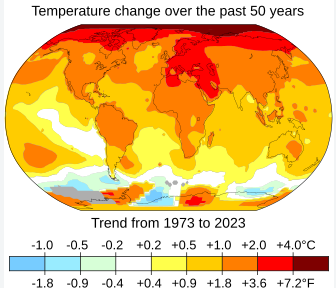
- How is it possible that billionaires expect to live well here on Earth while 99.9% of us suffering with wildfires, devastating storms, blistering heat, losses of landmasses, and desertification?
- At the end of the day, is money really that precious?
Obviously, not everyone thinks this way, but to be in something of a “lovefest” for just a few minutes was a great relief.
relief.
 I may have mentioned that I’m lucky enough to be a part of a group of boyhood friends from our prep school in Philadelphia that meets monthly on Zoom.
Yesterday the question came up as to how our political beliefs are formed, and the group found my input somewhat shocking.
First, from what I can understand from neurologists, our brains are “wired” to function in certain ways. Via some combination of genetics, epigenetics, and early experiences, we are incapable of looking at the world in a fundamentally different way than we do now. I am no more capable of being a Trump supporter than I am of starting as quarterback in the NFL or memorizing the first 22K digits of pi, the way certain savants can.
This is validated by studies showing that our political philosophies are shaped by the way our brains fire under certain circumstances. When experimental subjects were hooked up to electronics that monitored their brain activities were shown pictures that depict certain threats, the results from self-described “liberals” and “conservatives” differed considerably. When shown photographs of kittens and mountain ranges, both groups processed those images in the same regions of the brain. But when shown photographs of snakes and tarantulas, conservatives were far more likely to process these images through the amygdala, the “fight-or-flight,” or “reptile” brain that kicks in when we interpret something as a danger to our survival.
I’m not losing my mind about immigration into the U.S.; I’m unconvinced that hordes of immigrants from our south or the Muslims from the Mideast are destroying our nation.
Why is that? My brain is wired to doubt it. For whatever reason, I’m more inclined to think that I’m one of 8 billion people on this planet that have almost identical goals and ideals. We all want to survive, to love our children, to be productive and responsible human beings, and to appreciate beauty.
On top of that, I’m a follower of Sam Harris, neuroscientist, author, and philosopher, whose work has shown that free will is an illusion. He points to a study whose findings are that, when we make up our minds in an instant to do a certain thing, say lift our finger from a table at a certain point of our choice, that our brains have made that decision a full half-second before.
Needless to say, there is a ton more to understand here about Sam Harris and his work on this subject. I urge readers to take that step forward.
Weather Guard Lightning Tech
Nordex Invests in Türkiye, Vestas Wins First V182 Order
Allen covers Nordex’s Türkiye expansion, Chinese turbine makers seeking European partners, Vestas’ first V182 order, and two Pennsylvania repowers.
The Uptime Wind Energy Podcast is brought to you by Weather Guard Lightning Tech, creators of the StrikeTape Ultra LPS retrofit. Subscribe to Uptime’s Substack newsletter. And check out Rosemary’s “Engineering with Rosie” Youtube channel. Have a question we can answer on the show? Email us!



-
Climate Change1 year ago
Guest post: Why China is still building new coal – and when it might stop
-

 Greenhouse Gases2 years ago
嘉宾来稿:满足中国增长的用电需求 光伏加储能“比新建煤电更实惠”
-
Greenhouse Gases1 year ago
Guest post: Why China is still building new coal – and when it might stop
-

 Climate Change2 years ago
嘉宾来稿:满足中国增长的用电需求 光伏加储能“比新建煤电更实惠”
-

 Renewable Energy11 months ago
Sending Progressive Philanthropist George Soros to Prison?
-
Climate Change2 years ago
Bill Discounting Climate Change in Florida’s Energy Policy Awaits DeSantis’ Approval
-
Greenhouse Gases1 year ago
嘉宾来稿:探究火山喷发如何影响气候预测
-

 Climate Change2 years ago
Analysis: China’s CO2 falls 1% in Q2 2024 in first quarterly drop since Covid-19