

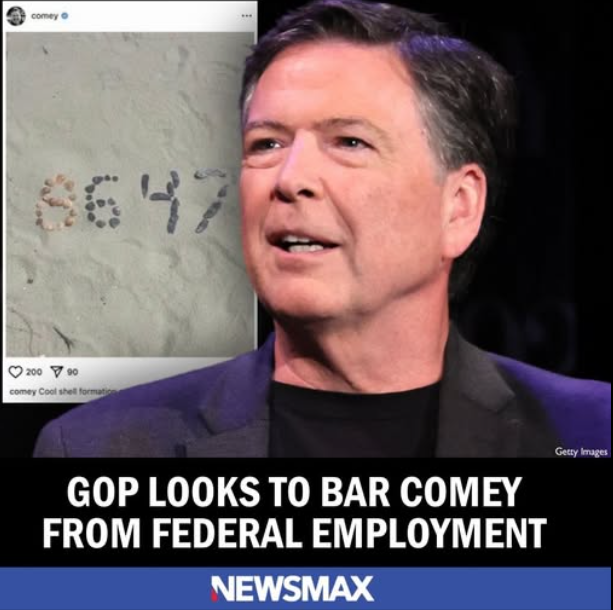
 When my brother and I were little, our father took great delight in amusing us with lingo he learned in basic training, prior to his being commissioned into the Army Air Force as a bomber pilot in WW II.
One term I remember his making frequent use of was “86,” meaning to be out of something. E.g., “Sorry boys, no pancakes this morning. We’re 86 on flour.”
I bring this up to suggest that James Comey was probably simply urging his nation to get rid of Trump by some legal means. Of course, asking to the GOP to act fairly in a case like this is like expecting your dog to play the violin.

 I met a guy today from a rural part of Central England–“nothing but farms and pubs,” as he put it. His father was an epidemiologist working for the United Nations, and so, as a boy, he lived all over the world and grew up largely in developing countries that suffered from horrific diseases.
He and his wife had the conversation one would expect from such people:
- Why are we so content to ignore climate change that is ruining our planet?
- Why are people so indifferent to the suffering of others?
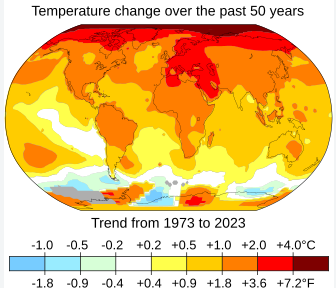
- How is it possible that billionaires expect to live well here on Earth while 99.9% of us suffering with wildfires, devastating storms, blistering heat, losses of landmasses, and desertification?
- At the end of the day, is money really that precious?
Obviously, not everyone thinks this way, but to be in something of a “lovefest” for just a few minutes was a great relief.
relief.
 I may have mentioned that I’m lucky enough to be a part of a group of boyhood friends from our prep school in Philadelphia that meets monthly on Zoom.
Yesterday the question came up as to how our political beliefs are formed, and the group found my input somewhat shocking.
First, from what I can understand from neurologists, our brains are “wired” to function in certain ways. Via some combination of genetics, epigenetics, and early experiences, we are incapable of looking at the world in a fundamentally different way than we do now. I am no more capable of being a Trump supporter than I am of starting as quarterback in the NFL or memorizing the first 22K digits of pi, the way certain savants can.
This is validated by studies showing that our political philosophies are shaped by the way our brains fire under certain circumstances. When experimental subjects were hooked up to electronics that monitored their brain activities were shown pictures that depict certain threats, the results from self-described “liberals” and “conservatives” differed considerably. When shown photographs of kittens and mountain ranges, both groups processed those images in the same regions of the brain. But when shown photographs of snakes and tarantulas, conservatives were far more likely to process these images through the amygdala, the “fight-or-flight,” or “reptile” brain that kicks in when we interpret something as a danger to our survival.
I’m not losing my mind about immigration into the U.S.; I’m unconvinced that hordes of immigrants from our south or the Muslims from the Mideast are destroying our nation.
Why is that? My brain is wired to doubt it. For whatever reason, I’m more inclined to think that I’m one of 8 billion people on this planet that have almost identical goals and ideals. We all want to survive, to love our children, to be productive and responsible human beings, and to appreciate beauty.
On top of that, I’m a follower of Sam Harris, neuroscientist, author, and philosopher, whose work has shown that free will is an illusion. He points to a study whose findings are that, when we make up our minds in an instant to do a certain thing, say lift our finger from a table at a certain point of our choice, that our brains have made that decision a full half-second before.
Needless to say, there is a ton more to understand here about Sam Harris and his work on this subject. I urge readers to take that step forward.
Weather Guard Lightning Tech
Nordex Invests in Türkiye, Vestas Wins First V182 Order
Allen covers Nordex’s Türkiye expansion, Chinese turbine makers seeking European partners, Vestas’ first V182 order, and two Pennsylvania repowers.
The Uptime Wind Energy Podcast is brought to you by Weather Guard Lightning Tech, creators of the StrikeTape Ultra LPS retrofit. Subscribe to Uptime’s Substack newsletter. And check out Rosemary’s “Engineering with Rosie” Youtube channel. Have a question we can answer on the show? Email us!



-
Climate Change1 year ago
Guest post: Why China is still building new coal – and when it might stop
-

 Greenhouse Gases2 years ago
嘉宾来稿:满足中国增长的用电需求 光伏加储能“比新建煤电更实惠”
-
Greenhouse Gases1 year ago
Guest post: Why China is still building new coal – and when it might stop
-

 Climate Change2 years ago
嘉宾来稿:满足中国增长的用电需求 光伏加储能“比新建煤电更实惠”
-

 Renewable Energy11 months ago
Sending Progressive Philanthropist George Soros to Prison?
-
Climate Change2 years ago
Bill Discounting Climate Change in Florida’s Energy Policy Awaits DeSantis’ Approval
-
Greenhouse Gases1 year ago
嘉宾来稿:探究火山喷发如何影响气候预测
-

 Climate Change2 years ago
Analysis: China’s CO2 falls 1% in Q2 2024 in first quarterly drop since Covid-19