

When I think of worms, I think of going for a walk on a rainy day and seeing (and smelling) the earthworms on the sidewalk exploring their aboveground surroundings. Did you know that worms also live in our ocean? Yes, it’s true. Sometimes, I have a hard time grappling with that fact. Yes, worms do live in the ocean. Marine worms live in nearly all areas of the ocean and are a part of the larger ocean ecosystem. One type of marine worm is the bearded fireworm. It’s brightly colored, which in the wild often means—danger! Let’s learn all about the fireworm.
Bearded Fireworm
Hermodice carunculata
The bearded fireworm is a type of marine bristleworm that belongs to the Amphinomidae family.
Love ocean content?
Enter your email and never miss an update
Physical appearance
Due to their beautiful, bright red-orange coloring, fireworms are often a favorite for marine photographers. In addition to the red-orange color, fireworms can also be green, yellow or gray in color. Their shape and size look a bit like a centipede. The average size of fireworms is usually between 5-10 centimeters in length, but can reach up to 35 centimeters. Their body has between 60 and 150 separate segments.
Apart from the head and last (or end) body segment, all the other segments are completely identical. Each segment contains two paddles or “legs” called parapodia for swimming, moving around or burrowing. Each segment also has clusters of stinging white bristles and red or orange gills. The mouth is on the bottom side of their second segment. Their head, containing eyes and sensory organs, is on their first segment.
Look, but don’t touch!
Fireworms produce a stinging sensation if touched. Fireworms are covered with fine, white, brittle bristles that break if touched. They are used as a defense mechanism—easily embedding into the skin of whatever predator has come into contact with it.
The bearded fireworm “toxins” produce an intense burning irritation in the area of contact. The sting can also lead to nausea and dizziness. A painful sensation can last up to a few hours after contact.

Scientists have not yet concluded about what chemical substance is part of the stinging process. Research suggest that they are venomous and use a series of toxins to defend themselves Only time (and more research) will reveal the specifics.
Not a dragon
Fireworm is also a type of dragon from the animated movie and tv show How to Train Your Dragon. The ocean fireworm is not the same as the dragon.
Diet and reproduction
Bearded fireworms are predators. They feed on soft and hard corals, anemones and small crustaceans. They “crawl” on the tip of coral reef branches and feed on the coral tissue, removing it from the coral skeleton. You can tell where a fireworm has been dining because the coral will have a lack of color on the eaten area.
Bearded fireworms are nocturnal, which means they are active during the night and usually hidden during daytime.
Did you know?
Bearded fireworms emit bioluminescence during their mating ritual.
The bearded fireworm can reproduce through both asexual and sexual means. Asexual—their bodies divide into separate parts and regenerate to become new individuals. Sexual—they can reproduce through regular spawning—this typically occurs two to five days after a full moon. Females emit a bioluminscent glow, attracting males to the surface, where they flash their colors as well. As they move toward each other, they shed and combine their sex cells.
Habitat and range
Bearded fireworms can be found near ocean reefs and at depths of up to 500 feet. They are common throughout the tropical western Atlantic as well as the mid-Atlantic. On the eastern side they are found from Algeria to Liberia, and on the western side from the southeast coast of the United States to Guyana, including the Gulf of Mexico and the Caribbean Sea.

Don’t count on seeing the bearded fireworms at your local aquarium—since they are so hostile, they are usually not held in aquariums.
Age and population status
Bearded fireworms live between two and three years.
The conservation status of the bearded fireworm is not listed in the International Union for Conservation of Nature database. Their status and population size are unknown. Not enough research has been conducted on this species to know what threatens them.
Part of a healthy ocean ecosystem
Fireworms, like other segmented worms, help in the decomposition process. They convert organic ocean debris into carbon dioxide, which is then used by the plankton to help with photosynthesis.
How you can help coral reefs and the animals who depend on them
It’s up to all of us to help protect marine fireworms, coral reefs and all the animals living in the sea. Ocean Conservancy is working with you to protect the ocean from today’s greatest global challenges. Together, we create evidence-based solutions for a healthy ocean and the wildlife and communities that depend on it.
Please make a donation to Ocean Conservancy—give today and make a difference for the future of our ocean!
The post What is a Bearded Fireworm? appeared first on Ocean Conservancy.

Ocean Acidification
Dr Heidarzadeh’s TV interview with SkyNews on the massive M7.7 Panama earthquake on 9 October 2026
Dr Heidarzadeh’s TV interview with SkyNews on the massive M7.7 Panama earthquake on 9 October 2026. Click here for the full story.

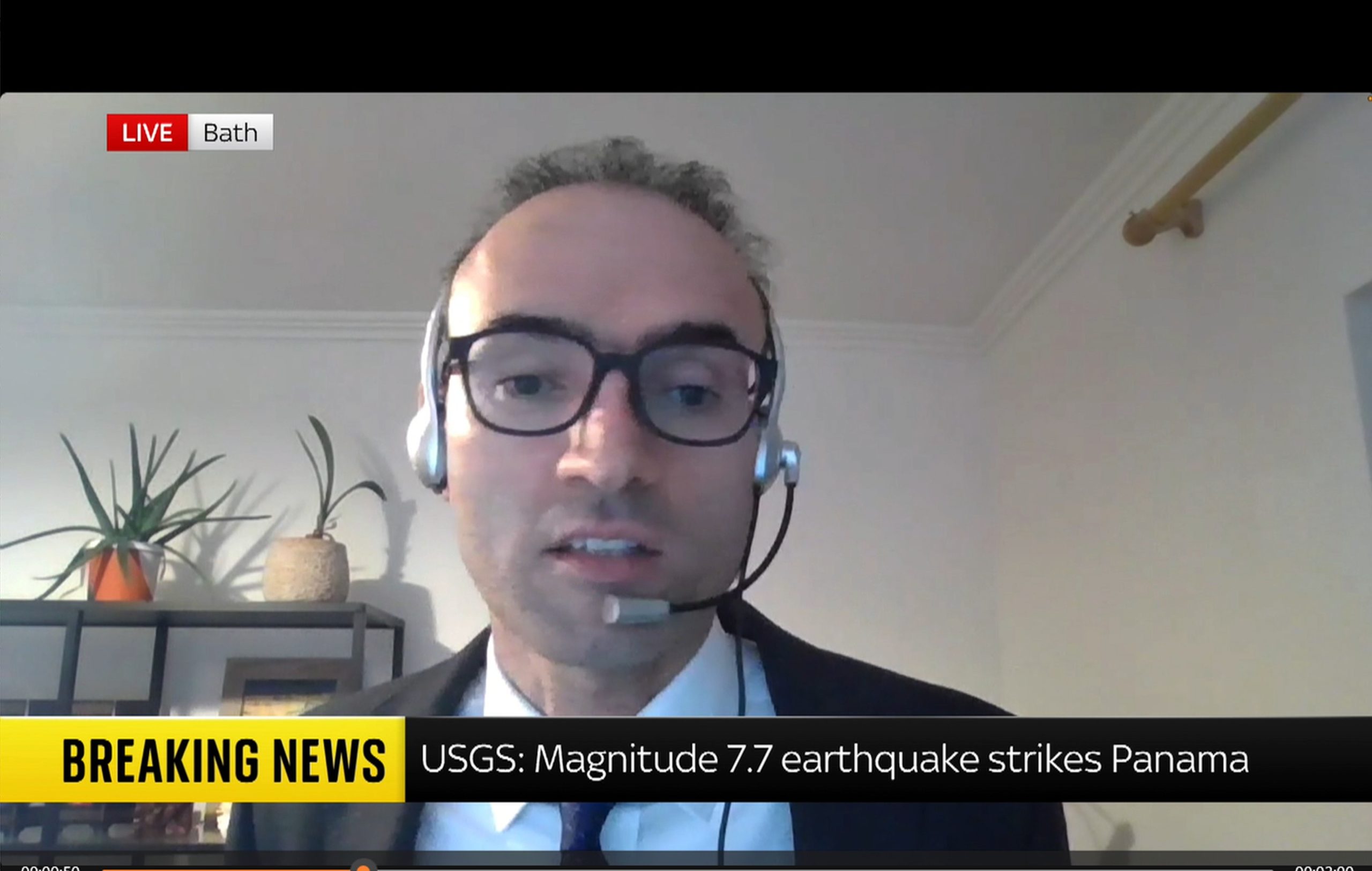
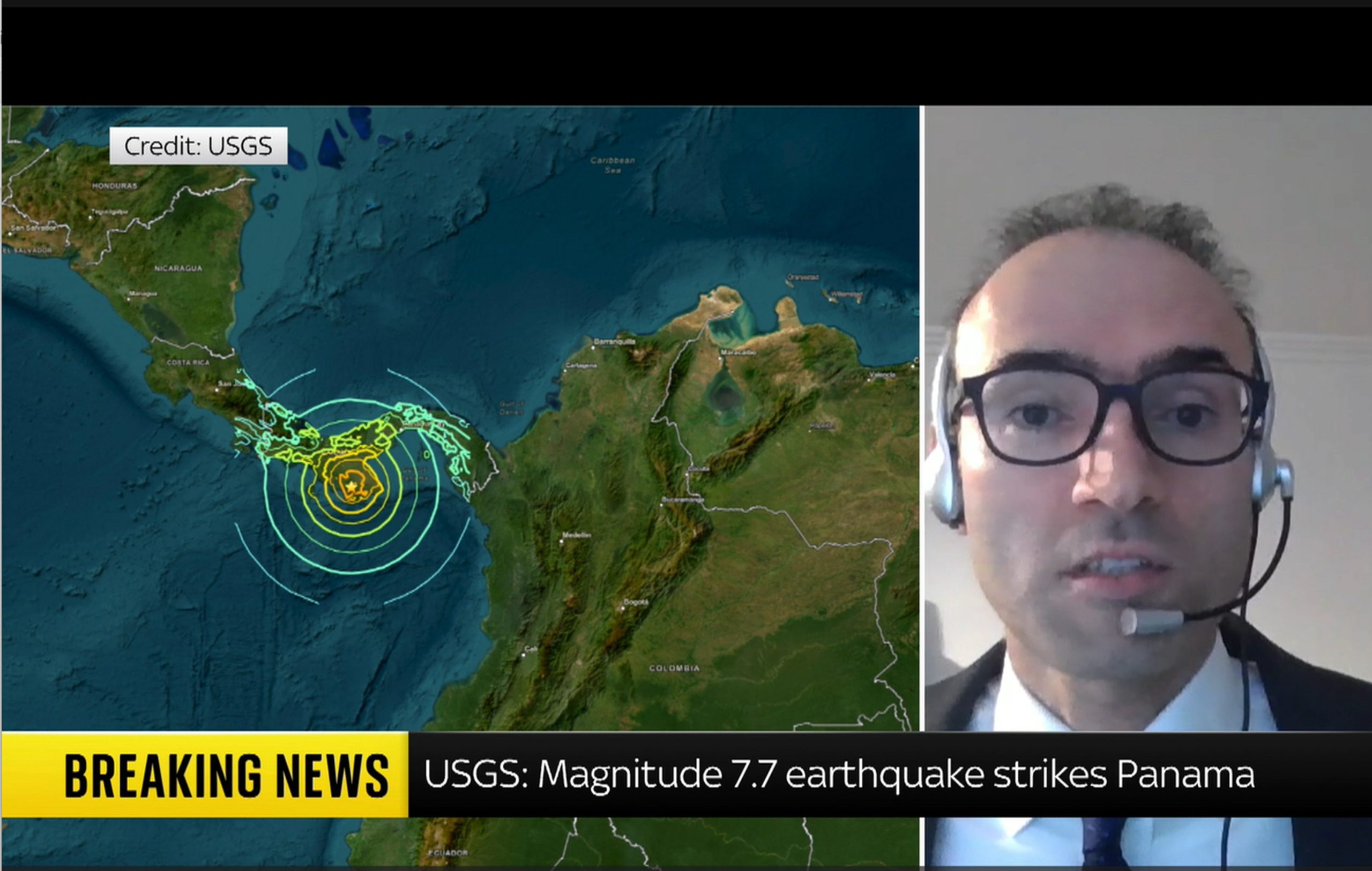
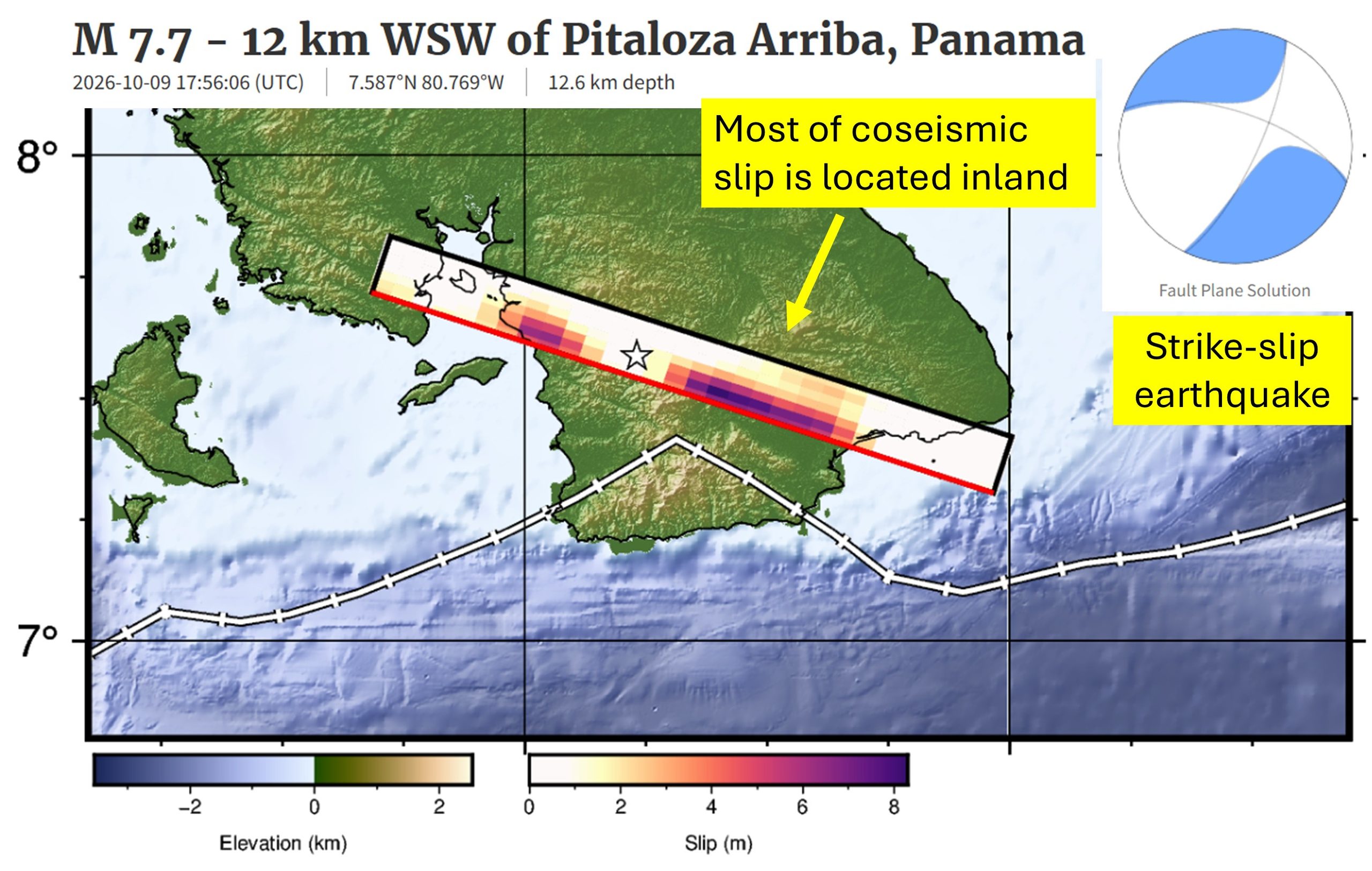
Dr Heidarzadeh’s TV interview with SkyNews on the massive M7.7 Panama earthquake on 9 October 2026
Our ocean is an incredibly vast and mysterious place. And there is no place where that is more evident than the deepest ocean area in the world: the legendary Mariana Trench. Located east of the Philippines, the Mariana Trench lies in the Mariana Archipelago in the western portion of the North Pacific. The greater area of the Mariana Trench Marine National Monument is made up of more than 95,000 square miles of ocean. Beneath these waters lie incredibly complex aggregations of submerged islands and volcanoes … and of course, an astoundingly massive trench.
Dive in with us to have your biggest questions answered about the famed Mariana Trench.
How deep is the Mariana Trench?
The deepest part of the Mariana Trench, known as Challenger Deep, is almost 36,000 feet below the ocean’s surface. For context, Mount Everest is about 29,000 feet above sea level, so the Mariana Trench is about 7,000 feet deeper than Mount Everest is tall. For one more comparison, the RMS Titanic lies at a depth of about 12,500 feet below sea level. The Challenger Deep is in waters nearly three times deeper than this ship’s final resting place.
Due to its enormous size, the Mariana Trench has at times been affectionately nicknamed the Grand Canyon of the ocean. This is certainly a picturesque image, but don’t let the mammoth size of this U.S. national terrestrial park fool you into thinking the Mariana Trench matches its size. The trench’s footprint is estimated to be 120 times larger than the Grand Canyon’s, and to reach the bottom of Challenger Deep, you’d need to descend through almost six Grand Canyons stacked on top of each other before you’d reach the seafloor.
Oh … and did we mention it’s five times wider than it is deep? It’s about 43 miles wide!
What is Challenger Deep, and how long would it take to reach it?
Challenger Deep is the deepest point of the Mariana Trench. Fewer than 30 people have ever journeyed to this area. The trek below the surface is long, dark and time-consuming, and it’s not an expedition considered lightly by scientists and explorers.
The first people to descend into the depths of this area in 1960 were oceanographers Jacques Piccard and Don Walsh, and it took them close to five hours to reach Challenger Deep. Since then, more advanced submersibles have been created, but it still takes two to four hours for modern vessels to reach such depths. For example, explorer and filmmaker James Cameron reached the seafloor in a little more than 2.5 hours in the first documented solo submarine dive to the area, and it took oceanographer Dr. Dawn Wright about four hours in 2022. It is crucial that these submersibles descend slowly and steadily beneath the surface, as the immense water pressure compounds with every mile a submersible descends. Speaking of pressure …
Get Ocean Updates in Your Inbox
Sign up with your email and never miss an update.
What is the water pressure at the bottom of the Mariana Trench?
If you thought the depth of the Mariana Trench was its only jaw-dropping feature, think again. Water pressure is one of the most important factors affecting deep-sea life. In the ocean, pressure increases by one atmosphere for every 33 feet (10 meters) of depth. One atmosphere (a unit of measurement for pressure equivalent to average air pressure at sea level) is equal to about 14.7 pounds per square inch (PSI), which is the approximate standard atmospheric pressure at sea level. If you were to convert atmospheric pressure into weight, one atmosphere is about the weight of a bowling ball. Stay with me, friends.
If a vessel were to dive 2,000 feet below the surface, the pressure would equal that of 60 bowling balls stacked atop every square inch of that submersible. But 60 bowling balls is simply nothing compared to the pressure in the Mariana Trench. The atmospheric pressure at the depths of Challenger Deep is equal to about 16,000 PSI. That pressure is about the same as the weight of an entire full-grown elephant on every square inch of a submersible!
Need a more extreme comparison? If a human were to be placed at the bottom of the Mariana Trench, the pressure would be equal to that of 50 jumbo jets piled on top of a person!
Do any animals live in the Mariana Trench?
The depths of the Mariana Trench come with immense pressure and extreme darkness, but somehow, life finds a way to survive. Organisms that live at an extreme depth, like that of Challenger Deep, have to be highly adapted to low temperatures (typically just above freezing), high pressure and virtually no light at all.
Species found in the depths of the Mariana Trench might look vastly different from animals from other ocean depths because their anatomy has been refined to thrive in harsh conditions. At such great depths, these animals typically depend on chemosynthesis (using nutrient-rich waters being pumped out of hydrothermal vents) or descending detritus (dead matter that has fallen from higher parts of the ocean) for food, such as whale falls. Just a handful of these animals include species of octopuses and squids, sea cucumbers, amphipods, sea jellies, shrimp, sea worms and some wild-looking fish!
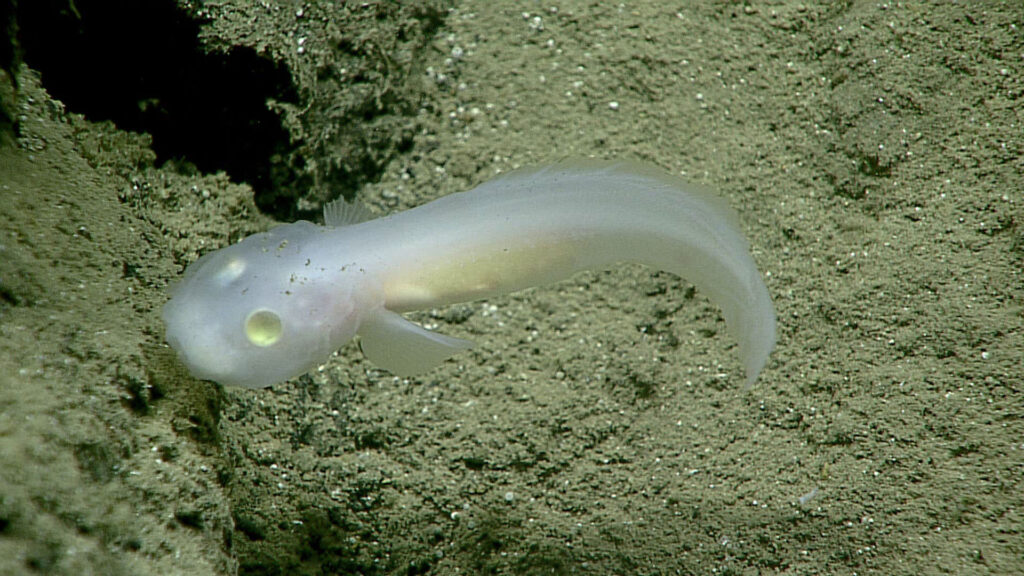
In 2025, more than 7,000 new species were discovered in the Mariana Trench, including the hadal snailfish (Pseudoliparis swirei). This is the deepest-dwelling fish currently known to science. Now, the fish has been dubbed “the Mariana snailfish.”
How was the Mariana Trench formed?
The process by which the Mariana Trench was created is a geologically fascinating one known as subduction. On the Earth’s surface, there are thin plates that cover the planet’s mantle, which is made of molten rock. If two of these plates collide, one pushes down into the Earth’s mantle while the other is pushed over the bottom plate. When this happens, a trench is formed from the drag of the bottom plate. This process can sometimes create incredibly strong earthquakes. The plates that forged the Mariana Trench’s creation are estimated to be up to approximately 180 million years old.
This trench was unknown to scientists until 1875. It was then that a team of explorers on the HMS Challenger measured the depth of the sea by simply lowering a weighted rope into the water. They were baffled when they measured that first portion of the seafloor to be five miles below the surface. And so was born the origin of some of the most daring deep-sea explorations known to mankind to date.
Is the Mariana Trench protected?
The Mariana Trench is in waters off Guam and the Mariana Islands. The region is protected from some human activities under its status as a marine monument. The creation of the Mariana Trench Marine National Monument signified that international, national and local leaders all recognize the importance of protecting this area.
However, just because the region is protected does not mean it’s not vulnerable to modern threats to ocean health. Plastic bags have been spotted in the Mariana Trench during several expeditions, highlighting the far-reaching impact of the marine debris problem. No corner of our ocean is safe from the ever-present threat of plastic pollution. The reality of a changing climate makes the future well-being of wondrous places like the Mariana Trench uncertain. What’s more: More than 70% of the global ocean has yet to be mapped. And what we don’t yet know about, we cannot wisely work to protect.
It’s up to us to work together to defend our ocean, from the sandy shores of our favorite beaches to the deepest, darkest parts of the sea. Together, we can work to protect our ocean as a whole, which ultimately helps protect treasured places like Challenger Deep.
Find out how you can join Ocean Conservancy’s wave of momentum to secure a healthy ocean and a thriving planet, forever and for everyone!
The post The Mysteries of the Mariana Trench appeared first on Ocean Conservancy.