

Vestas Buys TPI Assets, GE Supply Chain in Doubt
Allen, Joel, Rosemary, and Yolanda break down the TPI Composites bankruptcy fallout. Vestas is acquiring TPI’s Mexico and India operations while a UAE company picks up the Turkish factories. That leaves GE in a tough spot with no clear path to blade manufacturing. Plus the crew discusses blade scarcity, FSA availability floors, and whether a new blade manufacturer could emerge.
Sign up now for Uptime Tech News, our weekly email update on all things wind technology. This episode is sponsored by Weather Guard Lightning Tech. Learn more about Weather Guard’s StrikeTape Wind Turbine LPS retrofit. Follow the show on Facebook, YouTube, Twitter, Linkedin and visit Weather Guard on the web. And subscribe to Rosemary Barnes’ YouTube channel here. Have a question we can answer on the show? Email us!
Allen Hall: [00:00:00] Welcome to the Uptime Wind Energy Podcast. I’m your host, Allen Hall. I’ve got Yolanda Padron and Joel Saxum in Texas. And Rosemary Barnes is back from her long Vacation in Australia and TPI. Composites is big in the news this week, everybody, because they’re in bankruptcy hearings and they are selling off parts of the business.
Vestas is, at least according to News Reports positioned to acquire. A couple of the LLCs down in Mexico. So there’s uh, two of them, TPI in Mexico, five LLC, and TPI in Mexico, six LLC. There are other LLCs, of course involved with this down in Mexico. So they’re buying, not sure exactly what the assets are, but probably a couple of the factories in which their blades were being manufactured in.
Uh, this. Is occurring because Vestas stepped in. They were trying to have an auction and Vestas stepped forward and just ended up buying these two LLCs. [00:01:00] Other things that are happening here, Joel, is that, uh, TPI evidently sold their Turkish division. Do you recall to who they sold? That, uh, part of the
Joel Saxum: business too, two companies involved in that, that were TPI Turkey, uh, and that was bought by a company called XCS composites.
Uh, and they are out of the United Arab Emirates, so I believe they’re either going to be Abu Dhabi or Dubai based. Uh, but they took over the tube wind blade manufacturing plants in Isme, uh, also a field service and inspection repair business. And around 2,700 employees, uh, from the Turkish operation. So that happened just, just after, I mean, it was a couple weeks after the bankruptcy claim, uh, went through here in August, uh, in the States.
So it went August bankruptcy for TPI, September, all the Turkish operations were bought and now we’ve got Vestas swooping in and uh, taking a bunch of the Mexican operations.
Allen Hall: Right. And [00:02:00] Vestas is also taking TPI composites India. Which is a part of the business that is not in bankruptcy, uh, that’s a, a separate business, a separate, basically LLC incorporation Over in India, the Vestus is going to acquire, so they’re gonna acquire three separate things in this transaction.
The question everybody’s asking today after seeing this Vestus move is, what is GE doing? Because, uh, GE Renova has a lot of blades manufactured by TPI down in Mexico. No word on that. And you would think if, if TPI is auctioning off assets that GE renova would be at the front of the line, but that’s not what we’re hearing on the ground.
Joel Saxum: Yeah, I mean it’s, the interesting part of this thing is for Vestas, TPI was about 35% of their blade capacity for manufacturing in 2024. If their 30, if, if Vestas was 35%, then GE had to be 50%. There [00:03:00] demand 60. So Vesta is making a really smart move here by basically saying, uh, we’ve gotta lock down our supply chain for blades.
We gotta do something. So we need to do this. GE is gonna be the odd man out because, I mean, I think it would be a, a cold day in Denmark if Vestas was gonna manufacture blades for ge.
Allen Hall: Will the sale price that Vest has paid for this asset show up in the bankruptcy? Hearings or disclosures? I think that it would, I haven’t seen it yet, but eventually it’ll, it must show up, right?
All, all the bankruptcy hearings and transactions are, they have an overseer essentially, what happens to, so TPI can’t purchase or sell anything without an, um, getting approved by the courts, so that’ll eventually be disclosed. Uh, the Turkish sale will be, I would assume, would be disclosed. Also really curious to see what the asset value.
Was for those factories.
Joel Saxum: So the Turkish sale is actually public knowledge right now, and [00:04:00] that is, lemme get the number here to make sure I get it right. 92.9 million Euros. Uh, but of, of course TPI laden with a bunch of non-convertible and convertible debt. So a ton of that money went right down to debt.
Uh, but to be able to purchase that. They had to assu, uh, XCS composites in Turkey, had to assume debt as is, uh, under the bankruptcy kind of proceedings. So I would assume that Vestas is gonna have to do the same thing, is assume the debt as is to take these assets over and, uh, and assets. We don’t know what it is yet.
We don’t know if it’s employees, if it’s operations, if it’s ip, if it’s just factories. We don’t know what’s all involved in it. Um, but like you said, because. TPI being a publicly traded company in the United States, they have to file all this stuff with SEC.
Allen Hall: Well, they’ll, they’re be delisted off of. Was it, they were
Joel Saxum: in Nasdaq?
Is that where they were listed? The India stuff that could be private. You may ne we may not ever hear about what happened. Valuation there.
Allen Hall: Okay, so what is the, the [00:05:00] future then for wind blade production? ’cause TPI was doing a substantial part of it for the world. I mean, outside of China, it’s TPI. And LM a little bit, right?
LM didn’t have the capacity, I don’t think TPI that TPI does or did. It puts
Joel Saxum: specifically GE in a tight spot, right? Because GEs, most of their blades were if it was built to spec or built to print. Built to spec was designed, uh, by LM and built by lm. But now LM as we have seen in the past months year, has basically relinquished themselves of all of their good engineering, uh, and ability to iterate going forward.
So that’s kind of like dwindling to an end. TPI also a big side of who makes blades for ge if Vestas is gonna own the majority of their capacity, Vestas isn’t gonna make blades for ge. So GEs going to be looking at what can we, what can we still build with lm? And then you have the kind of the, the odd ducks there.
You have the Aris, [00:06:00] you have the MFG, um, I mean Sonoma is out there. This XCS factory is there still in Turkey. Um, you may see some new players pop up. Uh, I don’t know. Um, we’ll see. I mean, uh, Rosemary, what’s, what’s your take? Uh, you guys are starting to really ramp up down in Australia right now and are gonna be in the need of blades in general with this kind of shakeup.
Rosemary Barnes: What do we say? My main concern is. Around the service of the blades that we’ve already got. Um, and when I talk to people that I know at LM or XLM, my understanding is that those parts of the organization are still mostly intact. So I actually don’t expect any big changes there. Not to say that the status quo.
Good enough. It’s not like, like every single OEM whose, um, FSAs that I work with, uh, support is never good enough. But, um, [00:07:00] it shouldn’t get any worse anyway. And then for upcoming projects, yeah, I, I don’t know. I mean, I guess it’s gonna be on a case by case basis. Uh, I mean, it always was when you got a new, a new project, you need a whole bunch of blades.
It was always a matter of figuring out which factory they were going to come from and if they had capacity. It’ll be the same. It’s just that then instead of, you know, half a dozen factories to choose from, there’s like, what, like one or two. So, um, yeah, I, that’s, that’s my expectation of what’s gonna happen.
I presumably ge aren’t selling turbines that they have no capability to make blades for. Um, so I, I guess they’re just gonna have a lot less sales. That’s the only real way I can make it work.
Allen Hall: GE has never run a Blade factory by themselves. They’ve always had LM or somebody do it, uh, down in Brazil or TPI in Mexico or wherever.
Uh, are we thinking that GE Renova is not gonna run a Blade Factory? Is that the thought, or, or is [00:08:00] that’s not in the cards either.
Rosemary Barnes: I don’t think it’s that easy to just, just start running a Blade Factory. I mean, I know that GE had blade design capabilities. I used to design the blades that TPI would make.
So, um, that part of it. Sure. Um, they can, they can still do that, but it’s not, yeah, it’s, it’s not like you just buy a Blade factory and like press start on the factory and then the, you know, production line just starts off and blades come out the other end. Like there is a lot of a, a lot of knowhow needed if that was something that they wanted to do.
That should have been what they started doing from day one after they bought lm. You know, that was the opportunity that they had to become, you know, a Blade factory owner. They could have started to, you know, make, um, have GE. Take up full ownership of the, the blade factories and how that all worked. But instead, they kept on operating like pretty autonomously without that many [00:09:00] changes at the factory level.
Like if they were to now say, oh, you know, hey, it’s, uh, we really want to. Have our own blade factories and make blades. It’s just like, what the hell were you doing for the last, was it like seven years or something? Like you, you could easily have done what? And now you haven’t made it as hard for yourselves as possible.
So like I’m not ruling out that that’s what they’re gonna try and do, because like I said, I don’t think it’s been like executed well, but. My God, it’s like even stupid of the whole situation. If that’s where we end up with them now scrambling to build from scratch blade, um, manufacturing capability because there’s
Yolanda Padron: already a blade scarcity, right?
Like at least in the us I don’t know if you guys are seeing it in, in Australia as well, but there’s a blade scarcity for these GE blades, right? So you’re, they kind of put themselves in an even more tough spot by just now. You, you don’t have access to a lot of these TPI factories written in theory. From what we’re seeing.
You mean to get like replacement blades? Yeah. So like for, for issues? Yeah. New [00:10:00] construction issues under FSA, that,
Rosemary Barnes: yeah. I mean, we’ve always waited a, a long time for new blades. Like it’s never great. If you need a new blade, you’re always gonna be waiting six months, maybe 12 months. So that’s always been the case, but now we are seeing delays of that.
Maybe, maybe sometimes longer, but also it’s like, oh well. We can’t replace, like, for like, you’re gonna be getting a, a different kind of blade. Um, that will work. Um, but you know, so that is fine, except for that, that means you can’t do a single blade replacement anymore. Now, what should have been a single blade replacement might be a full set replacement.
And so it does start to really, um, yeah. Mess things up and like, yeah, it’s covered by the FSA, like that’s on them to buy the three blades instead of one, but. It does matter because, you know, if they’re losing money on, um, managing your wind farm, then it, it is gonna lead to worse outcomes for you because, you know, they’re gonna have to skimp and scrape where they [00:11:00] can to, you know, like, um, minimize their losses.
So I, I don’t think it’s, it’s, it’s
Yolanda Padron: not great. Yeah. And if you’re running a wind farm, you have other stakeholders too, right? It’s not like you’re running it just for yourself. So having all that downtime from towers down for a year. Because you can’t get blades on your site. Like it’s just really not great.
Rosemary Barnes: Yeah, and I mean, there’s flaws on there. Like they’ve got an availability guarantee. Then, you know, below that they do have to, um, pay for that, those losses. But there’s a flaw on that. So once you know, you, you blast through the floor of your availability, then you know, that is on the owner. Now it’s not on the, um, service provider.
So it’s definitely. Something that, yeah, there’s lots of things where you might think, oh, I don’t have to worry about my blades ’cause I’ve got an F, SA, but you know, that’s just one example where, okay, you will, you will start worrying if they, they yeah. Fall through the floor of their availability guarantee.
Joel Saxum: Two questions that pop up in my mind from this one, the first one, the first one is [00:12:00] directly from Alan. You and I did a webinar, we do so many of ’em yesterday, and it was about, it was in the nor in North America, ferc, so. They have new icing readiness, uh, reporting you, so, so basically like if you’re on the, if you’re connected to the grid, you’re a wind farm or solar farm and you have an icing event, you need to explain to them why you had an outage, um, and why, what you’re doing about it.
Or if you’re not doing something about it, you have to justify it. You have to do all these things to say. Hey, some electrons weren’t flowing into the grid. There’s certain levels. It’s much more complicated than this, but electrons weren’t flowing into the grid because of an issue. We now have to report to FERC about this.
So is there a stage when a FERC or uh, some other regulatory agency starts stepping into the wind industry saying like, someone’s gotta secure a supply chain here. ’cause they’re already looking at things when electrons are on the grid. Someone’s got a secure supply chain here so we can ensure that [00:13:00]these electrons are gonna get on the grid.
Could, can something like that happen or was, I mean, I mean, of course that’s, to me, in my opinion, that’s a lot of governmental overreach, but could we see that start to come down the line like, Hey, we see from an agency’s perspective, we see some problems here. What are you doing to shore this up?
Allen Hall: Oh, totally.
Right. I, I think the industry in general has an issue. This is not an OEM specific problem. At the minute, if this is a industry-wide problem, there seems to be more dispersed. Manufacturers are gonna be popping up. And when we were in Scotland, uh, we learned a lot more about that. Right, Joel? So the industry has more diversification.
I, I, here’s, here’s my concern at the minute, so. For all these blade manufacturers that we would otherwise know off the top of our heads. Right. Uh, lm, TPI, uh, Aris down in Brazil. The Vestus manufacturing facilities, the Siemens manufacturing [00:14:00] facilities. Right. You, you’re, you’re in this place where. You know, everybody’s kind of connected up the chain, uh, to a large OEM and all this made sense.
You know, who was rebuilding your blades next year and the year down, two years down the road. Today you don’t, so you don’t know who owns that company. You don’t know how the manager’s gonna respond. Are you negotiating with a company that you can trust’s? Gonna be there in two or three years because you may have to wait that long to get blades delivered.
I don’t know. I think that it, it put a lot of investment, uh, companies in a real quandary of whether they wanna proceed or not based upon the, what they is, what they would perceive to be the stability of these blade companies. That’s what I would think. I, I, Vestas is probably the best suited at the minute, besides Siemens.
You know, Vestas is probably best suited to have the most perceived reliability capability. Control,
Joel Saxum: but they have their own [00:15:00] blade factories already, right? So if they buy the TPI ones, they’re just kind of like they can do some copy pasting to get the the things in place. And to be honest with you, Vesta right now makes the best blades out there, in my opinion, least amount of serial defects.
Remove one, remove one big issue from the last couple
Allen Hall: years. But I think all the OEMs have problems. It’s a question of how widely known those problems are. I, I don’t think it’s that. I think the, the, the. When you talk to operators and, and they do a lot of shopping on wind turbines, what they’ll tell you generally is vestus is about somewhere around 20% higher in terms of cost to purchase a turbine from them.
And Vestus is gonna put on a, a full service agreement of some sort that’s gonna run roughly 30 years. So there’s a lot of overhead that comes with buying a, a Vestas turbine. Yes. You, you get the quality. Yes. You get the name. Yes, you get the full service agreement, which you may or [00:16:00] may not really want over time.
Uh, that’s a huge decision. But as pieces are being removed from the board of what you can possibly do, there’s it, it’s getting narrow or narrow by the minute. So it, it’s either a vestus in, in today’s world, like right today, I think we should talk about this, but it’s either Vestus or Nordic. Those are the two that are being decided upon.
Mostly by a lot of the operators today.
Joel Saxum: That’s true. We’re, and we just saw Nordex, just inked a one gigawatt deal with Alliant Energy, uh, just last week. And that’s new because Alliant has traditionally been a GE buyer. Right. They have five or six ge, two X wind farms in the, in the middle of the United States, and now they’ve secured a deal with Nordex for a gigawatt.
Same thing we saw up at Hydro Quebec. Right. Vestas and Nordex are the only ones that qualify for that big, and that’s supposed to be like a 10 gigawatt tender over time. Right. But the, so it brings me to my, I guess my other question, I was thinking about this be [00:17:00] after the FERC thing was, does do, will we see a new blade manufacturer
Allen Hall: pop
Joel Saxum: up?
Allen Hall: No, I don’t think you see a new one. I think you see an acquisition, uh, a transfer of assets to somebody else to run it, but that is really insecure. I, I always think when you’re buying distressed assets and you think you’re gonna run it better than the next guy that. Is rare in industry to do that. Think about the times you’ve seen that happen and it doesn’t work out probably more than 75% of the time.
It doesn’t work out. It lasts a year or two or three, and they had the same problems they had when the original company was there. You got the same people inside the same building, building the same product, what do you think is magically gonna change? Right? You have this culture problem or a a already established culture, you’re not likely to change that unless you’re willing to fire, you know, a third of the staff to, to make changes.
I don’t see anybody here doing that at the minute because. Finding wind blade technicians, manufacturing people is [00:18:00] extremely hard to do, to find people that are qualified. So you don’t wanna lose them.
Joel Saxum: So this is why I say, this is why I pose the question, because in my mind, in in recent wind history, the perfect storm for a new blade manufacturer is happening right now.
And the, and the why I say this is there is good engineers on the streets available. Now washing them of their old bad habits and the cultures and those things, that’s a monumental task. That’s not possible.
Allen Hall: Rosemary worked at a large blade manufacturer and it has a culture to it. That culture really didn’t change even after they were acquired by a large OEM.
The culture basically
Rosemary Barnes: remained, they bizarrely didn’t try and change that culture, like they didn’t try to make it a GE company so that it wasn’t dur, it was wasn’t durable. You know, they, they could have. Used that as a shortcut to gaining, um, blade manufacturing capabilities and they didn’t. And that was a, I think it was a choice.
I don’t think it’s an inevitability. It’s never easy to go in and change a, a culture, [00:19:00] but it is possible to at least, you know, get parts of it. Um, the, the knowledge should, you should be able to transfer and then get rid of the old culture once you’ve done that, you know, like, uh. Yeah, like you, you bring it in and suck out all the good stuff and spit out the rest.
They didn’t do that.
Joel Saxum: The opportunity here is, is that you’ve got a, you’ve got people, there’s gonna be a shortage of blade capacity, right? So if you are, if you are going to start up a blade manufacturing facility, you, if you’re clever enough, you may be able to get the backlog of a bunch of orders to get running without having to try to figure it out as you go.
Yolanda Padron: I feel like I’d almost make the case that like the blade repair versus replace gap or the business cases is getting larger and larger now, right? So I feel like there’s more of a market for like some sort of holistic maintenance team to come in and say, Hey, I know this OEM hasn’t been taking care of your blades really well, but here are these retrofits that have proven to be [00:20:00]to work on your blades and solve these issues and we’ll get you up and running.
Rosemary Barnes: We are seeing more and more of of that. The thing that makes it hard for that to be a really great solution is that they don’t have the information that they need. They have to reverse engineer everything, and that is. Very challenging because like you can reverse engineer what a blade is, but it doesn’t mean that, you know, um, exactly like, because a, the blade that you end up with is not an optimized blade in every location, right?
There’s some parts that are overbuilt and um, sometimes some parts that are underbuilt, which gives you, um, you know, serial issues. But, so reverse engineering isn’t necessarily gonna make it safe, and so that does mean that yeah, like anyone coming in with a really big, significant repair that doesn’t go through the OEM, it’s a, it’s a risk.
It, it’s always a risk that they have, you know, like there’s certain repairs where you can reverse engineer enough to know that you’re safe. But any really big [00:21:00] one, um, or anything that involves multiple components, um, is. Is a bit of a gamble if it doesn’t go through the OEM.
Joel Saxum: No, but so between, I guess between the comments there, Yolanda and Rosemary, are we then entering the the golden age of opportunity for in independent engineering experts?
Rosemary Barnes: I believe so. I’m staking, staking my whole business on it.
Allen Hall: I think you have to be careful here, everybody, because the problem is gonna be Chinese blade manufacturers. If you wanna try to establish yourself as a blade manufacturer and you’re taking an existing factory, say, say you bought a TPI factory in Turkey or somewhere, and you thought, okay, I, I know how to do this better than everybody else.
That could be totally true. However, the OEMs are not committed to buying blades from you and your competition isn’t the Blade Factory in Denmark or in Colorado or North Dakota, or in Mexico or Canada, Spain, wherever your competition is when, [00:22:00] uh, the OEM says, I can buy these blades for 20 to 30% less money in China, and that’s what you’re gonna be held as, as a standard.
That is what’s gonna kill most of these things with a 25% tariff on top. Right? Exactly. But still they’re still bringing
Joel Saxum: blades in. That’s why I’m saying a local blade manufacturer,
Rosemary Barnes: I think it’s less the case. That everyone thinks about China, although maybe a little bit unconventional opinion a about China, they certainly can manufacture blades with, uh, as good a quality as anyone.
I mean, obviously all of the, um, Danish, uh, American manufacturers have factories in China that are putting out excellent quality blades. So I’m not trying to say that they dunno how to make a good blade, but with their. New designs, you know, and the really cheap ones. There’s a couple of, um, there’s a couple of reasons for that that mean that I don’t think that it just slots really well into just replacing all of the rest of the world’s, um, wind turbines.
The first is that there are a lot of [00:23:00] subsidies in China. Surely there can only continue so long as their economy is strong. You know, like if their economy slows down, like to what extent are they gonna be able to continue to, um, continue with these subsidies? I would be a little bit nervous about buying an asset that I needed support for the next 30 years from a company like.
That ecosystem. Then the other thing is that, um, that development, they move really fast because they take some shortcuts. There’s no judgment there. In fact, from a develop product development point of view, that is absolutely the best way to move really fast and get to a really good product fast. It will be pervasive all the way through every aspect of it.
Um, non-Chinese companies are just working to a different standard, which slows them down. But also means that along the way, like I would be much happier with a half developed, um, product from a non-Chinese manufacturer than a half developed product from a Chinese manufacturer. The end point, like if China can keep on going long enough with this, [00:24:00] you know, like just really move fast, make bold decisions, learn everything you can.
If they can continue with that long enough to get to a mature product, then absolutely they will just smash the rest of the world to pieces. So for me, it’s a matter of, um, does their economy stay strong enough to support that level of, uh, competition?
Allen Hall: Well, no, that’s a really good take. It’s an engineering take, and I think the decision is made in the procurement offices of the OEMs and when they start looking at the numbers and trying to determine profitability.
That extra 20% savings they can get on blades made in China comes into play quite often. This is why they’re having such a large discussion about Chinese manufacturers coming into the eu. More broadly is the the Vestas and the Siemens CAAs and even the GE Re Novas. No, it’s big time trouble because the cost structure is lower.
It just is, and I. [00:25:00] As much as I would love to see Vestas and Siemens and GE Renova compete on a global stage, they can’t at the moment. That’s evident. I don’t think it’s a great time to be opening any new Blade Factory. If you’re not an already established company, it’s gonna be extremely difficult. Wind Energy O and M Australia is back February 17th and 18th at Melbourne’s Pullman on the park.
Which is a great hotel. We built this year’s agenda directly from the conversations we’ve had in 2025 and tackling serial defects, insurance pressures, blade repairs, and the operational challenges that keeps everybody up at night around the world. So we have two days of technical sessions, interactive roundtables and networking that actually moves the industry for.
Forward. And if you’re interested in attending this, you need to go to WMA 2020 six.com. It’s WOMA 2020 six.com. Rosemary, a lot of, uh, great events gonna happen at. W 2026. Why don’t [00:26:00] you give us a little highlight. Parlet iss gonna be there.
Rosemary Barnes: Parlow is gonna be there. I mean, a highlight for me is always getting together with the, the group.
And also, I mean, I just really love the size of the event that uh, every single person who’s there is interested in the same types of things that you are interested in. So the highlight for me is, uh, the conversations that I don’t know that I’m gonna have yet. So looking forward to that. But we are also.
Making sure that we’ve got a really great program. We’ve got a good mix of Australian speakers and a few people bringing international experience as well. There’s also a few side events that are being organized, like there’s an operators only forum, which unfortunately none of us will be able to enter because we’re not operators, but that is gonna be really great for.
For all of them to be able to get together and talk about issues that they have with no, nobody else in the room. So if, if you are an operator and you’re not aware of that, then get in touch and we’ll pass on your details to make sure you can join. Um, yeah, and people just, you know, [00:27:00] taking the opportunities to catch up with clients, you know, for paddle load.
Most or all of our clients are, are gonna be there. So it is nice to get off Zoom and um, yeah, actually sit face to face and discuss things in person. So definitely encourage everyone to try and arrange those sorts of things while they’re there.
Joel Saxum: You know, one of the things I think is really important about this event is that, uh, we’re, we’re continuing the conversation from last year, but a piece of feedback last year was.
Fantastic job with the conversation and helping people with o and m issues and giving us things we can take back and actually integrate into our operations right away. But then a week or two or three weeks after the event, we had those things, but the conversation stopped. So this year we’re putting some things in place.
One of ’em being like Rosemary was talking about the private operator forum. Where there’s a couple of operators that have actually taken the reins with this thing and they wanna put this, they wanna make this group a thing where they’re want to have quarterly meetings and they want to continue this conversation and knowledge share and boost that whole Australian market in the wind [00:28:00]side up right?
Rising waters floats all boats, and we’re gonna really take that to the next level this year at
Allen Hall: WMA down in Melbourne. That’s why I need a register now at Wilma 2020 six.com because the industry needs solutions. Speeches. That wraps up another episode of the Uptime Wind Energy Podcast. Thanks for joining us.
We appreciate all the feedback and support we received from the wind industry. If today’s discussion sparked any questions or ideas, we’d love to hear from you. Just reach out to us on LinkedIn and please don’t forget to subscribe so you’d never miss an episode. For Joel Rosemary and Yolanda, I’m Allen Hall.
We’ll catch you next week on the Uptime Wind Energy Podcast.

Weather Guard Lightning Tech
China Barred Vestas Software, Ørsted Buys Chinese Monopiles
Vestas CEO Henrik Andersen says China barred Vestas from monitoring its own turbines. Plus Ørsted takes heat for Chinese monopiles, India’s blade design gap, and tents that beat weather delays.
The Uptime Wind Energy Podcast is brought to you by Weather Guard Lightning Tech, creators of the StrikeTape Ultra LPS retrofit. Subscribe to Uptime’s Substack newsletter. And check out Rosemary’s “Engineering with Rosie” Youtube channel. Have a question we can answer on the show? Email us!
 Virtually all top-ranking retired military brass view Trump as shown at left. On top of that, Hegseth has publicly fired all current generals and admirals who are not loyal to Trump, as the entire world watched the purge.
Doesn’t this affect the way the psychopath’s command of our nation is ultimately determined?
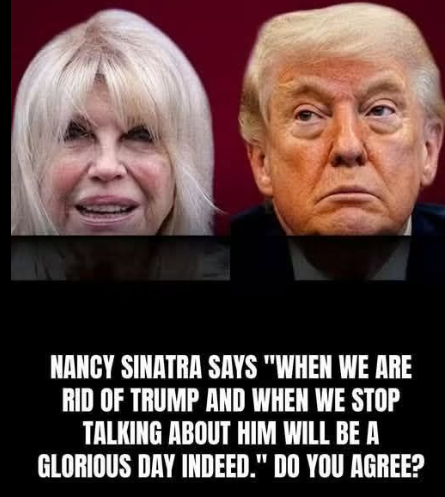 Keep in mind that “removing Trump from office” and “stop talking about Trump” are two different events.
It’s quite possible that a Democrat-controlled congress could remove him from power within the coming months. But think about the damage he’s done to our nation and the path to repair it. Think about the war, the trade deals, the economic policies, our relationships with our allies, the racism, our erstwhile position as leader in world democracy, and the degradation in public health, education, and environmental responsibility.
We’ll be talking about Trump as long as an organized human civilization is functioning on this planet.



