

Quick Key Facts
- Upcycling is the reusing of discarded objects, materials and other waste, for repurposing into something new of higher value and different use.
- Upcycling reduces waste in landfills, where products take forever to break down and emit greenhouse gases while they do. Upcycling plastic in particular also reduces pollution from manufacturing and conserves resources, as it reduces the need for new plastic products.
- Upcycling is more environmentally friendly than recycling, which uses more energy (which means fossil fuels), water and other resources in its processes of breaking down. Recycling also is now found to release large amounts of microplastics into the environment.
- Some things that can be upcycled into other goods are: cardboard, glass, plastic, metal and tin cans, wood, paper, styrofoam and other non-biodegradable packaging, and clothing.
- Upcycling food waste is a process being utilized to create new food and beverage products, as well as others that utilize the oils in wastewater from food processing facilities to make fertilizer, cosmetics, feed and energy, which eliminates the need for wastewater treatment facilities.
- Indirectly, objects that are upcycled help reduce the energy and water needed to manufacture new materials.
- There are companies who are now trying to take care of construction and demolition waste, which amounts to 600 million tons of debris a year with new innovative and functional building design products made with debris.
- Upcycling in the fashion industry is one of its hottest current trends.
What Is Upcycling?
Many of us are familiar with the phrase, “Reduce, Reuse, Recycle” in terms of sustainability, but it’s become apparent that “Reduce, Reuse, and Repurpose” might be a smarter avenue in terms of reducing waste streams.
Right now globally, 2.12 billion tons of waste is dumped annually. Many industries, particularly textiles, contribute not only to microplastic pollution and greenhouse gas emissions, but also poisonous gases in the atmosphere.
Doubling down on not always purchasing new things helps to reduce waste and conserve valuable resources.
Upcycling is the process of using items that might be discarded to create a new use for them, often one with higher value. It’s currently being done in fashion, with household items, plastic waste and other areas with creativity and innovation by households and businesses.
History and Evolution of Upcycling
While the term “upcycle” didn’t make its way onto the scene until the 1990s, the concept could be as ancient as the stone tools that prehistoric humans may have reused for both practical and nostalgic reasons.
During World War II, Britain mandated clothes rationing because many supplies were used to produce war uniforms, and about a quarter of the British population was involved in war efforts. As a response, they created a “Make-Do and Mend” campaign to help citizens creatively figure out ways to make their clothes last longer.

Because supplies were so scarce, it became important to repair, recycle and make clothes from scratch. Women couldn’t buy fabric, and often had to resort to using household textiles like curtains and tablecloths. Sometimes parachute silk was used for underwear, nightgowns and wedding dresses.
In the 50s and 60s, upcycling entered the art scene with avant garde artists that will be discussed below.
When the UK faced a major recession in the 80s and 90s, upcycling or “customizing” became popular again, with many youth upcycling second-hand clothes.
The first mention of the term upcycling appears in a 1994 article in the architecture magazine Salvo, where mechanical engineer Reiner Pilz stated, “I call recycling down-cycling. What we need is up-cycling, thanks to which old products are given a higher, not a lower, value.”
The word upcycling then emerged and became popular in 1998 in Gunter Pauli’s book Upcycling: The Road to Zero Emissions, More Jobs, More Income and No Pollution.
Now upcycling is emerging through the lens of climate change, and with concern for how waste impacts the natural environment.
While many are creating an industry around it globally in developed nations, some are introducing it as an industry in developing nations.
Upcycling and the Environment
Upcycling has a number of positive direct and indirect environmental impacts.
First and Foremost, Upcycling Reduces What Ends up in Landfills

According to the U.S. Environmental Protection Agency (EPA), 292 million tons of municipal solid waste was generated in 2018. Of this total only 94 million tons was recycled, 25 million tons was composted, and another 17 million tons of food was managed with other methods.
That still leaves a whopping 152 million tons of waste in the landfills generating greenhouse gases as they slowly break down, and increasing plastic pollution in the environment.
Upcycling Reduces the Extraction of Natural Resources
When you upcycle, you reduce the need to extract raw materials like steel, oil, lumber, forest resources, plastic, natural gas, coal and minerals to create something new. It also reduces the need for synthetic materials which are made from petrochemicals and not readily biodegradable.
It also helps you reduce water use. Textiles and garments alone are the second most water-consuming industry, with every process of manufacturing dependent on it from dyes, specialty chemicals and washing and rinsing.
Upcycling Lowers Carbon Emissions, Because of Less Manufacturing
According to the EPA, in 2019 the industry sector produced 23% of carbon emissions in the processing of raw materials into a finished product.
While recycling is better than going to the landfill, and it produces less greenhouse gas emissions than manufacturing of new materials, it still produces carbon emissions.
Upcycling and the Fashion Industry
Fashion, particularly fast fashion, is one of the largest issues of pollution in landfills.
Globally, about 85% of clothes ends up in landfills or burned. Many of these clothes are not recyclable in the first place, since plastic and synthetic fibers like polyester, nylon and acrylics are made from crude oil, which makes them impossible to reuse in other ways.

An estimated 13 million tons of textile waste a year comes from the manufacturers themselves, as well as retailers with the fashion industry contributing roughly 10% of all global carbon emissions and with plastic fibers in the clothes contributing to microplastic pollution.
Currently, there is a rise in the Zero Waste Fashion sector, with upcycling fashion brands emerging, many of them luxury brands.
In Asia, Cambodian company Tonlé sifts through leftover fabrics from large garment factories, using larger pieces to make new clothes, and smaller pieces for spinning into yarn for new designs. In Hong Kong, the brand Heritage ReFashioned makes luxury handbags with upcycled vintage textiles from China, Japan and Southeast Asia. Their mission is to turn forgotten textiles, like Japanese Kimono silk, into something more valuable.
In New York, Zero Waste Daniel by Daniel Silverstein uses fabric scraps to make custom clothing lines that look like mosaics. Zero Waste Daniel also has a buy back program.
RE/DONE is an online luxury label that features pieces made with reconstructed vintage sweaters, sweatshirts and denim.

Founded by surfer Kelly Slater, the brand Outerknown has a selection of upcycled items that involve upcycled cotton, recycled polyester and other materials. Their other clothing is Blue-sign certified, which means no harmful chemicals are used in its manufacturing process.
There are other more established brands doing upcycled lines.
Patagonia offers ReCrafted, which is clothing made exclusively from Patagonia products that have been brought back to the company through its Worn Wear Program.
Denim brands like Levi’s and Madewell allow customers to return old jeans so that the company can give them new life as something different. Denim collected by Madewell is upcycled into insulation for construction. Levi’s also offers instructions on how to repurpose their denim.
Coach also has (Re)Loved, an initiative in which consumers can shop pre-used Coach bags or even trade in their used bags so that they can be remade into a new design.
Upcycling and Art

In the early 1900s, French artist Marcel Duchamps coined the term “found art” or “ready-mades” where he created art from what was considered trash and other discarded items. This was later adopted widely by other artists in the Dada movement, a European avant-garde movement that emerged during World War I and would eventually give way to the Junk Art Movement of the 1950s.
Artist Robert Rauschenberg was a popular artist on that scene and was best known for making hybrid painting-sculptures he called “combines” out of litter from New York’s city streets – lightbulbs, chairs, tires, umbrellas, street signs and cardboard boxes.

In the 1960s, Franco-American artist Arman created a series called “Accumulations,” where he aggregated trash in airtight glass boxes to comment on a society in which everything seems disposable after a single use.
Contemporary artists have also employed other methods now to comment on the waste crisis through art, like Brazillian artist Vik Muniz, whose artistic project Waste Land used the trash from the world’s largest landfill in Rio to create pieces of art that featured renderings of the garbage pickers, with the goal to sell and donate all the proceeds back to them.
In the end he was able to raise $250,000 that went to the Association of Recycling Pickers of Jardim Gramacho to build houses and improve infrastructure.
Currently the upcycled art movement seeks to specifically help eliminate waste while creating art. One artist, Wim Delvoye, does an intricate carving of tires.
In Canada, artist Angie Quintilla Coates makes reclaimed art pieces like vases and lamp bases out of old plastic shampoo bottles, laundry detergent containers, mouthwash bottles and other items.

Upcycling Food Waste
About 1.3 billion tons of food is wasted annually, with food waste in landfills being one of the leading contributors of greenhouse gases. Upcycling food is one way to help reduce this waste stream.
The Upcycled Food Association (UFA) defines upcycled foods as those that “use ingredients that otherwise would not have gone to human consumption, are procured and produced using verifiable supply chains, and have a positive impact on the environment.”
Many companies use imperfect fruits and vegetables that wouldn’t be sold to market as they are, or to create other products like soups, sauces and chutneys. There are a number of brands now that also utilize it to create new food products like veggie chips and other snack foods in beverages.
There have also been a lot of innovations in upcycling food by using food byproducts left over during production.
Specialty spirit Wheyward Spirit utilizes whey, a liquid byproduct of cheese production.
The Supplant Company is creating sugars from fiber and upcycles the fiber-rich structural plant parts from agricultural side streams, such as straw and stalks, as well as cobs of corn, wheat and rice.
They claim it has the same texture and taste as cane sugar in baked goods and other treats. Since the ingredient is made from fiber, it retains certain beneficial fiber-based qualities: it is lower in calories, has a lower glycemic response and is a prebiotic.
The company Take Two makes upcycled barley milk, which is the first plant milk to utilize spent grain, of which over eight billion pounds is wasted annually from beer brewing processes.
Other companies are also creating new products while addressing socio-economic problems.
Australian company Aqua Botanical is working to create drinking water to combat water scarcity, by extracting, filtering and mineralizing the water used from the production of juice concentrate.
In West Africa, Sweet Benin is a company creating cashew apple juice. Only 10 percent of the nearly 280 million pounds of cashew apples are processed in Benin every year, contributing to massive amounts of food waste. In 2018, the company produced 180,000 bottles of cashew apple juice and is working to help cashew farmers supplement their off-season income.
There are many others.
A 2021 study published in Food and Nutrition Sciences revealed that only 10% of consumers are familiar with upcycled food products, but once educated about them, 80% say that they would seek them out.
Upcycling and Architecture

The construction industry accounts for nearly 40% of waste generated globally with an estimated 35% ending up in landfills. It consists of a variety of rejected debris, including concrete, wood, bricks, glass and steel. In 2018, according to the EPA, the U.S. alone created 600 million tons of waste in this sector.
As many seek to be more sustainable, upcycling has also been making its way into architecture through creativity and innovation.
In Las Rasas, Madrid, eco-fashion pioneer Ecoalf and tech design studio Nagami created their Net Zero, Zero waste boutique by 3-D printing the interior with plastics, repurposing more than 33 tons of it. Every wall, shelf and display table inside the store is also made from recycled plastics.
The Sint Oelbert gymnasium school designed by Grosfeld Bekkers van der Velde Architecten is the first permanent structure that utilizes cladding created by Pretty Plastic. Cladding is used on exteriors of buildings to provide thermal insulation and weather resistance, and to improve the appearance of buildings. Pretty Plastic’s shingles use recycled PVC windows and gutters to create products that are wind and waterproof, fire-resistant and capable of withstanding extreme weather conditions.
Scottish start-up Kenoteq has also created the world’s first sustainable bricks. K-Briq are bricks that look and weigh as much as a typical brick and behave like a clay brick in terms of insulation, but are made of 90% construction and demolition waste and emit less than 10% of the carbon emissions of traditional brick production.
The EcoARK, an exhibition hall in Taiwan, is one of the first buildings made with Polli-bricks made from plastic bottles. The Polli-bricks are translucent and have a honeycomb interlocking structure. The building’s Polli-bricks consist of more than 1.5 million plastic bottles.
In 2018, to align with the opening of the NYCxDesign Festival, Zero Waste Bistro, a food pop-up, was created with materials built from recycled food and beverage cartons made by the Rewall Company, which has since been acquired by Continuous Materials, which specializes in making roof coverboards from plastic and paper waste.
Ecobricks are more of a DIY-structured solution, where households and communities can take empty plastic bottles and fill them with clear and dry used plastic waste. The bottles can later be used and built into cement for garden structures or other uses.
Not everyone agrees that this is useful, particularly those who believe that reducing and stopping the use and purchase of plastic is the better solution.
Ideas for Upcycling at Home
One of the great things about upcycling is it allows you to exercise your creativity when trying to create something new. D-I-Y ideas for upcycling items, particularly for the home, are exhaustive and can involve utilizing old jars, paint cans, wine bottles, clothing, broken dishes, old furniture and other objects to make candles, glasses, pendant lights, planters, wreaths, baskets, different furniture and more.
Check out a curated list of some ideas from EcoWatch here.
Here are some more from DIY Craftsy.
Upcycling Clothing

Many things can be done with clothing by either upcycling old clothes into a new outfits by dying, embroidering, turning them into quilts, scrunchies or tote bags, or using them to clean the house.
They could also be turned into more interesting items. Denim, for instance, can be made into coin purses, organizers, jewelry, upholstery and other useful things.
Some people are also using fabric and linens, alongside plastic, to create upcycled zero waste baskets. Here is a tutorial on how to make them.
For the Garden and Yard

Unique upcycling ideas for the yard include upcycled wood pallet planters, used door sheds and windchimes from utensils.
Here is a link to ideas from Sustain My Craft Habit, which says you don’t always just have to limit yourself to what’s at your house — you can also find items at neighborhood yard sales, Facebook Marketplace, Freecycle and thrift stores.

Upcycling Food at Home
There are many ways to use as much as you can, and extend certain products you buy. You can reuse leftover jar juices as marinades or vinaigrettes, turn stale bread into croutons, regrow foods like romaine and onions, to name a few.
Food Scraps as Fertilizer for Plants
Besides composting, certain kitchen scraps can make excellent fertilizer.
Banana peels are filled with potassium that helps plants grow flowers and fruit. You can apply it by liquifying the banana, or letting the peel decompose on the soil. You can also soak the peels overnight in water, and pour the water into the soil.
Coffee grounds are rich in nitrogen and other minerals plants like. It’s recommended that grounds be spread on alkaline soil or for acid-loving plants. A list of acid-loving plants can be found here.
Egg shells are an excellent source of calcium which can give plants a great boost. Crush them into a powder-like consistency and sprinkle on soil or around trees.
Upcycling Organizations and Businesses
Upcycled Food Association
An organization that is working to build a food system where all food is elevated to its best and highest use, has members internationally and offers Upcycled certification for products.
Upcycling Group
Collaborates with various entities to offer end-market solutions for waste materials such as LDPE bags and wraps, flexible film packaging, glass, bottles, beverage cartons, mixed plastics, paper, coffee and soda cups, hemp, solar panels and food waste.
Upcycle That
A website dedicated to ideas for what and how to upcycle fabric, glass, leather, metal, paper, plastic, rubber, wax and wood.
Upcycle Africa
An organization focused on re-orienting and re-educating African communities towards a greener future through the process of upcycling, where the community can reduce waste accumulation by transforming useless products, materials or energy into something functional.
Shop Repurpose
A nonprofit organization based in NYC that raises funds to support workforce development through the resale of high-end items in our online and Soho Vintage store.
Freecycle
A grassroots nonprofit movement of people who are giving and getting stuff for free in their own towns to keep good stuff out of landfills.
The post Upcycling 101: Everything You Need to Know appeared first on EcoWatch.
https://www.ecowatch.com/upcycling-facts-ecowatch.html

Just like fashion has been overrun by fast fashion, home goods and furniture have similarly seen a rapid decline in quality. Rugs are no exception.
And similar to fashion, these cheap goods come at a high cost — namely, to the planet and to people. In fact carpet and rug production is rampant with exploitation.
On the other hand, fair trade rugs present the best of what a rug can bring to your home: artistry, craftsmanship, and heritage.
The brands featured in this guide are partnering with (and fairly paying!) skilled artisans who are using generations-old — and sometimes even centuries-old — techniques. These artisans are sustaining long lines of crafts, preserving their cultural diversity, and celebrating the richness of their time-honored crafts.
There’s simply no replacement for a timeless, quality artisan-made rug — they’re like pieces of art you can lay out on your floor or hang on your walls.
So, enjoy browsing through this guide to sustainable rug brands listed out below and best of luck on your search for the right fair trade rug!
Where to Find Ethical and Fair Trade Rugs
Note that this guide includes affiliates and partners. As always, brands must meet high standards for ethics and sustainability to be featured and all opinions are my own.
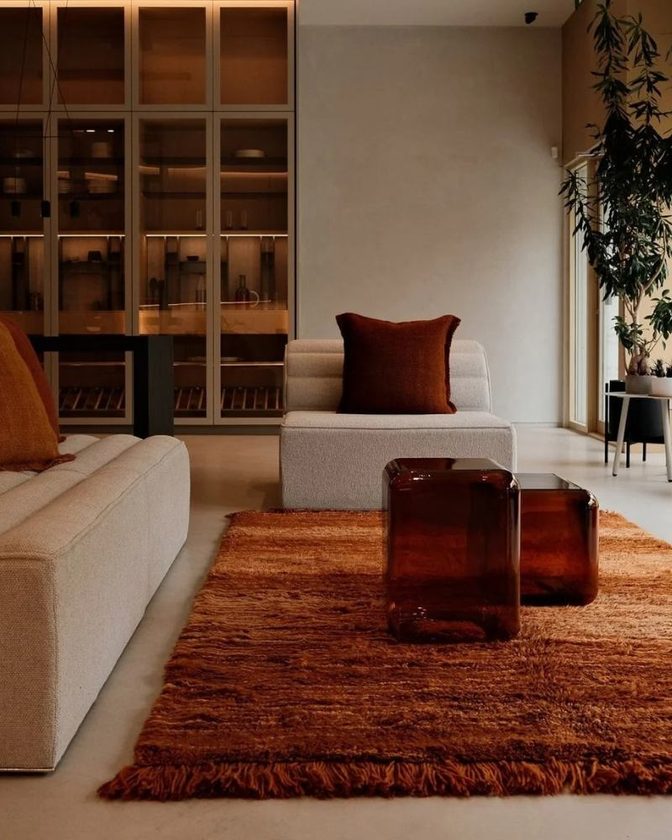
1. Obakki
Best for: warm-hued handwoven wool rugs
Categories: Area Rugs, Runners, Accent Rugs
Obakki partners with artisan weavers primarily in Oaxaca, Mexico — including individual makers like José — who hand-dyes and weaves rugs on a traditional pedal loom using locally sourced sheep’s wool and natural dyes derived from native plants. The brand also works with Rrres Design Studio, a Latin American studio dedicated to preserving traditional Oaxacan weaving techniques, and sources handwoven textiles from artisan communities beyond Mexico as well, including Morocco.
Each rug is made from 100% wool with no synthetic dyes or backing. Most pieces are made-to-order with a 4-8 week production window, shipped directly from the artisan partners.
Price Range: $460 – $4,159
Conscious Qualities: Natural Fibers, Natural Dyes, Craft Preservation
2. Kiliim
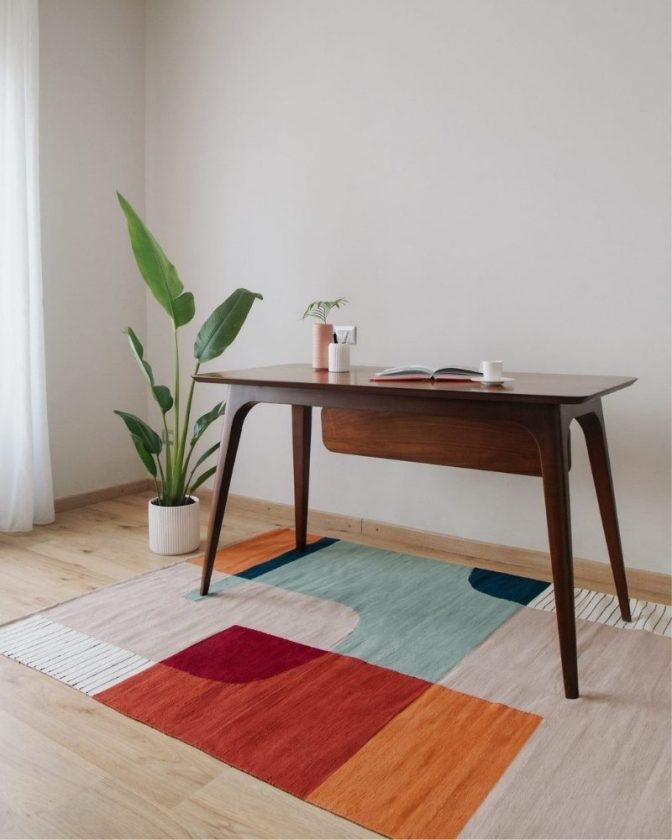
Best for: modern wool kilim rugs
Categories: Area Rugs, Accent Rugs
If you’re well-versed in rug terminology, you may recognize that this brand’s name looks similar to the word kilim.
Kiliim’s rug are made using authentic kilim rug craftsmanship by artisans in Egypt coming from generations of kilim artisans. To ensure ethical production and to support the preservation of this heritage craft, Kiliim pays living wages to all artisans.
Price Range: $95 – $4,812
Conscious Qualities: Ethical Production, Heritage Craft Preservation, Natural Fibers
3. Urban Natural
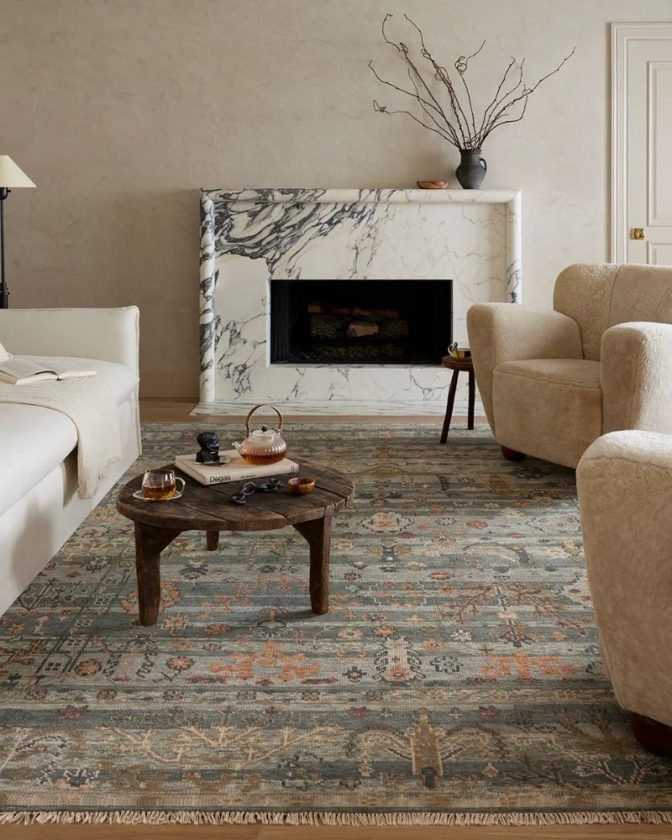
Best for: browsing fair trade rugs in lots of styles and sizes
Categories: Outdoor, Area Rugs, and Accent Rugs
This natural home and lifestyle retailer has a beautifully curated selection of sustainably-made rugs crafted with materials like jute, sisal, wool, and cotton.
Several brands on Urban Natural are also ethically hand-loomed or hand-knotted, such as Loloi — a GoodWeave partner — and Jaipur Living — a brand that partners with thousands of local artisans to sustain heritage crafts.
Price Range: $259 – $9,755
Conscious Qualities: Eco-Conscious Materials
4. LOOMY
Best for: pet-friendly and performance rugs
Categories: Area Rugs, Accent Rugs, Runners, Outdoor Rugs
Founded by a weaver, LOOMY is dedicated to crafting beautiful artisan-made rugs that will last for decades to come.
LOOMY partners with highly-skilled artisan weavers who craft quality rugs made from eco-minded materials like banana silk, jute, and recycled cotton, plus performance options made from 100% recycled polyester built to withstand whatever life brings you.
Price Range: $298 – $8,298
Conscious Qualities: Natural Fibers, Craft Preservation, Vintage Options