

Weather Guard Lightning Tech
The Blade Whisperer Returns with Morten Handberg
Morten Handberg, Principal Consultant at Wind Power LAB, joins the show to discuss the many variables within wind turbine blades that operators may not be aware of. From design to materials and operation, understanding your blades is crucial to making informed decisions in the field.
Sign up now for Uptime Tech News, our weekly email update on all things wind technology. This episode is sponsored by Weather Guard Lightning Tech. Learn more about Weather Guard’s StrikeTape Wind Turbine LPS retrofit. Follow the show on Facebook, YouTube, Twitter, Linkedin and visit Weather Guard on the web. And subscribe to Rosemary Barnes’ YouTube channel here. Have a question we can answer on the show? Email us!
Welcome to Uptime Spotlight, shining light on wind. Energy’s brightest innovators. This is the progress Powering tomorrow.
Allen Hall: Morten, welcome back to the program.
Morten Handberg: Thank you so much, Allen. It’s fantastic to be back. It’s, uh, I really, really happy to be back on the show to discuss blades with you guys.
Allen Hall: So you’re a resident blade whisperer, and we wanted to talk about the differences between types of blades even within the same manufacturer, because I think there’s a lot of misunderstanding if I buy a specific OEM turbine that I’m getting the same design all the time, or even just the same basic materials are that are used.
That’s not the case anymore.
Morten Handberg: No, I mean, there’s always been variations. Uh, so the B 90 is a very good example because initially was, was released with, uh, with the, with the glass fiber spark cap. [00:01:00] But at later iterations it was, then they then switched it to carbon fiber for, for, for larger, for larger turbines, for higher rated power.
But it, it, but it sort of gave that you were not a hundred percent sure. When you initially looked at it, was this actually a ca a glass fiber, uh, beam or a carbon fiber was only when you started to learn the integral, you know, what, what to read in, in the naming convention that you could understand it.
But it caused a little confusion about, you know, I’m looking at glass fiber blade or, or a carbon fiber blade. So it’s been there for a while, but we’re seeing it more and more pronounced with, um. Uh, OEMs changing to signs, uh, or OEMs merging together, but keeping their integral design for, for, for various purposes.
And then for the, for the, for the people, not in, uh, not in the loop or not looking behind the curtain. They don’t, you don’t know, know, know the difference. So I think it’s really important that we, that we sort of highlight some of those things to make it easier for people to, to, to know, to know this.
Allen Hall: There was a generational change. [00:02:00] Uh, even in the 1.5 megawatt class. There were some blades that were fiberglass and then they, there was a trend to move to carbon fiber to make them lighter, but then the designers got better and started putting fiberglass in, where now you have 70 meter blades that are fiberglass worth 35 meter blades, may have had carbon.
Yeah, it’s hard to keep up with it.
Morten Handberg: You know, it’s really difficult to know. I mean, for, for, for the longer blades, it’s becoming more and more pronounced that they will be, uh, there will be carbon fiber reinforced. But a good, uh, example of where it doesn’t really apply is actually with, uh, with Siemens cesa.
Because if you look at Siemens, Cade said, you know, it’s, it’s Siemens, uh, the original OEM Siemens at the original OEM Cade that merged. Quite a few years back, but you know, we still see the very sharp, uh, difference between the two different designs because whenever you install a Siemens Esso turbine offshore, it’s the Siemens integral blade, it will.
And, and they kept that, [00:03:00] uh, and that blade is produced in one cast, it’s called the Integral Blade because that’s their inherited design. And there are no adhesive bond blinds in that. Uh, so all laminated is consolidated. It’s all cast in one go, and then whatever kings and small, uh, defects there, then repaired on factory before they ship offshore.
These are pure glass fiber plate that has not changed at all. So that’s sort of the, uh, how do you say, uh, the one that, that, uh, that is outside the norm that we see today. But the Gaza part of it, they, they’ve kept for onshore purposes, they kept their design using, uh, adhered shells or adhered bond lines.
So they would have two, uh, share webs and then two shells, uh, that are then, that are then, then, uh, glued together, uh, at the bond lines, on the share, on the trading edge, and on the leading edge. With carbon re, re reinforcement. Um, so that is a massive different design within one [00:04:00] OEM and often when people say, well, we have a problem with the Siemens commes blade, which one?
Uh, so then it’s very, very important to understand, you know, what blade type, you know, what, what, what turbine model it is because then we can pretty easily drive it, or even for just know the wind farm because. If it’s offshore, we pretty much, you know, we can, we, we know already. We just need to know the what, what, what size of turbine is, and derive what blade type it is.
Onshore becomes a bit more pro problematic because then you need to know, you know, at what, when was it erected, because then, you know, it can be both, but. If you don’t know, then it will just be presented as a Siemens cesa. So it’s really important to keep, uh, in check, uh, when, when, when, when, when looking at that.
So that’s a, so that’s a very important distinction that, that we need, need to understand when the child, when determining blade damages,
Allen Hall: right, because the type of damage, the integral blade would suffer really completely different than the sort of the ESA bonded design. I was looking at blades in Oklahoma recently that were integral from like a two megawatt machine, and it, it [00:05:00] looks completely different when you walk up to that blade.
You can tell that it’s cast in one piece. It’s very interesting to see, but that makes it, I think the, the thing about those blades is that it’s a little more manufacturing cost to, to make ’em that way, but. They are, uh, tend to be a little more rugged out in service, right?
Morten Handberg: Well, they’re, they’re definitely heavier because of the, the manufacturing process that they go through.
Um, they’re more robust. We, I think we can, we can, we can see that from a track record, uh, in general. Um, but they’re, but the trade off is that they are a lot, they’re heavier. So that means that the, that the components that are used in the Drivetrain Tower Foundation, they’re equally heavier. So you pay the price in the, uh, in the cost of the turbine.
But, uh, overall on the, on the mainland side, we do see less, at least some structural damages and if something really bad happens, so, uh, the trailing edge more often, not it’s kept to the, to the tip or on that part of the trailing edge. So, so, uh, so [00:06:00] the, the, the blade structure keeps together better, um, because of this consolidation of the laminates.
Allen Hall: Right, and the, the traditional ESA design, I’ll call it, has been a bonded design for a long time. The issue with bond lines is there is no peel ply stoppage, so there’s no fasteners in it, in case it starts to come apart, it’ll continue to peel, and that’s what we typically call a banana peel when it really goes bad.
The blade splits in two. Once it starts, it really doesn’t have a way to stop. And I think that’s why inspection is so important on those bonded blades. Right?
Morten Handberg: Yeah. Actually, 1, 1, 1 1, 1, 1 small thing. Uh, peel ply is actually something that’s used in laminate production to, uh, to you apply it when you’re casting, you laminate typically for repair.
Then when you peel it off. The surface is fresh and clean, and then you can, you can continue working it, adding more, more mobilely or, or new coating. So it removes some, uh, lamination or some grinding process that will otherwise be needed, has no structural purpose in it, [00:07:00] uh, just to kill that myth of, but you’re right.
Uh, when you have an adhere blade for any, for any manufacturer, for any purpose. If you have a, uh, if you have a deep bonding that starts, then it can, it can, depending on the location, it can grow really fast because you don’t have the same consolidation. You do have some bike layers that would add over, but it doesn’t have the same integral strength that you would see with the, uh, with the consolidated laminate.
Allen Hall: So that’s a big difference. And if you’re looking at blades, and if you haven’t. Looked inside of a hub and looked inside the blade. You, you may not even know. And I think that does happen to a lot of engineers that they, because they, they’re dealing with a thousand blades a lot of times the blade engineers, it’s crazy what they’re asked to go do.
You just can’t know all the details all the time. But just knowing these top level things can really help you suss out like where to start. And, and, and even on the inspection res regimes would on an integral blade type design, are you doing different kinds of inspections than you would do on a standard kind of.
Mesa bonded up design?
Morten Handberg: I would [00:08:00] say not actually. I mean, you would still, you would still do, uh, you, you’ll still do internal inspections because, um, you can still have defect developing. They would be, uh, slower, uh, growing in general, um, compared to a, uh, to a more thin skin laminate, uh, type blade. But, but the inspection methodology is, is more, less the same.
You would do an external inspection to check for lighting damages wearing of, uh, coating. So erosion. Any kind of structural damage in developing over the shell, uh, surfaces. And internally, you would check the bond lines, uh, because even though they’re consolidated, there is still, uh, they, they, they still have a, have a bonding, uh, an in laminate bonding.
So you want to check if that is okay. Um, and you wanna see if there’s any, uh, any defects developing in the shoulder area from breathing or from, or any kind of manufacturing defect. So it’s not that. Not that you will. Yeah. That you will then, you know, set it up and then you can let it run forever without looking at it.
You d do need to do maintenance, [00:09:00] um, but if you do proactive maintenance, you can then, then you, you will detect it in time and you can do more, uh, reactive repairs.
Allen Hall: Yeah. And what’s the difference in repair costs between a integral blade where it’s all cast at one time versus a, a bonded design? Does it tend to be a little less expensive because it’s maybe a little localized than a.
Uh, a bonded type shear web design.
Morten Handberg: Well, if the damage affect multiple parts of shear web and, uh, and beam and shell, it will always be a very extreme, very costly repair, regardless of what, whatever blade type it is. Integral blades, I would say typically will likely be more expensive if you have a structural damage, but that’s just because of the sheer number of flies that will be affected because for a, for a thin skin laminate blade.
While the damage can be, can be much larger, the amount of layers that you need to remove will be less. So I would, I would always, I, I would, I would consider it more likely that the repair costs for, for a, [00:10:00] uh, for adhesive bond line blade to have a lower repair cost for the same type of damage that we see an integral blade.
But the integral plate will more, will, will, will have less of them, and you will also be able to detect them earlier. So the chance of preparing. Is higher on an integral plate is what I would normally that, that, that’s how I would normally, you know, pro think of it.
Allen Hall: Okay. That’s that’s good to know. Can we talk carbon protrusions and knowledge of them because it, it has seemed like over time there was, they were really hot in like the mid two thousands, into the 10 20, 10 20 12, 20 15 ish, and then it kinda went away for a little bit ’cause of the cost and now they’re coming back again because of the links.
It’s really. Important that you know if your blades have carbon in them, correct?
Morten Handberg: Yes. Um, one because, uh, carbon is more rigid, um, than, than than glass fiber. It is, uh, it is, it is multiple the times, multiple times stronger than glass fiber. That’s also why it’s favorable to use, [00:11:00]because you can produce a, a longer blade while, um, minimizing the weight increase that you would have.
Um, so that is a very, uh, that is a very appealing trait to have. The problem with carbon is two things. One, it is a, uh, conducted material, which means that it does, uh, create a, um, a mag, uh, how do you say, magnetic seal, if there’s any kind of, uh. Lightning activity if there’s any static develop, uh, uh, buildup inside the blade.
So that can be, that can cause its own set of problems and something where you have to be very observant of what, what kind of LPS system you have and what, what kind of lightning conditions you have. The second part is. Carbon fiber is so rigid. Then that also means if you have any kind of manufacturing defect, the effect of it is multiplied.
Um, because carbon fiber doesn’t, it doesn’t have the same elasticity. Glass fiber is very forgiving if you have a defect there. While it will develop over time [00:12:00] at some point for a large part of the time, they, because it’s so elastic, the loads they get distributed better. For carbon, it will centralize around the, the manufacturing defect and will just grow.
And once it starts growing, then it will, it will expand rapidly. So that’s also why when we see a, a, um, a blade damage where the defect started in the carbon spot, the the blade is simply just cut off. It’s simply like someone just took. Took a, uh, took a hacksaw and then cut the, the blade, uh, blade, blade section off because the, the, because of the rapid growth of that defect.
Um, so that, that’s sort of the, the trade off, but that’s also why we have to be even more observant. If an OEM is using carbon fiber to reinforce it, that they do NDT off their, um, off their blades before sending ’em out. And they do quality control off the protrusions when they receive them so that the owner doesn’t take over an inherited risk.
So that, I would really say that if you have wind turbines with carbon fiber, [00:13:00] if you’re planning to build them. You should make sure that there, that NDT is done, because you cannot verify this by visual. It’s, you know, if you can see them, that’s great, but it, it’s not a guarantee that there is nothing there.
Um, and the amount of defect that we see out there that does suggest that this is, this is not a, uh, a nice to have. It’s an absolute must to, must, must do to do NDT.
Allen Hall: Yeah, the carbon protrusions, if you looked at that process, it’s not a easy process, but they’re trying to orient the fiber in one direction all the time, and even slight variations can reduce the strength inside the protrusion.
So it becomes critical that the quality of the protrusion is good and, and the reason they. Make protrusions is to lower the cost. So the protrusion itself is really set into this fiberglass shell. So you’re really, you have merging two technologies together, which always doesn’t always work as well as you would want it to work.
But it has gotten, at least in my opinion, Morgan, and that’s why I’m asking you. Has it gotten better over time that we’ve gotten used to using [00:14:00]protrusions and are better at and applying them and in and maintaining them? At this point?
Morten Handberg: I think the OEMs are really good at using them in designs. I think they’ve done a really good job at using, utilizing the carbon fiber to its maximum potential, uh, to build blades that are plus a hundred meters.
Uh, what we have to be make sure is that whatever we then do in manufacturing quality control, operation maintenance. That adheres to the, to the same standard that would apply in design. So, you know, that that’s sort of the, that, that, that’s sort of the crux of it. Because if you, if you, if you design something perfect and then you have more, you know, how do you say it more, you know, less, uh, pristine approach to when you’re manufacturing or when you’re servicing it, then you know it, then it causes problem down, problems down the line.
Um, because. It will need maintenance, it will need very strict project control. So that’s why we have to be very vigilant.
Allen Hall: And I wanna talk about the difference between box beams and sort of standard [00:15:00] share. Web I beams, I’ll call ’em, that we typically see a lot more of today. There’s a number of blades, particularly early on that were box beam.
And when I talk to operators of these terms that have box beams and I say, Hey, do you have a box beam? I don’t, I don’t know. I don’t know. Uh, but those blades act uniquely different than sort of the blades we’re buying today, right?
Morten Handberg: Well, the B Beam is still in production. You can still acquire a turbine with a box beam in it.
It’s a, uh, it’s a investor design. It’s something that they invented, that they’ve used for ages, uh, decades. Uh, uh, think that goes all the way back to some of the first way business space. So it’s a very, uh, it’s, it’s a very strong design that they’ve utilized for, for. For the history of Vestas. Um, and it was originally a carbon based spark cap in a box beam.
There was a, it was a closed square that was a elongated. So, um, and then narrowing as you get further to the tip, uh, and then later on with the B [00:16:00] 90, they introduced carbon fiber protrusions instead of glass cyber in it to make it stronger and also enable building longer blades, but while keeping the low weight, because that’s really where they won a lot, is that they could keep extremely low blade weights.
And thereby very light turbines. Uh. While still, uh, uh, uh, how do you say producing, uh, having the same rated power as an equivalent turbine from any other m So that was really a, a, a, a unique design that this they had or have. Um, so the, if you want to know, if you have a box beam blade or an SST blade, you simply just have to look inside the plate.
It’s very easy. Uh, if you have a bucketing plate, all you will see is a, is a, is a square. Um, where at and, and you know, at, at a large tunnel and nothing else, if you have an I-beam with one or two share webs, if you look inside the blade, you will see, see these two share webs, but you also see the chamber and the trailing edge.
And in the leading edge. And that’s because it’s an open design. [00:17:00] So it’s actually very easy to detect if you have one or the other. But they’re very different from each other, uh, in a lot of other senses. Um, the. The box beam design is inherently non-structural shells. The, the blade shells are really, really thin, also very easy to repair because they’re so thin, but they’re very thin because the, all the loads is taken up by the box beam.
For the SST or the eye beam design, the loads are, while still thin skin relative is taken up more load. But, and, and in the design, they’re considered as being part of the load carrying structure. So you have to be more observant of maintaining the shell structure as well as the, as as the, the, how do you say, the low carrying structure on an, on an, uh, SST or I beam Blade.
Then you had to on a, on a box beam. And a good example of this is that you sometimes see that blade shields coming apart, coming apart on, um, on, on, on blade damages. And what is unique for [00:18:00] the i, for, for the box beam is that the box beam will just stay in place. It doesn’t it? It’s. Basically the, the turbine doesn’t seem, seem to care if it’s there or not.
It will just continue operating. Uh, so, so you can have, uh, shells, uh, part of the shell missing for a period of time. And the you, they only notice because, you know, you look up and then, hey, part of the, part of the blades look like it is looking like a, like a pine cone, a squirrel chew that, uh, because the part of the, the, uh, the shelves are missing and it, it’s quite weird.
Um, but, but that, that is how it is.
Allen Hall: Box beams. SST, that all makes sense to me. Uh, one of the things that we’re running into more recently is as blades get longer and the costs go up and the risk goes up along with it, as the blades get longer, of course, uh, there’s there’s much more instrumentation going on to the blades in the manufacturing process.
So now we’re seeing. Uh, thermal couples being applied during the manufacturing process to verify that [00:19:00] everything is cured out properly, which is a wonderful thing to do, honestly, in the manufacturing area, but. If they’re not removed, and I think more recently we have seen some thermocouples left in blades.
It can become a problem later on in life.
Morten Handberg: Well, I mean, uh, it’s actually something that’s been used for, for quite a while. It is, uh, thermocouples is something you would use to verify that your adhesive have seen the right curing temperature to make sure that it has the right mechanical properties. Which makes a lot of sense.
Um, obviously, you know, as an electrical engineers, you are, you know, you, you would know that, you know any, any, uh, conductive material. Whenever ex uh, and lighting expert, then when exposed to a lightning current will start to generate its own ma own magnetic fields that will, uh, that will on its own, uh, create a potential problem because then the, um, then, then they will start to react with each other.
And that can cause, um, that can cause risk of flashover, uh, it can cause lighting attachment [00:20:00] on its own. And that really applies to any kind of conductive component that you would have in your plate. Including your carbon beams. Uh, it’s not something that is unique for, for cabling inside the blades. It’s actually also something that if you have sense installation that you have to be very concerned about, you know, if you’re installing it.
How will it then, you know, react with the LPS system so that your census don’t start to become a flashover points that you introduce that. So that’s something that typically, uh, especially OEMs, they’re very concerned about, uh, that how will it interact with the LPS system and how will it interact with their carbon reinforcement?
And I think that’s fair. Um, how widespread an issue it is that we see flashover, I don’t know that many cases, but again. We don’t want to just install a lot and then find out there was a problem later on. You know, that’s really what we as an industry cloud should start to move away from. So I think there’s lot of good sense if you want, you know, I’m a big proponent for condition monitoring, but I [00:21:00] also am a big opponent that we need to verify things and understand the risk before starting to instrument their left and right.
Um. And for carbon fiber, fiber blades, you know, if they’re not integrated into the LPS system, that means that then they will, they will have their, they, they will create, create their own magnetic field during a lightning search. And that can then cause flash overs that we’ve seen with some, uh, historic and some, uh, current.
Models. Um, but the problem is, is is there for any carbon blade if the LPS system is not designed with intent, that to handle any, um, any lightning issues in, in the carbon fibers.
Allen Hall: And I think it gets down to inspection and regimes and timing depending on what is inside of your blade or, and even how it’s constructed.
In my opinion. I think what I see from operators is based upon their knowledge of what is happening in the blade. They’ll, uh, add a internal rover or drone, not internal, maybe sometimes internal drone, but usually a rover, [00:22:00] uh, will go inside the blade and start taking pictures. That has become more prevalent, I’d say in the last two years where you hear of full campaigns, and I know down in Brazil, earth, wind does them all the time down in Brazil because the, they have a capacity factor over 50%, so the blades are really getting used.
Those internal inspections have been eye-opening in, in terms of. Detecting problems early, and is that, is that where we’re headed right now is that we just need to know visually what’s going on more because the, the blade variations, OEM to OEM and factory to factory, that we just need to have a little more monitoring for a while until we get into an alignment.
Morten Handberg: I think that inspections is a symptom of not having the right tools to, to monitor. Not wanting the right tools to monitor because if we had condition monitoring and every blade, and every blade was fitted at with it from birth, we would know a lot more about what’s going on in the blades from day one.
And that will also mean that we would know if [00:23:00] two or three or five blades in a, in a 15, uh, turbine wind farm had problems we could focus on inspection regime on that. So, but right now, because we don’t have that, then we need to, to roll out a very large, very complex, uh, inspection regimes that takes a lot of downtime, is very expensive because we don’t have the necessary dataset to, to, uh, to, to determine accurately which turbines are actually at risk.
So I think it’s more of a symptom of, of the need for, for, for CMS. Um, I’m not, I’m not have nothing against rovers. I think they’re great for what they do, but I would prefer that we use them for these specific issues instead of having it as a, as a, as a major rollout over the entire wind farm.
Allen Hall: Oh, I, I agree with you there.
I think CMS is getting utilized more and more and more, and, and in fact, uh, as we talked to operators this year, because of, of rule changes in the United States, a lot of operators in the United States are now moving to a CMS system that they previously probably wouldn’t have done, [00:24:00] uh, because of the lifetime of the blade.
Right. So that, that’s something that I think. Uh, Denmark and Europe has done so much better. And Morton, you’re in the middle of all that, being based in Denmark, that CMS is a way of life, uh, on a lot of turbines in Europe and, but in the States and other places, even Australia, it, it may not be that widely used.
Morten Handberg: Well, I would say for the Australian market where we’ve done some work, they are, uh, very positive towards CMS and we know, we know quite a few operators that are actively either looking into it or looking at it from the, from day one in their wind farms. Uh, operators in Europe, I would say we we’re still not there yet.
Owners, there are some owners that are installing it, um, actively. It’s not something that, you know, we’re not seeing on the majority of the wind farm shed. It’s not, it’s not commonplace. It’s still, I would say, compared to the amount of turbines we have, it’s still a novelty. So our, I’m, I’m still, I’m, it’s still one of my, uh, my, uh, month, uh, how do you say my, uh, catchphrases [00:25:00] when I come out to onus and we’re talking about the problems, is that, you know, you can hand your blood damages, uh, on X, Y, and z.
You know, going forward, if you want to catch ’em early on or you want to understand them better, how they affect your blade, you need to look into CMS. Um, and again, it’s, there are a lot of good CMS options out there. A lot of them have actually been, been verified and, uh. I would say, you know, some higher tier systems, they make a lot of sense.
They give you a lot more data, but it’s, you know, something is better than nothing. I would say, let’s get some data in, let’s get started on the process. Let’s get some learnings, and then we can develop the technology. If we’re always waiting for the perfect system, then we’ll never get anywhere.
Allen Hall: I’m gonna bring up zero defects because I think this is all headed towards zero defects and we’ve, we’ve talked to a number of operators in the last six months who say to themselves.
In my, uh, TSA, I had a serial defect clause, but we missed the window opportunity. Usually it’s a year or two and you have to show a certain percentage. It’s like 25% have this [00:26:00] problem. If you’re not measuring a turbine or blade or anything on your, you will never figure out if you have a serial defect, and, and particularly if you don’t know what the architecture of each blade is, you won’t be able to connect the dots of these blades made at a particular factory, have this issue.
CMS becomes really vital in, in that aspect. As we’re putting billions of dollars into a farm, the value return is very high.
Morten Handberg: Yes, I would say so. The problem is that for a lot of operators then the operational margins, they’re very low. So if you don’t get it installed, uh, during CapEx, then to find budget for it during oex is something that’s really, is really hurting.
Uh, the budget and, and, and, you know, with elec the electricity prices in a lot of places being really low, then there might be a need for it, but it’s really difficult for to, to find a, a budget for it, that, that can then send that investment unless there is some really something really critical where it says it’s a do or die [00:27:00] thing.
Um. So, so I would, I would agree with you, yes. For, you know, it’s something that can help us identify if there is, uh, serial issues, because then the defect will develop and, you know, even if there is a serial issue, it can help us prevent the worst case scenario that the, that we see blade collapses, blades being replaced.
So, so there’s a lot of, you know, downstream, uh, um, advantages of, uh, of installing CMS and I, I truly believe that it will help us with the green transition as well, because as you know, with the number of blades that we’re replacing right now, you know, you know, scrapping blades is not green transition. If we can prolong lives, if we can repair them in, in, in due time, that’s how we get to, to, uh, to a green transition where the, where wind industry becomes profitable and affordable and where it’s, it, you don’t create an issue for some part of the industries, uh, because it’s a big problem for owners.
It’s a big problem for insurance [00:28:00] companies that we see this big turnover of blades because of, of catastrophic damages. So more, the more we can do to prolong life of blades. Prevent damages from happening or capture damages early on, and then get them repaired, will, will really help that, uh, uh, that move moving forward.
Allen Hall: Wow. That’s why we love having you on Morton because you can explain the complex and simple terms, and I think you’re right. You, you’re moving the industry. Uh, you’re recommendations are, are being heard by operators and by OEMs. I think. The industry is changing, and that’s great to hear. Morton, how do people get ahold of you?
Is it best to reach you on LinkedIn?
Morten Handberg: Well, either LinkedIn or you can also reach me on my, um, on my company email, MEH, at wind power app.com. Uh, that, that would be the, the far easiest way to get in. Hold me to, uh, uh, uh, where we can discuss any kind of late issues you might have. Always happy to, to support any owners or insurance insurers.
Allen Hall: More than I love having you on. We gotta have you on sooner next time and, and keep talking to these issues because a lot of [00:29:00] operators are struggling and there’s so much technology being applied to blades. We need to have you back on pretty soon.
Morten Handberg: Absolutely. I would love to be on to, uh, uh, to, to explain more complex issues and to puncture more, more myths.
Let, let’s do it.
https://weatherguardwind.com/blade-morten-handberg/

 In a better world, the International Criminal Court would have much greater power to prosecute war crimes.
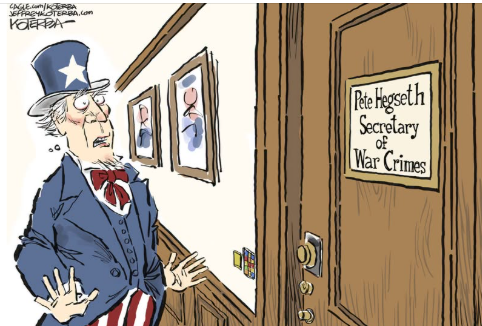
Today, winding up at The Hague requires terrible luck, and it’s virtually impossible to happen to a Donald Trump or a Pete Hegseth, given the enormous military might that the United States possesses.
Contrast this to what happened to Slobodan Milošević, who was arrested when his countries, Yugoslavia and Serbia, were overthrown.
 The prediction made here is nearly certain to come true.
The question is what happens at the point. E.g., how long does it take to rebuild trade deals and relationships with allies?
Keep in mind that regardless of the manner in which Trump loses power, there will always be “news” outlets like Fox and Newsmax, trying their best to convince the idiots that Trump was hounded and persecuted by the communists who hate America.
 All I can say about the me here is that personally I refused, against considerable pressure from my family, to indoctrinate my children into something I myself could not accept.
Is it actually “psychological abuse” to indoctrinate children into monotheistic religion? Whether to take it that far is an open question.
My parents, both atheists, sent my brother and me to Sunday School, as they thought it wrong to cut us off from a modality of growing up in America in the early 1960s. I don’t blame them, but again, it’s not something I was willing to replicate with my own children.



