

Discover the most sumptuous sustainable winter accessories to keep you warm and toasty.
With fall officially here and cold weather edging ever closer, it’s time to embrace some knitted accessories. From sustainable gloves to second-skin essentials like fair trade scarves and beanies, we’ve curated a list of consciously made warm accessories to cozy up with.
But, what counts as sustainable gloves, beanies, and scarves?
Many factors help us determine if a brand is offering sustainable winter accessories, but the key component we’ve placed importance on to create this guide is natural fibers.
Far too many knitwear options are available in the form of synthetic acrylics masquerading as woolens. Cheaper than its natural counterpart, acrylics are a problematic polymer-based fiber that won’t biodegrade, isn’t breathable, not to mention has a plastic-like feel. And let’s face it, there are better ways to preserve your body heat in winter.
We have found a set of brands for you that offer a blend of breathable natural fibers like wool in its many forms like Merino, Alpaca, or cashmere that come from cruelty-free and recycled sources. Some of the brands we’ve featured in this guide also offer knitted organic cotton gloves, scarves, and beanies that are known for their excellent thermoregulating properties.
Materials aside, the winter accessories we’ve found are also ethically produced and encourage the slow art of artisanal knitting. In fact, you can also choose to participate in the slow fashion practice of knitting this winter by making your own scarves, mittens, and beanies with DIY kits from the likes of We Are Knitters, or if you’re a seasoned sewist, you can pick some sustainable yarns from this guide.
After all, these cold-weather accessories are investment items you’ll hold onto for the long haul and even share with your partner owing to their unisex appeal.
And now without further ado, your destination for the add-ons you need to weather the cold season in style has arrived. From sustainable statement scarves and gloves to must-have beanies — discover it all here.
Price Range Key:
$ = Most products less than $100
$$ = Most products $100 – $200
$$$ = Most products $200+
Where to Find Sustainable Gloves, Beanies, and Scarves:
Note that this guide includes affiliate links, which means we may earn a commission if you purchase through one of these links which helps us continue to create more free resources for you!
1. Organic Basics
Categories: Scarves, Beanies | Conscious Qualities: GOTS Certified Organic, Global Recycled Standard Certified, Pays Fair Wages, Supply Chain Transparency, Philanthropic | Price Range: $
Danish brand Organic Basics offers a colorful range of warm weather accessories that will infuse instant street cred into any outfit. Full of logo-emblazoned pieces in earthy hues, you’ll find beanies, scarves, snoods, and even a balaclava to keep you snuggled up this season. They’ve even got some leg warmers in case you’d like to throw it back to the ’80s. Their organic cotton scarves and beanies are blended with a small percentage of recycled synthetics for added durability and come with a detailed carbon footprint report.

2. tentree
Categories: Beanies | Conscious Qualities: Certified B Corp, Responsible Wool Standard Certified, Ethical Production, Circular, Reforestation Program, Transparent Supply Chain | Price Range: $
Offering the coziest companions for some added warmth this winter, tentree’s beanies will have you dreaming of an outdoor adventure with its earthy hues and scenic design details. The beanies come knitted with a four-way stretch to provide maximum comfort around the head that’s crafted from materials like organic cotton and RWS-certified wool.

3. Colorful Standard
Categories: Scarves, Beanies | Conscious Qualities: Recycled Wool, Low Waste Practices, Pays Fair Wages | Price Range: $
Just as its namesake suggests, Colorful Standard offers an extensive collection of winter accessories in just about any color of your liking. So much so, that you can even shop by color to find a delectable hue ranging from soft pastels to highly saturated solids. Their collection of recycled wool scarves and beanies achieve their vibrant colors using OEKO-TEX® Standard 100 Certified dyes that have been thoroughly tested for harmful chemicals. We might suggest getting a light and dark beanie and scarf pairing of the same color to achieve an intriguing monochrome look.

4. PANGAIA
Categories: Gloves, Balaclavas, Scarves, Beanies | Conscious Qualities: Certified B Corp, Ethical Production, Transparent Supply Chain, Philanthropic, Reforestation Program | Price Range: $
Known for its elevated loungewear and innovative efforts with material science, PANGAIA offers an impressive range of sustainable winter accessories that’ll make a serious style statement. Prioritizing thermoregulation and sustainability with materials like recycled cashmere and NATIVA certified regenerative Merino wool, these accessories will go the extra mile in keeping you warm.

5. Frank And Oak
Categories: Mittens, Scarves, Beanies | Conscious Qualities: Certified B Corp, Philanthropic, Ethical Production, Transparent Supply Chain | Price Range: $
Based in Canada, Frank And Oak’s collection will evoke all the cozy winter vibes with their fuzzy accessories. Available in neutral earthy hues that have unmissable textural details, their winter add-ons are made using materials like non-mulesed Merino wool, Yak wool, organic cotton, and Seawool® that’s made from recycled polyester and oyster shell composites. You can even grab a matching pair of sustainable beanies and mittens to make adding the finishing touches to your outfit a lot easier.

6. The Knotty Ones
Categories: Mittens, Scarves, Beanies | Conscious Qualities: Women-owned, Small Batch Production, Slow Fashion, Pays Living Wages | Price Range: $$
The Knotty Ones is a close-knit sisterhood founded by three women who work with female knitters in Lithuania. These talented knitters meticulously handcraft their collection of warm clothes and accessories, some of which feature details like embroidery using leftover yarn which ensures that no two pieces are identical. You’ll find an assortment of handmade options made from alpaca wool, Merino wool, and cashmere. The brand also offers small knitted charms that can be pinned to your gloves, scarves, and beanies for an added touch of playfulness.

7. LANIUS
Categories: Gloves, Scarves, Beanies | Conscious Qualities: Woman-owned, Slow Fashion, GOTS Certified Organic, Circular, Transparent Supply Chain, Funds Climate Protection Projects | Price Range: €
For those of you who want to make a serious style statement this winter and stay warm while you’re at it, then German slow fashion brand LANIUS is offering an array of sumptuous sustainable scarves, gloves, and beanies made from alpaca, and Merino wool, along with a blend of wool and organic cotton, these accessories come in chunky and fuzzy knitted textures to help you make a unique choice. They also offer knitted headbands that’ll add a boho accent to your look.

8. Eileen Fisher
Categories: Gloves, Scarves, Beanies | Conscious Qualities: Woman-owned, Pays Living Wages, Circular, Low-waste Practices | Price Range: $$
If you’re on the lookout for an investment-worthy accessory that’ll see you through many winters, then look no further. Eileen Fisher’s collection of warm accouterments will instantly exude an air of elegance every time you sport them.
Crafted from sumptuous natural materials like alpaca, cashmere, silk, and Merino wool to name a few, their range of sustainable winter gloves, beanies, and scarves come in solid hues that are versatile enough for easy pairing. They also offer organic cotton beanies for those of you who prefer headgear with less hair-raising static.

9. ASKET
Conscious Qualities: Circular, Pays Living Wages, Supply Chain Transparency, | Categories: Scarves, Beanies | Price Range: $
ASKET makes shopping for a warm accessory an easy affair with its elegantly understated collection of beanies and scarves. Available in no more than four to five neutral hues and two knit styles and sizes per accessory, you’ll be sure to feel cozy no matter what you choose from their range of recycled cashmere and cruelty-free Merino wool pieces.
What’s more? You can even peruse through the price breakdown, carbon footprint, and trace the origin of an item to get deeply acquainted with your potential purchase.

10. Another Tomorrow
Categories: Scarves, Beanies | Conscious Qualities: Woman-owned, Certified B Corp, Pays Living Wages, Circular, Supply Chain Transparency, Philanthropic | Price Range: $$$
If monochrome styling is something you enjoy when layering up for the cold, then Another Tomorrow has some elevated accessory pairings for you. These accessories are crafted from recycled cashmere yarn reconditioned from post-consumer sweaters to maintain all the softness of virgin cashmere. Once purchased, customers can simply scan the QR code on their swing tag to take a closer look at the provenance of their product taking them on a virtual journey from farm-to-material-to-factory.

Some Final Notes on Caring for Your Sustainable Beanies, Gloves, and Scarves…
To take better care of your natural or recycled woolen, we highly recommend getting a pilling comb to get rid of the small fuzzy balls that form over repeated use.
And that nasty hair-raising static? Wool dryer balls or crumpled-up aluminum foil balls tossed in the dryer can help reduce static immensely.
About The Author:

Jharna Pariani is a fashion writer and creative strategist whose work is rooted in honesty and deep observation of the world around her. When she isn’t busy penning down her thoughts, she moonlights as a video editor creating fashion and food reels on Instagram for several brands and influencers
You Might Also Want to Check Out:
15 Best Sustainable Coats and Jackets to Keep You Warm
Ethical Boots to Rock This Fall and Winter
Conscious Sweaters to Cozy Up With
The post Sustainable Winter Scarves, Beanies, and Gloves to Bundle Up in Style appeared first on .
Sustainable Winter Scarves, Beanies, and Gloves to Bundle Up in Style

As a longtime book lover, I may be biased, but I think a full bookshelf is one of the most beautiful additions to a space. There’s nothing better than seeing a showcase of your favorite reads alongside a TBR list.
A bookcase, though, can of course be used for all sorts of purposes from placing your favorite photos of family and friends to showcasing treasured vintage finds.
Whatever the case, this guide will help you find the right sustainable bookshelf for your living room, office, or wherever you like to cozy up with a good read!
So what make a bookcase more sustainable? What makes a bookshelf non-toxic?
First of all: sustainable and non-toxic are two overlapping — but distinct — criteria. And both of those terms can come with a lot of opinions and varying definitions.
When it comes to sustainable bookcases, I look for:
- Responsibly Sourced Materials: most bookshelves are made primarily with wood. While natural, unsustainable wood sourcing can be a cause of deforestation, so we want to see that the wood was from responsibly managed forests or made from reclaimed or repurposed wood. Some bookshelves may feature metal, in which case recycled materials here are important.
- High Quality Construction: sustainability includes longevity — how long will you be able to use that furniture piece before it goes to the landfill and gets replaced? Look for transparency around craftsmanship and woodworking processes. Another sign of quality is the length of warranty a company has for its products.
- Ethically Made: this one is straightforward in theory — were the people making it paid fairly and working in safe conditions? — but is unfortunately not always easy to find information. In this category, I look for transparency in practices, what relationship the brand has with the manufacturer (some produce in-house which is the best case scenario for transparency!), where it was made, and how well the makers were paid.
Ideally a sustainable bookshelf would also be non-toxic — as toxic chemical fumes aren’t exactly sustainable! But this isn’t always the case. For example, if a company prioritizes upcycled materials, they don’t necessarily have control over what inputs were part of the original materials. And sometimes a company focuses more on ethical artisan partnerships and sustainable wood sourcing, more than, say, using non-toxic finishes.
But when it comes to non-toxic bookshelves, this is what I look for. (Note that non-toxic doesn’t necessarily mean safe for all chemical sensitivities. Nor does it mean zero potentially irritating chemicals.)
- Solid Wood (where possible): MDF or pressed wood contains glue to stick the various wood pieces together, which can contain added formaldehyde. I prefer solid wood, or if it is engineered wood, I’d make sure the company is transparent around the type of glue used and/or they at least have a product certification like GREENGUARD. (More on that in a second.)
- Low or Zero VOC Finishes: most wood furniture is completed with some sort of finish to provide a protection against scratches or moisture. Many of these finishes are synthetic, and some can contain high levels of toxic chemicals. Look for a natural finish like linseed oil or beeswax or a low VOC synthetic finish.
Relevant Certifications
You’ll see a few certifications referenced throughout this guide. Here’s what each one covers:
- FSC Certified = the wood sourcing was responsibly managed; this is not a finish, foam, or textile guarantee.
- GREENGUARD / GREENGUARD Gold Certified = the finished product was tested for low chemical emissions, including VOCs, with Gold representing the stricter tier.
- Fair Trade Certified
 = verifies that a factory meets standards for fair wages, safe working conditions, and ethical labor practices.
 - Cradle to Cradle Certified (Gold) = evaluates a product or material across material health, circularity, clean air/climate, water/soil stewardship, and social fairness.
Where to Find Sustainable Bookcases and Shelving
I’m always a secondhand first proponent, and that goes for furniture, too. While your local thrift store might not have used bookshelves, check for dedicated furniture resale shops near you or estate sales. (I use EstateSales.net to find ones near me.) You can also find gently used pieces on online marketplaces like Facebook Marketplace, OfferUp or AptDeco.
If you can’t find something you love secondhand, and you don’t want to DIY your own bookshelf, then the next best choice is to shop from one of the sustainable furniture companies below. (If you’re simply looking for a bookstand, I’d suggest browsing Etsy for a collection of solid wood, bamboo, and reclaimed wood book stands and cookbook stands!)
Note that this guide includes affiliate links, which means we may earn a small commission if you purchase through these links which helps us continue to run this website and create resources like these. As always all brands meet strict sustainability criteria and are brands we love — and that we think you’ll love too!
1. Medley
Best for: low VOC wood bookcases
Medley’s bookshelves are elegant and elevated, perfect for a living room. Each piece is made with 100% solid FSC-certified hardwood for the tops and sides, though low-VOC CARB 2 compliant plywood is used for the shelves.
Every eco-friendly bookcase is handcrafted in the US (California or North Carolina) and completed with a low-VOC wood finish.
Price: $2,395 – $2,995
Materials: White Maple, American Walnut Wood
Conscious Qualities: Made-to-Order, US-Made, FSC-Certified Wood, Natural Finish

2. Thuma
Best for: non-toxic modular bookshelf
Thuma’s eco-friendly bookshelf is made from upcycled wood sourced from rubberwood trees no longer being used to source rubber. The brand’s bookshelf is also GREENGUARD Gold certified.
What makes Thuma’s bookshelf stand out to me, though, is its modularity — their Pillar Bookshelf can be set in 10 different configurations. And if you start with just a few shelves but later decide you want a larger bookshelf, you can simply buy an additional shelf or two to add on to it!
Price Range: $550 – $3,300
Materials: Upcylced Rubber Wood
Conscious Qualities: GREENGUARD Gold Certified, Repurposed Materials, Adaptable

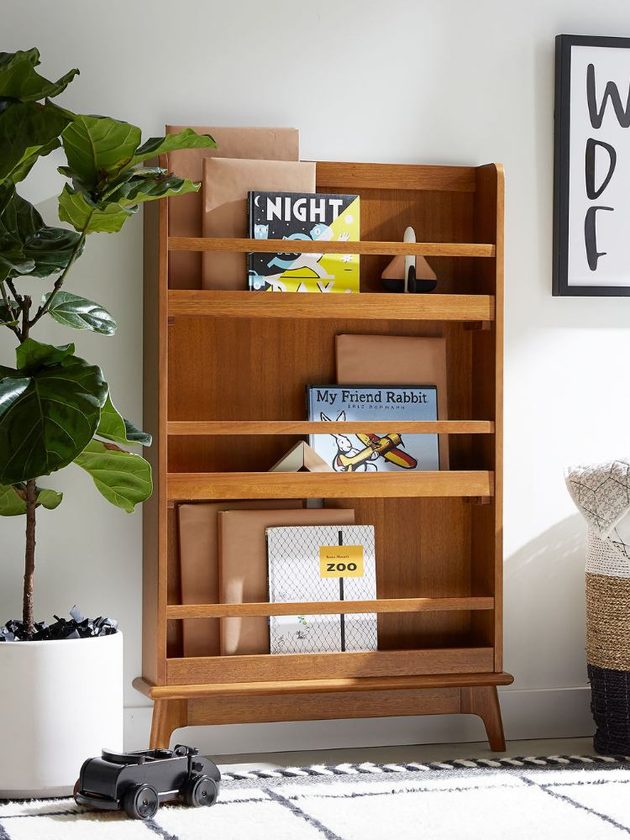
3. West Elm GREENGUARD Certified
Best for: low-tox bookcases and bookracks for kids
This furniture retailer has plenty of adorable, but functional, bookshelves for a playroom or kids’ bedroom. From cubby bookcases to mid-century bookracks, you’ll find plenty of options that are not only GREENGUARD certified, but made in Fair Trade Certifiedfactories, and/or with FSC-certified wood. Note that the company’s bookshelves are made with engineered wood, though.
West Elm also has GREENGUARD certified bookcases large enough for the adults too!
Price: $399 – $2,897
Materials: Solid Wood, Reclaimed Wood
Conscious Qualities: Fair Trade, FSC Certified, and GREENGUARD Certified Options
4. Urban Natural
Best for: a variety of eco-friendly bookshelves
This natural home retailer has sustainable bookcases in all shapes and sizes. From traditional bookcases to open-back asymmetrical shelving units, Urban Natural has options for any interior aesthetic. Each brand they carry values quality craftsmanship, responsible production, and sustainable sourcing.
Price: $1,099 – $5549
Materials: Solid Teak, Maple, Cherry, Walnut, Birch (varies by brand)
Conscious Qualities: FSC-Certified Options, USA-Made Options, Low VOC Finish Options (varies by brand)