

Weather Guard Lightning Tech

States Calculate Onshore Wind Opportunities
In September, when some farmers and homeowners in St. Joseph County in north-central Indiana received letters from German-based UKA Group about the company’s interest in developing a new wind farm, it wasn’t necessarily welcome news. A handful of the letter recipients took to social media to state their opposition. But for the western edge of neighboring state Ohio, wind has provided a significant economic boost for small communities.
Sparsely-populated Paulding County Ohio is home to fewer than 19,000 residents, three utility-scale wind farms, and one-and-a-half solar farms.
Each year from 2015-2020, the county saw roughly $2.5 million in “pilot payments,” pre-tax investments the county negotiated to be paid prior to the project’s completion. (More money was to be paid out once all of the turbines came online.) In 2020, Jerry Zielke, then Paulding County’s economic development director, told Ohio reporter Rod Hissong the new wind farm has been “a really really great opportunity for us and our community financially and it really has helped our economy here in Paulding County.”
Local media chronicled the process, explaining how the money generated was spent, invested, and shared in a variety of ways – including $120,000 in annual scholarships for local students.
Wayne Trace schools were an obvious beneficiary. According to the Spectrum article, “Wayne Trace Superintendent Ben Winans said since the school started receiving wind farm money in 2013 they’ve hired 18 new teachers. ” Winans also noted that the GAP closing – getting lower-performing students to achieve at higher levels – “improved from an ‘f’ to an ‘A,’ ” he told SpectrumOne.
Since then, Paulding County’s new economic development director, Tim Copsey, has increased the county’s income by negotiating to bring two solar farms to the area. Timber Road Solar Farm has been supplying local farmers with a “drought resistant form of income” since it came online in 2023.

Image credit: EDP and Timber Road Solar Farm (Ohio map) and Google Maps (Indiana map inset, below)
Will Indiana WElcome a New Wind Farm?

It may be an uphill battle for the UKA wind farm.
St. Joseph County recently enacted an ordinance to deter solar power generation in the county. But, the state already generates 3,368 MW – more than three times what Ohio’s wind farms generate – and another 302 MW are under construction, according to the US DOE and American Clean Power.
And it’s not a new development – according to the Indiana Office of Energy Development, wind energy has been part of the state’s fuel mix since 2006.
In Illinois, Indiana’s neighbor to the west, 7665 MW, or about 12% of the state’s energy, is derived from wind.
Will Indiana continue to do as other states do – including its neighbors, and other farming states like Iowa, and even oil-rich Texas – and sell wind power to fuel income for their state and county budgets? Time will tell, and we’ll be watching as things develop.
You also might be interested in: New Jersey’s Electricity Rate Crisis is a Perfect Storm for Wind Energy
For regular updates on wind and other renewable development projects, technologies, and news, subscribe to the Uptime Tech News newsletter and tune in to the Uptime Wind Energy Podcast.
https://weatherguardwind.com/states-calculate-onshore-wind-opportunities/

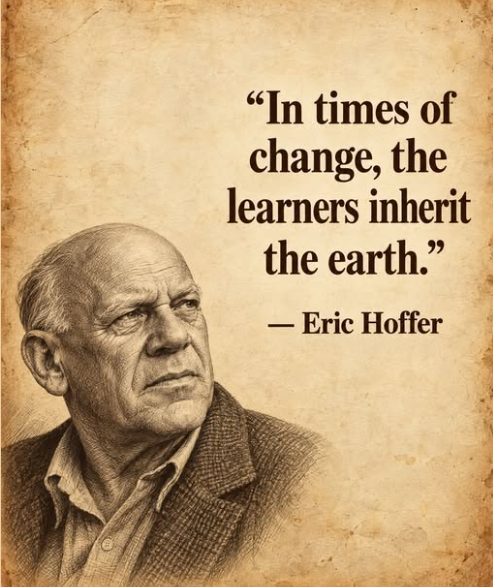 What Eric Hoffer, 20th Century American philosopher and social critic said here is interesting. But is it true? Does it have any relevance to our world today?
At this point, it doesn’t seem that the meek shall inherit the Earth. And it seems just as unlikely that the learners will have any better luck.
It looks like the world, dominated by the fairly greedy, will soon be dominated by the supremely greedy, those who really don’t care one iota about anyone but themselves–billionaires aspiring to become worth hundreds of billion dollars.
This runs counter to the norms of all societies that came before us. Never in our past have we had a civilization dominated by people who did care about their children’s future. Not even the most brutal kings and ruthless pharaohs of the past condemned future generations to dust.
https://www.2greenenergy.com/2026/10/08/whom-will-inherit-the-earth/
How DTU’s Rain Test Facility Predicts Erosion
Rosemary visits DTU Wind & Energy Systems in Denmark, where Nicolai Frost-Jensen Johansen explains rain erosion testing, tip speed, and LEP defects.
The Uptime Wind Energy Podcast is brought to you by Weather Guard Lightning Tech, creators of the StrikeTape Ultra LPS retrofit. Subscribe to Uptime’s Substack newsletter. And check out Rosemary’s “Engineering with Rosie” Youtube channel. Have a question we can answer on the show? Email us!
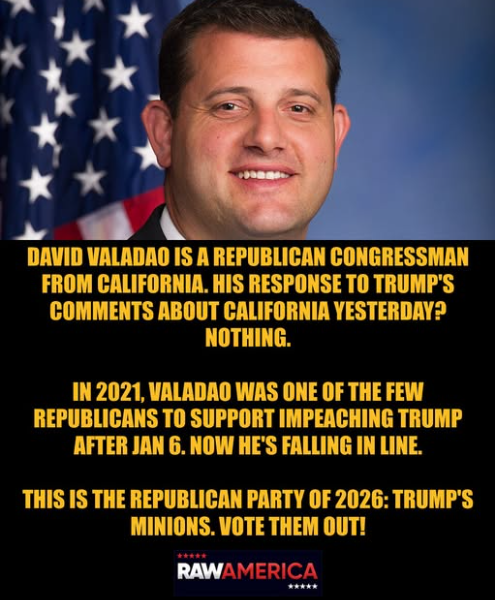 If it’s true that David Valadao is moving back in line with Trump (which seems exceptionally unlikely in California), this jackass is in the slim minority. Most congressional Republicans are trying to pretend they’ve never heard of Trump.
The representative’s district is in the rural farming region in Central California, but still, aligning oneself with Trump makes no more sense than cozying up to skin cancer.



-
Climate Change1 year ago
Guest post: Why China is still building new coal – and when it might stop
-

 Greenhouse Gases2 years ago
嘉宾来稿:满足中国增长的用电需求 光伏加储能“比新建煤电更实惠”
-
Greenhouse Gases1 year ago
Guest post: Why China is still building new coal – and when it might stop
-

 Climate Change2 years ago
嘉宾来稿:满足中国增长的用电需求 光伏加储能“比新建煤电更实惠”
-

 Renewable Energy12 months ago
Sending Progressive Philanthropist George Soros to Prison?
-
Climate Change2 years ago
Bill Discounting Climate Change in Florida’s Energy Policy Awaits DeSantis’ Approval
-
Greenhouse Gases1 year ago
嘉宾来稿:探究火山喷发如何影响气候预测
-

 Climate Change2 years ago
Analysis: China’s CO2 falls 1% in Q2 2024 in first quarterly drop since Covid-19