

Weather Guard Lightning Tech

New ONYX CEO, Smarter Farmland Contracts
The hosts cover some recent turbine failures, Onyx Insight’s new CEO and strategic acquisitions, research about wind turbine farmland contracts, and an article about hybrid brakes by Dellner.
Sign up now for Uptime Tech News, our weekly email update on all things wind technology. This episode is sponsored by Weather Guard Lightning Tech. Learn more about Weather Guard’s StrikeTape Wind Turbine LPS retrofit. Follow the show on Facebook, YouTube, Twitter, Linkedin and visit Weather Guard on the web. And subscribe to Rosemary Barnes’ YouTube channel here. Have a question we can answer on the show? Email us!
You are listening to the Uptime Wind Energy Podcast brought to you by build turbines.com. Learn, train, and be a part of the Clean Energy Revolution. Visit build turbines.com today. Now here’s your hosts, Allen Hall, Joel Saxon, Phil Totaro, and Rosemary Barnes.
Allen Hall: Welcome to the Uptime Wind Energy Podcast. I’m your host, Alan Hall in the Queen city of Charlotte, North Carolina.
Rosemary Barnes in Australia and Joel Saxon in the great state of Texas. Just before we hopped online to record this podcast, Rosemary was telling us about a number of turbine problems on LinkedIn and. Rosemary wanted to comment on them. These are some of the larger turbines. Rosemary are newer turbines.
Uh, some of them onshore, some of ’em offshore
Rosemary Barnes: for the, yeah, for the most part. Um, yeah, both onshore and offshore. Some a little bit older, but the common thread is, um, [00:01:00] just like spectacular fail failures of multiple blades of one across multiple turbines of one, the one I saw most recently. Had blades smashed to pieces.
It had towers that had just like fallen apart. Like it was, um, like they weren’t bolted together. Like it was just blocks stacked on top of each other and they had, you know, just an angry baby had just topped them over. That’s what it looked like. And um, I think what’s really interesting is reading the comments in those and it just, without fail every single time, the first few comments are gonna be.
Um, justifying how that is just cool and normal, like either by the company itself or the turbine manufacturer itself saying, oh, you know, oh, this was just a prototype. So, you know, it doesn’t matter that it fell apart, like. Forgetting about the fact that, okay, it’s just a prototype, but it’s still an operational turbine that people would’ve been inside it to install it.
They’re inside it to maintain it. You know, people are inside those things. They’re not supposed to be able to just fall apart by the time that it gets to that point.
Joel Saxum: I, I, I think I’ve seen some of these same posts, Rosemary, and one of the ones that I saw recently [00:02:00] was not even, it wasn’t new, it wasn’t prototypes.
It was, it was like, there’s a picture, there’s three turbines with, or four turbines and there of the, of the dozen blades in the picture, nine of them are gone. It’s just a nelle hub with like little stubs on three turbines, and those are only like 850 kilowatt, one megawatt, 1.5 megawatt machines. They’re, they’re old.
Rosemary Barnes: Yeah. Yeah. And so I think a typhoon went through in that particular case and I made a comment, you know, like it’s either poor turbine design or it’s really poor site assessment. In either case, it’s a failure, right? Like you don’t put wind turbines that can’t withstand a typhoon in a place that gets typhoons.
Um, but you always, you always say people saying how this is actually great engineering. And I just thought this is just the classic example of that, um, that was written under this latest post, and I’ll just read it out. The pictures point to the designers of these turbines. Having done that, designing to a certain wind speed, having done that to a high degree of consistency, I note three failure types [00:03:00] in the pictures, blade snap, tower, buckling and bolt failure, pointing to all parts, having been designed to the same survival.
Wind speed looks like they did their job well. And it’s just like, oh, what, you look at this, at this path of like it’s Godzilla has run through this wind farm, and you’re like, oh yeah, that looks like a job done. Well, well done guys. It’s just like, if we can’t learn anything as an industry from these kinds of things, then, you know, how can we expect to have a, a bright future for the industry?
Like it? It’s one thing to fail, but if you look at a failure and say, that’s actually a success that is. Just the worst possible outcome we have. We have to be able to say what went wrong, what do we do to make sure this doesn’t happen again? You have to. You have to learn, otherwise you’re going backwards.
Allen Hall: Are you worried about unexpected blade root failures and the high cost of repairs? Meet eco Pitch by Onyx Insight. The standard in blade root monitoring. Onyx state-of-the-art sensor tracks blade root movement in real [00:04:00] time, delivering continuous data to keep your wind farm running smoothly and efficiently.
With Eco Pitch, you can catch problems early, saving hundreds of thousands of dollars. Field tested on over 3000 blades. It’s proven reliability at your fingertips. Choose eco Pitch for peace of mind. Contact Onyx Insight today. To schedule your demo of Eco Pitch and Experience the future of Blade Monitoring, there’s been a series of leadership transitions that is really changing the face of the wind industry.
Onyx Insight. The Macquarie Capital Back Condition monitoring specialist who’ve had in the podcast, um, has appointed Alexis Grennan as this new chief executive officer Alexis Bringss dearly 20 years of experience from Joel. Schneider Electric where he most recently served as CEO of the digital grid division, and his expertise in smart grid software solutions and energy management systems positioned him to lead [00:05:00] Onyx Insights expansion beyond its current 28,000 wind turbines under monitoring across 35 countries.
So obviously Onyx is a big provider of CMS systems. They are the sole provider of CMS systems on GE turbines at the minute. Onyx is making a lot of moves. They just acquired 11 I recently also. So they’re, uh, what it looks like right now. They wanna be the, the leader in CMS.
Joel Saxum: Yeah, I think it’s, if you go deeper into their history a bit.
You know, the couple of CMS solutions around gearbox was really where they started then. Then they got to the eco pitch thing, and then now the blevin. And I think if you’re sitting in that boardroom, you’re thinking they want to be the center hub for IO ot, IOT being sensors out in the field. Anything that comes in, they want to be able to amalgamate it and help people out in that direction.
Um, you know, a new, a new CEO that has, uh, 20 years at Schneider [00:06:00]with digital grid. That’s awesome. Right? Good hire there. I would think. Um, I, I do see this as a trend in wind. You’re seeing some more CEOs and senior leadership coming into organizations from outside of wind directly. Some of the bigger capital holders, you know, the Goldmans of the world and the Macquarie’s and that kind of things, if they have portfolio companies, you’re seeing people be placed in leadership roles that are coming from outside of wind and bringing expertise from, of course, usually energy, software, supply chain, these kind of things that we need, but some fresh blood at the leadership level.
I like to see that.
Allen Hall: Well, the addition of the grid coming into Onyx, is that an expansion plan? Because there is a lot of work going on expanding the grid and monitoring the grid and making the grid carry more energy than what it was originally designed for. And I’ve listened to a number of podcasts over the last month that talks specifically to it.
It, it is a definite growth area. [00:07:00] You think this could indicate a move into other areas besides just the basic wind? CMS. Solutions.
Joel Saxum: Well, let’s think about it this way. So in wind, when you have wind specific companies, you’re starting to see intenders or you have been seen intenders for the last few years, even just the most basics inspections.
Okay? We’re inspecting blades. Use your RFP. Now those blades say, and blades plus BOP. So we want you to do the transmission lines. And then you’re seeing some of ’em that are BOP plus substations. So all the sub, all the way back to the edge of the wind farm where connects to the grid. Um, so companies are adjusting, like you’ve seen Skys specs adjust to that.
You, you know, whether it’s partnerships or expanding things internally and other companies as well, even down to the ISPs starting to do more and more and more because they’re being asked to. This makes sense because, uh, at the end of the day, if you’re working for a subset of customers, there’s only so much budget in.
Of turbine work and if you wanna expand your company and grow, you need to expand in other [00:08:00] areas. So why not just keep it going down the line of connection to the grid, inter, inter wind farm issues, those kind of things out of the wind farm. So I, I don’t know if that’s ON’S plan, but I can see that. I think that from a strategic standpoint, it makes sense.
Allen Hall: Well, as Schneider is involved in all kinds of aspects of the grid worldwide, so I would assume bringing in a new CEO would open up maybe some horizons to Onyx and maybe there’s adjacent businesses that they should be in because they have a lot of technology and they’re pretty smart group. They may want to expand outwin just a tiny bit just to, to test the waters, see what they could do there.
Well, going to solar seems like an obvious choice, but there could be other areas that they may want to look at, at least in the short term to see if they can add value.
Joel Saxum: Yeah. Grid infrastructure. Right. I think that that’s a, we talk about it regularly that our, our entire global grid is aging quickly. It’s aging fast, and with the changes coming [00:09:00] on board with.
You know, different generation types, all the batter, different types of battery storage, and you know, like our, our conversations with Joe Chicon over at Podge about, uh, frequencies on the grid and all these different changes and load changing and AI data centers coming up and on and off and on. Um, it’s really highlighting the need for a future digital grid, uh, and upgrades to it.
So Onyx is probably, you know, in the wind world that we see, they’re probably sitting pretty. In a pretty good spot as compared to most companies to be able to engage in that and bringing on someone from the digital grid side of Schneider. Smart move in my my opinion, I dunno. Rosie, what are your, what are your thoughts on that
Rosemary Barnes: in general?
I think it’s really good to move people around to similar industries or a little bit different, different roles. Uh, I think that that’s a, um, a real way to drive innovation forward by bringing in different perspectives. I know that I. I found myself appearing more innovative when I lived in Denmark. You know, just purely [00:10:00] because I had seen and experienced and done things in a different, a different way, solved similar problems in a different way.
Um, just, just through what I, you know, the kinds of engineers I worked with earlier in my career. It was different to the way that a lot of Danish people had been taught to approach problems. And it just, you know, when you bring in a few slightly different people, it really expands the um. Amount of options that you have on the table for solving new problems as they come up.
And all of these kinds of industries are doing stuff that hasn’t been done before, right? So I think you do want to have as many different options that you, as you can come up with to, um, end up with the good solutions and you’ll get more options if you don’t choose people that are all from the exact same background.
So I think in general, that, um, it’s always good to, to shake things up
Allen Hall: in this quarter’s PES Win magazine, there’s a lot of great articles that you. Need to read. And the way to do that is go to PS wind.com and download your free edition. [00:11:00] And we wanna talk about an article in the magazine this quarter, Joel, which is Hybrid Breaks Ya Breaks.
Why you would use ’em, why they’re, this is a little bit different than what we typically see on like a GE machine. Uh, Siemens GAA uses these quite a bit, which are sort of a passive and an active, so they’re a break. So there’s a hydraulic cylinders and there’s some active pads that close, but there’s also some static pads and they’re using slip rings instead of a, a bearing surface to rotate the jaw.
So if, if that makes sense. You to do an active system, uh, you can really put stress on your, on your ball bearings and probably flatten them over time if you keep squeezing enough. With this system, it’s a little more control, a little more precise. So you’re, I, I think the, the argument they’re making is that it, uh, simplifies the system, so there’s some complexities to it, but overall.
It costs less, [00:12:00] and that’s what we should be doing in engineering, right? Trying to figure out ways that maybe just cost a bit more for a component, but less overall.
Joel Saxum: Is it a direct retrofit? Like is this a, Hey, we’ve, we’ve had, we’ve had a component fail, so we want to put a new system in. Or is it like aix, swap it out now as a CapEx cost?
Or is it like during Repower, when are they putting this on?
Allen Hall: It’s from Donor Wind Solutions, uh, and they’re doing, doing it as part of OEM work, right? It, it does take a little bit of finite element analysis because of the way it loads up the, the yaw system. So you want to make sure that it doesn’t overload it if you’re gonna use it, but it’s one of those things in wind like, uh.
Try to choose a simpler system on a smaller turbine. As you get larger and larger, your approach probably changes. And this is what Ner is pointing out.
Joel Saxum: I’ve noticed that actually, if you’re, if you’ve frequented any wind conferences, technology shows, exhibitions, you will know where NER is because everything on their booth is lime green.[00:13:00]
Um, I love that. I think it’s a great approach, uh, which everybody knows. It’s, it’s like seeing the Dema, the Dema ships or the SVA ships in a port. You’re like, you know what? That one is right away. Uh, but del nor, but that’s what Nert does, right? They, they are. They have parts that are direct replacements.
Great. This is the part we’ve made it a little bit better, but it’s a direct replacement. But they also are re-engineering things, making them better, uh, for the long haul, uh, from a operations standpoint. ’cause I’ve seen some of their pitch, they have different kind of pitch systems and stuff as well that they are, are retrofits for, for, uh, specific machines that have trouble with them.
Um, but yeah, uh, this one to me, I’m not an expert on jaw brakes. Of course, that’s not my thing. Uh, but I do know that whenever you have to deal with that YA system, whether it be the gearing, the brakes, or the, you know, like the, the pucks and the GE go bad all the time. Like it’s an undertaking, uh, down to the point where people have developed UPT tower machining processes to fix, uh, issues with the YA system and whatnot.
So, um, if they’re, if, if someone is putting this [00:14:00] much engineering effort into fixing a problem, it’s definitely a problem.
Allen Hall: Yeah. Even think about the problem though, you have so much weight. Up into the cell and you’re trying to pivot all the time, and the wind is trying to move into the cell whether you want it to or not.
The YA system kind of takes all the abuse. So designing a system to last is really the key here. Without breaking things, I mean how many turbines have we seen where the YA gear teeth have been damaged or broken off? Because the brake system is not really de-stressing those teeth. It matters a lot. So as we get more and more efficient with wind turbines, we gonna be thinking about all the different components that go into a wind turbine and making them more efficient, making ’em last longer, making them cost less.
So if you haven’t downloaded the latest PES wind. Magazine do it. You can read this article from Donor. Just visit PS wind.com. As Wind Energy Professionals, staying informed is crucial, and let’s face it difficult. That’s why the Uptime [00:15:00] podcast recommends PES Wind Magazine. PES Wind offers a diverse range of in-depth articles and expert insights that dive into the most pressing issues facing our energy future.
Whether you’re an industry veteran or new. Wind, PES Wind has the high quality content you need. Don’t miss out. Visit PES wind.com today. Well in the US when a wind company wants to put some turbines on your farm, uh, the operator just talks to the, each farmer individually and negotiates a deal. Now a lot of those deals are very similar, but you may find from neighbor to neighbors, slight differences and farmers are getting.
Smarter over time. Clearly. Uh, a professor or assistant professor up at Purdue University in Purdue is in Indiana, kind of central part of the United States, explains that landowners can be paid up to $10,000 per acre annually [00:16:00]to lease to wind energy companies. And that’s a great amount of money. We’ll take that, but, and the turbines only occupy maybe one to three acres, and so you can continue to farm your several hundred acre parcel.
Uh, but. This professor notes that the farmers are starting to consider other factors than just the money, including the visual impact community relationships, which is the big one I think lately. And political beliefs about renewable energy, which jolt talks about all the time in Wisconsin. Uh. The advice from the professor is have an attorney to review the lease and to make sure that the wind operator is going to restore the land to its original condition once they stop using the turbines.
And I think that makes a ton of sense. So you’re seeing a slight shift in the way that landowners are coming to agreement with some of the operators. It is about the money, a large part of it, but they’re also trying to navigate the neighborhood situation where they don’t make their neighbors upset. You can imagine a lot of them have been there for generations and they don’t [00:17:00] want to really make the neighbors mad at ’em.
Uh, so you’re seeing a lot different types of leases coming about now than maybe you saw five years ago even. And that has evolved, uh, quite a bit. But the money is still good. I think most people, at least in the United States, most farmers will. Like to have that additional revenue. It just makes the farm much more profitable over time.
But that same situation doesn’t exist worldwide. And Rosie, are you seeing something different in Australia? It does seem like there’s a little more spreading of the wealth in, in terms of revenue.
Rosemary Barnes: I actually listened to a good podcast episode on this recently. Uh, it was the switched on, not the Bloomberg switched on, but the renew economy switched on.
Um, and they interviewed a now retired farmer who had, had one of the very early wind farms, um, in Australia, put on his farm. And I mean, his story was o overall very positive. It it, the [00:18:00] time when they started talking about it was during a very severe and prolonged drought in Australia and he had actually been trying to sell off land, um, just to keep the.
You know, keep the lights on, um, and was unable to sell. Like just there’s no buyers at any price at that time. And then, so the wind farm came and he, he also mentioned how important it’s to get, um, lawyers, good lawyers advising on the contract because he mentioned that he was getting paid every year before construction as well.
And that it ended up taking 10 or 14 years, I can’t remember the exact amount of time, but a long time. Between starting to talk about it and actually having the wind farm built. And if he hadn’t have had that, he said he wouldn’t have been able to make it. So, um, that was one thing. But yeah, so and so overall it was very positive for him.
He was eventually able to sell his farm and, and retire, um, nicely with a profitable farm. He also mentioned that he was able to do a lot of upgrades on the farm with the money, the revenue that was coming from the wind turbines. So when we went to sell, it had all new fences and, you know, stuff like that [00:19:00] that made it very attractive and easy to sell.
Um, but he also mentioned a few things that were just really bad, and he sounded really angry in that episode, um, where, uh, he, he said at that time it was like the wind developer knew everything and the farmers knew nothing, and they tried to keep it that way. Like he had a brother on a neighboring property was also in discussions about wind turbines, and they were forbidden from talking to each other.
I think that that’s a lesson that’s been learned over the last 10, 20 years in Australia, is that. It’s really worth it to put a bit of effort upfront in, um, listening to what people’s concerns are and then doing something about it. Uh, I think there’s been so much emphasis on like listening and talking and listening.
That’s not the important part. The important part is then understanding what the issues are and then, um, you know, removing those, those barriers. And, you know, money is a big part of that.
Joel Saxum: I spent. A eight plus years dealing with these issues in the field with landowners on, on oil and gas [00:20:00] projects, right?
So there’s stages of oil and gas projects from exploration to production and all these different things, and they, and everybody gets different lease payments and, and access payments along the way. And, and if you, you know, if someone has locked up your land in the seventies, you may only be getting five bucks.
And if someone has this, they’re getting more. It’s, and it, what ended up happening is, is. You need to, you need to, and we’re in the, we’re in the same space of wind because those same people, those same professionals, landmen and permit agents and stuff that worked in oil and gas work in wind and solar as well.
It’s the same companies. It’s the same ideas.
Allen Hall: Yeah. Same groups.
Joel Saxum: Yeah, same groups. Um, they, they need to distinguish and make sure they’re taking care of participating landowners and non-participating landowners. And the non-participating landowners, just like we’re talking about here, they’re just as important as the participating ones because they’re the ones you’re gonna piss off.
Uh, so, so you’re starting to see some payments going directly to them as well. Like if you’re within X amount of feet of a turbine, even if you’re not on your land, you are starting to get a little bit of a payment [00:21:00] in some areas, in some spots. Um, but one thing I wanna flag is, at the beginning of this, we talked about a lawyer, bringing a lawyer in and having them look at certain things.
I would say this and maybe the wind industry developers are gonna hate me for this. But there’s a legal, legal concentration called, um, a, a favored Nations clause or a most favored Nations clause. If you are a part of anything of this sort, make sure any, any signing, any contract for wind, uh, non-participating.
Participating. Make sure you have a clause like this in your contract because it will basically State wind Farm goes in a hundred turbines. If they’re offering you five bucks an acre and they’re offering your neighbor a thousand, you get a thousand too. It makes, it makes everybody equal in the playing field.
It doesn’t give anybody, uh, you know, better terms and conditions. Once one person gets a term and condition, that’s good, everybody gets it. That has that most favored nations clause in their contract. So have a lawyer institute that if you’re gonna be a part of one of these.
Allen Hall: Yeah. The other thing that was pointed out in the [00:22:00] article was, uh, a lack of increasing payments adjusted to inflation.
So some of the farmers are pushing back because inflation is relatively high. So if you got $10,000. Per acre per year in 2035, he may want to see something more like $15,000 per acre per year because of inflation. That to me makes a lot of sense, but I know a lot of leases don’t work like that. They’re just.
Fixed price. It’s today’s price and it stays that way until the end of the lease. It’s just simpler to do. There’s a lot less math to do. But Joel, as you see more, uh, farmers getting advice, taking advice, do you see this evolving into a more of a standard contract where they. Do have the favored nation.
They do have inflationary increases based on cost of living or some federal standard so that you’re, instead of having to negotiate every contract completely separate, you’re getting [00:23:00] something a little more universal, including helping the neighbors.
Joel Saxum: Yeah. The tough thing there is that a lot of wind.
Okay, so we’re like, I’m just gonna pick the United States example. You’re in different states, you’re in different counties, you’re in different areas, right? So if you go to Minnesota and you talk to someone in Minnesota about their mineral rights, they more than likely don’t know what you’re talking about.
Yeah, because that’s not a thing up there for most of Minnesota. Some of Minnesota is right, the Iron Range and whatnot, but if you talk to someone in Texas about mineral rights, that’s just as important or of more important than their actual real property surface rights. So they know and, and they have to build contracts around certain things the same way oil and gas contracts were like at oil and gas contracts at, you know, early days were easy.
It was X amount per acre. That’s it. Uh, now you have people buying strata and leasing strata out of, uh, subsurface things, and you have. Payments tied to payments tied to production, right? And I haven’t seen a whole lot of wind payments tied to production. I don’t know if that exists or solar, um, [00:24:00]that that can be a, you know, a shared upside or shared downside type thing.
Um, if someone’s gonna pay me $15,000 an acre, I’m just taking the cash. I don’t care what your production is ’cause that’s a great rate. So, so, um, you, you know, I think that. Using these organizations that have been doing this for a long time, that is a smart way to go if you’re an operator, uh, that know how to navigate the town halls and that know how to do these things professionally because there is actually just like you have to have a real estate license.
There is a professional landman license, uh, of, to do this kind of stuff. Uh, so there’s schooling, there’s certifications, all this. Again, I’m just talking in the United States here. Um, but, uh, I don’t know if I see a across the board. Federal type contract. ’cause it’s just too many municipalities, too much, too much going on.
Allen Hall: Well, we’ve been looking at a lot of wind farms the last couple of months on the lightning side and realizing, you know, how [00:25:00] dedicated the wind farm installations are to putting ’em on ridge lines, even if it’s a, a. A hundred feet higher. So that tends to spread out the wind farms. Unlike in some parts of Kansas where there isn’t a lot of variation in the, uh, in the surface in other places.
We’re just looking at Oklahoma, uh, where the turbines are specifically falling ridge lines. So you’re gonna end up crossing a lot of property lines when you do that, I assume. And you and I have been on a number of sites where. We’re going from one turbine to another and we’re crossing three or four different property owners and not that far of a distance.
Fences and gates. Right? The fences and gates. Bet. So even if you don’t have a turbine on your property, you may have a road on your property. And the how they navigate that. So if, if, if, if whoever’s. Taking on those contracts and negotiating on those contracts has a load of work to do. It’s going to be,
Joel Saxum: and like I like, I think I go back a little bit like it’s gonna be dependent on where you are, because a contract in Kansas is gonna look a lot different than a contract in Wyoming versus a contract in Texas just simply [00:26:00] because of local laws, access rights, these kind of things.
I’d say, I mean, however, one of the, that’s one of the things that’s cool to touch on is some of these farmers and ranchers, like when I was in oil and gas stations in Wyoming, they loved when the exploration crews came ’cause they would get money for roads. And they’d be like, oh, these old two tracks. Make that into a road that can take an 18 wheeler down then, then you can have access.
And they’re happy, happier than hell. This week’s Wind Farm of the Week is the Alta Complex owned by TerraGen out in California. So at one point in time, of course if you’re a part of wind lore in the United States. You know that this was the biggest wind farm in the United States at 1,550 megawatts. It was also the third largest onshore project worldwide.
Now there’s been a couple of the Sun Zia projects and stuff have been a bit bigger, but this thing is massive. Uh, spreads across about 9,000 acres and holds, hosts almost 600 turbine. Uh, so it started in 2010. Multiple phases of construction, uh, ended in 2014 and financed with almost $3 billion. [00:27:00]Uh, and it’s in that Tehachapi Pass area.
So, uh, it has, it actually still does have some capacity for expansion. Uh, but we wanted to share this one because, uh, just the size and scale of this thing, uh, being that it’s so big, uh, and as well. Long-term power purchase agreement signed with Southern California Edison. Uh, the output averages enough power to, to power about 450,000 homes annually, uh, which is just massive.
Uh, it’s created over 3000 jobs. And I think this one, the economic story might be the, the, the, the feather in the cap, uh, is it in his injects over $1 billion into the regional economy, which is just massive. So, uh, kudos to the wind industry for making this one happen. Uh, but looking ahead, uh, it is a bigger part of that Tehachapi wind resource area when it has the expan or has expansion potential of up to 10 gigawatts.
Uh, as California continues to grow out, its renewable grid. So this week’s wind farm, the Ulta Wind [00:28:00] Complex, so owned by TerraGen out there in California, the Wind Farm of the week.
Allen Hall: That wraps up another episode of the Uptime Wind Energy Podcast. Thanks for joining us. We appreciate all the feedback and support we receive.
From the wind industry. If today’s discussion sparked any questions or ideas, we’d love to hear from you. Just reach out to us on LinkedIn, particularly Rosemary, and please don’t forget to subscribe so you never miss an episode. So for Joel Rosemary, I’m Alan Hall. And we will catch you next week on the Uptime Wind Energy Podcast.
https://weatherguardwind.com/onyx-ceo-turbine-failures/

How DTU’s Rain Test Facility Predicts Erosion
Rosemary visits DTU Wind & Energy Systems in Denmark, where Nicolai Frost-Jensen Johansen explains rain erosion testing, tip speed, and LEP defects.
The Uptime Wind Energy Podcast is brought to you by Weather Guard Lightning Tech, creators of the StrikeTape Ultra LPS retrofit. Subscribe to Uptime’s Substack newsletter. And check out Rosemary’s “Engineering with Rosie” Youtube channel. Have a question we can answer on the show? Email us!
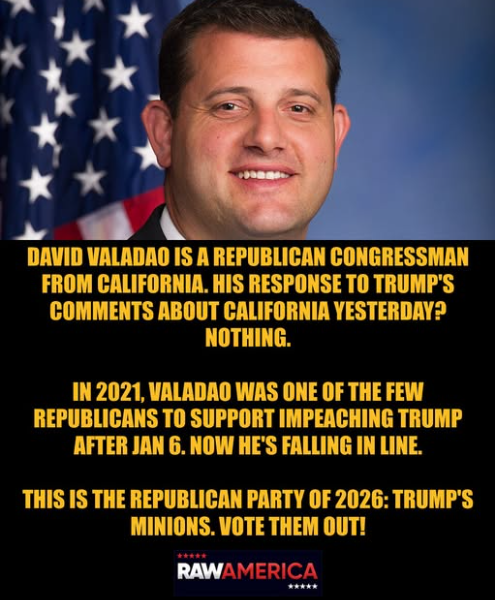 If it’s true that David Valadao is moving back in line with Trump (which seems exceptionally unlikely in California), this jackass is in the slim minority. Most congressional Republicans are trying to pretend they’ve never heard of Trump.
The representative’s district is in the rural farming region in Central California, but still, aligning oneself with Trump makes no more sense than cozying up to skin cancer.
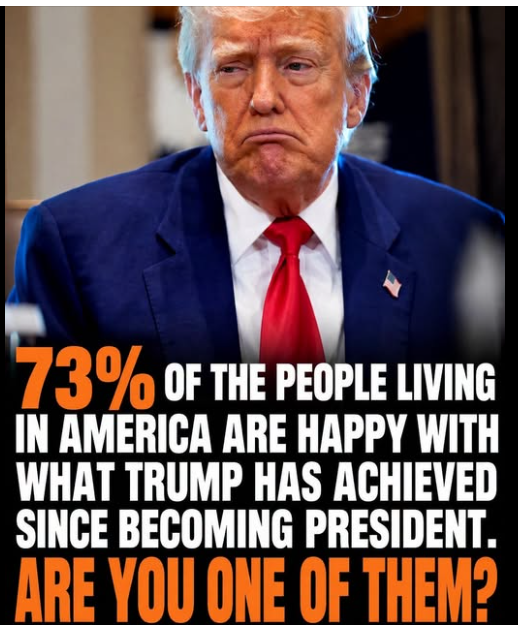 73%? Why not 95%? 125%?


