Connect with us

Published

on

Weather Guard Lightning Tech
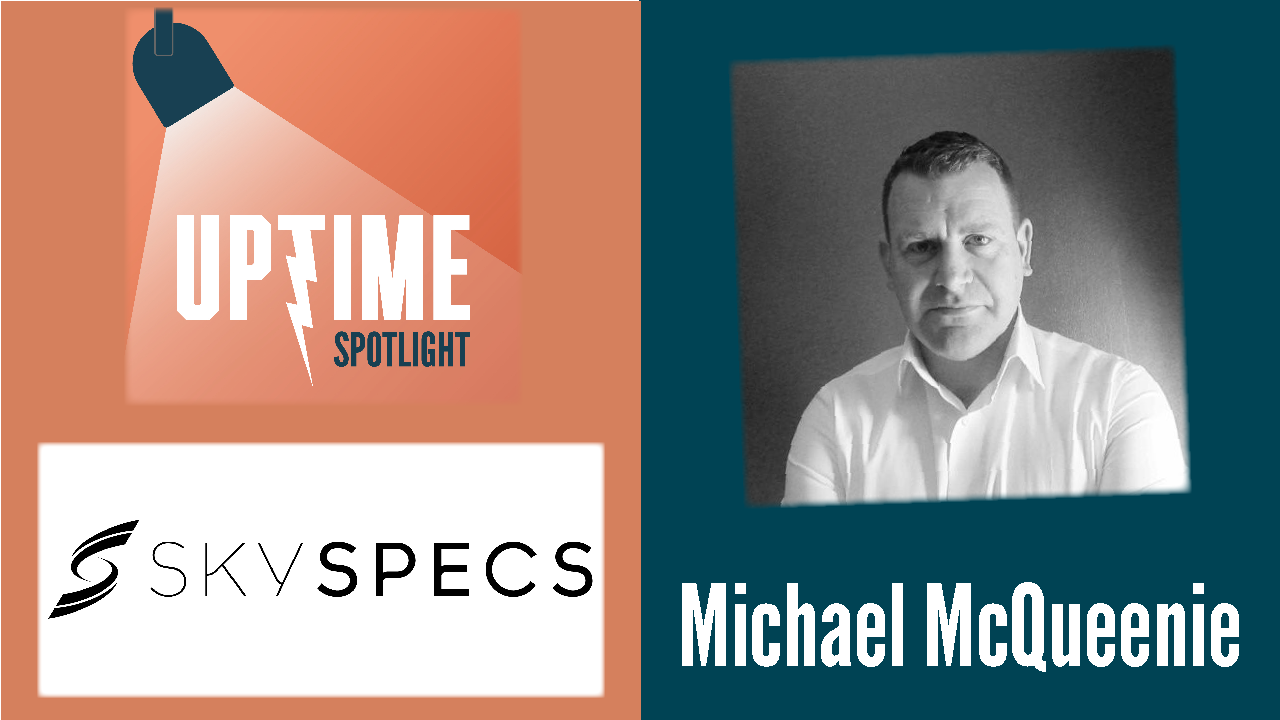
SkySpecs Supports European Wind Growth

Allen and Joel sit down with Michael McQueenie, Head of Sales for SkySpecs in Europe at the SkySpecs Customer Forum. They discuss the booming European wind energy market, SkySpecs’ role in asset management, and their expansion into solar farm operations.

Sign up now for Uptime Tech News, our weekly email update on all things wind technology. This episode is sponsored by Weather Guard Lightning Tech. Learn more about Weather Guard’s StrikeTape Wind Turbine LPS retrofit. Follow the show on Facebook, YouTube, Twitter, Linkedin and visit Weather Guard on the web. And subscribe to Rosemary Barnes’ YouTube channel here. Have a question we can answer on the show? Email us!

Welcome to Uptime Spotlight, shining Light on Wind Energy’s brightest innovators. This is the Progress Powering Tomorrow.

Allen Hall: Welcome to the Uptime Wind Energy Podcast Spotlight. I have Joel Saxum with me. I’m Allen Hall, the host, and we are here with Michael McQueenie head of sales for SkySpecs over in Europe. Michael, welcome to the show.

Michael McQueenie: Thanks for having me.

Allen Hall: We are at SkySpecs customer Form 2025 and it has been a blowout event, so many operators from all over learning and exchanging information about how they operate their assets.

We wanted to have you on today because you’re our reference to Europe and what is happening with SkySpecs in Europe. America and Europe are on different pathways at the moment. What is that status right now in Europe? What are people calling you for today?

Michael McQueenie: the, European market is really booming.

we get calls from customers to support [00:01:00] with internal inspections, external inspections as we always have for, nearly a decade now. We are seeing a lot more, discussions around the, enablement services that we can offer. how did, how do we bring a blade engineer and how do we bring a CMS engineer into support and give us, give us more of an insight on the data that we have or, or the data that Skys fix are producing.

things are evolving. and, it’s a buoyant offshore industry at the moment.

Allen Hall: yeah, there’s like thousands of turbines going up right now. it used to be when you thought of. Deployment. Unlike Germany, for example, it’d be three turbines on the hillside.

Michael McQueenie: Yeah.

Allen Hall: Now we’re talking about in the uk have hundreds of turbines hitting the water.

Michael McQueenie: Yeah.

Allen Hall: And that’s change of scale has driven a lot of operators realize I need expertise in blades, I need expertise in CMS. I need an expert in gearbox, but I don’t necessarily need them full time.

Michael McQueenie: Yeah.

Allen Hall: Skys spec. Can you help me?

Michael McQueenie: the projects [00:02:00] are, they’re fewer projects, but they’re, the scale of these projects are massive.

the scale of the turbine scale of the projects and the impact the projects can have on, the country, as a whole is, is massive. So yeah, it’s, it is a. It’s a, it is a great time to be in Europe and to see the growth. it’s been, coming for a long time. I’ve worked with consultancies who are looking at feasibility studies, in offshore, and onshore.

But the, the growth has been. Just, it’s just around the corner. And I do feel like now with some of these big projects that they’re installing, and yeah, just given the size of the turbines, it’s it’s massive.

Joel Saxum: one of the things I want to, I think there’s an important context here is that we’re talking, we’re sitting in Ann Arbor, right?

we’re in the us You’re over in Europe. I worked for a Danish company for a while and it was always like this seven hour delay. Kinda can I get the in, can I get the support? Can they get the support? Can we work? How do we work back and forth? Sometimes it was cool because you’d send an email at two o’clock and when you woke up in the morning [00:03:00] it was done.

That was awesome. But also there was these delays. Now this is the interesting thing here is, and Skys facts. This morning we listened to Cheryl. always a great presentation. Yeah. the head of the TEI blade stuff here. She was delivering some insights, but with her was Thomas. Thomas is in Europe.

And you have CMS experts in Europe. You have the local talent that’s over there that can work with these operators on their timelines, on their regular day stuff. They’re not waiting as, and what I’m trying to get to is, is SkySpecs is not a Ann Arbor company. Skyspace is a global company in a big way.

And so this, so thinking like, oh, this is an American company, w. Will we use someone that’s more local no. No. Skyspace is a local European company as well.

Michael McQueenie: Yeah, and we’ve got the SMEs over there. it’s not just Cheryl, who’s a fantastic en engineer. Having your at your, disposal, Thomas is phenomenal.

customers are seeing real value in integrating him into their team, being the SME [00:04:00] for them, as you, as we said before. Being able to turn ’em off, on and off as required. Don’t, you’ve not got that the FTE cost right. to bring in an SME that, that needs to, support you with a, with an individual component of your, asset.

Yeah. Blades are a huge problem. The industry’s seeing that as they’re getting bigger, the problems are getting bigger. but yeah, having, a local presence in Europe is, massive. my inbox is full from, all the US. Inquiries and issues, during the night, just like you’re saying.

Yeah. And I wake up to dozens of emails with, requirements on inbox and my to-do list is full. But the, but the reality is yeah, we’re, grown in Europe. we are. Our real solid presence in Europe and we’ve, seen massive growth this year.

Joel Saxum: I think it, it’s part of the value chain there.

Touching on the Thomas and Cheryl. Right. So in SkySpecs over this week, we’ve been talking more and more about the, how you guys like to specifically work within a workflow. And that workflow being we have [00:05:00]inspections, we’re in the platform now we’re in horizon, bam. And we can enable the tech enabled services, which is those SMEs which you have inside.

The company and then rolling that forward to the repair vendor management, which is happening in a big way in the States. Yesterday I saw a number, $13 million in repairs managed by the Sky Spec team. That’s huge. And, that same capability. And we’re just talking blazes right now, like we haven’t even touched on CMS performance monitoring, financial asset monitoring.

That same concept is, is replica replicate in the EU as well.

Michael McQueenie: No, it absolutely is, Our customers have got problems, we can help them with the problems. Thomas is, as you said, we work in workflows and Thomas is, is looking to support customers with how they, touch their data as few times as they possibly can.

How do we get from A to B and how does a customer understand what their problems are and how they fix the problems? And sometimes an [00:06:00]SME is the, way to fix that. Thomas has provide, provided huge value to our customers. The design of workflows in Horizon is the, essence. It exists just to try and get from A to B and, and try and drive insights and then next steps.

And I think that’s the important part, being, this is the action to

Joel Saxum: get

Michael McQueenie: to the, we’ve got the data, we understand what the data’s telling us. here’s an insight, but actually what is the follow up? And, Thomas is designing that follow up for our customers and providing the support.

Allen Hall: and just a little bit comparison between the United States and Europe, when we still talk to anybody in the United States about a turbine.

Almost always, it’s a two megawatt, one and a half megawatt turbine, right? Occasionally a four. Sometimes someone says

Joel Saxum: yesterday like, oh, that’s a three megawatt

Allen Hall: turbine. Whoa, what’s big? And in Europe, three megawatts was like years ago, particularly offshore that, everything’s 6, 8, 10.

Michael McQueenie: Yeah.

Allen Hall: Plus

Michael McQueenie: 3.6 was the common [00:07:00] turbine.

Five, eight.

Allen Hall: Yeah.

Michael McQueenie: Years ago, that was, what everyone was working on. And, they’re a very reliable turbine. It’s, there was a reason why there were so many of them installed at that time. but nowadays, we’re helping OEMs with 50 megawatt turbines.

Allen Hall: and I think that’s the, thing that we just don’t see in the states is a turbine that’s 15 megawatts is down for a day.

Is so much more expensive and particularly offshore and the expenses go astronomical compared to onshore. Yeah, and Michael, I always see your position of you’re there to save. Millions of pounds or millions, of euros all the time because a shutdown there is huge.

Joel Saxum: Yeah.

Allen Hall: And because the grids are changing so much in Europe where they’re becoming more solar and wind dependent and coal is going to change away.

And

Joel Saxum: triage.

Allen Hall: Yeah. The triage bit, is that the SkySpecs is in that position to really help a lot our operators out. You’re [00:08:00] providing the insights and the guidance and the knowledge that. An operator probably doesn’t have, because they don’t have the staff to go do it. It’s a And can you enlighten us like what that is because we just don’t see a lot of that here.

Michael McQueenie: Yeah. I think there’s a good reason you don’t see that this was, we are just providing data to some of these, transactions. Whether it’s a due diligence, inspection, or an end of warranty. We are just providing the insights for the customers to. Make their own decisions. Um, so it’s not a SkySpecs decision.

We are just providing insights to, to allow them to make a, smart, educated, data-driven decision.

Joel Saxum: I think that’s important, concept too. ’cause like here, the Skys spec user form, of course, we’re in the States, so we’ve been talking and I think there’s only two or three people here from.

Yeah. From overseas. So we’ve been talking a lot about the one big, beautiful, what it means. That doesn’t mean that much to you in your daily life, right? No. But your daily life is a bit different with, you have more of a focus on. Maybe financial asset owners. ’cause the market’s different, right?

Michael McQueenie: yeah.

Absolutely. The, [00:09:00] simplification of process and actually having a workflow no matter what, it’s, whether we’re taking financial data, CMS data or performance, SC data, The simplification of that process and driving insights from it is literally the foundation of what SkySpecs have been here to do.

So providing, financial institutions funds with the ability to. Reach out and, make quick decisions, data-driven decisions. there’s some very smart people in these organizations, asset managers who are, A costly resource to the fund. What they really need to do is pull le pull levers as in when it’s required to.

We need some support with sc. We need some support with blades. How do we, how do they, bring that resource and that expertise in house without having the FTE? and the funds are, phenomenal companies. They’re, growing fast. They don’t want the linear growth of people. to go along with that, that, growth of their portfolio.

So it’s important that we build relationships and make sure that we’re helping them [00:10:00] in every side of their business, whether it’s financial decisions or, technical decisions.

Joel Saxum: I think there’s a, there’s an important takeaway from this week as well, listening to all the SkySpecs, the people, the presentations, the communications, the, collaborations, the conversations.

Some of ’em a little bit later at night than other ones. I, won’t name any names, but. Listening to those things and understanding this. So a few weeks ago when I was talking with, we talked with Josh Garrell a little bit ago, and I, shared this with him. I saw a McKinsey report that said, SkySpecs, inspection company.

SkySpecs to me is not an inspection company. they do the best inspections in the world, in wind, in my opinion. Yes. However, there’s so much more, there’s so much more there. And it is, it’s really a full support in my opinion, for the CMS to scada, the performance monitoring, the financial asset modeling, the tech enabled insights, repair, vendor management.

There’s so many other solutions within this umbrella that I think a lot of people don’t see.

Allen Hall: And the one case study that came up yesterday, Michael, I think [00:11:00] that I found interesting was the offshore. Inspections before blades are hung. Yeah. And we see a lot of times in the states where blades are damaged in transport, we think, okay, yeah, the truck damaged it.

Okay, fine, we can fix it on the ground. But on the offshore case, that simple repair now has to happen out in the ocean, and that goes from a couple of thousand dollars to 10. Pounds to tens of thousands of pounds or more to get that resolved. And you had a case just like that.

Michael McQueenie: Yeah, and I think it’s hundreds of thousands if we’re being honest.

Yeah. If you start looking at vessel costs, crew costs, everything else. But actually what I like about it is that OEMs are actually becoming way more proactive because they know the cost of an up tower repair compared to, an onshore repair. So having the foresight to. Have the inspections completed at the right time.

Working with us on timelines, using technology to perform the inspections, getting through as many as we can, as quickly as we can, [00:12:00] addressing the problems, doing the analysis, and then actually solving the problem before it goes offshore is massive drainage that, how many times is a bleed lifted from the factory to installation.

Lot. It’s a lot. It’s a lot, It’s handled a lot. So there’s a opportunity for something to go wrong, as you said, oh, it’s been knocked, it’s, there’s something wrong. Something’s happened. but solving that is the OEM’s responsibility. So they’re becoming much more proactive in my opinion. we’ve, we’ve had a lot of use cases this week, and it’s always been about the, owners, the operators, how we’ve saved them money, how we provided them value.

The OEMs are looking to us to help them on that front as well, whether it’s robotic or whether it’s, providing analysis or, or a platform to, to manage the data. we are working with, with them in offshore, but the problems are so much bigger.

Allen Hall: I think the OEMs are learning from Skys spec, so watching what operators are doing to hedge their bets to protect their assets.

And SkySpecs is pretty much involved in all of that. [00:13:00] Now the OEMs are watching the operators saying, why are we not doing that? We’re seeing that in

Joel Saxum: the lightning.

Allen Hall: Absolutely. We’re seeing enlightening. We’re seeing it in CMS now. We’re seeing it in a number of areas where the OEMs have watched SkySpecs maneuver and provide better value to their customers that the OEMs are trying to mirror,

Joel Saxum: I touch on another case study because Alan, you and I sat in on this one yesterday, and if so, I’m gonna put my, my, I’m a European operator hat on. and this is a little weird. I don’t, I have a good accent. Not, I’m not gonna try that, but okay. Say I’m going to, I have a smaller wind farm, right?

So I may have, 20 turbines of a specific model, and I would like to understand where am I at for performance benchmarking? Am I doing well or not? I don’t have a huge fleet. European fleets are not that big unless you’re offshore. As specifically compared to the US where our wind farms are a hundred, 120 turbines.

Sun Z is a thousand turbines, right? That’s a wind farm. So the problem is different, [00:14:00] but Skys spec has that data. If this is your site, let’s look at how your site is doing compared to. These 1500 of the same models around the world. And then you can look at that, understand your performance benchmark, and then start diving into the issues that may be causing it, to not perform as well.

And then fixing them and getting it up to speed to what it should be compared to everybody else. And I thought, man, what a use case, especially in the European market.

Michael McQueenie: No, absolutely. and we always talk about benchmarking. We’ve, I’ve been with companies who have tried benchmarking in the past, looking at KPIs.

How do you benchmark your performance of your turbine against something similar? And I think Skyspace are starting to get that right. we’ve, got the sc the scatter data and looking at the biggest impact in damages or the biggest failure faults that you have on your turbine and how we, how it can help you.

Push the OEMs. Yeah, just give them a prod to,

Joel Saxum: we saw

Michael McQueenie: case studies on that

Joel Saxum: yesterday.

Michael McQueenie: The case studies we’ve seen this week have actually been incredible, and that’s probably the, biggest takeaway for a lot of [00:15:00]people. Just try and understand how we’ve helped. The, customers achiever a return or, what we’ve saved them, over time.

those have been probably the biggest takeaway for me this week. just people are starting to understand and appreciate the returns they could see if they engage with us on all these other products. But the performance side of thing, benchmarking is, a really interesting topic.

Completely away from just looking at performance data. Everyone in the room over the last couple of days. Is, dancing around the, topic of benchmarking because, they’re, very, protective of the data. Yes. but I think people, and we’ve spoke about maybe for the last 12 months, they have shown an interest in, oh, I can share some data and if it’s anonymized, that I’d be happy to take part in that.

But. I’d love to see, that taking a step further, I’d love to see that. I think everyone in the industry, everyone in that room would benefit from, [00:16:00]from data sharing to, to learn from each other with freely optimiz data. Yeah, absolutely.

Allen Hall: there have been a number of announcements this week also from SkySpecs.

Some of the bigger ones are the move into solar and Europe. There’s a lot of solar power in Europe, particularly some parts of Europe. That could be a massive amount of phone calls your way, Michael. oh, sky Spec is doing blades. Turbines and solar. I’ll take it.

Joel Saxum: Yeah.

Allen Hall: And I think there’s been a huge demand for that for the last several years, but it’s just been, you’ve been so busy with turbine problems, so honestly that you haven’t had the ability to get to solar.

Now with some of the tools you just brought in, you can.

Michael McQueenie: Yeah, I think we, we started off just blades, as we all know. Yeah. As you said, if we were just an inspection company. the acquisitions we’ve made, over the last few years have been taking us to the point where we’re now covering full turbine asset health monitoring.

And that was an important part. once we achieve that, now you can, you gain a [00:17:00] bit of clarity. we can start to look at diversification into new asset types. Solar’s been something I’m asked about once a month from European customers, and prospects. So we’ve tempered expectations for quite a long time.

We, we know we were going to move into solar at some point. we’ve got, we’ve got a really big opportunity I think, we’re very well positioned to, to help solar operators. Yeah,

Allen Hall: I think, I think there’s the variability in solar. From the different manufacturer. There’s so many manufacturers of panels and are inverters and even some of the configurations, the, support structures have issues, but SkyScan specs is gonna make that a lot easier because the tools are better now than they were five years ago.

Michael McQueenie: Yeah, no, absolutely. And we’ve got a massive customer base with that mix of wind, solar battery. So we, have to come up with that solution and, the tools are perfectly placed.

Allen Hall: Yeah.

Michael McQueenie: It’s the same engineers that will be asked.

Joel Saxum: See

Michael McQueenie: now [00:18:00] you’re dealing with solar. There’ll be no questions asked.

There will be. That’s happening already. You fixed wind for us. There’s, I’m gonna change your job description as wind engineer plus solar.

Allen Hall: Yeah. And then it’s gonna be

plus

Allen Hall: best, right?

Michael McQueenie: That,

reviewable energy engineer,

Joel Saxum: that’s what it will be. But I think there’s a, there’s some things here too to share with the European crowd is, there has been some strategic additions to the leadership team, Ben Token coming on as the CTO helping with some of that data architecture in the background.

And then what will be the future of you guys have, there’s always work to be done, right? But have gotten really close to having a big, perfect little model of this is how you manage a wind asset. now that can be control C, C control V, solar, control C control V best, and that’s the future of what Skys spec is going to become a renewable energy company.

And that’s the future.

Michael McQueenie: Yeah. I think that the additions to the business have been pretty visionary. Yeah. rich and Ben are both. Phenomenal individuals will, that will drive us to, success in all these other areas. [00:19:00] rich has, been part of the business and has from the board from a, for a number of years now, and, I think he’s now seeing the.

How special the business is. How special it could be. Yeah. Once we, start that diversification.

Joel Saxum: Yeah. I’ve seen Rich here at the, ’cause we are in Ann Arbor at the forum. It’s Wednesday. So we’ve, we’re on day two, and I’ve seen Rich floating around talking with some of the customers, talking with a lot of the SkySpecs employees.

I’ve had a few conversations with him and. That man has a big smile on his face all day long.

Michael McQueenie: Yeah.

Joel Saxum: He sees the opportunity. he’s happy to engage. He wants to talk with people. he’s gonna be a big part of the future of the group. And I, think it’s exciting to see him here.

Michael McQueenie: He really has, I think both of them have, really accelerated the excitement and the, development of all the tools.

everyone’s rallying behind them to

Joel Saxum: Yeah.

Michael McQueenie: to try and make sure that, we, get to the next tech.

Joel Saxum: Yeah. Last night we talked with, Ben about big data and analytics. We’re recording it now. So we’re, telling we’re gonna try to get him down to [00:20:00] Australia to speak to the Australian crowd during our event down there in February about big data analytics and his background, what Skys books is doing with it.

Allen Hall: Yeah. And big data is the future. Everybody knew it three years ago. Yeah. We’re finally at the level we can start processing it and make use of it. I think Michael, you’re in a unique position and SkySpecs is in a really unique position in Europe. The world is looking to Europe on renewables. The expansion of renewables, how coal has essentially gone away.

Gas is still kicking around. France has a, still a good bit of nuclear and rightly It’s a great resource for them. but the solar, wind battery play is gonna be the, big push over the next several years. Without SkySpecs, it’s gonna be really hard to be successful there and to get the revenue stream that you expected out of it.

Your phone has to be ringing off the hook all the time. Yeah.

Michael McQueenie: The, co-location story has been building momentum for a couple of years now, and right now it’s [00:21:00] just, everyone’s talking about it, the battery, adding batteries to sites and co-locating solar with wind. And, yeah, it’s, been, it is a really exciting thing.

it’s skys picks are really well positioned to help every one of them.

Allen Hall: So how do people get ahold of you? And is LinkedIn the best place? Just go, Michael McQueenie and SkySpecs.

Michael McQueenie: Yeah, most people, I’m fairly well connected in the European market. A lot of people will have my details, but yeah, LinkedIn, absolutely.

Allen Hall: Okay, great. Michael, I love having you, on webinars and in person for these, interview sessions because Joel and I learn so much. you’re just a great resource and if you’re interested in SkySpecs and, and the services that they offer. In Europe, get ahold of Michael. He will get you set up and get you into the horizon platform and get you solutions.

So Michael, thank you so much for being on the podcast.

Michael McQueenie: Thank

Allen Hall: you very much for it. It’s been [00:22:00] great.

https://weatherguardwind.com/skyspecs-european-wind/

Continue Reading

Renewable Energy

PowerCurve’s Innovative Vortex Generators and Serrations

Published

on

Weather Guard Lightning Tech

PowerCurve’s Innovative Vortex Generators and Serrations

Nicholas Gaudern from PowerCurve joins to discuss SilentEdge serrations with up to 5 dB noise reduction, Dragon Scale VGs for AEP recovery, and their approach to products that actually perform in the field. Contact PowerCurve on LinkedIn for more information.

Sign up now for Uptime Tech News, our weekly newsletter on all things wind technology. This episode is sponsored by Weather Guard Lightning Tech. Learn more about Weather Guard’s StrikeTape Wind Turbine LPS retrofit. Follow the show on YouTube, Linkedin and visit Weather Guard on the web. And subscribe to Rosemary’s “Engineering with Rosie” YouTube channel here. Have a question we can answer on the show? Email us!

Welcome to Uptime Spotlight, shining Light on Wind. Energy’s brightest innovators. This is the Progress Powering tomorrow.

Allen Hall: Nicholas, welcome back to the show.

Nicholas Gaudern: Thanks, Allen. Always a pleasure.

Allen Hall: Well, there’s a lot of new products coming outta PowerCurve. And PowerCurve is the aerodynamic leader in add-ons and making your turbines perform at higher efficiency with less loss. Uh, so basically taking that standard OEM blade and making it work the way it was intended to work.

Nicholas Gaudern: Yes. We

Allen Hall: like to

Nicholas Gaudern: think so. Yeah.

Allen Hall: And there’s a, there’s a lot of new technology that you’ve been working on in the lab that you haven’t been able to explore to the, introduce to the world, so to speak. Yeah. And we’ve seen some of it from the inside of, you know, you’re working behind the scenes or working really hard to get this done, but now that technology has been released to the world, and we’re gonna introduce it today, some new trailing edge.

[00:01:00] Components. Yeah. That really, really reduce the noise. But they, they look a little bit odd. Yes. There’s a lot of ADON dams going on with

Nicholas Gaudern: Yeah.

Allen Hall: With these. So what, what do you call these new trailing edge parts?

Nicholas Gaudern: So, so what you have in your hand here? This is the Silence edge, uh, serration. So this is our new trailing Edge Serration products.

Now, most people, when they think of training restorations, they are thinking of triangles.

Allen Hall: Exactly.

Nicholas Gaudern: These Dino tails. Dino Tails, that’s the Siemens, Siemens name for them. Pretty, pretty standard. You see ’em on a lot of turbines now. Sure. And they work, you know, they do do a job. They do a job. They reduce noise.

But like with lots of things in, in aerodynamics, there’s lots of different ways that you can solve a problem and some are better than others. So we’ve worked for a long, long time in the wind tunnel, uh, in the CFD simulations, and we’ve come up with this pretty unique shape. We think,

Allen Hall: well, the, the, the shape is unique and if you, if you look at it, there’s actually different heights to the, the triangle, so to speak.

To mix the air from the pressure and the [00:02:00] suction side to reduce the, the level of noise coming off the blade

Nicholas Gaudern: e Exactly. So we have, uh, we have an asymmetry to the part. We have these different tooth lengths. We have, uh, a lot of changes in thickness going on across the part. So it may be a little bit difficult to see on the camera, but these are quite sculpted 3D components.

They’re not, they’re not flat stock white triangles. No, no. There’s a lot of thickness detail going on here. We’ve paid a lot of attention to the edges. We’ve paid a lot of attention to these gaps between the teeth as well. So all of this is about trying to figure out what is the best way to reduce noise.

And something that not a lot of people will, will admit, but it’s true, is that as an industry we don’t really understand the fundamentals of how serrations work.

Allen Hall: It’s a complicated

Nicholas Gaudern: problem. It’s a really complicated thing. Problem, yeah. Yes. So trying to simulate it in CFD is an absolute nightmare. The, the mesh sizes required, the physics models required are really, really difficult.

So what we found is that you’re probably better off spending [00:03:00] most of your time and money in the wind tunnel. Yes. So, so we go to DTU, they have this wonderful, uh, air acoustic wind tunnel, the pool of core tunnel. It’s one the best tunnels in the industry for doing this kind of work. It

Allen Hall: is

Nicholas Gaudern: because you can measure acoustics and aerodynamics at the same time.

So this allows us to do a lot of very cost effective iteration for this kind of design work. So we know what’s important. You know, we’ve, we’ve studied all the different parameters of serrations lengths, aspect ratios, angles, thicknesses, all this kind of stuff. And it’s about bringing them together into a, into a coherent product.

So this is, this is a result of a lot of design of experiments, a lot of iteration, and combining wind tunnel and CFD to kind of get the best of both of those tools. So,

Allen Hall: so what’s the. Noise reduction compared to those standard triangular trailing aerations. Yeah.

Nicholas Gaudern: So there’s lots of different ways of, of thinking about noise reduction, but I think probably the most useful is the O-A-S-P-L.

So this is the overall sound pressure level. Right. Is kind of what [00:04:00]typically you’ll be measuring in an IEC test.

Allen Hall: Right.

Nicholas Gaudern: And that’s measured in decibels, but a way to decibels because it’s important that we’re waiting to what the human ear can actually hear. Right. Perceive. Exactly. So that’s the numbers we report.

For the field test we’ve recently completed with Silent Edge, we’re seeing up to five decibels of O-A-S-P-L noise reduction.

Allen Hall: Okay. So what’s that mean in terms of what I hear on the ground?

Nicholas Gaudern: So that is an absolutely huge reduction. It’s multiple times of reduction because you know, decibels on a log scale,

Allen Hall: right?

Nicholas Gaudern: So five DB is is enormous. It’s

Allen Hall: a lot. Yeah.

Nicholas Gaudern: And what’s really interesting is that if you have a turbine that’s running in a noise mode, just one decibel reduction. Of power, sound, sound, power level might be three or 4% P loss. I mean, that, that’s, that’s huge. Think about that loss. So if you need to reduce noise by five decibels to get within a regulation, imagine how much a EP you have to throw away by basically turning down the [00:05:00] turbine to do that.

Allen Hall: That’s right.

Nicholas Gaudern: So that’s really what the, the business case for these kind of products is. It means you can escape noise modes because as soon as you use a noise mode. You are throwing away energy.

Allen Hall: You’re throwing well you’re throwing away profits.

Nicholas Gaudern: Exactly.

Allen Hall: So you’re just losing money to reduce the noise.

Now you can operate at peak.

Nicholas Gaudern: Yep.

Allen Hall: Power output without the creating the noise where you have that risk. Right. So, and particularly in a lot of countries now, there are noise regulations. Yes. And they are very well monitored.

Nicholas Gaudern: Yep.

Allen Hall: We’re seeing it more and more where, uh, government agencies are coming out and checking.

Yes. ’cause they have a complaint and so you get a complaint. Oh, that’s fine. Or someone can complain. Yeah. You know, you need to be making your numbers.

Nicholas Gaudern: Yep. And, and the industry needs to be good neighbors, you know? It

Allen Hall: certainly does.

Nicholas Gaudern: Uh, we have to make sure that people are, you know, approving and comfortable with having wind turbines in their backyard.

Sure. And noise is a big part of that.

Allen Hall: It is.

Nicholas Gaudern: So yeah. Ap sure. That’s really important. Being a good [00:06:00] neighbor also important.

Allen Hall: Right.

Nicholas Gaudern: Meeting the regulations. Obviously you have to meet the regulations. So this product, um, has been through a really long development cycle, and we’re now putting the final touches to the, to the tooling.

So this is available now.

Allen Hall: Oh, wow.

Nicholas Gaudern: Okay. Great. Um, and we’re hoping that in the next uh, few months we’ll be getting even more turbines equipped out in the field with, with the technology.

Allen Hall: So, oh, sure. There’s a, you think about the number of turbines that are in service, hundreds of thousands total worldwide.

A lot of them have no noise reduction at all.

Nicholas Gaudern: No. No.

Allen Hall: And they have a lot of complaints from the neighbors.

Nicholas Gaudern: Exactly.

Allen Hall: Trying to expand wind into new areas, uh, is hard because the, the experience of the previous Yes. Neighbor

Nicholas Gaudern: Yep.

Allen Hall: Grows into future neighbors. So fixing the turbines you have out in sight today helps you get the next site.

I know we don’t always think about that, but that’s exactly how it works. Yeah, of course. Uh, we need to be conscientious of the people of the turbines we have in service right now. So that we can continue to grow wind [00:07:00] globally and more regulations on noise are gonna come unless we start taking care of the problem ourselves.

Nicholas Gaudern: Yep. And another really important thing with Serrations is that you have to design them so that they don’t impact the loads on the rest of the turbine.

Allen Hall: Right. And people forget about that.

Nicholas Gaudern: Yes.

Allen Hall: Can you just, can’t just throw up any device up there. And think, well, my blade’s gonna be happy with it. It may not be happy with that device.

Nicholas Gaudern: You have to really carefully understand what the existing blade aerodynamic signature is.

Allen Hall: Sure.

Nicholas Gaudern: How is that blade performing? What is the lift distribution across the span? Yeah.

Allen Hall: Right. Yeah.

Nicholas Gaudern: So what we do, and we, we’ve talked about it before we go and laser scan blades. We build CAD models, we build CFD models so we can actually understand how much lift a blade can take and what’s the benefit or the penalty of doing so.

So these serrations are designed by default to be load neutral. They won’t increase lift. They won’t reduce lift. That’s what

Allen Hall: it should

Nicholas Gaudern: be. That’s where you should start,

Allen Hall: right?

Nicholas Gaudern: And maybe there’s some scope to do something else [00:08:00] on certain turbines, but you shouldn’t, you shouldn’t guess. You, you need to calculate, you need to simulate, you need to think very carefully about that.

So that’s what we do with these, uh, with these serrations, we go through this very careful aerodynamic design process to make sure that they reduce noise and that’s it. They don’t increase loads, they don’t reduce AP by killing lift. And that’s, that’s an important aspect.

Allen Hall: Well, that’s the goal.

Nicholas Gaudern: Yes,

Allen Hall: exactly.

I don’t necessarily want to increase power. I don’t wanna put more load in my blade, but people do that. I’ve seen that happen and man, they regret it.

Nicholas Gaudern: Yeah, regret it. There’s, there’s some pretty wild claims out there as well about observations can and can’t do. And uh, like with lots of things, it’s important to just do the simulations, speak to some experts and, um.

Yeah, maybe take the, the less exciting path, you know, sometimes,

Allen Hall: well, no. Yeah. Well, less exciting path where I don’t have a broken blade.

Nicholas Gaudern: Yeah, exactly.

Allen Hall: Yeah. That’s a lot less exciting. It’s, it’s definitely more profitable. Now, the Dragon Scale Vortex generator has been [00:09:00] around about a year or so.

Nicholas Gaudern: Yep, yep.

Allen Hall: And the thing about these devices, and they’re so unique, interesting to think about because you typically think of a vortex generator as this being this little bit of a fence.

Where you are tripping the air and making it fall back down onto the blade.

Nicholas Gaudern: Yep.

Allen Hall: A really, it works.

Nicholas Gaudern: It works.

Allen Hall: But it’s it’s

Nicholas Gaudern: been around a long time.

Allen Hall: Yeah. Yeah. It, it does, it does do this thing. And they, they were, they came outta the aviation business. We use ’em on airplanes to keep air flow over the control surfaces so we can continue to fly even in close to stall conditions.

All that makes sense. And airplanes are not a wind turbine.

Nicholas Gaudern: Yes.

Allen Hall: So there’s different things happening there. So although they work great on on aircraft, they’re not necessarily the most efficient thing for a wind turbine where you’re trying to generate power and revenue from the rotation of the blades.

Nicholas Gaudern: Exactly.

Allen Hall: So this is a completely different way of thinking about getting the airflow back onto the blade where it produces [00:10:00] revenue.

Nicholas Gaudern: And what’s really nice is to actually see this together with silent edge, because historically, and maybe not even historically. Serrations VGs, they’re triangles. They work, they do a job.

But that doesn’t mean you can’t do it in a different way. In a better way.

Allen Hall: Right.

Nicholas Gaudern: And that’s the same principles from applying with Silence Edge and Dragon Scale. We want to work the flow in the most efficient way possible.

Allen Hall: Right. You’re trying to get to an

outcome.

Nicholas Gaudern: Yeah, exactly.

Allen Hall: Efficiently.

Nicholas Gaudern: We want to, we want to target very specific things on the blade, and that’s where you can see there’s a few different styles of Dragon Scale that we have on the table here.

We have some that are two fins. We have some that are three fins. We have different sizes, and this is because they’re tailored to different parts of the blade. So these three Fin Dragon scales, their focus is ultimate lift. We are creating a really powerful vortex through this combination of three air foils, if you imagine, um, the inside of a Turbo fan.

You have these cascading air force. [00:11:00] You look at the leading edge slacks on an aircraft. You look at the front wing of a Formula one car. It’s that kind of concept.

Allen Hall: It’s like that,

Nicholas Gaudern: and it’s these air force that are cooperating with each other.

Allen Hall: Right.

Nicholas Gaudern: To end up with a more beneficial result. ‘

Allen Hall: cause an air force by itself does a function, but when you combine airflows together in the right way

Nicholas Gaudern: Exactly.

Allen Hall: You can really control airflow efficiently, less losses. More of what you want out the backside. Yeah, exactly. It’s, it’s the backside you’re trying to work on, on a VG or, or dragon scales. You’re trying to create this flow which gets the airflow back onto the blade to create power. We,

Nicholas Gaudern: we want as much attached flow as possible and down exactly down in the roots of a blade.

We have to have really thick aerofoils, you know, blades about round. They’re basically cylinders.

Allen Hall: Yeah.

Nicholas Gaudern: And that, that’s essential, right? We have to have the blade take a lot of load into the root aerodynamically. They’re horrible.

Allen Hall: Yeah.

Nicholas Gaudern: So this is where these, uh, these powerful Dragon Scale VGs come into play because what they do is they’re [00:12:00] reenergizing the flow over the aerofoils, and they’re ensuring that that flow remains attached for much, much longer than if those bgs weren’t there.

So down in the root, you’ll get significant boosts to the lift that those sections can generate. And what’s more lift? It goes to more torque, it goes to more power, goes to more a EP. So these dragon scale VGs in the root are there to boost, lift, and boost EP out on the tip of the blade. Things are actually a little bit different because it’s way different.

You shouldn’t really have stall there to begin with if your blade’s been designed well.

Allen Hall: But if you have leading edge erosion exactly. Or some other things that are happening, you can have real aerodynamic problems.

Nicholas Gaudern: So yeah, as soon as you have erosion, uh, maybe your stall margin is not as big as you thought it was.

You’re starting to get some significant losses of lift Yes out towards the tip of the blade. So that’s where these, uh, TwoFin uh, variants come in. So it’s still a dragon scale vg, it’s still the same concept of these cascading error foils. Yeah, but these are [00:13:00] designed for basically ultimate lift to drag ratio.

Mm-hmm. So we don’t really want more maximum lift outta the tip. We kind of have enough, but what we do want is to keep stable attached flow and we want to do it for the less, uh, least drag penalty possible. So basically we want to get rid of as much parasitic drag as we can. These two fin dragon scales, we are seeing 25 plus percent improvements in lift to drag ratio.

Compared to a standard triangle vg. I mean that’s huge.

Allen Hall: That that is really

Nicholas Gaudern: huge.

Allen Hall: That’s huge, right? Because people have seen these, uh, triangular VGs in a lot of places. And one thing I’m noticing more recently is that those VGs, because they’re so draggy, they tend to flutter and they tend to break in just off.

Nicholas Gaudern: Interesting.

Allen Hall: So you’re having this failure mode because this thing is just blocking the air, getting the air to trip.

Nicholas Gaudern: Yeah.

Allen Hall: It’s not efficient. It does have its downsides ’cause it is. D definitely drag. Just face it, it’s it, is it a draggy [00:14:00] 1940s technology? That’s what it is. Where with the dragon scales, now we’re doing things a lot more efficiently and thinking about how do I get the airflow that the blade designer originally wanted?

Nicholas Gaudern: Yes,

Allen Hall: because the blade designer, they’re really intelligent people. They’re, they’re sitting designing blades. But the reality is what you design is on an ideal airflow, and what you have out in service are totally different things. As, as it turns out, the shape of the airflow is not what you think it is because it comes out of the tool and there’s a lot of touching with by humans that are grinding on the leading edges and doing the things that have to be done to manufacture it.

So you don’t really have an ideal blade when it comes out of the

Nicholas Gaudern: No. You

Allen Hall: never do factory. No, you never do.

Nicholas Gaudern: And it’s not polished either.

Allen Hall: It’s not polished. Right. So

Nicholas Gaudern: when you go to the wind tunnel, you have a perfect profile. Yes. And it’s polished. And it works basically. It

Allen Hall: works great. It

Nicholas Gaudern: works great.

Allen Hall: The theoretical and the actual match.

Yeah. In reality they do. I think a lot of operators are not [00:15:00] connected with that reality of, Hey, that Blade should be producing this amount of revenue for me, and it’s not. And you hear that discussion all the time, particularly in the us. It should be producing this amount of power. I’m doing all the calculations.

We are not producing that power. Why? The blade length’s saying, but the power’s not coming out of it. Well take a look at your leading edge, take a look at your yard full of shape and realize you’re going to have to do something like dragon scales to get that E energy. Exactly. Revenue back.

Nicholas Gaudern: You need to do a full aerodynamic health check.

Basically you do. And see what are all the possibilities to improve my blade performance. And some of it is down to the fundamental shape of the blade,

Allen Hall: right?

Nicholas Gaudern: But some of it is down to blade condition. Yes. Blade Blade manufacturing quality.

Allen Hall: Yes.

Nicholas Gaudern: Uh, what kind of paint did they put on it? What day of the week was it made?

And all these things can be compensated for by VGs and you’ll get more revenue out at the end.

Allen Hall: You say? ’cause what happens? The, the, the scenario which is hard to visualize unless [00:16:00] you’re an A and emesis, is that there comes on the suction side, and it should be, in a ideal sense, rolling all the way to the back edge of the blade and coming off.

What happens is though, is that. When you get leading edge erosion is that the air flow actually separates. Yeah.

Nicholas Gaudern: It

Allen Hall: doesn’t

Nicholas Gaudern: always make it, yeah.

Allen Hall: Doesn’t make it to the back edge. Yeah. And so you can see that, especially if, if there’s dirt in the air, you can look on dirty blades, you can see where that separation line is, and a lot of operators have sky specs, images or Zeit view images, and then go back and look at the blades.

It takes two minutes to go. I have

Nicholas Gaudern: particularly down in the root, you’ll see it.

Allen Hall: Oh, in the root all the time. You, you

Nicholas Gaudern: see it really clearly that that separation line

Allen Hall: all the time, you really see that separation line. I’m seeing it more and more up towards the tip. Interesting. That’s where the lightning protection, yeah.

Systems sit.

Nicholas Gaudern: Yeah.

Allen Hall: I see a lot of airflow that is not front to back on the suc. Well, you

Nicholas Gaudern: have a lot of three dimensional flow out there.

Allen Hall: You do towards the tip you do. And you realize how much power you’re losing there. And I think operators are just throwing away money.

Nicholas Gaudern: Yeah, exactly.

Allen Hall: So you could [00:17:00] put dragon skills on it very efficiently, very quickly.

Get that revenue back into your system and it’s gonna stay. So even if leading edge erosion happens, the dragon scales are gonna compensate for it. It’s gonna get the airflow back where it should be.

Nicholas Gaudern: Exactly. And the nice thing about this is, you know, we are building on well over a decade of upgrading turbines with aerodynamic components.

Oh yes. So this technology stands on the foundations of all of that work. In terms of the materials, the work instructions. Um, the fatigue calculate, you know, everything

Allen Hall: Yes.

Nicholas Gaudern: Is built on thousands of installations that we’ve done. Yes. So, although it’s a new technology aerodynamically, it’s not really new in lots of sensors.

Allen Hall: Well, I look at it this way. If you turn on Formula One today and look at what the new generation of cars running around as you look at the, that front. Yes. Uh. Fin. Yeah. What do I call it? Air foil shape in the front. It’s super complicated.

Nicholas Gaudern: The sculpting of the [00:18:00] surfaces is really impressive,

Allen Hall: right? There’s a lot of thought going into those surfaces versus you turn on a Formula One race or go on YouTube and look at a Formula One race from the 1980s.

Yeah, it’s basically a piece.

Nicholas Gaudern: Yeah.

Allen Hall: To provide down downforce. That’s it. The aerodynamics wasn’t really there, so we come a long way and a lot of that technology that happens in Formula One that happens in aviation eventually rolls down into. Yeah. Wind.

Nicholas Gaudern: Exactly

Allen Hall: right. So we, we, although we are not designing Formula One style blaze today, we’re taking that same knowledge and information and we’re applying that back in.

Nicholas Gaudern: Yeah. We’re

Allen Hall: secondarily we,

Nicholas Gaudern: which is a right thing to do. We’re taking, taking inspiration from all these different aerodynamic fields and, you know, picking the best

Allen Hall: Yes.

Nicholas Gaudern: From what’s available and just allowing ourselves to be a little bit more creative.

Allen Hall: Yes.

Nicholas Gaudern: And thinking outside the box a bit. There’s so many ways to do this as we’ve been saying.

And the import. And the

Allen Hall: data’s there.

Nicholas Gaudern: The data’s there. Exactly.

Allen Hall: The data’s there because you’ve been at the DTU Yep. Uh, wind Tunnel, which also has the acoustic piece to it. Yeah. So you have measured data from a reliable source. [00:19:00] You have field data, and you know, you put all these together, you’re gonna get that improvement back.

You’re gonna get your invest back, you’ll be more profitable.

Nicholas Gaudern: So Dragon Scale, focus on the AP. And that a EP will, uh, vary depending on the turbine.

Allen Hall: Sure.

Nicholas Gaudern: But we’ll assess the turbine and, and decide the best configuration, and then say silent edge. That’s the focus on the noise reduction. And we’re seeing up to five decibels OASP on the field.

It’s, which

Allen Hall: is crazy.

Nicholas Gaudern: It’s even more That’s really good that we were hoping for, you know?

Allen Hall: Yeah.

Nicholas Gaudern: So we, we know this is gonna be a, a great product.

Allen Hall: It looks very interesting.

Nicholas Gaudern: It does.

Allen Hall: It does it. It looks complicated and you think air airflow is complicated. It’s a compressible fluid. It’s not easy to, to just assume it’s gonna do what you think it is.

Yeah. You need to get into the tunnel. You need to replicate, you need to do all that work, which is expensive in time consuming. That’s why you go to someone like Power. Curver knows what they’re doing in the wind tunnel, knows how to measure those things and know when they’re getting nonsense. Out of their computer.

I

Nicholas Gaudern: mean, you, you’ll pay thousands and thousands of [00:20:00] Euros dollars a day to run a wind tunnel.

Allen Hall: You will.

Nicholas Gaudern: You’ve gotta Absolutely. You’ve gotta turn up with your plan in hand, that’s for sure.

Allen Hall: Oh, oh yeah, yeah, yeah. And I think there’s a lot of assumptions because it, aerodynamics is hard. You know, you watch these blade spin around, you don’t realize how complicated these devices are.

They are complicated. Those air force shapes we are running today have been through a lot of history, a lot of history to get to where we are now. Now we’re just gonna take him into the next generation. This, we’re bringing ’em into the two thousands. In sort of a

Nicholas Gaudern: sense, what I’m hoping to see is, you know, with the OEMs, some OEMs do it already, but it’s important to think about these components when you’re designing new blades as well, you should because then that will allow you a much bigger design space to work in.

And

Allen Hall: a lot less customer complaints.

Nicholas Gaudern: Yes.

Allen Hall: Where’s my power?

Nicholas Gaudern: Exactly. You know, these products, particularly the VGs, are really important tools for PowerCurve robustness. And some OEMs have known this for a long, long time.

Allen Hall: Yep.

Nicholas Gaudern: And you’ll see VGs on most of their blades. Mm-hmm. Others not so much. And that’s a design choice.

It’s a design philosophy. Um, and I think it may not [00:21:00] be the right one, you know?

Allen Hall: Well, I think the operators are asking to get the most out of their turbines. Yeah. Why shouldn’t they? They should be asking for that.

Nicholas Gaudern: I think for a, for a long time, and it’s not just in wind devices, like these have been considered, you know, band-aids fixes when you’ve, you’ve messed something up.

But I feel that’s a really negative way to think about products like this. They’re doing something that the kind of raw air fall shape on its own cannot achieve. Sure. Oh no. Right. You know, you might be able to mold some interesting stuff. Uh, as part of the blade, it’s very difficult to, to recreate the kind of aerodynamic effects that these products, uh, have.

Allen Hall: Right.

Nicholas Gaudern: So they shouldn’t be considered bandaids or fixes. No. They should be considered opportunities. And ways that you can maximize performance and unlock areas of the design space that previously weren’t accessible to.

Allen Hall: Sure. Every possible component that deals with fluid air is moving this way.

Nicholas Gaudern: Yes.

Allen Hall: Jet engines, you look at jet engine, how much more is going into those jet engines today in terms of this kind of [00:22:00] technology?

Yeah. All the race colors, doesn’t matter what class, where it is, is all looking at this anything to do with aircraft, it’s all over this.

Nicholas Gaudern: Yeah,

Allen Hall: exactly. Or, or doing this today. It’s just wind that’s behind

Nicholas Gaudern: wind. Wind is

Allen Hall: significantly

Nicholas Gaudern: behind. No,

Allen Hall: it’s not magic. It’s proven technology. It’s

Nicholas Gaudern: just good engineering.

Allen Hall: Well, it’s good engineering and if you call PowerCurve, they’re gonna help you under to to, to understand what you have today and what you could have tomorrow.

Nicholas Gaudern: Yes.

Allen Hall: And how this, these devices will improve your revenue stream.

Nicholas Gaudern: Exactly. You know, we will look at your blades, we’ll give you some good advice and maybe that advice will be that.

You know, a certain product isn’t right for your blade. Right. That’s fine.

Allen Hall: That’s an answer.

Nicholas Gaudern: That’s an answer.

Allen Hall: Yeah, it is.

Nicholas Gaudern: But let’s, let’s look at the blade. Let’s see what’s possible, and let’s just have a, have a proper conversation about it over some real data, some real

Allen Hall: facts. Right. I think that’s the key, and a lot of operators are afraid to talk about aerodynamics is it’s, it’s a difficult area to, to start the conversation on, right?

Yeah. But I think at the end of the day, when I work with PowerCurve, and I’ve worked with you guys for a [00:23:00] number of years, the answers I get back are intelligent and they’re not. Super complicated. This is what you’re gonna see. This is the improvement. And then we can, this is how we’re going to show you can get that improvement.

It’s not magic,

Nicholas Gaudern: no

Allen Hall: power crews backing up with data, which I think is the key, right? Because you’re the, you do hear a lot of noise in this industry about magical products that’ll do all these things. Particularly aerodynamic ones. Yes. PowerCurves, the ones really bringing the data.

Nicholas Gaudern: Yeah. And we have, we have the track record now.

We have like we do 17, 1800 turbines. Should be over 2000 very soon with our products on. Yeah. So we have a lot, we have a lot of data to draw on to know that we’re doing a good thing.

Allen Hall: Well, and speaking of that, because one of the questions that always pops up is, well, we have put these new VGs or trailing edges on, are they gonna stay on?

How durable are they?

Nicholas Gaudern: Yeah. And that’s a, that’s a really important question to ask was it doesn’t matter how fancy aerodynamic product is, if it falls off the blade.

Allen Hall: Right.

Nicholas Gaudern: So, you know, we’ve spent a lot of, uh, time and effort looking at how we should be fixing these products on. [00:24:00] So we use a, uh, a wet adhesive.

We specify a plexus adhesive to put our products in place. Really good adhesive. It’s a great adhesive and it means that they are not going anywhere. Basically. It’s a very, uh, forgiving adhesive. Uh, and it’s a very high spec. So we, we don’t use, uh, sided tape. We might have some of our products for some initial tack to help, you know, get the clear, the clear outta the line exactly.

But in terms of the bond itself, that is with a, a proper structural adhesive. So one thing that we are really proud of is that we haven’t got any, uh, reported failures of our panels over all the installations we’ve made. And that’s a combination of materials, but also geometry, work, instructions, adhesive.

It’s, it’s the full package. So it’s something that, um, yes, say we’re very proud of. And I think it’s, it’s a big part of what we do at PowerCurve, making sure the product is the right shape. Sure. But also making sure it stays on the blade.

Allen Hall: Well, you see it [00:25:00] from OEMs who have all kinds of aerodynamic treatments on there, and they’ll double set a tape to the blade, and then those parts are on the ground.

Nicholas Gaudern: Yeah. And double-sided tape. You can get some really nice spec tape. Sure.

Allen Hall: You,

Nicholas Gaudern: yeah. But it’s not

a

Allen Hall: 20 year device.

Nicholas Gaudern: No. And the installation tolerance required on surface prep is really, really high. So it’s possible. It’s just harder. I think it’s riskier,

Allen Hall: it’s risky.

Nicholas Gaudern: So, you know, I think for us, the adhesive is, is the way to go.

And, and it’s been proven out by the, by the track record.

Allen Hall: And some of the things we’ve seen over in Australia is when trailing ulcerations have come off, it’s been a safety concern. So now you got

Nicholas Gaudern: absolutely

Allen Hall: government officials involved in safety because parts are coming up. Turbine.

Nicholas Gaudern: Yeah.

Allen Hall: You

Nicholas Gaudern: can’t have these components flying, flying through the air.

That’s, that’s not safe.

Allen Hall: That’s because PowerCurve has done the homework.

Nicholas Gaudern: Yes.

Allen Hall: And has the track record. That’s why you wanna choose PowerCurve. So how do people get a hold of PowerCurve? How do they get a hold of you, Nicholas, to start the process?

Nicholas Gaudern: So, um, you’re welcome to reach out to us in lots of different ways.

We’re on LinkedIn. Uh, we have our website, [00:26:00] PowerCurve, dk, um, so yeah, LinkedIn websites. There’ll probably some links on this podcast as well to get in touch. But, um, yeah, whatever way works best for you.

Allen Hall: Yeah, it’s gonna be a busy season. So if you’re interested in doing anything with PowerCurve this year, you need to get on the website, get ahold of Nicholas.

And get started, uh, because now’s the time to maximize your revenue.

Nicholas Gaudern: Thanks a lot and great to talk to you,

Allen Hall: Nicholas. Thanks so much for being back on the podcast.

PowerCurve’s Innovative Vortex Generators and Serrations

Continue Reading

Renewable Energy

Sharia Law

Published

on

Does Sharia Law pose an actual threat to Americans?  Are we on a path to chopping off the hands of shoplifters? Passing laws that concern what people can and cannot eat? Polygamy?  Forcing women to wear the hijab?

Maybe.

Or maybe this congressman is a loudmouth asshole whose constituents are morons.

Sharia Law

Continue Reading

Renewable Energy

Another Thought on Tucker Carlson

Published

on

Carlson’s about-face on Trump is huge, as it signals that public intellectuals who wish to be taken seriously at this point cannot support the president, as his mental condition deteriorates and his criminality becomes ever more brazen.

Another Thought on Tucker Carlson

Continue Reading

Trending

Copyright © 2022 BreakingClimateChange.com