

Weather Guard Lightning Tech
SkySpecs Predicts Component Remaining Useful Life
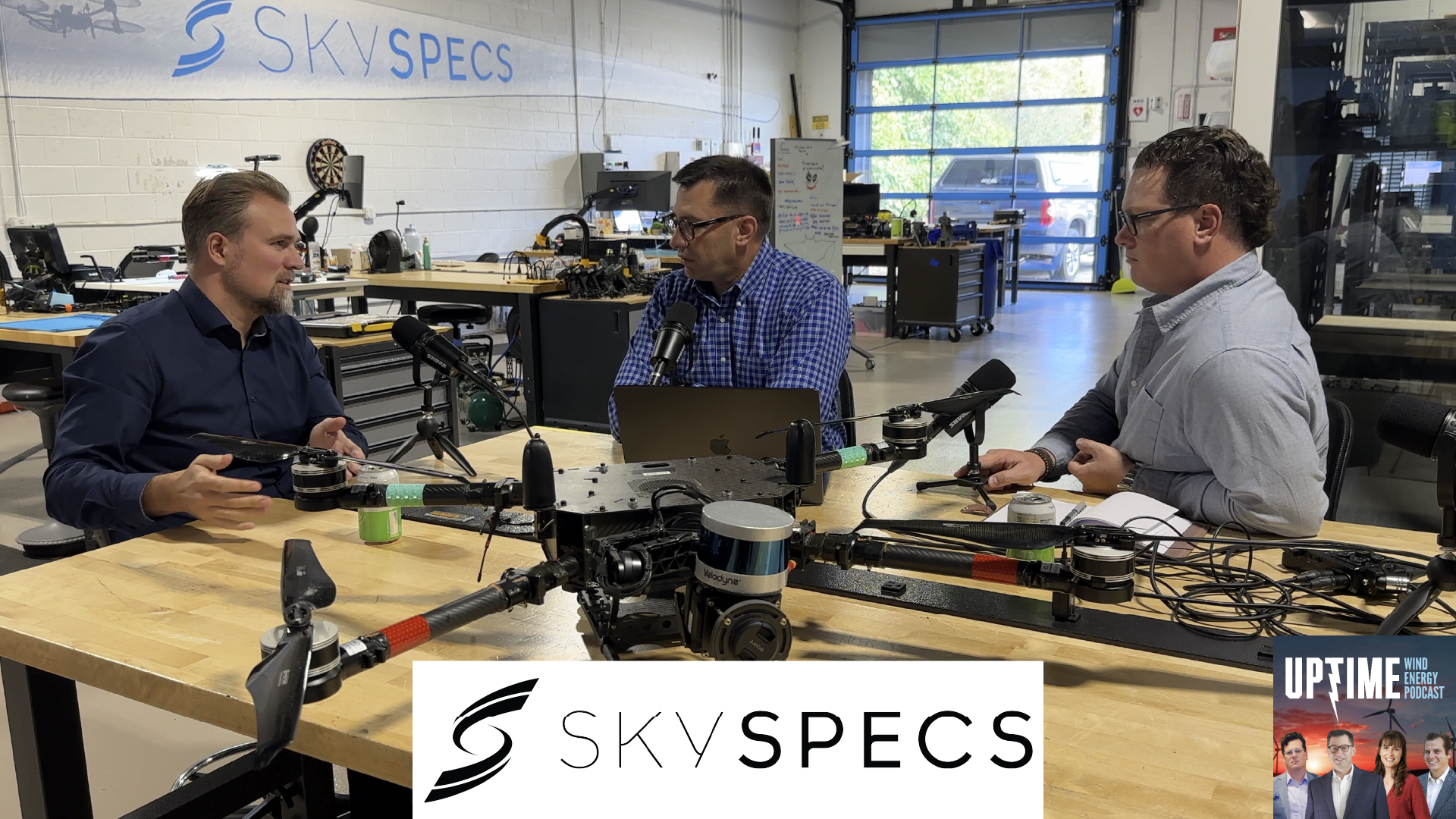
Allen and Joel speak with Allan Larson, VP of CMS Products at SkySpecs, about their remaining useful life estimates for operators. By predicting component failures, operators can create better maintenance schedules, saving time and money.
Fill out our Uptime listener survey and enter to win an Uptime mug!
Sign up now for Uptime Tech News, our weekly email update on all things wind technology. This episode is sponsored by Weather Guard Lightning Tech. Learn more about Weather Guard’s StrikeTape Wind Turbine LPS retrofit. Follow the show on Facebook, YouTube, Twitter, Linkedin and visit Weather Guard on the web. And subscribe to Rosemary Barnes’ YouTube channel here. Have a question we can answer on the show? Email us!
Welcome to Uptime Spotlight, shining light on wind energy’s brightest innovators. This is the progress powering tomorrow.
Allen Hall: Welcome to the Uptime Wind Energy podcast. I’m your host, Allen Hall, along with my co host, Joel Saxum. And today we’re diving into a critical challenge facing wind farm operators, predicting component failures and optimizing maintenance schedules. Imagine if wind farm operators could instantly gauge the cost impact of their decisions And automatically assign a dollar value to the risk.
It sounds like science fiction, but it’s actually becoming a reality through innovative approaches to remaining useful life assessments and automated risk detection. In today’s episode, we’ll explore how these technologies are revolutionizing wind turbine maintenance. Helping operators reduce downtime, cut costs, and extend the lifespan of their assets.
We’ll learn how advanced analytics and artificial intelligence are enabling more precise predictions and smarter decision making in a WinFarm world. Our guest is Allan Larson, the VP of CMS products at SkySpecs. In his role, Allan leads all aspects of product development for the Horizon CMS platform, which is crucial for wind turbine drivetrain monitoring and diagnostics.
As part of SkySpecs product team, Allan manages the product roadmap, conducts market research, and oversees the development and launch of new features. His expertise is key. In condition monitoring systems and AI based fault detection for wind turbines makes him a key player in shaping innovative solutions for the wind industry.
Allan welcome to the show.
Allan Larson: Thank you.
Allen Hall: That was pretty good, wasn’t it? That was a pretty good intro. I feel pretty good about myself now. Play it when you go home from the show here, yeah. That’s the rap, people. Uh, so, you’re a drivetrain specialist. CMS drive space.
Allan Larson: Yes. Specialist. These days, that’s what I’ve become.
Yes.
Allen Hall: Yeah. And that is, uh, obviously a really needed, uh, knowledge base, particularly as the number of wind turbines has grown dramatically and we’re rapidly producing turbines. We also rapidly produce drive train problems. And CMS is going to be the only way for us to dig ourselves out of a little bit of a hole on gearboxes and bearings and some of the drive train issues.
Uh, what do you see as sort of the top level issues out in the field today and what are you, what are you hearing?
Allan Larson: Well, I mean, I think about it not so much in terms of, uh, which, uh, which failure mode is occurring most today or whatever. It’s more, um, the failure modes that you have today is something that we need to detect early so we can act on it, right?
And, uh, that’s what CMS is all about. It’s about this early and accurate detection of failure. of drive train failure modes so you can take appropriate action at the appropriate time.
Allen Hall: Yeah, it’s been a very busy crane season in the middle of the United States. We’ve noticed a lot of gearboxes and main bearings being replaced.
The CMS systems are going to play a bigger part in that. I think a lot of operators are becoming much more aware that CMS is needed on drive train.
Allan Larson: Yes, um, actually when we, when we started, uh, the Company Vertical AI that SkySpecs acquired in 2021. When we started that, we thought, uh, our perception of the market was, say, uh, Europe is in front here, like they’re the most mature, most likely to adopt a new software solution.
And then we thought US is a bit behind based on what we knew about the market. And we would say, well, I think the US is maybe a decade behind in CMS adoption. That’s it. Uh, and I think it’s almost the other way around now. And so the U. S. market has picked CMS up like crazy. Really? Yes. So, uh, this is more and more becoming the perception that you just need to have that.
There’s no new turbines being produced in the market that doesn’t have a CMS system. Right. The manufacturer simply can’t offer a guarantee without it. Because they need to make the same maintenance decisions during warranty. And they need to know about it. Hey. Pending failures, uh, leading up to an, uh, end of warranty date.
And if they want to offer long term guarantees like FSAs, uh, they need to know what the current, uh, failure status is in their fleet. And so you do that with drivetrain condition monitoring. There’s some damages you can detect up to a year, several years in advance. Right. And others that’s months, half a year away.
Right. Like I said, we’ve, we’ve sort of. Uh, with our software focused in the beginning, of course, I’m solving the whole condition monitoring problem. But, uh, now we turn our attention a lot more towards how to drive action in the field more efficiently. That’s where the remaining useful life comes, comes into it.
Um, How was
Allen Hall: that, how was that implemented? I’m really curious how you think through that as a problem set and get to an output. What does that look like? Obviously you’re taking out all this data and we know more about turbines today than we knew 10 years ago. A lot more. There’s just so many more sensors on a turbine than there were, especially coming out of the factory.
Even though I think a lot of operators do complain that the number of, uh, amount of sensors that are on there probably isn’t enough. However, uh, you got to give the OEMs credit. There is more data coming down and people are adding their CMOS systems on top of them. What do you do with that? How do you process that?
What does that look like? How do you attack the problem of assessment?
Allan Larson: As in on the actual condition monitoring
Allen Hall: part? Yeah, how do you look at all that conditioning monitoring and then helping that site manager make a decision?
Allan Larson: Um, I think the detection problem is too hard to explain on radio. Laughter Um, and uh, others have done it.
I think I’d rather talk about the, the, um, Well, yeah, that’s what I’m trying to get at is it will kind of surprise you a little bit on how we approach it because, um, at the moment, it’s not so much about like, Oh, we’re going to combine all our data streams and then produce a magic output. It’s actually more of an understanding of the problem itself.
So let’s say that you, um, detect something on a main bearing, detect damage on a main bearing, right? It’s, we’re not predicting that something might happen. We detect something that is happening right now. like a damage that’s ongoing and that will last a certain amount of time. But, uh, and so we, the diagnostic piece of that is saying, well, it’s an, it’s an inner ring fault or it’s an outer ring fault, or it’s a bearing, a spalling issue or something like that, right?
You can diagnose it down to a really specific level. Um, but regardless of what it is, you’re going to have to exchange that main bearing at some point. You can’t avoid it. Maybe you can extend the life by greasing the bearings and purging the grease and re greasing it, so on. But the sort of prognostic of it, right, the prognosis, sorry, is clear, right?
That main bearing is going to die, you’re going to have to exchange it.
Allen Hall: So the remaining useful life is an interesting concept. Not a concept, I mean, it’s an action. But, obviously, when the designers of a component like a main bearing come to you and say, Well, The lifetime of this bearing is a thousand years.
Allan Larson: Yes.
Allen Hall: And then it’s five and it’s toast.
Allan Larson: Yeah.
Allen Hall: So something’s wrong there. Are you coming in for the remaining useful life and saying the lifetime of this bearing is actually a lot lower? Which then increases its cost? Is it based on history?
Allan Larson: Yeah. No, so, um,
Allen Hall: Because the predictive failure, right, the predictive failure rates are built into specs.
So the OEMs are out going to the manufacturers saying, I need to have one of these out of a million fail. Yeah, well, so,
Allan Larson: I mean, we’re talking about a domain where you detect something, right? You detect, let’s say that main variable, the probability of you having to exchange that main variable is 100%. Sure.
It’s going to happen. Sure. It’s going to happen. Yeah. But there’s a, there’s a, there’s a time when there’s a step change in the cost and time on, and the time you have until then, that’s basically your remaining useful life, right? That’s what you, what’s for you, but you should be interested in the time until I think I incur a risk.
So instead of saying that you have a probability for a risk, right? You’re talking more about using RUL as a proxy for risk probability. Okay. Okay, right. So you’re
Allen Hall: saying there’s a time window where that risk is can occur in or maybe not. I’ll give you the US versus European example. 10 years, repower US.
30 years, Germany probably still running.
Allan Larson: Yeah, but here you’re talking more about risk quantification on a fleet level. So like, should I buy this turbine or not? And like looking long term projections, but I’m talking about the detection of the individual failure mode. We have an ongoing case on a main bearing right now.
How do I, how do I, uh, how do I make decisions on should I fix it? Yeah. When should I, when should I repair it? Is it when, or if
Allen Hall: I want to get to that point, is it, is it a win or is it more like an if with a, with a 10 year lifespan and the economics, I think you raised a good, good question, Alan, which is
Allan Larson: 10 years into the future.
Like we just said earlier that the main bearing damage, like you, what will last you, maybe 12 months, right? Sure. You’re looking, you’re looking into either this or next financial year.
Allen Hall: Sure.
Allan Larson: Uh, and, and you’re not, you’re not doing, um, like, uh, you know, like your, your, your, your Weibull, uh, uh, Weibull based statistics to forecast failure rates in your fleet.
You’re looking to make decisions on the, on the actual repair test. That’s in front of you. When should I do it? And how should I prioritize it up against the others? Okay. All right. Yeah. So it’s not that 10 years into the future or this and that fleet, you’re really looking at, um, um, I know what the, I know what the costs are sort of predetermined, right?
I know what the liability is approximately, right? Sure. And I know what the risk is approximately. You can actually put that for all failure modes for the drive train. The individual customer will have an individual owner will have a cost assumptions they can put into something like that. Yeah. So the liability and risk, but you need something else just other than that to understand when I should and how I should prioritize.
So. Okay. Okay. So. That’s a very interesting aspect. I’m realizing now this is also tough for radio to explain. No, no, no.
Allen Hall: It’s good because I think this little walkthrough is indicative of the dilemma that a site supervisor would have and decisions they have to make. So, what you’re saying is, okay, inevitably we’re going to have to replace this part or a couple of parts probably were up there.
When do we, when do we manage, how do we manage that? The outlay of funds. How do we best manage it so we’re, uh, best spending money?
Allan Larson: Because that’s
Allen Hall: ultimately what it comes down to.
Allan Larson: You want to do two things. You want to, uh, you want to avoid risk, obviously. You want to avoid those costs. Sure. Oh, sure. Yeah, yeah.
You want to avoid the risk. And on the liabilities you have, uh, or you can say all your, when I say liabilities, I mean all your, Repair tasks. Let’s say you have two gearbox repairs that are pending. You want to do it at the same time. So you only have to get the crane out to site one time, right? Right.
That’s the, and you optimize on your liabilities in a way. So there’s optimize your liabilities and avoid your risks. RUL comes into place when you say like, well, look, uh, the ideal world would be, I have a countdown timer. I had it say, I have a 269 days until I have to exchange this main bearing or have to place the order because there’s an additional two months of lead time.
Between my, my place in the order and it happening, right. And then I avoid unplanned downtime or you have, you have exactly 29 days until you lose that uptower repair opportunity. Right. But that’s, it doesn’t work like that. You don’t get that precise. RUL is really difficult.
Allen Hall: Is it though?
Allan Larson: It’s very difficult.
Allen Hall: I’m asking, you’re the expert here. I’m the novice at this. For as many wind turbines, if we are built at particular models, I can think of, you know, Early Vestas turbines, GE 1. 5s, all those Siemens Gamesa turbines that are all the same. Do you not have some, at this point, predictive modeling of what that looks like?
So that, if my CMS system is giving me this level of vibration noise, that, hey, that means you do have 300 days to make a decision.
Allan Larson: Sure.
Allen Hall: For
Allan Larson: some, for some, uh, often occurring failure modes for certain populations of turbines. You’ll have a big enough data set to say something. That’s usually valuable. Yes, but it’s very rare that one actor has all of that data all at once, other than the OEM.
And even when they have it, there’s huge mechanical variance. Even if you look at 2. 3s, Siemens 2. 3s, for example. Oh, sure.
Joel Saxum: Different kinds of bearings in them. Even
Allan Larson: those bearings, even if they have the same model, have used different batches of metal, right? Yeah. It’s often how you find like serial defects, right?
Is that this or that batch of gearboxes was produced with a poor quality metal or something like that. Temper, right? So even within the same model, there are batches of, so the mechanical variance is huge. And then there are loads of factors that we don’t know what that, uh, that we can’t measure that drives a failure mode degradation.
It’s really hard to measure loads. For example, on a live turbine, you can, you can approximate it with power curves, but you can’t really do it. Right. All right. And, uh, how is the individual turbine lubricated and, uh, cooling systems? How are they running? It’s a very, very complex problem to say, and they all affect the remaining useful life.
I give you a counter example, right? Predict EV range, right? Let’s take Tesla cars, right? There’s probably how many millions of cars, millions of like, say, model threes out there, right? They’re, they’re very similar mechanically, like it’s not exactly the same, almost close, right? You have probably 500 million to a billion samples of battery drain from time to end.
You have very few and measurable factors like acceleration, elevation, temperature, all that stuff to help you make predictions on battery life. But still, nobody drives their batteries to zero.
Allen Hall: Right, because they know that’s a problem. It’s an estimation. Yes.
Allan Larson: Right. Not only do you not really, um, trust that you would also constantly be looking at that countdown because it’s going to live update all the time, right?
Right. It’s very hard to do with wind turbines. Is
Allen Hall: it, is, let me, that’s a good analogy, right? So the electric vehicle is a good analogy in the sense that Tesla has Millions of vehicles on the road. I own two Teslas.
Allan Larson: Oh, well you’re
Allen Hall: contributing to the data set. Yeah, but, yeah, I know. You see what I’m saying?
I just
Allan Larson: want to say, just for good measure, I bought them before I knew Elon was crazy. Okay?
Allen Hall: He’s going to put a man on Mars pretty soon, so. We’re a woman on Mars, we’re not the other. So you can’t be that crazy, but you know what they’re on the on that side on the on the Tesla side that they’re Analyzing all that data to do predictive analysis on lifetime and it then turns it to value it turns it to value for them turns It to valuation of the vehicle.
I Want to return my vehicle and buy a new model 3. What is this model old model 3 worth? Well, only Tesla really knows. Yes, they can Use predictive analysis and remaining useful life on
Allan Larson: it. And stuff like knowing what batch of metals goes into that. Only the OEM knows. And maybe, and maybe only really that the gearbox OEM, right?
Yeah, true. But really no, really no, right? Like that visibility throughout the supply chain. It’s not, that’s not our transparency. It’s just not there. And I think it would be too complex a problem to solve to get it. So you need a, you need a different approach. So it’s, it’s, so actually that’s the best way to say like, so One of the things I’ve learned with working with our CMS engineers is that they’re not, um, they’re not afraid of saying, we think this failure mode will last this and that many months.
So the true reality of RUL is that today you’ll say, Hey, this, this failure mode will probably last another two months, but, but I’ll check it again tomorrow.
Allen Hall: Yeah, yeah, yeah. That’s the smart move.
Joel Saxum: Yeah, I think the smart move is to take the worst case scenario. Like if you had, uh, 40 different types of bearings and different ones, the one that’s going to be the worst, that’s the one you model it off of.
So you don’t run into the
Allan Larson: Yeah. But you still need some sort of framework to communicate to site that they can use to communicate to their investors or management or whatever to tell them something about, you know, What’s the cost impact of this and that damage? What risk am I avoiding? And essentially, what value am I getting out of my CMS system?
And that’s been sort of, that’s been what I’ve been really trying to do something about over the last year. Just come up with a model that kind of works. And I think one of the things we shouldn’t be afraid to do is just Rely on some of that experience from CMS engineers and put it in a framework.
That’s big uncertainty. So you can say, Hey, I think this, you know, this main bearing typically lasts 12 months plus minus three months, but then you can use that uncertainty as a, as a, as a, as a risk gradient. So you will say until it gets to the lower bounds of this uncertainty, it’s low risk when it gets to the right, when it gets to the lower bounds, it’s medium.
Upper bounds of uncertainty high and beyond that it’s critical, right? Cause then you have a decision framework. You can sort of look at your fleet and ongoing things to make priorities with. Suddenly you can make a trade off. Let’s say you have two gearbox damages. One is in very early stages and one is in the late stages, but I can get a 25 percent discount if I replace them both now, but what I’m sacrificing, so I’m winning and avoided risk, but I’m also.
I’m, I’m, I’m exchanging another gearbox too early. What am I sacrificing? What am I sacrificing? Well, you’re pushing, you’re pushing, there’s two things, right? You’re pushing, uh, uh, uh, uh, a liability forward. So then you’re looking at it from a financial perspective. You’re saying, well, what’s the future value of cash, right?
Yes. Right. That’s all about. Right. And so I’m willingly, I can, I can make that calculation because I’d have an internal discount rate of maybe 10 percent that I do that up against. And then I can say that, well, I’m, I’m saving, I’m saving 50, 000 by doing this, these two people at the same time, but I’m, I’m trading off 25, 000 in like life.
Yeah. Yeah. In, in like early spend. Yeah. Right.
Allen Hall: Right. Yeah. That’s the part that that’s the missing variable. And a lot of these equations is how much am I going to lose if I don’t do it? Yeah. And then,
Allan Larson: and then that plan can change because then suddenly something happens that makes that someone, someone ran into a gate, right?
That’s part of it.
Allen Hall: Isn’t that the fight right now. If you look at an O and M building and you talk to the site supervisors, they’re held financially accountable for everything that happens on site. So they have to go get approval, especially when you’re talking about bearing replacement, gearbox replacement, anything involving crane.
The big thing is the crane. Is, is, is you have to get approval up the chain and, and those people up the chain want to have a better understanding of why, why now? That’s usually the most important one. Why now? Why can’t I wait six months so they can combine it with another project? Or whatever they’re trying to do, right?
There’s a lot of complexity to this.
Allan Larson: Here you can present them with a strategy they can choose.
Allen Hall: Yeah.
Allan Larson: So if you have this fly buzzing around in my eye and my nose constantly and I don’t know why it’s Is it also you? It’s like
Joel Saxum: turbine problems. They just don’t go, they won’t go away.
Allan Larson: Rule. Um Um Do you want a high risk strategy?
Because then we can run it into the high risk zone. Right. Right? Visual framework. You know the risk you’re taking is, uh, it’ll suddenly, here there’s a high risk that it’ll suddenly get to the stage where it can’t run anymore. And so, then you have two months of downtime. Because that’s our typical lead time for ordering a main bearing.
Allen Hall: Yeah.
Allan Larson: Right.
Allen Hall: Yeah. Okay.
Allan Larson: So yeah, I can clearly communicate it. And that’s the whole point of what we’re, what we’re trying to do.
Joel Saxum: I’m going to ask you an overreaching or overarching question about the CMS product, like that SkySpecs is producing for the market right now. As we know, like most, every, every turbine that comes off the line is going to have some type of CMS that the OEM can monitor it, whether it’s under FSA or under warranty period or whatever, your CMS product is a built in It’s not a bolt on sensor, it’s not external sensors, it’s just taking data streams.
It’s
Allan Larson: just a software.
Joel Saxum: So it’s just software, but it’s, it’s for an operator that maybe Running the site by themselves or running it with an ISP or even running it as an FSA with the OEM But they want to have their own eyes on what’s going on. Correct. So it’s like it’s because the Whoever wants to get control of that CMS that’s in the turbine.
That’s not the OEM doesn’t get it Like that’s just not they’re not gonna get it So you guys are the option in the aftermarket to be able to give them the eyes and ears of that CMS.
Allan Larson: Yeah In general there are three Three operating modes for like live monitoring or continuous monitoring. As we see it, there’s a, for the really big asset owners that have the in house engineering capabilities to do it, we can offer the software, they use the software, right?
But they can then reduce the complexity of how they monitor because they could do it all from one software instead of five, one for each hardware, right?
Allen Hall: Right.
Allan Larson: The second thing is you might not have that internal expertise. Maybe you just have one mechanical engineer that oversees suppliers that deliver stuff into your fleet.
They maybe help prioritize and stuff and like channel stuff to the site and so on. And there we do a service. We do the monitoring. Um, and, um, and there’s also a journey there where we support the in housing journey a lot. That’s, that’s kind of how we position ourselves as well. We, the companies that are just on the edge there, They want to in house it.
We offer a flexible model to do that. The final model is that, and that’s, those two first ones are specifically for self performing sites and self performing. Right. As if you have an FSA, you’re right. You need that second pair of eyes because, um, and this is not to do OEM bashing. I know, although I know you love that, is, uh, the OEM is monitoring, monitoring.
Tens of thousands of turbines, maybe 20, 30, 000 turbines that they have full scope services for. And I can guarantee you, your top priority site is not their top priority site. Right. Exactly. So how do you drive action? You drive that by actually knowing what’s going on.
Allen Hall: Yep.
Allan Larson: And it’s not about, it’s not about that.
You have to get like some sort of gotcha moment with the OEM. You have to be a good partner to them, right? Because their site operations are also struggling. It is also sometimes a bonfire, a dumpster fire of side operations. And they’re struggling as well with the right resources and their internal priorities and stuff like that.
But you can be a good partner to them if you know what’s going on in their turbine.
Allen Hall: Oh, sure. And it’s the same thing with
Allan Larson: performance analytics and other things as well. You want to be a good partner to the OEM, a strict, a firm partner. That knows how to drive your priorities, but you can’t do that without transparency.
And so shadow monitoring is something that’s really on the rise in the industry right now. And actually also a lot in Europe.
Allen Hall: Oh, I can imagine. We’ve seen it a lot more in the United States in the last two years, I would say. The shadow monitoring, because they’re trying to understand what they have purchased.
Yeah. And they have another 10, 8 years or so of operating it. So they’re trying to get some insights before the warranty runs out. And even if they have an FSA, they’re really trying to validate it. And that’s what mostly happens in Europe. So that makes total sense. So the Verizon CMS approach is getting adopted more widely now, I would assume.
Operators are becoming more aware of the situation in which they’re in and need help.
Allan Larson: I don’t think anybody in the future is going to buy a sensor system specific software. Right? That’s going away. Yeah. And, uh, and, uh, and I think the sensor manufacturers out there that haven’t adopted this on their roadmap, they’re going to lose out in the market.
Allen Hall: You’re seeing the essential manufacturers deliver API so that the data can be pulled into a system like Horizon CPS.
Allan Larson: Yes. Yeah.
Allen Hall: And that’s the right approach. And if, if, if an operator out there that. It has this issue and I, I don’t know of one in the states that doesn’t have this issue right now in terms of CMS and trying to understand the data and then look at remaining useful life.
How do they get a hold of you, Alan? How do they start picking your brain and saying, Hey, explain to me this Horizon CMS system and how it all works and how do I integrate it into my platform?
Allan Larson: Um, Find me on LinkedIn or they can just go to SkySpecs. com and look up. Well, that’s easy. That’s easy enough.
That’s easy enough. Uh, you know, uh, carry a pigeon, uh, owl, owl, whatever. You’re,
Allen Hall: you’re based in Denmark though. I’m based in Denmark. Yeah. Yeah. You’re not, you’re not in Michigan like the rest of the Sky Specs team, but no, that’s, you know, it’s good to bring in. But I speak to a lot of
Allan Larson: US asset owners as well.
That’s a big part of my job is to. Speak to customers and talk about the solution we have and understand their problems and challenges.
Allen Hall: Alan, we’re going to put your LinkedIn information into this podcast so people can find you. Uh, this has been a really fascinating discussion. Uh, as SkySpecs pushes into new areas like CMS and Drivetrain, it opens up so many opportunities and it’s good to know that smart people are working on these projects like you.
So I appreciate you being on the . I appreciate you being on the podcast. Of course. Course. And thank you for joining us.
Allan Larson: Yeah. And it was cozy here, right in our drone hanger in an, it was a, a good setting for this. Yes, it is. Well, thanks for, thanks for having.
https://weatherguardwind.com/skyspecs-remaining-useful-life/

 Have you ever wondered why every dictator in human history follows the exact same playbook? Check this out
Plato nailed this 2400 years ago, and it’s been on “rinse/repeat” ever since.
 On average, I meet perhaps 50 K-12 teachers each year, and I often ask them: What is the biggest challenge you face that impacts your ability to connect with and educate your students?
Here’s a rough tabulation:
Screen time, how it robs kids of their ability to pay attention, impedes social interaction, and makes parenting more difficult: 80%
Everything else combined: 20%
Maybe this is a cynical viewpoint, but it seems like that world of today revolves around the mega-corporations profiting by punishing their customers.
In this case, we have the tech giants ruining the lives of our children. Elsewhere, we have healthcare industry driving people into bankruptcy, Big Oil ruining our planet, the gun lobby murdering our kids, and, of course, an ultra-corrupt government looting our treasury to pay off billionaire donors.
Note that this wasn’t the case when we boomers were growing up 60 years ago. This is a distinctive shift from the 1960s when corporate America was focused on things like color TVs and the Ford Mustang.
Renewable Energy
Is a Team of Is a Bunch of MAGA Thugs Beating the Snot Out of a Woman a New Low, or Is it What We Now Need to Expect?
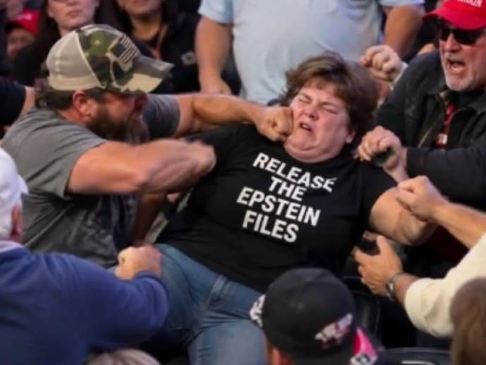 Just when we think there is a bottom, the United States sinks just a bit lower. It’s our brand nowadays.
That’s quite a left cross this thug delivered to this helpless female protestor.
It wasn’t too long ago that beating up women was taboo in America. My 11-year-old, sixth-grade son saw a male classmate of his badly bruise a girl by pushing her hard down to the ground–and proceeded to punch him in the mouth. A fellow father witnessed the scene and told me, “Your son’s fist was in that kid’s teeth within a fraction of a second.”
I had brought him up to avoid violence and achieve peaceful resolutions to conflicts, but I couldn’t fault him here.
What a disgusting bunch of turds we’ve become.

Greenpeace delivers 47 metre-long petition with half a million signatures to Woodside HQ following major gas protest

