Governments in Asia are making big changes to how companies can use carbon credits to fight climate change. This month, both Singapore and Japan released new rules to make sure carbon credits are used in a fair and honest way.
Carbon credits allow companies to pay to cancel out some of their emissions, often by funding tree planting or clean energy projects in other places. But these credits only work if they are real, high-quality, and not counted twice. That’s why Singapore and Japan are setting clearer rules for companies and investors.
Singapore’s New Guidance Brings Transparency to Voluntary Carbon Credits
Singapore has issued draft guidance to help companies use voluntary carbon credits responsibly in their climate plans. The guidance, released on June 20, 2025, states that firms should use credits only after they focus on practical emissions reductions. This includes improving energy efficiency and switching to cleaner fuels.
The guidance offers clear criteria to judge credit quality and integrity. Credits must be real and additional. This means emissions reduction wouldn’t have happened without them.
Moreover, they should be permanent, free of leakage, and independently verified. They also must not lead to double counting, and must align with international frameworks like Article 6 of the Paris Agreement.
Also, companies should share details on credit volumes, project types, registries, and any third-party ratings they use. All these are part of the Asian nation’s goal of reaching net zero by 2050.

The Singapore government is exploring ways to reduce risks associated with the use of carbon credits. They are looking into portfolio approaches and insurance to manage credit risks. Singapore has teamed up with the UK and Kenya in a Coalition to Grow Carbon Markets. This collaboration aims to establish common principles for corporate credit use before COP30.
Singapore will let businesses offset up to 5% of taxable emissions using Article 6 credits. They are also launching a Carbon Project Development Grant. This grant will support projects that generate credits. Public consultation on the draft runs until 20 July 2025.
In another Asian country, the same work is being done to boost voluntary carbon markets (VCM).
Japan’s FSA Advances Transparent Carbon Credit Trading Infrastructure
Japan’s Financial Services Agency (FSA) has introduced a framework for the carbon credit market and emphasizes voluntary credits. It sets out high-level principles to promote transparent, financially sound, and investor-protective transactions.
These principles come from the FSA’s Working Group on Financial Infrastructure for Carbon Credit Transactions. This group has met since May 2024. The working group looked at legal designs, disclosure standards, and technologies like blockchain. These help ensure credit traceability.
Japan plans to launch a mandatory emissions trading system in April 2026. The FSA framework will run alongside current J-Credits and voluntary systems. This dual approach builds market trust and attracts ESG investors. It also uses consistent global standards for sustainability reporting.
The country aims to achieve carbon neutrality in 2050 as shown in its energy roadmap below.
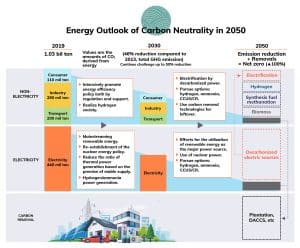
The FSA’s draft shows a wider move to prepare for the 2025 change to Japan’s GX Promotion Act. This change will provide legal support for emissions trading and voluntary credits. The FSA stresses the need for regular consultation and clear disclosure standards. This aligns with global frameworks like the ISSB and other G20 disclosures.
Shared Goals and Regional Cooperation in ASEAN
In a report by Abatable, the ASEAN carbon markets could bring in $3 trillion by 2050. This money would come from cutting or removing 1.1 billion tons of CO2 every year, which is a big chance for the region to help the environment and grow its economy.
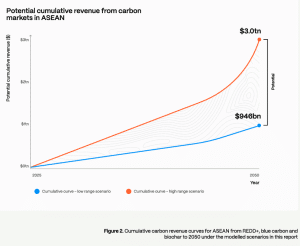
Both Singapore and Japan aim to build high-quality carbon markets by balancing flexibility with credibility. Singapore’s draft mentions Article 6. It also has a clear disclosure system for both the public and private sectors. Its approach includes regulatory support tools and financial incentives to promote early corporate adoption.
Japan focuses on market infrastructure and integrity. It aims to include voluntary credits in a stronger legal and tech framework. Its focus on emissions trading and voluntary credit systems matches OECD-style carbon market rules.
They also match regional efforts. For example, ASEAN is working on a Common Carbon Framework (ACCF). The Malaysia Carbon Market Association leads ACCF. It seeks to bring together carbon markets in Southeast Asia. It also helps the region reach its carbon neutrality goals.
The initiative supports a clear, effective, and connected carbon market. It promotes high-quality carbon credits, boosts tech and nature projects, and aligns with national policies. These efforts aim to boost sustainable investment and speed up ASEAN’s shift to a low-carbon future.
Meanwhile, the UK‑Kenya‑Singapore coalition aims for shared corporate principles before COP30.
Why These Frameworks Are Crucial for Climate Goals
High-integrity carbon markets are considered key tools in fighting climate change. They help shift money toward real decarbonization, especially in emerging economies.
The International Finance Corporation estimates that emerging markets could attract as much as $23 trillion in climate-related investments by 2030. Such investments drive meaningful environmental progress and present significant growth opportunities.
However, multinational firms in these markets face rising expectations. They need to use carbon credits in a way that is strategic, transparent, and credible. Thus, the new guidance and framework will help address this concern.
Looking Ahead: Toward Trustworthy and Effective Carbon Markets
Singapore and Japan are taking concrete steps to build trusted carbon credit markets in Asia. Regional coordination, like the coalition for COP30 and the ASEAN framework, can help with cross-border credit recognition. This may also lower compliance costs in the region.
Singapore’s draft guidance focuses on three key points:
- Environmental integrity
- Clear credit use
- Trustworthy disclosure
Meanwhile, Japan’s FSA is building a strong, transparent trading system.
These frameworks help companies reach net-zero by making sure carbon credits are used responsibly and transparently. They also ensure that these credits truly support climate goals.
As both countries shift from draft to action, they provide a model for others. This helps economies tap into voluntary carbon markets while keeping environmental integrity intact.
The post Singapore and Japan Set New Rules for Carbon Credits and How They Shape Asia’s VCM appeared first on Carbon Credits.
Carbon Footprint
Waymo and B2U Unlock a Second Life for EV Batteries with Grid-Scale Storage
As electricity demand rises and renewable energy grows in the U.S., battery storage is key. Waymo has launched a battery repurposing program to give retired electric vehicle (EV) batteries a new purpose in the power sector.
Waymo is working with B2U Storage Solutions to turn used batteries from its all-electric fleet into large-scale energy storage systems. Instead of recycling these batteries after use, Waymo will repurpose them to store electricity and support local power grids.
This program reflects a commitment to the circular economy, keeping products useful before recycling.
Adam Lenz, Head of Sustainability & Environment at Waymo, said:
“Our shared fleet of EVs provide a massive opportunity to support the growth of clean energy on the electricity grid while expanding the circular economy. Through this partnership, we can repurpose our batteries for local grid storage and ensure our batteries continue to provide economic and environmental value to the community long after they’ve retired from the road.”
Turning Old EV Batteries Into Energy Assets
EV batteries often retain significant storage capacity after their driving days. While their performance may drop for vehicles, many can still serve well in energy storage projects.
The press release says that retired Waymo batteries will join grid-connected energy storage systems through this partnership. These systems will store electricity from renewable sources like solar and wind.
During peak renewable generation, especially when solar production is high, the batteries will absorb excess electricity. Later, when demand increases in the evening, this stored energy can flow back into the grid.
This process helps balance electricity supply and demand, making renewable energy more reliable.
B2U specializes in second-life battery storage technology. They will manage the batteries during their second use and ensure proper recycling when they reach the end of their life.
Here’s a picture to show how B2U’s storage works.

This collaboration creates a complete lifecycle pathway for EV batteries—from vehicle use to energy storage and finally recycling.
Supporting Growing Demand for Battery Storage
This initiative comes at a time of rapid growth in renewable energy and battery storage in the U.S.
- According to the U.S. Energy Information Administration (EIA), developers plan to add 86 gigawatts (GW) of new utility-scale electricity generation capacity by 2026. If completed, it would be a record increase.
Solar energy will account for over half of these additions, with battery storage the second-largest category. Wind energy also plays a significant role in this growth.
In 2025, the U.S. power sector added 53 GW of new capacity, the highest since 2002. Meanwhile, battery storage installations keep increasing.
- They also expect to add about 24 GW of utility-scale battery storage in 2026, surpassing the previous record of 15 GW installed in 2025. Over the last five years, more than 40 GW of battery storage capacity has been added to the grid.
Texas, California, and Arizona are expected to account for around 80% of the planned battery storage in 2026.

The Grid Advantage of Reusing EV Batteries
Repurposing EV batteries offers crucial benefits for power systems and communities.
First, it extends the useful life of battery materials. Making lithium-ion batteries requires a lot of critical minerals and energy. Second-use batteries maximize the value of those materials.
Second, second-life batteries can lower energy storage costs. Since the batteries have already served in transportation, utilities can access storage capacity at lower costs than buying new systems.
Third, repurposing helps reduce electronic waste. Companies can keep batteries in use for several more years, easing pressure on waste management.
- Most importantly, battery storage boosts grid reliability. Renewable sources like solar and wind don’t produce electricity constantly. Energy storage systems fill this gap by storing power when production is high and delivering it when demand rises.
As renewable energy grows, these storage systems will be vital for stable electricity networks.
Freeman Hall, CEO of B2U Storage Solutions, said:
“This agreement marks a significant milestone in B2U’s mission to provide integrated repurposing services to the automotive industry. By extending the use of these batteries as grid storage, we are monetizing the full potential of EV batteries, now providing crucial stability to the power grid as energy demand continues to grow.”
First Deployments Planned for Texas and California
The first battery storage projects in the Waymo-B2U partnership will focus on Texas and California. Waymo already provides public autonomous ride-hailing services in these states.
Both states lead in renewable energy deployment. California increasingly relies on clean electricity and often has periods where renewable generation exceeds demand. Texas continues to lead the nation in new solar installations.
Waymo plans to repurpose old EV batteries into stationary storage systems. This will help manage renewable energy growth and improve local electricity infrastructure.
The company believes this initiative could deploy hundreds of megawatts of storage capacity in these regions. As autonomous EVs retire, their batteries could continue to provide value long after leaving the road.
This partnership shows how transportation electrification and clean energy can work together. Instead of viewing used EV batteries as waste, Waymo and B2U are transforming them into valuable energy assets. These assets support grid reliability, renewable energy integration, and a sustainable circular economy.
Waymo’s Broader Sustainability Efforts
The battery repurposing program is part of Waymo’s larger sustainability strategy. The company operates one of the largest fleets of fully autonomous electric vehicles, providing over 500,000 paid EV trips each week. These trips help cut emissions by replacing conventional vehicles with electric ones.
- Waymo estimates that every 500,000 weekly trips prevent about 530 tons of carbon dioxide emissions.
It also measures emissions avoided through its autonomous electric service. This framework evaluates the environmental benefits of electric, autonomous, and shared mobility solutions.
Additionally, the company reports its greenhouse gas emissions through parent company Alphabet as part of broader environmental efforts.
The post Waymo and B2U Unlock a Second Life for EV Batteries with Grid-Scale Storage appeared first on Carbon Credits.
Carbon Footprint
JPMorgan Backs Carbon Removal Growth With New Charm Industrial Deal
Carbon removal is moving beyond pilot projects. A new agreement between JPMorgan Chase and Charm Industrial shows how the sector is entering a new phase. The deal combines carbon removal credit purchases with financing support, helping expand future supply while reducing project risk.
Under the agreement, JPMorgan will purchase 61,500 metric tons of carbon removal credits from Charm Industrial. The bank will also provide financing support to help the company grow its operations.
The deal highlights a broader trend. Large financial institutions are starting to view carbon removal not only as a climate tool but also as a market with long-term growth potential.
As net-zero deadlines approach, demand for high-quality carbon removal credits is rising. Companies are looking for solutions that deliver measurable climate benefits and long-term carbon storage.
Taylor Wright, Head of Operational Sustainability at JPMorganChase, remarked:
“Our initial purchase with Charm marked an important step as we expanded our ambition in carbon removal and refined how we assess quality and deliver real impact across our portfolio. This new purchase—bringing our total to 90,000 tons—together with financial support from our business, reflects how our portfolio has matured over time and Charm’s track record of delivering measurable, durable outcomes across its projects.”
Carbon Removal Becomes a Bigger Part of Net Zero
Carbon dioxide removal (CDR) is different from traditional carbon offsets. Many offsets focus on avoiding emissions. Carbon removal takes carbon dioxide out of the atmosphere and stores it for the long term.
Most climate experts agree that emissions cuts alone will not be enough to meet global climate goals. According to the Intergovernmental Panel on Climate Change (IPCC), most pathways that limit warming to 1.5°C require large-scale carbon removal.
Today, the novel technological market remains small. Global demand for these engineered carbon removals is still below 10 million metric tons per year, according to CDR.fyi.
However, the State of Carbon Dioxide Removal Report shows that total global removals—mostly from forestry—already sit at 2.2 billion tons. Looking forward, IPCC climate pathways project that total global demand will need to reach billions of tons annually by mid-century to meet net-zero targets.

That growth is expected to come from sectors such as aviation, steel, cement, and shipping. These industries are difficult to fully decarbonize and will likely need carbon removal to address remaining emissions. Thus, investors and financial institutions are paying closer attention to the sector.
Inside JPMorgan’s Growing Climate Strategy
The agreement also fits JPMorgan’s broader climate strategy. The bank has committed to aligning key parts of its financing portfolio with net-zero emissions by 2050. It has also set emissions reduction targets across sectors including power generation, oil and gas, aviation, shipping, and automotive manufacturing.
In addition, JPMorgan has pledged to finance and facilitate more than $2.5 trillion toward sustainable development initiatives by 2030. That includes $1 trillion dedicated to climate action and green solutions. Carbon removal is becoming an important part of those efforts.

Many companies can reduce most of their emissions through clean energy, efficiency improvements, and new technologies. However, some emissions are likely to remain. Carbon removal is expected to help address these residual emissions.
The structure of the JPMorgan-Charm deal is also notable. Instead of only purchasing carbon credits, the bank is helping support future production capacity. This approach gives developers access to capital while helping buyers secure future carbon removal supply.
Peter Reinhardt, CEO and Co-Founder of Charm Industrial, stated:
“JPMorganChase is helping build the infrastructure for a permanent carbon removal industry. Having a sophisticated, mission-aligned financial institution come back for a second, larger purchase while also stepping up with growth capital is exactly the kind of validation that tells us we’re on the right path.”
Charm’s Way: Turning Farm Waste Into Permanent Carbon Storage
Charm Industrial uses a process known as biomass carbon removal and storage. The company collects agricultural waste, including crop residues that would otherwise decompose or be burned. It converts this material into a carbon-rich bio-oil through a process called fast pyrolysis.

The bio-oil is then injected deep underground for long-term storage. This method is designed to keep carbon locked away for hundreds or even thousands of years.
One advantage is that the process can use existing energy infrastructure. Storage wells, transportation systems, and other equipment already used in the energy sector can often be adapted for carbon storage.
Charm has become one of the leading companies in the sector. The company says it has already delivered more than 150,000 metric tons of carbon removal to customers, making it one of the world’s largest suppliers of durable carbon removal credits.
While the technology continues to develop, many experts see biomass carbon removal as one of the more mature engineered carbon removal pathways available today.
The Carbon Removal Supply Crunch Is Emerging
Corporate demand for carbon removal continues to increase. Technology companies have been among the biggest buyers. Many have net-zero goals and are looking for ways to address emissions that cannot be eliminated through renewable energy or operational improvements.
Programs such as Frontier have also helped accelerate the market. The initiative, backed by major technology companies, commits funding to help scale carbon removal technologies.
Yet, supply remains limited. Novel or engineered solutions contribute only 0.1%, roughly 2.2 million metric tons, to the physical supply.

Analysts at McKinsey estimate global demand for carbon removals could reach 100 million metric tons per year by 2030 and grow 100-fold by 2050. Current delivery volumes are only a small fraction of that level. CDR.fyi data shows only 1.5 million metric tons were delievered as of June 2026.
This gap between supply and demand is pushing buyers to sign long-term agreements years before credits are delivered. That trend is creating new opportunities for financing and investment.
Why Capital Could Unlock the Next Wave of Growth
One of the most important aspects of the JPMorgan-Charm agreement is the financing component.
Carbon removal projects often need large upfront investments. Companies must build infrastructure, secure storage sites, and establish monitoring systems before generating significant revenue.
New financing models are helping address this challenge. These include:
- Long-term carbon removal purchase agreements,
- Advance market commitments,
- Project financing backed by future credit deliveries, and
- Blended finance structures that combine different sources of capital.
The approach resembles the early growth of renewable energy. Long-term power purchase agreements helped wind and solar developers secure financing and expand rapidly.
Many industry observers believe carbon removal could follow a similar path. The involvement of a major institution like JPMorgan suggests the market is beginning to mature.
From Climate Niche to Investable Market
The JPMorgan-Charm Industrial agreement shows how climate finance is evolving. Companies are no longer focused only on buying carbon credits. Increasingly, they are investing in the systems needed to produce those credits at scale.
Most net-zero pathways still require large amounts of carbon removal to balance emissions from hard-to-abate industries. The challenge now is building enough capacity to meet future demand.
Technology is advancing. Corporate demand is growing. Financing is becoming more available. Together, these trends are helping move carbon removal from a niche climate solution toward a larger and more established market.
The post JPMorgan Backs Carbon Removal Growth With New Charm Industrial Deal appeared first on Carbon Credits.
Carbon Footprint
SMRs Set for Breakout: Global Nuclear Capacity Forecast to Jump Nearly Sixfold by 2030
Small modular reactors (SMRs) are moving from concept to commercial reality. A new forecast from GlobalData suggests global SMR capacity could increase nearly sixfold between 2025 and 2030.
The projection reflects rising confidence in advanced nuclear technology as countries search for reliable, low-carbon electricity. This demand is being driven by electrification, artificial intelligence (AI), data center growth, and industrial decarbonization.
For years, SMRs were seen as a long-term idea. That view is now shifting. Governments are updating nuclear policies. Regulators are speeding up licensing reviews. Utilities are forming partnerships with technology developers.
At the same time, electricity demand is rising sharply, strengthening the case for firm power sources capable of operating 24/7. This momentum comes as countries try to meet net-zero targets while also ensuring stable and affordable energy supplies.
Why SMRs Are Gaining Momentum
SMRs are nuclear reactors that typically produce up to 300 megawatts (MW) of electricity per unit. Unlike large nuclear plants, they are designed to be built in factories and assembled on site.
Supporters say this modular approach can reduce construction time, improve cost control, and make deployment more flexible. SMRs can also be added in phases, depending on demand growth.
GlobalData’s forecast reflects a wider revival in nuclear energy. The firm expects global nuclear capacity to grow steadily over the next decade, by almost sixfold from 2025 to 2030. That increase could even reach a hundredfold by 2040. Cleaner energy goals, policy backing, and increasing demand for stable baseload electricity will support this growth.

The International Energy Agency (IEA) also expects strong long-term growth. In its Announced Pledges Scenario, the IEA predicts over 1,000 SMRs to be used worldwide by 2050. This would add up to about 120 gigawatts (GW) of capacity. It also estimates SMR investment could rise from about $5 billion today to more than $25 billion by 2030.

Meanwhile, major SMR projects are moving forward. GE Hitachi’s BWRX-300 design will be used at Ontario Power Generation’s Darlington site in Canada. This is one of the most advanced SMR projects currently in planning.
Holtec International is also advancing plans to install SMR-300 reactors at the Palisades site in Michigan. The company has outlined a long-term vision that could scale SMR capacity across North America to as much as 10 GW in the coming decades.
These early projects are important. They will test cost, speed, and performance. Their results will help determine how quickly SMRs can scale globally.
Nuclear Power’s Quiet Climate Comeback
As countries move toward net-zero targets, nuclear energy is receiving renewed attention as a low-emissions power source.
According to the IEA, nuclear is the world’s second-largest source of low-emissions electricity after hydropower. In 2024, more than 410 reactors in over 30 countries supplied about 9% of global electricity. Nuclear also generated more low-carbon electricity than wind and significantly more than solar.

- Since 1971, nuclear power has helped avoid roughly 72 gigatonnes of carbon dioxide emissions by reducing reliance on fossil fuels.
This climate contribution is becoming more important as electricity demand rises and countries retire coal plants. The IEA expects global nuclear generation to reach a record high in 2025, supported by reactor restarts in Japan, maintenance work in France, and new builds in Asia.
More than 60 reactors are currently under construction worldwide, adding over 70 GW of new capacity.
SMRs could strengthen this role further. Their smaller size makes them suitable for regions where large nuclear plants are not practical. They may also replace aging coal plants by using existing grid infrastructure.

In addition, SMRs are being considered for industrial uses such as hydrogen production, mining, and heavy manufacturing, where steady heat and power are required.
Big Tech and Data Centers Drive New Power Demand
One of the strongest drivers for SMR growth is the rapid expansion of artificial intelligence and data centers. AI systems require large amounts of electricity. Training and operating these systems depend on high-performance computing infrastructure that runs continuously. This is pushing electricity demand higher in key technology hubs.
Goldman Sachs has raised its forecast for AI-related capital spending by major hyperscalers. The bank now expects Meta, Microsoft, Amazon, and Alphabet to invest about $5.3 trillion between 2025 and 2030, up from a previous estimate of $4.5 trillion. A large share of this spending will go into AI infrastructure, data centers, and supporting energy systems.
Moreover, Goldman Sachs Research estimates global data center electricity demand could increase by as much as 165% by 2030 compared with 2023 levels.
This surge in demand is changing energy planning. While renewable energy remains central to corporate climate strategies, many technology companies are also looking for stable, round-the-clock power sources.
SMRs are increasingly viewed as a potential solution because they can provide constant power without weather dependence. Unlike wind or solar, nuclear plants can operate day and night continuously. This reliability is becoming more important as AI workloads grow and grids face higher stress.
As a result, several SMR developers are now targeting data center operators as future customers, alongside traditional utilities.
The First Wave of SMR Projects Breaks Ground
The SMR industry is now entering a more practical phase, with several flagship projects moving toward construction and deployment.
In Canada, Ontario Power Generation is advancing the first commercial deployment of GE Hitachi’s BWRX-300 reactor at the Darlington site. This project is widely seen as a key test case for SMR commercialization in North America.
In the United States, TerraPower continues development of its Natrium reactor in Wyoming. The project, backed by Bill Gates, combines nuclear generation with advanced energy storage. This design aims to improve flexibility and help balance electricity grids with growing renewable energy penetration.
These developments mark an important shift. The industry is moving beyond design and licensing discussions and into construction, financing, and real-world deployment.
The Roadblocks on the Nuclear Revival Path
Despite strong momentum, SMRs still face major challenges.
- Cost remains the most important issue. Early projects must prove that factory-based construction can reliably reduce total costs compared with traditional nuclear plants.

- Regulatory approval is another barrier. Even though licensing frameworks are improving, nuclear projects still require long review timelines in most countries.
- Fuel supply is also a concern. Many advanced SMR designs depend on high-assay low-enriched uranium (HALEU), but global supply chains are still limited.
- There are also broader concerns around nuclear waste management and public acceptance, which continue to influence project timelines in several regions.
These challenges explain why some analysts remain cautious about near-term deployment, even while long-term forecasts are becoming more positive.
Outlook: A Defining Decade for SMRs
The next five years could be decisive for SMRs. Global momentum is being driven by several overlapping trends. Electricity demand is rising. AI growth is accelerating. Countries are committing to net-zero targets. Energy security has become a national priority. At the same time, nuclear technology is improving.
GlobalData’s forecast of a nearly sixfold increase in SMR capacity by 2030 reflects growing confidence that the sector is approaching commercial scale.
While SMRs are still in the early stages of deployment, progress in Canada, the United States, China, and other regions suggests the industry is moving closer to wider adoption.
If current projects succeed, SMRs could become an important part of the global low-carbon energy mix. They may help support grid stability, reduce reliance on fossil fuels, and provide the steady power needed for a more electrified and digital economy.
The post SMRs Set for Breakout: Global Nuclear Capacity Forecast to Jump Nearly Sixfold by 2030 appeared first on Carbon Credits.
-
Climate Change10 months ago
Guest post: Why China is still building new coal – and when it might stop
-
Greenhouse Gases10 months ago
Guest post: Why China is still building new coal – and when it might stop
-
Greenhouse Gases2 years ago嘉宾来稿:满足中国增长的用电需求 光伏加储能“比新建煤电更实惠”
-

Climate Change2 years ago嘉宾来稿:满足中国增长的用电需求 光伏加储能“比新建煤电更实惠”
-
Climate Change2 years ago
Bill Discounting Climate Change in Florida’s Energy Policy Awaits DeSantis’ Approval
-
Renewable Energy8 months agoSending Progressive Philanthropist George Soros to Prison?
-
Carbon Footprint2 years agoUS SEC’s Climate Disclosure Rules Spur Renewed Interest in Carbon Credits
-
Greenhouse Gases11 months ago
嘉宾来稿:探究火山喷发如何影响气候预测


