

Friday, March 14, I had the privilege of speaking at the Sustainability Institute’s (SI) Home Energy Makeover event in Charleston County, SC. Thanks to the homeowner, Ms. Daniels, funding from the Wells Fargo Foundation, the Sustainability Institute, and its contractors, Ms. Daniels’ home received energy efficiency improvements and a solar system with a modeled energy savings of 72%. This will take her bills from about $350 to about $90 per month. This initiative demonstrates what can be accomplished with energy efficiency and renewables.
How did this happen?
A couple of years ago, Ms. Daniels attended a local market and talked to someone from Dominion Energy South Carolina about her high energy bills. They told her about SI. She contacted SI, and they came out and conducted an energy assessment. One year later, SI contacted her and stated that her home was perfect for this Home Energy Makeover opportunity.
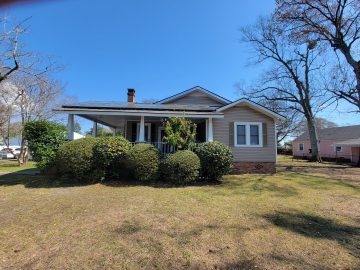
Improvements included
Ms. Daniels’ home received top-to-bottom energy efficiency upgrades including:
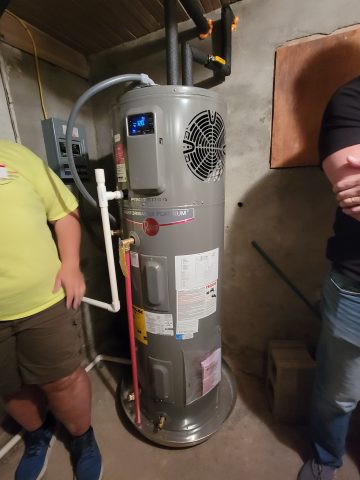
- ENERGY STAR appliances – washer, dryer, stove/oven, refrigerator
- Electric heat pump water heater
- Heat pump with rigid ductwork and sump pump
- Attic insulation and air sealing
- 5 kW solar system
- Basic weatherization – weather stripping, gasketing, door sweeps
- Home Energy Monitor to track and manage energy use
Low-income residents are in need
Energy Burden refers to the percentage of income required to pay for electricity in a home. A 6% energy burden is considered high, and according to the National Renewable Energy Lab’s State and Local Planning for Energy Platform, the area where Ms. Daniel’s home is located has an energy burden of 6.74%, and surrounding areas are close to 8-9%.
In Charleston County, just by making energy efficiency upgrades, homeowners have the potential to save almost $600 each year in energy bill reductions. If we look at this statewide, low-income residents throughout South Carolina have the possibility of saving even more. There is so much potential, and we can do more to help our communities. Between low-quality housing stock and low/fixed income, there is a lot of need.
Take this statewide
Wouldn’t having this type of program throughout South Carolina be great? That has been a dream of mine and many in South Carolina, and it’s time for it to become a reality. With proper funding and a trained workforce, we can greatly improve homes in this same fashion. It will take a coordinated effort amongst diverse stakeholders such as non-profits, advocacy organizations, utilities, and others. I hope this model inspires you to invest in South Carolina communities to reduce energy burdens so residents can live in healthy, efficient homes.
For more energy efficiency data, see SACE’s “Energy Efficiency in the Southeast” report.
The post SC Home Energy Makeover – Let’s Take This Statewide!! appeared first on SACE | Southern Alliance for Clean Energy.

Weather Guard Lightning Tech
Vineyard Wind Sues GE Vernova, US Monopile Factory Bankrupt
Allen covers EEW American Offshore Structures’ Chapter 11 filing, Vineyard Wind suing GE Vernova for $545 million, Europe’s exit from Korea, and wind project wins in Australia and Canada.
Sign up now for Uptime Tech News, our weekly newsletter on all things wind technology. This episode is sponsored by Weather Guard Lightning Tech. Learn more about Weather Guard’s StrikeTape Wind Turbine LPS retrofit. Follow the show on YouTube, Linkedin and visit Weather Guard on the web. And subscribe to Rosemary’s “Engineering with Rosie” YouTube channel here. Have a question we can answer on the show? Email us!
There is a story unfolding across this industry right now. It is a story of two worlds. One world is closing its doors. The other is throwing them wide open.
Let us start in New Jersey. EEW American Offshore Structures filed for Chapter Eleven bankruptcy on April eighth. This was the first monopile manufacturing facility ever built in the United States. New Jersey Governor Phil Murphy announced a two hundred fifty million dollar investment in the Paulsboro Marine Terminal back in twenty twenty. It was called the largest industrial offshore wind investment in the country at the time. At full buildout… five hundred thousand square feet of production space. More than one hundred monopiles per year. Five hundred workers. They even built the first American-made monopile… for Orsted’s Ocean Wind project. It weighed three million pounds. It measured three hundred feet long.
Then Orsted canceled Ocean Wind One and Two. Then Shell pulled out of Atlantic Shores. Without contracted work… workers disassembled and recycled finished monopiles for scrap. Federal policy shifts removed the pipeline of future projects. A landlord eviction filing followed. And then… Chapter Eleven. That is a two hundred fifty million dollar facility… with nowhere left to go.
Now stay with us. Because just offshore… another American offshore wind story is fighting for its life. Vineyard Wind… the sixty-two turbine project fifteen miles south of Martha’s Vineyard… filed suit in Massachusetts against GE Renewables. GE Vernova says Vineyard Wind owes it three hundred million dollars for work already performed… and it wants to walk away at the end of April. Vineyard Wind says not so fast.
The developer says GE still owes five hundred forty-five million dollars for what it calls inexcusably poor performance after a catastrophic turbine blade collapse in July of twenty twenty-four. Fiberglass blade fragments washed onto Nantucket beaches during peak tourist season. Sixty-eight of seventy-two blades had to be removed and replaced. That set the project back nearly two years. Construction did reach completion in March… making Vineyard Wind the first offshore project to finish under the current administration. But now the only contractor capable of completing the remaining work… wants out. A court hearing was scheduled for Thursday.
And now… look eastward. Something similar is playing out in Korea. European offshore wind companies are exiting the Korean market one by one. Corio Generation, a British firm owned by Macquarie, disbanded its Korean unit and pulled out of joint projects in Busan and Ulsan. Germany’s RWE quit offshore wind projects in Taean and Sinan counties. Vestas postponed its turbine factory in Mokpo… indefinitely. Equinor began reducing its Korean workforce. Shell exited the Korean offshore market entirely in twenty twenty-four.
These companies point to worsening global profitability… and Korean government policies they say favor domestic companies over firms with greater experience. Korea had a target of three gigawatts of offshore wind by twenty thirty. That goal is now in serious doubt.
But here is where the story turns. Not every market is closing its door. Eight thousand miles from New Jersey… in the Sunshine State of Queensland, Australia… the final forty-one turbines just arrived at the Wambo wind project. Cubico Sustainable Investments and Stanwell are building a five hundred six megawatt project on the Darling Downs. Stage One… two hundred fifty-two megawatts… already feeding the Queensland grid. Stage Two deliveries are now complete. Commissioning and full operations are on track for the end of twenty twenty-six.
And up in Ontario, Canada… the province just approved fourteen new wind and solar projects totaling more than thirteen hundred megawatts. The average price… eight point eight cents per kilowatt hour. Compare that to twenty-one point four cents for some proposed nuclear projects… and more than thirty-two cents for certain new reactor designs. Contracts run for twenty years, with all projects online before twenty thirty.
So let us step back. In New Jersey… the first American monopile factory files for bankruptcy. Off Massachusetts… a completed offshore wind farm fights to keep its contractor. In Korea… European developers pack their bags. But in Australia… turbines arrive on schedule. And in Canada… wind power undercuts nuclear at the meter.
The wind energy industry is not in retreat. It is choosing its battlegrounds. And where the conditions are right… the blades are turning.
And now you know… the rest of the story.
That is the state of the wind industry for the 13th of April, twenty twenty-six. Join us for the Uptime Wind Energy Podcast tomorrow.
 Did Jennifer Lawrence really say this? I hope not, because it’s complete stupidity.
People who didn’t criticize Hitler, Mussolini, or the dozens of other fascist dictators as they were rising to power merely ushered them into a position in which they could destroy the lives of millions of innocent lives.
 The author of the meme at left writes, “We’re the only ones.”
This is completely incorrect, not that you care about facts and truth. Over 30 countries, primarily in the Americas, offer unconditional birthright citizenship, granting citizenship to almost anyone born within their territory, regardless of their parents’ status.

Oil Tycoon Funds Far-Right Candidate Challenging Texas Oilfield Regulator

Sustainability In Your Ear: Author Michael Maniates on Why Green Shopping Isn’t Enough
Data Center Boom Reaches West Georgia, Raising Questions Amid Mounting Opposition
-
Climate Change8 months ago
Guest post: Why China is still building new coal – and when it might stop
-
Greenhouse Gases8 months ago
Guest post: Why China is still building new coal – and when it might stop
-

 Greenhouse Gases2 years ago
嘉宾来稿:满足中国增长的用电需求 光伏加储能“比新建煤电更实惠”
-
Climate Change2 years ago
Bill Discounting Climate Change in Florida’s Energy Policy Awaits DeSantis’ Approval
-

 Climate Change2 years ago
嘉宾来稿:满足中国增长的用电需求 光伏加储能“比新建煤电更实惠”
-
Climate Change Videos2 years ago
The toxic gas flares fuelling Nigeria’s climate change – BBC News
-

 Renewable Energy6 months ago
Sending Progressive Philanthropist George Soros to Prison?
-

 Carbon Footprint2 years ago
US SEC’s Climate Disclosure Rules Spur Renewed Interest in Carbon Credits