

This was created to provide resources to those who are experiencing climate or ecological grief.
This guide includes the following types of resources:
Articles/Handbooks
- Climate Doom to Messy Hope: Climate Healing & Resilience: A Practical Handbook for Climate Educators and Community
- Published by the UBC Climate Hub
- Coping with Climate Change
- Published by Australian Conservation Foundation, Australian Psychological Society, Climate Reality Project Australia, and Psychology for a Safe Climate
- Ecological Grief as a Response to Environmental Change: A Mental Health Risk or Functional Response?
- Published by the National Institutes of Health
- Ecological grief literacy: Approaches for responding to environmental loss
- Published by the Society for Conservation Biology
- Fighting Climate Anxiety on the Frontlines
- Published by Atmos
- Healing Our Climate Grief
- Published by Sustaining All Life and United to End Racism
- How climate change affects mental health: Experiencing disaster – or even reading about it in the news – can be stressful and scary. These steps can help
- Published by Yale Climate Connections
- Youth Wellbeing: Climate & Health: Responding to Youth Emotional Distress Due to Climate Change; A Guide for Parents and Caregivers
- Published by the Minnesota Department of Health
Books
- A Field Guide to Climate Anxiety: How to Keep Your Cool on a Warming Planet by Sarah Jaquette Ray
- Book Description: “Drawing on a decade of experience leading and teaching in college environmental studies programs, Sarah Jaquette Ray has created an “existential tool kit” for the climate generation. Combining insights from psychology, sociology, social movements, mindfulness, and the environmental humanities, Ray explains why and how we need to let go of eco-guilt, resist burnout, and cultivate resilience while advocating for climate justice. A Field Guide to Climate Anxiety is the essential guidebook for the climate generation—and perhaps the rest of us—as we confront the greatest environmental threat of our time.”
- Adventures in the Anthropocene: A Journey to the Heart of the Planet We Made by Gaia Vince
- Book Description: “We all know our planet is in crisis, and that it is largely our fault. But all too often the full picture of change is obstructed by dense data sets and particular catastrophes. Struggling with this obscurity in her role as an editor at Nature, Gaia Vince decided to travel the world and see for herself what life is really like for people on the frontline of this new reality. What she found was a number of people doing the most extraordinary things.”
- Beyond Climate Grief: A journey of love, snow, fire and an enchanted beer can by Jonica Newby
- Book Description: “In this magical, often funny and deeply moving personal story, award-winning science reporter Jonica Newby explores how to navigate the emotional turmoil of climate change.”
- Climate Grief by Shawna Weaver
- Book Description: “After years of research on climate change, human behavior, and climate grief, this book captures Shawna’s experience in environmental justice activism, as a mental health professional, and navigating the complexities in the intersection of climate change, personal wellness, and scalable sustainability solutions.”
- Generation Dread: Finding Purpose in an Age of Climate Anxiety by Britt Wray
- Book Description: “An impassioned generational perspective on how to stay sane amid climate disruption.”
- H is for Hope by Elizabeth Kolbert
- Book Description: “In twenty-six essays—one for each letter of the alphabet—the Pulitzer Prize-winning author of The Sixth Extinction takes us on a hauntingly illustrated journey through the history of climate change and the uncertainties of our future.”
- Hope, Human and Wild: True Stories of Living Lightly on the Earth by Bill McKibben
- Book Description: “Hope, Human and Wild sets out on a dramatically different journey to provide examples and hope for a sustainable future, one in which our society’s wealth is measured less by its material productivity and more by its spiritual richness; less by its consumption of resources and more by the extent to which we live in harmony with the natural world. From the Adirondack Mountains to Kerala, India, to Curitiba, Brazil, McKibben offers clear-eyed and profoundly compelling portraits of places where resourceful people have confronted modern problems with inventive solutions, and thrived in the process.“
- Mourning in the Anthropocene: Ecological Grief and Earthly by Joshua Trey Barnett
- Book Description: “Enormous ecological losses and profound planetary transformations mean that ours is a time to grieve beyond the human. Yet, Joshua Trey Barnett argues in this eloquent and urgent book, our capacity to grieve for more-than-human others is neither natural nor inevitable. Weaving together personal narratives, theoretical meditations, and insightful readings of cultural artifacts, he suggests that ecological grief is best understood as a rhetorical achievement. As a collection of worldmaking practices, rhetoric makes things matter, bestows value, directs attention, generates knowledge, and foments feelings. By dwelling on three rhetorical practices—naming, archiving, and making visible—Barnett shows how they prepare us to grieve past, present, and future ecological losses. Simultaneously diagnostic and prescriptive, this book reveals rhetorical practices that set our ecological grief into motion and illuminates pathways to more connected, caring earthly coexistence.”
- My Green Manifesto: Down the Charles River in Pursuit of a New Environmentalism by David Gessner
- Book Description: “In My Green Manifesto , David Gessner embarks on a rough-and-tumble journey down Boston’s Charles River, searching for the soul of a new environmentalism. With a tragically leaky canoe, a broken cell phone, a cooler of beer, and environmental planner Dan Driscoll in tow, Gessner grapples with the stereotype of the environmentalist as an overzealous, puritanical mess. But as Dan recounts his own story of transforming the famously polluted Charles into an urban haven for wildlife and wild people, the vision of a new sort of eco-champion begins with someone who falls in love with a forgotten space, and then fights like hell for it.”
- Restoring the Kinship Worldview: Indigenous Voices Introduce 28 Precepts for Rebalancing Life on Planet Earth by Wahinkpe Topa (Four Arrows) and Darcia Narvaez, PhD
- Book Description: “Selected speeches from Indigenous leaders around the world-necessary wisdom for our times, nourishment for our collective, and a path away from extinction toward a sustainable, interconnected future.“
- The Dinner Party also made an Eco-grief Reads list that can be found here.
Other Resources
- Climate Aware Therapy
- Find a therapist that has experience with eco-anxiety
- Eco Anxious Storytelling
- “Feeling worried about climate change is normal. Embrace your anxiety with courage and compassion and transform it into meaningful action.”
- Gen Dread Newsletter
- “A newsletter about staying sane in the climate crisis”
- Yoga for Ecological Grief
- Scroll to the bottom for a free self guided yoga course

Source: “A Climate Narratives collaboration between Grace Nosek and Meghan Wise” (2021) https://ubcclimatehub.ca/wp-content/uploads/2022/09/Climate-Doom-to-Messy-Hope-Handbook.pdf
Podcasts
- A Podcast and Practice for our Planetary Emotional Wellbeing
- Podcast and Website Description: “Love Letters to Planet Earth is a podcast and practice space, meant to nurture the connection between the planet and ourselves and find emotional buoyancy in the era of climate change. We will learn from nature’s hard work how to navigate this in between places the Earth is in so that we can remember the inextricable link between our emotional health and our planetary health in this moment of great change and crisis. In doing this there is great opportunity for deep healing.”
- BBC’s The Climate Question
- Podcast Description: “Why we find it so hard to save our own planet, and how we might change that.”
- Climate Change and Happiness: An international podcast that explores the personal side of climate change.
- Podcast Description: “Most of you around the world recognize the dangers of human-caused climate disruptions and their impacts on you, through disasters and the ripple effects, or simply due to the profound emotional weight of the issue. But there are few safe forums to reveal one’s feelings about climate change. We invert the paradigm. Here we are open about our climate emotions, as humans and from our perspectives as researchers and climate psychology experts. We put language to what you feel about the climate crisis—and also what you might want to feel, feelings you can grow and cultivate. This supports your resilience and your mental health and wellbeing. We invite other experts to join us in our conversations, and we hope you can join us too.”
- Facing It: a podcast about love, loss and the natural world
- Podcast Description: “The age of climate crisis is upon us, and grief and anxiety are on the rise. This podcast explores the emotional burden of climate change, and why despair leaves so many people unable to respond to our existential threat. Overcoming that paralysis is the first step in moving to action, and yet official climate strategies rarely address the emotional toll of climate grief and eco anxiety. Meanwhile, frontline communities — particularly people of color, indigenous communities, and other historically-marginalized groups — are experiencing the heaviest mental health impacts of climate disruption and displacement. This series introduces ways to move from despair to action by addressing the psychological roots of our unprecedented ecological loss.”
- Ted Climate
- Podcast Description: “Host Dan Kwartler unpacks the problems and solutions behind big systemic issues in bite-sized episodes. You’ll find out which bag is best for the planet, imagine our world without humans, and follow the international journey of the very shirt on your back. Yes, we’re going to talk about the bleak stuff—it’s a crisis after all—but we’ll also share little ways you can make changes in your daily life, in your towns and cities, and at your workplaces to help change climate change. Ultimately we’re aiming for some HOPE through a focus on solutions, instead of just, you know, tumbling towards inevitable doom.”
- TED Podcast: Outrage + Optimism
- Podcast Description: “Face the climate crisis head on, but understand that we have the power to solve this. Hosted by Christiana Figueres, Tom Rivett-Carnac and Paul Dickinson this podcast about issues and politics will inform you, inspire you and help you realize that this is the most exciting time in history to be alive.”
Support Groups
- All We Can Save Circles
- “Are you hungry for deeper dialogue about the climate crisis and building community around solutions? We are too. That’s why we created All We Can Save Circles — like a book club, but a cooler, deeper, extended version. Let’s strengthen the “we” in All We Can Save. Circles were created by Dr. Katharine Wilkinson.”
- Climate Awakening
- “Share your climate terror, grief, and rage with people who understand. Join a Climate Emotions Conversation – a small group sharing & listening session about the climate emergency.”
- Good Grief Network
- “A peer-to-peer support group for people overwhelmed by eco-distress and collective trauma from social and ecological injustices”
- Work that Reconnects Network
- “The Work That Reconnects Network nurtures a regenerative and thriving world for all beings by providing support, connection and inspiration to the global Work That Reconnects community.”
Videos
- Climate Optimism: Building Our Future With Better Tools Ted Talk by Adam Dorr
- Eco-anxiety from Caroline Hickman from the Institute of Art and Ideas
- Get to Grips with Grief from Clover Hogan & Caroline Hickman
- Gritty Optimism: Hope in the Face of Climate Change Ted Talk by Trevor Slansky
- Speaker Session: Climate Psychology with Caroline Hickman from the Climate Vine
- The case for stubborn optimism on climate Ted Talk by Christiana Figueres
- The Climate Optimist Youtube Channel

Chloe is a Civil and Environmental Engineer, and graduate student at Humphrey College of Public Affairs at the University of Minnesota. Chloe served as a Minnesota Climate Impact Corps Member at Climate Generation throughout the summer of 2024. She is pursuing a master’s degree in Science,Technology, and Environmental Policy to develop cross-cultural competency to communicate scientific information among different communities in Minnesota. Her empathetic nature and dedication to justice will aid in ensuring that solutions have legitimacy and involve cross-boundary organizing to establish equity. In her free time she enjoys going on walks with her dogs, reading thrillers, downhill skiing and riding her bike.
Header Photo Source: “Broken Harmony” by Ildiko Nova (2019) https://understoreymagazine.ca/article/turning/
The post Resources to Combat Climate Grief appeared first on Climate Generation.

A report from Greenpeace Australia Pacific and Springmount Advisory reveals the untapped green economic opportunity for Western Australia in a declining Asian gas market, which also offers a genuine solution for decarbonisation in Asia.
Is Western Australia clinging to a fading gas industry while a thriving green future passes it by? As major Asian trading partners rapidly pivot away from volatile gas imports toward cheap solar and battery storage, this report exposes a high-stakes choice: risk becoming stranded in an oversupplied fossil fuel market, or harness WA’s unmatched sun and wind to lead the global clean energy transition.
Summary
From Gas to Green: Building Western Australia’s Future State reveals that Western Australia (WA) faces a critical juncture as falling Asian gas demand, geopolitical gas supply volatility and accelerating renewable energy deployment undermine the long-term economic viability of gas exports. By harnessing its world-class wind and solar resources, the report demonstrates that WA can execute an orderly phase-out of gas and pioneer a green commodity export economy that could generate $987 billion in economic value by 2060, create 24,000 ongoing jobs, and drive a 9.6% reduction in global greenhouse gas emissions.
Key Findings
- Gas demand is falling in Asia – WA can no longer rely on gas exports: Gas demand in core Asian markets fell in 2025 and is projected to continue to decline in 2026. Legislated energy plans in Japan, South Korea, and China now prioritise renewables and nuclear over gas.
- Asia is increasing renewables, importing gas just gets in the way: Evidence from markets like Thailand suggests that gas imports are increasingly crowding out cheaper renewable energy investments and battery storage rather than displacing coal, locking in more emissions over time.
- Green commodities offer a real solution to decarbonise Asia – this is a major win for WA: With world-class renewables, WA can lead Australia’s green commodity exports, which by 2060 could be worth almost a trillion dollars ($987 billion) and support a genuine 9.6% reduction in global emissions.
Recommendations to WA government
Recommendation 1: Plan an orderly gas phase-out aligned with a trading partner pivot plan
Implement a managed, orderly phase-out of gas exports aligned with trading partners’ decarbonisation pathways, rather than waiting for demand to collapse, by:
- Developing and implementing a staged phase-out of gas facilities aligned with feedstock supply expiry or typical end of facility lifespans.
- Committing to no new gas development for gas expansion, including Browse and Kimberley fields.
- Developing new, reciprocal trade relationships with existing gas trade partners, structured to progressively replace gas exports with green commodities – integrated with recommendation 2.
Recommendation 2: Develop an integrated green commodity export strategy, positioning WA as a global green iron manufacturing hub
Establish an integrated green commodity export strategy that immediately prioritises green iron development, positioning WA as a global green iron manufacturing hub, by:
- Committing to green commodity export targets to give industry and investors a clear demand signal.
- Prioritising green iron as the lead sector within the broader green commodity strategy, given WA’s iron ore endowment and first-mover potential.
Recommendation 3: Reject false solutions such as carbon dumping (CCS) and blue hydrogen
Reject carbon dumping (also described as carbon capture and storage, or CCS) and blue hydrogen as viable decarbonisation technologies, and prioritise green hydrogen and proven renewables for clean energy and fuel production by:
- Excluding blue hydrogen projects (and CCS-dependent projects) from all government support programs.
- Requiring existing hydrogen-based production (including ammonia, methanol, synthetic fuels) to have clear, near-term transition timelines to switch to green hydrogen production.

What you can do
Together, we can push for a prosperous green future.
You can help by:
- Sending an email to Environment Minister Murray Watt and Prime Minister Anthony Albanese, calling on them to reject Browse.
- Sharing this story to help more Australians understand what’s at stake.
- Encouraging your friends and family to take action.
REPORT: “From Gas to Green” Building Western Australia’s Future State
Cleaner cooking projects in the UN carbon market will have to set aside a share of their credits to insure against the risk that the trees they save are lost to fire, drought or logging, after the market’s regulator rejected calls to exempt the sector.
The requirement is part of a new rulebook that the Paris Agreement carbon market regulator – the Article 6.4 Supervisory Body – approved last Friday for programmes that aim to cut emissions by distributing new and cleaner cookstoves in regions that still burn wood or charcoal for cooking.
These are the UN mechanism’s first rulebooks for cookstoves, one of the carbon market’s most popular credit types and also one of its most criticised for overstating climate benefits.
They consist of two methodologies: one for programmes that aim to cut greenhouse gas emissions by distributing more efficient cookstoves that burn less wood or charcoal, and a separate methodology for projects shifting households to lower-emissions cookers running on electricity or liquid petroleum gas (LPG).
Mkhuthazi Steleki, the South African chair of the Supervisory Body, said “this decision gives cleaner cooking projects a new pathway under the UN carbon market, with clear rules to ensure that each credit represents a real and credible emission reduction”.
Industry and NGOs lobby to weaken UN carbon credit rules in “coordinated” push
In copycat submissions and a private briefing to government officials, the groups have opposed a proposal to tighten safeguards for emissions offsetsLaunch of Africa Energy Bank delayed again in blow to oil and gas hopes
Repeated delays are raising questions about the bank’s momentum and whether it can mobilise investment to finance Africa’s oil and gas ambitions in an era of energy transition

Exemption push rejected
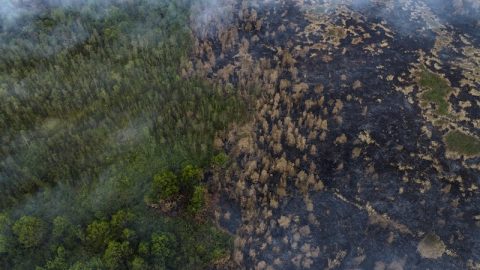
More efficient cookstove projects earn credits based on the amount of carbon they save by preserving trees that would have otherwise been cut down and burned for fuel. But if those trees later burn in a wildfire or are logged, the carbon stored would be released anyway, erasing the climate benefits of the credits.
Several carbon credit developers, conservation NGOs and the UN Environment Programme (UNEP) disputed that cookstove projects face this risk, in what critics described as a “coordinated lobbying campaign”.
They argued that, unlike forest protection schemes, this type of credit represents a “flow” of avoided emissions rather than a “stock” of stored carbon that can be released. They also warned that requiring a buffer would impose disproportionate costs and undermine the financial viability of these activities.
But the UN carbon market regulator was not persuaded by the argument. It decided that projects would have to protect against this reversal risk by handing over a percentage of credits to a so-called “buffer pool” instead of selling them.
‘New paradigm’
The amount of credits to be given up is calculated by applying different methods for natural risks, like wildfires, droughts or hurricanes, and human-caused ones, such as logging or land clearing.
For natural risks, project developers will need to apply local risk values derived from new modelling published by a group of independent scientists.