

Weather Guard Lightning Tech
Prometheus Wind’s Industry Growth w/ Will Friedl
Allen and Joel catch up with Will Friedl, CEO and co-founder of Prometheus Wind, based in Colorado. The company has been growing rapidly in the industry, conducting maintenance, blade repairs and more. Will discusses his experience as a business owner in the wind industry and the lessons he has learned along the way. To learn more, visit https://www.prometheuswind.com/ or call 1 (800) 487-4460.
Sign up now for Uptime Tech News, our weekly email update on all things wind technology. This episode is sponsored by Weather Guard Lightning Tech. Learn more about Weather Guard’s StrikeTape Wind Turbine LPS retrofit. Follow the show on Facebook, YouTube, Twitter, Linkedin and visit Weather Guard on the web. And subscribe to Rosemary Barnes’ YouTube channel here. Have a question we can answer on the show? Email us!
Pardalote Consulting – https://www.pardaloteconsulting.com
Weather Guard Lightning Tech – www.weatherguardwind.com
Intelstor – https://www.intelstor.com
Allen Hall: Welcome to the special edition of the Uptime Wind Energy Podcast. I’m your host, Allen Hall, along with Joel Saxum. We’re here with Will Friedl, who is the CEO of Prometheus Wind. And if you’re not familiar with Prometheus, they’re based in Colorado and they do a ton of turbine work from blade repair to foundation.
Torque and tensioning, pretty much anything to do with wind turbines they’re involved with. And Will is a graduate of the Air Force Academy and is a veteran, and this is their third year in operation. And we wanted to touch base with Will. Because when we get an update of all the things that have happened, and there’s been some tremendous growth at Prometheus Wind, so Will, welcome to the program.
Will Friedl: Hey, thanks for having me. I really appreciate it, sir.
Allen Hall: Let’s start off with I think the most exciting development, on top of everything else that’s happened, is the training center. You’ve now built out a training center. Yes, sir. Can you tell us about it?
Will Friedl: Yes, sir. Yeah. I think there’s a fundamental difference between companies that, are hiring for talent and then going out there and doing work.
And of course we’re a bootstrap company that’s what we had to do for the first two years of our operation. But it was quickly apparent. It’s Hey, we need to get a training center so we can upskill our guys so they can grow, they can earn more money. But also so that we can check people coming through the door to make sure that they have the skills that they need.
And so that was a big initiative, a huge lift this winter time, during the. Quote unquote off season we built out a a small training center here in Greeley, Colorado about two hours away from where I live. And and we’ve had great success with it. So we’ve had, we’ve run all of our guys through that.
Everyone who’s new goes through that training center. We get, we able to do a thorough evaluation of their skill sets, put them on the correct, educational track, and when they graduate, they they get the appropriate skill level identification and the qualifications that they need.
That we provide. So it’s been a huge success. It’s not something that, immediately, you flip the switch and it comes online. There’s growth to it. You learn how to train, you learn how to change your curriculum to be more effective. But overall just right out the door, we’ve seen a lot of success with it.
Seen a lot of extra buy in from guys who are appreciative of being up skilled. We’ve seen better retention. We’ve seen, higher quality and more, a better production rate of guys in the field. So it’s been a, it’s been a huge blessing for us.
Joel Saxum: Will, I know you and I were catching up at ACP and earlier than that in the year, I think O& M as well, over in San Diego with your team, we were talking about the build out of the training center and what it looks like for you guys in the future and what that was going to do for your program.
And it sounds like, it’s been a success, right? Like better quality in the field, better buying, you’re able to impart your company culture, which I know is really important to you guys. From the early stages before people hit, yeah, before people get out to the field, they’ve already got that base of this is who Prometheus is.
This is how we operate. This is what goes on in our company. And I know that this is this is your third year in business. Like you said, so you went year one, year two, and talking off air, you’ve two X your business every year. So congratulations on that as a bootstrap business. That’s tough to do.
Will Friedl: Yeah. Thanks. Appreciate that, man.
Allen Hall: With the training center and the organization in which you run and being a former military veteran through the Air Force Academy and organizing all kinds of activities that which you can’t describe to me, I’m sure it does seem like one of the things you notice about Prometheus is you’re very well organized, like you have, Systems in place to make sure that the customer gets what they’ve asked for.
And the technicians are doing what they’re supposed to, and the technicians have the proper tools and that, and getting every, that organizational piece is really important to Prometheus, which you don’t always see in all the ISPs, especially at your size and at year three, a lot of times you just don’t see that kind of organization.
How, what does that air force training bring into Prometheus? What do you think it brings to the aspect of Prometheus?
Will Friedl: Yeah, that’s a great question. I really appreciate you asking. Working in the air force, the military is, unquestionably the biggest bureaucratic organization in the world.
As part of the U S government, the biggest the most systemized entity that you’ve ever seen. And so when you learn to work through that system, you really learn, all the different process controls that are in place to produce certain results, in, in the military environment is one of extreme risk, and so you have to manage this risk and it’s also one of extreme chaos, there’s always things popping up.
And so you have to be able to manage and communicate through those issues that pop up. And what’s been really cool about us is that, my background isn’t in wind and it took me a long time to learn the technical aspects of the business, through and through. And I’m always learning more, you can always talk to an engineer, you always find out how much you don’t know.
But but what’s interesting is that, what the strength that I do bring in and I was, is the vision of okay, this is how a good organization works and works every single time. And as we’ve gone through the process, we’ve had these, we’ve had mistakes and we’ve had, things that are suboptimal, additional expenses here and there.
And what we found is that what’s made us really resilient is our ability to say, okay, Hey, this doesn’t work. We need to change it. And then have the exact. Yeah. Know exactly what lever we need to pull to change that outcome, and, maybe next time it’s a little bit closer, but it’s not always there, but once you figure out what we need to do, we’ve been really good at taking the same systems that I’ve been working with for over a decade in the military and applying them into the company and saying, okay, Hey, this is how this is going to run.
And if we, in the future, we need to change it, this is the process for changing it. And that’s made us really adaptable. We, you talk to a lot of small companies and they’ll say, I’m super adaptable because I, and they have that attitude because they can change what they’re doing in the moment.
But what I think is really important in order to be able to scale and do that well, is that not just change what you’re doing in the moment, but also almost immediately implement a system that will allow you to shut your brain off to that side and every single time it goes that way now that doesn’t always happen, right?
And there’s always errors and you’re always adjusting it. But at least we, like I’m, my team now is very familiar with, okay, Hey, this changed. Okay. I need to update this, this procedure, I need to update this process. I need to inform this person and then boom, we make that change and then we just roll in a slightly different direction.
It’s a little bit more on target. So I think that’s been the thing that’s allowed us to grow and to learn from our lessons and do such a ineffective job and basically de risk our operations. It’s interesting, for blade repair, we had a kickoff meeting yesterday and the client was, very experienced very experienced program manager for blade repair.
They’d been doing this for years and years. And we showed up and, most clients, they show up and they’re like, okay, let’s, what do we need to do? And we have a procedure that we do that leads leads them through the step by step conversation so that we cover all the bases, and they showed up with their stuff and we went through that and then we’re like, okay here’s our stuff what about this? What about this? What about this? And, and we had just, we had taken lessons learned and implemented it immediately into that, in that process.
And you could just see that they were just like, we’ve been doing this for a long time. We’ve never really seen this kind of thing. Like this is very, it just sets that precedent, and we still have to go out to out there and execute well. But in the military we say like a good plan makes a good execution.
So I think we’re starting off. on the right foot and we’re starting off the right foot because we did this very methodically.
Joel Saxum: So with that one in mind, like that client experience you had just this week, right? You are a part of the advanced and veterans advanced energy project.
And I know that we’ve talked about this in the past. We had Kevin doffing on, we talked to some other people about it. Give us an update on what’s going on with that program, because I know Allen and I, we’re not intimately involved with it. So we know about it on, in, on that surface level but what are you, what’s your involvement with those guys this year?
Will Friedl: The Veteran Advanced Energy Project basically takes veterans from across the industry and tries to upskill them and allow them to get exposure to different parts of the industry. And the way they do that is they create a fellowship of a handful of people who come together and we have monthly meetings and go over, leadership developments updates to the industry.
And we talk about our different sectors of the industry. So there’s a lot of already. Just built into that system. There’s a lot of cross pollination that happens. And then also every veteran who’s a part of it has to write a policy proposal paper. And so you work with people that are way smarter than you.
I have a lot more research background. And they just know a lot of things that, you know, that I, for one, don’t know, and so working with them, they help you to write this policy paper and, you interview multiple people and you get an idea. The idea is that you get a depth of knowledge into a sector of the industry that, that is totally outside your scope.
And you come out of that fellowship, not only do you have good friends, you’ve got a network across the industry. But also, you’ve got this depth of knowledge in an area that you would not know otherwise. And so my focus is currently, and I’m not done with my policy paper.
So I’ve got lots of research to do, you can imagine I’m busy doing other things, at the same time but my, my research is in, the economics of the wind industry and how that’s, how that money is currently flowing and and whatnot, because, the industry is like a river, and there are certain rivers that are slower and certain rivers that go backwards, and I’m trying to get an understanding of what that river’s and so yeah, that’s. That’s the update for where I am with that process.
Allen Hall: I think that’s good because you have that veterans network, you have a broader view of what’s happening in the United States in terms of renewable energy and wind.
What are you seeing with Prometheus wind? What things have you noticed over the last 12 months?
Joel Saxum: Yeah. So the industry is from the, from a perspective of a small, yeah, small business owner, ISP, what, how does what’s going on in the wind industry affect you right now? How that affects me is basically
Will Friedl: The more the more development that goes into this industry, we have a little bit on the construction side, but we do mainly maintenance services.
And the currently established let’s see market share is just the amount of wind turbines that are out there. So the more wind turbines that get. That get added, the larger the market share. And generally speaking, if you keep the same percentage of the market share, that means that things look good in the future, and then, the converse is also true. So I’m really plugged into that because I think it’s really important to understand, Hey, what is, what’s coming in the future? How big is this market going to be? Is it going to grow? Is it going to decrease? What are some of the threats to that?
And then, how do I respond to that? I just, because I think it’s important for everybody who’s in a leadership position in this industry to really understand that and to understand the implications to help drive, their policies and their future predictions. So that’s how I I’m looking at it.
And I see the trickle down effect. The difficulty is, when you talk about what have I seen in the, in, in Prometheus wind we’re, we started real small. So we’re getting bigger and bigger. And so I, it’s hard for me to see that because I haven’t reached a normalized state.
Once we reach a normalized state, then we can see those fluctuations a little bit more. Right now we’re just like, exploding in certain, like we’re really seeing a lot of success in what we’re doing and we don’t, it’s hard to say, Hey, this is coming from the market or, Hey, we’ve just been around long enough to have our name out there.
And now we know what we’re doing so we can have better sales conversations or expanding our market value. So yeah, so that’s how I’d answer both of those questions.
Allen Hall: Are you getting more phone calls reaching out to you now, instead of you having to knock on doors, has that flipped a little bit?
Will Friedl: It has, Still nothing beats knocking on doors, right? You just have to, you have to find the right person at the right time. And and have your values align your opportunities line. But what’s, what we’ve noticed is that, as we’ve gotten into these larger companies through pyramids, what’s cool is And I tell people all the time, wind industry is interesting because it’s not like a level steady state industry, right?
There’s this huge expansion of work that happens in the summer. And site managers, they don’t staff for that to cover that. They, have, they have for instance, blade repair or inspections, anything that’s outside the norm, they’ll have that built into their budget.
And so once you come in and you do a good job. It’s I need to fill this, I have this gap in my capabilities. I need to fill it with somebody. And once, once you come in and do that, good job, there’s. There’s very little that’s going to happen to keep you from coming back to that site.
You know what I mean? Or at least them, keep them from requesting that you come back to that site. And that’s what we’ve seen essentially is once we capture it, we hold, and once we cap, we capture and hold, I guess it’s a little bit like warfare but yeah that’s what we’ve that’s what we’ve seen.
And still need a lot of, still need a lot of outreach, but generally speaking, once we’ve done a certain scope of annualized scope of work, we get that phone call ringing. Every single time.
Joel Saxum: And then once you’re, I know you’re in with a couple of larger operators and I know if you work at one wind farm for them and you get a rave review there, of course, that, that operator is going to say, Hey, go to this wind farm.
We need you at this one. Now we need you at that one. Now I need you at that one. So yeah, that expansion. But that speaks to the quality, right? So it speaks to this quality and the service that Prometheus offers.
Will Friedl: It is. It’s been awesome. I don’t want to say Hey we jumped in and we did everything perfectly from day one.
You know what I mean? That’s not the, that’s not the story that we have. And that’s not what I’m trying to highlight. We’ve made mistakes like everybody else, but we’ve had this. Constant drive to to improve and improve and to identify where are we failing?
Where do we need to get better? And I would say that we’ve done that very well. And so we’re what you’re left with is a very consistent product that has a lot of quality. That’s not just happenstance. We didn’t just jump into the right, to the right role and systemize that.
Now we started off with a couple of assumptions that were wrong. We changed those around and we got through maturity, we got to something that’s, and I would say consistently excellent.
Joel Saxum: What would you say? What would be the lesson if you could go back and give three years ago, will a piece of knowledge?
What would it be?
Will Friedl: This is not inspiring. This is not inspiring. This is going to be like first off, things are going to be okay. And that’s what there’s so many times when there was just so like the burden of stress was, I can’t even tell you I went through a program in the Air Force where there’s 90 percent washout rate and that program, is a very difficult program.
But it’s only, it’s only 20 weeks long. And every day for the last 10 days, Two to three years, with the exception of a couple of months ago, once we started picking up steam this season has felt like I was a day in that program. It was that stressful. And like I’ll go back and I go back and do my job and it’s so everything’s so easy.
It’s so straightforward. You had a military, it’s Oh, you just need to know this procedure. You need to know who to communicate that the problem solving infrastructure and the problems that you face are their problems are like, they’re filtered. There’s a filter before they hit you.
And then once they hit you, it’s okay, you’re getting trained for those problems that are going to hit you. Here there’s no filter and there’s no system. And then it’s been it’s been a lot. And basically I think a good amount of encouragement. The other thing I would tell me is it’s focused on sales because you’re not going to know, you don’t know what your assumptions are until you, put them to the test and and then and focus on growing in a slower, this year, last year, I think we grew too fast and we had some issues and we pared our teams down.
And then we kept going from there. And this year we’ve been very deliberate on how fast we grow and maintaining. Okay. Hey, if I’m going to bring a team on, I need to make sure that they have this qualification. I know exactly what I need to train them on and I’m going to, I’m growing them one at a time.
And so that by the time, I’ve got as many teams that I need they’re all good and I don’t have to, I don’t have to be fielding calls all day long just to keep them operational.
Allen Hall: Yeah. What are your growth areas now? Where do you see your business expanding?
Will Friedl: The spring is the growth time, right?
That’s where, I would say the winter time, we purposely were training setting up the training center. So that was like hair on fire all through that, trying to get it ready by spring. And then and then the springtime you’re sitting on all these clears. And so you’re trying to make sure it’s working to go.
And so that’s hair on fire time. And so my next thing is, we’ve grown to a certain amount and, being on these calls, that call that I mentioned, what’s cool about it is that I wasn’t the one running that call, that was, that, that was my project manager. That was my operations guy.
They were the ones running that call. And and so it’s like a, so my next thing is to, okay, sweet. We’ve gotten to a certain size. We might still build, Add a couple of teams here and there, as projects pick up throughout the summer. But I think the next stage is to, okay, let’s sit, let’s wait, let’s see what happens.
Maybe I can take a vacation, de stress a little bit. And and then we can identify where to go from there. So I would say the Air Force, they got this thing called the OODA loop, the Orient, it’s for fighter pilots. But part of that is, okay, Once you understand the situation, just orient yourself to, to what’s going on and then decide to go from there.
So we’ve gone through the hair on fire stage backstage. Let’s do some orientation and decide, very methodically what we’re going to do next.
Joel Saxum: Will, you guys are, of course, we know, doing blade work. What are your other scopes that you’re taking on this summer?
Will Friedl: Yeah, great question. We do a lot of inspections too.
We’re really good at bore scope inspections and a warranty that kind of thing, tower walk downs. We’re getting staffed on some construction sites to do some basically some inspections for the customer to make sure that, the turbines that are built or the turbines that were purchased, and and that’s not always the case and and to a great expense sometimes, and we’re on sites doing that we’re doing end of warranty we do a lot of into warranty, especially in Q4, as you can imagine.
And and then we just, we do maintenance support as well. So we’ve had crews several crews out doing full maintenance schedules for turbines and and then whatever else is needed. Sometimes it’s for a contention gig. Sometimes it’s the full scope. Sometimes it’s Hey, we’re here.
We just had these bearings go out. We need some or we need some inspections on these bearings, we need re grease. A lot of different things. It’s amazing. These things these. These machines are so technical. And so there’s so many different failure modes. There’s so many different maintenance procedures.
There’s so many different things that can happen where you’re just like, Hey, I don’t have, I don’t have a guy on my crew who’s got the bandwidth and the specialty to do this. I need to call somebody. And that’s what we feel. We feel calls like that. And we sometimes we can, sometimes we can’t do it, but most of the time we can.
Joel Saxum: And I know, cause a lot of the operators, like especially site supervisors, once they have a team on site that they like, they’re just feeding them work because they’d like to keep them there. That cause that’s, the technician shortages are regular, right? So if they leave that. A site supervisor may be like, I don’t know what I’m going to get these guys back.
So while they’re here, I’m going to try to get as much work out of them as I possibly can. So that’s when you have scope creep or scope changes and those kinds of things. But it sounds like you guys have got a pretty good system for dealing with those as they come up.
Will Friedl: Yeah, absolutely. Yeah. We I it could, it comes down to just the systems that we have, not only for training our people, but also for managing our people.
So when things change we’ve got, you’ve got a way to figure out, okay Hey, how do we address this? How do we how do we walk away so that, or how do we, make sure that the customer understands, Hey, we’re making this a priority. We’re going to get this problem solved. And we’ll figure out what we need to do to make that happen.
And and, all along that process, you talk, you just took the nail on the head. Things are constantly changing, right? Hey, you’ll be out there and there’ll be like, We’ll get some bad Boar Scope results, and I’ll be like, okay, Hey we actually want to, increase the number of Boar Scopes that you’re doing on site or whatever it is, or, Hey, we need you to give us a little bit more analysis on this.
Can have an engineer look at this? And as we go through that process, it’s constantly changing. And so because it’s dynamic, it requires a lot of good communication, right? And so that’s where, our communication systems and how we come into play, we’re usually in front of those things.
So we’re asking the questions and And my brother has this great saying just a little bit of background. When I started the business, I started with two, two brothers who have a lot of wind industry experience. But he’s always starting their cat.
He’s like, yeah, we just got to kill those cats. He’s he’s got to ask those questions, kill those cats and move on.
Allen Hall: Since you brought up bearings and you guys are looking at bearings, there appears to be a significant issue with bearings in the United States at the moment.
What are you guys saying?
Will Friedl: We are seeing those issues. I had that’s the first thing. And we’re finding those issues. We don’t do, I do want to say we don’t do major component exchange at this year. And that’s something that we’re looking to add. We were originally looking at it this year.
We’re probably going to add it next year. Again, very methodical steps forward. We’re not, swapping those things out all the time, but when we do the inspections for them we’re seeing a lot of issues, a lot of breakdowns for it now. It sounds like it’s a good business at the moment though.
It should be. It really is. It really is. I think sites, they appreciate when, when you can consistently show up on the right, with the right equipment, with the right people, who have a professional attitude, who communicate well through the project, where you get your results and your inspection results in a timely manner, that’s in a professional, like easy to read format.
And just the process is smooth and it happens without them having to make phone calls or ping things. And the questions are coming from the vendor instead of them going to the vendor. I think that experience is something that a lot of sites appreciate. And and yeah and being able to do that we’ve had a lot of really good business.
Allen Hall: This has been a really good update of all the things that are happening at Prometheus wind and really excited for you. It sounds like the growth is in action at the moment. So if you have. Wind farm and you need some maintenance inspections or end of warranty campaigns being conducted.
You needed to reach out to Prometheus Wind. How do they do that? How do they reach you?
Will Friedl: You can go to our website, www.prometheuswind.com, and Prometheus is P-R-O-M-E-T-H-E-U-S. Everybody messes that up. Or you can reach us by phone. Our phone number is 1 800 487 4460.
Allen Hall: It’s great to have you back on the program and great to see all of all the success.
Will Friedl: Hey, thank you so much. I really appreciate the opportunity to speak with you guys. It’s always awesome to listen to you guys and to be able to come on and talk every once in a while. So thanks so much.
https://weatherguardwind.com/prometheus-wind-industry-growth/

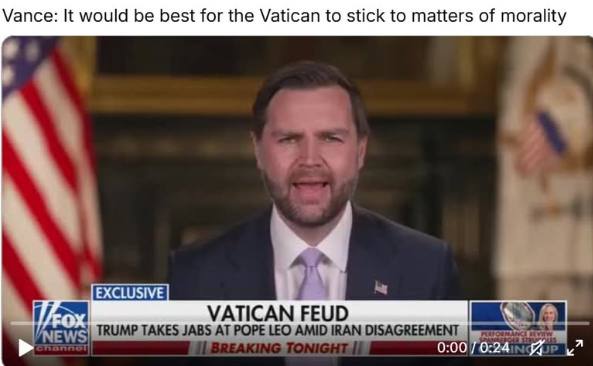 The Pope stands in opposition to pointless, illegal wars, cruel and inhumane treatment of the poor, and criminal insanity.
That strikes most of us as “matters of morality.”
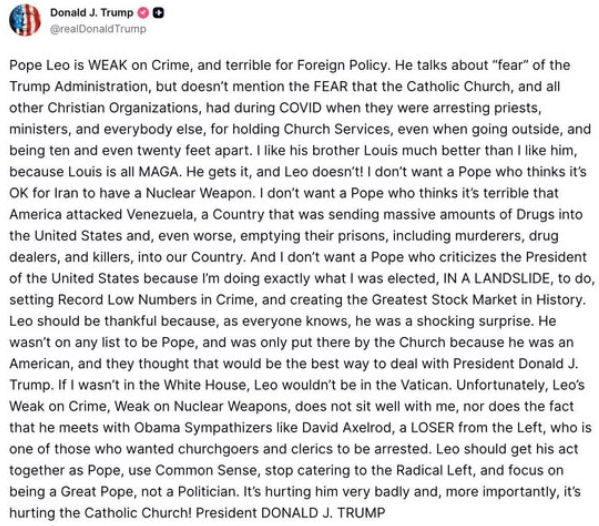
The Pope Should Stick to “Matters of Morality,” But What Exactly Does this Mean?
 Donald Trump is achieving something that I would have said was impossible: alienating the MAGA base. First, he depicts himself as Jesus in a post on Truth Social (see left), then he attacks the Pope (see below).
Christians don’t go for garbage like this.
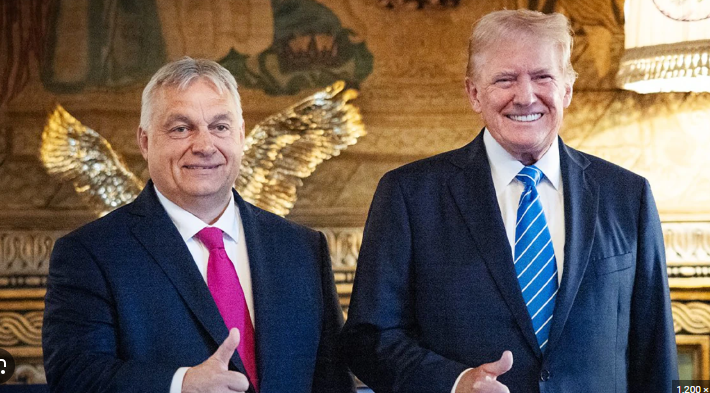 Péter Magyar just knocked out the Kremlin’s power and authority in Europe. Viktor Orbán is out.
I’m so happy for the people of Hungary, and for Americans as well, because here’s proof that it’s possible for authoritarianism to be overturned by the will of the people.
It’s a rare example, but an example nonetheless.


-
Climate Change8 months ago
Guest post: Why China is still building new coal – and when it might stop
-
Greenhouse Gases8 months ago
Guest post: Why China is still building new coal – and when it might stop
-

 Greenhouse Gases2 years ago
嘉宾来稿:满足中国增长的用电需求 光伏加储能“比新建煤电更实惠”
-
Climate Change2 years ago
Bill Discounting Climate Change in Florida’s Energy Policy Awaits DeSantis’ Approval
-

 Climate Change2 years ago
嘉宾来稿:满足中国增长的用电需求 光伏加储能“比新建煤电更实惠”
-
Climate Change Videos2 years ago
The toxic gas flares fuelling Nigeria’s climate change – BBC News
-

 Renewable Energy6 months ago
Sending Progressive Philanthropist George Soros to Prison?
-

 Carbon Footprint2 years ago
US SEC’s Climate Disclosure Rules Spur Renewed Interest in Carbon Credits