

Anything worth achieving is hard. It requires dedication, focus, and perseverance. And sometimes a little luck. Osprey Wilds’ clean energy focus began 20 years ago. Yet, it wasn’t until this fall with the addition of a 716 kilowatt (kW) solar photovoltaic system that we finally reached our goal of producing 100% of our electricity on-site through renewable sources. As a 501 (c) (3) nonprofit environmental learning center, Osprey Wilds reaches over 15,000 people annually through our wide-ranging accredited environmental education programs. Located on Grindstone Lake, near Sandstone, MN, our campus resides on 783 acres of beautiful forests, prairies and wetlands. This ideal setting, accompanied by our overnight lodging and dining facilities, allows us to connect K-12 students, youth, family and adults to nature for multiple days at a time, providing truly immersive, meaningful connections to the environment. At our core, we believe it is our responsibility to model sustainable environmental practices for others to learn from. This includes how we steward the land, how we use energy, how we grow, raise and purchase food, and the products we use. Our goal is always trying to reduce our impact on the planet, lessen our carbon footprint, and teach our audience what they can do in turn with their lives. We strive to create environmental ripple marks and we achieve that through our mission of instilling a connection and commitment to the environment in people of all communities through experiential learning.
The path down our clean energy focus began in 2004, when we secured a federal Housing & Urban Development (HUD) grant to install a 65-ton geothermal ground-source heat pump system to cool and heat our two main buildings. This eliminated our usage of propane to heat the two buildings, and shifted our energy needs to run the heat pumps on electricity. With the realization that our overall energy usage was lower, but our electricity needs were now higher, we sought out adding renewable energy sources to produce the electricity we used. From 2005 to 2015, we were successful in obtaining grants to add over 39 kilowatts of solar photovoltaic arrays to supply about 20% of our total campus electricity needs. During that time, we also added 29 solar hot water panels for domestic use in heating the water used for our dormitory showers and sinks, and our commercial kitchen, made a campus-wide LED lighting upgrade, added blown cellulose insulation to improve the R-value of our buildings, and upgraded our HVAC control systems. But to cover the remaining 300,000 kilowatt hours of electricity we were still using annually, we knew we needed to do something big to achieve our goals of becoming carbon neutral.

In 2019, we reached out to a solar company to help us achieve that goal. Over the next several months, I worked with them on a plan of adding 248 kW of solar photovoltaic arrays, distributed across multiple solar-compatible locations on our property that would produce the kilowatts needed to cover our annual energy usage. We worked with our local bank to secure terms for a loan that would finance the cost of the system, and met with our local electric cooperative East Central Energy about how this could work. This proposed system would put us well over 40 kW on our account, the kW threshold in Minnesota for net-metering. Coming to the realization that this proposal wouldn’t allow for net metering with our system meant ultimately it wouldn’t work economically for Osprey Wilds, as we would have been reliant on the net-metered income for the months we overproduced to cover the loan expenses we were looking to take on to finance the project. If we could have purchased the system outright and not had to worry about cash flowing the loan, net metering wouldn’t have made a big difference. It was a learning process, and whetted my appetite to see if there was some other way we could collaborate with East Central Energy to achieve our energy goals and theirs.
We all know what happened in March 2020. The world came to a halt with the impact of COVID-19, and in many ways is forever changed from that pandemic. Our focus at Osprey Wilds shifted to institutional survival and how we could sustain as an organization that is designed around immersive, shared experiences with people. For a solid year, we had no program revenue from in-person K-12 schools, a devastating loss for us, only enhanced by the sadness in knowing that thousands of children looking forward to that multi-day nature experience at Osprey Wilds were missing out. We were fortunate to secure federal grants from the rescue packages passed, and stayed afloat. As things slowly began coming back and operations returned closer to normal, the time was right to re-engage with East Central Energy and their CEO Justin Jahnz to see what might be possible. Those talks in 2022 led to an idea – a three party power purchase agreement among Osprey Wilds, East Central Energy and a solar provider, with the solar provider owning and operating the system on Osprey Wilds property and selling the electricity to East Central Energy, who then would sell it to Osprey Wilds. For it to work, we needed a solar provider interested, selling the solar electricity generated at rates that would be make financial sense for East Central Energy to purchase, while still being high enough that it was profitable for the solar provider, yet also low enough that Osprey Wilds could afford to purchase the electricity from East Central Energy. It was a proposal that would require threading a needle to find financial terms that could work for all parties, but it was also exciting and definitely worth the effort to see if we could make it happen.
During this time period, Osprey Wilds also completed a conservation easement with the Minnesota Land Trust on over 460 acres of our campus. Permanently protecting over 85% of our campus was something our organization was proud to have accomplished, and aligned very strongly with our environmental values of treading lightly on the planet, and protecting natural resources in perpetuity. During this conservation easement process, I knew I wanted to leave open the ability to add a large solar photovoltaic system on our campus for the eventual goal of producing 100% of our electricity onsite. For an optimal solar capacity location, as well as a visually strong first impression, we landed on a 3-acre exclusion in our 20-acre tallgrass prairie, noticeable on your left hand side as soon as you pull into Osprey Wilds’ driveway. The 3-acre exclusion was large enough for a 250 kW system, capable of supplying all of our electricity needs.
But as we began working with East Central Energy on the RFP (request for proposal) for the solar project at Osprey Wilds, I learned that this was a relatively small space to work with, as providers would be interested in putting up a larger system to reach the economies of scale necessary to lower the cost of the project and make it financially attractive. Examining the size of the exclusion, it was determined that the largest a system could be was approximately 700 kW. While this seemed very large to me, many commercial solar installers are looking at systems with production levels two to ten times that size to make projects financially viable.
With that knowledge, I was worried if we would get any proposals that would fit within the financial parameters needed for it to work for East Central Energy and Osprey Wilds. In the spring of 2023, we received proposals back from multiple solar companies. But unfortunately and somewhat predictably, all the numbers were far higher than what East Central Energy could afford to purchase, and in turn, what Osprey Wilds could as well. With that deflating realization, we talked openly with the company that had been the closest in their proposal, Soltek, Inc., about our desire to find a way with this project. We shared the benefits we saw for their company to be able to partner with East Central Energy and an environmental learning center that hosts and educates thousands of participants each year, and the impact they could have on those individuals with this inspiring project. Shawn Markham, Soltek’s CEO, took that passion of ours to heart, and over the ensuing months kept diligently trying to find ways to reduce the cost of the project to make it viable.


In March of 2024, I got a message from Shawn that we should talk. Conditions had shifted dramatically within the solar industry in the past 12 months. Changes made by the California Public Utilities Commission (CPUC) in the fall of 2023 were taking effect April 15th that were reducing the daytime compensation for rooftop solar for homeowners by about 75%, making it much less affordable for individuals to add solar. As a result, the solar industry was struggling. Shawn now had access to materials and equipment that he could get for half the price he could a year ago, dramatically lowering the cost of the proposed Osprey Wilds system and thus lowering the rate at which he could sell electricity to East Central Energy. Concurrently, he had also applied for a Renewable Energy in America Program (REAP) grant through the USDA and was awaiting word on its status. By the end of June, Shawn got word that he’d received the REAP grant, and with the savings he was realizing with the lower priced materials for the project, he could offer a rate that fit for East Central Energy and their cooperative members, and for Osprey Wilds. The solar dream was going to happen!
Soon materials and panels were being delivered to Osprey Wilds, and all three parties worked on crafting power purchase and land lease agreements for project terms to become official. The end result would be a win-win-win. Soltek would own and operate the system, selling affordable electricity to East Central Energy, while creating a 30-year source of guaranteed income. East Central Energy would expand their ability to purchase affordable, clean, and locally sourced electricity for their members. Lastly, Osprey Wilds would achieve its carbon goals, and save money with favorable electricity rates secured for the next 30 years.
Installation of the eventual 716 kW prairie solar garden began late July and was completed in just three weeks. East Central Energy is currently in the final stages of installing their transfer station next to the system, which will feed into their phase three line only a few hundred feet away. The system will go live in October, and produce 1,000,000 kWh (1,000 megawatt hours) annually, more than three times Osprey Wilds’ current electricity demands. The large production level of the system will set us up for future campus expansions that can remain carbon neutral. In the meantime, the majority of the electricity generated will actually go to our neighbors, providing them with clean, locally produced electricity at no increased expense to them.
The prairie solar garden is nestled within prairie grasses and wildflowers, allowing native ecosystems to coincide with energy production. In addition, the solar garden is bordered by a woven wire fence perimeter, which will allow us to partner with local sheep producers to add pastured livestock and agriculture into the mix, creating three sustainable land uses simultaneously.

With this project’s completion, we will now boast the largest solar photovoltaic system of any nature center or environmental learning center in Minnesota and the Midwest. It is a tangible example of what can happen when you work with others – you are able to achieve something greater than you could on your own. A rising tide lifts all boats, and it is our hope that this project demonstrates to our guests our commitment to the planet, and that it inspires them to pursue ways they can reduce their carbon footprint and climate change impact. We share a beautiful planet, one of unimaginable beauty, that is worth fighting for. When you love something, you take care of it, and at Osprey Wilds, this prairie solar garden is our latest pledge to the Earth that we are doing what we can to take care of it. We encourage you to do what you can for the planet as well.
Osprey Wilds is open to the public with over 10 miles of hiking and cross country ski trails at no charge. Visit us to see our prairie solar garden, check out our live animal ambassadors, shop our gift shop, learn about upcoming programs, or simply enjoy a nature respite along the lake, in the woods, or on the prairie.

Bryan Wood strives to provide people with rewarding and meaningful environmental experiences. He has followed his passion for the outdoors through various positions over the years. Throughout all of them is rooted a deep desire to connect people to nature and inspire them to make a positive impact with their lives for the planet and its inhabitants.
The post Osprey Wilds Achieves 100% Solar Clean Energy Goal appeared first on Climate Generation.

Climate Change
Large flotilla brings Pacific voices and message to leaders at Pre-COP meeting: Keep 1.5C Alive
NADI, FIJI Wednesday 7 October 2026 — Around 80 people including Pacific and Torres Strait community members, Elders and youth activists travelled as part of a colourful flotilla past the Pre-COP venues with a message for leaders: ‘Keep 1.5°C Alive’.
High res footage and images available here
The large flotilla included traditional Fijian voyaging vessel the Uto Ni Yalo, six 6-person outrigger canoes, and Greenpeace campaigning vessel the Oceania which sailed from Sydney to the Pre-COP in Nadi. On board were Elders, climate-vulnerable communities members from across the Pacific and Torres Strait, youth activists and poets, and campaigners and climate experts from across the region.
Messaging on canoes and banners said ‘Hold the Line at 1.5°C’ and ‘Keep 1.5°C Alive’ — a reminder to leaders that the climate limit established under the Paris Agreement is a non-negotiable survival line.
Shiva Gounden, Head of Pacific at Greenpeace Australia Pacific, said: “People from across the Pacific and Australia have come together today to make sure the voices of our communities are heard by leaders meeting here in Nadi for the Pre-COP climate talks. The Taku Pakasoa Declaration adopted here at Pre-COP means ‘Strength in Unity’, and that’s how we’re coming together today.
“Our message is clear: Hold the Line on 1.5°C and centre those most impacted by the climate crisis in your decision-making. Our children’s futures must not be stolen away so that polluting nations can continue down the fossil-fuel path.
“Limiting global heating to 1.5°C is a non-negotiable survival line for Pacific communities and for humanity. Every cyclone, every storm now blows with the deadly force of accumulated emissions and gives a warning of what is to come as we face a dangerous summer of climate-fuelled extreme weather. Do not ignore our voices.”
On board, Aigagalefili Fepulea’i-Tapua’i, Pacific youth climate advocate and poet from Aotearoa Climate Action Network, said: “To hold the line on 1.5C for our Pacific family, New Zealand, as the only country where the connection between environmental protection and indigenous rights is legally validated by our constitutional document, must protect the rights of Māori.”
ENDS
Media contact: Kate O’Callaghan in Nadi on +61 406 231 892 (Whatsapp/Signal)
Large flotilla brings Pacific voices and message to leaders at Pre-COP meeting: Keep 1.5C Alive
Climate Change
A ‘victory’ for communities as High Court rules climate impacts from coal and gas must be considered even where fossil fuels are exported
SYDNEY, Wednesday 7 October 2026 — In response to the landmark High Court ruling that climate impacts of fossil fuel projects must be considered by NSW planning authorities, the following lines can be attributed to Joe Rafalowicz, Head of Climate and Energy at Greenpeace Australia Pacific
“The High Court decision today is a victory for communities that bear the brunt of the storms, bushfires and extreme weather fuelled by Australian fossil fuel corporations.
“Coal and gas companies have claimed they are not responsible for their pollution because it happens overseas, but today Australia’s highest court sided with common sense and scientific evidence to find that every new coal and gas approval in this country could put us at risk, no matter where it is sold or burnt.
“As leaders meet at the Pre-COP talks in Fiji this week, Pacific communities are reaffirming the importance of the 1.5C temperature limit as a survival line for humanity, and is a scientific, moral and legal obligation as affirmed by the landmark Pacific-led ICJ Advisory Opinion. The highest court in the world, and now in Australia, have been clear: it is legally imperative that all of the pollution from fossil fuel projects be considered before approving a new project.
“Now is the moment for the Australian Government, as COP31 President of Negotiations, to find the courage, leadership and grit our country is known for to chart a new course away from fossil fuels. This begins with showing leadership at home by ending new coal and gas approvals.”
-ENDS-
After witnessing the effects of sea-level rise in the low-lying island nation of Tuvalu, Pacific leaders on Tuesday used the pre-COP31 summit in Fiji to voice their frustration at the difficulties they have experienced in tapping the global climate finance system.
A small group of government leaders, climate negotiators and heads of development banks and climate funds took a trip to Tuvalu’s Funafuti atoll on Tuesday morning, travelling by road over land just 10-20 metres wide to visit a project that is building barriers to keep the sea from the land.
They then flew to Fiji for the pre-COP summit, where several Pacific leaders said they had been let down by the insufficient quantity, bad terms and slow speed of international finance to help them adapt to a warming climate that is bringing higher oceans, drought and more powerful storms to their shores.
“Right now, our islands are like a canoe that has been rammed by a massive foreign ship. Our canoe is taking on water, we are sinking, and what is the world’s response?” asked Palau’s President Surangel Whipps Jr.
“They hand us a tiny patch to cover a gaping hole,” he continued, “but the bureaucratic process just to receive that patch is so slow that the water fills the hole while we wait. Then to rebuild the vessel so that we can survive the next storm, we are offered loans, debt that adds weight to a sinking boat packaged in red tape so thick we can barely access it. And while we wait, the water continues to fill.”

Pacific leaders and Australia called again on governments to invest in the new Pacific Resilience Facility (PRF), which has been designed by the Pacific Islands Forum and is seeking $500 million in investments by COP31 in November.
It has around $180 million so far, but did not receive additional pledges during the UN General Assembly in New York. The PRF aims to invest to generate annual returns which it can give to projects like water tanks for drought-hit communities.
Witnessing sea level rise
The annual pre-COP gathering is usually a low-profile technical meeting of climate negotiators. But this year, Australia – which is the president of negotiations at COP31 – partnered with the Pacific to introduce a “leaders segment” in an attempt to shine a spotlight on climate issues affecting the region.
Fourteen government leaders – from Australia, Timor-Leste, Mauritius and the Pacific – made the trip. They were joined by the European Union’s climate commissioner Wopke Hoekstra, the heads of the Green Climate Fund and the Asian Development Bank and former Australian prime minister Julia Gillard.
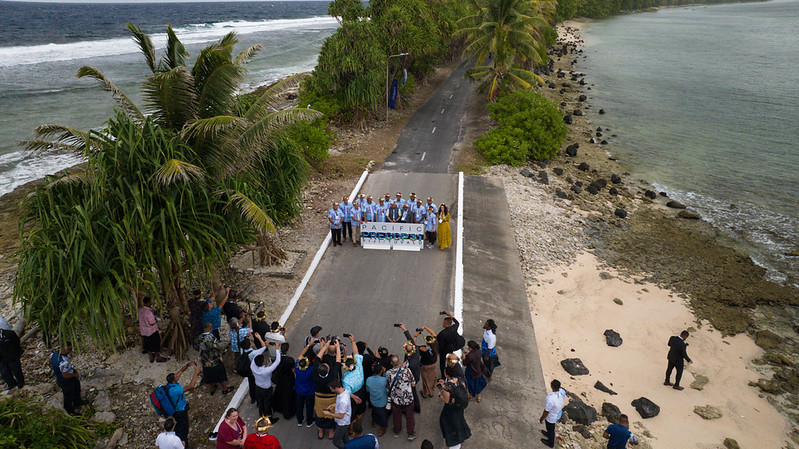
On their return to Fiji, Solomon Islands Prime Minister Matthew Wale told the pre-COP leaders roundtable that the sea level rise they had witnessed was personal for him.
“Tuvalu was not just a site visit for me. I saw the story of my own saltwater people,” he said, adding that he, his daughter and his grandfather had lost their houses to sea level rise and that three-quarters of his electorate live on land that will be underwater in the next 30 years.
From the other side of the world, Antigua and Barbuda’s environment minister Michael Joseph said Tuvalu’s problems felt similar to those of his own Caribbean islands. “I saw vulnerable communities… just metres from the sea and people determined to remain on their land, preserve their culture and way of life,” he said.

A group of Fijian schoolchildren told the leaders it was not just sea level rise the Pacific struggles with but also heatwaves, droughts and storms, which worry their families and prevent them from learning.
Climate finance red-tape
Several Pacific leaders criticised the world’s leaders for not doing enough to combat climate change. Cook Islands Prime Minister Mark Brown expressed disappointment that only two non-Pacific leaders had come to the pre-COP, a fact Australian media widely picked up on to label the event a flop and question its A$20 million (US$14m) price tag.
“We’ve heard a lot of numbers these last two days,” Brown said. “Let me share one of my own. More than 50 invitations extended to world leaders… to see for themselves what high emissions are doing to our nations and our ocean – an ocean that covers nearly one-third of the Earth’s surface.”
-
Pacific islands seek backing for new regional fund ahead of COP31
Pacific leaders will appeal for pledges to a new regional fund designed to swiftly channel climate finance to local communities -
The Pacific made history in the courts – now we must do it in the negotiations
Legal clarity alone will not lead to reduced emissions, more finance or stronger national climate plans – political will is key to meeting states’ obligations -
Civil servants warn fossil fuel exploration could harm New Zealand’s climate reputation
Advice to politicians says revoking a ban on oil and gas drilling could damage relations with Pacific neighbours and risk lawsuits
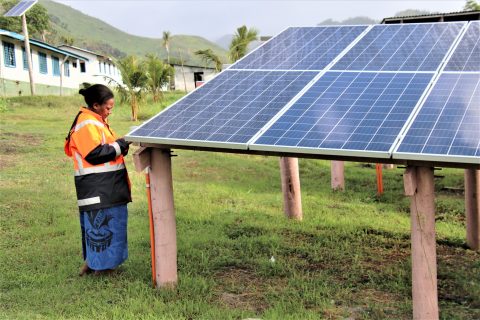


He called for more climate finance for the Pacific, asking “if the world is prepared to assess our suitability for climate finance, why is it not equally prepared to scrutinise whether those responsible for delivering it are meeting their obligations?”
Like Palau’s president Whipps, Naoero’s President David Adeang criticised the red tape that is hindering access to climate finance as well as a lack of money, complaining especially about “complicated procedures, heavy reporting, delays in approval and disbursement”.
Adeang added that “the way we assess vulnerability matters”, adding that it should be measured by more than income. Naoero, for example, is classified by the World Bank as high-income, restricting which climate finance it is eligible for.
Action plan to improve access
On Thursday, the Australian government will present a statement and action plan on improving access to climate finance for small island developing states and least developed countries, which it is asking other countries and organisations to endorse.
The statement addresses some of these Pacific complaints as well as acknowledging that progress has already been made on simplifying access by multilateral development banks and climate funds.
In Fiji, Asian Development Bank head Masato Kanda said his institution is “tailoring our finance and operations to island realities” because “your children and their children should be able to grow old in the countries their ancestors have called home for millennia”.
The executive director of the Green Climate Fund (GCF), Mafalda Duarte, said that the GCF-backed coastal adaptation project leaders visited in Tuvalu shows that “climate finance works” although – as the project took eight years to implement – “it takes time, and therefore we have no time to waste”.
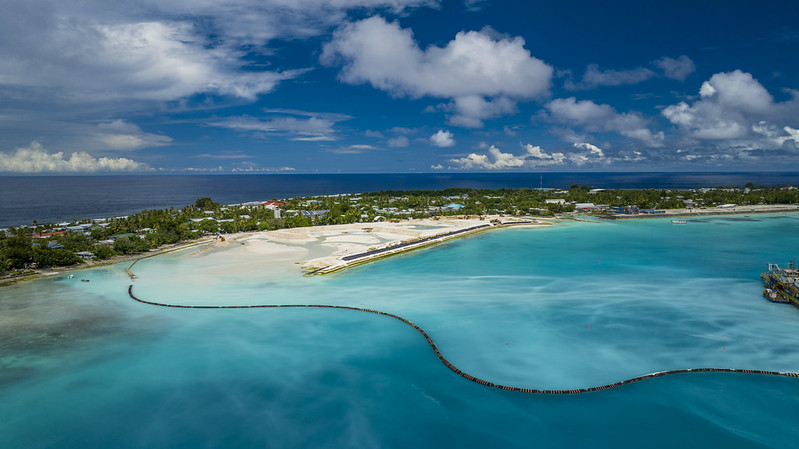
Australia calls for optimism
While Pacific leaders expressed concern that the world is set to blast past its agreed 1.5C warming limit, endangering their nations, Australia’s Prime Minister Anthony Albanese called for “optimism”. “If people think there is no hope, then they will not strive to get the change that we need,” he said.
He said that when he attended his first COP in 2005, Australia’s renewable energy target was 2%. Its target is now 82% renewable electricity by 2030.
While Albanese promoted Australia’s success at electrifying homes and businesses and rolling out renewables, he has been criticised by climate campaigners for extending the production of fossil fuels, including coal – largely for export.

France’s Minister for Ecological Transition Monique Barbut defended the European Union’s climate action at the pre-COP meeting. She said the continent was heating up and reducing emissions faster and providing more climate finance than anywhere else in the world.
“It is time for all major emitters to step up and do their fair share” on climate finance, she said. Most developing countries with large emissions have fiercely resisted joining the club of climate finance donors, arguing they have played a disproportionately small historic role in causing climate change.
Barbut, as well as Palau’s president Whipps, called for the next flagship scientific assessment report of the Intergovernmental Panel on Climate Change (IPCC) to be finished by COP33 in 2028, in time to inform the next global stocktake of national climate action.
This timeline has been opposed by countries like India, Saudi Arabia and China, who argue it would put an unfair burden on developing countries. Barbut said countries should “support the work of the IPCC rather than sabotage its calendar”.
Barbut said that governments should agree at COP31 to aim to raise the share of “clean electricity” in final energy consumptio