Quick Key Facts
- Eight million tons of plastic reaches our oceans annually. The top plastic marine debris items are cigarette butts, food wrappers, beverage bottles and lids.
- Ocean currents pull plastic into convergence zones called “gyres” that form patches of waste at their centers. The largest is the Great Pacific Garbage Patch, which is twice the size of Texas.
- Plastic is a major threat to aquatic life, killing 100 million marine animals per year.
- Plastic waste degrades quickly in the ocean — especially along shorelines — and sheds microplastics into marine environments.
- Rivers act like arteries, conveying huge amounts of waste to oceans. Just 1,000 rivers are responsible for 80% of all ocean plastic.
- Various technologies are being employed to clean up ocean plastic: Seabin vacuums in litter and microplastics; Wasser 3.0 swirls hybrid silica gels in a vortex to form microplastic agglomerates; the Great Bubble Barrier pushes plastic to the surface of Amsterdam’s canals using air bubbles.
- The Ocean Cleanup is one of the most well-known cleanup efforts in the ocean, primarily targeting the Great Pacific Garbage Patch. The organization aims to eliminate 90% of floating plastic in the oceans by 2040.
- Cleanup efforts have been criticized for their impact on marine ecosystems, particularly the neuston floating on the ocean’s surface and the fish trapped in plastic-catching nets.
Ocean Plastic: The Basics

The Earth’s oceans are teeming with life — and with plastic. In fact, by 2050, it’s expected that there will be even more plastic in the ocean than fish.
Adding to the 150 million tons already in marine environments, eight million tons of plastic reaches our oceans every year. While the Ocean Dumping Ban Act of 1988 (also known as the Marine Protection, Research, and Sanctuaries Act) banned dumping waste directly into the ocean in the United States, waste still makes its way into waterways through illegal dumping and other means. Without proper systems worldwide for handling and disposing of waste, it can easily end up in rivers and eventually make its way into the ocean. In coastal areas especially, rainwater can flush litter into storm drains and eventually into the ocean.
Of the 380 million tons of plastic produced every year, 50% is single use products, much of which makes its way into oceans. Some top marine debris items, according to NOAA, are cigarette butts, food wrappers, plastic beverage bottles and lids.
Great Pacific Garbage Patch
When plastic makes its way into the ocean, some of it is pulled by ocean currents to consolidate in specific areas forming “patches” at their centers. There are five of these convergence zones, called “gyres” — one in the Indian Ocean, two in the Atlantic Ocean and two in the Pacific Ocean — and they are often the focus of large-scale ocean cleanup efforts. The Great Pacific Garbage Patch is one of the largest and most well-known patches, and is located in the North Pacific Gyre between Hawaii and California. The patch is 1.6 million square kilometers: 2x the size of Texas and 3x the size of France. Within it are an estimated 1.8 trillion pieces of plastic; some are macroplastics — like cigarette butts, medical waste, plastic bags and bottles, abandoned fishing gear, etc. — but the majority of the debris is made up of microplastics. Overall, the majority (by count) of plastic pieces in the garbage patches consists of those smaller than 5mm in size.
A common misconception of these gyres and patches within them is that they’re just giant, floating mats of garbage. In reality, a lot of the waste floats below the surface of the water, and there are different concentrations throughout the patch itself — so some parts of it just look like regular ocean from above.
Why Is Ocean Plastic a Problem?
Ocean-bound plastic is expected to triple by 2040 if drastic action isn’t taken to reduce both our consumption and our waste management practices. Once plastic reaches the ocean, it causes serious harm to marine life and can impact global economies like fisheries and wildlife tourism.
Microplastics
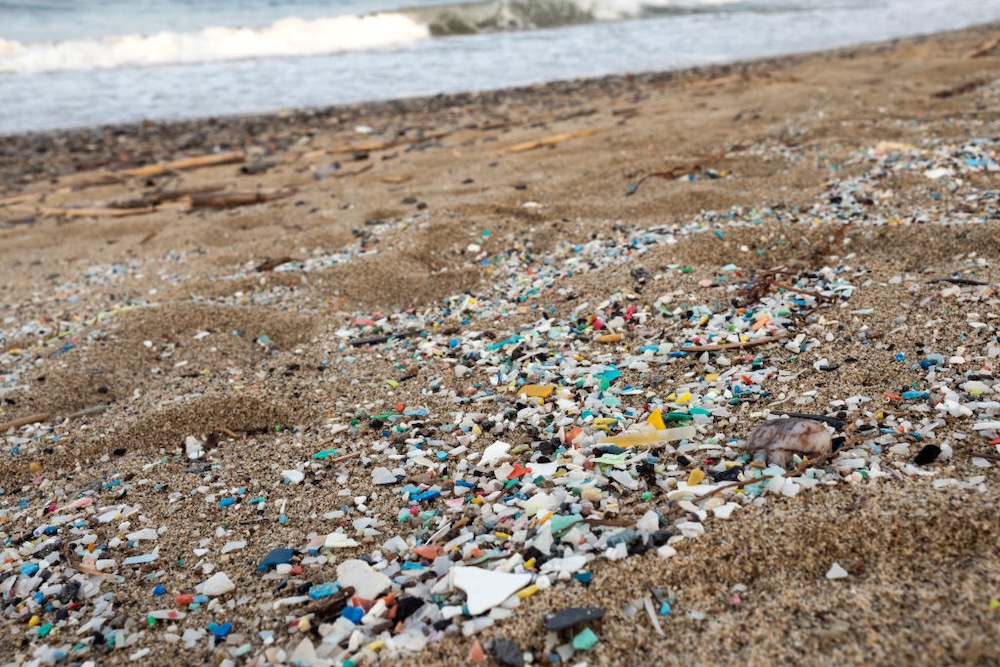
Since the early 2000s, scientists have become aware of the presence of microplastics in oceans, although they’ve lingered in these marine ecosystems since the 1960s. Microplastics are tiny plastic fragments of five millimeters or less in diameter. “Primary” microplastics were created at that size for products like microbeads and plastic fibers used in synthetic fabrics, while “secondary” microplastics form from larger pieces of plastic as they degrade in the environment under the forces of water, wind and UV rays. Microplastics are ubiquitous in our environment now and are found virtually everywhere on Earth, from the deepest trenches of the ocean, to the highest mountains, to the air and water we take into our bodies. In the top foot of seawater alone, it’s estimated that between 82 and 358 trillion plastic particles (about 2.4 to 10.8 billion pounds) are floating.
Microplastics are particularly an issue in oceans, where they degrade more easily and are readily ingested by wildlife — so when plastics enter the ocean, they will eventually shed microplastics as they break down. Because these tiny plastic fragments aren’t filtered out by current sewage technology, removing plastic from the ocean (and preventing it from entering in the first place) is crucial to mitigating the impact of microplastics on marine environments.

Threats to Marine Life and Ecosystems

It’s not hard to imagine that millions of pieces of plastic would disrupt natural ecosystems, fundamentally changing their makeup and impacting the species that depend upon them. In all, plastic kills more than 100 million ocean animals per year. Marine life gets entangled in ghost fishing gear like abandoned nets, or other plastic items like grocery bags and six-pack rings. They ingest it too — almost all seabirds on Earth have eaten plastic, as well as half of sea turtles. Filling their stomachs with debris can cause these animals to die of starvation or suffer from internal injuries. Furthermore, debris in these patches can even transport species to other locations — including crabs, algae and barnacles that attach to the plastic — and might become invasive when they settle in new areas.

Economic Impacts
Along with their environmental toll, ocean plastics also pose a threat to global economics. It makes ecosystems less resilient by altering biodiversity and other conditions, especially when connected with other stressors like ocean acidification and rising temperatures. Thus, plastic diminishes the ability of marine ecosystems to provide ecosystem services — that is, the beneficial services that ecosystems provide us with, such as carbon storage and climate regulation, recreational opportunities/tourism, waste detoxification, pest and disease control and a source of food for humans. When an ocean is functioning normally, it provides us with these positive (and profitable) ecological functions. It’s estimated that in 2011, marine ecosystem services created value for society of about $49.7 trillion a year — but due to marine plastic, there has been a 1-5% decline in overall ecosystem services, which equates to about $500 billion to $2,500 billion in value lost.

Scallops at an aquaculture farm in Tongoy Bay, Chile. Maria Valladares / NOAA OAR 2014 Photo Contest
The aquaculture industry is especially at risk. Plastic in marine environments can reduce the efficiency of fisheries and threaten fish populations that people depend on for food. Seafood is a principal source of animal protein for humans, and makes up over 20% of food intake by weight for 19% of the global population.

Tourism/recreation is another huge industry that depends on thriving marine ecosystems. Not only does environmental and wildlife tourism provide opportunities for enjoyment and fulfillment all over the globe, but it is also a multi-billion dollar sector that many economies depend on. Losing species that rely on impacted marine environments could mean fewer opportunities for enjoyment, and thus a loss of that crucial income. Species also have cultural value to humans; there is evidence that humans psychologically benefit from merely knowing that marine animals exist in their lives and will continue to live there.
Current Ocean Cleanup Technology
Amidst this gargantuan influx of ocean plastic, new technological innovations have begun targeting marine waste and finding effective ways to both remove it from natural environments and prevent it from ending up there in the first place.
Seabin V5
Seabin V5, launched in Australia in 2015, has set an ambitious target to clean 100 cities of marine debris by 2050. This innovative solution is primarily designed to operate in calm water, like harbors and marinas. As the name implies, the Seabin functions as a floating receptacle, collecting litter floating on the water’s surface as well as substances like oil, fuel and detergents. The device operates akin to a vacuum, drawing in water and catching waste materials, including microplastics. The collected waste is then retained, while the water is filtered and then sent back into the ocean. The potential of Seabin to address plastic pollution in still water is substantial, with projections anticipating the capture of about 90,000 plastic bags per year.
FRED
Developed by the San Diego-based nonprofit Clear Blue Sea, FRED (which stands for Floating Robot Eliminating Debris) emerged through a collaborative effort with high school and college interns and volunteers. The robot has a more specific focus than some other cleanup technologies, targeting mainly plastics prone to disintegrating into microplastics. Operating like a vacuum, FRED can pick up debris from 3cm to 2ft in size, using its two front flaps to direct debris onto a conveyor belt, which moves them into a collection basket. It also has additional front flaps to collect larger pieces of trash as well. Because the robot runs on renewable energy, it’s not at all dependent on fossil fuels. The machine’s slow pace, coupled with sophisticated sensors, effectively prevents marine life from entering and helps it function as a water quality monitor as well. FRED generates underwater maps too, which can help predict the impacts of climate change or runoff from pollution. While it’s a smaller operation, its holistic design that addresses both waste collection and water monitoring is one with great promise.
Wasser 3.0
Hailing from Germany, Wasser 3.0 is tackling microplastic pollution in waterways. The main component is a vortex system that swirls a non-toxic compound composed of hybrid silica gels, drawing in microplastics and causing them to clump into “popcorn-like” agglomerates that float to water’s surface, which can then be easily removed. The process has the potential to serve as a microplastic-removal tool in sewage systems — which currently are unable to filter out microplastics — and is already being used at a municipal wastewater treatment plant in Landau-Mörlheim, Germany, as well as a paper processing facility.
The Ocean Cleanup
Perhaps the most prominent and well-known system in the realm of ocean cleanup is led by The Ocean Cleanup (TOC), a Dutch nonprofit organization founded in 2013 by 18-year-old Boyan Slat. Slat was inspired to start the initiative after taking a family scuba diving trip to Greece at the age of 16, where he was dismayed to see more plastic bags than fish in the water. Backed by funding from Coca-Cola and other large corporations, The Ocean Cleanup has a mission to eliminate 90% of floating plastic in the oceans by 2040.

TOC’s system employs a four-step process in collecting waste: target, capture, extract and recycle. Cameras first scan the surface of the water to find plastic hotspots and determine where the cleanup should target, also using computational modeling to predict where plastic hotspots will be based on water currents. Then, plastic is captured in the retention zone using their “Interceptor vessels.” Two boats pull a large U-shaped barrier through the water that goes about 3 meters below the surface, collecting the trash as it moves. The boats come together once a week to close the gap, and the retention zone is taken onboard and emptied onto the vessel. The collected waste is then separated into different recycling streams to send to shore.
The Great Pacific Garbage Patch is TOC’s first target. They began collecting plastic there in 2019, and have been removing it consistently since 2021. Thousands of tons have been collected by now, with around 245,680 kg of trash removed so far. TOC hopes to remove 1% of the patch by the end of 2023. Initially, the organization employed System 001, which proved to be ineffective. Now, however, they’re using System 002 while developing System 03, which will be a whopping 2,400 meters wide, three times larger than System 002, thereby reducing the number of units needed to clean up the patch.
In Rivers
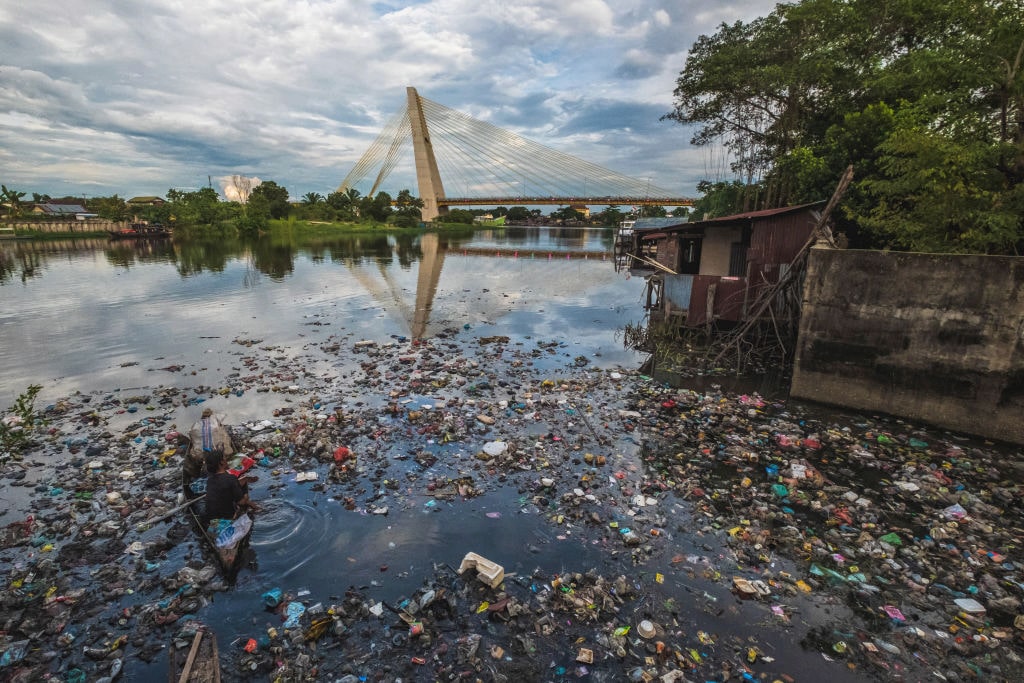
Plastic that’s already in the ocean isn’t the only waste of importance. A huge amount of plastic reaches our oceans via rivers, so effective cleanup methods must also target these arteries to prevent waste from reaching marine environments in the first place. More than 1,000 rivers are responsible for 80% of ocean plastic, according to research conducted by The Ocean Cleanup in 2021. Along with cleaning up the GPGP, TOC’s approach also includes intercepting plastic from 1,000 rivers worldwide — currently, they are doing so at 11 rivers in Vietnam, Indonesia, Jamaica, the Dominican Republic and Malaysia — which they believe could halt 80% of river-based plastic from reaching oceans. They use AI-powered cameras to figure out contributing factors like depth, width and flow speed of the debris, and use their Interceptor vessels to collect waste at the mouth of these rivers and ferry it to waste management facilities.
Mr. Trash Wheel
Who knew a trash collector could be a tourist attraction? Mr. Trash Wheel — created by Clearwater Mills, LLC — resides in the Baltimore Harbor, catching ocean-bound plastic and entertaining visitors with his goofy, giant googly-eyes. The contraption uses two-foot-deep containment booms to collect trash flowing down the river. Water currents power the wheel — or solar power, when the currents aren’t strong enough — which rakes trash and lifts it out of the water and onto a conveyor belt. The trash then falls into a dumpster on another floating barge, which transports it away to be incinerated for electricity. Four such wheels exist across the harbor, known as the “Trash Wheel Family,” which has collected 2,362.23 tons of trash.
The Great Bubble Barrier
This barrier isn’t made of hard materials like many other cleanup systems — instead, it’s made of air. A Dutch startup company created this barrier for the Amsterdam canals to capture plastic through the whole width and depth of a river. The system’s successes include its lack of interference with the river’s regular functions — like ship use and fish passage — and its around-the-clock operation. A perforated tube runs along the bottom of the river and pushes out air at an angle, creating a “screen” of bubbles that blocks plastics and directs them towards the surface of the water into the catchment system. The group expects 86-90% of plastic to be removed in the Oude Rijn in Katwijk, Netherlands via this system.
WasteShark
Inspired by the whale shark, the WasteShark was created in 2018 by RanMarine Technology to clean up waterways, harbors, ponds and lakes, and was recently deployed in New York City’s Hudson River. Like the whale shark — which filters water through its body to ingest krill and plankton — the WasteShark filters water through it to catch plastic waste, as well as algae and other biomass. This small, boat-like drone floats along the water’s surface to collect debris to be taken to land and disposed of, using sensors to avoid obstacles. It also collects information on the water it traverses, like salinity and pH levels.
Problems Related to Ocean Cleanup Efforts
Efficiency and Validity
There has been controversy over whether ocean cleanup technologies are more harmful than helpful, and whether they’re as effective as they’ve claimed to be. In 2022, a video from The Ocean Cleanup of waste aboard one of their vessels prompted calls that the trash was too clean to have come from the ocean, and perhaps was staged, which the organization denies.
There have also been questions of whether their methods themselves are successful. System 001 was ineffective, and System 001B would have required 150 units to effectively clear the GPGP. System 002 has been more successful, but very expensive — although TOC says it will solve some of the issues in earlier systems, such as “overtopping,” by which plastic rode in waves over the top of the barriers.
Habitat Destruction and Bycatch
The Great Pacific Garbage Patch and other gyres aren’t just home to plastic, but also to other floating marine life that have made their home there, or have otherwise gotten caught up in this new ecosystem. Many of these systems — especially those that collect plastic in net-like structures — have the potential to be harmful in the way that trawl fishing is, which catches fish indiscriminately, although these nets are often more shallow and move slowly so the creatures can escape. Along with fish, sharks, and turtles, plastic-catching nets also disturb the neuston: a community of organisms including crabs, sea anemones, insects, snails, worms, nudibranchs and other small creatures that float on the surface of the ocean. The neuston is an important food source for larger species, and given the way it interacts with ocean currents, it often ends up where ocean plastic accumulates.

The Ocean Cleanup in particular has come under fire for potential harm to ecosystems. Their systems have caught fish, small sharks, mollusks, and sea turtles accidentally, although the organization does maintain that by weight, it’s a very small amount compared to the plastic. In 40 tons of plastic, 141 kg of biological matter was caught, or 3.6g for every 1,000g of plastic collected. They also claim that fish can escape their catch system through hatches, and they have breathing ports for animals, as well as lights, acoustics and cameras to detect and deter species. The TOC has begun addressing their impact on the neuston as well, and maintains that preliminary data is promising, finding only one type of neustonic organism (Velella velella) had been caught. Seabin has also been criticized for its impact on marine life. A 2022 study found that for every 3.6 pieces of litter captured, so was one marine animal. When examined in a tidal marina, Seabin captured 58 items of litter a day on average, as well as 13 marine organisms, 50% of which were dead upon retrieval.
Energy Use
Many cleanup methods are powered by renewables, but not all of them, begging the question of whether these cleanups are causing greater harm to the climate while they remove trash. Ocean Cleanup ships, for example, are powered by fossil fuels and emit 660 tons of CO2 per month — although the group says that they will offset all emissions from System 002, as they have with 001. However, the legitimacy and ethicality of carbon offsets at large has been hotly debated.
Non-Surface Plastic and Prominence of Microplastics
Most cleanup systems only reach a few feet below the ocean’s surface, but many macroplastics do fall to the ocean floor and are thus missed in cleanup efforts. At such a depth, however, plastics are more likely to become a part of the ecosystem, so a disturbance would be more harmful to wildlife. Similarly, not all cleanup systems capture microplastics, which we know are an extremely significant source of harm in marine environments. During the first 5 years after being released into the ocean, 77% of floating plastic is found close to the shore where it erodes faster into microplastics. There is an argument to be made that beach cleanups and efforts closer to land would be more productive at ridding the ocean of microplastics — or dealing with plastic at the source by preventing its introduction into waterways at the outset. Some argue that focusing so heavily on ocean cleanup diverts attention away from addressing the creation and poor disposal of plastics in the first place.
What Action Can We Take?
Reduce Single-Use Plastics

At our current rate of consumption — and as the global population expands and becomes more affluent — plastic use is expected to triple by 2060, according to the Organization for Economic Cooperation and Development Projects. To eliminate plastic waste from oceans, we must combat the source rather than the symptom. Even in the absence of systemic changes that limit consumption of single-use plastics worldwide, we can make the choice for ourselves to cut it out of our lives. Think of major sources of plastic in your life (especially single-use items), and consider ways you can replace them with reusables. Bring your own bags to the grocery store, carry a reusable coffee cup, ditch plastic water bottles entirely. Think further, too — what beauty products can you replace with sustainable alternatives? What kitchen items? How can you grocery shop in a way that reduces plastic? These are all questions we can answer for ourselves.
Recycle Correctly
Recycling is, of course, one solution to plastic waste by diverting it towards reuse. However, only 9% of plastic waste ultimately gets recycled, and even the plastic that does make it into the recycling bin doesn’t always get recycled in the end. With the acknowledgment that recycling is an inadequate complete solution — and can be used as a scapegoat to justify our overconsumption of resources — it’s a widely available resource and one we should take advantage of. First of all, learn how to recycle correctly. There are no universal rules for what should go in a recycling bin — it varies widely by municipality, which means you need to research how you’re supposed to do it for the specific recycling system you utilize. It’s also important to avoid “aspirational” recycling — that is, recycling things that you think (or hope) can be recycled — which can lead to even more waste at recycling centers.
Legislative Action
As is the case with many environmental issues, legislation can be a major tool by which ocean-bound plastic can be controlled. The 2021 Break Free From Plastic Pollution Act has been introduced as an amendment to the Solid Waste Disposal Act, and aims to reduce the production of some single-use plastics — including packaging — and have producers on the hook for their disposal. Many places — including several U.S. states — are banning plastic bags, and some state-level initiatives want to create extended producer responsibility legislation. Legislation is an important tool for change. Vote for people who support these causes. Look into what they’ve voted for and against in the past, and advocate for the adoption of policies that limit plastic waste.
Participate in Cleanups

The Young European Ambassadors from the Western Balkans participate with other volunteers in the EU Beach Cleanup in Durres, Albania on Sept. 18, 2021. WeBalkans EU / CC BY 2.0
Cleaning up plastic waste doesn’t only have to happen in faraway gyres or major rivers to make a difference. Look into cleanups in your community hosted by local environmental organizations or volunteer groups. Larger organizations also host large-scale coastline cleanups, like the International Coastal Cleanup with the Ocean Conservancy, Oceana, 5 Gyres (which operates in 66 countries), the Pacific Beach Coalition and the Surfrider Foundation. Or, get out there yourself and clean up! Organize a cleanup if there isn’t one, utilizing your network through school, work or other organizations that you’re a part of.
Support Organizations
Whether it’s volunteering your time, donating money or sharing information about their efforts on your social media feed, support organizations that are combating ocean-bound plastic waste, like the Plastic Pollution Coalition and the Plastic Soup Foundation. Larger environmental organizations like the Natural Resources Defense Council, the Sierra Club and the Environmental Defense Fund have considerable influence and lobby for just environmental policies too.
Takeaway
Technological solutions to our plastic problems do exist, although they don’t come without their own issues. Ultimately, we should think about plastic pollution from all ends: reducing our consumption to begin with, preventing waste from entering waterways, and removing it when it does in a way that doesn’t impact ecosystems. Like many environmental issues, cleaning up ocean plastic is a wide-reaching one with impacts across many different sectors including human health, ecosystem stability and industry. Successful cleanup systems will have to reflect the complicated nature of the enterprise, taking all of these different concerns into account.
The post Ocean Cleanup 101: Everything You Need to Know appeared first on EcoWatch.
https://www.ecowatch.com/ocean-cleanup-facts-ecowatch.html
Green Living
Earth911 Inspiration: A Serious Look at Modern Lifestyle
Today’s quote comes from Pope John Paul II’s message for the celebration of the World Day of Peace, 1990. He wrote, “Modern society will find no solution to the ecological problem unless it takes a serious look at its lifestyle.”
Earth911 inspirations. Post them, share your desire to help people think of the planet first, every day.
The post Earth911 Inspiration: A Serious Look at Modern Lifestyle appeared first on Earth911.
https://earth911.com/inspire/earth911-inspiration-take-serious-look-lifestyle/
Green Living
Best of Sustainability In Your Ear: Making Billions of Square Feet of Commercial Space Sustainable with CBRE’s Rob Bernard
The built environment, particularly office buildings other urban facilities, are responsible for 39% of the global energy-related emissions, according to the World Green Building Council. About a third of that impact comes from the initial construction of a building and the other two-thirds is produced over the lifetime of a building by heating, cooling, and providing power to the occupants. Our guest today is leading a key battle to reduce the impact of the built environment. Tune in for a wide-ranging conversation with Rob Bernard, Chief Sustainability Officer at CBRE Group Inc., which manages more than $145 billion of commercial buildings, providing logistics, retail, and corporate office services across more than than 100 countries.

Rob cut his sustainability teeth at Microsoft, as its Chief Environmental Strategist for 11 years, as the company was developing its world-leading approach and collaborating with other tech giants to lobby for policy and funding to accelerate progress. He discusses CBRE’s Sustainability Solutions & Services for commercial building owners, as well as the accelerating progress for renewables, carbon tracking, and economic, health, and lifestyle benefits of living lightly on the planet. You can learn more about CBRE and its sustainability services at cbre.com
Take a few minutes to learn more about making construction and building operations more sustainable:
- Earth911 Podcast: Cityzenith’s Michael Jansen Uses Digital Twins to Reinvent Urban Planning
- Earth911 Podcast: Concrete.ai CEO Alex Hall On Mixing Embodied Carbon Out Of the Built Environment
- Best of Earth911 Podcast: Lowering Construction Impacts With Green Badger’s Tommy Linstroth
- Best of Earth911 Podcast: William Ulrich on Learning From Y2K To Design the Circular Economy
- Best of Earth911 Podcast: Autodesk Spacemaker Aides Building Efficiency With AI Insights
- How to Assess Your Business’ Environmental and Social Impacts
- Passive House Design: Changing the Future of New Home Construction
- Subscribe to Sustainability in Your Ear on iTunes and Apple Podcasts.
- Follow Sustainability in Your Ear on Spreaker, iHeartRadio, or YouTube.
Editor’s Note: This podcast originally aired on April 15, 2024.
The post Best of Sustainability In Your Ear: Making Billions of Square Feet of Commercial Space Sustainable with CBRE’s Rob Bernard appeared first on Earth911.
https://earth911.com/podcast/earth911-podcast-making-billions-of-square-feet-of-commercial-space-sustainable-with-cbres-rob-bernard/
Green Living
Sustainability In Your Ear: Zena Harris Brings a Green Spark to Hollywood
An average big-budget movie creates about 3,370 metric tons of CO₂, according to the Sustainable Production Alliance’s 2021 report. That’s like driving over 700 gas-powered cars for a year, or about 33 metric tons of CO₂ for each day of filming. A single TV season can have the same impact as 108 cars. With thousands of productions happening every year in North America, Hollywood’s environmental impact is hard to overlook. Zena Harris, founder and president of Green Spark Group, has spent more than ten years helping the industry turn sustainability goals into practical steps that productions can track. On this episode of Sustainability In Your Ear, she shares how to build sustainable practices into film and TV projects from the very start, instead of adding them at the end when most waste has already been created. Zena started Green Spark Group in 2014 after earning a master’s in sustainability and environmental management at Harvard. She pitched Vancouver’s major studios on a simple idea: sustainability can save money. Her first big project, the X-Files reboot, managed to divert 81% of its waste across 40 filming locations. Since then, her certified B Corp consultancy has worked with Disney, NBCUniversal, Amazon, and other major studios, and she founded the Sustainable Production Forum, which is now in its tenth year.

This conversation comes at an important time. Soon, California’s climate disclosure laws will require studios to report emissions from every vendor in their production supply chain, both before and after filming. Zena points out that while studios are getting ready, most of their suppliers—like small companies that rent generators, handle waste, or provide lumber on tight schedules—are not prepared. The Sustainable Entertainment Alliance has released Scope 3 guidance for productions, and updated Scope 1 and 2 guidance came out in August 2025, but there is still no single tool that everyone uses. The real challenge over the next two years will be closing the gap between what studios must report and what their suppliers can provide. Zena also makes a bigger point about culture. After 12 years in the industry, she sees sustainability experts facing the same obstacles again and again because the way content is made hasn’t changed. The day-to-day work is important, but the bigger opportunity is in climate storytelling. Only about 13% of recent top-rated films mention climate change at all. Tracking the carbon footprint of a TV season is important, but what really matters is how a billion viewers see what’s normal on screen. That’s the influence Hollywood hasn’t fully used yet.
To follow Zena’s work, visit greensparkgroup.com. You can also learn more about the conference she started at sustainableproductionforum.com, or listen to her podcast, The Tie-In, which she co-hosts with Mark Rabin.
- Subscribe to Sustainability In Your Ear on iTunes
- Follow Sustainability In Your Ear on Spreaker, iHeartRadio, or YouTube
Interview Transcript
Mitch Ratcliffe 0:00
Hello, good morning, good afternoon, or good evening, wherever you are on this beautiful planet of ours. Welcome to Sustainability In Your Ear. This is the podcast conversation about accelerating the transition to a sustainable, carbon-neutral society, and I’m your host, Mitch Ratcliffe. Thanks for joining the conversation today.
We’re going to talk about film and television, because every film and TV production starts the same way: with a creative vision, a budget, a shooting schedule, and a huge amount of stuff. Generators burn diesel all day and night at shooting locations. Trucks idle as they wait to move between locations. Sets are built from raw materials only to end up in the landfill when filming ends. Craft services rely on single-use items for literally everything that’s placed on the table for the production team.
Now multiply that by the thousands of productions happening in North America each year, and the scale of the problem becomes clear. The average feature film emits 3,370 metric tons of carbon dioxide, which is like driving more than 700 gas-powered cars for a full year. And a single season of a TV show can match the emissions of 108 cars — and that’s not even counting the supply chain, everything that comes onto a set and everything that leaves. Hollywood has promised to be more sustainable many times, and our guest today has spent the last 10 years figuring out what it really takes to make these promises come to life in practice.
Zena Harris is the founder and president of Green Spark Group, a certified B Corp sustainability consultancy that she launched in 2014 with a mission to change the environmental impact of entertainment. She holds a master’s degree from Harvard in sustainability and environmental management, and she came to this work not as an environmentalist, but as a systems thinker — someone who spent her early career in engineering and HR identifying where organizations were leaking efficiency and money. But when she moved to Vancouver and discovered that nobody was focused on sustainability in what had become one of North America’s largest film production hubs, she saw a gap and filled it.
For more than a decade, she’s worked with major studios — including Disney, NBCUniversal, and Amazon — helping them embed sustainable practices in video production projects, and she’s developed measurable goals and built cross-industry collaborations that make lasting change possible.
She also founded the Sustainable Production Forum, which is now in its 10th year and has become the industry’s premier gathering place for turning sustainability talk into coordinated action.
We’ll talk with Zena about what it looks like when a production plans for sustainability from the very beginning, instead of adding it on at the end of the process like we usually do with all of our waste. And she’ll explain her idea of radical collaboration and why making real progress in Hollywood requires everyone — that includes unions, guilds, city governments, power companies, and those top-talent stars — to work together. We’ll also discuss how she uses the circular economy on set, the accountability gap that remains even as California’s new climate disclosure laws start to roll out, and whether the same systems-thinking approach can help business outside the film world.
To find out more about Zena’s work and Green Spark Group, visit greensparkgroup.com — that’s all one word, no space, no dash. Hollywood has the power to change how people think about sustainability, but can it also change how it works behind the scenes? Zena Harris is tackling both challenges at the same time. Let’s see what she’s discovered, right after this brief commercial break.
Mitch Ratcliffe 3:49
Welcome to the show, Zena. How you doing today?
Zena Harris 3:50
Hi. Thanks for having me. I’m doing great. The sun is shining in Tacoma, Washington, and I’m happy to be talking with you.
Mitch Ratcliffe 3:59
Well, I’m so happy to hear that you live in Tacoma. I lived there for almost 50 years. It’s a beautiful place, and I’m glad you’ve inherited it. I really like it. But you started your sustainability career in Vancouver, and you had no entertainment experience, and your first project was helping The X-Files reboot series divert material at 40 shooting locations — and you reduced their waste by 81%. What gave you the confidence to, you know, just call and say, ‘Hey, can I make you more sustainable?’
Zena Harris 4:31
It was a little more than that. You know, there was a lead-up to it. I had studied the film and TV industry in graduate school — I did my master’s thesis on it — so I had a little bit of a background. And the reason I studied it in grad school: I was in a sustainability master’s program, and I wanted to figure out how to shift culture. The first thing I thought of was, okay, people watch TV, we all love movies — that’s where I should start digging in to see what they’re doing. And they weren’t doing a ton. They were doing a little bit, but not too much.
So I talked to all the studio reps and found out what was going on and created a whole framework, like you do in graduate school, and wrote it all up. And then I pitched it to every studio. I sent out a white paper, essentially, to all the studios, and I was like, ‘Hey, let’s talk about this.’ Flew to LA, met with people in person. And I’m like, ‘I’m in Vancouver. I know it’s a major film hub. Put me to work.’ And one person did. She said, ‘Hey, you know, The X-Files is coming. It’s a big show. We have room in the budget to make this great. Let’s see what we can do.’ And that’s what really got me going.
One of the first people I met in the industry was Kelsey Evans. She is the owner of Keep It Green Recycling, which is a local vendor in Vancouver. Now, I had studied the film and TV industry, I know management practices and sustainability and the science, and she knew — like, really knew — the industry. So we worked together on that production, and we still work together today. She’s a friend of mine. She’s fantastic.
We got a lot of stuff done on that show, and that was my introduction into the film industry in practical terms. Vancouver, because it’s a major film hub, has — let’s just say — 20 shows filming at any given time. Sometimes it’s a lot more. But I knew that the work I was doing on that one show could scale. We needed to do it on all the shows. We needed to engage the industry. We needed to train people. So I started Green Spark Group as a vehicle to do this in the industry more broadly.
I think my past experience — prior to even going to grad school — in HR for a multinational company, and I was also an executive director at an international nonprofit where we had working groups and people from all over the world coming together to solve problems and create programs, all that gave me confidence to step into the film industry, look around, learn from others, apply my skills, and build this momentum locally. The company, locally, ended up — now we work across North America and even in other countries. So it’s been a journey.
Mitch Ratcliffe 7:52
Well, you point out that they said, ‘We’ve got room in the budget to make this great,’ but that isn’t always the case. So what’s the pitch to a new client?
Zena Harris 8:00
Yeah, yeah. Well, those are the magic words: ‘We can save you money.’ That is it. That’s it. I mean, look, this has been a movement over the last, let’s say, 12 years — that’s how long I’ve been working in this space. And it’s rare for folks to say, ‘Yeah, we can figure this out in the budget.’ Sometimes it happens, but most people want to know how they can save money. So if you can show them very clearly that they can save money, that pushes the door open. And then you can talk about lots of other things too.
Mitch Ratcliffe 8:43
So tell us about The Amazing Spider-Man 2. You saved them a lot of money. How’d you do it, and how much did you save them?
Zena Harris 8:48
I did not work on that. A colleague of mine, Emellie O’Brien, worked on that. That was actually one of the first productions publicized for saving a lot of money. I think they saved something like — well, I have the number here — $400,000. The cool thing about what happened with that, and also what happened with The X-Files and some others shortly thereafter, is that the studio recorded behind the scenes. They interviewed crew members to talk about what they had done. Then they published some of the stats in a case study and a video.
People in our industry love watching videos, right? So we did a behind-the-scenes for The X-Files, which caught lightning in a bottle — really created a whole movement in Vancouver. We showed that little five-minute behind-the-scenes video to everyone, and they saw their peers in that video because they were crew members speaking about what they had done. Things like that really sparked action in people and this excitement that, ‘Wow, things I have seen and kind of felt uncomfortable with — like waste, nobody likes seeing waste — people saw solutions in those videos. People saw themselves, saw their peers, and that inspired action, awareness, intrigue — like all the stuff you would want to create a movement. I can’t say enough about those early videos. They really helped kind of put us on a trajectory for more awareness and more action.
Mitch Ratcliffe 10:42
A set is kind of like a microcosm of a city. A lot of stuff comes together and then disperses again. We actually did some consulting a few years ago with Hollywood about recycling the material on site — they use the PCs for the first time and then send them to recycling. It’s amazing how wasteful it could be. Tell us about what happens on a set. What’s the input, and what’s the output?
Zena Harris 11:10
Yeah, you are right. It is definitely akin to a city. I mean, if you think about it, for a large film or TV series, there can be 20 different departments working together to make that project happen. Each of those departments brings in some kind of material, some kind of input. The production office will have lots of office supplies, equipment, office equipment, furniture for the office — that kind of thing. Those things are coming in, and then you use them, and then they go out.
Then you can think of production design and construction. These two departments work really closely together, and they’re the ones creating and then building the sets in the sound stage. You can think about all the materials that might be associated with that. Construction is a big input department, where we’re bringing in lots of wood — and other types of material. It’s not just wood, but essentially we’re building a village inside a sound stage to shoot. And it’s all the wood and any other material that goes into that: wallpaper, paint, all sorts of props, set dressing that will go into that space.
So all that’s coming in, and then we use it for a short period of time, and then we have to do something with it. A lot of times, set walls are kind of standard — they can be reused. These are things that, if we recognize the patterns here, we’re using these things all the time. We’re breaking them down, and then we do something with them. A lot of times the breakdown is fast. You don’t have a ton of opportunity to really think. But if we know that there’s a pattern associated — prep, production, and wrap every single show — we know that we can disrupt that pattern. We can plan for it.
This is where thinking ahead and planning like, ‘Hey, we can reuse these walls. Got a lot of doors here — we’re going to reuse these doors. We’re going to send them to a place that will hold them temporarily, like a reuse center, and then those can be redistributed back into the industry.’ Some productions will store this stuff on their own if they have reshoots they think they might have, or another series they might come along. So all of these are options.
The default historically has been — because this is a dynamic industry, because timelines are short, people need to get out of their stage space — to use it, break it down, put it in the dumpster, get that thing out of here, and move on. So we’re saying there’s another way to do it, and just that alone saves the production a lot of money, because those big dumpsters at the end of it all are expensive to haul away. If we can reduce even a few of those, that is a cost savings, and then that material can be diverted and reused. So everything coming in — food, big material like construction material that people think a lot about, anything coming in — has an opportunity to be diverted, redistributed on the back end. And then that action saves money.
Mitch Ratcliffe 14:59
Well, you describe what’s needed as radical collaboration. I’m wondering if you can explain what that means, because Hollywood’s going through a lot of changes right now, and it sounds like sustainability may be the keystone of some new talent or new careers during the production process. So what are the hardest stakeholders in that radical collaboration to get to move from where they are today?
Zena Harris 15:22
Yeah. I think, like I said, I’ve been doing this for a really long time, and one of the things that I’ve picked up over the years is that people in the industry have been conditioned to point fingers. There are different stakeholders in the industry. Crew will point to the union or the studio, for example, and say, ‘You know, those folks need to do something so that I can integrate sustainable practices.’ The unions will point to crew or studios. The studios will point to production or unions. And so at the end of the day, that doesn’t get us anywhere. We’re kind of swirling in this finger-pointing. And nobody really knows what to do. They’re waiting for something. So progress is slow when you do that.
In order to move the needle, I think one of the things we need to do is actually work together in ways that might seem unconventional or radical. I keep reminding myself of the saying, ‘What got us here won’t take us forward.’ So we have to get over ourselves and do something differently. We know that there’s no single organization that’s going to solve all the problems or change the existing system. We need a different approach, a different narrative around all of this — not just kind of deferring to another stakeholder.
This is what I call radical collaboration, because it’s different. Collaboration between crew and unions and studios and creatives and suppliers and industry organizations — in ways that have been different than we’ve tried before, that really haven’t worked so well, or not to the degree we wanted them to work. So instead of reinventing the wheel on that, we need a whole different tack. I think that in order to see success, we need positive reinforcement for people. We need to actually say, ‘Yes, this worked,’ and in increments too — not just the big things. When people see that positive reinforcement, they actually lean in. They actually have more confidence in what they’re doing. And then this increases momentum. That’s kind of my view of radical collaboration and what I think is needed to keep the ball rolling.
Mitch Ratcliffe 18:07
Well, you’re making a really interesting point, which is that people don’t dislike change. They may be a little afraid of it, but they want to see that the extra effort involved in making the change actually is paying off. As the orchestrator of the sustainability activities on set, how do you communicate that to them so that the Teamsters and the members of the Screen Actors Guild all say, ‘Oh, I’m in’?
Zena Harris 18:37
Yeah, yeah. Well, you know, it’s interesting. You mentioned a couple of different positions there — Teamsters and actors and these sorts of things. Everybody is coming to the production with a different perspective, a different viewpoint, kind of a different mandate within their department. Like, their job is to do this. So everybody sees sustainability in a slightly different way.
One of the things we really strive to do — and I would say this is kind of a standard practice, but what we’re trying to do as a team at Green Spark Group — is go beyond surface-level conversations. Not just say, ‘Here are a few things you could do,’ but really try to have a deeper conversation with people in each of these departments and ask them what they see, what they need to be successful in doing any one of the things that they might want to do differently, and really help them get there. If they’re afraid to talk to someone, well, we’ll help them do that. We will have their back. We will go with them and be a backstop for anything they may not know or feel confident talking about. If it is finding a vendor and they don’t have time to look around, we’ll help them do that.
You know, people say, ‘Meet you where you are.’ But it’s really going beyond surface-level conversations. It’s really tapping into people’s wants, needs, level of confidence, and helping them grow that and helping them shine in their role — whatever it is. I think that sort of human-centric approach is really helpful, and what really moves the needle, or actually builds trust. Because at the end of the day, we can go in there and talk about all sorts of gear. There’s a lot of gear out there. There’s a lot of batteries out there that are going to save emissions. But I have seen multiple times where batteries have been rented, they sit in the gear truck, and people are afraid to use them. Why is that? Let’s talk about that. Let’s really unpack it, and let’s find a safe space to do it. Maybe it’s that lightweight one over there, and we want to just test it out. Totally cool. Let’s make that happen. What’s it going to take to get there?
Mitch Ratcliffe 21:24
This very meta moment — talking about telling stories to storytellers to get them to change their behavior — is a great place to take a quick commercial break. Folks, we’re going to be right back to continue this really interesting conversation.
Welcome back to Sustainability In Your Ear. Let’s get back to my conversation with Zena Harris, founder and president of the Hollywood sustainability consultancy — although Vancouver, too — Green Spark Group. Zena, your mission is to change the climate of entertainment, and that has a double meaning that clearly was deliberate. But I’m wondering, in the current environment and thinking about the stories we tell about why we do things, with all the whiplashing political winds of the last couple of years, how has that changed your message and your perception of what Hollywood’s trying to accomplish?
Zena Harris 22:16
Yeah, I mean, I’ve said this a few times. We have a lot of momentum. Right now, in 2026, there are more organizations, there are more people thinking about sustainability, there are more tools out there for people to use. There’s a lot of momentum in the industry. So for us at Green Spark Group, we are on a mission to change the climate of entertainment, and it’s incremental, year over year, year over year — and so we’re still working on it. It’s very relevant for us today.
We have had a hand in changing a lot in the entertainment industry over the last 12 years. We started programs, we’ve created strategic plans for industry organizations and training in the C-suite, and started the industry’s first conference. We’re uplifting people and trying to give a platform to people to collaborate and share their ideas. But there’s a lot of opportunity out there. There are still a lot of people who are new to sustainability, and they need someone to help them make sense of it all. It’s taking all this wonderful information that’s been created by various organizations — and we’ve contributed as well — and distilling it and helping them make sense of it all, make decisions that are in line with their values, and implement the things that they want to implement. Save the money that they can save, that they know they can, when they start doing the math.
Mitch Ratcliffe 24:11
Is the money the key thing right now? Is it the sustainable savings, or is it still a commitment to the climate, in the context of, again, all the backlash against the idea of environmentalism?
Zena Harris 24:24
Yeah, I mean, the idea of environmentalism, I think, is kind of in the broader ethos. I think when you get down to talking to people one on one, they want solutions to things — waste they’ve seen, or emissions they’ve encountered on production, or food waste, or whatever it is. Whether they call themselves an environmentalist or they just are a caring and concerned person, everybody wants a positive working experience. And they don’t want that tension internally between, ‘I’m doing this great, creative, wonderful thing in my job, and then I look over here and some negative thing is happening environmentally or whatever.’ People want a holistic, positive work experience. So I think that’s core at the end of the day — to tap into that, and, like I said, just go beyond surface-level conversations and really help people figure that out.
Mitch Ratcliffe 25:35
Let me ask about the other side of that equation, about changing the climate of entertainment. Hollywood has enormous cultural reach, but we did a little research and found that only about 10%, 13% was the number we came up with, of recent top-rated films even acknowledge the idea of climate change on screen. Do you hear creatives on the content side talking about climate? Do they ask you? Do they say, ‘You know, this is interesting, I’d like to learn more, and I might tell a story about it someday’?
Zena Harris 26:05
Yeah. I mean, this idea that the industry reach is certainly enormous — the cultural influence of the industry, wherever you’re interacting with it, whether you love a character on screen, whether you follow an actor in real life and kind of just like what they do, whether you follow — like, I’m an operations kind of person, I like looking at how things work and trying to improve that. But this idea of climate storytelling, a lot of people are thinking about it right now. It’s a huge lever. You will hear that batted around a lot. A lot of industry organizations are doing research on it and trying to get into writers’ rooms and in film schools.
There’s a lot of momentum in that space. We have been engaged a few times in that effort, and it’s proven beneficial. So I would say that 13% — there’s a lot of momentum around this subject, and I can see that number increasing over time. People want stories that reflect the current reality they’re feeling in real life. There are a lot of people working in environmental jobs, or in some shape or form, and I think those kinds of professions will be reflected on screen a lot more in the future. So, yeah, I think there’s a lot of momentum in that space.
Mitch Ratcliffe 27:52
I can see a film about a ranger saving a family from a fire.
Zena Harris 27:57
You can think it, they can do it.
Mitch Ratcliffe 28:00
Let’s turn back to the operational question, as you pointed out you focus on that. One of the common problems that production has, along with every other business, is trying to fully measure what’s going on. Like we were talking about, this set is this midpoint in a very complex supply chain where stuff has flowed in, now it needs to go somewhere in order to either be reused or appropriately recycled, but we can’t fully measure all that. What’s still in the invisible category of information? In the same sense that Scope 3 emissions are hard for a typical corporation to measure, is there a comparable issue with production sustainability?
Zena Harris 28:36
Oh yeah, 100%. Look, there are always more things to measure. As an industry, we have focused a lot on carbon emissions from things like utilities, fuel, air travel, and accommodations. We have a really good handle on that. But those are, like, four categories, right? And, as you said earlier, materials are coming onto production — food, wood, office supplies, you name it, it comes onto production. So those are the things we don’t have a solid handle on. There’s embedded carbon and all that stuff.
There are also lots of industry tools, industry carbon calculators out there — some measure more than others.
Mitch Ratcliffe (interjects)
Are any of them any good?
Zena Harris (continues)
Yeah, yeah, they’re good. But some have more inputs than others. Some will only measure those four categories that I mentioned. For years, for example, everybody in the industry wants to know the waste diversion rate, right? But nobody focuses on the carbon emissions associated with that material. We just get a diversion rate, and we call it good. So you have to choose: if you want to know all of that, you have to choose a tool that will allow you to input more of that information. And we don’t have a standard tool yet in the industry that everybody uses, so we can compare apples to apples.
We have guidance in the industry, and that’s really helpful. The Sustainable Entertainment Alliance, which is an industry consortium, has put out guidance on Scope 1, Scope 2, and Scope 3. Their Scope 3 guidance is the most recent, and with new information, new methodology, a lot of people don’t really know what to do with that, and maybe aren’t sure which tool to use to capture some of that stuff. So there’s a lot of uncertainty even around the guidance that’s out there. That’s where you can seek out professionals to help you understand all that stuff.
Mitch Ratcliffe 31:11
One of the characteristics of the change we’re undergoing right now is the recognition of externalities. And in Hollywood production generally — I have some friends who are in the industry — it seems to me that they focused almost entirely on who was in front of the camera and who was behind the camera, and only now are starting to recognize that they’re part of this deeper supply chain. And now California’s new climate disclosure laws are going to require studios to report indirect, upstream and downstream emissions from every vendor by this year. How’s that going to change? And is the industry actually getting the traction on trying to respond to that requirement?
Zena Harris 31:47
The studios are very aware of this. They’ve been preparing for this. The suppliers upstream, downstream are not as [prepared].
Mitch Ratcliffe 31:58
So how are they not prepared? What do we need to do?
Zena Harris 32:00
Well, they haven’t been tracking.
Mitch Ratcliffe 32:10
So they’re the typical company.
Zena Harris 32:13
They are a typical company. These are small companies servicing these projects, these productions. And we’ve been so focused in the industry on pre-production and production — that piece of the content creation process. So if you think of a book that has 10 chapters, we’ve been essentially focusing on one chapter. So you’ve got all of the other ones, and all of the service companies and suppliers and all of that that still incorporates the book, and all of those are contributing in some way.
Now we’ve been collecting data from waste haulers. We’ve been collecting data from people who supply equipment, and even those folks are still trying to get organized with their data. So you can imagine, like every other company, they all have their own operations. So that’s one thing. You can incorporate sustainability into your own company operations, and then you can provide data associated with the product or service that you are providing. And that’s going to matter. Those things roll up into this production reporting, and that production reporting rolls up into the larger studio, who’s going to have to incorporate that into their corporate reporting.
Mitch Ratcliffe 33:54
So do you see this regulation as catalyzing the potential for sustainability at scale in entertainment production?
Zena Harris 34:05
Yeah. I mean, I think it provides people a solid talking point to go up and shake the tree a little bit and say, ‘Hey, we’re going to have to be doing this.’ Look, they’re not going to have all the information they need, probably, in year one. So they’re going to take what they do have, and they’re going to estimate probably across their slate. And then they’re going to work really hard to make that better, more accurate in the coming years. So if you’re not asked in year one as a supplier for certain information, you might be in year two and three. It would be wise, I think, to kind of get your house in order and be able to start reporting on these things, even if you’re never asked. It’s good for you as a company, because you start to understand where your waste is, where your emissions lie, and then you can start making changes accordingly. And yes, that stuff saves money. So it’s good for everyone to be thinking about this, whether you’re asked by a studio or not.
Mitch Ratcliffe 35:16
Well, that’s really the key — that it’s also rewarding to make that kind of additional positive impact, as well as save some money and make more profit in the long run. I mean, that’s what’s rewarding about progress in general.
Zena Harris 35:30
Totally, totally. It’s a ripple effect, right? And then we just get better as an industry, and then an industry that contributes to broader society.
Mitch Ratcliffe 35:40
So after 10 years, how far has the industry come toward the vision that you had when you started Green Spark Group?
Zena Harris 35:50
Oh, gosh. Well, there’s a lot that has happened over these years. Like I said, more people are aware, more people are engaged. But I think that we are swirling within the existing system. Sustainability practitioners that started working on production like I did years ago — we just entered this existing content creation system. And what I’m noticing now is that we’re swirling within the same system. We’re all running up against similar challenges around the world with regard to implementing sustainable practices. So we’re coming up against consistent hurdles, barriers within this system.
For me, that’s an opportunity to look a little bit bigger and say, ‘Okay, well, if we keep running into the same barriers, what if the system shifted? What if the entire system shifted? What are the incentives involved in the system to keep it the way it is?’ And there’s a lot — that’s a whole separate podcast — but all to say, this is where we need to be thinking: how we shift the system, how we have that radical collaboration, how we shift the needle on what suppliers are doing and reporting, and these sorts of things. And that’s what’s going to take us to the next level. We’re going to get over the hump.
Mitch Ratcliffe 37:34
So, given that, imagine that you are Zena, goddess of sustainability, and can put your finger on one thing and change it. What would it be, in order to drive much more rapid transition to a more sustainable production environment?
Zena Harris 37:51
I mean, I think it all comes down to the people — the people in the system that are either allowing or not allowing, either making excuses or open to possibility. It all comes down to that. There are some core elements associated with people, behavior change, these sorts of things. I think mindset is core, absolutely core. I think courage — even to talk about this stuff within your small team or your department, or even in a larger conversation — is pretty critical, to voice some things you’re noticing, or what ideas you have for doing things differently. I think that collective confidence — once you do that, people get on board. They come together. Confidence is critical as well. If you don’t have it, you’re not going to take the next step, right? So there are fundamental human elements that need to be developed, to be encouraged, to be demonstrated. And I think that is going to shift the needle.
Mitch Ratcliffe 39:08
It’s a storytelling challenge in a lot of ways. There’s some carrot, there’s some stick, there’s a lot of nuance to that tale that we need to really make embedded into everybody’s approach to thinking about the work. Zena, thanks so much for your time today. How can folks follow both Green Spark Group and the work you’ve done with the Sustainable Production Forum?
Zena Harris 39:28
Sure. You’re always welcome to check out our website, greensparkgroup.com. We post insights there monthly and have a lot of great information for folks. Also on social media at @greensparkgroup — pick a platform, we’re probably on it. And then the Sustainable Production Forum is online as well, sustainableproductionforum.com, and from there you can get to all of their content, videos, anything you want to know is there too.
And I’ll also just give a quick plug for my podcast that I co-host with my longtime friend Mark Rabin. It’s called The Tie-In, and so folks can also check out stories from crew members, from people doing amazing work behind the scenes. We talk to them all there.
Mitch Ratcliffe 40:21
Zena, thanks so much. It’s been a fascinating conversation. Really enjoyed it.
Zena Harris
Thank you.
Mitch Ratcliffe 40:31
Welcome back to Sustainability In Your Ear. You’ve been listening to my conversation with Zena Harris, founder and president of Green Spark Group, the certified B Corp sustainability consultancy she launched in 2014 to change the climate of entertainment. You can find Zena and her team’s work at greensparkgroup.com — that’s all one word, no space, no dash. And check out their conference, the Sustainable Production Forum, now in its 10th year, at sustainableproductionforum.com, also all one word, no space, no dash.
I think the headline from Zena’s work is a pitch, not a principle: ‘We can save you money.’ That’s how she opens a conversation with a studio, and it’s why The Amazing Spider-Man 2 became an early case study, based on the work of a colleague of hers at Green Spark who helped that production save roughly $400,000 through sustainable practices. The implications of these savings are clear when you stand next to the dumpster at the end of a chute and watch a village’s worth of lumber, furniture, wallpaper, and props get hauled away to a landfill because the stage needs to be empty by Monday.
The sustainability opportunity in film and TV isn’t a values problem — the industry’s values are already stated on the record. It’s an operational capacity problem, and Zena’s work is translating aspiration into line items a production accountant can track. And that’s to the benefit of the environment, even if it’s not visible on the bottom line.
California’s new climate disclosure laws are about to change the equation, too. Beginning this year, studios will have to report upstream and downstream emissions from every vendor in their production supply chain. That’s the chapter of the book, as Zena put it, that the industry has never actually opened. The studios knew that this is coming, and they’ve been preparing for it. Their suppliers — the small companies servicing productions on short timelines — mostly haven’t. That gap is the real story over the next 24 months in the entertainment sustainability business.
Zena’s advice to suppliers is the same advice my recent guest Steve Wilhite, who leads Schneider Electric’s power management division, offered corporate energy buyers just a few weeks ago: get your house in order now, because even if you’re not asked for data today, you will be in two or three years. The companies that can report cleanly will win work, while those that can’t will become a balance sheet burden to the studios.
A digital nervous system is arriving now in Hollywood, and every waste hauler, every generator rental company, every lumber supplier is becoming a data-producing node in a network that didn’t exist just one or two production cycles ago. California’s environmental policy is forcing that network into being, and once it exists, it will not unbuild itself, because people are going to see the benefits. They’re going to see the savings that we’ve been talking about throughout this conversation.
And after 12 years in the business, I think Zena’s comment near the end of our conversation — that sustainability practitioners in entertainment are ‘swirling within the existing system’ — is important to note. The hurdles they hit on one production look identical to the hurdles they hit on the next, because the content creation system itself hasn’t changed. That’s the green living myth problem I discussed recently with author Michael Maniates, but with a Hollywood accent: individual actors are doing the right thing inside a structure that continues to produce the same outputs by default. And that can easily become disenchanting. On-set greening is necessary and it’s real, but the industry’s deepest cultural lever is the one that we discussed in passing.
Only about 13% of recent top-rated films even acknowledge climate change on screen. The carbon accounting for a single TV season matters, but the cultural accounting — for what a billion viewers see, what they feel is normal, and what film and television characters drive and eat and care about — that’s the lever that this industry hasn’t yet pulled. Production sustainability builds the operational muscle and the credibility, but climate storytelling is where that credibility will be built at scale, because it will spread these ideas, changing not only Hollywood’s practices, but the practices of an entire world. One without the other leaves the most influential narrative engine on the planet running on the old script, and it’s time for a change.
So stay tuned. We’re going to keep talking with people rewriting what’s possible on set and on screen. And could you take a moment to help spread the word about the sustainable future we can build together? You are the amplifier that can spread more ideas to create less waste. So please take a look at any of the more than 550 episodes of Sustainability In Your Ear in our archives. Writing a review on your favorite podcast platform will help your neighbors find us. So please tell your friends, family, and co-workers they can find Sustainability In Your Ear on Apple Podcasts, Spotify, iHeartRadio, Audible, or whatever purveyor of podcast goodness they prefer.
Thank you, folks, for your support. I’m Mitch Ratcliffe. This is Sustainability In Your Ear, and we will be back with another innovator interview soon. In the meantime, take care of yourself, take care of one another, and let’s all take care of this beautiful planet of ours. Have a green day.
The post Sustainability In Your Ear: Zena Harris Brings a Green Spark to Hollywood appeared first on Earth911.
https://earth911.com/podcast/sustainability-in-your-ear-zena-harris-brings-a-green-spark-to-hollywood/
-
Climate Change9 months ago
Guest post: Why China is still building new coal – and when it might stop
-
Greenhouse Gases9 months ago
Guest post: Why China is still building new coal – and when it might stop
-
Greenhouse Gases2 years ago嘉宾来稿:满足中国增长的用电需求 光伏加储能“比新建煤电更实惠”
-
Climate Change2 years ago
Bill Discounting Climate Change in Florida’s Energy Policy Awaits DeSantis’ Approval
-
Climate Change2 years ago嘉宾来稿:满足中国增长的用电需求 光伏加储能“比新建煤电更实惠”
-
Renewable Energy6 months agoSending Progressive Philanthropist George Soros to Prison?
-
Carbon Footprint2 years agoUS SEC’s Climate Disclosure Rules Spur Renewed Interest in Carbon Credits
-
Renewable Energy2 years ago
GAF Energy Completes Construction of Second Manufacturing Facility

