

Weather Guard Lightning Tech

New Insurance Group, EDPR Enters Australia, IRA Costs Surge
We discuss an offshore renewable insurance consortium launched by SCOR and Acrisure Re and EDPR’s acquisition of Australian renewables firm ITPD to expand in the Asia Pacific. Plus, a look at the rising budget costs for clean energy tax credits in the U.S. Inflation Reduction Act and what it could mean for the growth of wind, solar and electric vehicles.
Allen Hall: I’m Allen Hall, president of Weather Guard Lightning Tech, and I’m here with the founder and CEO of IntelStor, Phil Totaro, and the chief commercial officer of Weather Guard, Joel Saxum. And this is your News Flash. News Flash is brought to you by our friends at IntelStor. If you need actionable information about renewable projects or technologies, check out IntelStor at IntelStor.com.
Reinsurer SCOR has launched a new offshore renewable energy insurance consortium with partner Acrisure Re. The consortium increases SCOR’s total deployable capacity to over 180 million dollars. SCOR says. Its technical expertise and understanding of client needs positions it as a leader in providing insurance. To the growing offshore wind industry.
So Phil, another insurance company hopping into the offshore market, there seems to be a lot of people putting their toes in the water at this point on offshore. 180 million is not a lot of money in that marketplace, but it does seem like people are testing the waters.
Philip Totaro: It’s an interesting thing.
Certainly good to do with a partner. The challenge with offshore is obviously with the scale, like you’re saying, 180 million and deployable. Capital is not going to really make that much of a dent in the overall global market, which is, well over, a trillion dollars in investment even at this point.
The reality is that, insurers have seen a lot of losses onshore and offshore. It’s good that you’re getting, new companies involved. It’s, score is increasing the scope of their. What they’re able to address. The challenge is that, I think these kind of partnerships.
Are going to be necessary moving forward because insurers and in particular reinsurers have had a really rough go of it. With some of the catastrophic losses that they faced, particularly in offshore over the years where, entire projects have had to have, the main shaft bearings replaced on the turbine or.
You’ve had other kind of significant fleet wide issues in, in some cases. Overall, it’s a good thing. It’s a good deal. But it’s a market that’s getting tougher and tougher to get into.
Joel Saxum: Yeah, the important thing to understand about the insurance market in any industrial capacity, specifically, we’re talking about onshore, offshore wind here, is that you don’t have an insurance company and that’s your insurance.
You may have an insurance company, the broker, whatever that runs the thing, but you may have 20, In an offshore win, you could have 20, 30 companies in here. So if SCOR comes in on a project, say there’s, right now we talked earlier today about Dogger Bank A. Dogger Bank A is going to have two, two policies there.
One for construction, one’s when they turn into operations. There’s going to be a turn off, turn on date there. That, say, we’re going to go to the policy when it is in operation, that policy may be written by, who knows, I don’t know, Aeon, that’s the broker, but the Aeon will have 20 different, 30 different companies behind them, each one of them taking 2%, 3%, 5 percent of that risk, there may be one lead on there, and that lead on something like an offshore wind project may only be 7.
5 percent or 10 percent or 15 percent as opposed to onshore where it may sometimes be 25, 30, 40 percent because, that asset, that wind farm may be worth 100 million or 200 million where you go to an offshore wind farm, it’s worth a billion. Nobody has that kind of capital. So a lot of times the lead is someone who really knows offshore stuff Njord, they put that thing out because, the big pro, Case in the North Sea a couple of years ago, where it was almost a billion dollar claim for all of the export cables or interarray cables on an Ørsted wind farm.
A lot of people took a huge hit on that one. So having more players come in and be able to spread that risk out. They’re gonna, they’re good possibility of making some money. That’s what insurance companies do. They, say people say banks run the world. Insurance companies are the ones who run the world.
You can’t get a loan unless you get it insured. So that’s how you can look at that. But yeah 180 million for that segment, not that much, but they’ll get a couple percentage points on a wind farm and be able to learn a little bit more from that consortium that they’re working with outside of even Acrisure.
Good move on their part, and it’s going to be, we’re going to need more capacity as we, as the world changes and we get more offshore wind as well.
Philip Totaro: A lot of the insurance companies have also said that insuring bigger turbines is an even bigger risk than it was with, upwards of the 10 megawatt, offshore turbines that we have in the market today.
So when you start talking about 15, offshore wind turbines that’s gonna necessitate more risk diversification.
Allen Hall: Portuguese energy giant EDPR has acquired Australian renewables firm ITP Development, adding one and a half gigawatts of renewable energy capacity. EDPR secured ITPD to significantly expand its presence across Asia Pacific markets.
The deal provides EDPR with an entire project pipeline, plus an operational team to support rapid growth in Australia. Now, Phil, Australia is becoming a really hot market for renewable energy. It has been for the last 20 years, but I think the world is awakening to the fact that there’s a lot of opportunity there.
What is the IntelStor research point to for Australia?
Philip Totaro: There’s 4. 3 gigawatts under construction right now. With another, close to eight gigawatts of consented projects that are, haven’t started construction yet, but they’re in the pipeline and in, a later stage of development.
But they also have something upwards of 90 gigawatts of proposed projects in Australia. Now, a lot of that’s not actually going to get built. But even if a fraction of it does, let’s say 25 percent of it that’s still a rather substantial amount. Getting in on, a company that’s got a pipeline already is a great thing.
And bringing a brand name like EDPR to the Australian market is a fantastic idea where You know, there’s ample opportunity there. There’s likely to be factories built in the market. Again, if some of those projects, that 90 gigawatt pipeline that I talked about, some of that actually transpires.
There, Vestas will definitely do a factory in Australia. That’s going to make life easier for a company like EDPR if they want to be able to source turbines. The bottom line is there’s a huge opportunity. The challenge for Australia is they don’t quite have the transmission infrastructure that they need to be able to accommodate that much capacity.
Or, Any kind of an export market. They’ve talked about taking the electricity, converting it into hydrogen, maybe doing export that way, or building cables to Indonesia or other New Guinea, et cetera places around even talking about doing an export cable between, a new export cable between Australia, New Zealand the bottom line is there’s, opportunity there for them to be able to be a net electricity exporter.
Or hydrogen exporter, but the reality is, it’s a good thing to, to get into a hot market and Australia is definitely one of the top five markets.
Joel Saxum: I would say that one of the big things about the changing market in Australia, we have heard. Through the grapevine that some of the developers and operators are starting to push back on FSAs.
So that is going to turn into a little bit more of a market where there is going to be some place for some ISPs and some other people in there. So it’s a rapidly evolving, growing, changing
Allen Hall: marketplace.
In the United States, the Congressional Budget Office has significantly raised expected costs for the IRA Bill’s energy and climate policy provisions.
A greater investment and participation is seen in climate friendly technologies like electric vehicles, batteries, wind, and solar power. The CBO now projects 428 billion more in costs related to the law’s clean energy tax credits and other measures. above original estimates. Now, Phil, I think the original estimate was about 370 billion over 10 years when they passed that law.
And now they’re talking about more than doubling the amount of expenditure for the IRA bill wind and solar being big drivers, obviously, and then electric vehicles and some of the EPA regulations and some of the states are forcing electric vehicle uptake faster, so that ends up being more credits going out to, to, to buyers of that.
This is causing some instability, and I know it’s just getting talked about now, but what, what happens here as we go forward and those costs continue to rise?
Philip Totaro: Keep in mind as well, you’ve got, as of 2024, 52. 7 gigawatts of wind that is at least 10 years old or older. And I forget precisely what the number is for solar, but they’re also going to start seeing over the next, 5 to 7 years a ramp up in the amount of capacity that they could potentially repower.
Certainly, wind repowering is going to be a huge driver to this cost increase. And it’s because companies are starting to get wise to what, NextEra, Invenergy, and MidAmerican and Berkshire Hathaway have been doing for the last, five or so years, six years. You know everyone else is starting to jump on that bandwagon and say hey my power purchase agreement is only like 22, but I can also get an extra 26 or whatever the indexed Prices for the PTC this year.
I forget what the CPI number is But let’s call it around 26 a megawatt hour that the PTC is more than what you’re getting from your PPA that definitely makes it lucrative to want to repower your project with that much capacity, again, 52. 7 gigawatts of wind, that’s 10 years old or older and would qualify for a PTC requalification with a refurbishment or a full repowering.
That’s something that’s gonna cause that number to potentially increase even more.
Allen Hall: They’re talking about trillions of this, Joel. They’re talking about this reaching one or two trillion dollars. And a short amount of time.
Joel Saxum: I see it happening. I think that there’s going to be more people to take advantage of it.
The, when you get the mass consumer in there, proposed changeover in just passenger vehicles, that’s 7, 500 a crack. Now that’s a lot of money. So that’s just that’s one thing and that’s, of course, a drop in the bucket compared to what some of these PTC credits are, but you also have 45X and 45C and 45 this and 45Y and there’s the hydrogen and there’s so many parts of this pill.
And some of them are capped, right? There’s sections of that thing. And we talked with David Burton from Norton Rose Fulbright. He said, this one’s capped. There’s only so much and it’s competitive to get, but this one is uncapped and the ones that are uncapped. Are the ones that are just going to they’re just going to run wild.
And if we really plan on getting this energy transition done the way we think we can those costs are going to grow and grow. And you have big ones, right? Some of these 30, instead of taking PTC on some of these offshore wind projects, the developers are taking the 30 percent ITC credit.
And at 30 percent of one of these big offshore wind farms could be 300 million.

 Does this guy have a solid point?
Is war a bad thing? What about rape and torture?
Do they point to weaknesses that must be strengthened?
Is Bullying a Bad Thing? Not if We Want a Society of Brutality
 Maybe the protestors are less concerned about length of time in office, and more with criminal authoritarianism.
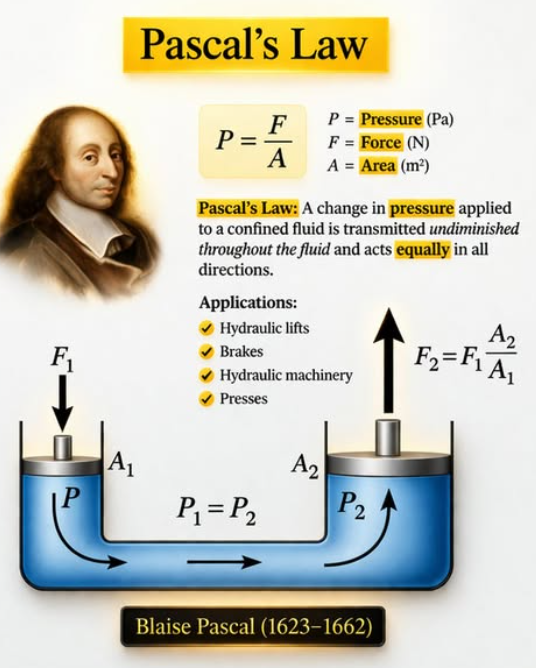 I have such respect for Pascal that I considered naming our son after him. (My wife wasn’t having it. Maybe if we lived in France?)
Pascal made important contributions to both math and physics but he’s perhaps best known for his philosophic “wager,” that it makes sense to believe in God, since if He exists, you’ll be very glad you did, and if He doesn’t, you haven’t lost anything. I counter that this is not how we accept or reject religious tenets.



-
Greenhouse Gases8 months ago
Guest post: Why China is still building new coal – and when it might stop
-
Climate Change8 months ago
Guest post: Why China is still building new coal – and when it might stop
-

 Greenhouse Gases2 years ago
嘉宾来稿:满足中国增长的用电需求 光伏加储能“比新建煤电更实惠”
-
Climate Change2 years ago
Bill Discounting Climate Change in Florida’s Energy Policy Awaits DeSantis’ Approval
-

 Climate Change2 years ago
嘉宾来稿:满足中国增长的用电需求 光伏加储能“比新建煤电更实惠”
-
Climate Change Videos2 years ago
The toxic gas flares fuelling Nigeria’s climate change – BBC News
-

 Carbon Footprint2 years ago
US SEC’s Climate Disclosure Rules Spur Renewed Interest in Carbon Credits
-

 Renewable Energy5 months ago
Sending Progressive Philanthropist George Soros to Prison?