

-
Supply Chain & Trade -
Press Releases
New Analysis: How New Tariffs Could Undermine America’s Solar Progress
WASHINGTON, D.C. – Potential new tariffs resulting from the antidumping and countervailing duty (AD/CVD) investigations into solar cells and modules imported from Cambodia, Malaysia, Thailand, and Vietnam could increase costs to a level that significantly restricts solar supply and installations in the U.S., impeding America’s ability to create jobs, provide clean, affordable energy, and achieve climate targets, according to an analysis released today on the potential impacts of new tariffs on the solar industry.
Commissioned by the American Council on Renewable Energy (ACORE), the new Clean Energy Associates analysis outlines how the U.S. solar sector is currently in good health with a fast-emerging domestic solar manufacturing supply chain. However, the imposition of new, unpredictable AD/CVD duties on solar cells and panels from Southeast Asia could raise U.S.-made module costs by 10 cents per watt and imported module costs by 15 cents/watt. These higher prices implemented on top of other headwinds, including domestic factors and trade restrictions already in place and impacting the industry’s trajectory, could seriously hinder America’s progress on solar deployment.
To meet the government’s target of a 50-52% reduction in greenhouse gas emissions by 2030, the U.S. solar industry must increase from 177 gigawatts (GW) of installed capacity to over 500 GW.
“Today, solar is one of the most affordable and reliable energy sources we have to power our economy,” said ACORE President and CEO Ray Long. “Injecting uncertainty into the market slows economic growth and the good-paying jobs clean energy creates, undermines U.S. climate objectives, and will inevitably raise energy costs for American families. This is not an appropriate course of action and could unintentionally cede U.S. leadership in the solar industry to other countries.”
While the U.S. is actively building its solar module manufacturing capabilities, the researchers explain how more time is still needed, particularly to build cell capacity, to meet demand. Imposing additional tariffs on solar cells will likely harm American module manufacturers, who must rely on imported solar cells to meet their current production needs. The analysis conveys how this could undercut the buildout of a strong domestic solar supply chain and jeopardize U.S. factories and the jobs they support.
Data in the new analysis shows how solar prices have already started to spike since the petitions were filed with the U.S. Department of Commerce and U.S. International Trade Commission on April 24. Click here to download Potential Impacts of the 2024 Antidumping and Countervailing Duties on the U.S. Solar Industry.
###
About ACORE:
For over 20 years, the American Council on Renewable Energy (ACORE) has been the nation’s leading voice on the issues most essential to renewable energy expansion. ACORE unites finance, policy, and technology to accelerate the transition to a renewable energy economy. For more information, please visit www.acore.org.
Media Contacts:
Alex Hobson
Sr. Vice President, Communications
American Council on Renewable Energy
hobson@acore.org | 202.830.3592 (o) | 202.594.0706 (c)
Shawna Seldon McGregor
shawna@themaverickpr.com
917.971.7852
The post New Analysis: How New Tariffs Could Undermine America’s Solar Progress appeared first on ACORE.
https://acore.org/news/new-analysis-how-new-tariffs-could-undermine-americas-solar-progress/

 Whoa. Let’s take a step back. Is it really either A or B?
You could on the side of the morons, those incapable of any level of critical thinking, like the author of the meme here.
 The United States seems set on propelling itself backwards.
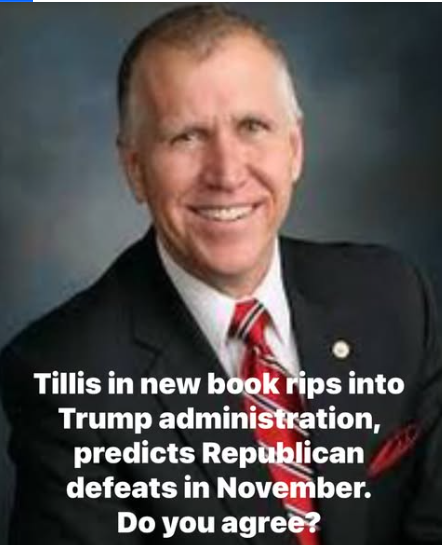 Maybe, as they say, “Hell has a special place reserved in it” for people like Thom Tillis, Republican Senator from North Carolina, who enabled Trump to rape and destroy the United States.
That was until it became clear to Tillis that he could jump ship, write a scathing book about the president, get all over mainstream news promoting it, and go on to enjoy another chapter of political success.
That we Americans are so stupid that we accept this blatant hypocrisy and criminality is sad proof that we’re not the people we were 20 years ago. Maybe what many people are saying are correct: we deserved what we got.



-
Climate Change1 year ago
Guest post: Why China is still building new coal – and when it might stop
-

 Greenhouse Gases2 years ago
嘉宾来稿:满足中国增长的用电需求 光伏加储能“比新建煤电更实惠”
-
Greenhouse Gases1 year ago
Guest post: Why China is still building new coal – and when it might stop
-

 Climate Change2 years ago
嘉宾来稿:满足中国增长的用电需求 光伏加储能“比新建煤电更实惠”
-

 Renewable Energy12 months ago
Sending Progressive Philanthropist George Soros to Prison?
-
Climate Change2 years ago
Bill Discounting Climate Change in Florida’s Energy Policy Awaits DeSantis’ Approval
-
Greenhouse Gases1 year ago
嘉宾来稿:探究火山喷发如何影响气候预测
-

 Climate Change2 years ago
Analysis: China’s CO2 falls 1% in Q2 2024 in first quarterly drop since Covid-19