

SYDNEY, Monday 24 August 2026 – New analysis of Woodside modelling released by Greenpeace Australia Pacific and Environs Kimberley has revealed the oil and gas corporation’s plans to drill at Scott Reef could cause an oil spill up to 30 times bigger than the 2009 Montara disaster, impacting the Kimberley coastline and reaching as far as Indonesia.
The new analysis details the “catastrophic” oil spill risk put to environmental regulators for approval by Woodside in its Browse to North West Shelf Project (Browse) plans, the worst-case scenario being a blowout directly below Scott Reef, polluting whale migratory pathways and covering isolated turtle nesting ground with oil condensate.
An FOI application (F348) revealed the federal environment department (DCCEEW) asked offshore oil and gas regulator NOPSEMA to look into the oil spill risk in 2025. NOPSEMA’s response to the application refused access to its report, and one document shows DCCEEW sought further advice this year.
Greenpeace and Environs Kimberley are calling on the Federal Government to publicly release the NOPSEMA report given the risk of an uncontrolled release of oil condensate from directly below Scott Reef.
Hannah Schuch, Senior Campaigner at Greenpeace Australia Pacific, said: “Woodside is aware that drilling at Scott Reef risks a massive oil spill that would have severe, far-reaching consequences. It appears environmental regulators are aware too.
“The state and federal governments need to take this risk from Woodside’s drilling plans seriously, as they could end up allowing the worst oil spill in Australian history.
“The pygmy blue whales that migrate up and down the WA coast with their newborns each year could be swimming and feeding in toxic, oil-slicked water. Woodside’s proposal to drill at Scott Reef is an environmental disaster waiting to happen, and the WA and federal governments have one surefire way to prevent catastrophe — reject Browse.”
Martin Prichard, Executive Director at Environs Kimberley, said: “A catastrophic oil spill by Woodside would be disastrous not just for marine life in the area but also for the Kimberley’s $500 million tourism industry.
“The state and federal governments will see five marine parks on the Kimberley coast included in the risk area of a catastrophic Woodside oil spill.
“The Montara oil spill was disastrous for West Timor with the toxic oil destroying seaweed farmers’ livelihoods. The Kimberley dodged a bullet with Montara, we were lucky the spill didn’t head our way. Myself and a crew flew over the Montara oil spill and followed it as far as we could. It was like a scene from a disaster movie.”
After the WA Environmental Protection Authority deemed Browse “unacceptable” due, in part, to oil spill risk, Woodside submitted a mitigation plan based on technology that has never been used “in anger”, a weakness stated in an independent expert review of the plan.
Professor Richard Steiner, independent oil spill expert, said: “A large offshore spill is impossible to effectively contain or recover. Historically, only 2-6% of total spill volume is recovered and the ecological injury from the release of toxic hydrocarbons in the sea can be severe, extensive, and long-term.
“Here in Alaska, government research concludes that several marine populations injured by the 1989 Exxon Valdez oil spill, including whales, fish, and seabirds, are still not recovering today, 37 years later. We should expect similar long-term ecological impacts in Western Australia if there were to be a major oil spill. The only sure way to avoid the risk of a catastrophic marine oil spill is to not develop oil and gas projects in marine environments.”
-ENDS-
Media contact
Emma Sangalli on emma.sangalli@greenpeace.org or 0431 513 465

A beacon of love
On an outer island of Fiji, two thousand nautical miles from Sydney, is a shining light of hope and resilience for our troubled world.
The island of Kioa is home to a Tuvaluan community who migrated from their atoll of Vaitupu in the late 1940s. It is a land of warm hearts, big smiles, and deep cultural roots; a place where the sound of a conch still summons the island together, where islanders paddle out to fish in carved outrigger canoes, and healthy happy children walk barefoot to school.
Here, culture is life. Kioans live sustainably through their traditional knowledge and practices. The island is alive with song, dance and the rhythms of a life tied to the tides, the winds, and the seasons.

Facing the future
Greenpeace has been lucky to have a relationship with Kioa for a number of years now, and we are continually learning from this remarkable community.
Last week, as part of our Voyaging Oceania project, we returned to the island. Our purpose was twofold —- to carry messages from the island to leaders gathering in Nadi this week for the Pacific Pre-COP, and to support the Kioa community in their efforts to improve water security for the island.
Unlike Tuvalu itself, with its eight atolls, Kioa is a mountainous, forested and richly fertile island. It will remain habitable far into the future. Kioans did not initially migrate from Vaitupu due to climate change, but the move was prophetic. They now have a lifeboat.
However, even Kioa faces challenges on our rapidly warming planet, in particular when it comes to water. Climate change is shifting once reliable rainfall patterns. On top of this, the island is already feeling the effect of this year’s intensifying El Niño event, which for Fiji means reduced rainfall and prolonged dry spells.
Right now, fresh water has to be carefully rationed, and is only available for a few hours a day. During last week’s visit aboard our campaigning ship Oceania, Greenpeace was privileged to work with the Kioa community on a new solar-powered water distribution project for the island.
Designed and led by the island, the project involves using a solar pump to move water from a reliable source to a storage tank and then using gravity to distribute the water around the village.
It was a lesson in how local knowledge and ingenuity can be the backbone of today’s climate solutions. To build a dam around the source, the local community knew the exact spot where they could gather gravel at low tide to mix with the cement. They took only what was needed, knowing that all resources must be carefully conserved. Kioa has no roads and no machinery, and it was an all-of-island effort to carry the materials up to the project site, including many heavy bags of sand and rock.
Such projects truly bring to life the vision of a resilient, locally-led, fossil fuel free Pacific.
Gallery photos taken by Raeed Ali, Pacific Community Mobiliser at Greenpeace Australia Pacific
Voices of wisdom
During our four precious days on Kioa, Greenpeace’s Pacific team sat with the island’s elders as they shared stories and experiences for us to carry with us to the Pre-COP. During a fun filled morning at the island’s school, Kioa’s children shared what they love about their life on Kioa and what they want to see nourished and protected. They wrote these messages on flags which will fly proudly from Oceania in Nadi.

It is hard to describe the warmth and generosity we experienced once again in Kioa. Meals were lovingly prepared for us, each one the product of many hours and many hands needed to fish, to grow, and to prepare. In the evenings we were entertained with traditional songs and dances, each one pulsing with an indescribable energy. For Kioans, these rituals are of course more than entertainment. This is how they have encoded and kept alive countless generations’ worth of traditional knowledge, and the wisdom that has enabled them to flourish sustainably and peacefully.
We are now sailing on to Nadi, inspired by the warmth and wisdom of Kioa, and determined to help take the voice of Pacific climate justice to the world.
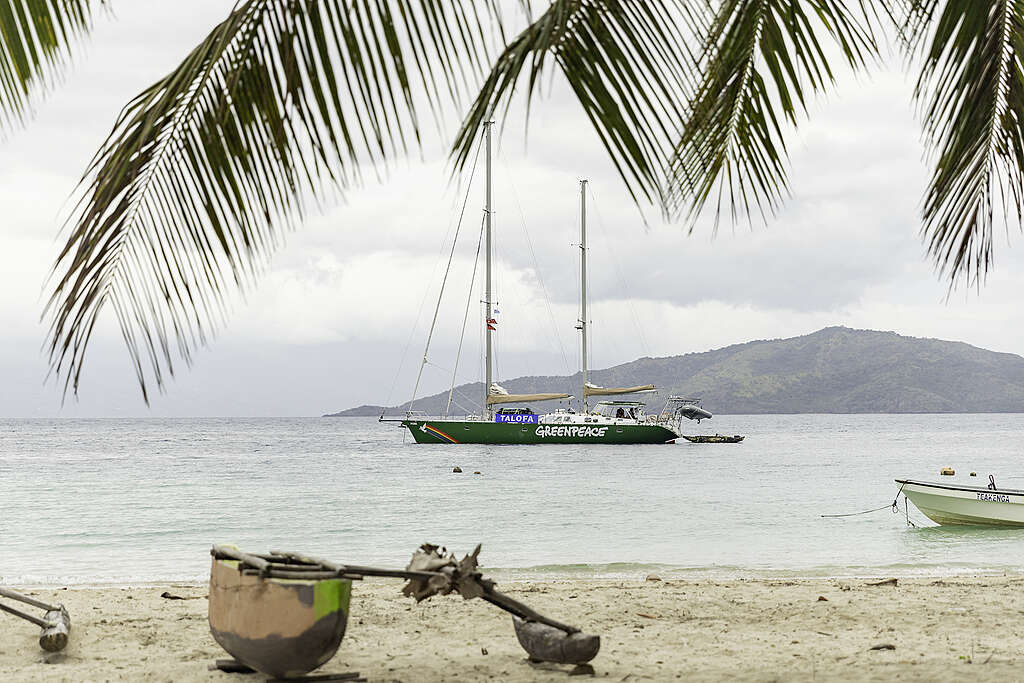
A visit to Kioa is a reminder of what life can and should be. It is a reminder of what we are all fighting to protect. It is a reminder of the power of local knowledge and culture, and of listening to those on the climate front line. And it’s a reminder that tackling climate change is above all about building community, and respecting and loving each other.
Piers Forster is Professor of Physical Climate Change and Director of the Priestley Centre for Climate Futures at the University of Leeds. He has previously served as a lead author on several IPCC assessment reports.
Evidence of a rapidly changing climate and our improved scientific understanding is compelling nations to act, but not always in a good way. The science itself is facing well-organised obstruction.
The consequences of politicising the evidence are now more apparent than ever, especially in the run-up to a crucial intergovernmental climate meeting taking place in Addis Ababa this week.
On the agenda is a proposal that would prevent all governments from being able to use the most up-to-date analysis of options for combatting climate change at a critical stage in UN negotiations.
The meeting is the 65th session of the Intergovernmental Panel on Climate Change (IPCC), the body charged with providing gold-standard scientific and economic evidence on climate change to the world.
-
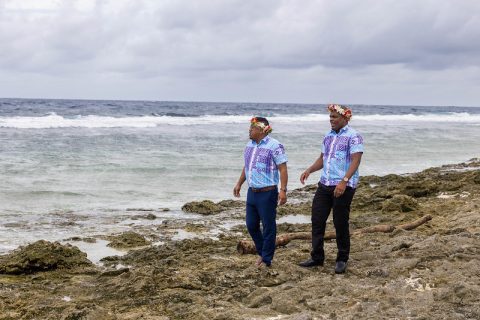
Pre-COP draws attention to Pacific’s climate plight and 1.5C goal
After visiting Tuvalu’s shrinking land, COP31 President Murat Kurum said that the global 1.5C warming limit is “a matter of survival” for the Pacific -
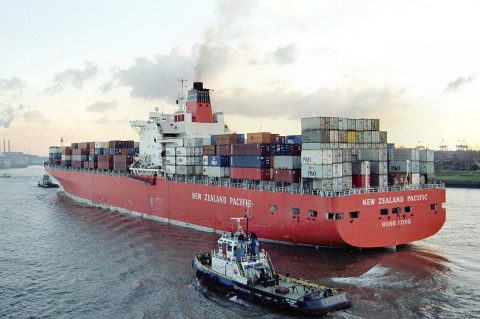
New Zealand accused of breaching EU trade deal over climate rollbacks
The EU’s climate trade rules face their first major test after a green group alleged New Zealand violated binding environmental provisions under its trade deal with the bloc
Often characterised as a scientific organisation, the IPCC is actually a forum of governments that commissions assessments from scientists from across the globe. This unique effort is doubly important as it represents the world’s only climate science reports that are approved by consensus among the 195 countries that make up its membership.
But this consensus also means that governments can regulate the IPCC’s reports and timescales. Countries can make it difficult for their scientists to participate or even withhold the organisation’s budget.
By doing so, they can place a straitjacket on the production of analysis that these self-same governments are obliged to consider when they assemble under a different umbrella – the UN Framework Convention on Climate Change (UNFCCC), which relies on the findings from the IPCC to guide negotiations.
When it works well, this intergovernmental approach means that countries agree on, and have a firm, authoritative scientific basis for acting on the evidence in a cooperative way.
Until now, the system has largely functioned as it should, despite a certain amount of posturing and politicking. This month, however, could be the time when that delicately balanced state of affairs comes to an end.
Enemies of science?
The vast majority of governments – in Europe, Africa, Southeast Asia, Latin America and most importantly the small island developing states which sit on the frontlines of climate impacts – want the three main parts of the IPCC’s current assessment report (AR7) finished by the end of 2028. That would mean its conclusions can inform the next Global Stocktake – the five-yearly process set up under the Paris Agreement where governments review progress on climate action and ideally commit to stronger efforts.
Against this view stands a handful of major emitters who are determined that the IPCC’s upcoming report on mitigation – reducing climate-heating emissions – will not emerge until after that crucial political decision-making point.
The figureheads for this group are Saudi Arabia and India, with a few others such as Russia lurking in the background. Finding the Saudis here is absolutely expected, but India’s presence is more surprising given President Narendra Modi’s commendable commitment to building a clean energy economy, most notably his leadership of the International Solar Initiative.
As science comes under attack at UN talks, climate movement splits over how to respond
Underneath pretexts of giving the authors more time, or making it fairer in terms of who can contribute, they have a hidden motive: if the report on mitigation is delayed beyond the second Global Stocktake, the same governments that delayed it will then argue that the stocktake cannot meaningfully discuss vital mitigation action without the latest report, effectively delaying more ambitious agreements on cutting emissions by another five years.
It is the duty of every government that professes to care about climate change to oppose such a retrograde step. There are worrying signs, however, that some governments which are highly influential within the IPCC system may be about to cave.
No time to appease
What seems to be happening is that in the face of signals that the Saudis, for example, are prepared to block the IPCC’s budget if they don’t get their way, some governments are leaning towards appeasement, i.e. publishing the mitigation report only after the Stocktake been has completed, just to keep the whole process moving – better a bad agreement than no agreement.
This would be a major error of judgement, for two reasons.
One is that appeasement will not stop the naysayers’ moves to derail climate action – quite the opposite. Giving ground on this will only embolden them to propose other roadblocks, such as further delays and arguments over report content, or further minimising and excluding UN and non-UN science in other fora, such as the UNFCCC science negotiation tracks.
The second is that giving way would be a betrayal of communities in countries impacted by climate change around the world. In India itself, 90% of the workforce toils outdoors in informal settings and temperatures are rising well above 40C – so constraining global warming as soon as possible is clearly desirable for both human health and economic productivity.
Funding gap threatens next round of IPCC climate science reports, chair warns
For the UK, this is a time to remain rock-solid in support of an outcome that so manifestly serves the interests of people at home and around the world. Britain has a distinguished record in international climate science, being the only country to have supplied two chairs to the IPCC, including the incumbent, Jim Skea.
The climate impacts seen around the world this year – from lethal heatwaves in Europe to Nepal’s devastating flood – prove there is no time to wait. Climate action needs to be accelerated. Getting the right decision this week, so that the latest evidence can be acted on at the right time, is essential.
The world will be watching and counting on governments to stand strong and defend the need to deliver relevant and timely climate science for us all.
The post Governments that support climate science must stand firm against naysayers appeared first on Climate Home News.
Governments that support climate science must stand firm again