


Microsoft has made a significant move for its climate goals. It signed a deal with Rubicon Carbon to buy 18 million tonnes of carbon removal credits. This will happen over the next 15 to 20 years. These carbon credits will come from Afforestation, Reforestation, and Revegetation (ARR) projects around the world.
The agreement is one of the largest of its kind by a single company and shows how big corporations can help scale climate solutions. Microsoft has entered into many similar carbon removal deals starting early this year.
Rubicon Carbon, a leading carbon credit management firm backed by TPG Rise Climate, will manage the projects and ensure they meet high scientific standards. With this deal, Microsoft is funding climate efforts that may not have received investment otherwise.
Tom Montag, CEO of Rubicon Carbon, emphasized the importance of the deal, saying:
“Addressing climate change requires more than good intentions—it requires capital deployment at scale. This collaboration serves as a blueprint for how the financial sector can meet the urgency of the moment while also generating strong financial returns.”
Why Carbon Removal Matters
Carbon removal is the process of taking carbon dioxide (CO₂) out of the atmosphere and storing it in natural or engineered ways. Reducing emissions is important, but scientists say we also need carbon removal to reach global climate goals.
Nature-based solutions like planting trees are some of the most affordable and scalable options available today.
According to Microsoft, carbon removal plays a key role in their goal to be carbon negative by 2030. That means removing more CO₂ than the company emits. To reach this goal, Microsoft has committed to using a blend of natural and technological solutions.
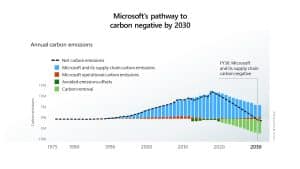
This deal focuses on ARR projects—planting trees and restoring vegetation to capture carbon from the air. These projects often get ignored because of low funding. However, Microsoft’s long-term purchase helps make sure they are built and cared for.
The tech giant has been the top buyer of carbon removal credits, purchasing 5 million tonnes in 2024 as seen below.

Setting a New Standard for Carbon Markets
Each transaction under the agreement is a long-term “offtake.” That means Microsoft promises to buy credits in the future, giving developers financial certainty now. These types of deals are common in energy markets but are still new in the carbon market.
Microsoft and Rubicon also worked together to create a new evaluation framework for carbon credit quality. It includes Microsoft’s science-based standards and Rubicon’s existing due diligence tools. The credits must meet strict rules for impact, durability, and transparency.
Rubicon’s science team will use satellite data and remote sensing tools to track and verify carbon removal over time. This approach builds confidence in a market that has faced criticism for low-quality or unverifiable carbon credits in the past.
Brian Marrs, Senior Director of Energy & Carbon Removal at Microsoft, noted:
“We believe that project finance needs to be central to the voluntary carbon market. This deal signals the long-term demand for carbon removal necessary to mobilize infrastructure-grade investment and world-class execution.”
Fueling a Maturing Carbon Market
The voluntary carbon market—where companies buy carbon credits to meet sustainability goals—is growing fast. According to McKinsey & Company, global carbon credit demand could reach 1.5 to 2 billion tonnes per year by 2030, up from under 500 million in 2023. Yet, concerns about credit quality have held back investment.
Deals like Microsoft’s help build trust in the market by sending clear signals: there is real, long-term demand for high-quality removal. This helps project developers get loans, attract private funds, and plan bigger projects.
Nature-based credits are also more affordable than high-tech options like direct air capture (DAC), which can cost over $100 per tonne. In contrast, ARR credits often cost between $5 and $15 per tonne. You can find carbon prices for different types of credits on our page here.
Microsoft’s commitment to long-duration contracts gives these projects a better chance to succeed. It helps diversify removal technologies in the market. This is key for increasing global carbon removal capacity. The market has seen significant growth since 2020, as shown below.

A Growing List of Corporate Climate Leaders
Microsoft is not alone in investing in carbon removal. Other major companies like Shopify, Stripe, and Alphabet (Google) have made similar commitments. They are working together to create the early market for permanent carbon removal. This can happen through nature or new technologies.
But Microsoft stands out for the scale and structure of its deals. Besides the 18-million-tonne deal with Rubicon, Microsoft has invested in carbon removal projects. These include DAC facilities and bioenergy with carbon capture and storage (BECCS).
The company’s 2023 sustainability report showed it contracted 1.4 million tonnes of carbon removal. About 40% of this comes from engineered sources. These investments are part of a bigger climate plan. This plan aims to cut Scope 1, 2, and 3 emissions in operations, the supply chain, and products.
The Road Ahead: Scaling Climate Solutions Through Partnership
Rubicon Carbon launched in 2022 with the goal of scaling high-quality carbon credit projects. Supported by TPG Rise Climate, it blends finance and climate science to help companies track their carbon footprints. The Microsoft partnership is its largest and most ambitious deal to date.
Jim Coulter, Founding Partner of TPG and Managing Partner at TPG Rise Climate, noted that this deal is not just about selling the credits, but also about reshaping how they fund climate action.
The new evaluation framework aims to show how carbon markets can grow into reliable and scalable systems. Both parties hope to lead by example. This includes transparency, long-term planning, and science-driven impact assessments.
Looking forward, the success of this deal could encourage more companies to enter similar agreements. It might also create better financing tools for carbon project developers. This could strengthen standards in the voluntary carbon market.
Microsoft’s carbon credit agreement with Rubicon Carbon shows how corporate climate commitments can translate into meaningful global impact. By locking in 15- to 20-year purchases, the tech giant is helping fund carbon removal projects that can last decades.
The blend of business innovation, environmental science, and financial strategy sets a new path forward. As other companies watch this space, one thing is clear: carbon removal is becoming a core part of the climate solution, and Microsoft is helping to lead the way.
The post Microsoft’s Mega Move: 18 Million Carbon Credit Deal with Rubicon Carbon appeared first on Carbon Credits.

EU carbon credit claims changed on 27 September 2026, the day the Directive (EU) 2024/825 began to apply across the European Union. The change is narrow. It changes how a company can talk about the credits it buys. A product can no longer be called neutral on the strength of compensation alone; however, every specific, evidenced statement about what a company measured, reduced, and funded stays fully available.

The post Promoting Improved Cooking Practices in Nigeria appeared first on Terrapass.



-
Climate Change1 year ago
Guest post: Why China is still building new coal – and when it might stop
-

 Greenhouse Gases2 years ago
嘉宾来稿:满足中国增长的用电需求 光伏加储能“比新建煤电更实惠”
-
Greenhouse Gases1 year ago
Guest post: Why China is still building new coal – and when it might stop
-

 Climate Change2 years ago
嘉宾来稿:满足中国增长的用电需求 光伏加储能“比新建煤电更实惠”
-

 Renewable Energy12 months ago
Sending Progressive Philanthropist George Soros to Prison?
-
Climate Change2 years ago
Bill Discounting Climate Change in Florida’s Energy Policy Awaits DeSantis’ Approval
-
Greenhouse Gases1 year ago
嘉宾来稿:探究火山喷发如何影响气候预测
-

 Climate Change2 years ago
Analysis: China’s CO2 falls 1% in Q2 2024 in first quarterly drop since Covid-19