

Macquarie Acquires Ziton, Octopus Energy Enters US Market
This week on News Flash, the hosts discuss Macquarie Asset Management’s acquisition of Ziton, a Denmark based provider of operations and maintenance services to the offshore industry. Also, Octopus Energy solidifies its entry into the US renewables market with an investment to create 600 megawatts of new solar farms in the U. S. And Berkshire Hathaway consolidates their company operations, opening the door for more renewable projects.
Sign up now for Uptime Tech News, our weekly email update on all things wind technology. This episode is sponsored by Weather Guard Lightning Tech. Learn more about Weather Guard’s StrikeTape Wind Turbine LPS retrofit. Follow the show on Facebook, YouTube, Twitter, Linkedin and visit Weather Guard on the web. And subscribe to Rosemary Barnes’ YouTube channel here. Have a question we can answer on the show? Email us!
Pardalote Consulting – https://www.pardaloteconsulting.com
Weather Guard Lightning Tech – www.weatherguardwind.com
Intelstor – https://www.intelstor.com
Allen Hall: I’m Allen Hall, president of Weather Guard Lightning Tech, and I’m here with the founder and CEO of IntelStor, Phil Totaro, and the chief commercial officer of Weather Guard Lightning Tech, Joel Saxum. And this Is your newsflash news flashes brought to you by our friends at IntelStor. If you want market intelligence that generates revenue, then book a demonstration of IntelStor at IntelStor. com
Warren Buffett’s Berkshire Hathaway energy, the second largest us clean power owner will pay about 3. 9 billion for the minority 8 percent stake held by the family of late board member, Walter Scott. The deal involves 2. 37 billion in cash. The exchange of Berkshire Class B shares for 1. 6 billion BHE shares and issuance of a 600 million one year note.
As of January 1st, Berkshire Hathaway Energy owned about 14 gigawatts of clean energy capacity, including 12 gigawatts of wind. And roughly 2 gigawatts of solar and storage. Now, Phil, Berkshire Hathaway Energy has been consolidating operations over the last 6 to 12 months. Is this part of that larger plan to consolidate?
Philip Totaro: It sounds like it although this is also obviously a bit of a legacy thing with taking over the stake held by, by Scott’s family and presumably in some kind of a trust or something. Like. It’s giving Berkshire Hathaway Energy the opportunity, as you mentioned, to just consolidate the, the company’s ownership and consolidate the brands under the Berkshire Hathaway Energy umbrella, which theoretically gives them more power.
Bandwidth and more capacity to keep borrowing if they need to borrow to go, build out the pipeline of renewable energy projects that they’ve got. So one thing that we’ve talked about recently on the show is the fact that there’s a lot of investment funds and firms coming into the renewable sector.
What they bring with them is capital, or the ability to go leverage the, the capital base that they’ve got to go borrow money. So for your big utility company owner operators, they want to be able to do a similar thing. And this is going to help kind of bolster the, the company’s ability to, to do that.
Joel Saxum: Yeah. It’s the same thing. Like Phil saying, we’ve talked about on the show before Berkshire Hathaway backed Warren Buffett, big money is following the same concept as you’re seeing with a lot of other big money groups, Vanguard, BlackRock, all these different and, and of course, pension funds and whatnot of putting their capital Into energy infrastructure world, right?
So they’re helping build up the energy transition, but that’s because they see it as good business. So when you see big money coming into a certain sector, you can bet it’s going to be around a while and they’re betting banking on success. UK
Allen Hall: based Octopus Energy has made two new investments in the U. S.
green energy market. Following its initial entry just three months ago with solar farm acquisitions in Ohio and Pennsylvania, the company sealed a deal with solar farm developer SoCal to help them rapidly scale up, targeting 600 megawatts of new solar farms in the U. S. Over the next five years, primarily in Texas, this is expected to generate enough green power for about 40, 000 Texan homes.
UK based solar developer Zestec, supported by Octopus Energy, is also moving into the U. S. market, focusing on commercial and industrial rooftop solar projects. Okay, Phil, so the solar industry is really ramping up in the United States. Octopus has been active there and is now bringing others over. The rapid development of solar in the United States is pushing a lot of investment, too.
How fast do you expect solar to grow here over the next 12 months?
Philip Totaro: There’s a tremendous amount of solar projects in the pipeline of project development pipeline, as well as in the interconnection cubes. And the reason for the timing of this, and why we want to cover a solar play here on, on the wind energy podcast is the fact that Octopus Group in general, an octopus energy, they’re, they’re obviously energy focus subsidiary is, is doing this at this time is they feel the conditions are right for.
Their type of business model and what that is, is they sometimes will go leverage the capital that they bring to the table, but they also have a pretty unique perspective where they’ve partnered with companies in the UK, like Ripple Energy, for instance, where they do either fractional ownership or community development.
Of sites on behalf of a multitude of, of different owners and investors in a project. And so that’s part of the angle here is for them to be able to deploy a rather substantial amount of capital into, much smaller, um, solar plays within the market. In, in the US which hasn’t really been particularly well penetrated.
We’ve got a lot of corporate and industrial power buying for solar and, and industrial rooftop solar. Obviously we’ve got some residential and that still, needs to be built out. We’re not quite at the same levels of penetration, at least on a percentage wise basis compared to places like Australia, for example.
But there’s, there’s more room to grow and as octopus, pardon the pun, but extends his tentacles and, and, tries to, Ensure that they’ve got a, a presence in in both utility scale, wind utility scale, solar utility scale, energy storage technology. This also gives them a chance with these partnerships to get into the residential solar market and ensure that they could take advantage of.
The growth potential that that we see in the market.
Joel Saxum: So in the United States, there’s a two, two very separate markets for solar, right? You have your big utility scale stuff and you have your smaller stuff that is industrial commercial residential, whether it’s rooftops or or some people putting solar panels on top of parking structures, these kind of things.
As Phil mentioned, Australia is leading the world, of course, in this, in this space of integration with solar and the community itself. Octopus coming in with their knowledge, their expertise, and some capital behind them to make a move in this sector. It’s a good thing for the energy transition within the United States.
Allen Hall: Macquarie Asset Management is set to acquire 100 percent ownership of Ziton, a Denmark based provider of operations and maintenance services to the offshore wind industry. The acquisition is expected to be completed in December of this year, or the first quarter of 2025, subject to regulatory approvals.
Zyton recently launched a new brand identity, Zyton 2. 0, signaling its focus on future decades of O& M service solutions for offshore wind turbines. All right, Phil, so Macquarie has been investing in renewable energy, and particularly in wind. The push offshore and then being an australian based organization is that to prepare for the offshore growth in australia or they really focused on offshore
Philip Totaro: growth over in northern europe they’re looking at a global perspective Allen.
Is it on themselves has been active in eleven different countries on i think it’s something like eighty or eighty five different projects. And. It’s mostly European but that’s also based on the legacy of their, EPC vessels and service vessels that they’ve developed and utilized over the past few decades.
Now, with the industry looking to push to much bigger scale and heights in, in terms of turbine size, as well as the pace of deployment globally with the consolidation in the market with Kedler. For example, and, other companies, Van Oord and Bonner and, and companies like this, really building out their portfolio of vessels.
The Chinese are also starting to look like they’re going to be competition globally as far as both the equipment providers and the EPC contractors and vessels even if you’re gonna have a European flagged vessel, you may end up still having it fabricated over in China just because of how cost effective it can be to do that.
So this play on behalf of Macquarie is helping them kind of build pieces of a puzzle where, you’ve seen them make acquisitions in onshore wind, offshore wind, some solar and storage, they’ve made acquisitions in asset management. They’ve made acquisitions now in companies that can provide services.
I would anticipate that they’re not done yet making acquisitions, but it’s also part of bringing a lot of capabilities in house and positioning themselves for the future of the industry. So,
Joel Saxum: talking at the recent Hamburg event, a lot of, People got together, a lot of ideas were shared, a lot of information was shared.
One of the things you heard out of the, coming out of that market over there in the EU is that there is some consolidation going on. And part of this goes hand in hand with some margin compression and some other things that are happening within the market. But when you see a group like Zaytan that, their EBITDAs, Going up this year and things are looking bright having some big money come in.
It looks good for that space the whole offshore wind O& M space as the, we continue the build out for offshore wind. Nice to see more money coming in in the face of some different market conditions.
https://weatherguardwind.com/macquarie-ziton-octopus-energy-us-market/

 All I can say about the me here is that personally I refused, against considerable pressure from my family, to indoctrinate my children into something I myself could not accept.
Is it actually “psychological abuse” to indoctrinate children into monotheistic religion? Whether to take it that far is an open question.
My parents, both atheists, sent my brother and me to Sunday School, as they thought it wrong to cut us off from a modality of growing up in America in the early 1960s. I don’t blame them, but again, it’s not something I was willing to replicate with my own children.
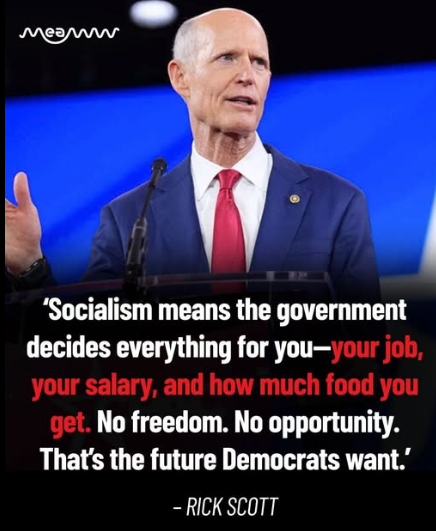 In less than a month, we’re going to learn how many idiots are buying this socialism crap.
Sure, there are people who don’t know anything about the way people live in northern England, New Zealand, Costa Rica, etc. Most of these people couldn’t find these countries on this globe.
But how many can there possibly be?
Clearly, Republicans are desperate, but isn’t asking voters to believe that the Swedes have to rely on the government for their job, salary, and food a bit over-the-top?
 I got the meme here from a neighbor, but I wonder who actually wrote it. There is a ton of propaganda on social media suggesting that we need to normalize the sociopathic criminality of the U.S. president.
It’s true that not every election is an apocalypse, but 2024 was disastrous for the U.S. democracy.
Yes, the country did not end. But it took a giant leap towards authoritarianism.
Even that’s not the end of the world. Democracies fail with great frequency on this planet. I just never thought I’d be living in the biggest socio-political collapse in the last 2000 years.
In an average week, I meet quite a few travelers here from lands all around this planet. Their most common thoughts on what’s happening here: “We simply feel sorry for you.”

Large flotilla brings Pacific voices and message to leaders at Pre-COP meeting: Keep 1.5C Alive
A ‘victory’ for communities as High Court rules climate impacts from coal and gas must be considered even where fossil fuels are exported

Indoctrinating Children into Religion
-
Climate Change1 year ago
Guest post: Why China is still building new coal – and when it might stop
-

 Greenhouse Gases2 years ago
嘉宾来稿:满足中国增长的用电需求 光伏加储能“比新建煤电更实惠”
-
Greenhouse Gases1 year ago
Guest post: Why China is still building new coal – and when it might stop
-

 Climate Change2 years ago
嘉宾来稿:满足中国增长的用电需求 光伏加储能“比新建煤电更实惠”
-

 Renewable Energy12 months ago
Sending Progressive Philanthropist George Soros to Prison?
-
Climate Change2 years ago
Bill Discounting Climate Change in Florida’s Energy Policy Awaits DeSantis’ Approval
-
Greenhouse Gases1 year ago
嘉宾来稿:探究火山喷发如何影响气候预测
-

 Climate Change2 years ago
Analysis: China’s CO2 falls 1% in Q2 2024 in first quarterly drop since Covid-19