

Survivors of the deadly Los Angeles wildfires are calling for lawsuits and policies to hold those most responsible for global climate disasters accountable, reported The Guardian.
Increasing evidence shows that oil and gas companies have known for decades that fossil fuels are the cause of global heating, but they have continued to market their products while spreading doubt about climate change.
“It is hard to properly express how much was lost,” said Palisades resident Danielle Havanas, whose home was destroyed by last week’s fire, as The Guardian reported. “How do you communicate the value of your deceased mom’s journal from 1981 when she was pregnant with you?”
University of California, Los Angeles, climate scientists have already concluded that the climate crisis was most likely the cause of a quarter of the dry conditions that fueled the rapid spread of the fires.

“[I]t should not continuously fall in us to address the consequences of big oil’s negligence,” said Altadena neighborhood resident Sam James, whose grandfather lost his home in the Eaton fire. “They must take responsibility for the harm that they’ve caused, pay reparations to the affected communities who lost their homes and businesses, and take immediate steps to mitigate further damage.”
California and other states, along with some cities, have brought lawsuits to hold big oil accountable and force them to foot the bill for damages.
“We’re already paying for big oil’s climate destruction, not just with money, but with our lives, so that’s why we need our own climate superfund bill,” said Clara Vondrich, senior policy counsel at nonprofit Public Citizen, of a new version of legislation originally considered by California last year.
On Thursday morning, dozens of climate activists with Sunrise Movement LA protested outside a Phillips 66 oil facility, while 16 demonstrators stormed the Lubricant Terminal’s office building, reported the Los Angeles Times.
Sunrise Movement LA is demanding that oil companies “pay up” to help with wildfire relief and support the state’s clean energy transition.
“Fossil fuel CEOs are responsible for the destruction that is happening right now in Los Angeles,” said 18-year-old Simon Aron, a volunteer with Sunrise Movement and action lead for the protest, as the Los Angeles Times reported. “They are responsible for the fact that me and my neighbors had to evacuate our homes, that we still can’t drink our water.”
Police escorted some of the demonstrators out, but no arrests were made.
“The group that was inside decided to step out,” said Kidus Girma, Sunrise Movement national organizer, as reported by The Los Angeles Times. “The plan is to continue holding space and seeing if other possible occupations begin in the state.”
Sunrise Movement LA planned to keep protesting at the facility through Thursday, until their demands were met or the CEO of Phillips 66 agreed to meet with them.
According to fire experts, Southern California wildfires are becoming more destructive for multiple reasons, including increased development in high-risk areas, as well as a “feedback loop” where native plants don’t have enough time to regrow between fires, which opens the land for more flammable, fast-growing invasive vegetation to spring up.
Following the Eaton and Palisades fires, bipartisan leaders criticized city officials for problems with water pressure and lack of preparedness.
At least 25 people have died in the fires, which left 23 still missing, burned over 27,000 acres and are not yet 100 percent contained.
The post LA Residents Say Fossil Fuel Industry Needs to ‘Pay Up’ for Damage From Wildfires appeared first on EcoWatch.
https://www.ecowatch.com/los-angeles-wildfires-fossil-fuel-industry-lawsuits.html

In 2024, the global market for eco-labeled products crossed $500 billion. Electric vehicles, bamboo toothbrushes, compostable packaging — the shelves are full of ways to shop your way to a better planet. And yet global carbon emissions hit another record high that same year, and atmospheric CO₂ now stands above 429 parts per million. Decades of research have produced a finding that the sustainability industry doesn’t want to talk about: buying green products doesn’t drive the systemic change we need. It might not even be moving the needle. That’s the core argument of Michael Maniates, an environmental social scientist and author of The Living Green Myth: The Promise and Limits of Lifestyle Environmentalism. Michael has spent more than 30 years studying why well-intentioned environmental choices at the checkout line fail to add up to real-world emissions reductions, and what kinds of action actually do. In this episode of Sustainability In Your Ear, he makes the case that the most powerful thing an eco-conscious person can do isn’t swap their products. It’s to become an active citizen.

The resulting cycle has a name in Michael’s framework: the trinity of despair. Earnest effort. Negligible impact. Creeping anxiety that we can’t turn the corner. People try hard, see little result, feel guilty when they can’t maintain perfection, and eventually burn out — or conclude that meaningful change requires getting every single person on board first. He is a sharp critic of what sociologist Elizabeth Shove has called the ABC model of social change: shift Attitudes, change Behavior, and better Choices will follow. It’s the backbone of most sustainability communications — and, he argues, it’s empirically fragile. Pro-environmental attitudes don’t reliably produce pro-environmental behavior. Yet the model persists in education, marketing, and environmental organizing alike. Why does it keep coming back? Maniates identifies two reasons. First, it’s deeply embedded in the educational system. Second, it sanitizes a genuinely gnarly problem of power and politics into a communication challenge: if we just get more information out there, people will make better choices. That framing shifts blame onto consumers, hides the structural drivers of high-carbon living, and makes life easier for politicians who don’t want to touch the structural stuff.
Find Michael Maniates’ work, including his email to ask your direct questions, at michaelmaniates.com. His book, Consumption Corridors: Living a Good Life Within Sustainable Limits is available as a free download. The Living Green Myth: The Promise and Limits of Lifestyle Environmentalism was published in November 2025 by Polity Press.
- Subscribe to Sustainability In Your Ear on iTunes
- Follow Sustainability In Your Ear on Spreaker, iHeartRadio, or YouTube
Interview Transcript
Mitch Ratcliffe 0:00
Hello, good morning, good afternoon, or good evening, wherever you are on this beautiful planet of ours. Welcome to Sustainability In Your Ear. This is the podcast conversation about accelerating the transition to a sustainable, carbon-neutral society, and I’m your host, Mitch Ratcliffe. Thanks for joining the conversation. Today we’re going to explore how to have a genuine green impact — whether that stops at making small changes or must involve active political engagement. In 2024, the global market for eco-labeled products crossed the $500 billion mark. Sales of reusable water bottles hit $10 billion. Plant-based meat alternatives, electric vehicles, bamboo toothbrushes, compostable phone cases — the shelves are groaning with ways for conscientious consumers to buy their way to a better planet.
And yet global carbon emissions still hit another record high that same year. The concentration of atmospheric CO₂ passed 427 parts per million, and it currently stands at 429 parts per million as I speak. Microplastics are turning up in human brain tissue. So the gap between what we’re buying and what’s actually changing has never been wider — and that gap is exactly where our guest today has spent his career.
Michael Maniates is an environmental social scientist, a senior fellow with the Story of Stuff project, and the author of The Living Green Myth: The Promise and Limits of Lifestyle Environmentalism, published by Polity Press in November 2025. He’s also the co-author of Consumption Corridors: Living a Good Life Within Sustainable Limits. Before that, he spent more than 30 years teaching environmental studies at Allegheny College, Oberlin College, and the Yale-NUS College in Singapore, where he was the inaugural head of the Environmental Studies program. Right now he’s writing a new book called Stop Wasting Time: Four Paths to Deep Sustainability in Higher Education.
Michael’s central argument is provocative and well-evidenced: the story that we’ve been told about saving the planet through better consumer choices — what sociologist Elizabeth Shove has labeled the ABC model, for Attitudes, Behavior, and Choices — is empirically fragile and strategically dangerous. Decades of research document what scholars call the attitude-behavior gap and the behavior-impact gap. Pro-environmental attitudes don’t reliably produce pro-environmental behavior, and when they do, the aggregate impact on emissions is in most cases negligible.
Michael calls the resulting cycle of earnest effort, negligible impact, and our creeping anxiety that we can’t turn the corner the “trinity of despair.” He proposes a framework of minimum and maximum consumption standards — a floor below which no one should fall, and a ceiling above which individual consumption begins to destroy others’ chances at a good life — and those should be arrived at through democratic deliberation, not expert decree.
Now at Earth911, we publish a lot of green living advice every day: how to recycle, reduce food waste, choose better products, compost, fix what you have, make it last longer. We also consistently urge our audience to engage their elected representatives at every level, because we’ve long recognized that individual action without systemic change only salves individual concerns without actually moving the societal needle on climate. Michael’s research is a sharper version of that perspective, and I invited him to talk with you all because we want every person who reads Earth911 to have the greatest possible impact. If the social science says there are more effective places to invest our environmental energy alongside our daily choices, we want to understand where those places are and how we can get there. Open minds, try more ideas — and trying more ideas is how we will eventually get to less waste overall.
You can find Michael and his work at michaelmaniates.com — that’s all one word, no space, no dash. So is the living green story we’ve been telling ourselves helping us, or standing between us and the systemic changes we actually need? Let’s find out right after this quick commercial break.
Mitch Ratcliffe 4:26
Welcome to the show, Michael. How are you doing today?
Michael Maniates 4:28
I’m doing great, Mitch. Thank you so much for having me.
Well, thank you for joining me. Your work is fascinating, and I can appreciate the challenge of trying to speak to people who want to do the right thing but are not necessarily taking all the steps they need to in order to enact change in the world. So I want to start with a basic question. You don’t argue that making small changes in lifestyle or embracing green products isn’t making a difference — but that it isn’t enough. What is your advice for having a genuine positive impact on the environment?
Yeah, I think buying green and living lean — which is something that so many of us do — can make a difference in our lives for a whole host of reasons. It can help us be more aware of our surroundings. It can help us walk our talk. It often helps us protect our families or friends from toxins, especially if we’re big users of organic foods. But what it can’t do, despite what we often hear as consumers or what we may sometimes say as marketers, is drive that fundamental social transformation for sustainability.
There are a whole lot of reasons for that — reasons I describe in my book, and that others have called out as well. The impact of these green gestures is too small. They don’t deliver meaningful, consistent benefits. What benefits do arise are quickly swamped by expanding economic growth. And oftentimes, the changes we really need to be making just aren’t for sale. So our ability as consumers to drive those changes is difficult at best.
It seems to me that our best chance for making a difference is to start thinking — or maybe just thinking harder — about how to be a citizen in community with others, not as a solitary consumer in the checkout line. That means working with others, where and when we can, to try to shift everyday patterns of life in genuinely sustainable directions, so that acting sustainably becomes, as entrepreneur Paul Hawken once said, natural and normal — as easy as falling off a log — rather than the product of intentionally virtuous acts that are often difficult to sustain. This is really a call for community connection, for becoming a citizen-expert in a particular issue, drawing on one’s own expertise and working with others to try to create new ways of living.
Mitch Ratcliffe 7:01
That suggests that the first step is really to see yourself as part of a system. You use vivid metaphors — like “it’s the maze, not the mouse” — and thinking about it from that perspective, how do you suggest someone make that transition? Let’s say somebody who currently invests their environmental energy toward purchases. How should they transform that into a broader, more meaningful response?
Michael Maniates 7:31
Well, it could be — and I do not want to in any way denigrate people’s efforts as consumers. I came up as an energy guy and helped run a community energy project for many years in a small Rust Belt town in Pennsylvania. But at the end of the day, lots of these issues are beyond our ability to address as consumers.
What it really depends on, as I argue in this little book I’ve written, is that one needs to identify where one’s passion is. Let’s say your passion is energy. You’ve outfitted your house, you’re using all the best appliances, maybe you’ve got some solar panels on the roof — you’re doing what you can as an individual consumer. But to really make a difference, to get at that playing field that’s fundamentally tilted toward fossil fuels and an expansionist carbon-emitting economy, it does mean trying to find like-minded people. That can be in your own community, it can be at the national level, it can be networked globally.
The task is to find those people and then begin to experiment — often in your own community initially, but perhaps beyond that — to try to shift subsidies, taxes, the default settings of everyday society. To begin to shift the maze, if you will, rather than blaming individuals for being insufficiently educated or having bad values. I have a chapter in my book titled “Why Environmentalists Don’t Get Invited to Parties.” Nobody wants to have their finger wagged at them.
The goal is to begin to think about how to re-jigger everyday life so that we unconsciously act sustainably, even when we don’t realize it, because that’s just how things are set up.
Mitch Ratcliffe 9:51
I’m put in mind of Neo starting to see the Matrix and then being able to interact with and really change it. Your background is interesting — you ran a yogurt shop in Berkeley before becoming an academic, and you worked for Amory Lovins and later Pacific Gas and Electric. How has that non-academic career arc shaped the way you think about systemic change versus individual virtue?
Michael Maniates 10:17
I came up as an adult in the environmental movement in the mid-to-late ’70s as an undergraduate student at Berkeley. My first job, before going to Pacific Gas and Electric, was working for Amory Lovins in San Francisco — for the International Project for Soft Energy Paths.
This tension between systemic change and individual virtue — as I recall it in the late ’70s and early ’80s, they were actually one and the same. Individual virtue around the environment involved brainstorming with others, maybe over coffee or a beer, about how to work together to shift change. There were no green products really to purchase back then. Enacting your environmental concerns as a consumer just wasn’t on the table.
This separation of individual virtue in the checkout line versus thinking about systemic change begins to emerge in the late ’80s, and I think it’s fully entrenched now — to the point where what we’re really looking at is not so much a crisis of democracy but a lack of familiarity with the arts of citizenship. Now we typically don’t know our neighbors. We’re on our devices. We tend to be more isolated. The whole ecosystem of groups that folks might have joined — from the PTA to bowling leagues — has atrophied.
What I’m really calling for, as others are as well, is a reinvigoration of community connection. These days, around environmental issues, the most prominent environmental story is often “get off the grid, take care of yourself, and shut down.” And surveys show that actively pursuing green behaviors often demobilizes people in terms of their civic engagement.
Mitch Ratcliffe 12:59
That seems so counterintuitive — but what you’re saying suggests that we’ve simply oriented ourselves toward ourselves rather than toward the rest of the system we live in, at least around environmental issues.
Michael Maniates 13:14
This really begins to take hold in the mid-to-late ’80s. By ’89 or ’90, the number of consumer goods on the shelf with a “buy this and save the world” green pitch had doubled — and then it doubled again in ’92. And that led us into this isolated, take-care-of-yourself perspective.
Now my students — and folks older than them — find that the easiest way to imagine acting on the environment is by buying green products, and perhaps feeling guilty when they slide off that path of perfection, because you just can’t be perfect.
In the mid-to-late ’80s and early ’90s, I was convinced that if you could just get people to screw in an energy-efficient light bulb today, they’d become energy activists tomorrow. But what academics and marketers both have discovered is that if you come to environmental issues as a consumer first, there is a strong tendency to believe you’ve done your bit by buying green — and so there’s no need to engage in the messier business of meeting new people and trying to find a group to work with. It also separates you from the collective. Political scientists call these “solidarity benefits” — you don’t really get that when you screw in a light bulb.
And finally, this is where my survey and interview work has added something to the literature: if you try to save the world in your own small way through these acts of environmental stewardship, it can lead you to the conclusion that social change happens when you get everybody on board. Because if we’re saving the world through the cumulative effect of small consumption acts, in order to have any appreciable impact, you’ve got to get a lot of people on board. But this view — that you need large majorities before you can drive change — is empirically untrue. That’s not at all how social change happens. In reality, you need 10, 15, 20 percent working strategically, and you’re off to the races.
Mitch Ratcliffe 17:06
In fact, I’ve seen research that suggests that if you get to 3.5 percent, you’re well on your way.
Michael Maniates 17:12
Exactly. And I share a variety of these reports and data with students — smart, committed, passionate students both in the US and in Singapore — and they are stunned. They never really got this in their education.
I can appreciate that, because I have an eight-year-old son who, just yesterday for a school assignment, was instructed to write an essay about how we need to reduce our use of single-use plastics in the household in order to address the microplastics problem. But if we really want to get at the microplastics problem, it probably requires some set of agreements on production and on the creation of alternatives, which is beyond what households can drive with their consumption choices. We drive that as citizens, not consumers.
Mitch Ratcliffe 18:47
The activism you’re describing is interesting to me because I was involved in early privacy discussions and the founding of the Electronic Frontier Foundation — and the EFF made a very conscious decision to focus on thought leadership and not build a broad constituency. That seems to be the modern approach many activist organizations take. How do you recommend an individual engage with companies, or conversely, companies engage with individuals, in order to begin to influence policy? For instance, to reduce the incidence of microplastics?
Michael Maniates 19:14
Well, I don’t think there’s a recipe. I teach a course on this, and the first thing we discuss is that there really are no hard-and-fast recipes in the policy sciences for how to translate one’s own energy — whether that’s an individual or an organization — into policy change.
That said, I think there are first principles. We know that people become engaged as citizens when they identify with groups that are pushing the ball downfield. They engage when there’s a moral claim or a sense of injustice. And they engage when there is some sense that there’s a goal that can be realized and they can be part of reaching it. When you get those three things together, it is like magic.
So with that in mind, individual businesses and entrepreneurs want to be thinking: What problem are we actually trying to solve? And they want to stay completely clear of any narrative that says “engage with my product, get all your friends to do it, and the cumulative effect will be transformative change” — because that kind of narrative propagates a theory of social change that can be debilitating. They need to think about whether there are stakeholder groups they can point people toward, whether there are ways to educate their consumers to think more strategically. I’ll give you one example from the book, which is IKEA.
Michael Maniates 22:22
IKEA does a lot of survey work and publishes the results. In their most recent report, they identified that the two primary reasons people buy green at IKEA are to save money and to drive change. Now, I’m okay with the saving-money part. It’s the “process of social change” framing that I think gets pretty wonky.
What I would say to IKEA is: if you think the problem is climate change, then don’t sell your consumers this living green myth — the idea that they’re part of change by doing these small things. Instead, begin to think strategically about how you can provide information with each purchase, or how through email memberships you can direct people to organizations doing good work, or how you can create a community conversation at the local IKEA store on a Saturday morning — feed everybody a free breakfast and talk about how we try to make a difference in our community.
Mitch Ratcliffe 23:42
I mean, Swedish hot dogs — just bring them in.
Michael Maniates 23:45
Or those meatballs would be awesome. But if you really want your commercial enterprise to drive a difference rather than just fatten the bottom line, then you need to be thinking about those kinds of things. There’s no guarantee it’ll succeed, but you’ve got to be committed to it.
Mitch Ratcliffe 24:16
What you’re describing is, in a way, movement marketing. And you’re a critic of the ABC model of social change — shift Attitudes, change Behavior, and you get better Choices. Why does it keep coming back? What’s the shift we need to make in our thinking?
Michael Maniates 24:38
Sociologists have been scratching their heads for some time about why this ABC model persists. It has been shown again and again, at least around environmental issues, to be woefully inadequate. Education doesn’t reliably lead to changes in attitudes. Changes in attitudes more often than not don’t lead to behavior change, especially if you’re in an environment that privileges a particular way of living. And even if you do change your behavior and make different choices, these are typically too small to make a difference.
So why does it persist? I think it’s deeply ingrained in our educational system. But more importantly, this focus on people’s attitudes and values and behaviors turns a gnarly problem around power and politics and influence into something sanitized: we just need to get more information out there. It shifts blame, hides responsibility, turns consumers into scapegoats, and makes politicians’ lives easier. You can’t blame anyone for wanting to make their life easier — but the sum total is an approach to problem-solving that just isn’t cutting it.
Mitch Ratcliffe 27:03
Well, the maze is showing signs of stress, and you were relating that you’re in Abu Dhabi today. Tell me what happened in the neighborhood. How do you see the old system — the maze — falling apart?
Michael Maniates 27:16
There are always going to be cracks. We live in complex systems, and these systems have emergent properties. Things happen, opportunities arise. What we see now with the escalation of energy prices is a renewed interest in renewables, EVs, and other possibilities, and a reminder that we remain dependent on the Middle East for oil, directly or indirectly.
My argument all along is that if people are looking for these opportunities — these cracks in the maze — they’ll be surprised at how many they see in their community, their state and nation, and in the world. My concern is that if we’re too busy trying to figure out the best sustainable product to buy, we’re not looking for these larger possibilities.
The systems we live in are actually less stable and less permanent than they seem. Which I think invites all of us to ask: What am I most interested in? Is it food? Is it energy? Is it transportation? And then, how can I begin working with others to figure out where the cracks in the wall are, and try some new things?
There’s probably nothing more rewarding than working in common for the common good. Working with others isn’t always a lovely experience, but more often than not, people will tell you that some of the best experiences of their lives have been joining with others to try to make things happen. It’s that joy of participation, that joy that comes with citizenship, that I’ve tried to talk up as a way of inspiring people to look for action as citizens, rather than as consumers.
Mitch Ratcliffe 31:44
Welcome back to Sustainability In Your Ear. Let’s return to my conversation with Michael Maniates. He’s the author of The Living Green Myth. Michael, before we continue, I want to ask about something you said in the last segment — it sounds like you’re saying that saving money from energy or water efficiency innovations on offer at places like IKEA isn’t necessarily a good thing. Can you break that down for us?
Michael Maniates 32:14
Yeah, I don’t mean to sound dismissive of energy or water efficiency improvements. It would be crazy to argue for a more inefficient system. The point is simply that increased efficiency in resource use almost always produces, over time, greater consumption — not less — either in that resource or as increased consumption elsewhere in the economy that swamps the initial gains. Economists have called this for some time the Jevons Paradox.
When thinking back to IKEA: these resource-efficiency gains are a good thing, and they may put a little lid on consumption for a bit. But at best, that buys us time to be thinking about more fundamental transformations — ones that hardwire reduced material throughput in the economy and give us higher standards of living and better environmental outcomes.
Mitch Ratcliffe 34:05
You propose both a floor — a minimum consumption necessary to live a good life — and a ceiling, the maximum at which one’s choices begin to destroy others’ opportunity to make similar choices. The floor sounds easy to sell. How do you make the case for an upper limit in societies that treat unlimited consumption as synonymous with freedom?
Michael Maniates 34:32
That’s the million-dollar question. You’re referring to the book Consumption Corridors, published back in 2021 and available as a free download from the University of Münster. This idea of a corridor — a minimum and a maximum — is moving forward, particularly in Europe, especially around housing and transportation.
The argument isn’t, right off the bat, an environmental one. It says: if we want to pursue the good life — to know we’re living the best life we can in a way that doesn’t hurt other people — then most people would be down with that. No one rolls out of bed in the morning wanting to be complicit in environmental degradation or in making life awful for others.
To your question about how to talk about limits without sounding like you’re taking away people’s freedom: the first thing I’ve learned is that you just need to remind people of what they already know. I have a limit on the amount of chocolate I eat each day or the amount of wine I drink each week — I know if I exceed that limit, it’s not going to be great. My son wants more screen time than I allow him. So I think we’re all kind of aware of that already.
The task is then helping people — as facilitators, not as policymakers talking down to them — begin to think about how floors and ceilings in particular contexts might actually make everybody’s life better. Limits on vacation properties in housing-scarce cities. Congestion pricing. Residential parking permit limits. All of these show that limits can actually help us navigate life in a way that feels just.
Mitch Ratcliffe 38:33
In a lot of ways, this is not radical at all. Adam Smith — both Wealth of Nations and The Theory of Moral Sentiments — makes these arguments over and over.
Michael Maniates 38:43
Yes. But a lot of Americans perceive these self-imposed limits as constriction, as preventing them from exercising their full freedom. I was really taken by a David French piece in the New York Times about why Americans are so unhappy, even though they’re so rich. When you have a lot of inequality, a portion of consumption becomes relative comparison. If you see somebody else getting a better deal — he uses the example of an airplane where someone cuts the line because they’re a super-tier member — whatever you have starts to feel like not enough.
Inequality, empirically, is one of the major drivers of the overconsumption machine. And yet our level of happiness has stayed flat or declined over the last 20 to 25 years, even as per-capita consumption has risen. If we were consuming more and we were happier, at least we’d be destroying the planet with a little happiness. But that’s not happening.
This is where the consumption corridor notion comes from — which is really beginning to take off in Europe. We may not be talking about hard limits at the top, but rather a set of regulations or incentives that greatly discourage people from continuing to climb the consumption ladder. If you can do that, you begin to reduce the overall disparity in consumption levels, which can slow down this tendency to compare ourselves against one another.
Mitch Ratcliffe 42:15
I’ve been reading the philosopher Omri Boehm’s book Radical Universalism: Beyond Identity, which anchors on the idea that the recognition of personal dignity is a foundation on which society can be rebuilt inclusively. What would you suggest the foundational value we embrace as a society should be, and how would you integrate that into your relationship with customers, if you were a company?
Michael Maniates 43:07
If we were thinking about human dignity and some degree of justice that we could all sort of get behind, then I think the environmental protection piece takes care of itself to a great degree. Because so much of what we think of as environmental disruption or pollution is really the crap — whether it’s carbon, toxins, or sludge — produced by some people who are consuming a great deal and don’t see the consequences of their actions. That waste flow inevitably gets deposited on less powerful, more defenseless people.
If we take human dignity seriously, we want to create systems whereby the consequences of my consumption choices come back to me, rather than being deposited on others. Then I think that takes care of the business case as well. We don’t want to be creating what economists call “externalities” that are hidden away. Instead, we want to be thinking about modes of production and consumption that embrace circular economy thinking, and that in particular aren’t just driving the consumption machine but are embracing notions of sufficiency as much as efficiency.
Michael Maniates 44:45
Consumption Corridors argues that the minima and maxima should be designed through very deliberative democratic processes — not imposed on us — and you outline a three-stage process for doing that kind of community deliberation. Has it been tried anywhere?
Michael Maniates 45:10
That three-step process: first, pull together people who represent your community and talk about what you care about — your visions and goals for the good life. Step two: let’s think about how we get there for everybody, and that will often focus on not “What do I want?” like a McMansion, but rather “What do I actually need?” The third component is talking about what the community does to get there — through regulation, peer pressure, or taxes — in order to move us toward those goals.
In the Consumption Corridors book, this three-step process is put forward as largely aspirational. But the huge aha moment for me was around the proliferation of citizen assemblies across Europe on climate change. As of 2023, there were more than a dozen EU countries that have consistently run these assemblies — 30 to 200 people, reflecting the heterogeneity of the country, given scientific and technical advice but not told what to do by experts.
What you see again and again is that when you bring regular people together across class and ideological lines and ask “What do we care about?”, most people care about the same things: family, community, love, connection, having a meaningful life. And then when you ask “How are we going to get there?” you find a much higher degree of support for sufficiency measures than experts predict — measures that would really dampen upper-level consumption and redirect those benefits toward people at the bottom.
Mitch Ratcliffe 47:57
Do we have the right political systems or approaches to political deliberation now that we are a deeply connected planet? Could it be radically decentralized while at the same time enabled by global coordination of resources?
Michael Maniates 48:17
One thing that pains me when I travel — I still read books, look out the window, and people-watch, old-fashioned that way — is that everyone is on their devices, completely removed from the people next to them. I love chatting people up on the train or the plane or the bus, and that just doesn’t really happen much anymore.
So the task is for each of us, in our own way, to put the screen down, as I say in my book, and just join a group or a club. I’m inspired by Robert Putnam, who wrote Bowling Alone and lamented the loss of social connection. Just put that screen down, go join a group. It doesn’t need to be environmental. Just begin to develop social connections. And then, as you do that, if there are ways of connecting with eco-local initiatives — which are often networked globally but happening locally in your community — being drawn into that can open up lots of possibilities.
The systems of governance we live in have remained largely the same for the last couple of hundred years. But it’s how we have understood our role in that governance system that needs to change. If we care enough to be super-shoppers in the market for the planet, then we need to care enough to bring that energy to bear on actions that are likely going to be more effective for the planet, and in the long run, better for us.
Mitch Ratcliffe 51:04
Based on the way your students behave today — their engagement with these ideas and their approach to developing solutions — what would the world look like in 2040 if they get the resources they need to put their vision in place?
Michael Maniates 51:31
I’m going to be a little bit of a downer here, and that’s not my natural thing. I’ve never belonged to the apocalyptic camp of environmentalism. I take a page out of Kim Stanley Robinson’s book — the Hugo Award–winning sci-fi writer many of your listeners may know from The Ministry for the Future.
I was on a panel with Stan some years ago at the Worldwatch Institute, and he was making the case that whether it’s “too late” depends entirely on your time horizon. If you’re thinking about the next 10 years, the trajectory on ice loss, climate change, biodiversity erosion, and global market forces that poorly account for ecological goods and services — it’s probably going to get worse before it gets better. But if you take the long view — if you say that in four or five generations, things are going to be much better, and we understand ourselves as beginning to set in motion ideas, technologies, business practices, values, and governance systems that will bend the arc of human experience toward a peaceful coexistence with the nonhuman world — if you think of it that way, then we are blessed to be on the planet at this point.
We are in a situation where our progeny, four or five generations from now, will say: “Those people living in 2024 and 2025 — they had a lot on their plate, but despite that, they still rolled up their sleeves and got the ball rolling. They took the long view, and they made things happen.”
I don’t preach this perspective to my students, but when they come to me knowing about the trends we’re seeing converge, I share that perspective with them: hope is a verb. Make something happen, knowing that down the line, people will thank you for that.
Mitch Ratcliffe 54:42
It puts me in mind of meeting Jane Goodall, who radiated that active hope — and it’s so important to keep that in mind as we continue to move through this process of losing what we currently have, while building something that’s profoundly better. Michael, it’s been a great conversation. How can folks follow along and reach out to you?
Michael Maniates 55:20
If they want to go to my website, michaelmaniates.com, they’ll see my email information. They can also Google me. Feel free to drop me a note — it would be my pleasure to respond to folks and assist anyone with questions: regular people looking to make a difference, businesses or entrepreneurs trying to figure out what the academic literature might tell them about how to put their aspirations into tangible action, or anyone else. I’d be delighted to chat.
Mitch Ratcliffe 56:00
Well, Michael, thanks so much for your time today.
Michael Maniates 56:03
Thank you, Mitch.
Mitch Ratcliffe 56:09
Welcome back to Sustainability In Your Ear. You’ve been listening to my conversation with Michael Maniates. He’s an environmental social scientist, senior fellow with the Story of Stuff project, and author of The Living Green Myth: The Promise and Limits of Lifestyle Environmentalism, published by Polity Press. You can find it online at Amazon, Powell’s Books, and other fine booksellers. You can also find Michael’s work at michaelmaniates.com.
This conversation might feel uncomfortable for anyone who’s ever felt kind of proud while recycling — and I include myself in that group. Michael has spent decades looking at the evidence and has reached a conclusion that many in the sustainability community avoid: changing consumer behavior alone is not an effective environmental strategy. Aspiration is not enough. Real impact requires action combined with policy to create widespread change. In other words, you have to redesign society, not just start rebuilding it from the inside. We actually have to do both.
Global carbon emissions reached another high in 2024, and atmospheric CO₂ at this moment is at more than 429 parts per million — even with a $500 billion market for eco-labeled products, the climate trends have not improved. Michael explains that this is not because people lack the right values. The real issue is the system, not the people. The maze, not the mouse.
Europeans tend to act more sustainably because they live in cities with good public transit and strong recycling programs — in other words, the maze is configured for sustainability. By contrast, Americans live in a system that makes sustainable choices harder, and yet they’re still blamed for their decisions when they don’t make the right ones. So they’re caught in a kind of double bind.
Michael points to what he calls the deepest failure: the fact that people put in real effort, then see little impact, and feel growing anxiety as the gap between effort and results remains wide open. The reason this gap remains is the belief at the heart of consumer sustainability — the idea that if enough people make the right purchase, their choices will add up to real change. Michael’s research shows that this idea is not supported by evidence. It leads to burnout and distracts from the more effective work of active citizenship.
Michael’s argument isn’t that individual action is worthless. It’s that individual action in community with others, oriented toward shifting what he calls the default settings of everyday life, is more powerful than individual action in the checkout line alone. Social change research consistently shows that committed minorities of 10 to 20 percent of a population, working strategically, can drive structural transformation. What keeps that full potential from being realized is the competing narrative that you need super-majorities and overwhelming consensus before anything can change — a theory that conveniently lets the system off the hook while exhausting everyone who’s trying to change it.
The Consumption Corridors framework — built on democratic deliberation over the floor below which no one should fall and the ceiling above which individual consumption begins to compromise everyone else’s opportunity — may sound radical until you notice where it’s already happening: congestion pricing, vacation home restrictions, residential parking permit limits. Citizen assemblies in more than a dozen European countries have repeatedly shown that when ordinary people cross class and ideological lines to discuss what they actually care about, they tend to converge on the same things — family, community, connection, and a decent life — and with that in common, they tend to produce stronger sufficiency measures than experts predict.
Michael’s closing thoughts stuck with me: in four or five generations, people are going to look back and wonder if those of us who understood the stakes actually took action. Kim Stanley Robinson’s view — that it’s not too late if we think in terms of generations instead of the decades immediately ahead — this kind of hope can become real, not just a slogan, because long-term thinking always asks us to do more, not less. And that’s why human society makes progress.
So stay tuned. We’re going to keep talking with thinkers and doers who are rewriting the rules of what’s possible. And I hope in the meantime you’ll take a look at the archive of more than 550 episodes of Sustainability In Your Ear and share a few of them with your friends. Take some action. Write a review on your favorite podcast platform — that will help your neighbors find us. Because folks, you’re the amplifiers that can spread more ideas to create less waste.
Please tell your friends, family, co-workers, and the people you meet on the street that they can find Sustainability In Your Ear on Apple Podcasts, Spotify, iHeartRadio, Audible, or whatever purveyor of podcast goodness they prefer. Thank you for your support. I’m Mitch Ratcliffe. This is Sustainability In Your Ear, and we will be back with another innovator interview soon. In the meantime, folks, take care of yourself, take care of one another, and let’s all take care of this beautiful planet of ours. Have a Green Day.
The post Sustainability In Your Ear: Author Michael Maniates on Why Green Shopping Isn’t Enough appeared first on Earth911.
https://earth911.com/podcast/sustainability-in-your-ear-author-michael-maniates-on-why-green-shopping-isnt-enough/
Earth911 inspirations. Post them, share your desire to help people think of the planet first, every day. Click to get a larger image.
This week’s quote from author and PBS host Steven Johnson gives us confidence that the post-carbon economy can be achieved: “[E]very now and then, some individual or group makes a leap that seems almost like time traveling.”

This poster was originally published on August 9, 2019.
The post Earth911 Inspiration: Steven Johnson — Innovation Is Like Time Travel appeared first on Earth911.
https://earth911.com/inspire/earth911-inspiration-steven-johnson-innovation-is-like-time-travel/
Green Living
Best of Sustainability In Your Ear: Plastic Bank’s David Katz on Grassroots Recycling Solutions
Turn back the clock to our first conversation with David Katz, founder of Plastic Bank. He shares his vision for a regenerative society built on grassroots recycling programs that help low-income regions build resilient communities. The Vancover, B.C., startup compensates more than 30,000 plastic recyclers in the Philippines, Indonesia, Brazil, and Egypt. To date, Plastic Bank has stopped over 99 million pounds of plastic waste — the equivalent of more than 2 billion plastic bottles — from entering the world’s oceans, and the pace of its collections is accelerating. The people who collect plastic are paid for the material they deposit at more than 511 Plastic Bank branches. Katz’s team has partnered with more than 200 companies, including Procter & Gamble, HelloFresh, L’Oreal, and Coca-Cola, to create circular economies in plastic packaging.
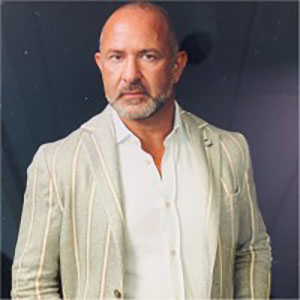
Their next goal is to capture 10 billion bottles, which still represents only 1.7% of the 583 billion produced in 2021, according to Euromonitor. David explains that a shift in mindset from extractive ownership to regenerative stewardship can break the economic mold and bring prosperity in regions where so much valuable material currently is treated as waste. Plastic Bank uses a blockchain-based data collection and reporting system that helps collectors track their earnings and which provides transparency and traceability for the plastic captured. Plastic Bank works with plastic recyclers to convert the collected bottles into SocialPlastic, a raw material for making new products. They sell plastic #1, #2, and #4 to industry to recover their costs. You can learn more about Plastic Bank at plasticbank.com.
- Subscribe to Sustainability in Your Ear on iTunes and Apple Podcasts.
- Follow Sustainability in Your Ear on Spreaker, iHeartRadio, or YouTube
Editor’s Note: This episode originally aired on March 23, 2022.
The post Best of Sustainability In Your Ear: Plastic Bank’s David Katz on Grassroots Recycling Solutions appeared first on Earth911.
https://earth911.com/podcast/earth911-podcast-plastic-banks-david-katz-on-grassroots-recycling-solutions/

Oil Tycoon Funds Far-Right Candidate Challenging Texas Oilfield Regulator

Sustainability In Your Ear: Author Michael Maniates on Why Green Shopping Isn’t Enough
Data Center Boom Reaches West Georgia, Raising Questions Amid Mounting Opposition
-
Climate Change8 months ago
Guest post: Why China is still building new coal – and when it might stop
-
Greenhouse Gases8 months ago
Guest post: Why China is still building new coal – and when it might stop
-

 Greenhouse Gases2 years ago
嘉宾来稿:满足中国增长的用电需求 光伏加储能“比新建煤电更实惠”
-
Climate Change2 years ago
Bill Discounting Climate Change in Florida’s Energy Policy Awaits DeSantis’ Approval
-

 Climate Change2 years ago
嘉宾来稿:满足中国增长的用电需求 光伏加储能“比新建煤电更实惠”
-
Climate Change Videos2 years ago
The toxic gas flares fuelling Nigeria’s climate change – BBC News
-

 Renewable Energy6 months ago
Sending Progressive Philanthropist George Soros to Prison?
-

 Carbon Footprint2 years ago
US SEC’s Climate Disclosure Rules Spur Renewed Interest in Carbon Credits