

This week, the international court of justice (ICJ) opened two weeks of hearings on states’ climate-related legal obligations – and the consequences, if “significant harm” is caused.
The case stems from a unanimous UN general assembly (UNGA) request for an “advisory opinion” from the ICJ.
It is taking place against a backdrop of rapidly escalating climate impacts. Emissions continue to rise, rather than falling rapidly, as needed to avoid dangerous levels of global warming.
It is the ICJ’s largest ever case, with more than 100 countries and international organisations making interventions, deploying a wide variety of legal arguments.
Ralph Regenvanu, climate envoy for Vanuatu, which led the campaign for the ICJ hearings, said in his opening address: “[T]his may well be the most consequential case in the history of humanity.”
Below, Carbon Brief interviews leading international law scholar Prof Philippe Sands – who drafted the pleadings for Mauritius, but is speaking here in a personal capacity – to find out more about the legal issues at stake and the wider significance of the ICJ case.
- On the significance of the case: “It’s the first time the ICJ has been called upon to address legal issues relating to climate change.”
- On the key legal arguments: “There’s just a huge number of issues that are coming up.”
- On climate obligations under the UN: “Will the court open the door to the situation that the 1992 [UN climate] convention … [is] not the be all and end all?”
- On where outcomes could come from: “Essentially, it’s the whole of international law!”
- On the responsibility of states: “The question at the beating heart of this case, really, is the consequences of emissions over time.”
- On historical emissions: “The big issue is, are you liable for the continuing consequences of your past emissions?”
- On applying international law: “When drafting the climate treaty regime, [did] states…exclude the application of general international law?”
- On expectations for the case: “What I’m interested in, really, is an advisory opinion that is capable of having hard, practical application.”
- On the state of the science: “A procedure in which the judges hear privately from any person…is unusual. It’s unorthodox.”
- On the significance of the submissions: “The oral phase is very important, because it basically concentrates the issues down to the most significant and narrow set of issues.”
- On the question of the UN or wider law: “It’s a tough situation for the judges.”
Carbon Brief: Would you be able to start by just situating this case in its wider legal context and explaining why it could be so consequential?
Philippe Sands: Well, it’s the first time the international court of justice has been called upon to address legal issues relating to climate change. The ICJ is the principal judicial organ of the United Nations and, although the advisory opinion that it hands down will not be binding on states, it is binding on all UN bodies. The determinations that the court makes will have consequences that go very far and that will have a particular authority, in legal and political terms. Of course, everything turns on what the court actually says.
CB: Would you be able to summarise the key legal arguments that are being fought over in this case?
PS: No! I mean, there’s just a huge number of issues that are coming up. But, essentially, the court has been asked two questions by the UN General Assembly – the first time, I believe, that a request from the General Assembly has been consensual, with no objections. The two questions are, firstly, what are the obligations for states under international law to protect the climate system? And, secondly, what are the legal consequences under these obligations, where, by their acts and emissions, [states] cause significant harm to the climate system? So, there are two distinct questions – and about 100 states and international organisations of various kinds have made submissions on the vast range of issues that are raised by these two questions. The questions are very, very broad and that signals to me that the court’s response may be quite general. But, for me, the crucial issues are, firstly, what the court says about the state of the science: is it established, or is there any room for doubt? Secondly, what are the obligations of states having regard to the clarity of the science? Thirdly, are there legal obligations on states in relation to the climate system that exist and arise outside of the treaty regime – the 1992 [UN Framework] convention [on climate change], the Kyoto Protocol, the Paris Agreement and so on and so forth. And, related to that, fourthly – this is the most intense, legally interesting aspect – what are the responsibilities of states for historic emissions under general international law? And, in particular, are the biggest contributors liable under international law to make good any damages that may arise from their historic actions? But, I mean, there’s just such a vast array of questions that are addressed, it’s impossible to summarise briefly.
CB: This is the challenge I found when I was trying to write questions!
PS: To be honest, the questions [put by the UN General Assembly] are rather general, so I have concerns about the burden that has been imposed on the court. My general approach has been that, with advisory opinions, the best questions are those which require a yes or no answer. But the moment you have questions of such generality, you impose on the 15 judges an especially onerous burden, because the questions are open to interpretation.

CB: Some countries are arguing, effectively, that states’ climate obligations start and finish with the UN climate regime, as you’ve already mentioned.
PS: Exactly. Well, that’s a central aspect of what’s coming up. Will the court open the door to the situation that the 1992 [UN climate] convention and the subsequent agreements [Kyoto, Paris] are not the be all and end all, and that the rules of general international law [also] apply? And, if so, what are those rules? And what are the consequences of breaching those rules? Some states say there can’t be any liability under general international law because the whole matter is governed by the treaty regime. Other states say that’s not right, that, although the treaty regime is a distinct “lex specialis” – a specialised area of law – that does not preclude the application of the general principles of international law. So that may be a really interesting issue for the court to determine.
CB: Could you say a bit more about the other areas of international law, where obligations could come from, whether it’s human rights, or customary law, or whatever it might be?
PS: The difficulty, if you look at the first part of the question [put to the court]…the drafters of the question invite the court to have regard to the Charter of the United Nations, the Covenant on Civil and Political Rights, the Covenant on Economic and Social Rights, the Framework Convention on Climate Change, the Paris Agreement, the UN Convention on the Law of the Sea, the duty of due diligence, human rights law, the principle of prevention, and the duty to protect and preserve the marine environment. That is a vast array of international legal obligations and it’s not exhaustive. It says, having particular regard to, so, essentially, it’s the whole of international law! So the court is being asked to address the application of the whole of international law to the issue of climate change and, in particular, issues of legal consequences, and in particular, the issues of state responsibility. So, it’s vast, vast.
CB: Another set of arguments that I’ve seen…is around the idea of the “responsibility of states for internationally wrongful acts”, which might lead to a requirement for cessation of the acts and reparation of the harm done. Can you just say a bit more about what that idea means and where it comes from?
PS: There’s an area of international law called the law of state responsibility. That law of state responsibility says that when you have committed a wrongful act and violated a rule of international law, you are liable for all of the consequences. That rule has not been incorporated, as such, or at all, into the treaty regime [on climate change]. So, essentially, by raising those issues, there are a number of legal issues that arise – but there are two of particular interest. Firstly, in relation to damage that is caused by climate change, are those states most responsible, liable for the consequences of that damage in, let us say, for example, in financial terms? And, secondly – and this relates to something called the principle of “common but differentiated responsibility” – does the fact that certain states have historic emissions going back 200 years mean that their entitlement to the remaining “carbon budget” is reduced. So, the question, I think, at the beating heart of this case, really, is the consequences of emissions over time, looking back and looking forward. That’s one aspect the court may have at the forefront of its mind.
CB: Historical greenhouse gas emissions, but also the rights of future generations, have both come up quite a lot in some of the submissions. Can you just say a bit more about the legal arguments around these?
PS: The big issue is: are you liable for the continuing consequences of your past emissions? And does the nature and extent of your past emissions affect your ability to generate emissions in the future? Those are really the two issues and the treaty regime does not, as such, explicitly address [them]. The practicalities are that islands are disappearing with sea level rise. Are historic polluters of greenhouse gases responsible for the consequences of those disappearances? Or, if states are required to build sea walls to protect themselves, can they bring a case against the biggest polluters for the consequences of sea level rise? That’s the kind of complex issue the court may have in the back of its mind, because that’s essentially what’s being asked.
CB: In terms of how they will decide whether these other potential areas of law could give rise to obligations on states – and, therefore, potentially further consequences – how are they going to decide? To decide whether those [areas of law] do apply, or whether it is only the UN climate regime that gives rise to obligations.
PS: They are going to have to address whether, when drafting the climate treaty regime, states intended to, or did as a necessary consequence, exclude the application of general international law. That is an issue that they will do by looking at the climate regime and determining whether, by adopting it, there was an intention to exclude the application of general international law. So, that is a classical job for lawyers, for judges: to interpret the law, to interpret what the drafters of the treaty regime have done and what they intended, and to then form a view in applying the general rules of international law, whether a space is left which allows those general rules to apply. That’s classically what international judges will do.
CB: You’ve already said a little bit about this, but what would your expectations be for this advisory opinion, which I gather is expected next year?
PS: Normally, it takes six months from after they’ve done the hearings for an advisory opinion to come up. I don’t really have any expectations. There’s been a previous advisory opinion in relation to the Law of the Sea proceedings. The Tribunal for the Law of the Sea came up with an advisory opinion which, in a sense, was rather general. What I’m interested in, really, is an advisory opinion that is capable of having hard, practical application, as happened, for example, in the advisory opinion on the Chagos Archipelago, where the court was asked two questions, essentially, “yes/no” questions, and the court gave a very clear advisory opinion, which has had significant political and legal consequences. The difficulty with asking very general questions is you get very general answers, and very general answers are less easily capable of practical application. So, the best-case scenario for me, is that the court comes up with an advisory opinion of sufficient clarity on the facts, which is basically the state of the science and on the applicable legal principles, which then allows other courts and, in particular, national courts, to take the advisory opinion, in interpreting and applying domestic law, which is, ultimately, going to be where the rubber hits the road. So my expectations turn on the nature and generality of the opinion that the court is able to give. But where the questions posed are so general, I would be concerned that the answers may also be rather general and that limits my expectations.
CB: You mentioned the state of the science as being very important. We know that the court met with a delegation of IPCC [Intergovernmental Panel on Climate Change] authors and I gather there’s some sort of question mark about the procedure used to do that?
PS: The normal process is that if scientists are going to provide information to the judges, it would be in the form of submissions made in writing, or in open court, publicly and transparently. A procedure in which the judges hear privately from any person, however authoritative – and the IPCC is authoritative – is unusual. It’s unorthodox. It does raise questions. We don’t know who attended. We don’t know what they said. We don’t know what the exchanges were with the judges. I have to assume that it was done by the judges, at their request, as a way of informing themselves on the state of science, which is understandable. But the more usual way for this to happen would be, as I said, in written submissions made to the court and in open submissions made already in the courtroom. So it is unusual.
CB: You mentioned already, there’s more than 100 submissions from countries and international organisations. And we’ve obviously got these two weeks of hearings, with some of those same entities making oral statements. How significant are those submissions in terms of shaping the advisory opinion of the court?
PS: My experience before the court, having been involved in a number of cases involving advisory opinions and contentious cases, is that the written pleadings are very important in setting out the generality of the arguments and the totality of the arguments. And, essentially, what you see is a narrowing down. There are essentially three rounds. The first round is the first written statement of the participating states and international organisations. Then they have a second written round, which tends to narrow down the issues and be responsive to the first round of others. And then you’ve got the oral arguments, which are limited, of course, to half an hour for each participant. And so it’s a real narrowing down and homing in. Essentially, what the oral arguments are doing is signaling to the judges what the states participating think are the most significant issues. That’s why the oral phase is very important, because it basically concentrates the issues down to the most significant and narrow set of issues. And so it gives the judges a sense of what states think are the most important issues to be addressed. Secondly, it provides states with an opportunity to hear what responses each state has made to the written submissions of other states. So the oral phase is significant.
CB: If you were going to make a bet, which way would you say the court would go on that key question of whether it’s just the [UN] climate regime that gives rise to obligations [on states], or whether there could be obligations from other parts of the law?
PS: I think the court will proceed very carefully. I don’t think it will want to close the door to the application of other rules of international law. Rather, as the International Tribunal for the Law of the Sea did, which opened the door to the application of the Law of the Sea Convention to the issue of climate change – and opened it quite widely. I don’t know precisely where the court will go. But I would be surprised if they said general international law does not govern issues related to climate change.
The interesting area to read, in what they say, will be the relationship between the general rules and the treaty rules. I mean, the broader issue here is that, essentially, the legislative system has broken down. The states have been unable to legislate effectively and efficiently to address the issues related to climate change. And so what has happened is that a group of states have essentially gone to the General Assembly and said: “The legislative system is broken down. Let’s now ask the judges to step in and tell us what the applicable principles and rules are.” The difficulty that that poses for the judges, who will be conscious that the legislative system has not delivered, is that it’s not the function of judges to legislate. The function of judges is limited to interpreting the law and applying it to the facts, to identify the existence of rules and then applying them to the facts. So I would have thought the instinct of the judges will be to do something, but not to want to overstep the proper boundaries on the judicial function. And that’s a difficult challenge for the judges that they find themselves in.
[It is] a very delicate and difficult situation in the face of, on the one hand, the urgent need for action, and, on the other hand, the failure of states, essentially, to deal with the situation and act as the scientists tell us is needed. I don’t know whether you’ve been through all the different pleadings. I drafted the pleadings for Mauritius – I’m speaking here in a personal capacity. Mauritius decided not to participate in the oral hearings, but you can go on to the Mauritius statement and, if you look at the second Mauritius statement filed in August, you’ll find attached to it as an annex, a report by Prof James Hansen, one of the world’s leading scientists. And that really indicates, with crystal clarity, the urgency of the situation. He’s one of the world’s leading scientists on this issue and that’s the kind of submission that could concentrate the minds of the judges and, I think, impel them to want to go as far as they can. But they’ll be acutely conscious of the limits of judicial function. And, of course, you know, some countries like the UK are basically saying, butt out, leave it to the treaty negotiators, leave it to the treaty system. And the US has said essentially the same thing yesterday. So, it’s a tough situation for the judges.
An abridged version of this interview was published in DeBriefed, Carbon Brief’s weekly email newsletter. Sign up for free.
The interview was conducted by Simon Evans via phone on 5 December 2024.


The post Interview: Prof Philippe Sands on UN court’s landmark climate-change hearing appeared first on Carbon Brief.
Interview: Prof Philippe Sands on UN court’s landmark climate-change hearing

When José Antonio Kast took office as Chile’s new president in March, one of his first moves was to put the brakes on plans to expand two protected marine parks – raising doubts about the country’s high-profile bid to host the headquarters of the High Seas Treaty.
But during the UN General Assembly last month, the right-wing leader reaffirmed his leftist predecessor’s ambition for Chile to host the landmark global pact, which came into effect in January and provides a legal framework to protect the waters of the high seas beyond national jurisdiction that cover about two-thirds of the world’s oceans.
Hailing the country’s “maritime vocation”, Kast’s government said the bid to host the treaty’s secretariat in the port city of Valparaíso was state policy and testament to its commitment to multilateralism.
“For the government of Chile, it is of high interest to achieve this recognition, and we will carry out all the efforts to obtain the necessary support,” Foreign Minister Francisco Pérez Mackenna was quoted as saying by local media.
-
At pre-COP, UN climate chief warns of heat threat to mothers and babies
The spotlight on maternal health came on the first day of the pre-COP31 meeting in Fiji, where Pacific concerns are set to top the agenda as ministers gather for talks -
Big banks behind “net zero” alliance continued lending to coal firms
New data shows coal finance has stayed steady at the global level since 2022, as international efforts to cut the ties between lending and emissions faded -
Jordan’s mega-plan for water security risks locking in fossil gas demand
A giant desalination plant will help Jordan confront water scarcity, but solar power’s limited role in the energy-hungry project has raised questions about how climate adaptation finance is being spent

Tough competition from Chinese, Belgian bids
But to garner the votes it needs, Chile must fend off competing bids by Belgium – which has proposed its well-connected capital, Brussels – and China, whose well-funded bid includes the provision of free premises in the coastal city of Xiamen and five years of free utility costs.
Parties to the treaty, formally called the Agreement on Marine Biological Diversity of Areas Beyond National Jurisdiction (BBNJ), will choose the headquarters at their first summit (COP1), in New York from January 11 to January 22, 2027. They will seek consensus, falling back on a two-thirds majority in successive secret ballots.
Chile has offered to provide a restored waterside warehouse “at its own expense” as office space, pitching itself to developing countries as a Global South alternative to Europe-centred Brussels. Among richer countries, it is promoting its democratic credentials and greater transparency as an alternative to China.
Rolling back environmental safeguards at home?
While the South American country remains the top pick among environmental campaigners and other civil society groups, critics of Kast’s government say recent policy moves may make it harder for the country to garner the support it needs.
On March 12, the day after Kast took office, the Environment Ministry withdrew 43 decrees awaiting legal approval, including a push to expand the Mar de Juan Fernández and Nazca-Desventuradas marine parks – vast protected areas in Chile’s Pacific Ocean waters. Both remain under review, the ministry told Climate Home News.
The decrees also included an emission standard for coal power plants and regulations for Chile’s new biodiversity and protected areas service.
A month after holding up the decrees, Kast questioned aspects of Chile’s urban wetlands protection law, suggesting it was sometimes an unjustified obstacle to much-needed housing development, and his administration has also sought to ease the rules on salmon farming in the world’s second-largest producer.
In August, the Constitutional Court struck down the salmon farming reform after a challenge by opposition lawmakers and warnings from green groups including Greenpeace, which said it could help farms relocate into protected areas such as the Kawésqar National Reserve.
Valparaíso mayor Camila Nieto, from former leftist President Gabriel Boric’s party, backs the bid to host the High Seas Treaty, but said she hoped “the government’s support also translates into public policies consistent with the goals of protecting and conserving the oceans”.
“The decisions a country makes on environmental matters can influence international perceptions of its commitment to protecting the oceans. That is something we cannot ignore,” Nieto told Climate Home News.

China’s bid stirs concerns over data access, fishing
Chile’s past record on marine protection – it has protected 43% of its jurisdictional waters – could yet give it an edge.
“Chile deserves it for its conservation record as a state. For more than 15 years Chile has been following this path,” Liesbeth van der Meer, executive director at conservation group Oceana in Chile, told Climate Home News.
Concerns in some quarters about the rival bid by China – for example, over a potential conflict of interest due to the vast Chinese fishing industry – may also weigh in Chile’s favour, experts say.
Chinese-flagged vessels did about 30% of detected high seas fishing between 2022 and 2024, according to an Oceana analysis of Global Fishing Watch data. China also sponsors five of the International Seabed Authority’s 31 deep-sea mining exploration contracts, more than any other country.
The secretariat would host sensitive marine data, making transparency paramount, experts say.
China says hosting the secretariat in Xiamen would help make the treaty more globally representative, fostering cooperation between rich and developing countries and aiding equitable access to marine science and technology.
Wang Yi, China’s minister of foreign affairs, said in a statement that the country has “all along championed true multilateralism” and “firmly defended” UN institutions. Given Xiamen’s $38-billion ocean industry, the city lives up to the treaty’s “significance and promising future”, he added.
Meanwhile, Chile is proposing the treaty’s first high seas marine protected area for the Salas y Gómez and Nazca ridges, a chain of more than 110 seamounts stretching about 4,000 km from off Peru to Rapa Nui (Easter Island) that is rich in endemic fish and other marine species.
The ridges are “a true oasis of productivity”, said Carlos Gaymer, director of the Centre for Ecology and Sustainable Management of Oceanic Islands at Universidad Católica del Norte and co-author of a 2021 scientific review of the area.
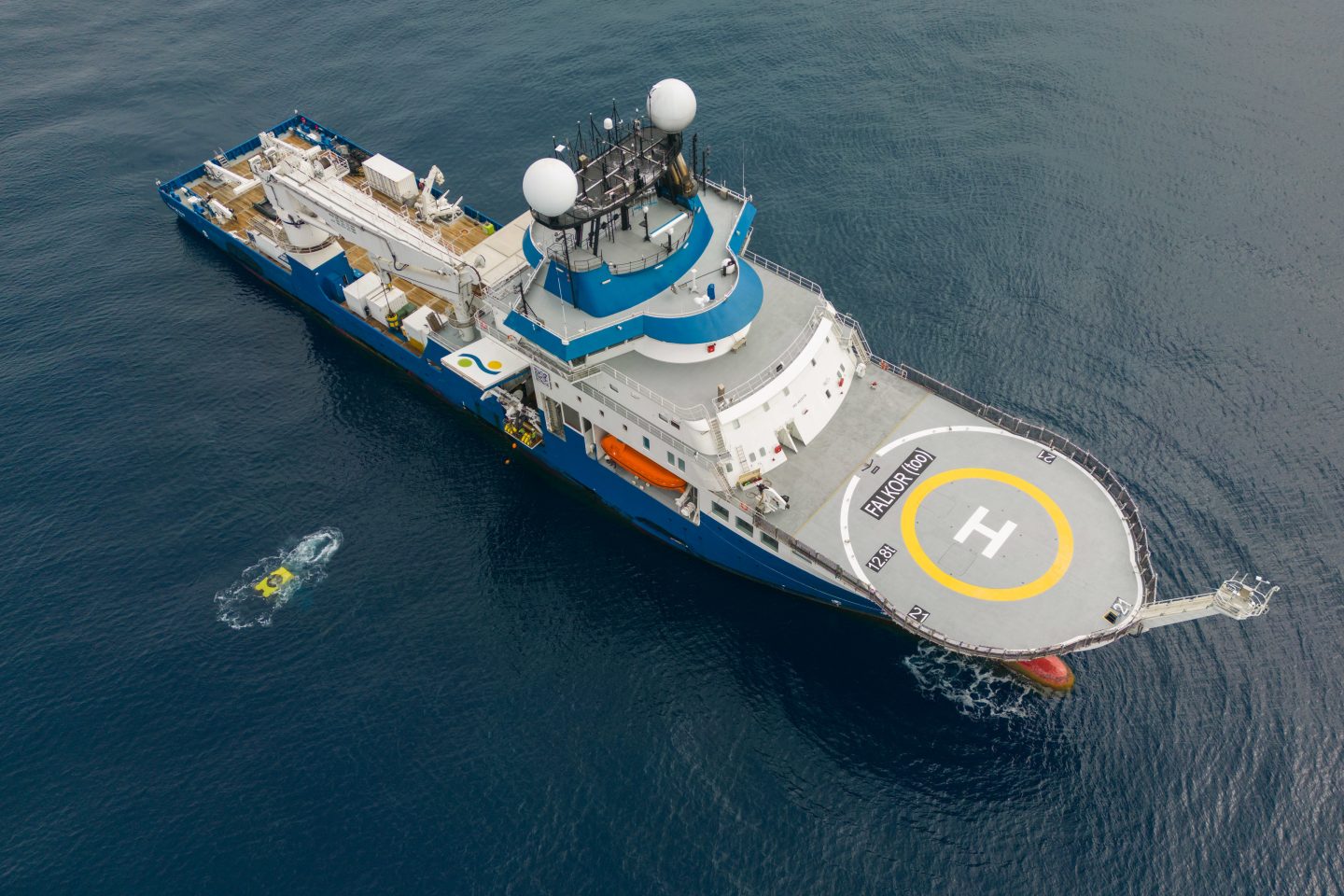
The water is so clear that phytoplankton thrive around 200 metres down, feeding zooplankton, small fish and, up the chain, sharks and seabirds. Whales, turtles and sharks use the ridges as “a real highway” across the Pacific, Gaymer said. Parts of the Nazca ridge are likely nursery grounds for jack mackerel and swordfish.
Chile has already asked the body that regulates the industry in the area – the South Pacific Regional Fisheries Management Organisation (SPRFMO) – to close the ridges to all fishing vessels. According to Chilean data, more than 80% of fishing in the area involves Chinese vessels.
Meeting on the Chilean request in early September, SPRFMO’s scientific committee agreed only to recommend closing the area to bottom fishing. SPRFMO’s commission will take the final decision at its next meeting, in early 2027.
For Gaymer, Chile’s push to close the area to fishing should be seen as a “starting point” for the treaty proposal.
“Every time there’s a new expedition, species new to science appear,” Gaymer said. “If you don’t protect areas like these … those species simply disappear from the planet.”
The post Race to host High Seas Treaty HQ heats up as Chile reaffirms bid appeared first on Climate Home News.
Race to host High Seas Treaty HQ heats up as Chile reaffirms bid