


The nuclear energy landscape in North America is undergoing a significant transformation, with both the US and Canada making strides to bolster their nuclear capabilities. From reviving uranium enrichment in the US to Canada’s embrace of nuclear financing, the region is on the road to a nuclear energy resurgence.
Breaking U.S. Nuclear Dependence
The US uranium enrichment sector stands to receive a substantial $2.7 billion injection as part of a government funding bill. This initiative reflects a strategic move to reduce reliance on nuclear fuel imported from Russia.
Proposed by the White House, the funding is integral to President Joe Biden’s broader plan to procure enriched uranium directly from domestic sources. The goal is to revitalize nearly dormant US capabilities by establishing a guaranteed buyer for American-made nuclear reactor fuel.
The move coincides with potential legislative measures to restrict imports of enriched uranium from Russia. The NO RUSSIA bill, National Opportunity to Restore Uranium Supply Services In America Act of 2022, expels Russia’s influence from the U.S. uranium market.
The provision of enrichment funding is based upon implementing limitations on the importation of enriched Russian uranium. The fund is from a credit program for domestic nuclear reactors established in the bipartisan infrastructure law of 2022.
The allocated funding is specially dedicated to cultivating a market for domestically produced enriched uranium. This uranium serves as fuel for the US fleet of over 90 nuclear reactors, as well as for highly enriched uranium used in emerging advanced reactor technologies, currently monopolized by Russia.
In December 2023, after over 50 years, the U.S. issued approval for a groundbreaking nuclear reactor developed by Kairos Power.
The California-based startup has been granted a construction permit by the Nuclear Regulatory Commission (NRC) for its Hermes demonstration reactor in Tennessee. The novel reactor uses molten fluoride salt as a coolant, a more efficient technology than conventional water-cooled nuclear reactors.
The NRC has also granted certifications to other innovative nuclear developers, e.g. NuScale Power and Centrus Energy Corporation, in collaboration with the Energy Department. Most initiatives involved small nuclear reactors (SMR), generating under 300 MWe capacity.
These developments indicate a shifting regulatory stance toward innovative approaches to nuclear power generation in the U.S.
Financing the Canadian Nuclear Renaissance
Over in Canada, the federal government amended its green bond programs. They now permit the financing of nuclear projects and navigated an initial test of investor support for this energy source.
Notably, about 15% of the country’s electricity comes from nuclear power. Most of the 19 reactors are in Ontario which provides 13.6 GWe of power capacity.
 The sovereign and the province of Ontario issued a combined C$5.5 billion or US$4.1 billion in securities. This marked the first two offerings under the revised Green Bond Framework for green debt that allow funding for nuclear initiatives. Previously, the framework didn’t include nuclear energy from getting financial support.
The recent $4 billion issuance by the Canadian sovereign did not explicitly earmark proceeds for nuclear power projects. Still, the federal government emphasized its commitment to nuclear development. Also, investors have eagerly subscribed to the 10-year debt offering, with orders surpassing $7.4 billion, nearly double the final amount.
Powering Ahead: Canada’s Ambitious Nuclear Expansion Plans
Canada aims to develop both new large-scale nuclear capacity and SMRs. In 2018, Natural Resources Canada (NRCan) unveiled its SMR Roadmap, outlining a strategic plan for the advancement of nuclear technology centered around SMRs.
In February 2023, the Canadian government initiated the Enabling Small Modular Reactors Program. It allocates about US$22 million to facilitate the advancement and implementation of SMRs.
Another notable nuclear development in Canada is Ontario’s 2015 decision to greenlight the refurbishment or lifetime extension of 4 nuclear units at Darlington and the remaining 6 units at Bruce (with the initial 2 units already refurbished). This ambitious C$26 billion 15-year program stands as one of the most significant clean energy endeavors in North America.
Bruce Power, an Ontario-based company aiming to construct the world’s largest nuclear power plant, announced that all its future bonds will adhere to green financing principles. The nuclear power developer also introduced at COP28 last year the first carbon offset protocol for nuclear generation.
James Scongack, Bruce Power’s Chief Development Officer, noted that investor appetite for green securities is shaping their future fundraising strategies. He further noted that:
“With the demand we see for green bonds, we have no doubt all future bonds funding nuclear projects will be green bonds.”
The inclusion of nuclear projects reflects a growing acceptance of nuclear power to decarbonize and enhance energy security. This development signifies a significant shift in green finance and underscores the evolving role of nuclear energy in Canada’s sustainability efforts.
By embracing nuclear power, the US and Canada are paving the way for a sustainable energy landscape while enhancing energy security.
The post Funding Bill Grants $2.7B to American-Made Nuclear Reactor Fuel appeared first on Carbon Credits.


The global electric vehicle (EV) market is gaining speed again. A sharp rise in oil prices, triggered by the recent U.S.–Iran conflict in early 2026, has changed how consumers think about fuel and mobility. What looked like a slow market just months ago is now showing strong signs of recovery.
According to SNE Research’s latest report, this sudden shift in energy markets is pushing EV adoption faster than expected. Rising gasoline costs and uncertainty about future oil supply are driving buyers toward electric cars. As a result, the EV transition is no longer gradual—it is accelerating.
Oil Price Shock Changes Consumer Behavior
The conflict in the Middle East sent oil markets into turmoil. Gasoline prices jumped quickly, rising from around 1,600–1,700 KRW per liter to as high as 2,200 KRW. This sudden spike acted as a wake-up call for many drivers.
Consumers who once hesitated to switch to EVs are now rethinking their choices. High and unstable fuel prices have made traditional gasoline vehicles less attractive. At the same time, EVs now look more cost-effective and reliable over the long term.
SNE Research noted that even if oil prices stabilize later, the fear of future spikes will remain. This uncertainty is a key driver behind early EV adoption. People no longer want to depend on volatile fuel markets.
EV Growth Forecasts Get a Major Boost
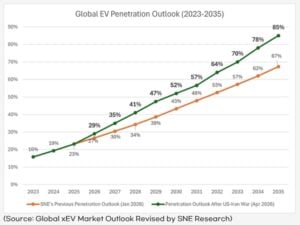
SNE Research has revised its global EV outlook. The firm now expects faster adoption across the decade.
- EV market penetration is projected to reach 29% in 2026, up from an earlier estimate of 27%.
- By 2027, the share could jump to 35%, instead of the previously expected 30%.
- Most importantly, EVs are now expected to cross 50% of new car sales by 2030, earlier than prior forecasts.

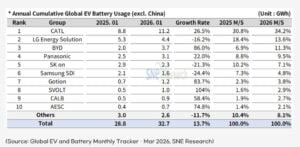

The post Global EV Sales Set to Hit 50% by 2030 Amid Oil Shock While CATL Leads Batteries appeared first on Carbon Credits.
Carbon Footprint
AI Data Centers Power Crisis: Massive Energy Demand Threatens Emissions Targets and Latest Delays Signal Market Shift

The rapid growth of artificial intelligence (AI) is creating a new challenge for global energy systems. AI data centers now require far more electricity than traditional computing facilities. This surge in demand is putting pressure on power grids and raising concerns about whether climate targets can still be met.
Large AI data centers typically need 100 to 300 megawatts (MW) of continuous power. In contrast, conventional data centers use around 10-50 MW. This makes AI facilities up to 10x more energy-intensive, depending on the scale and workload.
AI Data Centers Are Driving a Sharp Rise in Power Demand
The increase is happening quickly. The International Energy Agency estimates that global data center electricity use reached about 415 terawatt-hours (TWh) in 2024. That number could rise to more than 1,000 TWh by 2026, largely driven by AI applications such as machine learning, cloud computing, and generative models. 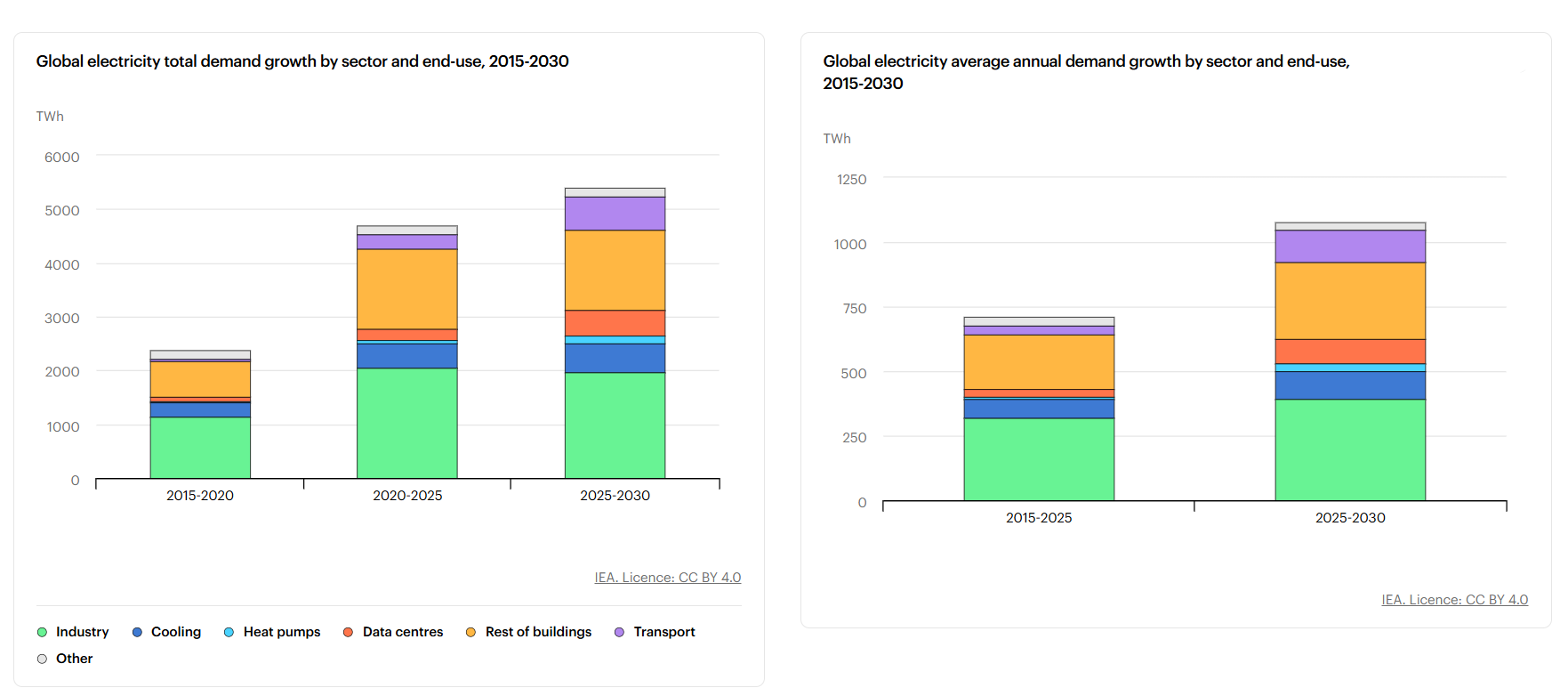
At that level, data centers would consume as much electricity as an entire mid-sized country like Japan.
In the United States, the impact is also growing. Data centers could account for 6% to 8% of total electricity demand by 2030, based on utility projections and grid operator estimates. AI is expected to drive most of that increase as companies continue to scale infrastructure to support new applications.
Training large AI models is especially energy-intensive. Some estimates say an advanced model can use millions of kilowatt-hours (kWh) just for training. For instance, training GPT-3 needs roughly 1.287 million kWh, and Google’s PaLM at about 3.4 million kWh. Analytical estimates suggest training newer models like GPT-4 may require between 50 million and over 100 million kWh.
That is equal to the annual electricity use of hundreds of households. When combined with ongoing usage, known as inference, total energy consumption rises even further.

This rapid growth is creating a gap between electricity demand and available supply. It is also raising questions about how the technology sector can expand while staying aligned with global climate goals.
The Grid Bottleneck: Why Data Centers Are Waiting Years for Power
Power demand from AI is rising faster than grid infrastructure can support. Utilities in key regions are now facing a surge in interconnection requests from technology companies building new data centers.
This has led to delays in several major projects. In many cases, developers must wait years before they can secure enough electricity to operate. These delays are becoming more common in established tech hubs where grid capacity is already stretched.
The main constraints include:
- Limited transmission capacity in high-demand areas,
- Slow grid upgrades and long permitting timelines, and
- Regulatory systems not designed for AI-scale demand.
Grid stability is another concern. AI data centers require constant and uninterrupted power. Even short disruptions can affect performance and reliability. This makes it more difficult for utilities to balance supply and demand, especially during peak periods.
In some regions, utilities are struggling to manage the size and concentration of new loads. A single large data center can use as much electricity as a small city. When several projects are planned in the same area, the pressure on local infrastructure increases significantly.
As a result, some companies are rethinking their expansion strategies. Projects may be delayed, scaled down, or moved to new locations where energy is more accessible. These shifts could slow the pace of AI deployment, at least in the short term.
Renewable Energy Growth Faces a Reality Check
Technology companies have made strong commitments to clean energy. Many aim to power their operations with 100% renewable electricity. This is part of their larger environmental, social, and governance (ESG) goals.
For example, Microsoft plans to become carbon negative by 2030, meaning it will remove more carbon than it emits. Google is targeting 24/7 carbon-free energy by 2030, which goes beyond annual matching to ensure clean power is used at all times. Amazon has committed to reaching net-zero carbon emissions by 2040 under its Climate Pledge.
Despite these targets, AI data centers present a difficult challenge. They need reliable electricity around the clock, while renewable energy sources such as wind and solar are not always available. Output can vary depending on weather conditions and time of day.
To maintain stable operations, many facilities rely on a mix of energy sources. This often includes grid electricity, which may still be partly generated from fossil fuels. In some cases, natural gas backup systems are used more frequently than planned.
Battery storage can help balance supply and demand. However, long-duration storage remains expensive and is not yet widely deployed at the scale needed for large AI facilities. This creates both technical and financial barriers.
Thus, there is a growing gap between corporate clean energy goals and real-world energy use. Closing that gap will require faster deployment of renewable energy, improved storage solutions, and more flexible grid systems.
Carbon Credits Use Surge as Tech Tries to Close the Emissions Gap
The mismatch between AI growth and clean energy supply is also affecting carbon markets. Many technology companies are increasing their use of carbon credits to offset emissions linked to data center operations.
According to the World Bank’s State and Trends of Carbon Pricing 2025, carbon pricing now covers over 28% of global emissions. But carbon prices vary widely—from under $10 per ton in some systems to over $100 per ton in stricter markets. This gap is pushing companies toward voluntary carbon markets.

The Ecosystem Marketplace report shows rising demand for high-quality credits, especially carbon removal rather than avoidance credits. But supply is still limited.
Costs are especially high for engineered removals. The IEA estimates that direct air capture (DAC) costs today range from about $600 to over $1,000 per ton of CO₂. It may fall to $100–$300 per ton in the future, but supply is still very small.
Companies are focusing on credits that:
- Deliver verified emissions reductions,
- Support long-term carbon removal, and
- Align with ESG and net-zero commitments.
At the same time, many firms are taking a more active role in energy development. Instead of relying only on offsets, they are investing directly in renewable energy projects. This includes funding new solar and wind farms, as well as entering long-term power purchase agreements.
These investments help secure a dedicated clean energy supply. They also reduce long-term exposure to carbon markets, which can be volatile and subject to changing standards.
Companies Are Adapting Their Energy Strategies: The New AI Energy Playbook
AI companies are changing how they design and operate data centers to manage rising energy demand. Here are some of the key strategies:
- Energy efficiency improvements (new hardware and cooling systems) that reduce data center power use.
- More efficient AI chips, specialized processors, that drive performance gains.
- Advanced cooling systems that cut energy waste and can help cut total power use per workload by 20% to 40%.
- Data center location strategy is shifting, where facilities are built in regions with stronger renewable energy access.
- Infrastructure is becoming more distributed, where firms deploy smaller data centers across multiple locations to balance demand and improve resilience.
- Long-term renewable energy contracts are expanding, which helps companies secure power at stable prices.
A Turning Point for Energy and Climate Goals
The rise of AI is creating both risks and opportunities for the global energy transition. In the short term, increased electricity demand could lead to higher emissions if fossil fuels are used to fill supply gaps.
At the same time, AI is driving major investment in clean energy and infrastructure. The long-term outcome will depend on how quickly clean energy systems can scale.
If renewable supply, storage, and grid capacity keep pace with AI growth, the technology sector could help accelerate the shift to a low-carbon economy. If progress is too slow, however, AI could become a major new source of emissions.
Either way, AI is now a central force shaping global energy demand, infrastructure investment, and the future of carbon markets.
The post AI Data Centers Power Crisis: Massive Energy Demand Threatens Emissions Targets and Latest Delays Signal Market Shift appeared first on Carbon Credits.
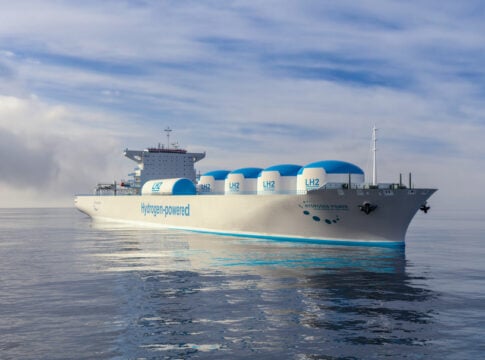
Japan has taken a major step in clean shipping. A consortium led by Japan Engine Corporation and Kawasaki Heavy Industries has successfully tested the world’s first hydrogen-fueled main engine for a large commercial vessel.
This engine is designed for deep-sea cargo ships, not just small vessels. That makes it a key milestone. Most earlier hydrogen ship projects focused on ferries or short routes.
The 3% Problem: Shipping’s Emissions Challenge
The engine is a low-speed, two-stroke design. This is the standard for large ocean-going ships. It can run mainly on hydrogen fuel. In tests, it achieved about 95% hydrogen use at full load, showing stable performance.
The engine will be installed on a 17,500-deadweight-ton multipurpose vessel. The ship is expected to be delivered in 2027. It will then undergo a three-year demonstration period starting in 2028.
Shipping is a major source of global emissions. The sector produces about 2–3% of global greenhouse gas emissions, based on data from the International Maritime Organization (IMO).
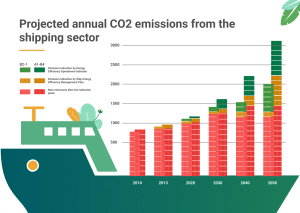
Most ships today use heavy fuel oil or marine diesel. These fuels produce high emissions. As global trade grows, shipping emissions could increase without new solutions.
Hydrogen is one option. When used as a fuel, it produces no carbon dioxide at the point of use. This makes it attractive for long-term decarbonization.
However, scaling hydrogen for large ships has been difficult. Key challenges include fuel storage, engine design, and safety. Japan’s latest engine test shows that progress is being made.
How Hydrogen Engines Work in Large Vessels
Hydrogen-powered ships can use fuel cells or combustion engines. Japan’s new system uses combustion. This means hydrogen burns inside the engine, similar to diesel. This approach allows easier integration with existing ship systems. It also reduces the need for full redesigns of vessels.
The engine uses liquid hydrogen fuel and advanced injection systems. Engineers have focused on stable combustion and material strength. Hydrogen burns faster than traditional fuels, so precision is critical.
The project includes partners such as Mitsui O.S.K. Lines (MOL), Onomichi Dockyard, and ClassNK. These groups support design, safety checks, and future operations.
The move is part of Japan’s Green Innovation Fund. The Ministry of Economy, Trade, and Industry has funded the program with about 2 trillion yen to help the country reach carbon neutrality by 2050.
Japan’s Net Zero Strategy and Hydrogen Push
This hydrogen engine project fits into Japan’s broader climate strategy. The country has pledged to reach net-zero greenhouse gas emissions by 2050. This goal was announced by former Prime Minister Yoshihide Suga in 2020.
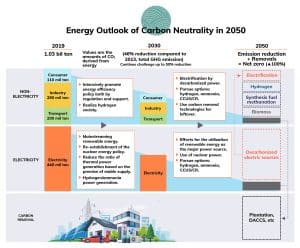
Japan sees hydrogen as a key part of its energy transition. Under its Basic Hydrogen Strategy, the government aims to expand hydrogen use across power, transport, and industry.
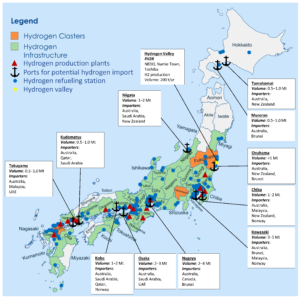
Japan plans to increase its hydrogen supply to 20 million tonnes per year by 2050, up from much lower current levels. The country is also investing in hydrogen imports, storage, and infrastructure.
Shipping plays a major role in this plan. Japan depends heavily on imports of energy and raw materials. Decarbonizing shipping is important for both climate and energy security.
- RELATED: Maritime Decarbonization: Japanese Shipping Giant NYK Partners with 1PointFive for DAC Credits
Projects like the hydrogen engine help link domestic policy with global action. They support Japan’s goal to build a full hydrogen value chain, from production to transport and end use.
Current Hydrogen Ferries in Operation
Japan has already started using hydrogen-powered ferries on real routes. One example is the Hanaria. This hybrid ship uses hydrogen fuel cells, lithium-ion batteries, and biodiesel. It began service in Kitakyushu in April 2024.
The ship can cut carbon dioxide emissions by 53% to 100% compared to regular vessels. It was built for a unit of Mitsui O.S.K. Lines and uses fuel cell technology developed with parts from Toyota.
Another example is the Mahoroba, built by Iwatani Corporation. This is a zero-emission hydrogen catamaran that can carry up to 150 passengers. It started commercial service in April 2025, transporting visitors to the Osaka-Kansai Expo.
In October 2025, the Tokyo Metropolitan Government agreed to bring the vessel to Tokyo Bay. It is expected to start operating there in fiscal year 2026. It will support environmental education and international events.
Japan has also invested in hydrogen transport systems. One example is the Suiso Frontier, which was launched to carry liquefied hydrogen across long distances. These efforts show that Japan is not only testing technology but also building the systems needed to scale hydrogen use globally.
From Ferries to Freighters: Scaling Hydrogen at Sea
Japan is part of a wider global shift. Many countries are testing hydrogen and other clean fuels for shipping.
For example, Norway launched the MF Hydra in 2023. Belgium introduced the Hydrotug 1 in 2024.
However, most of these vessels are small or operate on short routes. Japan’s project targets large cargo ships, which are more complex and more impactful for emissions.
Governments are also exploring hydrogen shipping corridors. These are planned routes where hydrogen-powered vessels can operate with proper fueling infrastructure. This global activity shows that hydrogen is moving from early testing to larger applications.
A $300B Hydrogen Market Meets Maritime Demand
The hydrogen economy is expanding quickly. Global demand is rising as industries look for low-carbon solutions.
Industry estimates suggest the global hydrogen market could exceed US$300 billion by 2030. Growth is driven by energy, transport, and industrial use.
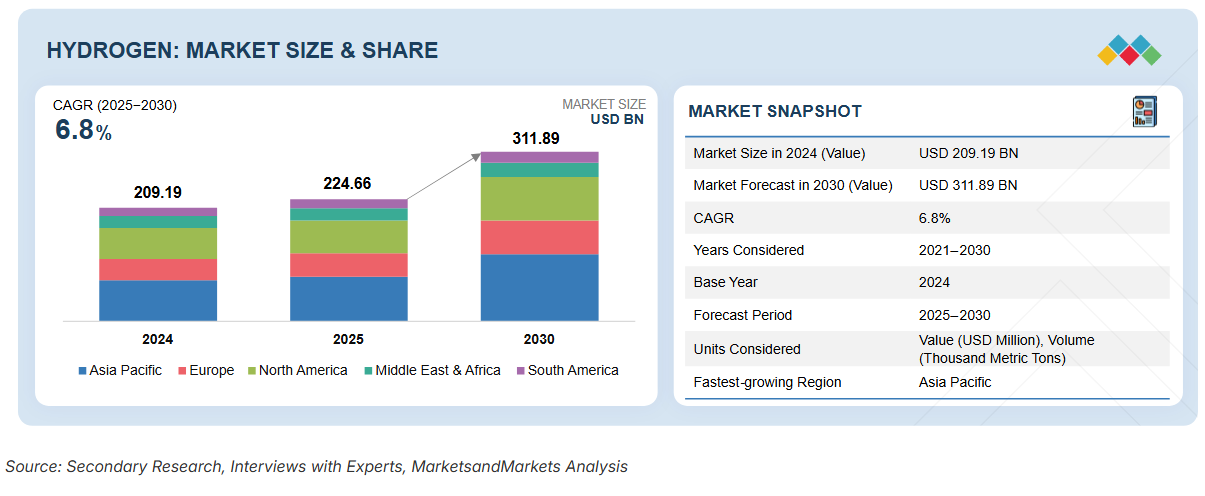
In shipping, hydrogen competes with other fuels like ammonia and methanol. Each has strengths and challenges. Hydrogen stands out for its zero carbon emissions at the point of use.
Cost, Storage, and Infrastructure Barriers
Still, hydrogen has limits. Several barriers remain before hydrogen ships become common:
- High costs compared to traditional fuels,
- Limited supply of green hydrogen,
- Lack of port infrastructure, and
- Strict safety requirements.
Despite these issues, investment is growing. Governments and companies are funding research, pilot projects, and infrastructure.
Japan’s demonstration project will help address those gaps. The planned three-year trial will provide real-world data on performance, safety, and costs. If successful, hydrogen engines could become a practical option for large vessels. This would help reduce emissions from global shipping.
Can Hydrogen Power the Future of Global Trade?
Japan’s hydrogen engine test marks a key moment for the shipping industry. It shows that hydrogen can power not only small vessels but also large commercial ships.
The link to Japan’s net-zero strategy makes this development even more important. It connects national policy with global climate goals.
The coming years will shape how fast hydrogen shipping grows. With strong policy support and continued innovation, hydrogen could play a major role in building a low-carbon maritime sector.
The post Japan Unveils First Hydrogen Engine for Large Ships appeared first on Carbon Credits.



-
Climate Change8 months ago
Guest post: Why China is still building new coal – and when it might stop
-
Greenhouse Gases8 months ago
Guest post: Why China is still building new coal – and when it might stop
-

 Greenhouse Gases2 years ago
嘉宾来稿:满足中国增长的用电需求 光伏加储能“比新建煤电更实惠”
-
Climate Change2 years ago
Bill Discounting Climate Change in Florida’s Energy Policy Awaits DeSantis’ Approval
-

 Climate Change2 years ago
嘉宾来稿:满足中国增长的用电需求 光伏加储能“比新建煤电更实惠”
-
Climate Change Videos2 years ago
The toxic gas flares fuelling Nigeria’s climate change – BBC News
-

 Renewable Energy6 months ago
Sending Progressive Philanthropist George Soros to Prison?
-

 Carbon Footprint2 years ago
US SEC’s Climate Disclosure Rules Spur Renewed Interest in Carbon Credits