

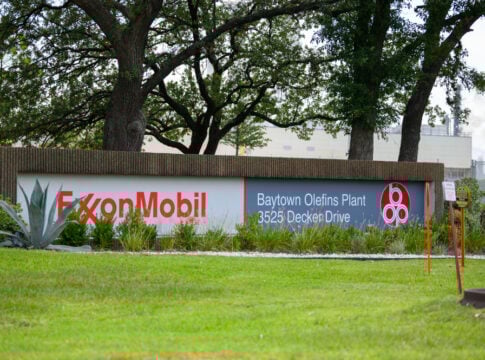
ExxonMobil (NYSE: XOM), one of the world’s largest oil and gas producers, is once again in the public eye. Last week brought big news for the oil major. There was a new gas find offshore in the Mediterranean. Moreover, a key legal ruling was issued regarding old refinery pollution in Texas. Adding to the headlines, the U.S. Environmental Protection Agency (EPA) has also proposed key carbon storage permits for the company’s growing low-carbon ventures.
These events show how ExxonMobil balances new energy projects with scrutiny over its environmental record. The gas company is feeling pressure from climate change demands. Its actions reveal both the opportunities and the challenges it faces in the evolving energy landscape.
Cyprus Gas Discovery Strengthens Global Portfolio
The first big development came from the Eastern Mediterranean. On July 7, ExxonMobil and QatarEnergy announced they had found a large natural gas reservoir off the coast of Cyprus. The find, located at the Pegasus-1 well in Block 10, revealed more than 350 meters of gas-bearing rock at a depth of about 1.9 kilometers.
This is the second major find for ExxonMobil in Cypriot waters, following the Glaucus-1 discovery in 2019. These discoveries are big wins for Europe. The region wants to find new natural gas sources and lessen its reliance on Russian energy.
The Eastern Mediterranean is becoming a key energy hub. Pegasus-1 adds important reserves to ExxonMobil’s global gas portfolio. It could help boost liquefied natural gas (LNG) exports. This would supply cleaner fuels in areas trying to move away from coal.
Pollution Comes at a Price: Baytown Fine Stands After Supreme Court Snub
The same day ExxonMobil celebrated its discovery off Cyprus, it also faced a legal setback at home. The U.S. Supreme Court chose not to review a lower court’s decision. That ruling upheld a $14.25 million civil penalty for long-term air pollution violations at the Baytown refinery complex in Texas.
Environment Texas and the Sierra Club filed a case against the company. They claimed it broke the Clean Air Act by releasing harmful pollutants like nitrogen oxides and sulfur dioxide for years. These emissions can contribute to respiratory issues, smog, and other environmental harm.
This decision ends a decade-long legal battle and marks one of the largest citizen-led environmental fines under the said law. It also highlights growing public and legal accountability for emissions from major energy facilities.
EPA Backs Exxon’s Texas Carbon Storage Ambitions
Amid legal challenges, ExxonMobil continues to invest in low-carbon technology. The Environmental Protection Agency (EPA) has proposed three Class VI carbon storage permits for ExxonMobil’s Low Carbon Solutions Onshore Storage LLC. This move could shape the company’s future in climate solutions in Jefferson County, Texas.

These permits back ExxonMobil’s “Rose” project seen in the map above. It’s a carbon capture and storage (CCS) site. The project aims to inject up to 5 million metric tons of CO₂ each year into deep underground rock formations.
The EPA’s proposal opens a 30-day public comment period, with a virtual hearing scheduled for July 31, 2025. EPA officials say early reviews show the project won’t risk underground drinking water. If approved, this would allow ExxonMobil to store CO₂ emissions from clean hydrogen and ammonia plants.
This CCS effort is part of a larger federal shift to expand carbon storage across the country. The EPA is also working to give permitting power to the Texas Railroad Commission. This puts Texas alongside states like Louisiana, North Dakota, and Wyoming. These states aim to speed up approvals for carbon storage projects.

CCS is vital for hard-to-decarbonize sectors like steel and cement. According to a DNV report, global CCS investment could reach $80 billion by 2030, enabling the capture of 270 million tons of CO₂ per year—a major tool in the climate transition.

By investing in CCS, ExxonMobil aims to position itself as a leader in technologies that can reduce industrial emissions—key to meeting its long-term climate targets.
ExxonMobil’s Climate Strategy: Progress and Pressure
These three developments—exploration success, legal accountability, and carbon storage expansion—reflect ExxonMobil’s evolving role in the energy transition.
The oil major is advancing its climate strategy. The goal is to reach net-zero greenhouse gas emissions from its operated assets (Scope 1 and 2) by 2050. The company has laid out interim goals to cut upstream emissions intensity by 40–50%, methane by 70–80%, and flaring by 60–70% by 2030, based on 2016 levels.

In the Permian Basin, ExxonMobil targets net-zero emissions from its unconventional operations by 2030. The company has installed more than 6,000 low-emission pneumatic devices. It has also eliminated routine flaring, added electric compressors, and started using wind-sourced electricity.
ExxonMobil’s Low Carbon Solutions division will invest more than $20 billion by 2027. This funding will support technologies such as carbon capture, clean hydrogen, and biofuels. This includes the $5 billion acquisition of Denbury Inc., adding to its CO₂ pipeline and storage network.
ExxonMobil has captured over 120 million metric tons of CO₂. Right now, it captures about 9 million tons each year. This makes the company a leader in industrial carbon capture worldwide. Projects like the Baytown low-carbon hydrogen facility aim to capture 7 million metric tons of CO₂ annually.
The company also plans to produce 1 billion cubic feet per day of hydrogen and 1 million metric tons of ammonia using CO₂ capture technologies. Globally, ExxonMobil is involved in CCS and hydrogen projects in Europe, the U.S., and the Middle East.
In summary, here’s the company’s climate targets:
- Cut Scope 1 and 2 emissions intensity from its oil and gas production by 40% to 50% by 2030 (vs. 2016 levels).
- Achieve net-zero emissions from its operated assets (Scope 1 and 2) by 2050.
- Invest $20 billion through 2027 in low-carbon projects globally.
Despite progress on Scope 1 and 2 goals, ExxonMobil has not set targets for Scope 3 emissions, which account for customer use of its products. This remains a point of pressure from environmental groups and ESG investors.

ExxonMobil focuses on exploration and production. But it is also creating a new strategy to tackle emissions. This shift helps meet rules and investor expectations.
Can ExxonMobil Stay on Track Toward Net Zero?
ExxonMobil had a week of mixed headlines. This shows the clash between old fossil fuel practices and the needs of a climate-aware future. The company is working to expand its carbon capture efforts and find new gas sources.
This reveals its plans for two things: keeping energy supplies strong now and creating lower-carbon resources for the future.
With this, ExxonMobil’s future will likely hinge on three key factors: growth, environmental responsibility, and investor pressure. As regulations tighten and clean energy competition rises, finding the right balance will be crucial.
- INTERESTING READ: Big Oil’s Showdown: How Shell, Chevron & ExxonMobil Balance Big Profits with Net Zero?
The post ExxonMobil’s (XOM Stock) Wild Ride: Gas Discovery, $14M Pollution Fine, and Carbon Storage Push appeared first on Carbon Credits.

EU carbon credit claims changed on 27 September 2026, the day the Directive (EU) 2024/825 began to apply across the European Union. The change is narrow. It changes how a company can talk about the credits it buys. A product can no longer be called neutral on the strength of compensation alone; however, every specific, evidenced statement about what a company measured, reduced, and funded stays fully available.

The post Promoting Improved Cooking Practices in Nigeria appeared first on Terrapass.



-
Climate Change1 year ago
Guest post: Why China is still building new coal – and when it might stop
-

 Greenhouse Gases2 years ago
嘉宾来稿:满足中国增长的用电需求 光伏加储能“比新建煤电更实惠”
-
Greenhouse Gases1 year ago
Guest post: Why China is still building new coal – and when it might stop
-

 Climate Change2 years ago
嘉宾来稿:满足中国增长的用电需求 光伏加储能“比新建煤电更实惠”
-

 Renewable Energy12 months ago
Sending Progressive Philanthropist George Soros to Prison?
-
Climate Change2 years ago
Bill Discounting Climate Change in Florida’s Energy Policy Awaits DeSantis’ Approval
-
Greenhouse Gases1 year ago
嘉宾来稿:探究火山喷发如何影响气候预测
-

 Climate Change2 years ago
Analysis: China’s CO2 falls 1% in Q2 2024 in first quarterly drop since Covid-19