

In September, SACE hosted the inaugural Electrify the South Collaborative, a two-day meeting of Southeastern local governments, in Savannah, Georgia. The event was co-hosted by the Southeast Sustainability Directors Network (SSDN), with funding from a generous Movement Infrastructure Grant from Mosaic. Learn more about the Collaborative, past and upcoming events and resources on the Electrify the South website, here.
The Collaborative provided participants an opportunity to discuss the barriers local governments face pursuing and implementing federal electric transportation dollars from both the Bipartisan Infrastructure Law (BIL) and Inflation Reduction Act (IRA), and how to overcome them. Each of the event’s panels, small-group discussions and reflective exercises were designed to inform participants, stimulate deepening dialog, and invite peer-to-peer collaboration. The two-day event moved the electric transportation (ET) transition conservation from barriers to solutions, highlighting local government successes and identifying improvements to federal funding requirements that would make accessing and implementing funds more efficient and effective. Read more about how the Collaborative is increasing communication and strengthening relationships.
Day 1 of the Collaborative dove right into the importance of authentic community engagement; then moved on to discuss barriers to implementing federal funds. Day 2 started out with a panel discussion with state and federal government leaders and then a discussion of pathways toward solutions and opportunities. Each segment of the Collaborative resulted in a list of takeaways and best practices, reflected below.
Community Engagement
BIL and IRA changed the federal funding landscape by introducing Justice 40 principles that require at least 40% of funded projects’ benefits to flow to communities under-resourced and overburdened by pollution. As a result, local governments must adjust how they work with their under-resourced and overburdened community members in order to understand their needs and priorities and ensure required benefits are delivered.
Thus, Day 1 of the Collaborative dove right into the importance of authentic community engagement. Participants were asked to rank how well they feel they engage their communities on transportation and mobility issues from one (lowest)-five (highest). The average score of 2.7 provided baseline data supporting local governments’ need for community engagement. When participants were asked to identify their top three challenges in engaging their communities on ET, a more complete image began to emerge on what actions could be most helpful.

The three highest ranked challenges identified were:
- Lack of charging infrastructure
- Perception that EVs are for the rich
- Misinformation
Other concerns shared focused on the limited resources available to municipalities. One participant talked about competing priorities like biking infrastructure. Another offered that in rural communities, where there are other mobility needs to address and a current lack of desirable EVs and charging infrastructure, focusing on ET can come across as tone deaf. Participants also acknowledged the complexities of engaging communities on transportation electrification, as well as the distrust many under-resourced communities have around transportation decisions that stem from historic malfeasance.
Interestingly, the conversation didn’t focus on the highest ranked challenges; rather, the discussion highlighted the importance of building relationships and intentionally planned community engagement with specific outcomes identified. Working with community partners and offering opportunities to understand the community’s knowledge, beliefs and needs were identified as cornerstones to effective community engagement. The importance of providing education on how ET can improve the quality of life for community members – human health, job creation, and training opportunities – was another theme.
Best Practices Identified:
- Tag onto existing meetings not related to ET
- Identify community movers and shakers
- Be transparent with community partners, share data with community partners, explain to community partners why their input matters
- Compensate (or resource) community members for their participation
- Provide continuous touchpoints with the community on ET topics
- Offer online opportunities for engagement
Creative Ideas Shared:
- Use digital marketing to advertise events (ads in video games)
Barriers: Small Group Challenges, Large Group Solutions
After the community engagement discussion, we asked participants to rank barriers to pursuing and implementing federal ET funding. Participants were placed in small, facilitated groups to unpack their answers. Then, solutions were discussed among the whole room through a series of facilitated conversations to get more detailed information about what is needed to overcome these issues.

Not surprisingly, budget (approval processes, accessing matching funds), staff capacity, and the need for additional information (cost estimates, infrastructure plan) were the three highest ranked concerns.
Some municipalities are already thinking strategically about the EV transition and have set goals and municipal electrification plans in place. Not surprisingly, local governments implementing these best practices are already working systematically across departments to plan for and budget for ET. Participants recognized that in the absence of goals or a plan it is imperative to have intentional communication among departments, with stakeholders, and from neighboring municipalities, because it eases staff capacity.
Best Practices Identified:
- Partnerships with key stakeholders
- Utilities to offset costs with programs like make-ready, identify where grid capacity is, providing projection data
- Transit agency for grant writing help
- Hertz partnership in Atlanta for rideshare drivers
- Emergency responders to mitigate EV risks
- Leasing fleet vehicles to overcome cost/availability issues
- Planning to reduce VMT
- Prioritizing electric vehicles in resilience efforts as assets capable of acting as a power source during an emergency event
- EVSE sighted equitably across communities
- Car share programs with EVSE to encourage community support
- Educating staff who drive EVs

State and Federal Government Panel
Day 2 began with a panel discussion with state and federal agency and legislative leaders, which provided an opportunity for both panelists and participants to share insights and answer questions. Having participation from the Federal Department of Transportation and Joint Office of Energy and Transportation staff was critical because it established direct communication and connections between the federal staff tasked with rolling out the funding and local staff who will be recipients. Additionally, having a state legislator and state agency deputy director participate highlighted the role state leadership can play in facilitating the flow of these federal dollars. Having that conduit of information exchange between local governments and the federal government can improve federally funded programs and how they are implemented.
The question “What needs do you have from the federal or state government to be better prepared?” served as a jumping off point.

Participants were asked to select all that applied. The top three identified were:
- Access to data and/or maps showing grid capacity to assist with site selection for EV charging
- Visibility of upcoming funding programs available from the federal government/state DOTs in one place
- Information about local government-accessible tax credits
As information was shared on federal programs and resources, questions began flying around the room. The Joint Office of Transportation and Energy recognized that more resources and clarity are needed for local governments applying for future notice of funding rounds with the new NEVI (corridor and community) programs. Federal representatives asked questions of participants so that they could take back input from local staff to improve how future rounds are rolled out. Participants discussed struggling with many factors that weigh into grant applications: timing, match, and reimbursement based on compliance. They also heard creative solutions their peers have employed. Additionally, several local government participants were learning that they can use “elective pay” for the first time using new IRS Commercial Tax Credits for vehicles and the Alternative Fuel Vehicle Refueling Property Credit, for charging infrastructure.
Best Practices Identified:
- Build relationships with Congressional office staff
- Build relationships with Council of Governments
- Seek Metropolitan Planning Organization (MPO) support. Ex: Greensboro, NC was lead applicant for CFI proposal with 6-7 smaller adjacent towns and served as the primary applicant
- Seek state level support. Ex: Tennessee DOE helped support rural CFI proposal
- Use in-kind resources for required local 20% match
- Resource third-parties for letter of support and 20% match
Resources:
- Rural electric mobility infrastructure Toolkit
- Urban electric mobility infrastructure Toolkit
- Federal EV Infrastructure Funding Matrix
- EPA Region 4 Thriving Communities Technical Assistance Centers Program (TCTAC) for help with grant writing
Takeaways:
- Big discrepancies exist across the region in terms of state agency (DOT and EO) support by state.
- Two tension points with timing of federal funding: 1. Proposal needs to be fully fleshed out which takes time before it can be presented to decision makers. 2. Then, there is often a long glide path to get a proposal in front of the decision making board (60 days). For these reasons, project open periods need to be longer than 60 days. 90 days was discussed as the optimal time frame.
Pathways to Solutions: Local Support and Peer to Peer Integration
Another important aspect of the Collaborative was creating pathways toward solutions and opportunities. Intentional time was dedicated for local governments to share their successes and ask one another deeper questions about how the solutions work. After talking through all these ideas, the final activities of the Collaborative were designed to turn these potentials into actionable next steps. Participants were encouraged to partner with others who are working on similar projects and continue collaboration.
One of the concluding questions posed to participants of the Collaborative was “What is your most important takeaway?” It was heartening to hear relationships between participants noted in several of their replies:
“As a municipality, it was great to hear that we are not alone in our struggles with transportation electrification. It was clear that most of us share more commonalities than differences when it comes to this topic, and my takeaway is that we can find solutions if we think creatively and leverage our networks.”
“New contacts with other municipalities to collaborate and share information with for best practices.”
“Create Relationships & Engage with State Legislators for Up-to-date information.”
There was a sense of optimism in the room of possibilities and that was reflected in several comments that the funding is significant and attainable but time is of the essence.
“That local governments can get federal funding for EVs and charging equipment through many more ways than I realized.”
“Lots of once-in-a-generation funding opportunities right now — we need to be proactive in seeking these out.”
Biggest Takeaways:
- One participant reflected, “It’s time for our city to start thinking strategically about EV transition, rather than piecemealing”.
- There came to be an understanding that grant writing can be worked on as regional partnerships to help smaller agencies access more funding with less resources expended. One participant commented, “Our opportunity to acquire federal funding is likely tied to regional collaboration”
- Another commented “I am able to identify collaborators in my community that can help develop a regional plan. Our plan will help us prioritize initiatives for grant funding.”
Best Practices Identified:
- Knoxville shared a mapping tool designed by Raleigh, N.C. that was modified to layer in additional data points to evaluate charging station location criteria. This tool is public data that can be modified.
- Raleigh is planning municipal workplace “park and ride” parking/charging hubs located at equitable locations around town rather than locating charging solely at city owned buildings.
- Savannah intervened in the Georgia Power rate case and advocated for a make-ready program successfully.
- Protocol for sharing information within city departments about new EVSE installations
- Standardization for EVSE equipment and software requirements (must be OCPP compliant)
- Financing EVSE through on-bill financing from the utility
Next Steps and Moving Forward
The Electrify the South Collaborative in Savannah was a huge success, and the SACE and SSDN teams are looking forward to continuing the conversation during a virtual event on Thursday, November 30, 2023 from 12-1:30 PM ET. Municipalities that were unable to attend the in-person event in Savannah are encouraged to participate in November. Please use this link to register.
The Southern Alliance for Clean Energy’s Electrify the South program leverages research, advocacy, and outreach to accelerate the equitable transition to electric transportation across the Southeast. Visit ElectrifytheSouth.org to learn more and connect with us.
The post Electrify the South Collaborative: Digging into Electric Transportation Opportunities, Challenges and the Path Forward for Local Governments appeared first on SACE | Southern Alliance for Clean Energy.

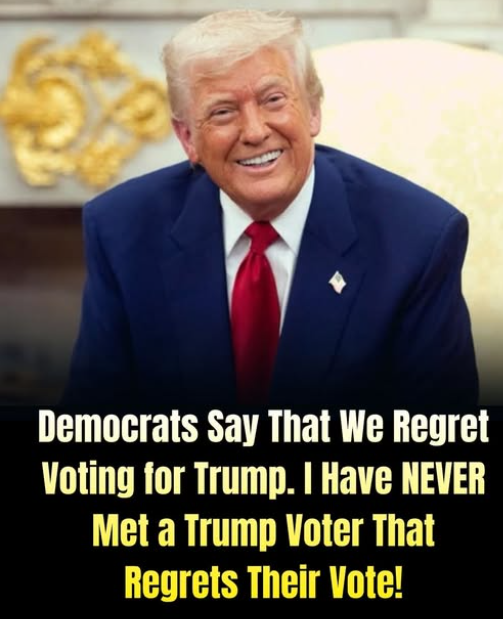 For those who struggle with elementary school arithmetic, Trump won the election (50%+ approval) out of more than 150 million votes cast, and now his approval rating is in the low 30s.
That’s ~30 million voters who regret their choices, out of the common American.
Add in the Tucker Carlsons of the world.
Absolutely.
It must be done, because our country is home to some hateful morons who want to see honest, hardworking, taxpaying people with brown skin deported, and their families torn apart.
It wasn’t the American way until recently, but it sure is now.
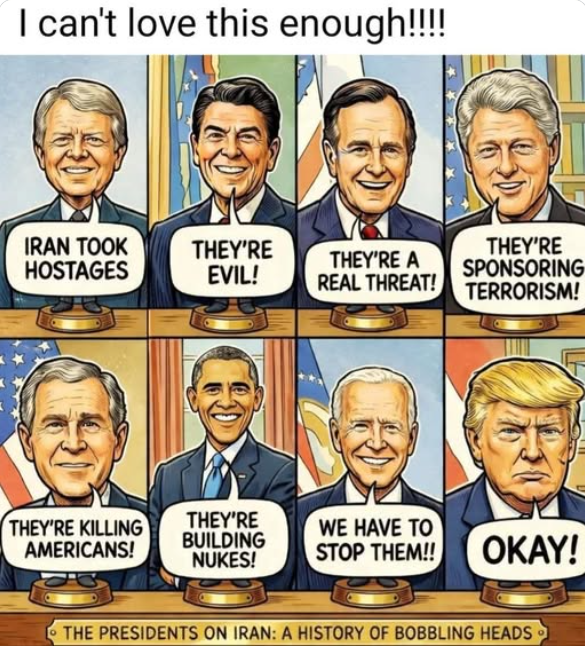 As shown at left, the United States is loaded with people who twist the facts to their liking.

After a Slow Start on Climate, Zohran Mamdani Faces Scrutiny Over Parks Budget and Environmental Promises
Who Loses in the Trump Administration’s $1 Billion ‘Deal’ to Abandon Offshore Wind?
Minneapolis Activists Launch Hunger Strike to Protest Polluting Trash Incinerator
-
Climate Change8 months ago
Guest post: Why China is still building new coal – and when it might stop
-
Greenhouse Gases8 months ago
Guest post: Why China is still building new coal – and when it might stop
-

 Greenhouse Gases2 years ago
嘉宾来稿:满足中国增长的用电需求 光伏加储能“比新建煤电更实惠”
-
Climate Change2 years ago
Bill Discounting Climate Change in Florida’s Energy Policy Awaits DeSantis’ Approval
-

 Climate Change2 years ago
嘉宾来稿:满足中国增长的用电需求 光伏加储能“比新建煤电更实惠”
-
Climate Change Videos2 years ago
The toxic gas flares fuelling Nigeria’s climate change – BBC News
-

 Renewable Energy6 months ago
Sending Progressive Philanthropist George Soros to Prison?
-

 Carbon Footprint2 years ago
US SEC’s Climate Disclosure Rules Spur Renewed Interest in Carbon Credits