

Welcome to Carbon Brief’s DeBriefed.
An essential guide to the week’s key developments relating to climate change.
This week
Hurricane Melissa
‘TOTAL DEVASTATION’: Hurricane Melissa has killed at least 49 people after sweeping through the Caribbean islands of Jamaica, Cuba, Haiti and Bermuda, reported Independent. Jamaica’s prime minister Andrew Holness said the storm left “total devastation”, destroying homes and infrastructure and leaving people “stranded on roofs and without power”, said BBC News. In Haiti, at least 30 people were killed in floods, Reuters added.
WARM WATERS: Melissa is tied as the strongest Atlantic hurricane to ever hit land, slamming Jamaica with winds of 185mph and fuelled by anomalously warm waters, reported the Associated Press. Fossil-fuelled climate change made the storm “four times more likely”, according to analysis cited by Agence France-Presse. Early estimates suggest infrastructure damage alone could amount to 40% of Jamaica’s gross domestic product, said the newswire.
RECORD RAINS: Elsewhere, Al Jazeera reported on major floods in central Vietnam, where the former imperial city of Huế saw record rainfall of more than 1,000mm over a 24-hour period, according to the country’s weather agency. The Associated Press reported that climate change is “driving more intense winds, heavier rainfall and shifting precipitation patterns across East Asia”.
Climate plans off track for 1.5C
‘DRASTICALLY SHORT’: The latest national climate plans will cause global emissions to drop 10% by 2035 from 2019 levels, “bending the emissions curve downwards for the first time”, but falling “drastically short” of the 60% cut needed to keep 1.5C in sight, said the Guardian. The plans – known as nationally determined contributions (NDCs) under the Paris Agreement – were assessed by the UN in a synthesis report ahead of COP30, the publication said. The 10% cut reflects plans announced by China and the EU, in addition to formal submissions from 64 countries, according to Reuters.
OVERSHOOT ‘INEVITABLE’: UN secretary-general António Guterres said in a joint interview with the Guardian and the Amazonian publication Sumaúma that overshooting 1.5C of global warming was now “inevitable” and would have “devastating consequences”. Guterres “did not give up on the [1.5C] target”, but urged world leaders to “change course” during COP30 to ensure the “overshoot is as short as possible and as low in intensity as possible to avoid tipping points like the Amazon”.
Around the world
- DELIVERY: The UK government published its “carbon budget and growth delivery” plan, outlining policies to meet its mid-2030s climate targets. Read more in Carbon Brief’s in-depth coverage of the plan.
- DEAL UNEARTHED: Donald Trump and Xi Jinping have settled a dispute over rare-earth mineral supplies during trade talks, said the Guardian. Trump described the talks as “amazing” and agreed to reduce tariffs on Chinese goods by 10%, it added.
- AVOIDABLE DEATHS: Climate change and policy “failures” are leading to “millions” of avoidable deaths each year, according to Le Monde’s coverage of the latest Lancet Countdown report on health and climate change.
- DEFORESTATION DOWN: On the eve of hosting COP30, Brazil’s government announced an 11% drop in annual deforestation in the Brazilian Amazon, the fourth consecutive annual fall and lowest deforestation rate since 2014, reported Agence France-Presse.
- DUTCH ELECTION: Democrats 66 (D66), the centrist party led by former climate minister Rob Jetten, narrowly won a snap general election in the Netherlands, said Brussels Signal.
- EU FLEXIBILITY: As the EU continues to negotiate 2040 emissions targets, the bloc is considering a “more flexible path” for industries to meet the goals, reported Reuters.
12 times
The extent to which current finance flows would have to increase to meet developing countries’ adaptation finance needs in 2035, according to the latest UN adaptation gap report covered by Carbon Brief.
Latest climate research
- Young children in sub-Saharan Africa are 77% more at risk from malaria for every 1C temperature increase | PLOS One
- Social media use is linked to “climate anxiety, climate doom and support for radical action” | Climatic Change
- Future droughts could weaken peatlands’ ability to store carbon, creating a positive feedback cycle for climate change | Science
(For more, see Carbon Brief’s in-depth daily summaries of the top climate news stories on Monday, Tuesday, Wednesday, Thursday and Friday.)
Captured
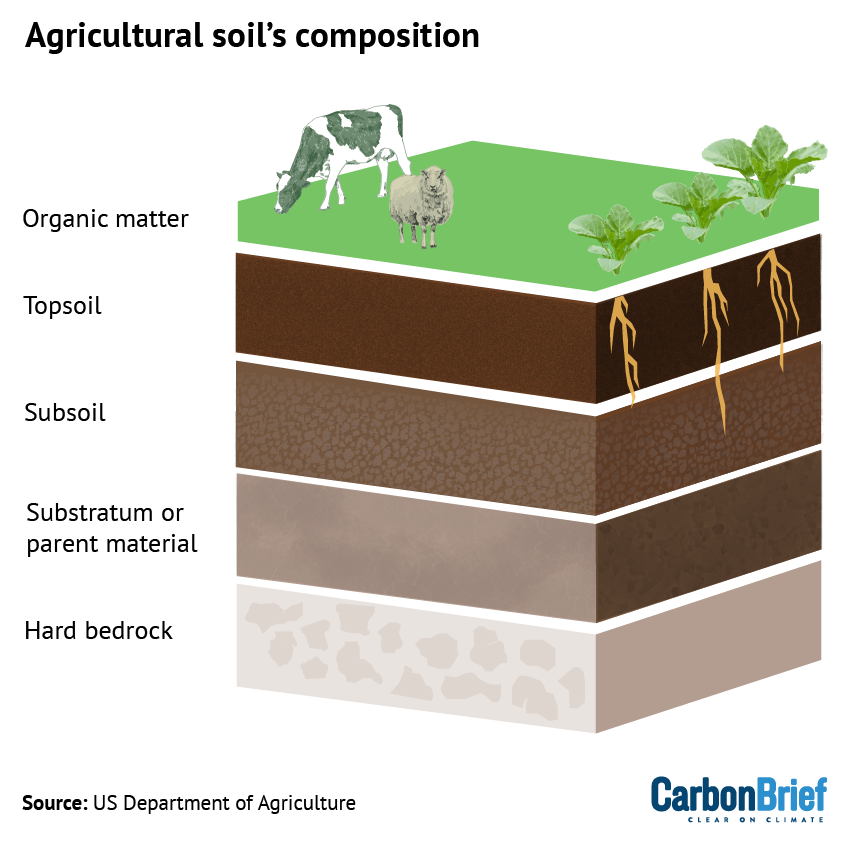
Carbon Brief explored the importance of soil health for food security and climate change in a new Q&A. As the diagram above illustrates, agricultural soil is composed of four layers – known as soil horizons – containing varying quantities of minerals, organic matter, living organisms, air and water. The world’s soils have lost 133bn tonnes of carbon since the advent of agriculture around 12,000 years ago, with crop production and cattle grazing responsible in equal part.
Spotlight
Crackdowns on climate and environmental activism
This week, Carbon Brief speaks to Mary Lawlor, UN special rapporteur on human rights defenders, who led a recent report highlighting crackdowns on the rights of climate and environmental activists around the world.
Carbon Brief: Why do you see climate change as a human-rights issue?
Mary Lawlor: I don’t think there’s any doubt about climate change being a human-rights issue nowadays, because everyone can see it. It interferes with so many rights. The right to food, for example. We’ve seen the situation where drought, storms and floods interfere with food production. And then if you look at the right to life – according to the WHO, we’re currently seeing an average of 175,000 heat-related deaths per year around the world, and those numbers will increase. But we now also have advisory opinions of the ICJ, the Inter-American Court of Human Rights, the International Tribunal for the Law of the Sea, all of which state clearly that climate change is a reality. They see it as a human-rights crisis.
CB: What human-rights violations are being faced by climate and environmental activists around the world right now?
ML: We went to a lot of Indigenous communities in the Amazon and we saw firsthand the threats against Indigenous defenders in Brazil who are opposing carbon-credit projects in their territories, where they themselves have been reducing deforestation with success for years. Then, for example, there were smears against a lawyer in Argentina who was supporting communities in their legal fight against the extraction of lithium from their territories without their consent. And, then, you have surveillance of climate activists organising peaceful protests against new fossil-fuel projects, for example, in the Philippines. So it’s kind of like an octopus, the tentacles are reaching out.
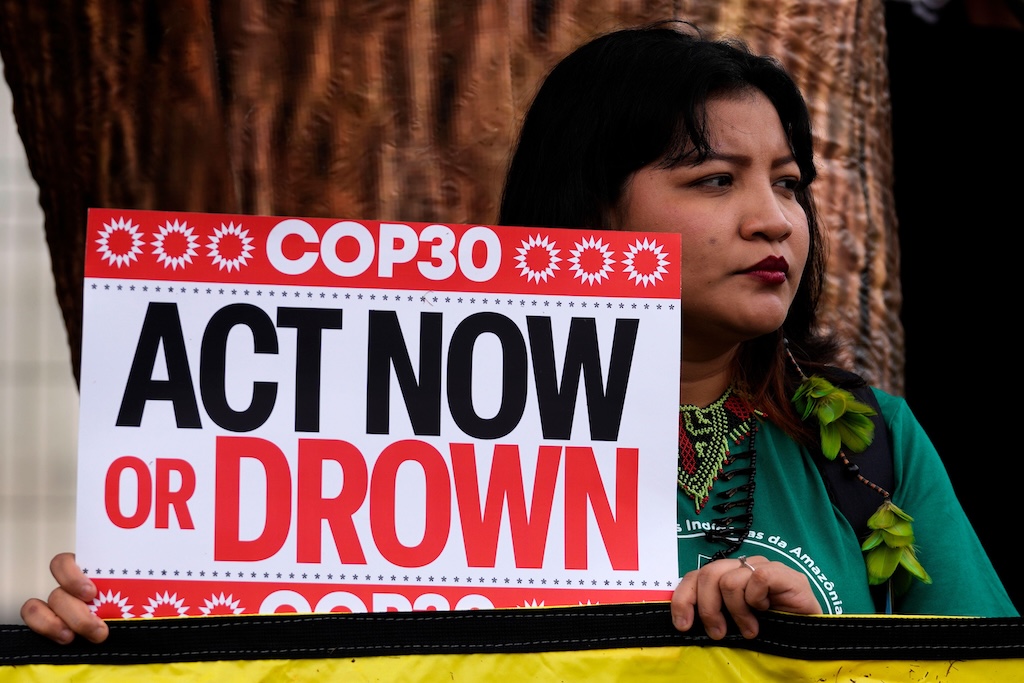
In some of the more developed countries, like France and Spain, you have accusations of terrorism against peaceful climate-justice movements. In Germany, you had the investigation and prosecution of a climate-justice group for alleged organised crime based solely on their peaceful protests that put no human being in danger and did no harm to anyone.
CB: What are some examples that you’ve seen of good practice by governments in relation to the work of climate and environmental activists?
ML: My favourite is Brazil and MST [Landless Workers’ Movement]. They were aided in their tree-planting programme by the federal authorities, who provided helicopters and the federal highway police piloted these helicopters. Seeds of the endangered juçara palm and araucaria trees could be air-dropped over land in Paraná, after the devastating fires that took place. So that’s my absolute favourite, because it showed how a state and defenders can work together as allies to prevent destruction and even worse climate change.
CB: According to Global Witness, 413 land and environmental defenders were killed in Brazil during 2012-2024. What is the current situation for environmental defenders in Brazil going into COP30?
[Brazil] are really making efforts, as far as I can see, to address the root causes – and this is really why human-rights defenders are in such danger – that is, land is at the heart of all the problems there. But progress is still very slow. At the moment, only 16 territories have been demarcated by [Brazilian president] Lula and that is hugely important because, as I said, it’s at the root of pretty much all the attacks and killings by either the thugs associated with the companies, or the big landowners, the illegal logging, and all the stuff that is happening there. So that is something that we really need a speed up of – the demarcation of Indigenous lands.
When it comes to COP30, they’ve put some effort into making it more inclusive, especially when it comes to bringing the voices and experiences of Indigenous defenders into the negotiations. Now we’ll see what will happen in November and what the negotiations bring.
This interview has been edited for length.
Watch, read, listen
‘GOD’S WILL’: Samaa TV followed four street workers across Pakistan, exploring their views on climate change through the lens of faith.
COP EXPECTATIONS: Down to Earth unpacked what to expect from COP30 from a global-south perspective in their Carbon Politics podcast.
1.5C ALIGNED: Scientist and former UN climate lead Ploy Achakulwisut grappled via a LinkedIn post with the challenges of assessing whether national targets are aligned with a 1.5C world.
Coming up
- 4 November: UN emissions gap 2025 report launch
- 4 November: International Energy Agency (IEA) world energy outlook 2025 report launch
- 6-7 November: COP30 leaders summit, Belém, Brazil
Pick of the jobs
- International Institute for Sustainable Development, head of secretariat, national adaptation plan global network | Salary: CA$129,000-CA$161,000. Location: Ottawa or Toronto, Canada (hybrid)
- SRM360, lead writer/editor | Salary: $100,000-$120,000. Location: Remote
- Project Drawdown, senior analyst, climate philanthropy and investing | Salary: $120,000-$160,000. Location: US
- Climate News Tracker, journalism insights analyst | Salary: Unknown. Location: London (hybrid)
- University of Birmingham, climate and public health policy impact fellow | Salary: £36,636-£46,049. Location: Birmingham, UK
DeBriefed is edited by Daisy Dunne. Please send any tips or feedback to debriefed@carbonbrief.org.
This is an online version of Carbon Brief’s weekly DeBriefed email newsletter. Subscribe for free here.

The post DeBriefed 31 October 2025: Hurricane Melissa strikes Jamaica; Climate plans overshoot 1.5C; Protest crackdowns appeared first on Carbon Brief.

Drought and heatwaves occurring together – known as “compound” events – have “surged” across the world since the early 2000s, a new study shows.
Compound drought and heat events (CDHEs) can have devastating effects, creating the ideal conditions for intense wildfires, such as Australia’s “Black Summer” of 2019-20 where bushfires burned 24m hectares and killed 33 people.
The research, published in Science Advances, finds that the increase in CDHEs is predominantly being driven by events that start with a heatwave.
The global area affected by such “heatwave-led” compound events has more than doubled between 1980-2001 and 2002-23, the study says.
The rapid increase in these events over the last 23 years cannot be explained solely by global warming, the authors note.
Since the late 1990s, feedbacks between the land and the atmosphere have become stronger, making heatwaves more likely to trigger drought conditions, they explain.
One of the study authors tells Carbon Brief that societies must pay greater attention to compound events, which can “cause severe impacts on ecosystems, agriculture and society”.
Compound events
CDHEs are extreme weather events where drought and heatwave conditions occur simultaneously – or shortly after each other – in the same region.
These events are often triggered by large-scale weather patterns, such as “blocking” highs, which can produce “prolonged” hot and dry conditions, according to the study.
Prof Sang-Wook Yeh is one of the study authors and a professor at the Ewha Womans University in South Korea. He tells Carbon Brief:
“When heatwaves and droughts occur together, the two hazards reinforce each other through land-atmosphere interactions. This amplifies surface heating and soil moisture deficits, making compound events more intense and damaging than single hazards.”
CDHEs can begin with either a heatwave or a drought.
The sequence of these extremes is important, the study says, as they have different drivers and impacts.
For example, in a CDHE where the heatwave was the precursor, increased direct sunshine causes more moisture loss from soils and plants, leading to a drought.
Conversely, in an event where the drought was the precursor, the lack of soil moisture means that less of the sun’s energy goes into evaporation and more goes into warming the Earth’s surface. This produces favourable conditions for heatwaves.
The study shows that the majority of CDHEs globally start out as a drought.
In recent years, there has been increasing focus on these events due to the devastating impact they have on agriculture, ecosystems and public health.
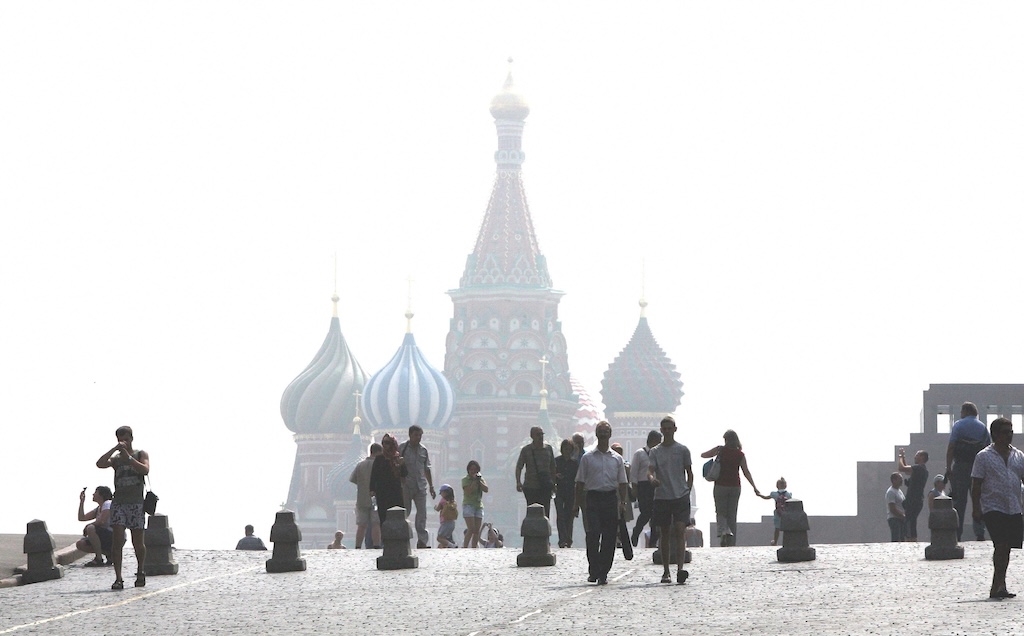
In Russia in the summer of 2010, a compound drought-heatwave event – and the associated wildfires – caused the death of nearly 55,000 people, the study notes.
The record-breaking Pacific north-west “heat dome” in 2021 triggered extreme drought conditions that caused “significant declines” in wheat yields, as well as in barley, canola and fruit production in British Columbia and Alberta, Canada, says the study.
Increasing events
To assess how CDHEs are changing, the researchers use daily reanalysis data to identify droughts and heatwaves events. (Reanalysis data combines past observations with climate models to create a historical climate record.) Then, using an algorithm, they analyse how these events overlap in both time and space.
The study covers the period from 1980 to 2023 and the world’s land surface, excluding polar regions where CDHEs are rare.
The research finds that the area of land affected by CDHEs has “increased substantially” since the early 2000s.
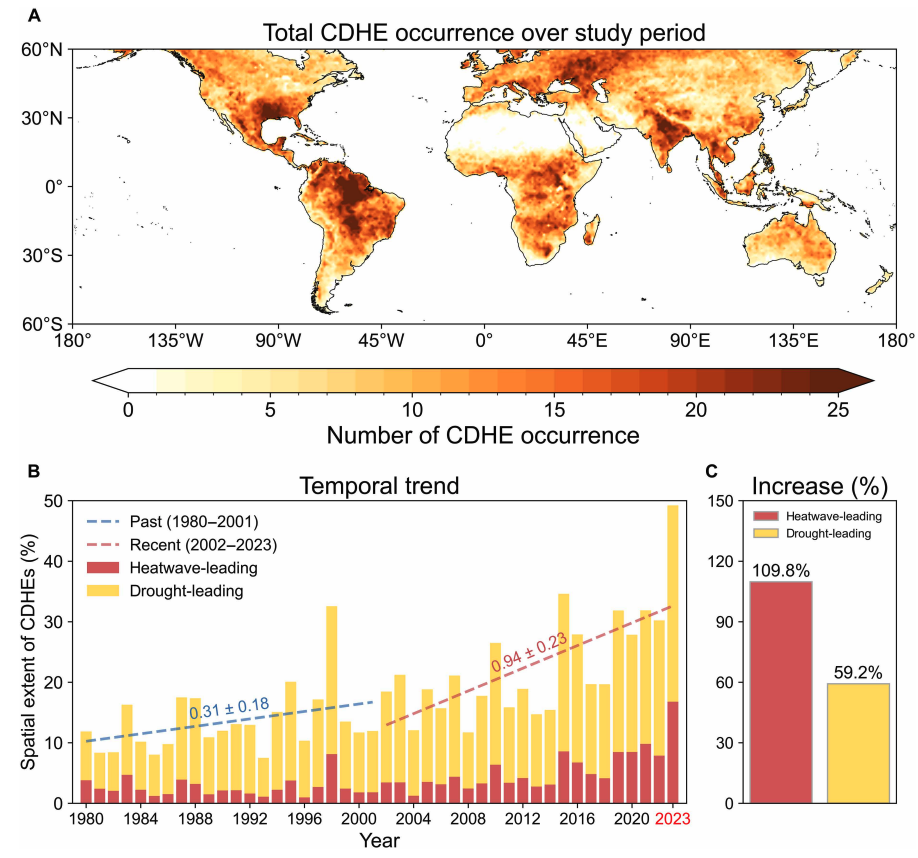
Heatwave-led events have been the main contributor to this increase, the study says, with their spatial extent rising 110% between 1980-2001 and 2002-23, compared to a 59% increase for drought-led events.
The map below shows the global distribution of CDHEs over 1980-2023. The charts show the percentage of the land surface affected by a heatwave-led CDHE (red) or a drought-led CDHE (yellow) in a given year (left) and relative increase in each CDHE type (right).
The study finds that CDHEs have occurred most frequently in northern South America, the southern US, eastern Europe, central Africa and south Asia.
Threshold passed
The authors explain that the increase in heatwave-led CDHEs is related to rising global temperatures, but that this does not tell the whole story.
In the earlier 22-year period of 1980-2001, the study finds that the spatial extent of heatwave-led CDHEs rises by 1.6% per 1C of global temperature rise. For the more-recent period of 2022-23, this increases “nearly eightfold” to 13.1%.
The change suggests that the rapid increase in the heatwave-led CDHEs occurred after the global average temperature “surpasse[d] a certain temperature threshold”, the paper says.
This threshold is an absolute global average temperature of 14.3C, the authors estimate (based on an 11-year average), which the world passed around the year 2000.
Investigating the recent surge in heatwave-leading CDHEs further, the researchers find a “regime shift” in land-atmosphere dynamics “toward a persistently intensified state after the late 1990s”.
In other words, the way that drier soils drive higher surface temperatures, and vice versa, is becoming stronger, resulting in more heatwave-led compound events.
Daily data
The research has some advantages over other previous studies, Yeh says. For instance, the new work uses daily estimations of CDHEs, compared to monthly data used in past research. This is “important for capturing the detailed occurrence” of these events, says Yeh.
He adds that another advantage of their study is that it distinguishes the sequence of droughts and heatwaves, which allows them to “better understand the differences” in the characteristics of CDHEs.
Dr Meryem Tanarhte is a climate scientist at the University Hassan II in Morocco, and Dr Ruth Cerezo Mota is a climatologist and a researcher at the National Autonomous University of Mexico. Both scientists, who were not involved in the study, agree that the daily estimations give a clearer picture of how CDHEs are changing.
Cerezo-Mota adds that another major contribution of the study is its global focus. She tells Carbon Brief that in some regions, such as Mexico and Africa, there is a lack of studies on CDHEs:
“Not because the events do not occur, but perhaps because [these regions] do not have all the data or the expertise to do so.”
However, she notes that the reanalysis data used by the study does have limitations with how it represents rainfall in some parts of the world.
Compound impacts
The study notes that if CDHEs continue to intensify – particularly events where heatwaves are the precursors – they could drive declining crop productivity, increased wildfire frequency and severe public health crises.
These impacts could be “much more rapid and severe as global warming continues”, Yeh tells Carbon Brief.
Tanarhte notes that these events can be forecasted up to 10 days ahead in many regions. Furthermore, she says, the strongest impacts can be prevented “through preparedness and adaptation”, including through “water management for agriculture, heatwave mitigation measures and wildfire mitigation”.
The study recommends reassessing current risk management strategies for these compound events. It also suggests incorporating the sequences of drought and heatwaves into compound event analysis frameworks “to enhance climate risk management”.
Cerezo-Mota says that it is clear that the world needs to be prepared for the increased occurrence of these events. She tells Carbon Brief:
“These [risk assessments and strategies] need to be carried out at the local level to understand the complexities of each region.”



The post Heatwaves driving recent ‘surge’ in compound drought and heat extremes appeared first on Carbon Brief.
Heatwaves driving recent ‘surge’ in compound drought and heat extremes
Greenhouse Gases
DeBriefed 6 March 2026: Iran energy crisis | China climate plan | Bristol’s ‘pioneering’ wind turbine
Welcome to Carbon Brief’s DeBriefed.
An essential guide to the week’s key developments relating to climate change.
This week
Energy crisis
ENERGY SPIKE: US-Israeli attacks on Iran and subsequent counterattacks across the Middle East have sent energy prices “soaring”, according to Reuters. The newswire reported that the region “accounts for just under a third of global oil production and almost a fifth of gas”. The Guardian noted that shipping traffic through t