

Welcome to Carbon Brief’s DeBriefed.
An essential guide to the week’s key developments relating to climate change.
This is an online version of Carbon Brief’s weekly DeBriefed email newsletter. Subscribe for free here.
This week
Countdown to COP
FOSSIL PHASEDOWN: The “high ambition coalition” – a group of 15 nations including France, Spain and Kenya – has called for the phasing out of all fossil fuels at preliminary talks ahead of this month’s COP28 climate summit in Dubai, the Financial Times reported. This puts the group “at odds” with major fossil fuel producers, particularly in the Middle East, the paper added.
RENEWABLES ‘RALLY’: The EU, US and the United Arab Emirates are “rallying” other governments to join a global deal to triple renewable energy this decade at COP28, according to documents shared with Reuters. The countries are working to recruit others to sign the pledge ahead of COP28, with a launch event likely to be held at the start of the summit, it said.
PAPAL PARTICIPATION: Pope Francis has announced that he will attend COP28, becoming the first pontiff to participate in such an event, the Wall Street Journal reported. UK monarch King Charles will attend the opening ceremony, a year after he was advised by former prime minister Liz Truss’s government not to attend COP27 in Egypt, reported the Guardian. Reuters noted that US president Joe Biden is not scheduled to attend.
‘Carbon budget’ cuts
SHRINKING BUDGET: The remaining “carbon budget” for limiting global warming to 1.5C above pre-industrial temperatures has shrunk further, according to a new study reported on by BBC News. The study found that only 250bn tonnes of CO2 can be released if the planet is to have a 50% chance of staying below 1.5C, BBC News reported. The study authors revealed the reduced carbon budget in a Carbon Brief guest post last year and the new study includes small methodology updates.
COUNTDOWN: The Guardian reported that, according to the study, the remaining carbon budget will be exhausted in six years, given current levels of emissions. The UN goal of reaching net-zero by 2050 would give the planet only a 40% chance of staying below 1.5C, the paper added. New Scientist noted that, to have half a chance of limiting global warming to 1.5C, the planet would need to reach net-zero emissions by 2034.
TEMPERATURE TARGETS: Elsewhere, a separate study led by Dr James Hansen, a NASA scientist best known for his striking testimony on climate change before Congress 35 years ago, projected that the world will warm by 1.5C this decade. “The 1.5C limit is deader than a doornail,” said Hansen, according to the New York Times. The newspaper carried comments from Carbon Brief’s climate science contributor Dr Zeke Hausfather, who says: “I think everyone agrees that 1.5C is in the rearview mirror at this point.”
Adaptation gap
‘WOEFULLY INADEQUATE’: The United Nations Environment Programme has published its annual “adaptation gap” report, which found that current spending is “woefully inadequate,” according to the New York Times. The report warned that developing countries need 10-18 times more climate adaptation funding than they currently receive, the Washington Post reported.
BILLIONS NEEDED: Developing countries need $215bn-387bn per year to adapt to the impacts of climate change – a $47bn increase since last year’s assessment – the Financial Times reported. However, adaptation finance flows to developing countries declined by 15% to $21bn in 2021, leading to a finance gap of $194bn-366bn per year, according to the South China Morning Post.
‘MAJOR GAPS’: In a Carbon Brief guest post, two of the report’s authors identified the major gaps in adaptation finance and explained why they have emerged. Over 2017-21, only 66% of the allocated funds were successfully disbursed to their recipient countries, the authors estimated.
Around the world
- PRICE SPIKE: The World Bank has warned that the ongoing conflict between Israel and Hamas could drive up oil prices, Reuters reported. According to the newswire, the bank outlined three scenarios, the worst of which could see oil prices jump above $150 per barrel.
- THREE BASINS: Rainforest countries from across three continents have agreed to work together to finance and protect their ecosystems – but failed to firm up a unified alliance, Carbon Brief reported.
- WIND WOES: The world’s biggest offshore wind developer has taken a £4.6bn hit after scrapping two projects in the US due to rising costs and delays, the Times reported. The decision is a “blow” to Joe Biden’s plan to reach 30GW of offshore wind capacity in US waters before 2030, the Guardian said.
- LICENCE TO DRILL: The UK’s North Sea Transition Authority has issued 27 new oil and gas licences, the Press Association reported. The Times said the decision has attracted criticism, with Scottish first minister Humza Yousaf calling it the “wrong move”.
- INDONESIA EMISSIONS: Indonesia aims to cut CO2 emissions from its on-grid power sector to 250m tonnes by 2030 and increase its share of renewable electricity generation to 44%, Reuters reported. The plan is part of the nation’s “just energy transition partnership”.
$150bn
The amount that banks pumped into companies with “carbon bomb” projects – extraction projects that release more than one gigatonne of CO2 – in 2022, according to the Guardian.
Latest climate research
- The Denman Glacier in East Antarctica will contribute 0.33mm per year to global sea level rise until the year 2300 – a level that is “comparable to half of the contemporary sea level contribution of the entire Antarctic ice sheet” – according to new research in Science Advances.
- Forests in the Brazilian Amazon that have been disturbed by human activity have much lower resilience to heat stress and atmospheric water stress than intact forests, according to a new study in Global Change Biology.
- New research in Communications Earth and Environment found that the rise in global average surface temperature shows a consistent 50-year trend of 0.18C per decade, with an increased rate from 1990.
(For more, see Carbon Brief’s in-depth daily summaries of the top climate news stories on Monday, Tuesday, Wednesday, Thursday and Friday.)
Captured
Global South Climate Database

Carbon Brief’s Global South Climate Database, a project that aims to ensure that journalists from all over the world can contact climate experts from developing countries, recently celebrated its one-year anniversary. The database now includes 1,003 experts from 107 countries, who collectively speak more than 75 languages. Carbon Brief launched the publicly available, searchable database of climate experts from the global south in October 2022, with the support of the Reuters Institute’s Oxford Climate Journalism Network.
Spotlight

Prof Saleemul Huq: A ‘climate revolutionary’
This week, Carbon Brief profiles the life of loss-and-damage pioneer Prof Saleemul Huq.
Tributes have been flooding in from politicians, scientists and activists for Prof Saleemul Huq – the influential Bangladeshi climate scientist who died on 28 October at the age of 71.
Born in 1952 in then-East Pakistan, Huq attended university in the UK. After obtaining his PhD in biochemistry at Imperial College London, he returned to Bangladesh where he founded the Bangladesh Centre for Advanced Studies – an independent thinktank focused on environment policy.
Huq quickly became a leading voice in community-based adaptation and organised annual conferences on the topic from 2005, bringing together experts from around the world.
In 2009, Huq was appointed the director of the International Centre for Climate Change and Development (ICCAD). He also set up the climate change research group at International Institute for Environment and Development (IIED) in Bangladesh, and was its initial director – continuing as a senior fellow until 2021.
Huq was a prominent scientist. He worked as lead author on the third, fourth and fifth assessment reports of the Intergovernmental Panel on Climate Change (IPCC). He also published hundreds of papers in high-profile journals throughout his career.
The Queen awarded Huq an OBE in the 2022 New Year’s honours list for his “services to combating international climate change”. Later that year, Nature named Huq as one of its top-10 scientists, calling him a “climate revolutionary”.
Huq also played an active role in international climate negotiations. He attended every single set of UN climate talks, from COP1 in Berlin in 1995 to COP27 in Egypt, where he used his expertise to advise the least developed and most climate-vulnerable countries.
Huq was widely known for his campaign work on providing “loss and damage” funding for less developed countries. At COP27, he was front and centre when countries came to a historic agreement to set up a loss and damage fund.
“He worked tirelessly for 30 years,” Harjeet Singh, head of global political strategy at the Climate Action Network, told the Washington Post. “Despite many moments of frustration, he never lost hope.”
ICCAD has launched a petition calling for the UN loss and damage fund to be named after Huq, after the idea gained traction with many prominent voices in the climate community.
Huq was part of the advisory committee to the presidency of COP28 and had planned to attend the talks in Dubai.
In his final piece of writing, published days after his death, Huq emphasised the need to “keep pressure on the biggest emitters” at COP28. Prof Farhana Sultana, his co-author, wrote that he “was a visionary and steadfast leader on climate justice, a champion of developing countries at climate negotiations, an advocate for the global poor, and a source of inspiration to thousands worldwide”.
Huq was a “titan of the climate movement who stood out in a field dominated by scientists from Europe and North America”, said Mohamad Adow, director of energy and climate thinktank Power Shift Africa.
German climate envoy and former Greenpeace head Jennifer Morgan called Huq “a driving force for climate justice since the beginning of the climate debate”.
ICCAD called him “a visionary leader who was not only the torch bearer for Bangladesh’s fight against climate change but for the entire global community”.
On Sunday afternoon, hundreds gathered at the Gulshan Society mosque in Dhaka to pay their respects. Huq is survived by his wife, son and daughter.
Watch, read, listen
‘KILLER LAKE’: A joint investigation by the Bureau of Investigative Journalism and Reuters revealed the “preferential treatment and backroom deals” behind the Canadian winner of gas rights on Congo’s “killer” Lake Kivu.
SUN AND WIND: On her blog Sustainability by Numbers, Dr Hannah Ritchie walked through the numbers from a policy paper (pdf) published by the University of Oxford looking at the potential for solar and wind to meet the UK’s energy needs.
ECUADOR VS OIL: BBC podcast The Climate Question explored why the people of Ecuador voted to stop oil drilling in the Amazon rainforest.
Coming up
- 6-10 November: Group on Earth Observations (GEO) week 2023, Cape Town, South Africa
- 6-10 November: 52nd Meeting of the Pacific Islands Forum, Cook Islands
- 7 November: Liberia second round of presidential elections
- 10 November: IEA Energy Policy Review of Uganda, Kampala, Uganda
Pick of the jobs
- Carbon Brief, multimedia producer | Salary: £30,000 a year, dependent on experience. Location: A UK/Europe time zone
- UK Met Office, scientific manager – sea level rise | Salary: £49,149 a year. Location: Exeter
- The Nature Conservancy, policy adviser, northern Caribbean programme | Salary: BSD$53,000-58,000. Location: Bahamas
- The Stockholm Environment Institute, research fellow, climate finance | Salary: Unknown. Location: Bangkok, Thailand
DeBriefed is edited by Daisy Dunne. Please send any tips or feedback to debriefed@carbonbrief.org

The post DeBriefed 3 November 2023: King at COP28; 1.5C in ‘rearview mirror’; Life of ‘climate revolutionary’ Prof Saleemul Huq appeared first on Carbon Brief.

New Zealand’s parliament has adopted a controversial new law blocking a whole avenue of climate litigation and shutting down its most advanced corporate lawsuit, which has been blamed by the government for shaking business confidence and investment.
The Climate Change Response (Tort Liability) Amendment Bill, expected to take effect in the coming days after it is formally signed by the Governor-General, prevents all current and future civil claims for climate loss or harm under tort law.
Justice minister Paul Goldsmith said last week that the aim was to give businesses “certainty around their climate change obligations”, noting it would not alter the government’s responsibilities under the Climate Change Response Act 2002 nor business obligations under the Emissions Trading Scheme.
“Our response to climate change is best managed by the Government at a national level and not through piece-meal litigation in the courts,” he added in a statement.
Such litigation, he said, “risks developing a new regime that contradicts the framework Parliament has already enacted” to tackle climate change.
South Africa’s top court blocks Shell’s offshore oil exploration right
Constitutional Court rules that Shell and its partners failed to consult affected communities and did not properly consider environmental risksPeruvian farmer loses climate case against RWE – but paves way for future action
Experts say that despite dismissing the lawsuit, the ruling sets a precedent by confirming that climate science can establish legal liability for the damage caused by emissions

Goldsmith singled out a key domestic climate lawsuit brought by Northland iwi leader and activist Mike Smith against six big companies: dairy firms Fonterra and Dairy Holdings, energy firms Genesis Energy and Z Energy, New Zealand Steel and coal mining firm BT Mining. A seventh original defendant, Channel Infrastructure, was dropped after it permanently decommissioned its Marsden Point oil refinery.
Smith argued that these companies had caused him harm under public nuisance and negligence law, as well as a third breach of a duty to cease contributing to climate change that has yet to be tested domestically. He did not seek financial compensation, instead asking for the companies to immediately stop emitting or contributing to net greenhouse gas emissions.
In one of the most advanced corporate climate accountability lawsuits in the world, a trial had been scheduled for April 2027 after the Supreme Court unanimously allowed the case to continue.
Corporate lobbying in the shadows
Smith described the passing of the bill as “deeply concerning”, particularly as it coincided with the Supreme Court hearing another of his climate lawsuits. In that case, Smith v Attorney-General, he argues that the government’s response to climate change and its impacts on Māori communities in particular breaches rights to life and culture.
“That timing raises profound questions about the separation of powers and the rule of law,” said Smith. “Whatever one’s view of the merits of these cases, it is deeply troubling when parliament intervenes to remove a legal pathway while the courts are actively considering fundamental questions about climate responsibility, rights and the crown’s obligations.”
The bill – which says that no person (including the government) can be found liable in tort for emissions-related climate change effects – followed major lobbying efforts by the companies defending themselves in Smith’s lawsuit. They outlined a proposed legal amendment in a briefing note to the government in 2024.
The centre-right government has been fiercely criticised over its lack of transparency in relation to this lobbying activity. The national ombudsman recently found that the Prime Minister’s Office effectively withheld information requested by the Environmental Law Initiative about meetings, discussions and conversations regarding Smith’s case.
Green groups fail to stop bill
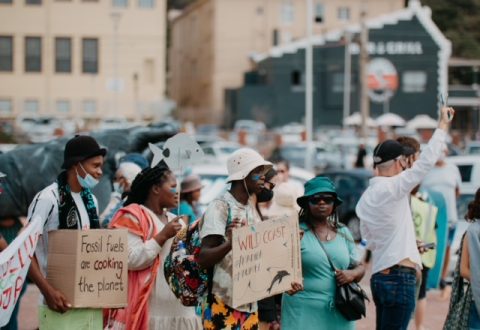
The bill sparked huge concern among environmental campaigners in New Zealand and elsewhere. Greenpeace Aotearoa called it a “shocking abuse of executive power” and the vast majority of submissions to a parliamentary inquiry said it should be rejected.
But in the end, it was adopted with little resistance, moving relatively smoothly through parliament, passing its third reading by 67 votes to 53. Sam Bookman, climate law lecturer at Melbourne Law School, told Climate Home News he was not surprised by this, given that the coalition government has a secure majority.
A complaint has been made to the UN special rapporteur on climate change and human rights by Smith, the National Iwi Chairs Forum Pou Tikanga and youth coalition Climate Clinic Aotearoa over what they see as the government’s heavy-handed approach. Smith is also challenging the new law in yet another lawsuit.
“Pathetic”: New Zealand plans to barely cut emissions between 2030 and 2035
Bookman thinks it “very unlikely” that such a challenge will succeed, noting that New Zealand’s constitution is firmly anchored in parliamentary sovereignty.
But the expert in climate law does not see the bill as the end of legal action in the country, noting that New Zealand has a “sophisticated climate litigation landscape with a growing number of specialist and experienced lawyers and NGOs”.
The country is also approaching its next general election in November, and some opposition parties have pledged to restore access to the courts if elected.
Amanda Larsson, global project lead on agriculture for Greenpeace International, said: “This law deserves to be tested, and I strongly encourage the international climate litigation community to unite and help defend New Zealanders’ fundamental right to hold polluters accountable before this becomes a global blueprint.”
Copycat legislation on the rise
New Zealand’s move is part of a small but growing legislative effort to shut down climate litigation around the world.
In the US, Republican politicians introduced legislation in the House and Senate in April that would shield fossil fuel firms from climate liability lawsuits. Similar laws have already been passed at state level in Tennessee, Utah, Iowa and Louisiana.
The German state of Bavaria has put forward a similar proposal to the Federal Council, aiming to block private climate claims as well as the recognition and enforcement of foreign judgments imposing such liability. There are also proposals to limit available remedies and actions in the Netherlands and Belgium.
UN General Assembly backs “climate obligations” set by world’s top court
Bookman said he expects more efforts to counter climate damages litigation and advised plaintiffs to think about how to respond, including drawing on broader support in opposing them.
“Even though it’s very hard for plaintiffs to win these types of cases, companies are very eager to avoid the expense, embarrassment and political accountability that come even with unsuccessful lawsuits,” he said.
The post New Zealand moves to protect business with law curtailing climate litigation appeared first on Climate Home News.
New Zealand moves to protect business with law curtailing climate litigation
Bhima Yudhistira Adhinegara is the Executive Director of the Center of Economic and Law Studies (CELIOS), an Indonesia-based economic think tank. Muhammad Zulfikar Rakhmat is the Director of the China-Indonesia desk at CELIOS.
Indonesia produces around 60% of the world’s nickel, a metal used to manufacture batteries for electric vehicles (EVs) – more than any other country in the world. But in 2026, the government sharply reduced how much of its nickel can be extracted from the ground.
Production quotas were reduced by around 40% this year compared to 2025. Weda Bay, the largest nickel mine on Earth, had its allowance cut by more than 70% and exhausted its full-year quota by the end of May, halting mining entirely; it cannot resume large-scale extraction until next year unless regulators grant an extension.
The policy has sparked a vivid debate in Indonesian policy circles: how can the country shift its strategy from a decade of mining vast quantities of cheap nickel to producing a high-value and low-carbon material that the rest of the world wants for EV batteries.
The cuts aren’t a silver bullet to clean up Indonesia’s nickel industry, whose smelters are powered by coal – the most polluting fossil fuels. But alongside stricter enforcement of environmental rules, it is one side of efforts to produce more sustainable nickel for a premium.
Restricting Indonesia’s nickel output
Production quotas were introduced to stop the collapse of nickel prices because of oversupply in the market. Prices had fallen more than 40% in 2023 alone and kept sliding as Indonesian supply kept growing, hitting a four-year low of around $13,900 a ton in late 2025.
Critics called the recent tightening of production quotas proof that Indonesia’s nickel strategy has failed, arguing that the industry shouldn’t need to throttle its own output to survive. But when assessed against what the policy was supposed to do – push up nickel prices – it has worked. Prices jumped to $20,000 a ton in May, the highest since 2024.
-
Big banks’ lending to coal backers undermines Indonesia’s green plans
Foreign banks involved in Indonesia’s $20-billion Just Energy Transition Partnership have also funded companies working on coal power expansion, a TBIJ and Climate Home News investigation reveals -
Southeast Asia’s fragile grids threaten billions in clean energy investment
Renewables developers need reliable electricity infrastructure and stable policies to help the region meet climate goals and surging demand for power

Chinese industry groups representing companies that have invested billions to mine and refine the country’s nickel were furious, warning Indonesia’s president Prabowo Subianto that the cuts put $50 billion worth of investment at risk. But much of that Chinese capital is sunk into smelters and processing plants built specifically to run on Indonesian ore, and cannot simply be moved elsewhere. That gives Jakarta more room to hold its ground than the warning suggests.
Stronger environmental enforcement
Since the start of the year, Indonesia’s forestry task force has seized more than four million hectares of land from mines and plantations operating illegally in protected forests, collecting over two trillion rupiah ($113 million) in fines.
This included 148 hectares seized from Weda Bay for lacking a forestry permit. The share of nickel produced from illegal small-scale mining also fell from about a quarter in 2022 to roughly 10% by 2024.
The crackdown responds to serious environmental damages in the nickel industry. On Obi Island, a waste pond collapsed after heavy rain in June 2025, flooding three villages and killing a resident. Internal company tests found chromium-6 – a carcinogen – in the water, in quantities far above the legal limit. The footprint of another mine near Raja Ampat, which is home to some of the world’s richest coral reefs, grew 60-fold in just eight years.

The market is responding to early cleanup efforts. Low-carbon nickel now sells for a real premium, roughly $18,800 to $19,300 a ton compared with $17,900 to $18,300 otherwise, as carmakers seek to source cleaner materials to comply with the European Union’s new emissions rules for imports.
In turn, this is incentivising the industry to do more to green its operations. Vale Indonesia’s smelter in South Sulawesi now runs almost entirely on hydropower, for example.
None of this addresses coal use, however. Major Indonesian nickel producers still emitted an estimated 15 million metric tons of greenhouse gases in 2023. Indonesia may be cracking down on illegal mining and rewarding cleaner producers but it is still running its mines on the dirtiest fuel available.
Unequal benefits
For Indonesia to truly benefit from producing cleaner and high-value nickel, it needs to reap the economic benefits too. Although the industry has boosted the country’s economic growth, the reality on the ground tells a different story.
Konawe in Southeast Sulawesi is home to a major smelting complex. Growth in the district jumped from 6% to 22% between 2015 and 2023, driven almost entirely by the nickel industry, according to a study by the Lowy Institute study. At the same time, poverty levels increased slightly and unemployment remained unchanged.
-
Nickel mining for electric vehicles is destroying lives in Indonesia
Indonesia’s abundant nickel reserves are crucial for a low carbon world. But extracting them is ruining local peoples’ lives and causing rampant deforestation -
Indonesia turns traditional Indigenous land into nickel industrial zone
Indonesia supplies the EV industry with critical battery materials but the sector’s rapid expansion is infringing the rights of Indigenous peoples -
Indonesia’s failing Just Energy Transition Partnership is a cautionary tale
The government has abandoned its plan to shut down a major coal plant, which was a key part of the deal, raising doubts about the donor-backed approach


In Halmahera, another epicentre of the nickel industry, spending by the poorest fifth grew just 5% between 2019 and 2022, compared with 28% for the wealthiest fifth, according to a separate study.
Part of the reason for this inequality is the system for transferring mining royalties to district authorities where the mines are located. In theory, they are entitled to the largest share. But in practice, payments are delayed, companies routinely dispute what they owe and royalties are pooled and distributed across a larger area.
The Natural Resource Governance Institute has found that decentralisation handed local governments power to approve new mines faster than they could build their capacity to manage them. Higher output raises national income on paper, but local governments remain constrained by fiscal rules and infrastructure costs that scale with mining.
None of this makes the 2026 quota cuts a mistake. Indonesia has every right to defend its pricing power over a resource it controls. But limiting extraction isn’t going to fix underlying issues around environmental enforcement and revenue-sharing. That requires rules that are consistently enforced, royalties that reach communities living by the mines, and a plan to wean smelters off coal.
The post Indonesia’s nickel production cuts are not enough to create a sustainable industry appeared first on Climate Home News.
Indonesia’s nickel production cuts are not enough to create a sustainable industry
Climate Change
Risk of “catastrophic” oil spill reaching Kimberley coast found in Woodside’s Scott Reef gas drilling plans
SYDNEY, Monday 24 August 2026 – New analysis of Woodside modelling released by Greenpeace Australia Pacific and Environs Kimberley has revealed the oil and gas corporation’s plans to drill at Scott Reef could cause an oil spill up to 30 times bigger than the 2009 Montara disaster, impacting the Kimberley coastline and reaching as far as Indonesia.
The new analysis details the “catastrophic” oil spill risk put to environmental regulators for approval by Woodside in its Browse to North West Shelf Project (Browse) plans, the worst-case scenario being a blowout directly below Scott Reef, polluting whale migratory pathways and covering isolated turtle nesting ground with oil condensate.
An FOI application (F348) revealed the federal environment department (DCCEEW) asked offshore oil and gas regulator NOPSEMA to look into the oil spill risk in 2025. NOPSEMA’s response to the application refused access to its report, and one document shows DCCEEW sought further advice this year.
Greenpeace and Environs Kimberley are calling on the Federal Government to publicly release the NOPSEMA report given the risk of an uncontrolled release of oil condensate from directly below Scott Reef.
Hannah Schuch, Senior Campaigner at Greenpeace Australia Pacific, said: “Woodside is aware that drilling at Scott Reef risks a massive oil spill that would have severe, far-reaching consequences. It appears environmental regulators are aware too.
“The state and federal governments need to take this risk from Woodside’s drilling plans seriously, as they could end up allowing the worst oil spill in Australian history.
“The pygmy blue whales that migrate up and down the WA coast with their newborns each year could be swimming and feeding in toxic, oil-slicked water. Woodside’s proposal to drill at Scott Reef is an environmental disaster waiting to happen, and the WA and federal governments have one surefire way to prevent catastrophe — reject Browse.”
Martin Prichard, Executive Director at Environs Kimberley, said: “A catastrophic oil spill by Woodside would be disastrous not just for marine life in the area but also for the Kimberley’s $500 million tourism industry.
“The state and federal governments will see five marine parks on the Kimberley coast included in the risk area of a catastrophic Woodside oil spill.
“The Montara oil spill was disastrous for West Timor with the toxic oil destroying seaweed farmers’ livelihoods. The Kimberley dodged a bullet with Montara, we were lucky the spill didn’t head our way. Myself and a crew flew over the Montara oil spill and followed it as far as we could. It was like a scene from a disaster movie.”
After the WA Environmental Protection Authority deemed Browse “unacceptable” due, in part, to oil spill risk, Woodside submitted a mitigation plan based on technology that has never been used “in anger”, a weakness stated in an independent expert review of the plan.
Professor Richard Steiner, independent oil spill expert, said: “A large offshore spill is impossible to effectively contain or recover. Historically, only 2-6% of total spill volume is recovered and the ecological injury from the release of toxic hydrocarbons in the sea can be severe, extensive, and long-term.
“Here in Alaska, government research concludes that several marine populations injured by the 1989 Exxon Valdez oil spill, including whales, fish, and seabirds, are still not recovering today, 37 years later. We should expect similar long-term ecological impacts in Western Australia if there were to be a major oil spill. The only sure way to avoid the risk of a catastrophic marine oil spill is to not develop oil and gas projects in marine environments.”
-ENDS-
Media contact
Emma Sangalli on emma.sangalli@greenpeace.org or 0431 513 465



-
Climate Change1 year ago
Guest post: Why China is still building new coal – and when it might stop
-
Greenhouse Gases1 year ago
Guest post: Why China is still building new coal – and when it might stop
-

 Greenhouse Gases2 years ago
嘉宾来稿:满足中国增长的用电需求 光伏加储能“比新建煤电更实惠”
-

 Climate Change2 years ago
嘉宾来稿:满足中国增长的用电需求 光伏加储能“比新建煤电更实惠”
-
Climate Change2 years ago
Bill Discounting Climate Change in Florida’s Energy Policy Awaits DeSantis’ Approval
-

 Renewable Energy10 months ago
Sending Progressive Philanthropist George Soros to Prison?
-
Greenhouse Gases1 year ago
嘉宾来稿:探究火山喷发如何影响气候预测
-

 Carbon Footprint2 years ago
US SEC’s Climate Disclosure Rules Spur Renewed Interest in Carbon Credits