

Welcome to Carbon Brief’s DeBriefed.
An essential guide to the week’s key developments relating to climate change.
This week
Eyes on the Arctic
SOURCE, NOT SINK: The Arctic tundra has become a net emitter of greenhouse gases, rather than a “carbon sink”, for the first time, according to the Arctic Report Card issued this week by the US National Oceanic and Atmospheric Administration. The Alaska Beacon wrote that this shift is “result of permafrost warming, increased wildfires and other effects of climate change”.
ARCTIC ACREAGE: E&E News reported that the US Bureau of Land Management will open 400,000 acres of the Arctic National Wildlife Refuge for oil and gas drilling, despite promises to the contrary during Joe Biden’s 2020 campaign. The area represents the minimum that was required to be put up for sale by Donald Trump’s 2017 tax bill, which opened the preserve to development, Reuters said.
UK’s path to ‘clean power’
ACTION PLAN: The UK government published a 136-page “action plan” for reaching its goal for low-carbon sources to meet 100% of electricity demand and 95% of generation by 2030, BBC News reported. It includes various reforms that ministers will introduce over 2025 to boost renewables, change the planning system, increase flexibility in the electricity grid and support energy storage projects, according to the broadcaster.
RECORD RENEWABLES: The Financial Times said that the government is considering weakening the rights of communities to object to new pylons or windfarms in their neighbourhoods as part of the plans. It added that, in a bid to meet its goals, the government is “preparing a record-breaking auction of renewable subsidy contracts next year”. Carbon Brief has just published an in-depth run down of the plan’s key details.
Around the world
- BRONZE MEDAL HEAT: The UK Met Office has predicted that 2025 will likely be in the top three warmest years on record, “falling in line just behind 2024 and 2023”.
- CANADA TARGET: Canada has a new target to cut its emissions to 45-50% below 2005 levels by 2035, a less ambitious pledge than its climate advisers suggested, Climate Home News reported. A statement from Canada said the pledge will be submitted to the UN in 2025 and act as its “nationally determined contribution” (NDC) under the Paris Agreement.
- HIGHLY DRY: More than three-quarters of Earth’s land is “permanently drying”, according to a report released at the UN desertification summit in Riyadh. AfricaNews reported that nearly five billion people will be affected by drying by the end of the century, if current warming trends continue.
- DENGUE ON THE RISE: The Pan-American Health Organization announced that, this year, the Americas have “faced the largest dengue epidemic since records began” more than 40 years ago. It said “the situation is linked to climate events favouring mosquito proliferation”.
- ‘NO WINNERS’: “Tariff wars, trade wars and sci-tech wars” will have “no winners”, Chinese president Xi Jinping said in a recent meeting with representatives from “major international economic organisations”, according to Xinhua.
- GEOENGINEERING GUIDANCE: The EU’s scientific advisory group recommended that the bloc should move to “prohibit solar geoengineering technologies…and push for a worldwide ban”, Politico reported.
£57.5 million
The record amount of funding provided to farmers in England who were impacted by last winter’s severe flooding, according to figures released to Carbon Brief.
Latest climate research
- According to research in Science, the 2014-16 marine heatwave in the Pacific Ocean killed at least half of Alaska’s common murre, an abundant seabird species.
- Climate-change-driven shifts in atmospheric circulation will result in increased turbulence over Europe, especially during the winter months, a study in Geophysical Research Letters found.
- A rapid attribution analysis by the World Weather Attribution service found that this year’s record-setting typhoon season that battered the Philippines was “supercharged” by climate change. Carbon Brief covered the findings.
(For more, see Carbon Brief’s in-depth daily summaries of the top climate news stories on Monday, Tuesday, Wednesday, Thursday and Friday.)
Captured

Ahead of Donald Trump’s second term as US president, a rerun of his first trade war with China is firmly on the cards – and minerals key to the energy transition may end up in the crossfire. Carbon Brief took an in-depth look at what US-China tensions over critical minerals could mean for the stability of their supply chains and for the transition to cleaner energy. The Venn diagram above – put together by the Chinese government and translated to English by Carbon Brief – shows where China expects there to be overlap between itself, the EU and the US when it comes to minerals and materials considered to be “critical” for energy and industry.
Spotlight
What concerns climate scientists
This week, Carbon Brief speaks to scientists at the annual meeting of the American Geophysical Union in Washington DC about what is on their minds as 2024 draws to a close, and what they think the biggest climate stories of 2025 might be.
Their answers have been lightly edited for length and clarity.
Prof David Ho, professor of oceanography at the University of Hawaii at Manoa and co-founder and chief science officer at [c]worthy
All I seem to think about these days is CDR – carbon dioxide removal. Normally I say that it doesn’t make sense to deploy [CDR] until we decarbonise drastically, because it is useless when we’re still emitting more than 40bn tonnes of CO2 every year…But if we don’t start now, we might not be able to scale [up] fast enough.
I’m thinking about that because it does have to go from something that most people have never heard of, to the biggest thing we’ve ever done, in a short time.
It’s really hard to know with the new administration in the US [what the biggest story will be].
But the overarching story, of course, is that we’re emitting more CO2 – things are getting worse, and we’re not doing anything about it. And whether that remains the biggest story or not, I don’t know, because it seems like everything that we do is small compared to the fact that we don’t do anything about the continued use of fossil fuels.
Dr Sahra Kacimi, a polar scientist at the NASA Jet Propulsion Laboratory
There are a couple things that have been on my mind. My research is really focused on sea ice and how can we better monitor it from space, which means providing better estimates of sea ice thickness, including the snow on top of it, and then trying to use a combination of satellite observations to really better understand the state of sea ice and how it’s changing in the context of global warming.
I’m really interested in this new satellite mission called SWOT [Surface Water and Ocean Topography]. To me, it really marks the beginning of a new era…Everyone you can talk to – people working on hydrology, oceanography, sea ice – what we’re seeing is just incredible.
Antarctic sea ice is a really hot topic, because there’s still a lot of things that we don’t know about it and about why it’s been changing so much in the past few years…Not necessarily next year, but in the next few years, the Southern Ocean and Antarctic sea ice and Antarctic climate is going to be a major, major climate story.
Dr Cynthia Rosenzweig, senior research scientist and head of the Climate Impacts Group at the NASA Goddard Institute for Space Studies and winner of the 2022 World Food Prize
When AgMIP [the Agricultural Model Intercomparison and Improvement Project] started and we started holding these sessions at AGU on the effects of climate change on agriculture and food, they would be very small. And now you can see how this area is growing in importance and [in] the science.
The work is going beyond the “big four” crops – wheat, rice, maize and soya beans. Of course they will always be very important, but you can see a role for a much broader range of crops…I would also say [there’s a growing focus on] mitigation and adaptation together.
It’s wonderful to see all this wonderful work. But unless you coordinate it and actually then bring it to the policymakers, where does it go? And so that’s really the meaning of AgMIP. [We’re holding] the 10th global workshop in March-April. We’ll be bringing together teams of people who actually do the work, and they work together at the workshop. I really believe in putting “work” back in workshops.
Dr Erich Fischer, a climate scientist and lecturer at ETH Zürich
We have now seen the first year with 1.5C of global temperature rise, but that’s just the first one. So most places haven’t yet seen anything close to the highest local temperature, precipitation or drought conditions possible under today’s climate – even without any further warming. I expect to see a lot more records being broken in 2025.
And then the big question is whether global temperatures will continue to rise at these rates. This has implications for all regions of the globe – including the oceans, which are warming very rapidly themselves.
Watch, read, listen
SURVIVAL STORY?: The Washington Post’s Post Reports podcast asked whether the Inflation Reduction Act can survive the term of incoming president Donald Trump.
WORKING THE NIGHT SHIFT: Grist examined how fisherfolk and farmworkers are adjusting to overnight shifts to escape extreme daytime temperatures.
(RE)WILD THING: A comic in Vox explained how rewilding your lawn can help boost biodiversity and contribute to mitigating climate change.
Coming up
- 9-16 December: Plenary session of the Intergovernmental Science-Policy Platform for Biodiversity and Ecosystem Services (IPBES), Windhoek, Namibia
- 16-20 December: 68th meeting of the Global Environment Facility Council, Online
- 17 December: Launch of IPBES nexus assessment
- 17 December: 168th meeting of the committee of permanent representatives of the UN Environment Programme, Nairobi, Kenya
- 18 December: Launch of IPBES transformative change assessment
Pick of the jobs
- International Centre for Integrated Mountain Development, Living Mountain Lab outreach specialist | Salary: $33,720. Location: Kathmandu, Nepal
- Sustainability Research Group at the University of Basel, funded PhD in sustainable agri-food system governance (two roles) | Salary: Unknown. Location: Basel, Switzerland
- Wired, senior writer, climate | Salary: $95,000-$127,000. Location: San Francisco, New York, London or remote
DeBriefed is edited by Daisy Dunne. Please send any tips or feedback to debriefed@carbonbrief.org.
This is an online version of Carbon Brief’s weekly DeBriefed email newsletter. Subscribe for free here.


The post DeBriefed 13 December 2024: Arctic tundra emitting CO2; UK sets path to ‘clean power’; What climate scientists worry about appeared first on Carbon Brief.

Jacynta Fa’amau is a Pacific campaigner at global grassroots climate movement 350.org and a secretariat member of Pacific Climate Warriors.
The first thing that struck me was the sheer size of Queensland’s Saraji coal mine. Standing at the edge of the enormous pit, my brain scrambled for words as I scanned the earth’s open wound – a whole island could probably fit inside it.
Looking down, I noticed footprints of an emu and a koala, pressed and dried in what was once a puddle – signs of how drought had driven animals in desperate search of water, so dangerously close to the coal trucks and heavy machinery ahead.
Earlier this year, I joined a small group of Pacific Islanders on a journey through the Bowen Basin to learn from First Nations communities battling Australia’s mammoth coal industry. Of the more than 40 coal mines operating in the area, BHP & Mitsubishi Alliance’s Saraji mine is one of the largest. So it came as a painful shock to us when in August, the Australian government approved the mine’s extension just months after our visit.
-
As COP31 co-host, Australia should make its polluters pay for climate damage
With UN climate funds running short on cash, now is the time to start taxing the companies whose emissions are driving harm in the Pacific and other vulnerable parts of the world -
At pre-COP, UN climate chief warns of heat threat to mothers and babies
The spotlight on maternal health came on the first day of the pre-COP31 meeting in Fiji, where Pacific concerns are set to top the agenda as ministers gather for talks

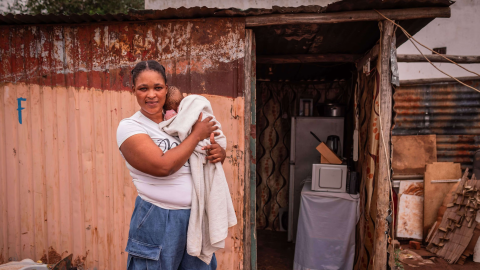
Witnessing coal extraction is devastating. It is bad enough to see what pillaging tonnes of coal can do to a mine’s immediate surroundings: dry creek beds, dwindling wildlife, denuded land. But to know that this coal will be shipped across the ocean, bring air pollution, and eventually lead to the destruction of Pacific islands thousands of miles away is another kind of heartbreak.
Rising ocean waters
I’m an Australian-born Samoan. In 2002, I visited my family home for the first time. My father took me to the rural community where generations of my family were raised. He did not have the words to describe how much has changed since rising ocean waters had taken away almost a third of the beach.
I learned of how we had to relocate my great‑great‑grandparents’ grave to higher ground twice in the last 15 years. Of how my cousins have to paddle out further to sea to catch fish, since warmer waters have destroyed much of the reef. Of how the ocean crashes so close to my uncle’s home that he had to build a new house further away.
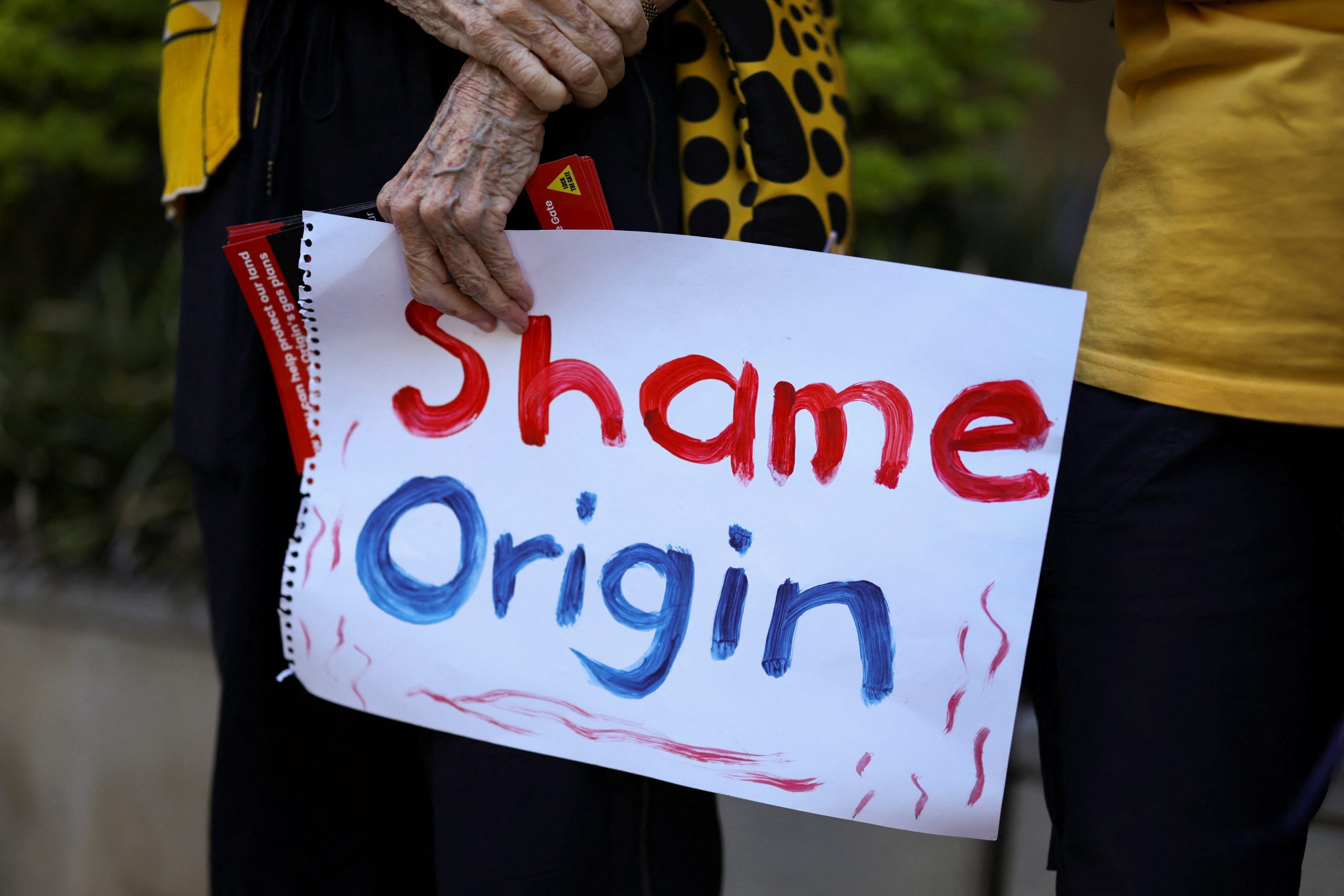
We saw reflections of our own climate destruction in the Pacific when we shared these stories with our First Nations relatives at the edge of the Saraji mine. Murrawah Johnson and Teila Watson, both Birri Gubba and Gangulu women, made clear connections between their struggles and ours. “We don’t get to inherit our land and we don’t get to inherit our traditional roles. We are fighting a war on extinction,” Murrawah said.
Coal extraction devastated their lands and cultures – totems have disappeared, fresh water has become scarce – while the effects of using it have devastated ours. “King tide, cyclones, all the violence that has been enacted on your country and people is because of the violence that has been allowed here, to us and our country,” Teila said.
Wearing the mantle of climate leadership
This week, Australia is assuming the mantle of climate leadership as co-president and head of negotiations of this year’s UN Climate Change Conference, COP31. It will lead on deliberating the summit’s priorities as world leaders and climate negotiators descend on Fiji and Tuvalu for the pre-COP meetings.
Ironically, just days before the pre-COP began, the New South Wales Independent Planning Commission approved the largest-ever coal project the state has seen, set to emit an extra 800 million tonnes of carbon emissions. I joined the Pacific Climate Warriors and other communities in submitting about 4,000 appeals to oppose the project – yet these all fell on deaf ears.
-
Fossil fuel expansion threatens COP31 hosts’ credibility, experts warn
Türkiye and Australia are pushing coal, oil and gas at home with no national timeline for their own fossil fuel phase-out -
This Australian coal community is co-designing its own green future
The mining town of Collie offers a promising example of how to survive – and even thrive – amid the global transition to net-zero emissions
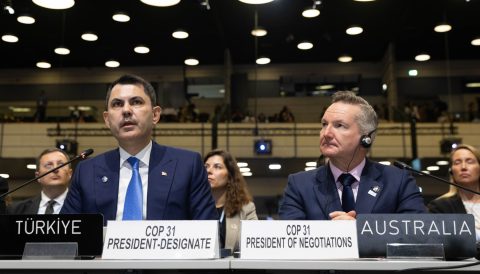

But the fight is not yet over. The project still requires federal approval to proceed, so every promise that Australia makes while at the helm of the climate talks counts. These promises will be measured against actual decisions it makes at home: to either lock us into more decades of climate pollution, or begin shutting down coal and gas once and for all.
Pacific leaders have made it clear that countries must align their policies with the 1.5-degree warming goal, a limit that we already know will be breached within the decade. Any chance of keeping this still within reach requires an immediate end to fossil fuel expansion and concrete plans to phase out existing projects. But success will be an uphill battle if COP31’s own head of negotiations refuses to lead by example.
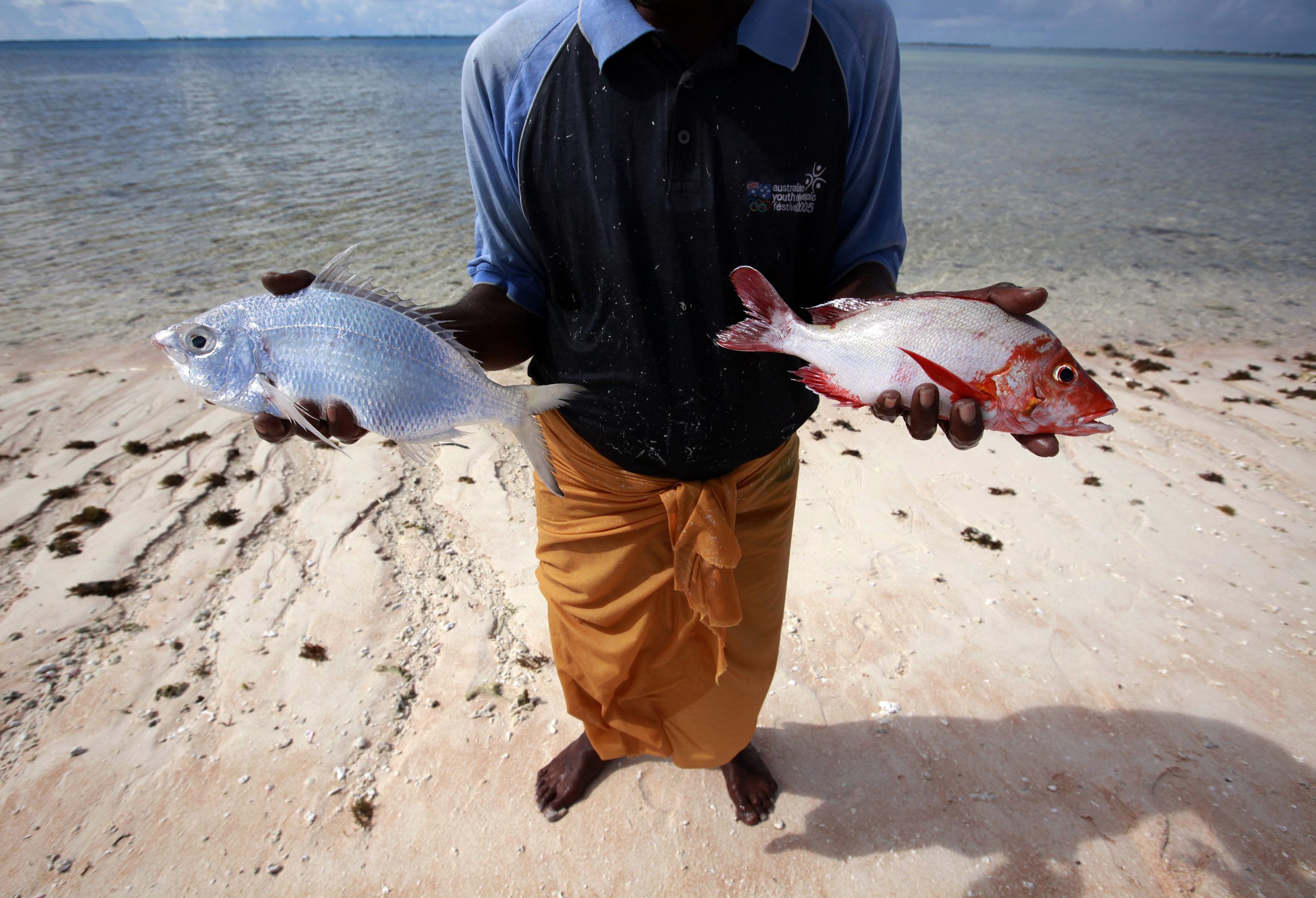
Australia remains the second-largest coal exporter in the world. It is one of the very few industrialised countries under the Paris Agreement’s Annex I that still has no coal phase-out plan. Since 2022, the Albanese government has approved 37 new, expanded or extended coal, oil and gas projects. It is thus unsurprising that its own mitigation policies have been rated by Climate Action Tracker as “insufficient”, even without factoring in fossil fuel exports and related expansion.
Keeping 1.5C alive
Australia must course-correct to earn the mantle it has been given, especially by Pacific nations that backed the country’s bid for the COP31 co-presidency. As a first step, the government must end all coal expansion and explicitly declare a coal phase-out date. It’s the only way to show that it’s capable of leadership that moves beyond endlessly deliberating the “if”, and starts implementing the “how” of keeping the 1.5C target alive.
The dread I felt staring down at the abyss on the edge of that coal mine months ago still exists. I carry it with me as I show up at the pre-COP to demand that leaders heed the calls of Pacifi