

Welcome to Carbon Brief’s Cropped.
We handpick and explain the most important stories at the intersection of climate, land, food and nature over the past fortnight.
Key developments
UK election impacts
LABOUR’S ENVIRONMENT PRIORITIES: The UK’s new Labour government has started to outline its priorities, with the new minister for the Department for Environment, Food and Rural Affairs (Defra), Steve Reed, setting out his five priorities in a video posted to Twitter. These were, he said: “Cleaning up British rivers, lakes and seas; creating a roadmap to move Britain to a zero-waste economy; supporting farmers to boost Britain’s food security; ensuring nature’s recovery; and protecting communities from flooding.” Edie reported that the UK “ranks in the bottom 10% of nations globally in terms of biodiversity intactness”, and that it is nowhere near its national goal of protecting 30% of its land and sea by 2030.
AGRICULTURE PLANS: However, a budget for farming was notably absent from the Labour manifesto. Nick von Westenholz, the National Farmers Union’s (NFU) director for strategy, told Euractiv last week that setting the budget for the environmental land management schemes (Elms), which will replace the EU’s multimillion farming subsidy programme by 2027, was “crucial”. Under Elms, farmers can receive subsidies for actions such as reducing pesticide use, planting wildflowers and preventing groundwater pollution. (See Carbon Brief’s 2023 explainer for more details.) Making the Elms subsidies financially attractive to farmers was a key issue, von Westenholz said: “There is a concern about the budget not being sufficient and that there won’t be enough of a business case for farmers to adopt the scheme”. Last week, Carbon Brief analysed the climate issues that the new Labour government will have to address, including those on land, agriculture and nature.
CONSERVATIONISTS REACT: Inkcap Journal summarised the positive, but cautious, reactions of conservation champions to Labour’s victory. Charities including the RSPB and CPRE urged the new prime minister to “act quickly on nature”, highlighting that upcoming decisions will “affect all UK wildlife immensely”. The Wildlife Trusts commended Labour’s “welcome commitments on nature and climate”, but published a list of priorities for the new government, including a review of the Environmental Improvement Plan and increasing the budget for wildlife-friendly farming. Experts also shared their views with Carbon Brief on what Labour’s priorities should be for climate action.
African farmers’ woes
DOUBLE THREAT: In the Conversation, University of Cape Town researcher Dr Vuyisile Moyo described the challenges facing farmers in Zimbabwe due to the “combination of heat, droughts and floods caused by climate change, and water contamination and damaged land caused by illegal, small-scale mining”. There are an estimated 400,000 illegal, small-scale miners in the country and their operations have resulted in “deforestation, land degradation, water pollution and loss of biodiversity”, Moyo wrote. One farmer told Moyo: “My farm was encroached by the artisanal miners who believed that there is a lot of gold there. My farmland was dug all over and now I no longer have land for crop production.”
MALNUTRITION AND DROUGHT: Al Jazeera carried a gallery of photos from drought-stricken Zimbabwe, with one farmer telling the outlet: “I did not harvest anything after all my effort and using all our savings to buy seeds.” Malnutrition is on the rise in the eastern Zimbabwean district of Mudzi, with cases jumping “by about 20%” over the past three months. The outlet added that “Zimbabwe and neighbouring Malawi and Zambia are among the countries in southern Africa most affected by malnutrition” amid the drought. In nearby Namibia, cattle sales have increased by nearly 50% as farmers facing the “biting effects of drought” have been forced to sell off their herds, the Namibian reported. As a result of the influx of cattle to the market, producers’ prices declined by nearly 4% since last year, the outlet added.
‘FOOD SECURITY CRISIS’: In South Africa’s Western Cape province, “informal settlements have been waterlogged for days” following heavy rains, Ground Up reported. Many of the people living in these settlements are “farm workers who have been evicted from farms they used to live at”, the South African outlet wrote. The Associated Press reported that “a food security crisis lies ahead” for Kenya following devastating floods that impacted the country beginning in mid-March. And local NGOs told Devex that flooding across east Africa has left children at risk of malnutrition “because of lack of food and medical services”.
Spotlight
Murky waters
In this spotlight, Carbon Brief unpacks the agenda ahead of the International Seabed Authority, as it resumes negotiations to frame rules for deep-sea mining.
The controversial possibility of mining the deep sea for critical minerals has been catapulted to the spotlight in the past few years, from investigations into the work of the International Seabed Authority (ISA) to late-night comedians in the US running dedicated segments.
Triggered by a move by Nauru in 2021, the ISA has been “under pressure” to finalise rules to regulate deep-sea mineral exploitation or risk the possibility of assessing mining applications without them.
That “what-if” scenario has become one of “what-now”, as the ISA’s 36-member council has already passed the July 2023 deadline to draw up this mining code. This atmosphere of uncertainty has since been met by a growing chorus of 27 governments that have called for some form of ban, moratorium or pause on deep-sea mining.
On Tuesday, the ISA resumed its 29th annual session in Kingston, Jamaica, with three crucial points on the agenda for its council and assembly: the debate over the mining code and a moratorium, the election of its secretary general and, for the first time ever, a discussion on the need for a general policy to protect and preserve the marine environment.
“All states have said that they don’t want [mineral] exploitation without regulation, but just how robust that regulation is, that’s the fault line,” Julian Jackson, project director of seabed mining at Pew Charitable Trusts, told Carbon Brief. According to Jackson, there are still “30 outstanding, big policy issues” to be resolved, from “permissible levels of environmental harm” – such as thresholds for toxicity – to issues of compensation and liability. He added:
“These are very technical negotiations, with yet more detailed standards and guidelines remaining to be addressed, all being done in an international, multilateral setting with very divergent views and not enough time.”
While the groundswell calling for a moratorium has grown, with banks and companies joining the fray, senior lecturer at the Borneo Marine Institute Dr Sharifah Nora Syed Ibrahim points to the fact that developed countries such as Norway have moved in the opposite direction. She told Carbon Brief:
“Norway wants to keep the option of deep-sea mining open, including within its national waters, because if oil is being phased out due to the climate movement, what other main natural resources does Norway have, other than fisheries?”
Who secures the ISA’s top post, which holds sway over the deep sea’s future, has been the subject of a huge scandal in recent weeks. Earlier this month, a New York Times investigation pointed to “allegations of possible payments to help secure votes” and attempts “to entice a candidate to withdraw from a race” amid complaints of misuse of agency funds by ISA chief Michael Lodge, who is currently eyeing a third term at the top.
While Lodge responded to the Times in a six-page statement describing the story as a “collation of vague, unsubstantiated, unfounded and anonymous rumours”, observers told Carbon Brief the allegations were being discussed on the first day of the talks.
“The science [on impacts] is way behind, the regulations are also way behind,” said Jackson:
“In the meanwhile, how do you have a multilateral organisation mired in allegations of conflicts of interest governing what is still so poorly understood?”
News and views
ARGENTINA BEEF: The consumption of beef in Argentina has fallen to a historical low, with demand forecasted to fall to the “lowest level in a century”, according to the Buenos Aires Times. A report from the Rosario Board of Trade found that annual beef consumption is now around 45kg per person, down from a peak of more than 100kg in the 1950s. Bloomberg attributed the decline to skyrocketing beef prices amidst a national recession. However, a shift to poultry, pork and plant-based diets due to greater nutritional awareness amongst consumers is also contributing, the newswire said. Argentina remains one of the biggest beef consumers globally, surpassing the UK and US (18 and 38kg per capita, respectively).
EU POLICY: The farmers’ organisation European Coordination Via Campesina has called on the EU to control agricultural prices and abandon free-trade agreements, including the long-stalled deal with the Mercosur South American trading bloc, Euractiv reported. “Farmers fear the Mercosur deal would result in markets being flooded with cheaper products”, it said. A separate Euractiv piece said that the European People’s Party is aiming to take the post of agriculture commissioner in the European Parliament in a move to solidify itself as “the farmers’ party”. Meanwhile, US paper producers have warned that new EU regulations requiring them to trace the sources of timber will cause price increases and shortages of diapers, sanitary pads and hygiene products, with Bloomberg reporting that “pulp supply chains are too diffuse to track all trees”.
‘CARBON LAUNDRY’: Brazil is “rac[ing]” to launch “one of the first major carbon emissions trading systems in the developing world”, Dialogue Earth reported. The emissions trading system aims to cover major polluting companies from sectors such as steel and cement, it added, but they would also be allowed to offset their emissions by buying credits from the voluntary market. This would need “careful regulation”, experts told the outlet, to ensure Brazil does not become “the carbon laundry of the world”. Dialogue Earth also covered controversies around “blue carbon” trading in China, where “most of the credits…involve the scientifically contentious matter of carbon sequestration by shellfish and seaweed”. Scroll.in, meanwhile, reported on “dubious” credits being generated by Himalayan hydropower projects.
WATER WARS: Amid ongoing drought in the south-western US, the country is “looking to parched northern Mexico to solve its water shortage”, Excelsior reported. The newspaper noted that the latest agreement between the two countries marks “the third consecutive year of water cuts from the Colorado River to Mexico”. In return for the reduction, Mexico will receive $65m “that will be used to improve water resources infrastructure”. Nearly two-thirds of northern cities and towns are already impacted by water shortages, including “a dozen municipalities living in a state of emergency”, Excelsior said. It added that 14 members of congress from Texas have requested the US “suspend aid to Mexico…until Mexico pays off its current water debt”.
DEFORESTATION DECREASE: Last year, Colombia “achieved its lowest deforestation rate ever recorded”, reporting a 36% decrease compared to the previous year, City Paper Bogota said. (Historical records in the country go back to 2000.) The figure represents a decrease of more than 50% over the last two years, “surpassing the initial target” set in the country’s national development plan, the outlet said. It quoted Colombian environment minister Susana Muhamad, who said: “It is a truly iconic year in this fight against deforestation.” However, Colombia Reports said that the reduction is “feared to be temporary” and that “the first quarter of this year indicated that deforestation had been going up again”.
DISPUTED MAPS: Indigenous communities in India’s western state of Gujarat have complained that district authorities rejected their forest rights claims based solely on satellite imagery collected by an autonomous state body, over other evidence such as testimonies and site inspections, IndiaSpend reported. Activists accused the GEER Foundation of “a lack of transparency”. Villagers asked to vacate their lands within 10 days told the outlet that the “notices came as a shock, as GPS and satellite imagery exercises conducted by local NGOs” support their claims. An official told IndiaSpend that the foundation “has now agreed to share their maps”, but said that “people give arbitrary estimates” of the size of their forest plots. Separately, the Financial Times reported that Australia has asked for a delay of the EU deforestation law regime citing “incorrect data”, with a spokesperson stating that “[t]he EU’s map is not a single source of truth”.
Watch, read, listen
BALANCING ACT: On her Feed the Planet podcast, Prof Sarah Bridle talked to researcher Barbara Bray about how to balance humans’ health with that of the planet.
COMEBACK KID: Mongabay carried a two-part series on the “re-introduction” of the Spix’s macaw that went extinct in the wild, but now faces an “uncertain future”.
STICKER SHOCK: In a new video, Al Jazeera explored how climate change has played a role in the global increases in food prices and inflation.
PORK OUT: Vox carried a long read that looked at how factory farming was “shoring up public support” by “funding favourable research” from US public university scientists.
New science
Mitigation and Adaptation Strategies for Global Change
Grape growers in parts of the Mediterranean should consider reducing their crop’s exposure to sun and optimising water usage to help vineyards adapt to climate change, according to new research. The researchers aimed to understand how climate change will impact wine-growing areas in Portugal, Italy, Turkey and Morocco. Using scenarios under moderate (RCP4.5) and very high emissions (RCP8.5), the researchers compared the main climate-related challenges these locations will face and assess the “best strategies to reduce the impacts of climate change at the national and regional levels”. The conclusions of the study “may support local growers” in optimising “sustainable production under changing climates”, the researchers wrote.
Severe droughts reduce river navigability and isolate communities in the Brazilian Amazon
Communications Earth & Environment
A new study found that severe droughts “routinely disrupt inland water transport and isolate local populations” in the Brazilian Amazon, resulting in restricted access to food, medicine, education and more. By combining historical records of river streamflow, maps of human settlements and news reports, researchers analysed the impacts of lowered river levels on communities near the Amazon River. They found that droughts over the past two decades “have not only caused exceptional low-water anomalies across the Amazon basin, but also dramatically increased the duration of the low-water period”, contributing to communities’ isolation. They concluded: “Given this new reality, Amazon countries must develop long-term strategies for mitigation, adaptation and disaster response.”
Science Advances
New research found that planted mangroves store nearly three-quarters of the amount of carbon stored by untouched mangroves over 20 to 40-year timescales. Analysing data from 684 planted mangrove stands around the world, researchers looked at the carbon storage both below and above ground and determined how carbon storage rates change over time. They found that planted stands that incorporate more than one mangrove species “would maximise [carbon] accumulation within the biomass compared to monospecific planting”. The authors concluded: “Our models also facilitate goal setting; performance measure development; and progress tracking in restoration, rehabilitation or afforestation projects.”
In the diary
- 15 July-2 August: Second part of the 29th Session of the International Seabed Authority Assembly and Council | Kingston, Jamaica
- 22-26 July: 27th Session of the FAO Committee on Forestry | Rome
- 27 July-2 August: 61st Session of the Intergovernmental Panel on Climate Change (IPCC-61) | Sofia, Bulgaria
This is an online version of Carbon Brief’s fortnightly Cropped email newsletter. Subscribe for free here.
Cropped is researched and written by Dr Giuliana Viglione, Aruna Chandrasekhar, Daisy Dunne, Orla Dwyer and Yanine Quiroz. Please send tips and feedback to cropped@carbonbrief.org.

The post Cropped 17 July 2024: Climate change and wine; Seabed mining talks; Argentina’s beef habit appeared first on Carbon Brief.
Cropped 17 July 2024: Climate change and wine; Seabed mining talks; Argentina’s beef habit

The US is expected to resume its attempt to sink measures for a greener global shipping sector at closed-door talks between governments at the International Maritime Organization (IMO) in early September.
The US and oil-producing allies like Saudi Arabia want to weaken a proposed plan for cleaner fuels that aims to reduce planet-heating emissions from the industry, which relies heavily on dirty bunker fuels. Shipping currently represents 3% of global emissions.
Those that want a softer system are likely to back a Liberian proposal which expert analysis suggests would see emissions fall by only half at most by 2050, far short of the sector’s agreed climate goals.
After several years of debate, governments provisionally agreed in April 2025 on the “Net Zero Framework” (NZF), a series of emissions reduction targets for shipowners, backed up with financial rewards for meeting the targets and fees for missing them.
But in October 2025, after a high-profile intervention from US President Donald Trump and threats of sanctions and visa restrictions, the US convinced a majority of voting nations to postpone the adoption of the NZF for a year.
Ralph Regenvanu, climate minister for the Pacific nation of Vanuatu, called the delay “unacceptable” given the urgency of accelerating climate change.
After a round of low-profile talks in May, the first of three further sets of talks on how to clean up shipping will begin at the IMO’s riverside headquarters in London on Tuesday, culminating in a final public session in November.
Em Fenton, who follows the talks as senior director of climate diplomacy at Opportunity Green, an NGO focused on aviation and shipping, said governments should not be sidetracked by alternative proposals to the NZF, calling them “a distraction from a hard-fought multilateral compromise”.
“If countries want to deliver a just and fair maritime transition, there is really only one choice: back the NZF and stand together in solidarity against those who would tear it apart,” Fenton added.
Five proposals on the table
Governments will discuss five different proposals submitted in advance of next week’s meeting. The most ambitious of these is from the Pacific island nation of Tuvalu, which has proposed a levy on the entirety of a ship’s emissions rather than just those above a certain level, as the NZF envisions.
That had been the original demand of Pacific nations before the NZF was provisionally adopted in April 2025. At the time, Tuvalu’s transport minister Simon Kofe described the NZF as disappointing and not ambitious enough.
For this reason, six Pacific countries abstained in the vote on the NZF. While they supported the original plan for its adoption in October 2025, they have used the delay to push again for more ambition.
John Kautoke, advisor to a group of Pacific nations called 6PAC+, told Climate Home News that the NZF “cannot diminish its already inadequate ambition. If anything, the NZF must increase in ambition if we are going to renegotiate its parameters.”
-
New Zealand moves to protect business with law curtailing climate litigation
A new bill prevents corporations being sued for the climate damage their emissions cause, as the government says climate action should be handled at the national level not in court -
Indonesia’s nickel production cuts are not enough to create a sustainable industry
The government is restricting nickel production to push up prices but producing more sustainable nickel for a premium requires addressing the industry’s coal issue -
As marine heat breaks records, countries seek ocean roadmap at COP31
Africa and the EU are leading a push for COP31 to deliver a roadmap that lays out measures to protect fast-warming oceans


Analysis by the Institute of Marine Engineering, Science and Technology (IMarEST) suggests that, of the five proposals, only Tuvalu’s would meet the 2030 and 2040 emissions reduction targets for global shipping that were agreed by governments in 2023. Those were for cuts of 20% between 2008 and 2030, 70% by 2040 and then reaching net zero “by or around, i.e. close to 2050”.
Despite this, the UK, Australia, Canada and South Africa have formally proposed that governments adopt the NZF, which won support in a 63-13 vote among governments at the April 2025 talks. Trump’s US walked out halfway through.
According to IMarEst’s analysis, while the NZF proposal will not be enough to meet the industry’s targets, it will reduce emissions more cheaply than the Pacific proposal.
A proposal by Brazil – which fought hard for the NZF last October – suggests tweaking the framework to make meeting targets easier in the short term and harder in the long term.
While this compromise will make it more appealing to the owners of polluting ships and countries that support them, IMarEst estimates it would lead to higher cumulative emissions than either the NZF or Pacific proposals.
The NZF stipulates that fees for high-polluting shipowners should be be put into a Net Zero Fund and used to promote clean shipping fuels and a fairer transition. The Brazilian proposal would delay raising and spending these funds by two years, from 2029 to 2031.
Liberia’s proposal weakens emissions cuts
The US and Saudi Arabia are likely to swing behind a new proposal from Liberia, whose government makes millions of dollars a year selling the right for shipowners to register their vessels in the small West African nation via a US-based company.
This proposal would weaken the emissions reduction targets. IMarEst says it would cut the industry’s emissions at most by a half by 2050, falling far short of the target agreed in 2023 for international shipping to reach net zero “close to 2050”.
It would also replace the NZF’s fees for missing targets with a carbon trading system. As a result, there would be no Net Zero Fund and therefore less money available to incentivise green fuels and make the transition more equitable for poorer nations.
Pacific advisor Kautoke said that, as well as preventing shipping from reaching zero emissions by 2050, Liberia’s proposal would mean the Pacific “will not receive any support to deal with the disproportionately negative impacts created by the cost of the transition”.
“We get a double blow if we adopt the Liberian proposal,” he warned. “We get all the cost of a transition without any support, and we have an industry that continues to burn fossil fuels to an unforeseen point.”
Japanese proposal favours shipowners
Japan has submitted a late proposal to amend the NZF so that shipowners have more control over how the fees they would pay for emitting above a set threshold are spent.
University College London professor Tristan Smith has argued that this change means there will be no central mechanism to incentivise investments in clean fuels. He wrote on LinkedIn that under the system put forward by Japan, shipowners would be able to select which green projects their fees would go to. They could choose their own or those of a sister company or other shipowners, rather than funding broader just transition projects that would benefit marine workers or developing countries hit by rising shipping costs.
Despite its flaws, Smith added that Japan’s proposal “could still get taken seriously by some, given how appealing it may seem to shipowners who have consistently demanded control of revenues, and given how the US and other member states have pushed back against the IMO Net Zero Fund and [greenhouse gas] pricing.”
Tacit or explicit approval?
Next week, governments are expected to make statements saying which proposals – or which aspects of proposals – they prefer. Another set of talks will be held from November 23-27 before a potentially final round from November 30-December 4.
A new framework to tackle shipping emissions could be adopted at those talks if two-thirds of countries that are present and signed up to a regulation called Marpol Annex VI – endorsed by just over 100 states – vote in favour of it, as they did in April 2025.
The US and its allies are also trying to change the rules to make the next stage more difficult. Decisions that have been adopted at IMO meetings usually take effect automatically unless a certain number of countries object within a certain time period decided by governments, a system known as tacit approval.
But the US wants that to require explicit approval instead, so that any new emissions standard would not come into force unless enough governments – representing a certain percentage of the world’s shipping fleet – actively indicate support for it.
Critics say this change would give a small number of countries with large shipping registries the power to block implementation. Liberia has the world’s biggest shipping registry, run by an American company, followed by Panama and the Republic of the Marshall Islands.
Liberia and Panama have supported the US at the talks on the Net Zero Framework. The Marshall Islands has long been one of the most vocal supporters of climate action in shipping but, with its officials and shipping registry income vulnerable to US retaliation, did not sign on to the recent Pacific proposal vowing to strengthen the NZF if it is re-opened.
Brazilian negotiator Adriana de Medeiros Gabinio warned in April that the NZF’s opponents are trying to change the rules by which it comes into force as a “safety net to block” it.
The post Battle over cleaning up shipping set to resume at London talks appeared first on Climate Home News.
Battle over cleaning up shipping set to resume at London talks
SYDNEY, Wednesday 26 August 2026 — New 2026 Sustainability Reports released by supermarket giants Coles and Woolworths this week demonstrate the retailers are failing on their commitments to end deforestation in their supply chains.
Adele Chasson, Nature Policy Lead at Greenpeace Australia Pacific said:
“These so-called sustainability reports are revealing. Despite their public commitments in 2024 and 2025, neither Coles nor Woolworths have taken deforestation-linked beef off their shelves. Meanwhile, bulldozers continue to tear up forests and bushland, pushing wildlife closer to extinction and causing mass toxic runoff to flow into the Great Barrier Reef. Millions of native animals like koalas are losing their homes to beef pastures each year, while the big supermarkets put off action.
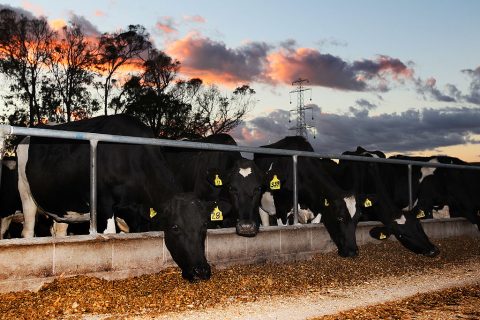
“Australians would be shocked to know that beef on the shelves of our biggest supermarkets could be pushing threatened species to the brink of extinction. Collectively Coles and Woolworths have made more than $2 billion in profits in the last year, profiting from the destruction of wildlife and precious Australian nature. Coles and Woolworths owe it to shoppers to deliver on their promises and end deforestation in their supply chains now.
“As big beef buyers, Coles and Woolworths have an essential role to play in keeping Australia’s unique forests standing. They can help stop the Great Barrier Reef from being poisoned by runoff and protect iconic forest wildlife by taking deforestation off their shelves. It’s time these big companies put their money where their mouths are and follow through on their promise of sourcing and supplying deforestation-free beef.”
New Zealand’s parliament has adopted a controversial new law blocking a whole avenue of climate litigation and shutting down its most advanced corporate lawsuit, which has been blamed by the government for shaking business confidence and investment.
The Climate Change Response (Tort Liability) Amendment Bill, expected to take effect in the coming days after it is formally signed by the Governor-General, prevents all current and future civil claims for climate loss or harm under tort law.
Justice minister Paul Goldsmith said last week that the aim was to give businesses “certainty around their climate change obligations”, noting it would not alter the government’s responsibilities under the Climate Change Response Act 2002 nor business obligations under the Emissions Trading Scheme.
“Our response to climate change is best managed by the Government at a national level and not through piece-meal litigation in the courts,” he added in a statement.
Such litigation, he said, “risks developing a new regime that contradicts the framework Parliament has already enacted” to tackle climate change.
South Africa’s top court blocks Shell’s offshore oil exploration right
Constitutional Court rules that Shell and its partners failed to consult affected communities and did not properly consider environmental risksPeruvian farmer loses climate case against RWE – but paves way for future action
Experts say that despite dismissing the lawsuit, the ruling sets a precedent by confirming that climate science can establish legal liability for the damage caused by emissions


Goldsmith singled out a key domestic climate lawsuit brought by Northland iwi leader and activist Mike Smith against six big companies: dairy firms Fonterra and Dairy Holdings, energy firms Genesis Energy and Z Energy, New Zealand Steel and coal mining firm BT Mining. A seventh original defendant, Channel Infrastructure, was dropped after it permanently decommissioned its Marsden Point oil refinery.
Smith argued that these companies had caused him harm under public nuisance and negligence law, as well as a third breach of a duty to cease contributing to climate change that has yet to be tested domestically. He did not seek financial compensation, instead asking for the companies to immediately stop emitting or contributing to net greenhouse gas emissions.
In one of the most advanced corporate climate accountability lawsuits in the world, a trial had been scheduled for April 2027 after the Supreme Court unanimously allowed the case to continue.
Corporate lobbying in the shadows
Smith described the passing of the bill as “deeply concerning”, particularly as it coincided with the Supreme Court hearing another of his climate lawsuits. In that case, Smith v Attorney-General, he argues that the government’s response to climate change and its impacts on Māori communities in particular breaches rights to life and culture.
“That timing raises profound questions about the separation of powers and the rule of law,” said Smith. “Whatever one’s view of the merits of these cases, it is deeply troubling when parliament intervenes to remove a legal pathway while the courts are actively considering fundamental questions about climate responsibility, rights and the crown’s obligations.”
The bill – which says that no person (including the government) can be found liable in tort for emissions-related climate change effects – followed major lobbying efforts by the companies defending themselves in Smith’s lawsuit. They outlined a proposed legal amendment in a briefing note to the government in 2024.
The centre-right government has been fiercely criticised over its lack of transparency in relation to this lobbying activity. The national ombudsman recently found that the Prime Minister’s Office effectively withheld information requested by the Environmental Law Initiative about meetings, discussions and conversations regarding Smith’s case.
Green groups fail to stop bill
The bill sparked huge concern among environmental campaigners in New Zealand and elsewhere. Greenpeace Aotearoa called it a “shocking abuse of executive power” and the vast majority of submissions to a parliamentary inquiry said it should be rejected.
But in the end, it was adopted with little resistance, moving relatively smoothly through parliament, passing its third reading by 67 votes to 53. Sam Bookman, climate law lecturer at Melbourne Law School, told Climate Home News he was not surprised by this, given that the coalition government has a secure majority.
A complaint has been made to the UN special rapporteur on climate change and human rights by Smith, the National Iwi Chairs Forum Pou Tikanga and youth coalition Climate Clinic Aotearoa over what they see as the government’s heavy-handed approach. Smith is also challenging the new law in yet another lawsuit.
“Pathetic”: New Zealand plans to barely cut emissions between 2030 and 2035
Bookman thinks it “very unlikely” that such a challenge will succeed, noting that New Zealand’s constitution is firmly anchored in parliamentary sovereignty.
But the expert in climate law does not see the bill as the end of legal action in the country, noting that New Zealand has a “sophisticated climate litigation landscape with a growing number of specialist and experienced lawyers and NGOs”.
The country is also approaching its next general election in November, and some opposition parties have pledged to restore access to the courts if elected.
Amanda Larsson, global project lead on agriculture for Greenpeace International, said: “This law deserves to be tested, and I strongly encourage the international climate litigation community to unite and help defend New Zealanders’ fundamental right to hold polluters accountable before this becomes a global blueprint.”
Copycat legislation on the rise
New Zealand’s move is part of a small but growing legislative effort to shut down climate litigation around the world.
In the US, Republican politicians introduced legislation in the House and Senate in April that would shield fossil fuel firms from climate liability lawsuits. Similar laws have already been passed at state level in Tennessee, Utah, Iowa and Louisiana.
The German state of Bavaria has put forward a similar proposal to the Federal Council, aiming to block private climate claims as well as the recognition and enforcement of foreign judgments imposing such liability. There are also proposals to limit available remedies and actions in the Netherlands and Belgium.
UN General Assembly backs “climate obligations” set by world’s top court
Bookman said he expects more efforts to counter climate damages litigation and advised plaintiffs to think about how to respond, including drawing on broader support in opposing them.
“Even though it’s very hard for plaintiffs to win these types of cases, companies are very eager to avoid the expense, embarrassment and political accountability that come even with unsuccessful lawsuits,” he said.
The post New Zealand moves to protect business with law curtailing climate litigation appeared first on Climate Home News.
New Zealand moves to protect business with law curtailing climate litigation


-
Climate Change1 year ago
Guest post: Why China is still building new coal – and when it might stop
-
Greenhouse Gases1 year ago
Guest post: Why China is still building new coal – and when it might stop
-

 Greenhouse Gases2 years ago
嘉宾来稿:满足中国增长的用电需求 光伏加储能“比新建煤电更实惠”
-

 Climate Change2 years ago
嘉宾来稿:满足中国增长的用电需求 光伏加储能“比新建煤电更实惠”
-
Climate Change2 years ago
Bill Discounting Climate Change in Florida’s Energy Policy Awaits DeSantis’ Approval
-

 Renewable Energy10 months ago
Sending Progressive Philanthropist George Soros to Prison?
-
Greenhouse Gases1 year ago
嘉宾来稿:探究火山喷发如何影响气候预测
-

 Carbon Footprint2 years ago
US SEC’s Climate Disclosure Rules Spur Renewed Interest in Carbon Credits