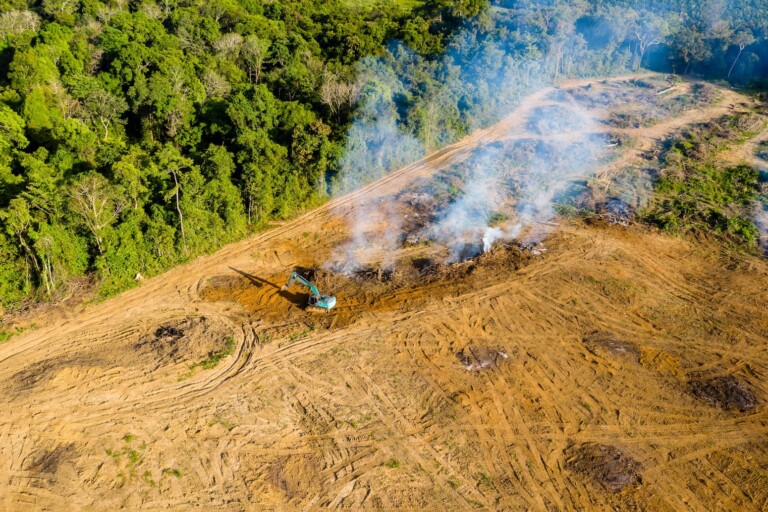
To many people, Brazil conjures up images of the endless Amazon River, lush tropical rainforest and breathtaking wildlife. In a country of its size, this picture can remain true while also containing a more complex and changing set of realities.
For example, climate change, high water demand and human activity are also leading to increased desert-like conditions. One recent study found that in the past 30 years, there has been a 30% expansion in dryland habitat across Brazil. One of the most affected areas includes the state of Pará, a major part of the Amazon rainforest and home to Belém, which is hosting this year’s UN climate summit.
Water shortages
Brazil’s northeast region is particularly noted for its semi-arid landscape and water scarcity.
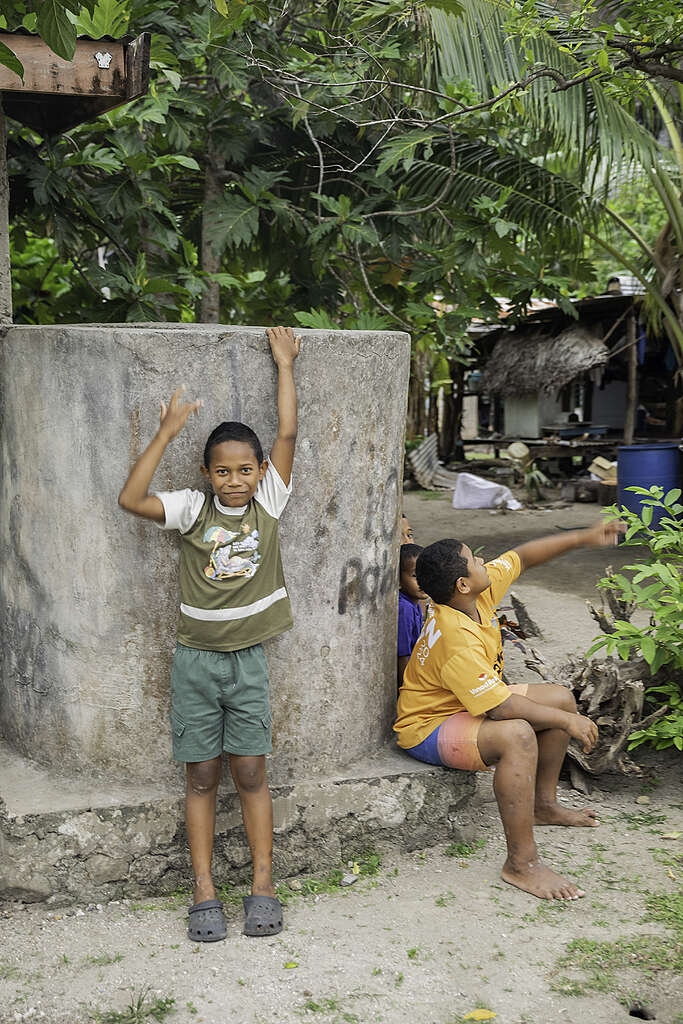
Pernambuco, a small state by Brazilian standards, extends from the eastern Atlantic coast into the region’s interior for around 450 miles. Water availability is a constant concern for many communities across the state, especially family farms which are significant contributors to the regional economy.
“One of the main problems people are facing here is the growing frequency of droughts and the irregularity of rainfall. As a result, producing food has become extremely difficult,” said Carlos Magno, a coordinator at Centro Sabiá, a non-profit organisation in the area.
“We’re also experiencing stronger heatwaves, which have been causing the death of many trees and affecting the local environment even more,” Magno added.
He went on to describe how family farming in the region is almost entirely dependent on rain to grow food. There are no irrigation systems or wells to support communities so when the rains fail, it means less food on the table.
Addressing these concerns is a key objective of an ongoing project supported by the Adaptation Fund’s Climate Innovation Accelerator (AFCIA), administered by the UN Development Programme and carried out by Centro Sabiá.
Transforming lives
Centro Sabiá has an intimate knowledge of how family farming operates in the region. It spent time consulting with communities to better understand their concerns, and hearing their ideas on how to combat water scarcity.
The project is implementing simple, yet affordable, climate solutions which are improving the livelihoods of local people. One intervention being explored is to recycle wastewater to help with the growth of new agroforestry plots. The water – taken from washing or cleaning – is filtered and then redirected for use on plots that combine crop farming with tree planting. The technique is designed to improve soil health, cut pollution and improve biodiversity.
“The water that used to pollute the soil now nourishes crops and trees,” added Magno. “When people realise that their available water is limited, but they can reuse it to grow food, it changes everything.”
On the project, 130 families, totalling over 31,000 people, introduced greywater reuse across 30 new agroforestry plots. The systems are low-cost and simple to implement within a farm’s existing infrastructure. They can be used for years with the initial access to technical support, and, as a result, are now treating millions of litres of water each year.
The impacts in Pernambuco have been immediate. Each family is estimated to be saving US$350 a year on water, and earning over US$300 a month from selling agroforestry products.
Making farming greener
Agroforestry has been identified as a sustainable alternative to industrial farming.
According to some scientists, the Amazon rainforest is able to recycle up to 5 litres of water per square metre a day. By contrast, land used for pasture is only able to recycle 1.5 litres. This helps to explain why some previously biodiverse areas that have been converted for cattle ranching and farming are now becoming drier.
Agroforestry seeks to redress the balance by including trees in the agricultural process, bringing more moisture – and carbon – back into the soil. The response to these techniques from people across Pernambuco has so far been overwhelmingly positive.
“Nature is doing really well for us,” reported Cilene, a local participant in the project. In a recent interview with the Adaptation Fund, she explained how in the past, “we bought things with pesticides. Now with this project we are learning to have better, healthier food.”
“Compared to how we were living before, we see better results and sustainable benefits,” she added.
Francisca Ferraz de Aquino Silva, a farmer in Calumbi, agrees. “This project was a real turning point in my life,” she said.
“After the technology arrived, I realised it was possible to make better use of water, without waste, and to produce food while improving the soil. It was a new opportunity in my life,” she told Centro Sabiá.
“Agroforestry reduces the need for heavy labour. You work without much effort, it brings economic return, and nature works in your favour…I saw that it was possible to live in semi-arid conditions with dignity and prosperity – planting biodiversity and working with agroforestry systems,” she added.
What this means for COP30
As heads of state discuss the state of the planet in Belém, they only need look around at the surrounding rainforest to see how vital a role it plays.
Human development and extreme weather are putting significant pressure on nature and people’s livelihoods. If these drier conditions persist, the rainforest could be turned into savannah, which some scientists believe will create further dry weather and drought.
But the lessons from Belém’s southerly neighbour over in Pernambuco could provide an answer.
“Policymakers and delegates attending COP30 have a lot to learn from the project,” commented Magno. “It was built with civil society. It was carried out with the contribution of organisations and people who work every day with local communities.”
“By the end of the [climate] conference, the decisions and commitments must truly guarantee that adaptation resources reach the communities that are struggling every day to adapt to climate change,” he continued.
“It is crucial for funds from international climate agreements and adaptation policies to reach the local level, where they are needed the most.”
Adam Wentworth is a freelance writer based in Brighton, UK
The post COP30: Brazil is drying up despite its rich natural resources appeared first on Climate Home News.
COP30: Brazil is drying up despite its rich natural resources
Climate Change
Why the ICJ’s advisory opinion on climate change took a backseat at COP30
With the International Court of Justice’s landmark advisory opinion on climate change hot off the press this July, hopes were high it could be used as a diplomatic lever for stronger climate action at COP30 in Brazil. But it proved a difficult tool to wield in a tense atmosphere.
The advisory opinion (AO) from the world’s top court – which determined that all states have obligations to protect the climate system from significant harm – has already been woven into new climate litigation and existing legal cases, and judges are starting to reference it in their rulings.
The Mexican community of El Bosque in Tabasco even managed to use it as leverage in recent negotiations with the central government over its latest national climate plan (NDC).
Yet, while some countries wanted the ICJ’s non-binding conclusions to feature in the main political decision approved at November’s climate COP in the Amazon city of Belém, the lack of a coordinated strategic push meant that did not happen, legal experts said.
Monaco, Mexico, the Alliance of Small Island States (AOSIS) and the group of Least Developed Countries (LDCs) all called for the ICJ’s decision – and two other climate advisory opinions from the Inter-American Court of Human Rights and the International Tribunal on the Law of the Sea – to be recognised during various COP30 presidency consultations.
But Jennifer Bansard, the Earth Negotiations Bulletin team leader, told journalists at COP30 that these requests were “at very generic levels” and did not go into the courts’ actionable findings.
“Deep, deep, deep red line”
The closest the ICJ advisory opinion came to being mentioned in a formal text was during a review of the Warsaw International Mechanism for Loss and Damage (WIM). This is key as experts believe the decision has particularly significant implications for the new loss and damage fund.
During these discussions, the Independent Alliance of Latin American and Caribbean Nations (AILAC) said the AO provides “an informed legal foundation” for advancing work on loss and damage. They pointed to “the need for comprehensive assessment and health protection” for vulnerable groups and “forms of reparation” This was supported by Vanuatu, which led the diplomatic work resulting in the ICJ opinion.
But Saudi Arabia, representing the Arab Group, responded that the ICJ’s final outcome is “non-binding” and “does not represent parties’ views” even though it participated in the process. Negotiations, it added, are a “party-driven process based on consensus, and not litigation”.
According to a source in the room, the Arab Group described the inclusion of the ICJ AO anywhere in the WIM document as a “deep, deep, deep red line”. “If you insist on discussing it, we might as well just suspend this session to not waste each other’s time,” said Saudi Arabia’s negotiator. The AO is not mentioned in the final agreed WIM text.
“We are still here” – COP30 tests resolve to keep fighting climate crisis
Harjeet Singh, founding director of the Satat Sampada Climate Foundation and strategic advisor to the Fossil Fuel Non-Proliferation Treaty Initiative, said the group was particularly concerned about the ICJ’s reference to the status of a state as developed or developing as “not static”.
“They feared that formally recognising the opinion would open the door to limitless legal liability for fossil fuel production,” he explained.
Left out of the COP30 cover decision
In addition, the AO’s recognition of a “just and fast transition in line with best available science” was mentioned by Fiji, for the Alliance of Small Island States (AOSIS), at an inaugural meeting on the Just Transition Work Programme. AILAC, Egypt and the UK also raised it during just transition negotiations, while Malawi used it to try to frame transition finance as a legal necessity.
Some states had expected the cover decision to recognise the AO in some form, but text drawn up by Brazil’s COP presidency did not include relevant wording.
The lack of references came despite the fact that the UN asked the ICJ for the advisory opinion unanimously and 96 countries spoke at the hearings.
Data visualisation developed by law professor Margaret Young and designers Dan Parker and Stanislav Roudavski.
Singh said the COP30 battle lines were drawn so sharply on the ICJ opinion because it validates the claims of vulnerable countries for climate justice, while historical and large polluters wanted “to avoid acknowledging any legal framework that implies liability”.
But, he added, while pushing back strongly against it, developed countries “neither championed nor explicitly opposed it in open plenary to avoid negative optics”.
The ICJ’s recognition that COP decisions may have legal effects could also make negotiators more wary of what they agree to.
In the closing COP30 plenary, Palau for AOSIS noted the ICJ’s clear assertion of 1.5C as the legal temperature limit. Yet the final Mutirao decision explicitly reiterates the Paris Agreement’s language of “pursuing efforts” to reach that level, while retaining the original goal of “well below 2°C”.
No coordinated push to champion the AO
Harj Narulla, a barrister specialising in climate litigation and counsel for the Solomon Islands, argued the COP30 decision “undermined” the ICJ’s conclusions. But barring a few nations like Saudi Arabia, he saw the overall outcome as a “failure of capacity and coordination, rather than a principled opposition to using the AO”.
Insiders said government negotiating teams remain too separate from their legal teams, and the former were not properly briefed on how the AO could be used in practice.
The leadership expected from climate-vulnerable countries, particularly the island nations that had advocated for the AO in the first place, also seems to have been absent. A briefing by Ed King and Lindsey Smith, who work on international climate strategy for the Global Strategic Communications Council, described AOSIS’s showing at COP30 in particular as “insipid”.
EU alliance with climate-vulnerable nations frays over finance trade-off
Ralph Regenvanu, minister of climate change of Vanuatu and a key architect of the AO campaign, mentioned it several times in public, including at Cambodia’s announcement that it would formally support a fossil fuel non-proliferation treaty. But his focus seemed to be on pursuing a new UN resolution recognising the ICJ’s findings.
Neither AOSIS nor Regenvanu responded to requests for comment.
Influencing the wider narrative
Nonetheless, Mohamed Adow, director of Power Shift Africa who has followed the climate talks for many years, believes the AO is “starting to influence the wider narrative around responsibility and liability”.
“Though it did not make the ‘waves’ in the formal text that many hoped for, it was clearly the ‘undercurrent’ beneath many streams of negotiation,” agreed Singh.
Nikki Reisch, climate and energy programme director at the Center for International Environmental Law, an organisation that supports the youth activists who sparked the AO process, said the opinion also supports “the need to reform the UNFCCC to make it fit for purpose”. That includes preventing fossil fuel industry influence and allowing majority voting so that a handful of countries cannot block climate action.
Eyes on Colombia fossil fuel transition conference
In 2026, the opinion may start to play a stronger role on the global stage, including at an international conference on a just transition away from fossil fuels co-hosted by Colombia and The Netherlands next April.
The Fossil Fuel Treaty initiative says that gathering will align with the AO, “which confirmed that states have a legal obligation to protect the climate, including by addressing fossil fuel production, licensing and subsidies”.
Colombia seeks to speed up a “just” fossil fuel phase-out with first global conference
Experts, meanwhile, expect more domestic lawsuits underpinned by the advisory opinion aimed at pushing countries to raise their ambition on cutting emissions and say inter-state litigation cannot be ruled out.
“COP30 in Belém is by no means the last word on the ICJ AO or the climate duties it confirms,” Reisch said.
A version of this article was originally published in The Wave.
The post Why the ICJ’s advisory opinion on climate change took a backseat at COP30 appeared first on Climate Home News.
Why the ICJ’s advisory opinion on climate change took a backseat at COP30
Climate Change
China risks emissions rebound amid policy shifts, experts warn
After holding stable for two years, China’s carbon emissions may climb back up as the construction of new fossil fuel power plants accelerates and recent policy changes cloud the outlook for clean energy, a new report warned.
The world’s biggest carbon polluter is expected to keep total emissions flat in 2025 despite rising energy demand – a sign that clean power may, for the first time, fully offset the growth in electricity consumption, the analysis by the Centre for Research on Energy and Clean Air (CREA) showed.
But the Finland-based research group cautioned that a “concerning” policy environment for the next few years increased the risk of an emissions rebound. It added that China was also set to miss its key target for cutting carbon intensity – CO2 emissions per unit of gross domestic product – this year, meaning steeper reductions will be needed to hit its headline 2030 climate goal of slashing carbon intensity by 65%.
Belinda Schäpe, China policy analyst at CREA, said it was unclear how strongly committed China remained to its targets, despite leaders’ assertions that the government always makes good on its climate promises.
“All of this uncertainty raises a lot of questions around where emissions are going,” Schäpe told Climate Home News. “At the moment, it’s very finely balanced. They are just about flat but could well go up or down again based on the decisions that the government will make.”
New pricing model for renewables
Record solar energy installations and strong growth in wind power capacity have increased the share of non-fossil fuel electricity this year, with emissions from the power sector set to decline for the first time since 2016, the report said. But that progress has been partially countered by the rapidly growing use of coal for the production of plastics and other chemical products, meaning overall emissions are expected to remain stable.
At the same time, experts have warned that China’s new pricing system for solar and wind projects risks slowing the clean energy boom. Under the new policy introduced last June, developers of new solar and wind power plants need to secure contracts with provincial authorities through competitive auctions, instead of being guaranteed a fixed price.
Schäpe said prices had been “very, very low” in some of the auctions so far. “Of course, that’s great for consumers, but it’s really bad for project developers because they don’t want to go ahead and invest in new projects facing the risk of no returns,” she said.
Earlier this year, the International Energy Agency (IEA) cut its forecast for China’s 2025-2030 renewables growth by 5% due to the changes in the pricing model. The watchdog’s head Fatih Birol said the profitability of renewables projects – especially solar and wind – was expected to decline between 10% and 15% with the new policy.
Coal power boom continues
Coal power plants, on the other hand, are protected from this market-based system, relying instead on long-term power purchase agreements that lock in prices, Schäpe said, describing it as “unfair competition”.
China’s rapidly expanding coal power fleet is adding to the concerns. In 2025, the country has added the largest amount of coal-fired capacity since 2015, while progress on retiring older plants remains very slow, CREA’s report highlighted.
This runs contrary to a pledge made by President Xi Jinping in 2021 to “strictly control” new coal power projects. That commitment was omitted from Beijing’s updated national climate plan (NDC) submitted in late October ahead of COP30.
In its new NDC, China set an absolute emission reduction target for the first time, committing to cutting its greenhouse gas emissions by between 7% and 10% by 2035 from unspecified “peak levels”.
Focus on next five-year plan
Schäpe said that the absence of a base year could create an incentive to raise emissions and “storm the peak” – pushing them as high as possible to make future reduction targets easier to meet.
She said this put the focus on China’s 2030 carbon intensity target, adding that if Beijing was still serious about meeting it, emissions would need to peak “around now”.
China targeted an 18% reduction between 2021 and 2025, but it is projected to achieve about 12% by the end of this year, CREA’s report said. If that is confirmed, China will then need to significantly ramp up efforts to cut carbon intensity in the next five years to achieve its headline climate commitment for 2030.
Analysts expect China’s new five-year plan – the blueprint for its economic development – to provide more clarity on the country’s energy policies next year.
“We will see how the government is going to balance these two opposing forces: the outgoing coal industry interests and the new cleantech sectors that are meant to become the driver of future growth,” Schäpe said.
The post China risks emissions rebound amid policy shifts, experts warn appeared first on Climate Home News.
China risks emissions rebound amid policy shifts, experts warn
Climate Change
Proposal for global minerals deal meets opposition as China looks away
Saudi Arabia, Russia and Iran are among countries opposed to discussing options for agreeing on global norms to protect people and the planet from the impacts of mining, processing and recycling minerals needed for the clean energy transition, documents seen by Climate Home News show.
Environment officials gathered in Nairobi, Kenya, ahead of the UN Environment Assembly (UNEA) next week are discussing a resolution by Colombia and Oman that aims to make mineral supply chains more transparent and sustainable at a time when growing demand is spurring resource-rich countries to court investment and boost production.
They have proposed the creation of an expert group to identify a range of binding and non-binding international instruments “for coordinated global action on the environmentally sound management of minerals and metals” from mining to recycling. The group would also look at how to handle mining waste and provide guidelines on recovering minerals from tailings responsibly.
Those instruments could range from a global minerals treaty to a non-binding declaration or set of standards on best practice. The resolution is co-sponsored by Armenia, Ecuador and Zambia.
Colombia has previously called for an international minerals treaty to define rules and standards that would make mineral value chains more transparent and accountable.
China, US on the sidelines for now
But Iran, Russia and Saudi Arabia, which is emerging as a major player in mineral supply chains, oppose launching a process that could lead to an international agreement on the issue, according to several sources and documents shared with Climate Home News.
Countries will vote on the proposal next week, during the seventh session of UNEA, the world’s top decision-making body for environmental matters.
China, which dominates the processing of 19 of 20 minerals deemed critical for the global economy, has so far stayed quiet about the proposal, but analysts said Beijing was unlikely to support any supranational initiative to govern mineral supply chains.
China’s priority is “to remain sovereign throughout the process of how these minerals are produced and traded” and to promote cooperation “on its own terms”, said Christian-Géraud Neema, an expert on Chinese engagement in Africa’s transition minerals sector and the Africa editor of the China-Global South Project.
The US, which has been trying to counter China’s critical minerals clout, is not attending UNEA, while the EU – another major global market – is understood to broadly support the proposal.
A spokesperson for the US State Department said: “Our team in Nairobi is focused on the US-Kenya relationship and delivering results for the American people, rather than litigating endless woke climate change theater.” The European Commission did not immediately respond to a request for comment.
Several other countries have raised objections. Chile, a top producer of copper and lithium, wants to narrow the focus of the resolution to voluntary cooperation on illegal mining.
In Africa, most countries back the Colombia-Oman proposal, but Uganda and Egypt oppose it, said Nsama Chikwanka, director of Publish What You Pay Zambia, an NGO focused on resource sovereignty.
“Race to the bottom”
Campaigners say countries should unite at UNEA to pave the way for talks on the issue, with some saying binding rules should be the eventual target.
“The investments that are coming to countries like Zambia are from multinational enterprises and national laws are inadequate to ensure that robust standards are applied. So we need something that is internationally binding,” Chikwanka said.
This comes after opposition from China and Russia thwarted a push by mineral-rich developing countries as well as the UK, the European Union and Australia to reflect the environmental and social risks associated with mining-related activities in the outcome of COP30.
“What we are seeing at the moment is a huge race to the bottom of environmental standards at the same time as the impacts of mining are already immense,” said Johanna Sydow, a resource policy expert who heads the international environmental policy division of Germany’s Heinrich-Böll Foundation.
“It is the chance now to create a long-lasting space for governments to work together on this issue,” she told Climate Home News.
The race to extract minerals like lithium, nickel, copper, cobalt and rare earths needed to manufacture batteries, solar panels, wind turbines and other advanced digital and military technologies has led to growing cases of human rights violations, social conflict and environmental harms around the world.
In Indonesia, nickel mining is fuelling deforestation, in Zambia, copper mining has led to catastrophic leaks of mining waste and in Latin America, Indigenous Peoples say the rush to extract lithium for batteries is trampling their rights.
In 2024 alone, the Business and Human Rights Resource Centre recorded 156 allegations of human rights abuses linked to the mining of energy transition minerals.
Counter-proposals favour non-binding measures
Opposed to global discussions about possible binding tools to govern mineral supply chains, Saudi Arabia and Iran have instead suggested the creation of a technical platform that could review the impacts of mineral extraction in developing countries, explore options for support to address them, and advance voluntary cooperation on environmentally-sound practices.
Digging beyond oil: Saudi Arabia bids to become a hub for energy transition minerals
Saudi Arabia is already cooperating with mineral-rich nations on its own terms by investing billions of dollars in transition minerals abroad in a bid to become a global mineral processing hub that could become a counterweight to China’s dominance.
China, meanwhile, threw its weight behind a G20 agreement on a voluntary and non-binding Critical Minerals Framework intended to ensure that mineral resources “become a driver of prosperity and sustainable development”.
At the G20 leaders’ summit in South Africa last month, which was snubbed by the US, China also launched an economic and trade initiative on minerals, aiming to secure access to minerals in exchange for cooperation on technology, capacity-building and financing.
At least 19 countries, including Cambodia, Nigeria, Myanmar and Zimbabwe, alongside the UN Industrial Development Organisation, have reportedly joined the initiative.
For Neema, of the China-Global South Project, this is an explicit attempt to counter resource diplomacy by the US, which is offering developing countries security and military support in exchange for minerals.
“Producing countries in the Global South are more likely to be attracted by this approach because they know that the likelihood of Chinese companies and banks showing up is quite high,” he said.
The post Proposal for global minerals deal meets opposition as China looks away appeared first on Climate Home News.
Proposal for global minerals deal meets opposition as China looks away
-
Climate Change4 months ago
Guest post: Why China is still building new coal – and when it might stop
-
Greenhouse Gases4 months ago
Guest post: Why China is still building new coal – and when it might stop
-
Climate Change2 years ago
Spanish-language misinformation on renewable energy spreads online, report shows
-
Greenhouse Gases2 years ago嘉宾来稿:满足中国增长的用电需求 光伏加储能“比新建煤电更实惠”
-
Climate Change Videos2 years ago
The toxic gas flares fuelling Nigeria’s climate change – BBC News
-
Climate Change2 years ago嘉宾来稿:满足中国增长的用电需求 光伏加储能“比新建煤电更实惠”
-
Carbon Footprint2 years agoUS SEC’s Climate Disclosure Rules Spur Renewed Interest in Carbon Credits
-
Climate Change2 years ago
Why airlines are perfect targets for anti-greenwashing legal action