

The COP16 biodiversity summit came to an abrupt halt after countries failed to reach consensus on the creation of a new fund during a mammoth 10-hour final plenary session.
Countries debated through the night on Friday in Cali, Colombia, in an attempt to get through the many items on COP16’s agenda.
But, as the talks dragged on into Saturday morning, a large number of developing-country delegates were forced to catch flights home, leaving parties without the “quorum” needed to reach consensus on key issues.
Countries did manage to find consensus on a new benefit-sharing mechanism for genetic resources – known as the “Cali fund” – after lengthy discussions and last-minute text changes put forward by India to protect sovereign rights.
Nations also agreed to a new permanent body for Indigenous peoples, which will allow them to advise and offer their view at biodiversity COPs directly for the first time.
However, the thorny issue of setting up a new fund under the COP – and the final agenda item on a new framework for monitoring countries’ progress on tackling biodiversity loss – will need to be revisited at intersessional meetings next year.
Talks were overshadowed by a lack of progress on implementing the Kunming-Montreal Global Biodiversity Framework, the landmark “Paris Agreement for nature” deal made at COP15 in Montreal in 2022.
A joint investigation by Carbon Brief and the Guardian revealed just before the summit opened that the vast majority of countries missed a deadline to set out new plans for how they will meet the targets of the framework ahead of COP16.
By the summit’s end, just 44 out of 196 parties – 22% – had come up with new biodiversity plans.
Some megadiverse nations and major economies said they did not have the time needed to put plans in place, while developing countries said they were not provided with the funding required to produce new pledges.
Below, Carbon Brief has an in-depth summary and analysis of all of the key outcomes of COP16.
- Formal negotiations
- National biodiversity pledges (NBSAPs) and global review
- Finance
- Digital sequence information
- Monitoring framework
- Article 8(j)
- Biodiversity and climate change
- Mainstreaming biodiversity
- Synthetic biology
- Biodiversity and health
- Marine and coastal biodiversity
- Links with other bodies
- Invasive alien species
- Capacity-building and knowledge management
- Sustainable wildlife management
Formal negotiations
National biodiversity pledges (NBSAPs) and global review
NBSAPs
COP16 was the first biodiversity summit since nations signed a landmark agreement in late 2022 called the Kunming-Montreal Global Biodiversity Framework (GBF), which aims to halt and reverse nature loss by 2030. It is often described as the “Paris Agreement for nature”.
As part of the GBF and its underlying documents, countries agreed to submit new national biodiversity pledges, known as national biodiversity strategies and action plans (NBSAPs) “by” COP16, which began on 21 October.
The new NBSAPs were meant to outline how countries will implement the goals and targets of the GBF within their borders.
As such, the publishing of new NBSAPs was viewed by many as a key test of whether countries are taking action to ensure biodiversity loss is reversed by 2030.
For the past year, Carbon Brief has been closely tracking the release of new NBSAPs. A handful of European nations, including Spain, Ireland and France, were the first to release new NBSAPs in 2023 and early 2024.
In the months leading up to COP16, progress was slow. In September, just one month before COP16, only 19 parties out of 196 had released new NBSAPs.
Just ahead of the summit in October, Carbon Brief co-published an investigation with the Guardian finding that 85% of nations – 170 out of 196 parties – were set to miss the deadline to release new NBSAPs by COP16.
This included 12 of the 17 “megadiverse countries”, which together provide a home to 70% of the world’s biodiversity. (The US is a megadiverse country, but is not party to the CBD.)
Carbon Brief and the Guardian spoke to several major economies and megadiverse nations about why they were unable to meet the deadline.
Megadiverse nations Brazil and Colombia said the timeframe given to produce new NBSAPs was not long enough to properly consult all the relevant stakeholders and Indigenous groups; India referenced difficulties translating the targets to a local context; and the UK blamed multiple changes in power, both in Scotland and at the national level.
Elsewhere, many developing nations said that a lack of timely funding available from the Global Environment Facility (GEF), a major multilateral environmental fund, had prevented them from being able to produce new NBSAPs.
Several parties published new NBSAPs during the summit itself – just after the deadline. This included COP16 host Colombia, as well as Germany, Iran, Venezuela, Peru, India, Thailand, Tanzania, Vietnam, Argentina and the Netherlands.
By the summit’s end on 2 November, 44 out of 196 parties had produced new NBSAPs.
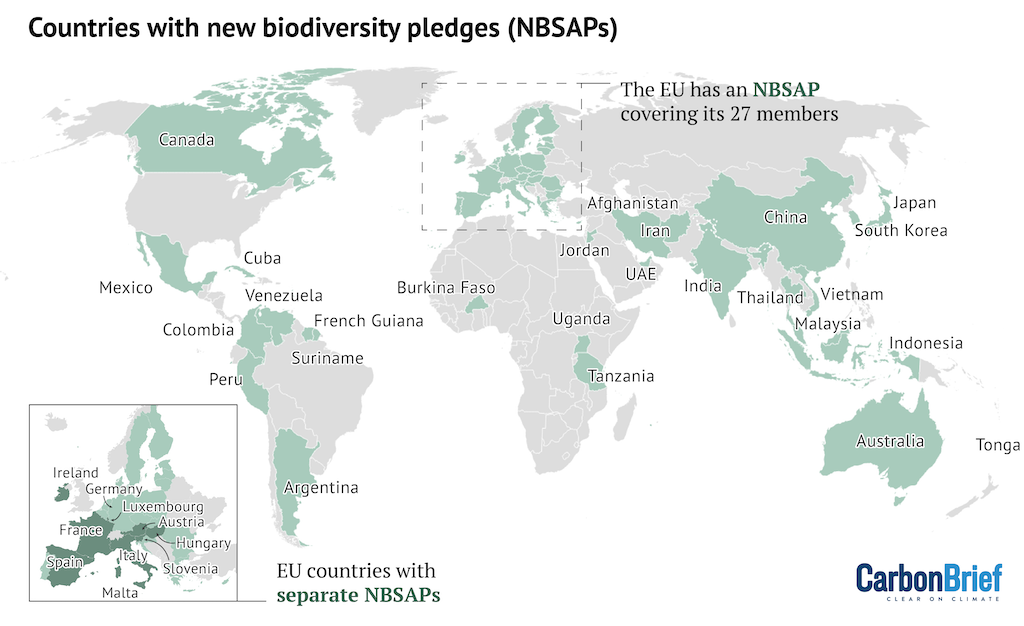
According to the GBF and its underlying documents, countries that were “not in a position” to meet the deadline to submit NBSAPs ahead of COP16 were requested to instead submit national targets.
These submissions simply list biodiversity targets that countries will aim for without an accompanying plan for how they will be achieved.
By the end of the summit, some 119 parties had produced national targets.
This included many developing nations. Bernadette Fischler Hooper, global advocacy lead at WWF, told Carbon Brief that this demonstrated the willingness of developing countries to implement the targets of the GBF, despite not having the funds required to produce NBSAPs.
One of the major tasks for negotiators in Cali was to decide how to move forward after the majority of countries failed to produce new NBSAPs ahead of the talks.
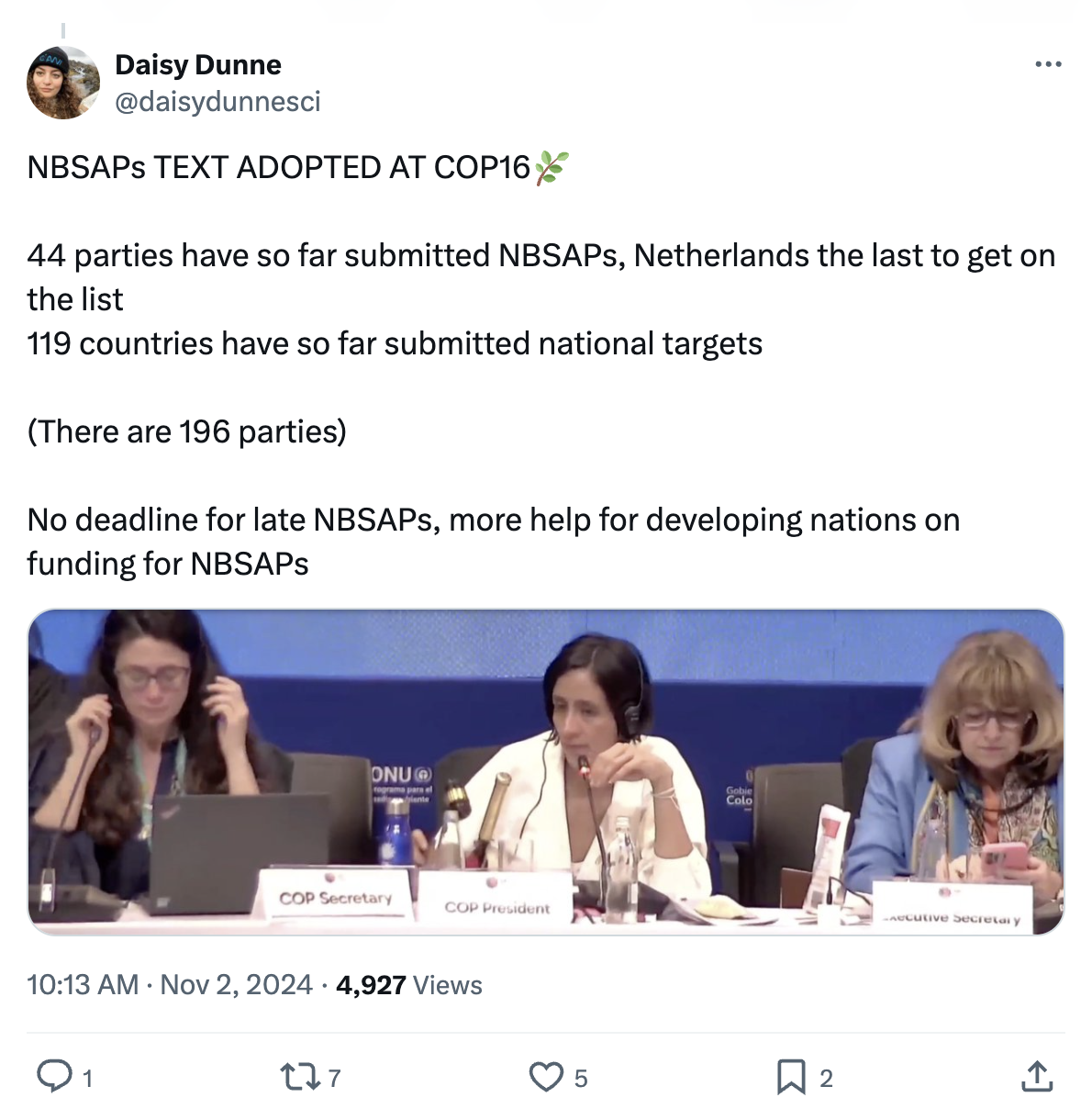
At the end of the summit, a new decision text on NBSAPs was adopted.
The text “urges” countries that have not yet done so to release new NBSAPs “as soon as possible”. (In UN language terms, “urges” is stronger than “invites” or “encourages”, but not as strong as “requests” or “instructs”.)

Carbon Brief understands that, during the negotiations for the text, the UK put forward the idea of putting in a timeframe of “as soon as possible and no later than October 2025”.
(October 2025 is the date of the next Subsidiary Body on Scientific, Technical and Technological Advice (SBSTTA) meeting.)
However, “the room did not seem taken” by the UK’s proposal, according to an insider, with many parties having the view that “as soon as possible” should be interpreted as meaning immediately.
Fischler Hooper told Carbon Brief that she had hoped to see the language say “as soon as possible, but no later than the end of 2025”, adding:
“Generally, having a clear deadline is good to keep countries to account. ‘As soon as possible’ is commonly understood as ‘really really soon’ and we can only hope that parties see it that way too.”
In acknowledgement of developing countries’ difficulties in producing new NBSAPs, the text also “requests” the GEF to “provide timely support to all eligible parties, aligned with national circumstances and needs, upon request, to enable them to” release new NBSAPs.
Global review
The GBF and its underlying documents also set out a plan for how countries’ biodiversity plans should be reviewed and monitored.
According to these documents, parties must submit national reports containing agreed headline indicators in 2026 and 2029. (See: Monitoring framework.)
At COP16 and “subsequent COPs”, a global analysis of “NBSAPs, including national targets” should be conducted to assess progress towards achieving the GBF.
A “global review” should then be held, section J of the GBF says. This is an element that observers believe could be key for implementation. The underlying document says this global review should take place at COP17 in 2026 and COP19 in 2028.
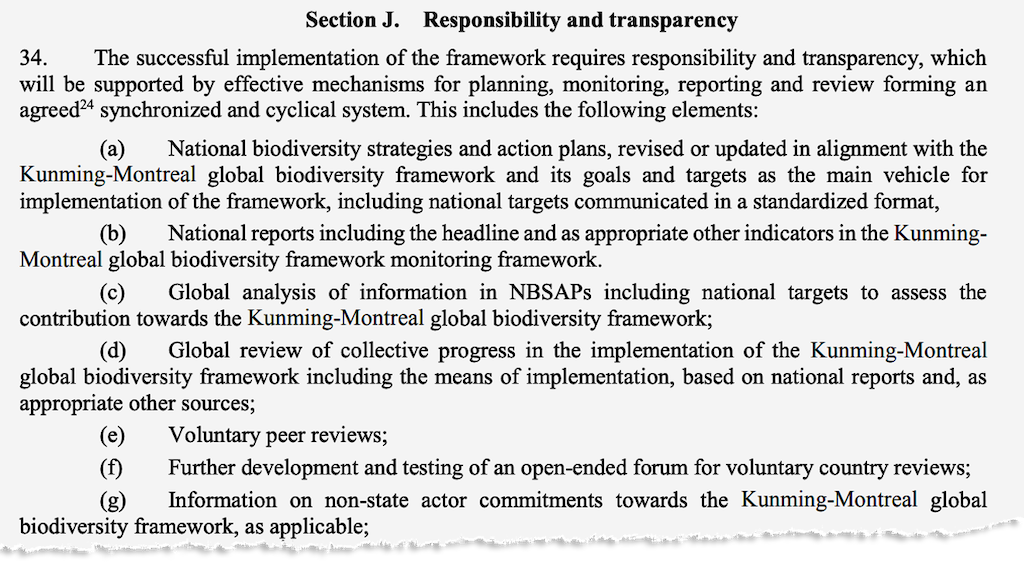
After global reviews, there will be “voluntary peer reviews”, according to the GBF, after which countries “may take the outcome of the global reviews into account in future revisions and implementation of their” NBSAPs and national targets.
In Cali, negotiators were tasked with hammering out the finer details of how this reviewing process should work.
At the end of COP, they adopted a new text deciding on the details for the global review at COP17 and COP19.
The text “decides” that the global review “will culminate in a decision or decisions by the COPs, including any recommendations, as necessary, to identify and address challenges in collective progress in implementation, including on the means of implementation”.
It specifies that the global review “should be focused on assessing collective progress
and that the review will be undertaken in a facilitative, non-intrusive and non-punitive manner”. It adds that the review should be a “party-driven process”.
The text also says the global review should draw on national reports, advice from subsidiary bodies and a “global report” on the “collective progress” of countries in meeting biodiversity goals.
This global report will “draw upon data and information provided by parties and the best available peer-reviewed scientific, technical and technological information, as well as traditional knowledge given access to with the free, prior, informed consent of Indigenous people and local communities”.
The text does not clearly state how countries will need to respond to the global review, beyond “recalling” the decision under the GBF that countries “may” revise their NBSAPs in response.
One observer who followed the negotiations closely described the omission of any kind of follow up to the global review as a “main concern”, telling Carbon Brief:
“Parties must be much clearer about what they will do in response to the outcomes of the global review.”
The observer added that the final text “significantly reduced the number of inputs into the global review”, leaving little room for civil society to voice their concerns.
In addition, the global review text lacks any mention of “high-level political oversight”, which could have helped with engaging countries on implementation, the observer added.
Finance
Finance was the headline “fight” of COP16, with deep divisions between developed and developing countries.
Just before 8:30am on Saturday morning, countries reached a stalemate on establishing a brand-new global biodiversity fund under the COP’s governance, which had been a key demand of developing countries.
As a requested check revealed that the COP no longer achieved quorum, discussions on the contours and governance of this fund will resume at a reconvening of COP16, likely to happen in tandem with next year’s intersessional talks.
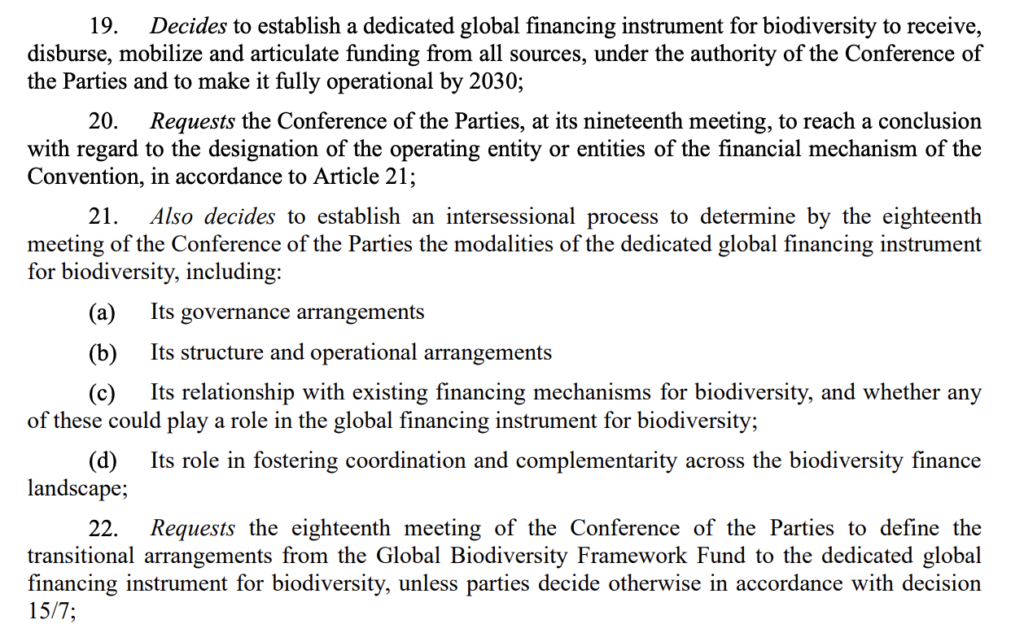
While the failure to establish a new catch-all fund disappointed developing countries, the Colombian presidency attempted a last-minute push to have the fund established. The draft decision text issued at 3:30 am also included one of the presidency’s key priorities for the conference – the recognition of existing high debt burdens. This was despite pushback from debtor countries, such as China.
The final draft decision text on resource mobilisation “takes note of” efforts to accelerate international financial sector reform and calls for a review of how the global debt crisis is impacting biodiversity action.
Reacting to the final text, Oscar Soria of the Common Initiative, said:
“Mobilising sufficient finance to achieve biodiversity goals has been a major issue for 30 years now. We saw insufficient leadership from wealthier countries: the EU and France in particular, Canada, Switzerland, Japan, the UK, but also China. The Colombian presidency was pushing for important topics to be included in conversations, such as sovereign debt, and put forward a rather exhaustive list of ways to explore biodiversity finance. [But] the state of distrust between developing and developed countries, and choices made by minister Muhamad in how she organised the process, made the negotiations very challenging in the last hours.”
Lim Li Ching of the Third World Network told Carbon Brief:
“The [global] north gets to keep the status quo. The [global south] gets a process.”
The Cali talks were a litmus test for whether and how countries had met their commitments to fund the GBF’s ambitious goals: to mobilise “at least $200bn per year” for biodiversity conservation by 2030 from “all sources”– domestic, international, public and private.
Of this, developed countries – along with others that “voluntarily assume” their obligations – are expected to “substantially and progressively increase” their international finance flows for nature “to at least $20bn per year by 2025, and to at least $30bn per year by 2030”, the GBF text states.
Two years ago, a finance package was rapidly gavelled through as part of the COP15 deal by the Chinese presidency, despite protest from developing countries. (See: Carbon Brief’s in-depth summary of COP15’s key outcomes.)
This ending was still fresh in countries’ minds from day one of the summit, when conversations around resource mobilisation and finance were herded, along with other fraught issues, into a working group.
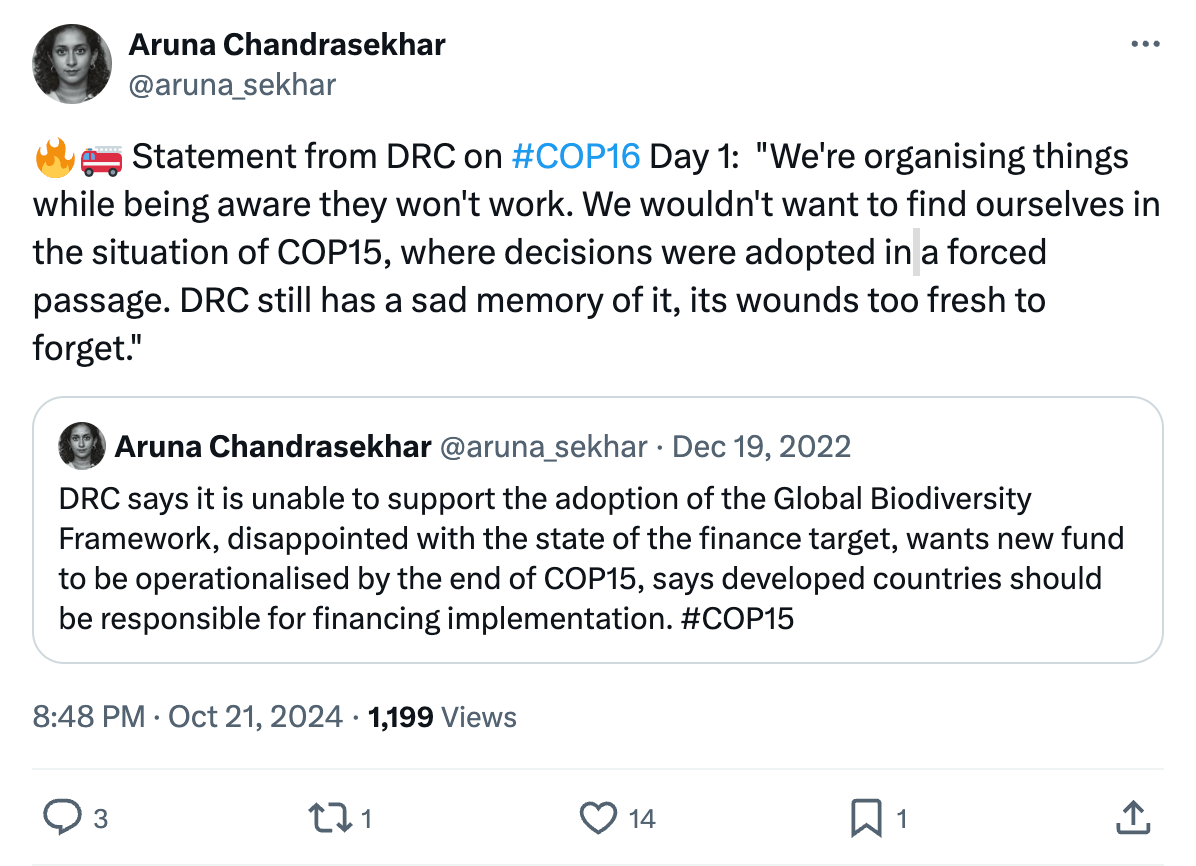
New fund and financial mechanism
In the run-up to COP15, developing countries, including South Africa, supported Brazil’s call for a new nature fund governed by the COP. In Montreal, countries accepted an interim fund – the Global Biodiversity Framework Fund (GBFF) – hosted under the Global Environment Facility (GEF).
By September this year, seven developed countries had contributed a total of less than $250m to the GBFF. The COP16 decision text on the financial mechanism, which was not passed, notes that “a number of eligible [p]arties have not yet accessed support from the GEF, in particular for the revision and updating of national biodiversity strategies”.
On the first day of COP16, Zimbabwe, speaking for Africa, and Brazil, speaking for megadiverse countries, revived the fight for a new fund that is separate from the GEF. In its intervention, Zimbabwe described the expectation that developed countries would deliver on the $20bn target as “seemingly wishful thinking”, but said that it could still be achieved “depending on what we decide at this COP16”.
Two days later, co-chairs published a 98-page-long non-paper that compiled what countries wanted for biodiversity finance over the next five years through to 2030. Non-papers are informal documents that bring together divergent views as parties attempt to reach a legal consensus. Non-papers do not usually attribute country positions explicitly, but this one included each country’s name alongside its wishlist for a new resource strategy.
In their submissions to the non-paper and elsewhere, developed countries, including Australia, Japan, the EU and others, opposed an entirely new fund. Many suggested leaving out references to Article 20 and 21 of the CBD, which cover equity. They also resisted including an update on their pledges to the GBFF.
“Finance day” at COP16, on 28 October, saw attempts and initiatives to thaw the resource deadlock. Seven countries, including New Zealand, France and Austria, as well as Quebec – the first sub-national government to do so – pledged $163m in total to the GBFF, taking the fund up to $396m.
Countries, observers and civil society reacted sharply to the announcement.
“We are talking about millions that have been pledged…But what we are expecting are billions,” Irène Wabiwa Betoko from Greenpeace told Reuters.
Brian O’Donnell, from Campaign for Nature, told Carbon Brief that “at least this $163m is grant money and not loans”.
As COP16 drew to a close, the future of the new fund seemed increasingly uncertain. After eight sessions of the contact group on resource mobilisation and the financial mechanism, (co-chaired by Ines Verleye of Belgium and Patrick Luna of Brazil), negotiations went straight to closed-door meetings with ministers and heads of delegation.
On Friday 1 November, the scheduled final day of COP16, the Colombian presidency released a draft decision text that proposed bumping discussions around a new funding instrument to intersessional discussions after COP16, with little other detail.
At 3:30 am on Saturday, well into overtime, COP16 president Susanna Muhamad alerted tired delegates to a new draft decision text on resource mobilisation. In an unexpected turn, the document contained a proposal to establish a new global biodiversity fund under the COP’s governance by COP30.
However, the passing of the text was prevented by the COP’s failure to reach quorum.
$20bn tussle
A key tension at COP16 was a commitment in the GBF for developed countries to collectively mobilise “at least” $20bn a year by 2025 to progressively fill a $700bn biodiversity finance gap by 2030.
In Cali, with two months to go until 2025, it was unclear if developed countries would end up meeting this target, with almost all of them falling far short of their “fair share”. (See: Carbon Brief’s in-depth piece on biodiversity finance and fair shares.)
In the latest reporting data from the Organisation for Economic Co-operation and Development – which is only as recent as 2022 – developed countries, including the US, had contributed $12.1bn towards biodiversity finance in 2022. Furthermore, only $3.8bn of that finance was biodiversity-specific.
On Wednesday, 30 October, ministers from 20 developing countries issued a statement urging global-north governments to meet and exceed the $20bn target and to set up a working group of finance and environment ministers to get it done on time.
The Ministerial Alliance for Ambition on Nature Finance comprised Burkina Faso, Cambodia, Cameroon, Dominica, Ethiopia, the Gambia, Grenada, Guinea, Ivory Coast, Liberia, Madagascar, Nigeria, St Kitts and Nevis, Samoa, Sierra Leone, Somalia, South Sudan, Togo, Vanuatu and Zambia.
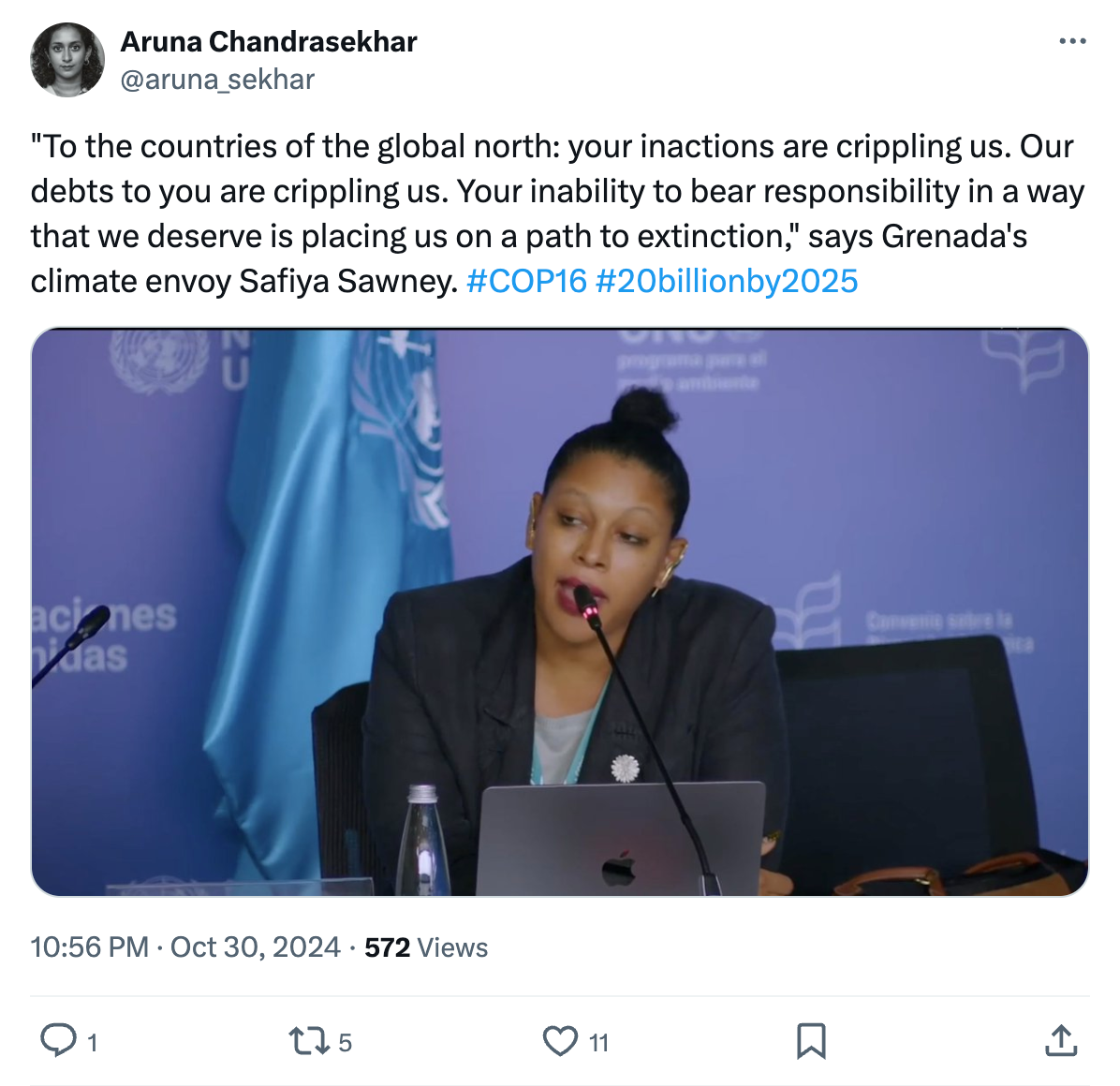
Private and innovative funding
Attempts to thaw the finance deadlock began right from the start of COP16, chiefly through private and “innovative” finance initiatives: from biodiversity credits to bonds and special hybrid funds.
Biodiversity credits were one of these mechanisms that saw both an increased push and increased civil society pushback at COP16. (See Carbon Brief’s in-depth Q&A on biodiversity offsets.)
Long-time CBD observers were surprised at their resurgence over the past two years. Neth Daño, Asia director of the ETC Group research collective, told Carbon Brief:
“In 2010, they killed the idea of biodiversity credits. Nobody thought they would come back like a zombie.”
On 28 October, the International Advisory Panel on Biodiversity Credits launched its framework for “high-integrity” principles for biodiversity markets, supported by France and the UK. The principles were dubbed “extremely problematic” by the Green Finance Observatory, a sustainable finance thinktank.
Meanwhile, the Brazil-led Tropical Forests Finance Facility (TFFF) received the backing of Colombia, as well as Malaysia, Indonesia, DRC and Ghana. The fund aims to raise $125bn for the six rainforest nations – dubbed the “Opec of rainforests” – through re-investing long-term loans from six developed countries: Norway, US, UK, France, Germany and Sweden.
While mobilising resources from “all sources” was the one point of consensus among parties in finance negotiations, the emphasis on private and “innovative” funding was criticised by developing countries.
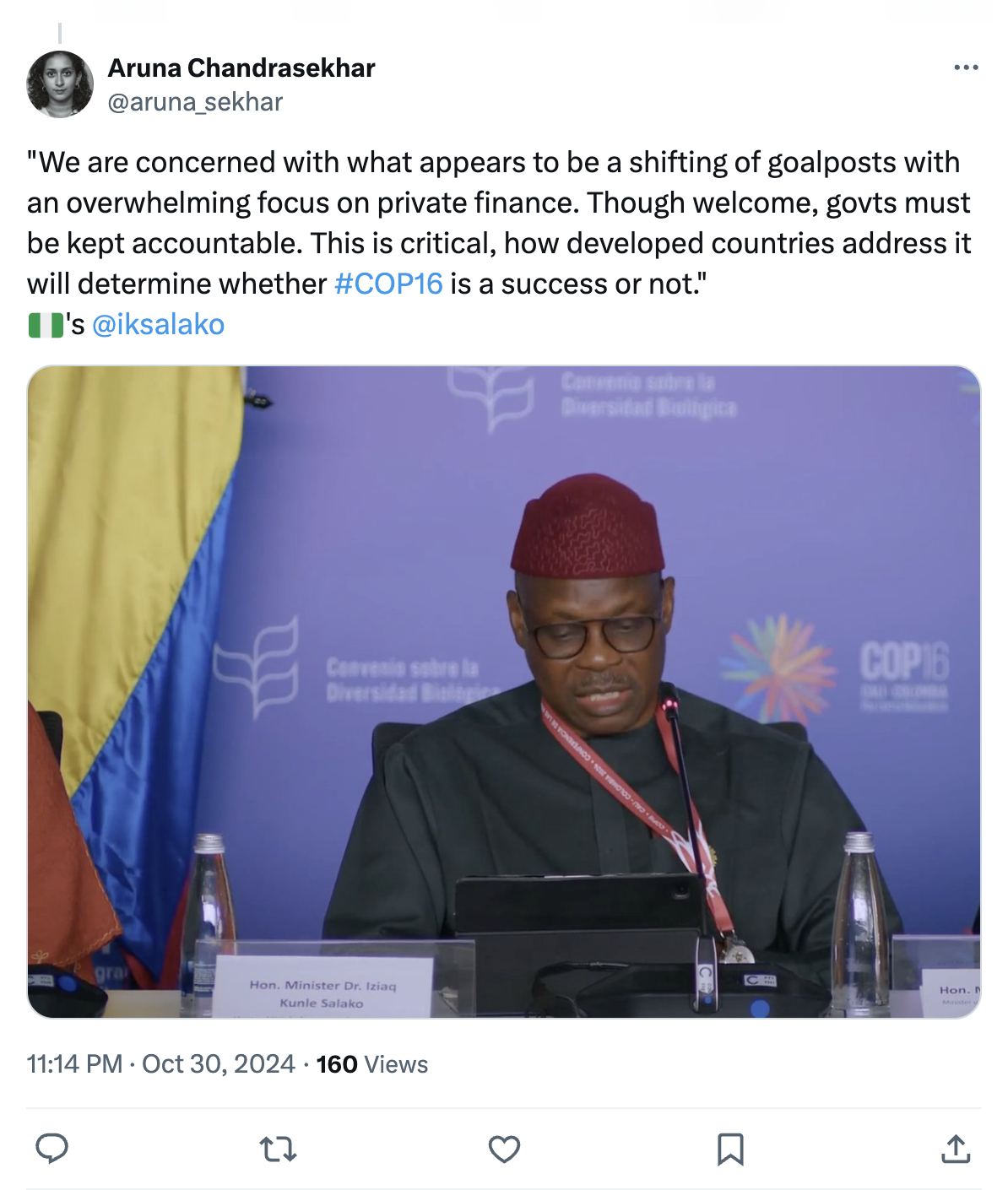
In a press conference on 30 October, DRC’s environment minister, Ève Bazaiba, condemned developed countries for not meeting their commitments. She also championed the Lion’s Share Fund, which hopes to raise funds from companies and brands that use biodiversity in their logos and advertising.
Digital sequence information
Of all negotiation tracks, digital sequence information (DSI) was one of the most keenly anticipated at COP16.
DSI is a term used at international talks to refer to genetic information from plants and animals.
This genetic information is often sourced from plants and animals in developing, biodiversity-rich countries by companies headquartered mainly in the global north, who use it to make products, such as drugs, cosmetics and food.
Because of this, developing nations have long called for the establishment of an international mechanism that can ensure that the benefits from DSI are shared fairly with the people living where the resources were discovered, including Indigenous groups.
While a fund and mechanism for sharing the benefits of DSI had already been established at COP15 in Montreal, many major loopholes remained in how both would work before it could formally begin.
This work was delegated to an “ad-hoc open-ended working group” on DSI, which met twice to resolve outstanding issues.
Earlier this month, negotiators met in Montreal for “five days of intense negotiations” to narrow down the options for the mechanism and fund, as well as how funds would “flow” through them.
This included deliberations on who would pay to use DSI, how much they would pay, what would “trigger” such payments, how this money would be disbursed – and to whom. It also covered how the entire mechanism would be managed and governed.
Discussions on DSI were carried out under a dedicated contact group that met eight times to resolve the 311 square brackets (denoting unresolved issues) that still remained in the text at the outset of the summit.
At COP16, countries agreed to the first-ever global fund to which companies using genetic data “should contribute”, along with a unique multilateral mechanism to support it.
Pharmaceutical, cosmetics, agribusiness, nutraceutical and technology conglomerates that benefit from genetic data “should” contribute 1% of their profits, or 0.1% of their revenue, to the landmark “Cali fund” under the agreement.
However, DSI experts told Carbon Brief that the use of the word “should” implies that contributing to the fund is still voluntary and that the payment rates are “indicative”, non-binding ones. In the run-up to COP16, blocs including African and Latin American countries sought a legally binding mechanism on DSI.
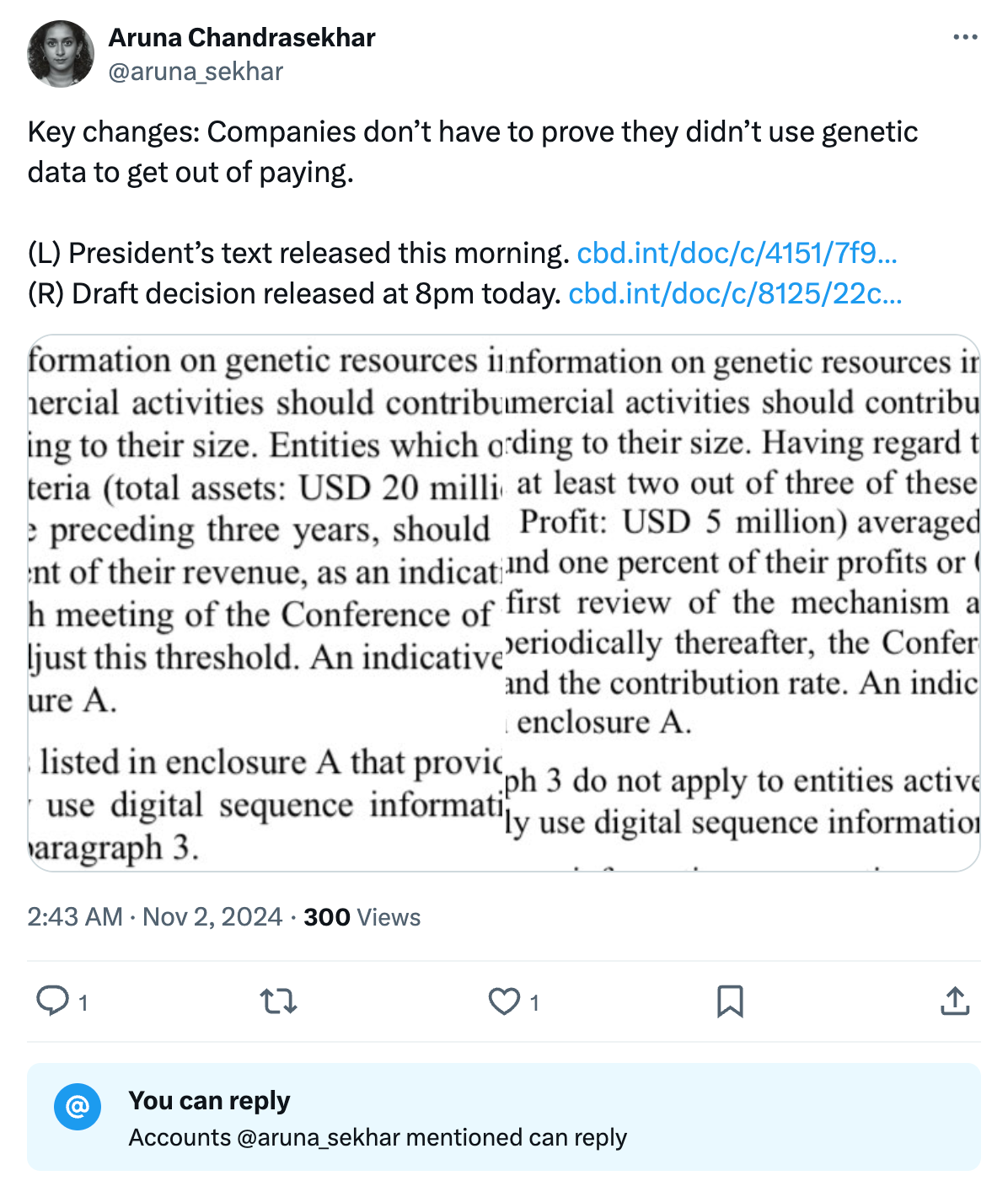
Additionally, companies could potentially avoid paying, since they are no longer required to prove that they did not use genetic data. A key clause was removed from the penultimate draft of the document that asked companies to “demonstrate” that they were not using DSI.
Instead, the final text leaves the decision up to companies.

Agribusiness – or “animal and plant breeding”, as it reads in the text – nearly escaped scrutiny, as a reference to agribusiness was removed from the “indicative list of sectors” that may benefit from the use of DSI. While it was included in the president’s draft issued on Friday morning, it had disappeared from the draft text issued later that night.
This raised concern among observers that other industries could be similarly lobbying for their exclusion from the list. (Carbon Brief understands that Switzerland raised the potential for removing pharmaceuticals from the list on the margins of the negotiations.)
Animal and plant breeding was added back into the text that was, ultimately, adopted at the plenary.
Despite countries such as Zimbabwe – opposed by Japan and Canada – insisting that academia and research institutions should contribute to the fund, this is no longer the case. Instead, these institutions are only expected to make explicit on their databases the countries of origin of data, to provide cues to users of these databases on to whom benefits should go to. Preserving open access was a key priority for the EU, Canada, Japan, Switzerland, Norway and Australia.
Nithin Ramakrishnan, a DSI expert at Third World Network, told Carbon Brief:
“The decision is giving biopirates a chance to make a one-time donation to the Cali Fund and get away with it.”
The final text states that at least half of all benefits going to the fund must be used to meet the “self-identified” needs of Indigenous communities in developing countries, particularly women and youth, although it concedes that this could be limited by “national circumstances”.
Countries, too, will receive “direct allocations” of funding, a subject that was keenly contested.
The global mechanism was set to supersede national laws around DSI, access and benefit-sharing, such as those developed by Brazil. However, many countries, including Bangladesh, Bolivia, India, Egypt and Argentina, saw this clause as a “blow to sovereignty” and a “washout for national access-and-benefit sharing laws”.
At 3:30am – when the Colombian presidency published a new draft DSI decision text – India strongly objected, asking for a clause on ensuring national access-and-benefit-sharing laws to be included in the annex.
Panama raised objections about the limited time to review the draft. At the plenary, it said:
“We’ve spent months on the previous version and we’ve also made sure that we invested resources before we came to the COP to discuss this. Like other small delegations. Panama has many real limitations in terms of its capacity to review and decide on a mechanism of this scope before the end of this COP. We consider that this action does not reflect adequate consideration concerning smaller delegations. And, therefore, we want to state that on many occasions, we were available to support the president in this matter, and we were excluded.”
Ramakrishnan told Carbon Brief:
“Developing countries didn’t yield sovereignty after two years of pressure from developed countries and industry and scientist lobbies [who said] this is a voluntary fund, so [national laws] don’t apply.”
The final decision explicitly does not supersede national legislation.
One of the key features of the DSI decision is revenue or profit-sharing by large companies benefiting from DSI, which emerged in a non-paper on Wednesday morning.
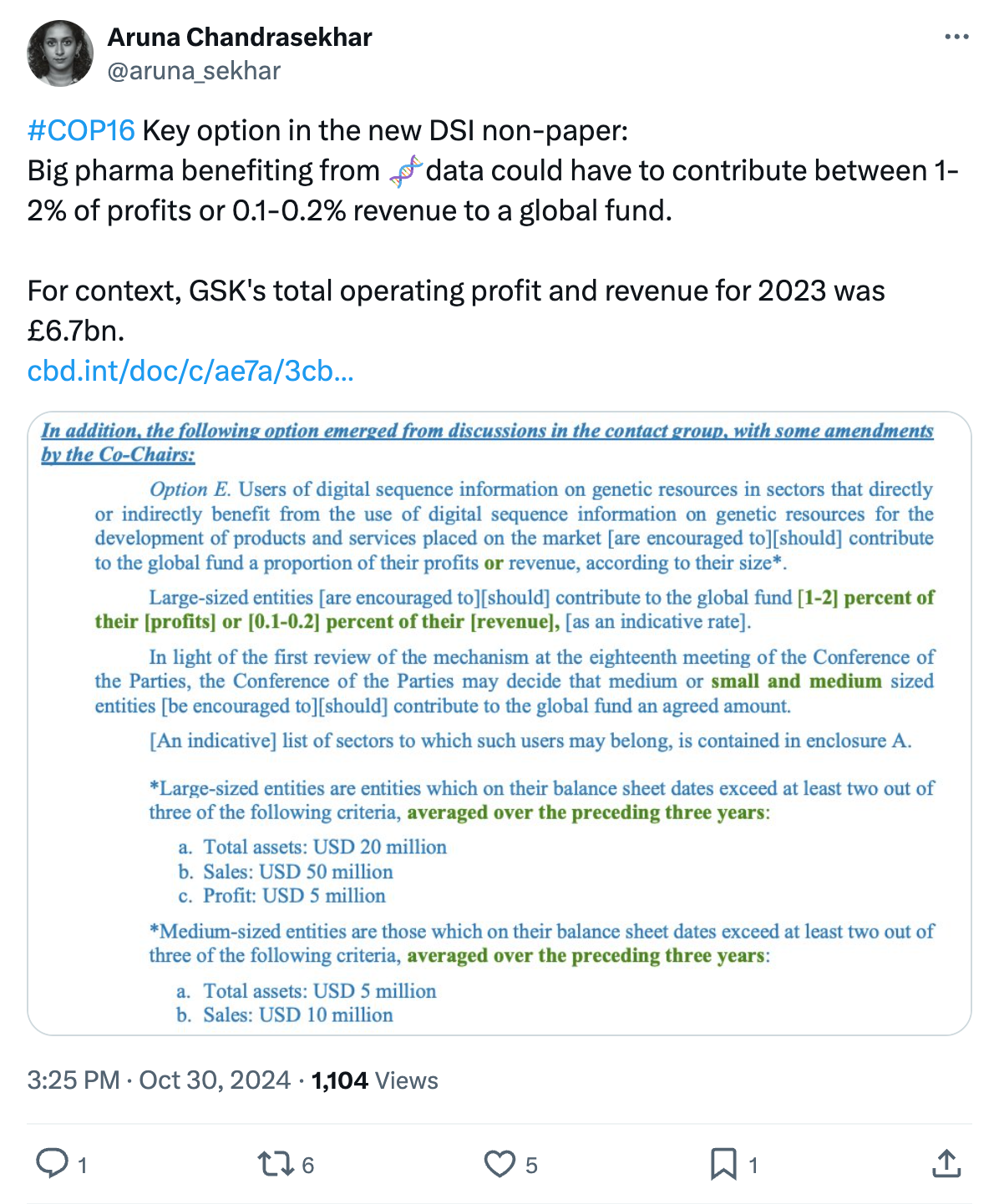
This was developed from a proposal by the Ocean Biodiversity Collective, which works on providing interdisciplinary expertise to countries on DSI negotiations. Lead researcher from the collective, Dr Siva Thambisetty, told Carbon Brief:
“Providing expertise in fraught negotiations is an opportunity and a challenge. [Our] model, which became the Norway proposal, had several elements to build a new payments system. One of the key values that must be embedded in the mechanism are that contributors ‘pay nature first’. Second, ‘everyone pays’ honours the principle that biodiversity is not a free asset and ensures a broad base for payments.
“Some of those elements were lost during the push and pull of the discussions. No party ever gets everything they want, of course, but it’s important that the core basis is not mangled going forward. We will need to assess implications fully in the coming days.”
The global DSI fund established by the decision will now be “under the authority of and accountable to” the COP.
Monitoring framework
The monitoring framework – one part of the negotiations covering mechanisms for planning, monitoring, reporting and review – is seen as critical to the success of the GBF.
This is, in part, because the failure of the previous set of biodiversity goals, the Aichi targets, has been widely blamed on the lack of implementation.
The monitoring framework is made up of a set of indicators corresponding to each goal and target of the GBF. There are four types of indicators:
- Headline indicators.
- Binary indicators.
- Component indicators.
- Complementary indicators.
Headline indicators are used to measure progress against quantitative targets, such as the pledge to protect 30% of the world’s land and oceans by 2030.
For more qualitative targets, such as the target to mainstream gender considerations across biodiversity planning, a set of binary indicators were developed – yes/no questions that countries answer about the presence or absence of legislation, policies or regulations relating to the target.
Component indicators measure progress towards sub-targets in the GBF, while complementary indicators assess areas that are related, but not necessarily explicitly laid out in the framework.
Countries are mandated to report on headline and binary indicators, but the component and complementary indicators are optional. As a result, throughout the negotiations, countries went back and forth on which indicators should fall into which category.
Lim Li Lin, a senior legal and environment advisor at Third World Network, told Carbon Brief:
“Everyone’s doing a juggle, right? We want the good ones to go in the mandatory, and we want the bad ones to go in the complementary, if we can’t get rid of them. And everyone’s doing the same thing from their own interest and perspective.”
At COP15 in Montreal, countries agreed on a monitoring framework, but that text also included a decision to review the monitoring framework at the subsequent COP and “thereafter keep the monitoring framework under review, as appropriate”.
The Montreal agreement also included the establishment of an ad-hoc technical expert group, which comprised 45 members – 30 representatives from parties and 15 observers, including representatives from the Global Youth Biodiversity Network and the International Indigenous Forum on Biodiversity.
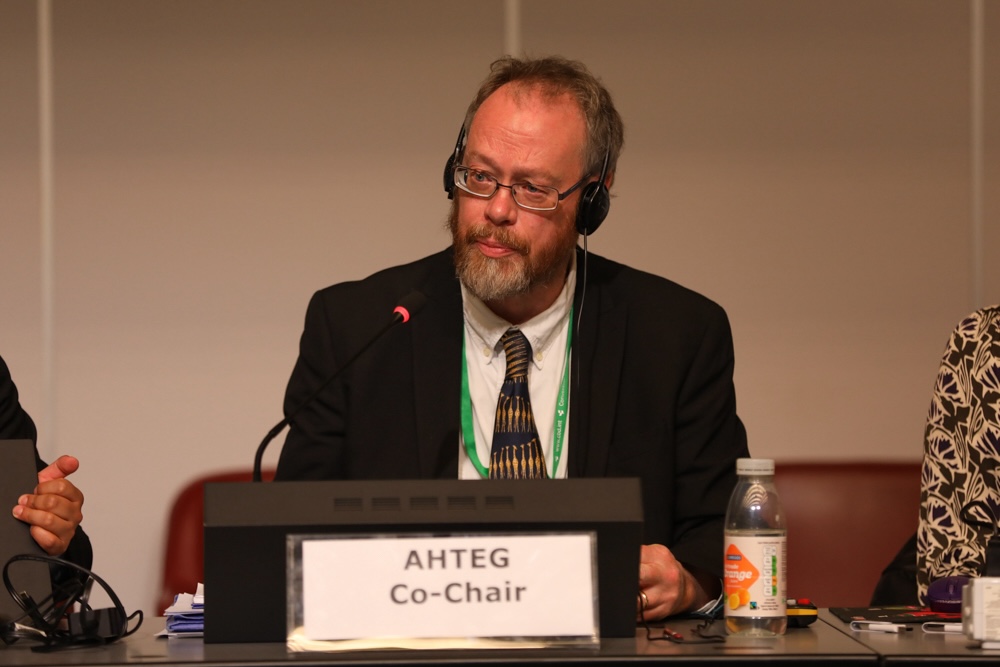
The ad-hoc group met six times over the course of the two-year interstitial period. An online forum also allowed other individuals and groups to comment on and discuss proposed indicators. The results of those meetings and discussions fed into the discussions in Cali.
However, the recommendations of the ad-hoc group were not uniformly accepted by parties.
Kirsty Leong, senior specialist on global policy and advocacy at WWF, told Carbon Brief:
“Procedurally, some parties are saying, ‘Hey, we gave a mandate to this expert group. So now we should adopt that framework’…And other parties are saying, ‘Well, actually, we never negotiated, and so everything’s still discussable.’”
A few indicators proved particularly contentious during the negotiations, including those on monitoring pesticide use and those related to digital sequence information and benefit-sharing from genetic resources.
On pesticide use, parties were split over whether countries should report “pesticide environment concentration” or “aggregated total applied toxicity”.
The former indicator is what was agreed in the decision in Montreal, but the latter is what was suggested by the ad-hoc technical expert group, which said that there is no reliable data on pesticide environment concentration.
Successive non-papers on the monitoring framework contained longer and longer footnotes about the pesticide indicator as parties struggled to reach consensus.
| Version | Date | Footnote text |
|---|---|---|
| Non-paper v1 | 24 October | n/a |
| Non-paper v2 | 27 October | [The indicator on pesticide environment concentration was adopted at COP-15 and the indicator aggregated total applied toxicity is a proposal by an expert group that did not find consensus at COP 16] |
| Non-paper v4 | 30 October | [[The indicator on pesticide environment concentration was adopted at COP-15 and the indicator aggregated total applied toxicity is a proposal by an expert group that did not find consensus at COP 16][The two alternative headline indicators are maintained to allow reporting on either of the two as well as for further methodological work][When possible the Parties may choose to report on either indicator according to their national and technical capacity and data availability provide valuable information for measuring progress towards the target] |
| Draft decision | 31 October | [[The indicator on pesticide environment concentration was adopted at the fifteenth meeting of the Conference of the Parties, and the indicator aggregated total applied toxicity is a proposal by an expert group that did not find consensus at the sixteenth meeting.][The two alternative headline indicators are maintained to allow reporting on either of the two, as well as for further methodological work.][When possible, Parties may choose to report on either indicator according to their national and technical capacity and data availability, and both provide valuable information for measuring progress towards the target.] |
| Draft decision | 1 November | [Parties may choose to report on either pesticide environment concentration or aggregated total applied toxicity headline indicators, depending on the availability of methodology and in accordance with their national circumstances and technical capacities[, recognizing that support will be prioritised for the development of the headline indicator at the furthest level of development at the global level].] |
Versions of the footnote explaining the disagreement over pesticide indicators at COP16.
Several ocean conservation experts also raised concerns that indicators on coral reef coverage and health – agreed in the COP15 monitoring framework – had disappeared from the texts put forward at COP16.
Dr Susan Lieberman, vice-president of international policy at the Wildlife Conservation Society, told Carbon Brief that she was “very disappointed” to see the coral reef indicators disappear. She added:
“Many governments are engaged in tremendous efforts on the conservation and management of their coral reefs, and inclusion of specific indicators of the ecological integrity of their reefs would have helped them report on outcomes.”
Indicators on coral reefs were not present in the final text.
One of the keys for NGOs and civil-society organisations following the monitoring framework negotiations was that, whatever was decided, the final text should include a call to revisit the framework and continue to add to the available indicators. Lim told Carbon Brief:
“Importantly, they mustn’t close the door to further work on the monitoring framework, because it’s far from complete. But at the same time, we need a monitoring framework, because if we’re not having at least what [already] we have for indicators, then we can’t measure the progress.”
As with so many other agenda items at COP16, discussions around resources and capacity were central to the negotiations around the monitoring framework. Countries face “very real capacity constraints in what they can implement”, Leong told Carbon Brief.
Country submissions ahead of COP16 showed that some global-south countries, such as Argentina and Brazil, were concerned about the burden of a monitoring framework that was too prescriptive, preferring one instead that was flexible to national circumstances.
During the working group meeting on the final day of the summit, the DRC requested that the entire monitoring framework be placed in brackets, stating that they could not accept the monitoring framework without a deal on resource mobilisation.
The action proved a decisive one, as the failure of countries to reach consensus on resource mobilisation meant that the monitoring framework was not discussed at the plenary. It will be taken up, along with the finance decisions, at continuation of COP16 that will most likely be tacked on to the CBD’s subsidiary body meetings next year.
Lim told Carbon Brief that through informal consultations, parties would “probably find a landing zone” between the end of COP16 and the subsidiary body meetings. She added:
“The monitoring framework is, of course, necessary…We will need to adopt it and it’s just too bad it didn’t happen now.”
Article 8(j)
Indigenous rights were one of the major discussion points at COP16, with Indigenous participation reaching an all-time high.
During a press conference held in the first week of the negotiations, Ramiro Batzin, co-chair of the International Indigenous Forum on Biodiversity (IIFB), laid out the group’s priorities. (The IIFB is an international organisation that represents Indigenous voices in the CBD negotiations.)
These included a programme of work on Article 8(j) through to 2030 and the creation of a permanent subsidiary body on Indigenous peoples and local communities (IPLCs) under the CBD.
Article 8(j) mandates that parties to the CBD “respect, preserve and maintain” the knowledge of IPLCs related to biodiversity conservation and sustainable use, and to “encourage the equitable sharing of benefits” from this knowledge.
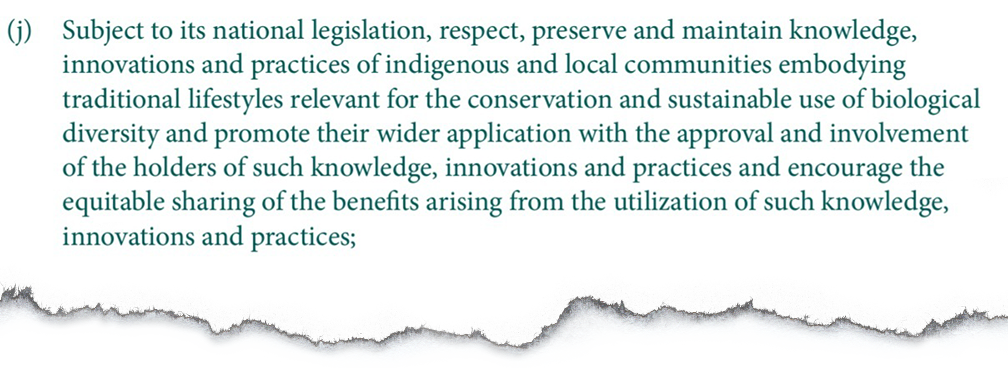
COP16 saw the adoption of the programme of work to implement Article 8(j) and other provisions related to Indigenous peoples and local communities through to 2030, “prioritising those tasks that contribute directly to the timely, full and effective implementation” of the GBF.
The programme has nine general principles and eight elements focusing on issues such as biodiversity conservation and restoration, sustainable use, full and effective participation and a human rights-based approach.
The work programme also includes elements such as direct access to funding for biodiversity conservation, restoration and sustainable use for IPLCs.

During a press conference near the close of COP16, several representatives from the IIFB welcomed the adoption of the work programme, calling it a “victory”.
Jennifer Tauli Corpuz, a negotiator and expert for the IIFB based in the Philippines, said:
“This sets us on a path to making sure that the GBF is implemented in full partnership with IPLCs.”
Batzin told Carbon Brief that the work programme will help ensure full implementation of the GBF:
“This programme will provide us with actions and guidelines for evaluation, monitoring and follow-up.”
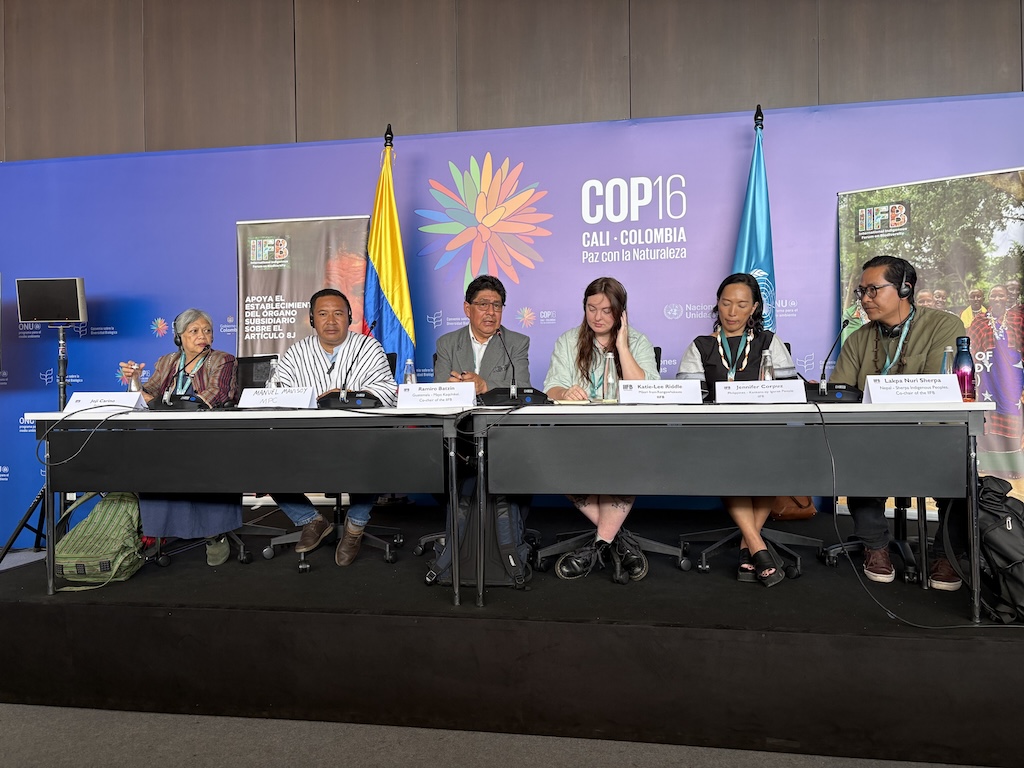
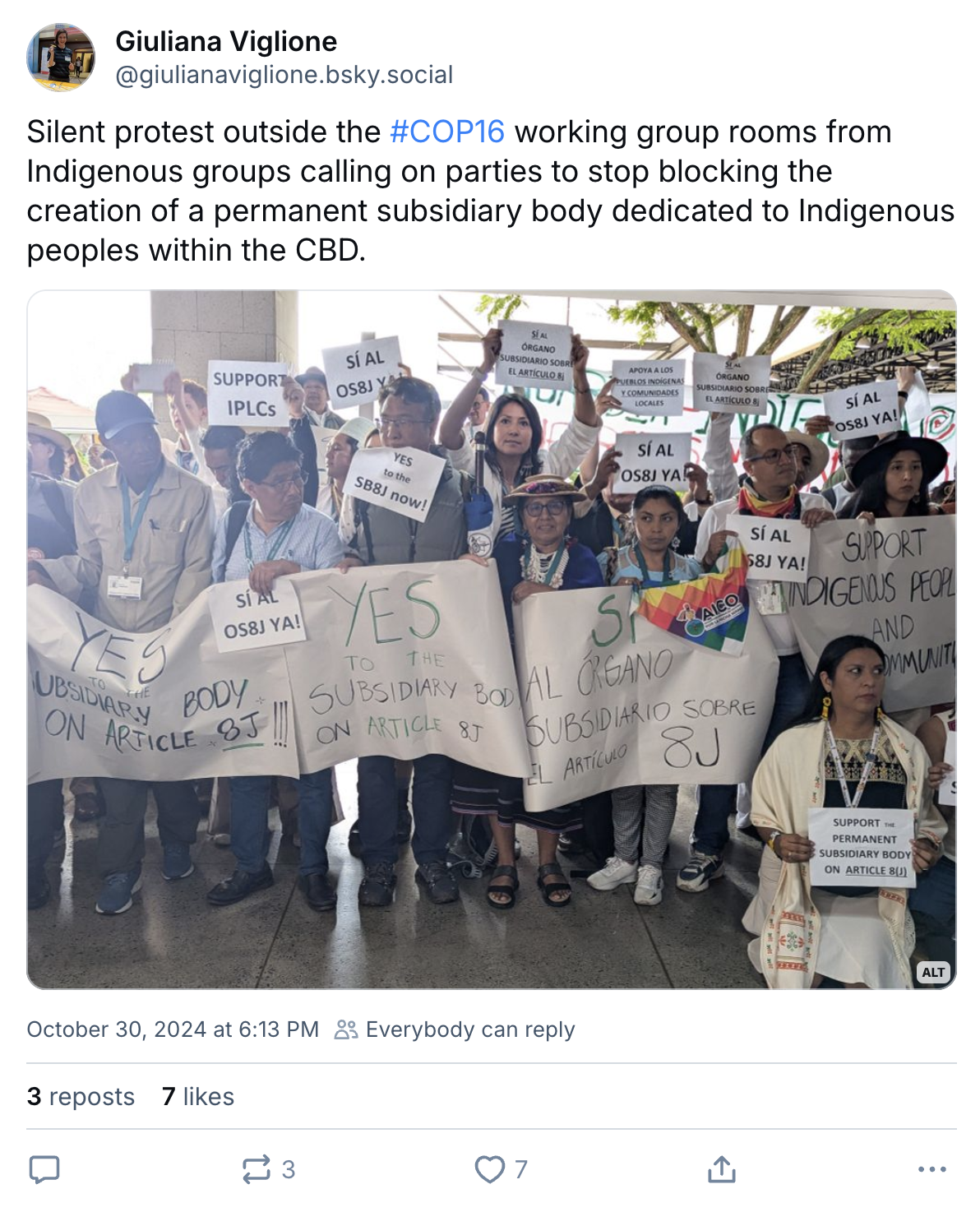
During the press conference, representatives of Indigenous peoples also called on the parties to adopt the subsidiary body. This group would have a permanent mandate to continue work under the CBD – and was a contentious issue throughout the summit. It was reportedly opposed by Indonesia, Jordan and Russia, as they argued that the working group has been effective already and a new subsidiary body would entail further costs.
Manuel Mavisoy, from Colombia’s Indigenous Movement’s Permanent Bureau of Concertation, said in that press conference that the subsidiary body “is the only mechanism that ensures the survival of Indigenous peoples’ traditional systems within the GBF”.
In an interview with Carbon Brief, Batzin stated that the subsidiary body would be a permanent institution designed to implement and monitor the Article 8(j) programme of work. Batzin emphasised that the body is intended to operate bilaterally, involving both states and Indigenous peoples – similar to how the Article 8(j) working group currently functions.
The working group on Article 8(j) has existed for more than 20 years, but it is only a temporary body, therefore it was likely to be disbanded, Corpuz told the press conference. She added that the proposed new subsidiary body would be “higher placed within the CBD”.
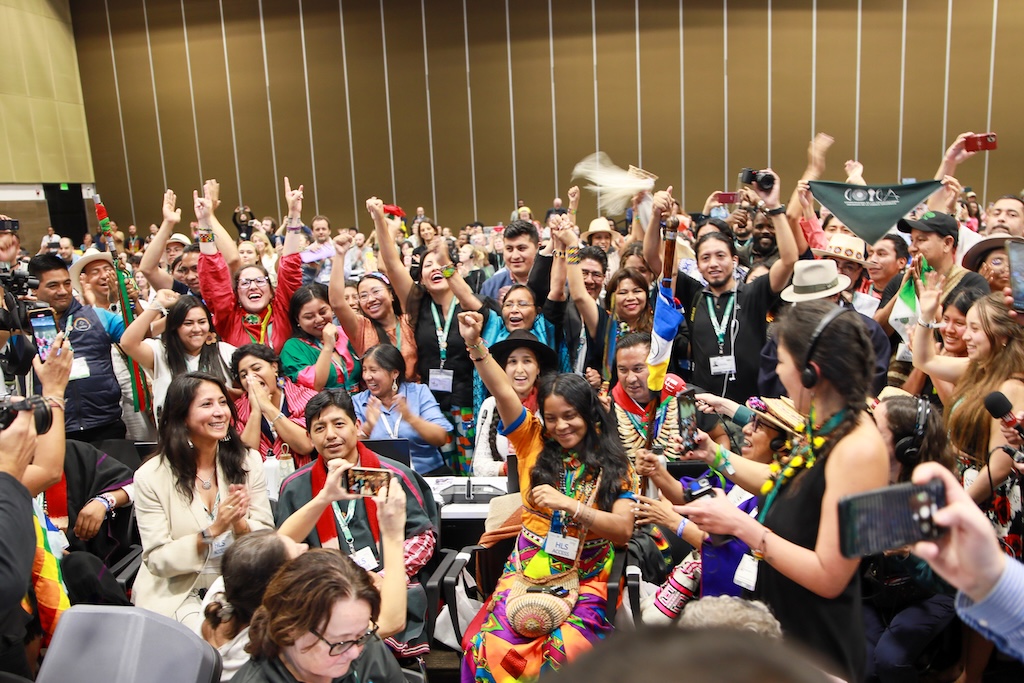
The plenary erupted in a standing ovation late on Friday night as Muhamad brought down the gavel to signify the adoption of the decision to establish a new subsidiary body.
A spokesperson for the IIFB and the Indigenous Women’s Biodiversity Network told the plenary that “this is an unprecedented moment in the history of multilateral agreements on the environment”. She added:
“This new subsidiary body will be a reference point for the rest of the world…We can feel proud of our work, which was participative, collaborative and constant.”
During the summit, the IPLCs also called for direct access to funding for biodiversity conservation.
The GEF has an “aspirational goal” that IPLCs should receive 20% of biodiversity resources, although no mechanism or action has yet been created to achieve this goal, Batzin told Carbon Brief. He added that IIFB supports funding being allocated directly to IPLCs and said the subsidiary body on Article 8(j) would have to discuss how to manage the flow of funding to Indigenous peoples.
The final DSI text that was adopted said that “at least half of the funding of the global fund should support the self-identified needs” of IPLCs, “where appropriate and subject to national circumstances”. (See: Digital sequence information.)
Another of the issues pushed by IPLCs at COP16 was human rights.
Joji Carino, senior policy adviser at Forest Peoples Programme (FPP) in the Philippines, told a press conference that the implementation of the GBF requires respecting the rights of IPLCs, such as the rights to their lands and territories, equitable participation in decision-making and respect for traditional knowledge.
During a conference on Indigenous peoples’ land rights, Luz Enith Mosquera, from the technical team of the Chocó Solidarity Interethnic Forum in Colombia, stressed the strong connection Indigenous peoples have with their territories:
“The forests, rivers, and jungles are environments with which we coexist; they are not mere objects to be dominated. We are part of the forest. The titled territories are preserved because the communities maintain a balanced relationship with the land.”
Mosquera told Carbon Brief that in the department of Chocó, collective territories are legally granted to Afro-descendant communities. However, there are still areas that lack legal titles and do not have community councils or collective safeguards. She told Carbon Brief:
“The absence of collective titling creates a legal vacuum that could allow outsiders to exploit these territories. Therefore, there is an urgent need for the titling, extension and regulation of the land and the communities”.
A separate COP16 decision concerned the recognition of Afro-descendant peoples.
It called on parties to incorporate the “contributions of people of African descent” and their knowledge of and connection to their lands in the implementation of the CBD and the GBF. It also “encourages” parties to “facilitate their full and effective participation” in both international agreements.
The decision also “encourages” parties, other countries and organisations to provide financial support and capacity-building for Afro-descendant peoples on a voluntary basis. It further encourages parties to communicate in their NBSAPs the contributions of Afro-descendant peoples to the implementation of the CBD and the GBF.
The text on Afro-descendant peoples was pushed strongly by Colombia and Brazil, but opposed by the Democratic Republic of the Congo, which argued there is a lack of evidence backing the contribution of these peoples to implementing the GBF.
Biodiversity and climate change
Coming soon
Mainstreaming biodiversity
Another item on the agenda at COP16 was “mainstreaming biodiversity”. This term refers to actions that seek to ensure that biodiversity is considered in any policies and practices that could have a negative effect on it.
This could include, for example, ensuring biodiversity is included in planning rules for new project developments or in agricultural guidelines.
Linda Krueger, global lead for biodiversity and infrastructure policy at the Nature Conservancy, an NGO which campaigns for mainstreaming biodiversity, explained to Carbon Brief:
“It’s how we feed ourselves; it’s how we clothe ourselves; it’s where we build our houses and drive our cars. We have to figure out how to improve those practices in all of those sectors.”
COP16 saw the launch of a “mainstreaming champions” group of nations, led by Mexico and COP16 host Colombia.
As of 1 November, the group had 17 members, with the host countries joined by Belgium, Canada, Chile, Costa Rica, Fiji, Finland, France, Georgia, Germany, Mauritania, Peru, Portugal, South Africa, Spain and, “tentatively”, Zambia.
According to a press release announcing the new alliance, its “key priorities” will be “accelerating collective action and impact”, “collaboration and mutual learning” and “engagement designed to maintain momentum through 2030”.
Colombia has “worked a lot on its environmental-licensing processes” for new projects to “make it mandatory for companies to address their impacts”, Krueger said, making the nation an apt co-host of the alliance.
During the negotiations, parties also agreed to a new decision text on mainstreaming biodiversity.
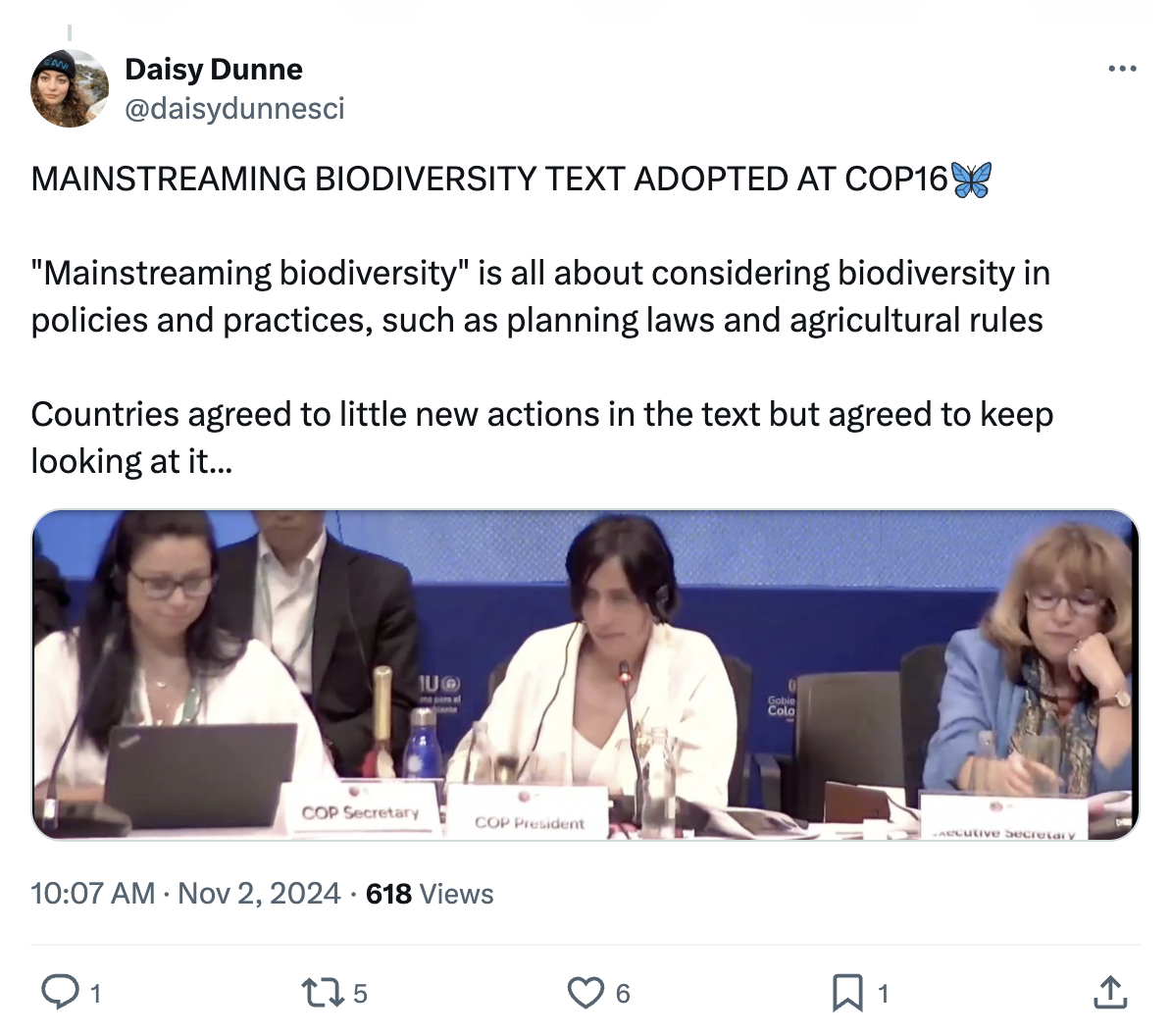
The text “reiterates” the “critical importance of mainstreaming biodiversity across the whole of government and the whole of society” in order to achieve biodiversity goals.
However, it offers little new in terms of what countries should do to ensure mainstreaming happens, according to Krueger.
“In terms of what it obligates countries to do, there’s frankly not a lot new there,” she told Carbon Brief.
The text “invites” countries “to provide relevant information…on biodiversity mainstreaming through their seventh national reports”, which are due in February 2026. (In UN speak, “invites” is not particularly binding.)
It also “requests” that the CBD executive secretary, Astrid Schomaker, take various actions around mainstreaming biodiversity, including “identifying challenges and scientific, technical and technological gaps that may undermine countries’ capacity to support mainstreaming”.
This section could be key to “helping to keep the mainstreaming agenda on the front burner”, Krueger said.
Despite not including many new actions for parties to take, the negotiations on the mainstreaming biodiversity text were long and tense, Carbon Brief understands, with Brazil, Russia and Japan among the countries to make lengthy interjections.
Though not stated explicitly, the ferocity of negotiations could reflect countries’ nervousness about actions that might require businesses to change their practices to be more friendly to biodiversity, observers told Carbon Brief.
Synthetic biology
Synthetic biology refers to developments in biotechnology that can change genetic materials, living organisms and biological systems. These include gene drives, where genetics of species are altered to try and disrupt certain genes in a population. This could target malaria-carrying mosquitos, for example, to help eradicate the spread of disease.
At COP16, countries agreed to work towards developing a “thematic action plan” to support capacity building and information sharing around these biotechnology developments. This decision was given the green light in the early hours of Saturday 2 November, with no last-minute interjections from countries.
The crux of Cali discussions on this topic centred on the focus of future talks on synthetic biology and also who would carry out these discussions.
Dr Marja Ruohonen-Lehto, the Finnish co-chair of the synthetic biology contact group at COP16, said countries showed “strong support and agreement” on developing an action plan. She told Carbon Brief midway through the summit:
“However, what we would see and prioritise as future work, it was less easy to see what the way forward would be – both what we would do in the future in relation to synthetic biology and who would do that work.”
The agreed text emphasised the “urgent need” for capacity building and technology transfers on synthetic biology, especially for developing countries. An ad-hoc technical expert group will be set up to continue discussions.
This group will identify the “current and potential benefits” of synthetic biology and the “potential negative impacts” of recent technology developments in this area.
The agreed document also requested that the CBD executive secretary submit a draft of the action plan, “with a view” for countries to consider this draft at the next UN biodiversity summit in 2026.
Dr Eva Sirinathsinghji, a biosafety research associate at thinktank Third World Network, said the final text provided a “more balanced version of outcomes” than other versions of the decision.
She told Carbon Brief that it is important to “not just assess potential benefits, but also risks [and] claims” around synthetic biology.
Dr Samantha O’Loughlin is a population geneticist at Imperial College London who followed the synthetic biology talks at COP16.
She noted that assessing these technologies is “quite an expensive process”. Countries want more funding to allow them to “assess [the technologies] for themselves…rather than having some huge, global process going on which is very broad and doesn’t really address issues country-by-country”, she told Carbon Brief, adding:
“Part of the issue is around where we should be putting our efforts and resources now. So a lot of parties, especially from South America and Africa, would really like to see money and resources go into capacity building.”
This would allow them to improve research and provide more regulation and risk assessments of synthetic biology, she noted.
Ruohonen-Lehto said the contact group talks were “constructive”, but added:
“It is clear that we have different views and the way forward in cases when there are different views is never easy. It’s always a somewhat difficult process.”
Before the summit, countries including Brazil, New Zealand and Chile did not support plans to extend the mandate of the expert working group on synthetic biology, according to Carbon Brief’s tracker on key negotiating issues.
Sirinathsinghji said the final outcome of this decision “focused more heavily on capacity building than assessment” and believed there was an “imbalance” in deciding to assess “benefits over risks”.
However, she noted these discussions will continue in future CBD negotiations.
Biodiversity and health
Biodiversity loss is linked in many different ways to the health of people, wildlife and ecosystems.
Robust ecosystems and species diversity benefit the production of food, clean water, medicine and other essentials for good health.
At COP16, following four years of negotiations, countries agreed a new voluntary action plan highlighting the links between biodiversity and health.
The plan, which was broadly supported by countries and NGOs ahead of the final negotiations, is intended to support governments and other stakeholders to better focus on health and biodiversity in their policies, strategies and programmes.

It outlined a number of voluntary actions on issues such as pollution, climate change and agriculture, plus detailed how they are relevant to the aims of the GBF. These include:
- Integrating the “consideration” of the links between climate change, biodiversity and health into national policy and planning rules.
- Reducing the “negative impacts on biodiversity and health” from agriculture and other sectors by boosting “sustainable practices”, such as “sustainable intensification” and “integrated pest management”.
- Developing ways to better understand the links between chemicals, waste and human health impacts.
Dr Susan Lieberman, the vice-president of international policy at the Wildlife Conservation Society, said that the plan also gives policymakers a toolbox to address issues feeding into pandemic risks.
The final agreement said it drew on “lessons learned” from the Covid-19 pandemic and other emerging diseases, “which have further highlighted the importance of the relationship between health and well-being and biodiversity”.
Dr Colman O’Criodain, the head of biodiversity policy at WWF International, told Carbon Brief that years of discussions on biodiversity and health at the CBD got a “boost” during the Covid-19 pandemic.
There has been a “growing realisation” about habitat loss and other issues being a “major trigger” for disease outbreaks, he said, adding:
“The plan basically acknowledges the risk that habitat fragmentation and habitat loss has [for] bad health outcomes.”
A study published earlier this year found that biodiversity loss drives the spread of infectious disease. Another study found that climate change is increasingly driving new encounters between mammal species, raising the risk of the spread of disease.
Lieberman told Carbon Brief that, while no countries outright tried to prevent the plan from being adopted, some elements were “watered down” in negotiations. She told Carbon Brief:
“Some countries with large conversion of tropical forest for livestock production don’t want that reflected in the action.”
For example, an earlier draft recognised that “several human-mediated factors are most likely driving the emergence of zoonotic diseases”.
These factors included “increasing human demand for animal protein”, “unsustainable agricultural intensification” and “land-use change and extractive industries”.
The language on this issue was shortened and softened in the final text to read:
“Emerging infectious diseases in wildlife, domestic animals, plants or people can be exacerbated by human activities, such as unsustainable land-use change practices and habitat fragmentation.”
Lieberman noted:
“The science is clear. Clearing a forest, disrupting ecologically intact forests, intact ecosystems and wildlife trade and trafficking, increases the risk of pathogen spillover [from one species to another]. They didn’t want to say that. They want to say human impact may increase the risk. But the science is clear.”
Negotiations on the action plan took place in a contact group. By 24 October, a draft with just 15 brackets was submitted to the CBD – a drop from 53 brackets in a previous version of the text.
The final text of the agreement was adopted by the COP16 plenary on 2 November. O’Criodain told Carbon Brief:
“At the end of the day, this plan is only going to be voluntary, but it’s still good guidance. Even if countries that don’t commit formally to implement it use the guidance and take the parts of it that are relevant to them, that’s still a good thing.”
Marine and coastal biodiversity
COP16 produced two texts under the “marine and coastal biodiversity” agenda item: one on ecologically or biologically significant marine areas, or “EBSAs”; and one on the conservation and sustainable use of marine, coastal and island biodiversity.
The text “recognises” that the identification of EBSAs “can make a crucial contribution to the implementation” of the GBF, but adds that the process “is strictly a scientific and technical exercise…and does not have economic or legal implications”.
Importantly, the existence of an EBSA does not imply any level of protection for those waters – although it can help governments identify areas that may be best-suited for turning into marine protected areas (MPAs).
The EBSA decision includes guidance on both identifying and modifying the descriptions of such areas – allowing the revision of existing areas as new scientific information comes to light.
Areas within national waters can only be described or modified by the country with sovereignty over those waters, while any states “individually or collectively, including through competent intergovernmental organisations” can do so for areas beyond national jurisdiction (the “high seas”).
The decision also allows for the withdrawal of descriptions “owing to the existence of a claim or dispute relating to sovereignty, sovereign rights or jurisdiction”.
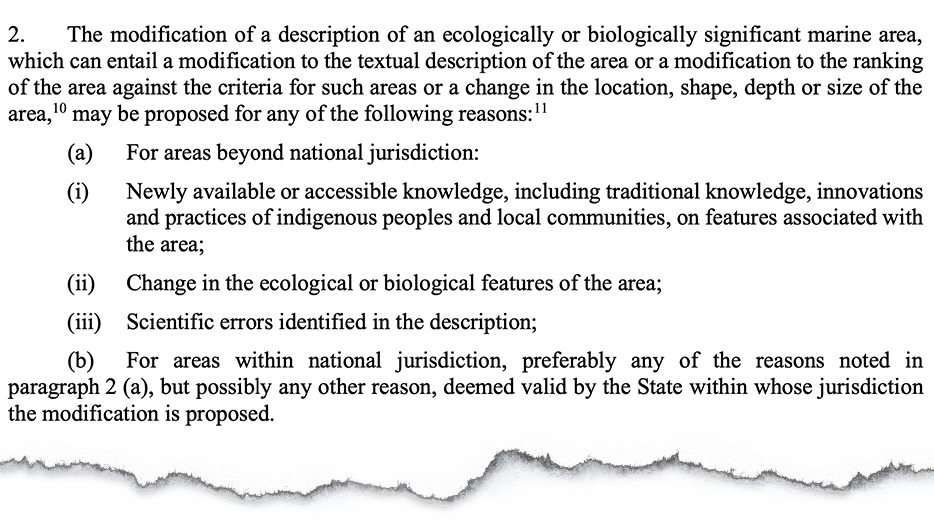
The decision also “requests” that the CBD “develop voluntary guidelines on peer-review processes for the description” of EBSAs.
The approval of the EBSAs document was reportedly met with cheers by negotiators, who have spent eight years working towards a decision on the topic.
Andreas Hansen, director of global ocean policy at the Nature Conservancy, told Carbon Brief:
“There was an initial wave of description of these really important areas, and then there was disagreement on how to update it and to actually keep the science up to date. And now, with this decision – which hopefully will be agreed – we’ll be back to getting the best science on the table to lay the foundation for marine protected areas or sustainable use measures or whatever countries deem appropriate.”
The decision “requests” a review of the effectiveness of its implementation in 10 years, which is to be reviewed at that time by the SBSTTA.
The other text, on conservation and sustainable use, identifies topics where the CBD Secretariat can guide countries on their implementation of the GBF.
That decision “welcomes” the adoption of the “High Seas Treaty”, which was “an important priority” for observer groups, Masha Kalinina, senior officer at the Pew Charitable Trusts, told Carbon Brief. She added:
“We support all links to the High Seas Treaty, because we can’t reach target three [30 by 30] without eventually protected areas in the high seas.”
Other conventions recognised in the text are the International Convention for the Control and Management of Ships’ Ballast Water and Sediments, the Convention on the Prevention of Marine Pollution by Dumping of Wastes and Other Matters and the ongoing discussions on a plastics treaty. Hansen told Carbon Brief:
“That goes to a general challenge around ocean governance and how many different treaties and bodies there are…So that text that explicitly gives the Secretariat the encouragement to reach out and do that collaborative work [with other bodies and Conventions] is really important from our point of view.”
The conservation and sustainable use decision also includes an annex, which contains “gaps and areas in need of additional focus”. These gaps include effective implementation of marine protected areas, deep-sea ecosystems, the effects of pollution and traditional knowledge of marine and coastal biodiversity.
Items that remained bracketed in the annex that was forwarded to the plenary included phrasing around the use of nature-based solutions, geoengineering activities “that may have impacts on marine and coastal biodiversity”, harmful fishing subsidies and the use of DSI.
The negotiations on marine geoengineering were “a bit of a mix”, Jehki Härkönen, senior policy advisor with Greenpeace International, told Carbon Brief.
The text was originally marked for deletion by the secretariat due to the existence of previous decisions on marine geoengineering. Härkönen said that “some countries [are] not necessarily wanting more regulation on marine geoengineering, but also there [has been] a bit of a discussion around where it should be regulated”.
However, he added, “currently there is no body that would comprehensively regulate marine geoengineering”.
Observers were generally pleased with the summit’s outcomes on marine and coastal biodiversity. Hansen told Carbon Brief:
“Overall, we are happy with good action now, and prefer that over slightly better action in two years time.”
Links with other bodies
Coming soon
Invasive alien species
Invasive species are one of the five main drivers of biodiversity loss and are covered under target 6 of the GBF.
Discussions on invasive species – as well as best practices for their prevention and control – have featured on the COP agenda for many years.
At COP16, parties discussed a text on invasive alien species (IAS) that covered a range of topics, including linkages between invasive species and climate change, and suggested actions for the prediction, prevention and management of IAS.
The text combines elements and guidance from the work of an ad-hoc technical expert group on IAS and a major report released last year by the Intergovernmental Science-Policy Platform on Biodiversity and Ecosystem Services (IPBES).
Although the IAS agenda item pre-dates the IPBES assessment on the topic, the decision “was enriched” by the assessment, Prof Aníbal Pauchard, an ecologist at the University of Concepción in Chile, told Carbon Brief. Pauchard, who co-chaired the assessment, added that “although our report wasn’t written for target 6, it’s very instrumental” to parties being able to achieve that target.
(For more on the links between invasive alien species and climate change, see Carbon Brief’s coverage of the IPBES assessment.)
Dr Colman O’Criodain, WWF’s lead expert on wildlife trade, told Carbon Brief:
“It’s been a painful process [leading up to the decision], but there’s never been fundamental divisions of principle like there have been on some other issues here. [It’s] more on points of detail.”
Observers told Carbon Brief that, in Cali, there was little disagreement as to the technical content of the decision. Rather, the main sticking point was a political one.
The major point of divergence remaining as the summit headed into the second week was whether to “welcome” or simply “note” the results of the IPBES assessment. As reported by the Earth Negotiations Bulletin, this disagreement stemmed from Russia’s objection that some of the underlying databases were not accessible in their country due to international sanctions.
The EU contends that Russia’s accessibility was a technical glitch and that it has since been resolved, according to O’Criodain.
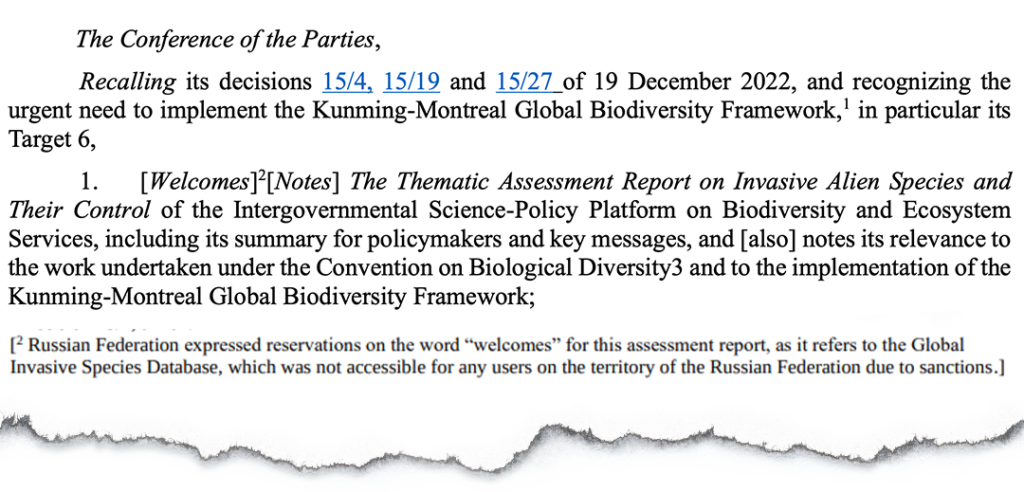
Dr David Obura, IPBES chair, told Carbon Brief:
“We would like the assessment to be welcomed, because then that encourages countries to really use the results. And it does make a difference, the language that is used, so we’re hoping that that can be resolved in the final negotiations.”
On future work on invasive species at the CBD, O’Criodain told Carbon Brief:
“There will be further discussion – perhaps not at the next COP, but this [agenda item] has come back a few times, and I’m sure it will come back again.”
Capacity-building and knowledge management
Coming soon
Sustainable wildlife management
Coming soon
Other matters
Liability and redress
At COP16, countries adopted two decisions on liability and redress for cross-border ecological and biological harms – one each under the COP and the Cartagena Protocol on Biosafety.
Liability and redress for damage to biological diversity falls under Article 14.2 of the UN CBD and was one of the major themes when the convention itself was being negotiated. At the time, countries could not reach a consensus on sticky questions around accountability, compensation and restoring damage.
In 2010, countries agreed on the Nagoya-Kuala Lumpur Supplementary Protocol on Liability and Redress, designed to prevent harms to biodiversity from the movement of living modified organisms across borders.
The Cartagena Protocol decision noted the limited ratification of the supplementary protocol “with regret” and reminded states to share information and set up an authority to identify, evaluate and respond to damages.
The COP16 decision included an agreement “to review the topic of liability and redress in the context of Article 14, paragraph 2” at COP18.
In September this year, the CBD secretariat published an information note, citing international developments, such as the new loss-and-damage fund, rising climate attribution and litigation and a global discussion on “ecocide”.
According to Anna Maddrick, climate law adviser to the permanent mission of Vanuatu, the lack of legally binding targets has been “a major challenge” in biodiversity law. She told Carbon Brief:
“Vanuatu’s proposal of an independent crime of ecocide to the International Criminal Court underlines a commitment to making environmental protection enforceable and is well placed to support the CBD’s implementation, especially on liability and redress.”
Scientific and technical needs
Agenda item 16 at COP16 addressed the scientific and technical needs to support parties in their implementation of the GBF.
The decision text highlights a few areas of work where advancement could be made, including biodiversity-inclusive spatial planning, pollution and biodiversity and sustainable biodiversity-based activities.
The COP16 decision also “welcom[es] the establishment” of regional scientific and technical support centres.
These centres were created under a COP15 decision on capacity-building and development, which “decide[d] to establish a mechanism comprising a network of regional, and/or additional subregional technical and scientific cooperation support centres”.
Under the COP15 decision, an “informal advisory group on technical and scientific cooperation” was convened to consider the candidates to host the regional support centres.
At its fourth meeting, the Subsidiary Body on Implementation approved the selection of five support centres in Africa, three in the Americas, five in Asia, four in Europe and one in Oceania.
These support centres will be housed at existing organisations and research institutes, including the South African National Biodiversity Institute, the Nanjing Institute of Environmental Sciences and the Secretariat of the Pacific Regional Environment Programme.
IPBES
The Intergovernmental Science-Policy Platform on Biodiversity and Ecosystem Services (IPBES) provides scientific, technical and policy support to countries on biodiversity and the interactions between humans and nature.
It functions in much the same way that the Intergovernmental Panel on Climate Change does with the UN Framework Convention on Climate Change.
COP16 produced a decision text on “matters related to the work programme” of IPBES. It “encourages” parties to “make use of, as appropriate, the assessments and deliverables” of IPBES.
It also “invites” IPBES to consider a range of options for a future assessment, including a bracketed option on “rights-based approaches”.
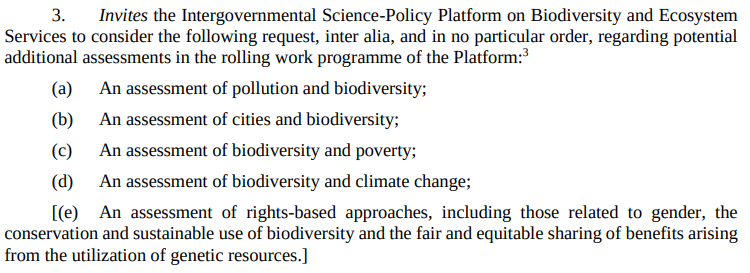
The decision text did not include the final report option. IPBES will consider the recommendations at its plenary meeting in Namibia in December and, in conjunction with other consultations and inputs over the next year, identify a topic at its plenary in 2025.
Obura, the IPBES chair, told Carbon Brief:
“From the IPBES perspective, what we like is that we’re being asked to do stuff and parties consider it important.”
Plant conservation
Coming soon
Communication and education
Coming soon
Diverse values of biodiversity
Coming soon
Around the COP
Colombian presidency
Colombia’s hosting of COP16 was widely celebrated due to the country’s leadership on biodiversity and climate issues and for Susana Muhamad’s selection as summit president.
The fourth-largest South America country, Colombia is one of the most biodiverse parts of the world and has the highest bird diversity, with more than 2,000 species recorded.
COP16 was originally due to be held in Turkey, but the country withdrew as host in July 2023 after the devastating earthquakes of February 2023, which killed more than 50,000 people.
Colombia was confirmed as the new host last December. Dr David Cooper, the then-acting executive secretary of the CBD, told Carbon Brief at the time that it was “exciting” to hold the conference in a “megadiverse country” with “very strong Indigenous peoples’ organisations [and] a very strong scientific base”.
Speaking to Carbon Brief two weeks before COP16, the CBD’s new executive secretary Astrid Schomaker added that Colombia has taken “leadership on biodiversity issues for many years”. She said:
“I think Colombia is an excellent host. They’ve made a lot of efforts to make this COP a success. And, in Susana Muhamad, we have a very knowledgeable and a very charismatic and very dedicated COP host. So I think the ingredients are in place for this to be a very good, successful COP.”
Muhamad was a central figure in the talks, encouraging finance boosts and for countries to reach agreement on key issues.
She told the summit’s opening ceremony that the “planet doesn’t have time to lose”.
Le Monde described the minister as a “rising star of the environmental movement on the international scene”. She is the “Frida Kahlo of environmental geopolitics”, Oscar Soria, the director of thinktank the Common Initiative, told the Guardian. The outlet noted that Muhamad worked as a sustainability consultant with Shell before entering politics.
The COP16 president spoke at events and media gatherings throughout the two-week summit. She told a mid-way press conference on 25 October that the negotiations were moving at a good pace, but divisions remained on key issues such as resource mobilisation. She added:
“We have a COP that has a very constructive climate.”
Colombia launched a “peace with nature coalition” at the summit on 29 October, a declaration calling for greater protection of biodiversity.
As of publication, more than 120,000 people signed this declaration through campaign group Avaaz. It was also supported by countries including Mexico, Spain, Germany, Uruguay and Costa Rica. (See: World leaders.)
The summit drew to a close abruptly – and prematurely – on 2 November, with minister Muhamad dropping the gavel at around 8.30am local time as there were not enough country representatives present to proceed.
The final hours of the plenary drew criticism from delegations who had to leave to catch flights as the summit ran more than 14 hours into overtime. (This was the longest a CBD COP has over run its scheduled end time.)
The sudden end to the talks “jeopardises the implementation” of the GBF, according to the director general of WWF International, Kirsten Schuijt.
She noted in a statement that despite Colombia’s “valiant efforts” and the “tireless work” of negotiators, meeting 2030 nature ambitions could be “veering dangerously off track” due to the outstanding issues. Schuijt added:
“Nobody should be okay with this – because it will impact us all.”
Accessibility and security
Cali was jam-packed with COP delegates. The CBD had been expecting 12,000-14,000 attendees, but more than 23,000 registered in the end.
As a result of this surge, delegates faced sluggish internet connections inside the blue zone. Carbon Brief understands that both Uganda and the DRC complained about the poor wifi connection during formal negotiations on the first day of the summit.
Translation issues also plagued the summit. In negotiations on Article 8(j) on 30 October, translation services were abruptly cut, “forcing all speakers and listeners to proceed in English only”, according to the civil-society organisation Avaaz. Avaaz noted that, under the CBD process, contact groups are only held in English and said that the “lack of translation services is deeply disappointing”.
Translation services also ended before the conclusion of the Working Group II meeting on the final day of the summit as parties tried to hammer out the final details on resource mobilisation and the financial mechanism.

Credit: IISD/ENB | Mike Muzurakis
Some documents put before the plenary for adoption had also not yet been translated into the other UN official languages, with the DRC raising the concern that it would be hard for them to adopt a decision that was not available in other languages. The representative said that they “would really like documents in the language we understand best”, but, ultimately, withdrew the complaint.
Additionally, countries with small delegations were unable to attend all of the talks, due to the number of agenda items that needed resolving within the two weeks. In an intervention on the first day, the DRC said:
“Is it possible to complete the processing of all these above-mentioned items in only 12 days, while keeping in mind the number of brackets in the different documents to be examined?”
Observers also expressed to Carbon Brief their belief that the agenda was too sprawling.
Many delegations rushed out of the final plenary to catch their flights, with the plenary hall visibly emptying out as the hours ticked by. Parties and observers expressed their frustration that the “big-ticket” items – DSI, finance and the monitoring framework – were left to the end of the plenary, when many parties were no longer present to provide consensus.
Attendees from Fiji and Panama told the hall that they were the only ones remaining from their delegations, with Fiji noting that they were the last remaining representative of the Pacific island nations.
At 8:09 am on Saturday, 2 November, Peru requested that the COP check whether the plenary still had quorum and the ability to take decisions, due to the mass exodus that had occurred over the previous hours.
After the check, it was confirmed that the COP did not have a quorum any longer and the meeting was suspended.
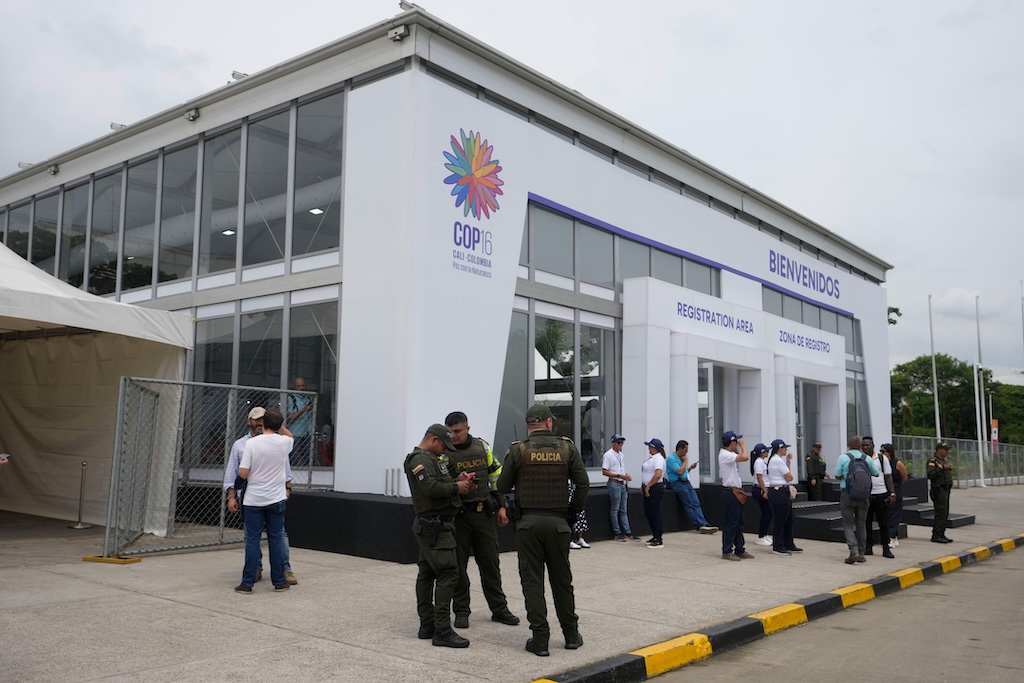
In the run-up to the summit, security concerns were a major discussion point. Colombia will soon mark eight years since signing a peace agreement that ended half a century of conflict. Other peace talks with a rebel group remain in stasis.
In July, a dissident rebel group threatened to disrupt the summit. This threat was withdrawn, but more followed from armed rebels “who control swathes of the Amazon”, the Financial Times reported.
Colombian president Gustavo Petro said he was “nervous” about something “bad” happening at the start of the summit, Colombia’s El Heraldo newspaper reported on 18 October.
Speaking at a press conference on 21 October, Cali’s mayor Alejandro Eder assured the safety of the summit and said that security was the first issue tackled in early hosting talks. Eder noted that COP
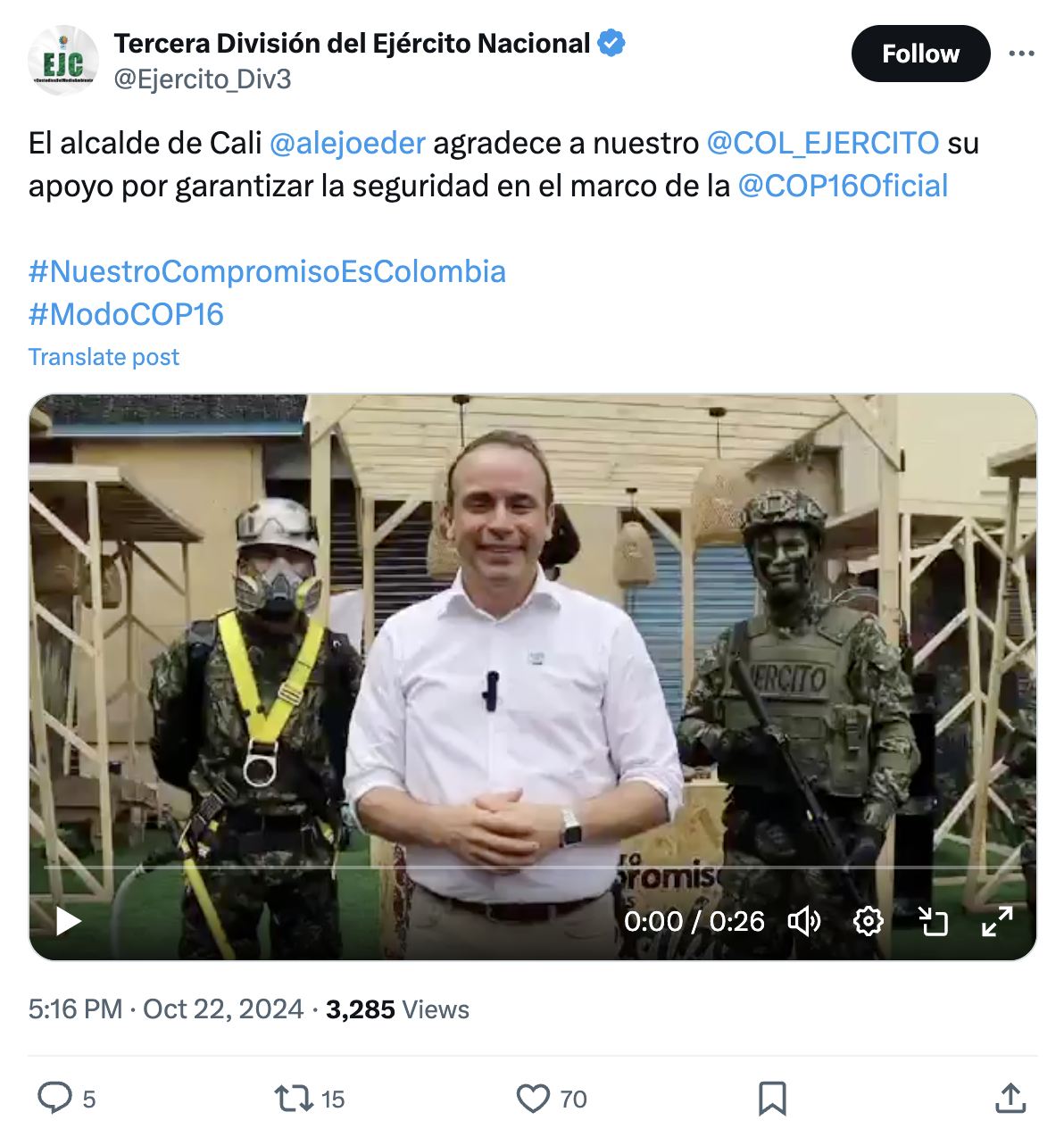
More than 10,000 police officers were stationed across the city during the summit and no security incidents were reported.
Elsewhere at the summit, multiple attendees told Carbon Brief their accommodation bookings were cancelled last-minute, leaving them scrambling for limited alternatives.
Some delegates opted for “love motels” whose rooms featured “circular beds, ‘love machine’ chairs, dance poles and sex swings”, the Guardian and AFP reported.
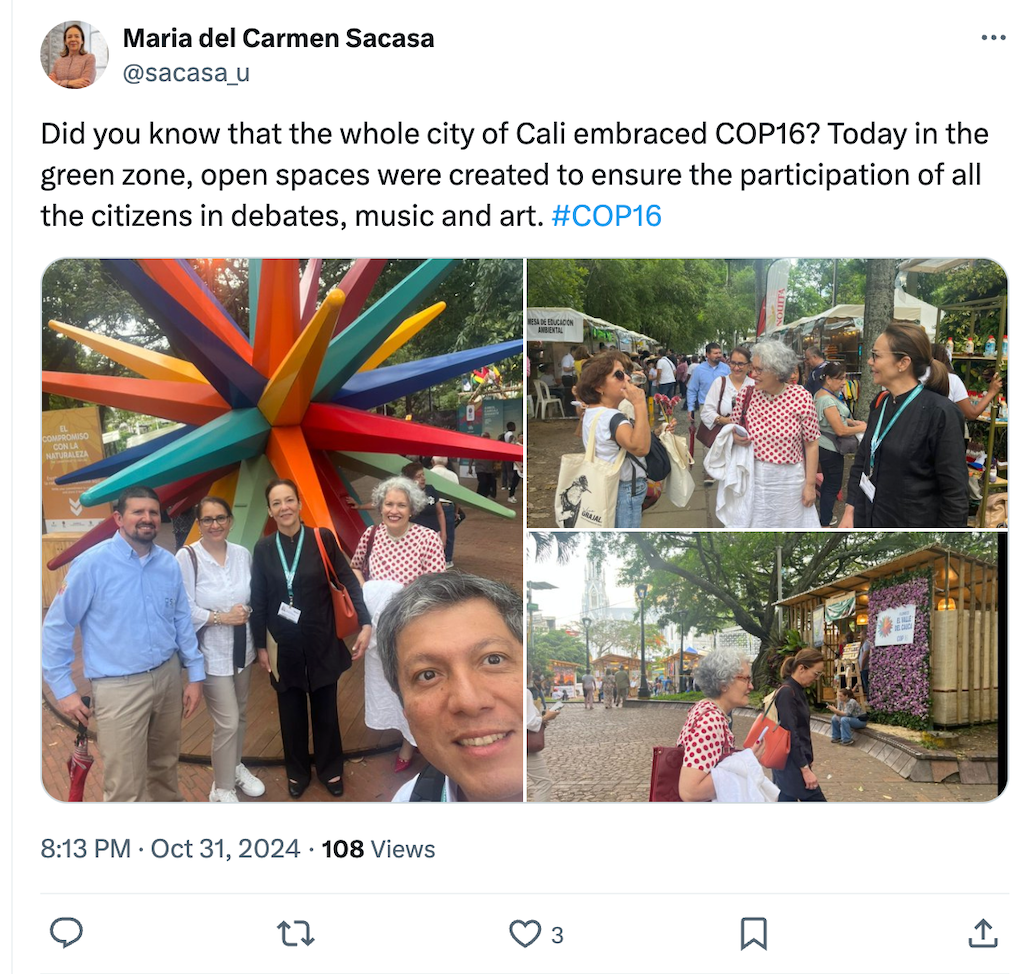
Outside the main negotiation area, the green zone at the summit, which usually hosts civil society, NGO and business events relating to nature, was also open to the general public – the first time that a green zone has not required pre-registration to access. Nearly 1 million people reportedly visited the green zone throughout the summit.
World leaders
Presidents and prime ministers are typically not invited to attend UN biodiversity conferences. Aside from Justin Trudeau, the prime minister of Canada, none were present at the last summit in Montreal.
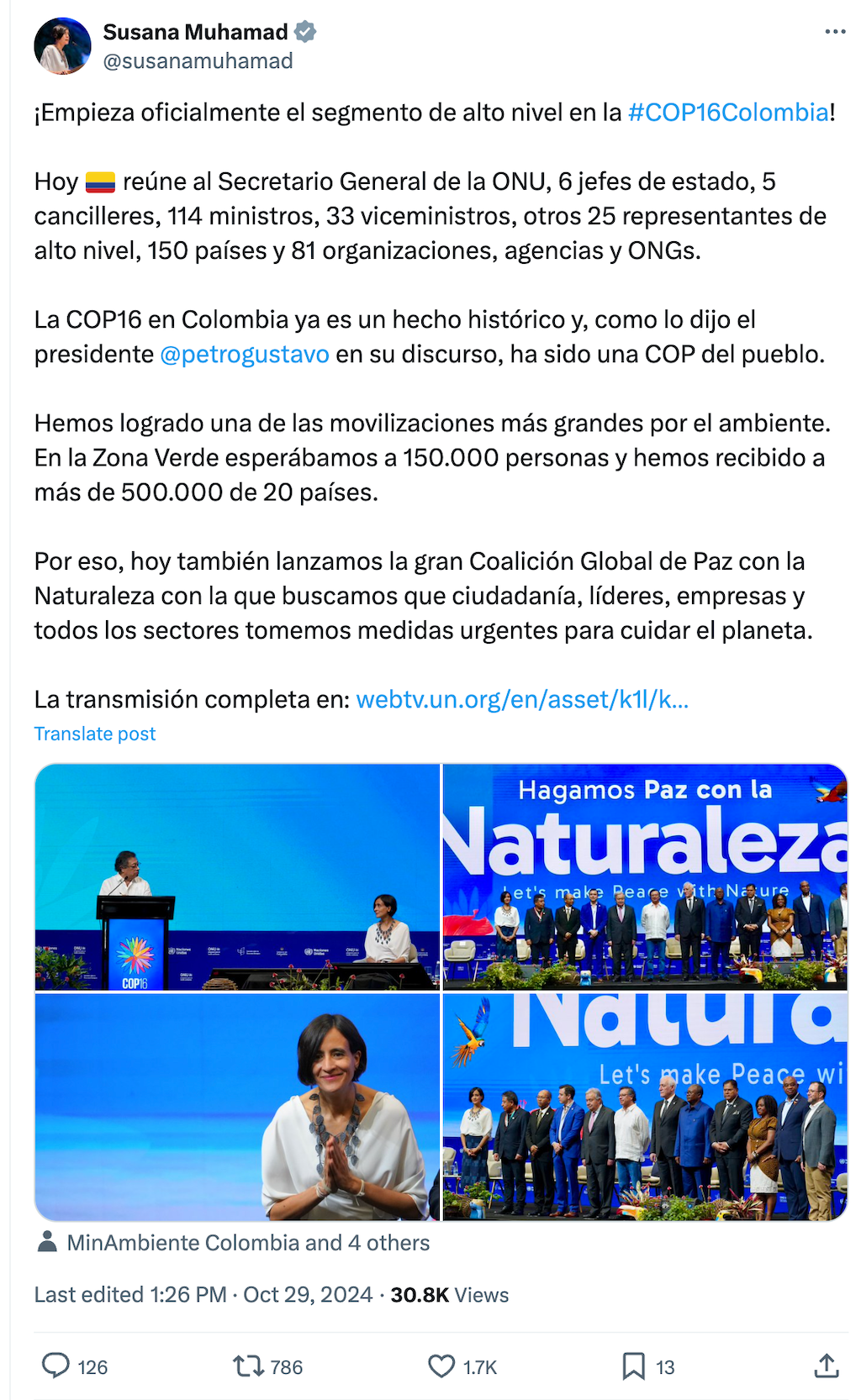
But a small number of world leaders travelled to Cali for COP16. Six heads of state and approximately 110 ministers from around the world attended a high-level segment on 29-30 October.
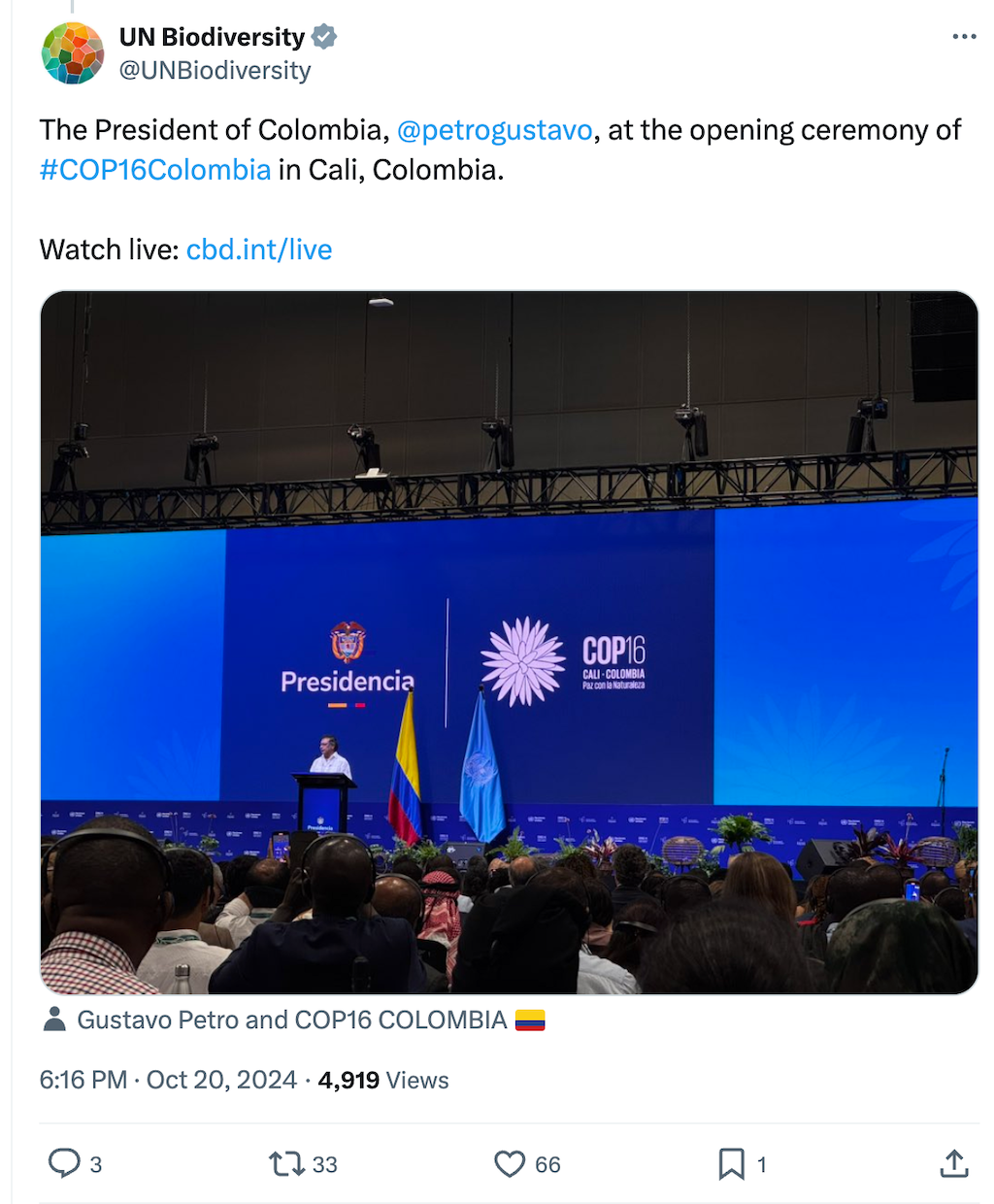
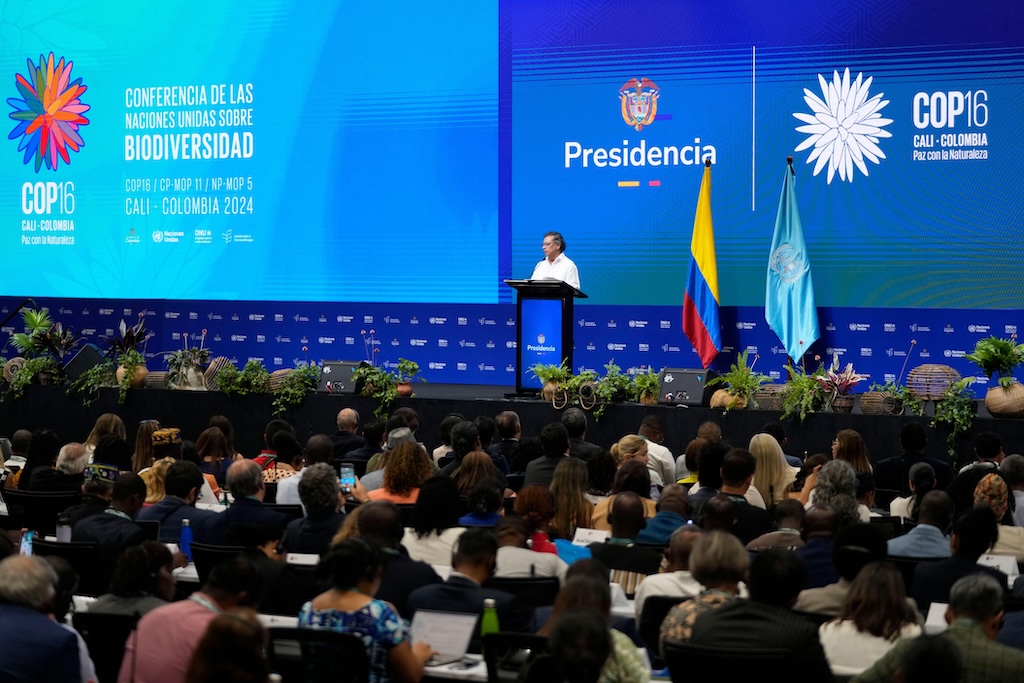
This included Colombian president Gustavo Petro, who spoke several times at the summit.
At the COP16 launch ceremony, Petro said that a “great battle for life” is approaching. He later told the high-level segment that both COP16 and the COP30 climate talks, due to be held next year in Belém, Brazil, must be “decisive” and “turning points where we won’t continue doing the same thing”.
UN secretary general António Guterres told the high-level segment that “nature is life”, but there is a “war against it”. He added:
“Biodiversity is humanity’s ally. We must move from plundering it to preserving it.”
The leaders of Armenia, Ecuador, Guinea-Bissau, Haiti and Suriname also attended the summit. The president of Ecuador, Daniel Noboa, told the plenary:
“Today we can change…I want to believe we can change and the world is not going to end.”
David Choquehuanca Céspedes, the vice president of Bolivia, told the summit that “Eurocentrism, capitalism and modernity” are “putting the planet at risk and exacerbating poverty”.
Credit: Fernando Vergara / Associated Press / Alamy Stock Photo
COP president Susana Muhamad said during the high-level segment that the attendance of world leaders “raises the level of political discussion that the COP on biodiversity has”, adding:
“This is not minor, because this is no longer an issue for conservationists or ecologists or environmentalists, it is an issue that should be at the centre of public policy of governments and the world.”
More world leaders were due to attend COP16, Carbon Brief understands, but provisional numbers dwindled as the summit approached.
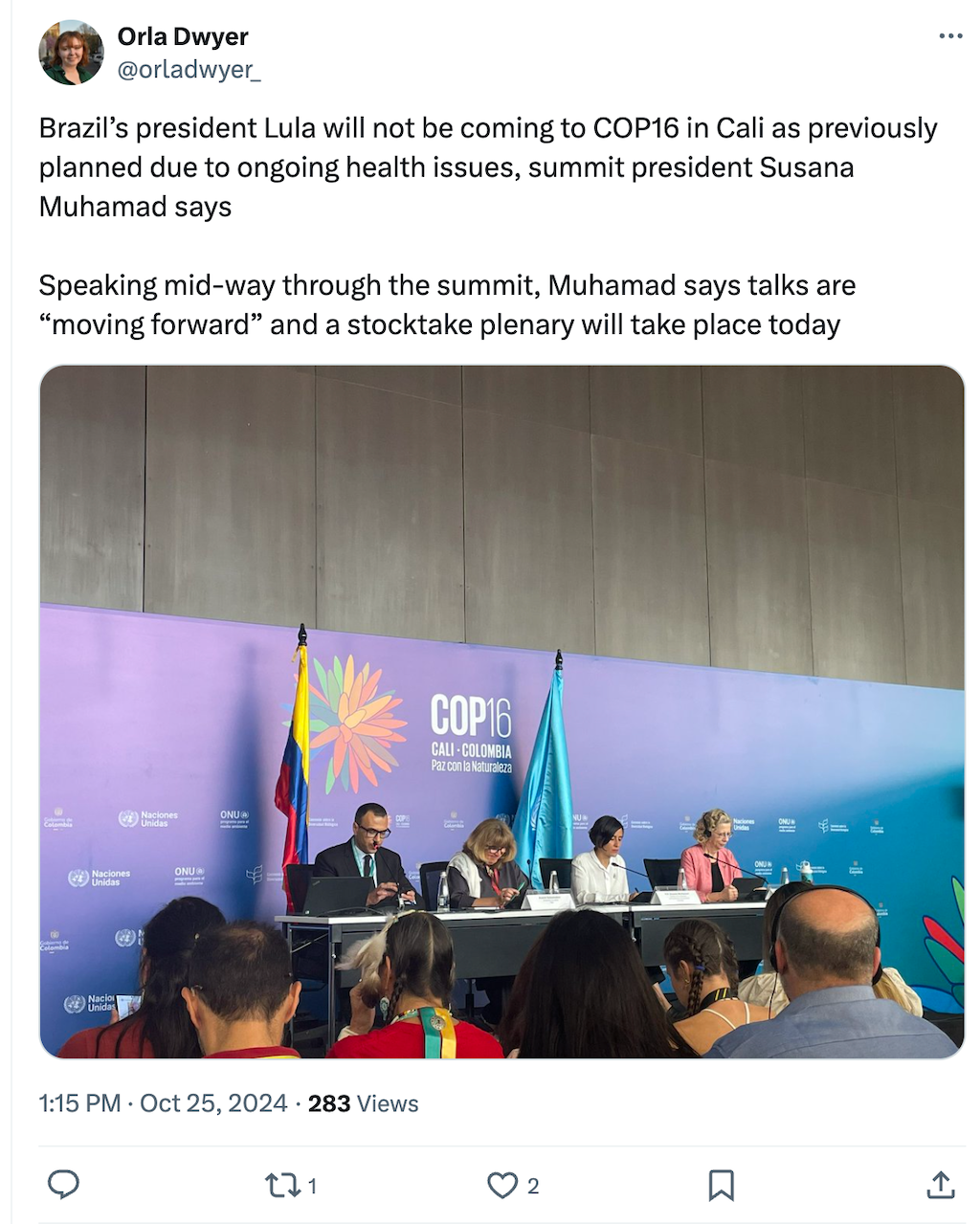
Brazil’s president Luiz Inácio Lula da Silva cancelled his planned attendance on Friday 25 October due to a head injury. The president also pulled out of a trip to Russia following an “accident at home that left him with a cut on the back of his head”, the Associated Press reported.
Muhamad told a 23 September press briefing that newly inaugurated president of Mexico, Dr Claudia Sheinbaum, would attend the summit, but she was also not present in Cali.
The ministers who attended mostly covered environment or climate briefs. However, some finance and foreign affairs ministers showed face and engaged in discussions.
Palestine’s foreign-affairs minister, Riyad al-Maliki, and Colombia’s Muhamad set up an agreement on “environmental cooperation and capacity building” at the talks. Speaking in Cali, Al-Maliki said:
“Colombia’s experience and knowledge will be essential to face the daily challenges we face in Palestine, particularly in the socio-environmental field.”
During the high-level segment of the conference, dozens of notable political figures, businesses, scientists and civil society groups signed an open letter to Petro and Lula encouraging the COP-hosting countries to “champion bold action” in aligning nature protection, climate action and transforming food systems.
Protests and environmental defenders
Coming soon
Greenwashing and lobbying
Coming soon
New science
A number of groups launched new or updated scientific reports on the sidelines of COP16.
On 22 October, the Group on Earth Observations launched the Global Ecosystems Atlas, which it called “the first harmonised resource dedicated to mapping and monitoring all the world’s ecosystems”.
In a press release, Astrid Schomaker, the CBD’s executive secretary, said:
“The Global Ecosystems Atlas is the first intergovernmental effort to develop a collation of the best ecosystem data from countries and it will serve as a critical tool by providing high-quality, reliable data on ecosystems around the world.”
On 28 October, the International Union for the Conservation of Nature (IUCN) launched the latest update to the IUCN Red List of Threatened Species.
The Red List update was widely covered by global media, including in South Africa, Australia, the UK and Japan.
The Red List update also included the Global Tree Assessment, the first such comprehensive look at the threatened status of tree species around the world – covering more than 80% of known species. It found that nearly 40% of tree species are at risk of extinction.
The same day saw the release of the Protected Planet Report 2024, the world’s “first official review” towards the 30-by-30 target.
It found that “global coverage of protected and conserved areas has now reached 17.6% of terrestrial and inland waters and 8.4% of marine and coastal areas”, noting that “this progress must be accelerated considerably if the target is to be fully met”.




The post COP16: Key outcomes agreed at the UN biodiversity conference in Cali, Colombia appeared first on Carbon Brief.
COP16: Key outcomes agreed at the UN biodiversity conference in Cali, Colombia

Drought and heatwaves occurring together – known as “compound” events – have “surged” across the world since the early 2000s, a new study shows.
Compound drought and heat events (CDHEs) can have devastating effects, creating the ideal conditions for intense wildfires, such as Australia’s “Black Summer” of 2019-20 where bushfires burned 24m hectares and killed 33 people.
The research, published in Science Advances, finds that the increase in CDHEs is predominantly being driven by events that start with a heatwave.
The global area affected by such “heatwave-led” compound events has more than doubled between 1980-2001 and 2002-23, the study says.
The rapid increase in these events over the last 23 years cannot be explained solely by global warming, the authors note.
Since the late 1990s, feedbacks between the land and the atmosphere have become stronger, making heatwaves more likely to trigger drought conditions, they explain.
One of the study authors tells Carbon Brief that societies must pay greater attention to compound events, which can “cause severe impacts on ecosystems, agriculture and society”.
Compound events
CDHEs are extreme weather events where drought and heatwave conditions occur simultaneously – or shortly after each other – in the same region.
These events are often triggered by large-scale weather patterns, such as “blocking” highs, which can produce “prolonged” hot and dry conditions, according to the study.
Prof Sang-Wook Yeh is one of the study authors and a professor at the Ewha Womans University in South Korea. He tells Carbon Brief:
“When heatwaves and droughts occur together, the two hazards reinforce each other through land-atmosphere interactions. This amplifies surface heating and soil moisture deficits, making compound events more intense and damaging than single hazards.”
CDHEs can begin with either a heatwave or a drought.
The sequence of these extremes is important, the study says, as they have different drivers and impacts.
For example, in a CDHE where the heatwave was the precursor, increased direct sunshine causes more moisture loss from soils and plants, leading to a drought.
Conversely, in an event where the drought was the precursor, the lack of soil moisture means that less of the sun’s energy goes into evaporation and more goes into warming the Earth’s surface. This produces favourable conditions for heatwaves.
The study shows that the majority of CDHEs globally start out as a drought.
In recent years, there has been increasing focus on these events due to the devastating impact they have on agriculture, ecosystems and public health.
In Russia in the summer of 2010, a compound drought-heatwave event – and the associated wildfires – caused the death of nearly 55,000 people, the study notes.

The record-breaking Pacific north-west “heat dome” in 2021 triggered extreme drought conditions that caused “significant declines” in wheat yields, as well as in barley, canola and fruit production in British Columbia and Alberta, Canada, says the study.
Increasing events
To assess how CDHEs are changing, the researchers use daily reanalysis data to identify droughts and heatwaves events. (Reanalysis data combines past observations with climate models to create a historical climate record.) Then, using an algorithm, they analyse how these events overlap in both time and space.
The study covers the period from 1980 to 2023 and the world’s land surface, excluding polar regions where CDHEs are rare.
The research finds that the area of land affected by CDHEs has “increased substantially” since the early 2000s.
Heatwave-led events have been the main contributor to this increase, the study says, with their spatial extent rising 110% between 1980-2001 and 2002-23, compared to a 59% increase for drought-led events.
The map below shows the global distribution of CDHEs over 1980-2023. The charts show the percentage of the land surface affected by a heatwave-led CDHE (red) or a drought-led CDHE (yellow) in a given year (left) and relative increase in each CDHE type (right).
The study finds that CDHEs have occurred most frequently in northern South America, the southern US, eastern Europe, central Africa and south Asia.
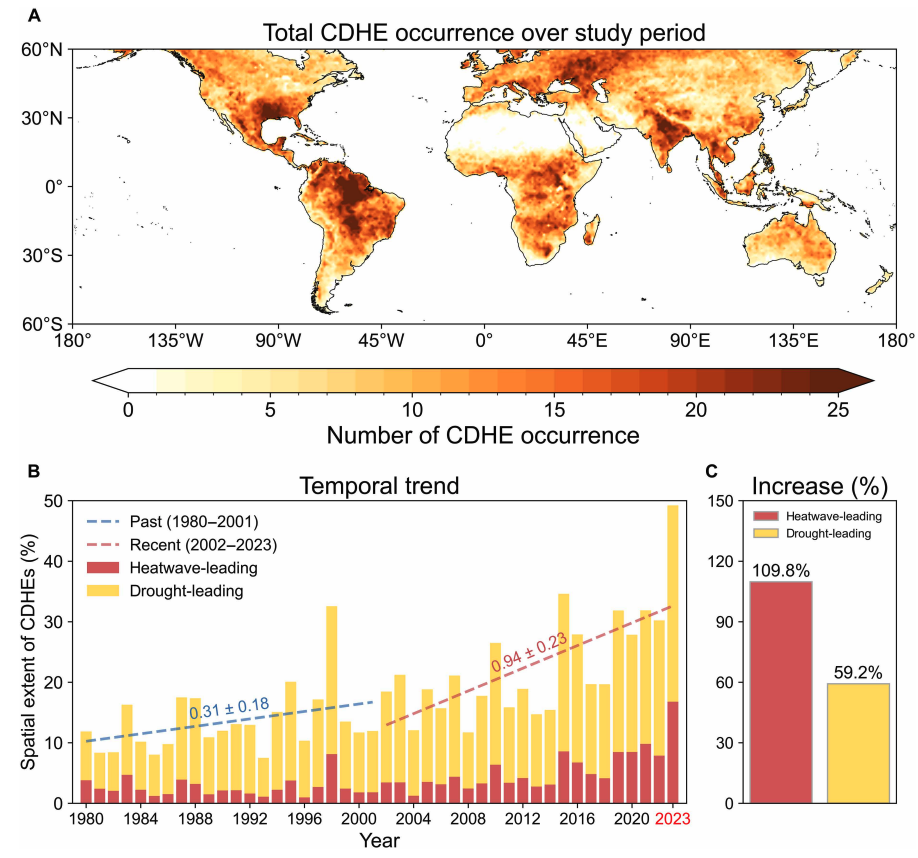
Threshold passed
The authors explain that the increase in heatwave-led CDHEs is related to rising global temperatures, but that this does not tell the whole story.
In the earlier 22-year period of 1980-2001, the study finds that the spatial extent of heatwave-led CDHEs rises by 1.6% per 1C of global temperature rise. For the more-recent period of 2022-23, this increases “nearly eightfold” to 13.1%.
The change suggests that the rapid increase in the heatwave-led CDHEs occurred after the global average temperature “surpasse[d] a certain temperature threshold”, the paper says.
This threshold is an absolute global average temperature of 14.3C, the authors estimate (based on an 11-year average), which the world passed around the year 2000.
Investigating the recent surge in heatwave-leading CDHEs further, the researchers find a “regime shift” in land-atmosphere dynamics “toward a persistently intensified state after the late 1990s”.
In other words, the way that drier soils drive higher surface temperatures, and vice versa, is becoming stronger, resulting in more heatwave-led compound events.
Daily data
The research has some advantages over other previous studies, Yeh says. For instance, the new work uses daily estimations of CDHEs, compared to monthly data used in past research. This is “important for capturing the detailed occurrence” of these events, says Yeh.
He adds that another advantage of their study is that it distinguishes the sequence of droughts and heatwaves, which allows them to “better understand the differences” in the characteristics of CDHEs.
Dr Meryem Tanarhte is a climate scientist at the University Hassan II in Morocco, and Dr Ruth Cerezo Mota is a climatologist and a researcher at the National Autonomous University of Mexico. Both scientists, who were not involved in the study, agree that the daily estimations give a clearer picture of how CDHEs are changing.
Cerezo-Mota adds that another major contribution of the study is its global focus. She tells Carbon Brief that in some regions, such as Mexico and Africa, there is a lack of studies on CDHEs:
“Not because the events do not occur, but perhaps because [these regions] do not have all the data or the expertise to do so.”
However, she notes that the reanalysis data used by the study does have limitations with how it represents rainfall in some parts of the world.
Compound impacts
The study notes that if CDHEs continue to intensify – particularly events where heatwaves are the precursors – they could drive declining crop productivity, increased wildfire frequency and severe public health crises.
These impacts could be “much more rapid and severe as global warming continues”, Yeh tells Carbon Brief.
Tanarhte notes that these events can be forecasted up to 10 days ahead in many regions. Furthermore, she says, the strongest impacts can be prevented “through preparedness and adaptation”, including through “water management for agriculture, heatwave mitigation measures and wildfire mitigation”.
The study recommends reassessing current risk management strategies for these compound events. It also suggests incorporating the sequences of drought and heatwaves into compound event analysis frameworks “to enhance climate risk management”.
Cerezo-Mota says that it is clear that the world needs to be prepared for the increased occurrence of these events. She tells Carbon Brief:
“These [risk assessments and strategies] need to be carried out at the local level to understand the complexities of each region.”



The post Heatwaves driving recent ‘surge’ in compound drought and heat extremes appeared first on Carbon Brief.
Heatwaves driving recent ‘surge’ in compound drought and heat extremes
Greenhouse Gases
DeBriefed 6 March 2026: Iran energy crisis | China climate plan | Bristol’s ‘pioneering’ wind turbine
Welcome to Carbon Brief’s DeBriefed.
An essential guide to the week’s key developments relating to climate change.
This week
Energy crisis
ENERGY SPIKE: US-Israeli attacks on Iran and subsequent counterattacks across the Middle East have sent energy prices “soaring”, according to Reuters. The newswire reported that the region “accounts for just under a third of global oil production and almost a fifth of gas”. The Guardian noted that shipping traffic through the strait of Hormuz, which normally ferries 20% of the world’s oil, “all but ground to a halt”. The Financial Times reported that attacks by Iran on Middle East energy facilities – notably in Qatar – triggered the “biggest rise in gas prices since Russia’s full-scale invasion of Ukraine”.
‘RISK’ AND ‘BENEFITS’: Bloomberg reported on increases in diesel prices in Europe and the US, speculating that rising fuel costs could be “a risk for president Donald Trump”. US gas producers are “poised to benefit from the big disruption in global supply”, according to CNBC. Indian government sources told the Economic Times that Russia is prepared to “fulfil India’s energy demands”. China Daily quoted experts who said “China’s energy security remains fundamentally unshaken”, thanks to “emergency stockpiles and a wide array of import channels”.
‘ESSENTIAL’ RENEWABLES: Energy analysts said governments should cut their fossil-fuel reliance by investing in renewables, “rather than just seeking non-Gulf oil and gas suppliers”, reported Climate Home News. This message was echoed by UK business secretary Peter Kyle, who said “doubling down on renewables” was “essential” amid “regional instability”, according to the Daily Telegraph.
China’s climate plan
PEAK COAL?: China has set out its next “five-year plan” at the annual “two sessions” meeting of the National People’s Congress, including its climate strategy out to 2030, according to the Hong Kong-based South China Morning Post. The plan called for China to cut its carbon emissions per unit of gross domestic product (GDP) by 17% from 2026 to 2030, which “may allow for continued increase in emissions given the rate of GDP growth”, reported Reuters. The newswire added that the plan also had targets to reach peak coal in the next five years and replace 30m tonnes per year of coal with renewables.
ACTIVE YET PRUDENT: Bloomberg described the new plan as “cautious”, stating that it “frustrat[es] hopes for tighter policy that would drive the nation to peak carbon emissions well before president Xi Jinping’s 2030 deadline”. Carbon Brief has just published an in-depth analysis of the plan. China Daily reported that the strategy “highlights measures to promote the climate targets of peaking carbon dioxide emissions before 2030”, which China said it would work towards “actively yet prudently”.
Around the world
- EU RULES: The European Commission has proposed new “made in Europe” rules to support domestic low-carbon industries, “against fierce competition from China”, reported Agence France-Presse. Carbon Brief examined what it means for climate efforts.
- RECORD HEAT: The US National Oceanic and Atmospheric Administration has said there is a 50-60% chance that the El Niño weather pattern could return this year, amplifying the effect of global warming and potentially driving temperatures to “record highs”, according to Euronews.
- FLAGSHIP FUND: The African Development Bank’s “flagship clean energy fund” plans to more than double its financing to $2.5bn for African renewables over the next two years, reported the Associated Press.
- NO WITHDRAWAL: Vanuatu has defied US efforts to force the Pacific-island nation to drop a UN draft resolution calling on the world to implement a landmark International Court of Justice (ICJ) ruling on climate, according to the Guardian.
98
The number of nations that submitted their national reports on tackling nature loss to the UN on time – just half of the 196 countries that are part of the UN biodiversity treaty – according to analysis by Carbon Brief.
Latest climate research
- Sea levels are already “much higher than assumed” in most assessments of the threat posed by sea-level rise, due to “inadequate” modelling assumptions | Nature
- Accelerating human-caused global warming could see the Paris Agreement’s 1.5C limit crossed before 2030 | Geophysical Research Letters covered by Carbon Brief
- Future “super El Niño events” could “significantly lower” solar power generation due to a reduction in solar irradiance in key regions, such as California and east China | Communications Earth & Environment
(For more, see Carbon Brief’s in-depth daily summaries of the top climate news stories on Monday, Tuesday, Wednesday, Thursday and Friday.)
Captured
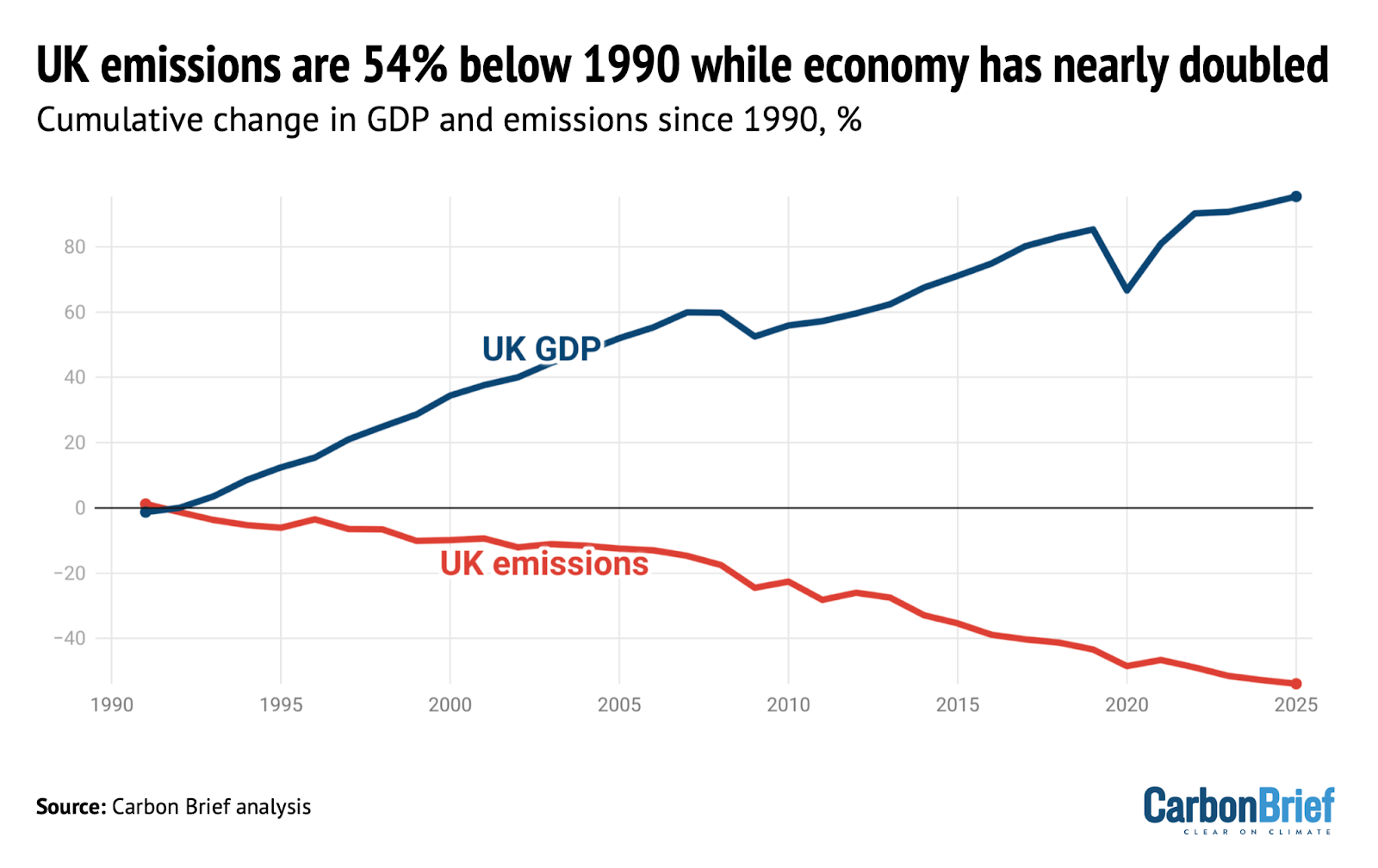
UK greenhouse gas emissions in 2025 fell to 54% below 1990 levels, the baseline year for its legally binding climate goals, according to new Carbon Brief analysis. Over the same period, data from the World Bank shows that the UK’s economy has expanded by 95%, meaning that emissions have been decoupling from growth.
Spotlight
Bristol’s ‘pioneering’ community wind turbine
Following the recent launch of the UK government’s local power plan, Carbon Brief visits one of the country’s community-energy success stories.
The Lawrence Weston housing estate is set apart from the main city of Bristol, wedged between the tree-lined grounds of a stately home and a sprawl of warehouses and waste incinerators. It is one of the most deprived areas in the city.
Yet, just across the M5 motorway stands a structure that has brought the spoils of the energy transition directly to this historically forgotten estate – a 4.2 megawatt (MW) wind turbine.
The turbine is owned by local charity Ambition Lawrence Weston and all the profits from its electricity sales – around £100,000 a year – go to the community. In the UK’s local power plan, it was singled out by energy secretary Ed Miliband as a “pioneering” project.
‘Sustainable income’
On a recent visit to the estate by Carbon Brief, Ambition Lawrence Weston’s development manager, Mark Pepper, rattled off the story behind the wind turbine.
In 2012, Pepper and his team were approached by the Bristol Energy Cooperative with a chance to get a slice of the income from a new solar farm. They jumped at the opportunity.
“Austerity measures were kicking in at the time,” Pepper told Carbon Brief. “We needed to generate an income. Our own, sustainable income.”
With the solar farm proving to be a success, the team started to explore other opportunities. This began a decade-long process that saw them navigate the Conservative government’s “ban” on onshore wind, raise £5.5m in funding and, ultimately, erect the turbine in 2023.
Today, the turbine generates electricity equivalent to Lawrence Weston’s 3,000 households and will save 87,600 tonnes of carbon dioxide (CO2) over its lifetime.
‘Climate by stealth’
Ambition Lawrence Weston’s hub is at the heart of the estate and the list of activities on offer is seemingly endless: birthday parties, kickboxing, a library, woodworking, help with employment and even a pop-up veterinary clinic. All supported, Pepper said, with the help of a steady income from community-owned energy.
The centre itself is kitted out with solar panels, heat pumps and electric-vehicle charging points, making it a living advertisement for the net-zero transition. Pepper noted that the organisation has also helped people with energy costs amid surging global gas prices.
Gesturing to the England flags dangling limply on lamp posts visible from the kitchen window, he said:
“There’s a bit of resentment around immigration and scarcity of materials and provision, so we’re trying to do our bit around community cohesion.”
This includes supper clubs and an interfaith grand iftar during the Muslim holy month of Ramadan.
Anti-immigration sentiment in the UK has often gone hand-in-hand with opposition to climate action. Right-wing politicians and media outlets promote the idea that net-zero policies will cost people a lot of money – and these ideas have cut through with the public.
Pepper told Carbon Brief he is sympathetic to people’s worries about costs and stressed that community energy is the perfect way to win people over:
“I think the only way you can change that is if, instead of being passive consumers…communities are like us and they’re generating an income to offset that.”
From the outset, Pepper stressed that “we weren’t that concerned about climate because we had other, bigger pressures”, adding:
“But, in time, we’ve delivered climate by stealth.”
Watch, read, listen
OIL WATCH: The Guardian has published a “visual guide” with charts and videos showing how the “escalating Iran conflict is driving up oil and gas prices”.
MURDER IN HONDURAS: Ten years on from the murder of Indigenous environmental justice advocate Berta Cáceres, Drilled asked why Honduras is still so dangerous for environmental activists.
TALKING WEATHER: A new film, narrated by actor Michael Sheen and titled You Told Us To Talk About the Weather, aimed to promote conversation about climate change with a blend of “poetry, folk horror and climate storytelling”.
Coming up
- 8 March: Colombia parliamentary election
- 9-19 March: 31st Annual Session of the International Seabed Authority, Kingston, Jamaica
- 11 March: UN Environment Programme state of finance for nature 2026 report launch
Pick of the jobs
- London School of Economics and Political Science, fellow in the social science of sustainability | Salary: £43,277-£51,714. Location: London
- NORCAP, innovative climate finance expert | Salary: Unknown. Location: Kyiv, Ukraine
- WBHM, environmental reporter | Salary: $50,050-$81,330. Location: Birmingham, Alabama, US
- Climate Cabinet, data engineer | Salary: hourly rate of $60-$120 per hour. Location: Remote anywhere in the US
DeBriefed is edited by Daisy Dunne. Please send any tips or feedback to debriefed@carbonbrief.org.
This is an online version of Carbon Brief’s weekly DeBriefed email newsletter. Subscribe for free here.


The post DeBriefed 6 March 2026: Iran energy crisis | China climate plan | Bristol’s ‘pioneering’ wind turbine appeared first on Carbon Brief.
China’s leadership has published a draft of its 15th five-year plan setting the strategic direction for the nation out to 2030, including support for clean energy and energy security.
The plan sets a target to cut China’s “carbon intensity” by 17% over the five years from 2026-30, but also changes the basis for calculating this key climate metric.
The plan continues to signal support for China’s clean-energy buildout and, in general, contains no major departures from the country’s current approach to the energy transition.
The government reaffirms support for several clean-energy industries, ranging from solar and electric vehicles (EVs) through to hydrogen and “new-energy” storage.
The plan also emphasises China’s willingness to steer climate governance and be seen as a provider of “global public goods”, in the form of affordable clean-energy technologies.
However, while the document says it will “promote the peaking” of coal and oil use, it does not set out a timeline and continues to call for the “clean and efficient” use of coal.
This shows that tensions remain between China’s climate goals and its focus on energy security, leading some analysts to raise concerns about its carbon-cutting ambition.
Below, Carbon Brief outlines the key climate change and energy aspects of the plan, including targets for carbon intensity, non-fossil energy and forestry.
Note: this article is based on a draft published on 5 March and will be updated if any significant changes are made in the final version of the plan, due to be released at the close next week of the “two sessions” meeting taking place in Beijing.
- What is China’s 15th five-year plan?
- What does the plan say about China’s climate action?
- What is China’s new CO2 intensity target?
- Does the plan encourage further clean-energy additions?
- What does the plan signal about coal?
- How will China approach global climate governance in the next five years?
- What else does the plan cover?
What is China’s 15th five-year plan?
Five-year plans are one of the most important documents in China’s political system.
Addressing everything from economic strategy to climate policy, they outline the planned direction for China’s socio-economic development in a five-year period. The 15th five-year plan covers 2026-30.
These plans include several “main goals”. These are largely quantitative indicators that are seen as particularly important to achieve and which provide a foundation for subsequent policies during the five-year period.
The table below outlines some of the key “main goals” from the draft 15th five-year plan.
| Category | Indicator | Indicator in 2025 | Target by 2030 | Cumulative target over 2026-2030 | Characteristic |
|---|---|---|---|---|---|
| Economic development | Gross domestic product (GDP) growth (%) | 5 | Maintained within a reasonable range and proposed annually as appropriate. | Anticipatory | |
| ‘Green and low-carbon | Reduction in CO2 emissions per unit of GDP (%) | 17.7 | 17 | Binding | |
| Share of non-fossil energy in total energy consumption (%) | 21.7 | 25 | Binding | ||
| Security guarantee | Comprehensive energy production capacity (100m tonnes of standard coal equivalent) |
51.3 | 58 | Binding |
Select list of targets highlighted in the “main goals” section of the draft 15th five-year plan. Source: Draft 15th five-year plan.
Since the 12th five-year plan, covering 2011-2015, these “main goals” have included energy intensity and carbon intensity as two of five key indicators for “green ecology”.
The previous five-year plan, which ran from 2021-2025, introduced the idea of an absolute “cap” on carbon dioxide (CO2) emissions, although it did not provide an explicit figure in the document. This has been subsequently addressed by a policy on the “dual-control of carbon” issued in 2024.
The latest plan removes the energy-intensity goal and elevates the carbon-intensity goal, but does not set an absolute cap on emissions (see below).
It covers the years until 2030, before which China has pledged to peak its carbon emissions. (Analysis for Carbon Brief found that emissions have been “flat or falling” since March 2024.)
The plans are released at the two sessions, an annual gathering of the National People’s Congress (NPC) and the Chinese People’s Political Consultative Conference (CPPCC). This year, it runs from 4-12 March.
The plans are often relatively high-level, with subsequent topic-specific five-year plans providing more concrete policy guidance.
Policymakers at the National Energy Agency (NEA) have indicated that in the coming years they will release five sector-specific plans for 2026-2030, covering topics such as the “new energy system”, electricity and renewable energy.
There may also be specific five-year plans covering carbon emissions and environmental protection, as well as the coal and nuclear sectors, according to analysts.
Other documents published during the two sessions include an annual government work report, which outlines key targets and policies for the year ahead.
The gathering is attended by thousands of deputies – delegates from across central and local governments, as well as Chinese Communist party members, members of other political parties, academics, industry leaders and other prominent figures.
What does the plan say about China’s climate action?
Achieving China’s climate targets will remain a key driver of the country’s policies in the next five years, according to the draft 15th five-year plan.
It lists the “acceleration” of China’s energy transition as a “major achievement” in the 14th five-year plan period (2021-2025), noting especially how clean-power capacity had overtaken fossil fuels.
The draft says China will “actively and steadily advance and achieve carbon peaking”, with policymakers continuing to strike a balance between building a “green economy” and ensuring stability.
Climate and environment continues to receive its own chapter in the plan. However, the framing and content of this chapter has shifted subtly compared with previous editions, as shown in the table below. For example, unlike previous plans, the first section of this chapter focuses on China’s goal to peak emissions.
| 11th five-year plan (2006-2010) | 12th five-year plan (2011-2015) | 13th five-year plan (2016-2020) | 14th five-year plan (2021-2025) | 15th five-year plan (2026-2030) | |
|---|---|---|---|---|---|
| Chapter title | Part 6: Build a resource-efficient and environmentally-friendly society | Part 6: Green development, building a resource-efficient and environmentally friendly society | Part 10: Ecosystems and the environment | Part 11: Promote green development and facilitate the harmonious coexistence of people and nature | Part 13: Accelerating the comprehensive green transformation of economic and social development to build a beautiful China |
| Sections | Developing a circular economy | Actively respond to global climate change | Accelerate the development of functional zones | Improve the quality and stability of ecosystems | Actively and steadily advancing and achieving carbon peaking |
| Protecting and restoring natural ecosystems | Strengthen resource conservation and management | Promote economical and intensive resource use | Continue to improve environmental quality | Continuously improving environmental quality | |
| Strengthening environmental protection | Vigorously develop the circular economy | Step up comprehensive environmental governance | Accelerate the green transformation of the development model | Enhancing the diversity, stability, and sustainability of ecosystems | |
| Enhancing resource management | Strengthen environmental protection efforts | Intensify ecological conservation and restoration | Accelerating the formation of green production and lifestyles | ||
| Rational utilisation of marine and climate resources | Promoting ecological conservation and restoration | Respond to global climate change | |||
| Strengthen the development of water conservancy and disaster prevention and mitigation systems | Improve mechanisms for ensuring ecological security | ||||
| Develop green and environmentally-friendly industries |
Title and main sections of the climate and environment-focused chapters in the last five five-year plans. Source: China’s 11th, 12th, 13th, 14th and 15th five-year plans.
The climate and environment chapter in the latest plan calls for China to “balance [economic] development and emission reduction” and “ensure the timely achievement of carbon peak targets”.
Under the plan, China will “continue to pursue” its established direction and objectives on climate, Prof Li Zheng, dean of the Tsinghua University Institute of Climate Change and Sustainable Development (ICCSD), tells Carbon Brief.
What is China’s new CO2 intensity target?
In the lead-up to the release of the plan, analysts were keenly watching for signals around China’s adoption of a system for the “dual-control of carbon”.
This would combine the existing targets for carbon intensity – the CO2 emissions per unit of GDP – with a new cap on China’s total carbon emissions. This would mark a dramatic step for the country, which has never before set itself a binding cap on total emissions.
Policymakers had said last year that this framework would come into effect during the 15th five-year plan period, replacing the previous system for the “dual-control of energy”.
However, the draft 15th five-year plan does not offer further details on when or how both parts of the dual-control of carbon system will be implemented. Instead, it continues to focus on carbon intensity targets alone.
Looking back at the previous five-year plan period, the latest document says China had achieved a carbon-intensity reduction of 17.7%, just shy of its 18% goal.
This is in contrast with calculations by Lauri Myllyvirta, lead analyst at the Centre for Research on Energy and Clean Air (CREA), which had suggested that China had only cut its carbon intensity by 12% over the past five years.
At the time it was set in 2021, the 18% target had been seen as achievable, with analysts telling Carbon Brief that they expected China to realise reductions of 20% or more.
However, the government had fallen behind on meeting the target.
Last year, ecology and environment minister Huang Runqiu attributed this to the Covid-19 pandemic, extreme weather and trade tensions. He said that China, nevertheless, remained “broadly” on track to meet its 2030 international climate pledge of reducing carbon intensity by more than 65% from 2005 levels.
Myllyvirta tells Carbon Brief that the newly reported figure showing a carbon-intensity reduction of 17.7% is likely due to an “opportunistic” methodological revision. The new methodology now includes industrial process emissions – such as cement and chemicals – as well as the energy sector.
(This is not the first time China has redefined a target, with regulators changing the methodology for energy intensity in 2023.)
For the next five years, the plan sets a target to reduce carbon intensity by 17%, slightly below the previous goal.
However, the change in methodology means that this leaves space for China’s overall emissions to rise by “3-6% over the next five years”, says Myllyvirta. In contrast, he adds that the original methodology would have required a 2% fall in absolute carbon emissions by 2030.
The dashed lines in the chart below show China’s targets for reducing carbon intensity during the 12th, 13th, 14th and 15th five-year periods, while the bars show what was achieved under the old (dark blue) and new (light blue) methodology.
The carbon-intensity target is the “clearest signal of Beijing’s climate ambition”, says Li Shuo, director at the Asia Society Policy Institute’s (ASPI) China climate hub.
It also links directly to China’s international pledge – made in 2021 – to cut its carbon intensity to more than 65% below 2005 levels by 2030.
To meet this pledge under the original carbon-intensity methodology, China would have needed to set a target of a 23% reduction within the 15th five-year plan period. However, the country’s more recent 2035 international climate pledge, released last year, did not include a carbon-intensity target.
As such, ASPI’s Li interprets the carbon-intensity target in the draft 15th five-year plan as a “quiet recalibration” that signals “how difficult the original 2030 goal has become”.
Furthermore, the 15th five-year plan does not set an absolute emissions cap.
This leaves “significant ambiguity” over China’s climate plans, says campaign group 350 in a press statement reacting to the draft plan. It explains:
“The plan was widely expected to mark a clearer transition from carbon-intensity targets toward absolute emissions reductions…[but instead] leaves significant ambiguity about how China will translate record renewable deployment into sustained emissions cuts.”
Myllyvirta tells Carbon Brief that this represents a “continuation” of the government’s focus on scaling up clean-energy supply while avoiding setting “strong measurable emission targets”.
He says that he would still expect to see absolute caps being set for power and industrial sectors covered by China’s emissions trading scheme (ETS). In addition, he thinks that an overall absolute emissions cap may still be published later in the five-year period.
Despite the fact that it has yet to be fully implemented, the switch from dual-control of energy to dual-control of carbon represents a “major policy evolution”, Ma Jun, director of the Institute of Public and Environmental Affairs (IPE), tells Carbon Brief. He says that it will allow China to “provide more flexibility for renewable energy expansion while tightening the net on fossil-fuel reliance”.
Does the plan encourage further clean-energy additions?
“How quickly carbon intensity is reduced largely depends on how much renewable energy can be supplied,” says Yao Zhe, global policy advisor at Greenpeace East Asia, in a statement.
The five-year plan continues to call for China’s development of a “new energy system that is clean, low-carbon, safe and efficient” by 2030, with continued additions of “wind, solar, hydro and nuclear power”.
In line with China’s international pledge, it sets a target for raising the share of non-fossil energy in total energy consumption to 25% by 2030, up from just under 21.7% in 2025.
The development of “green factories” and “zero-carbon [industrial] parks” has been central to many local governments’ strategies for meeting the non-fossil energy target, according to industry news outlet BJX News. A call to build more of these zero-carbon industrial parks is listed in the five-year plan.
Prof Pan Jiahua, dean of Beijing University of Technology’s Institute of Ecological Civilization, tells Carbon Brief that expanding demand for clean energy through mechanisms such as “green factories” represents an increasingly “bottom-up” and “market-oriented” approach to the energy transition, which will leave “no place for fossil fuels”.
He adds that he is “very much sure that China’s zero-carbon process is being accelerated and fossil fuels are being driven out of the market”, pointing to the rapid adoption of EVs.
The plan says that China will aim to double “non-fossil energy” in 10 years – although it does not clarify whether this means their installed capacity or electricity generation, or what the exact starting year would be.
Research has shown that doubling wind and solar capacity in China between 2025-2035 would be “consistent” with aims to limit global warming to 2C.
While the language “certainly” pushes for greater additions of renewable energy, Yao tells Carbon Brief, it is too “opaque” to be a “direct indication” of the government’s plans for renewable additions.
She adds that “grid stability and healthy, orderly competition” is a higher priority for policymakers than guaranteeing a certain level of capacity additions.
China continues to place emphasis on the need for large-scale clean-energy “bases” and cross-regional power transmission.
The plan says China must develop “clean-energy bases…in the three northern regions” and “integrated hydro-wind-solar complexes” in south-west China.
It specifically encourages construction of “large-scale wind and solar” power bases in desert regions “primarily” for cross-regional power transmission, as well as “major hydropower” projects, including the Yarlung Tsangpo dam in Tibet.
As such, the country should construct “power-transmission corridors” with the capacity to send 420 gigawatts (GW) of electricity from clean-energy bases in western provinces to energy-hungry eastern provinces by 2030, the plan says.
State Grid, China’s largest grid operator, plans to install “another 15 ultra-high voltage [UHV] transmission lines” by 2030, reports Reuters, up from the 45 UHV lines built by last year.
Below are two maps illustrating the interlinkages between clean-energy bases in China in the 15th (top) and 14th (bottom) five-year plan periods.
The yellow dotted areas represent clean energy bases, while the arrows represent cross-regional power transmission. The blue wind-turbine icons represent offshore windfarms and the red cooling tower icons represent coastal nuclear plants.
The 15th five-year plan map shows a consistent approach to the 2021-2025 period. As well as power being transmitted from west to east, China plans for more power to be sent to southern provinces from clean-energy bases in the north-west, while clean-energy bases in the north-east supply China’s eastern coast.
It also maps out “mutual assistance” schemes for power grids in neighbouring provinces.
Offshore wind power should reach 100GW by 2030, while nuclear power should rise to 110GW, according to the plan.
What does the plan signal about coal?
The increased emphasis on grid infrastructure in the draft 15th five-year plan reflects growing concerns from energy planning officials around ensuring China’s energy supply.
Ren Yuzhi, director of the NEA’s development and planning department, wrote ahead of the plan’s release that the “continuous expansion” of China’s energy system has “dramatically increased its complexity”.
He said the NEA felt there was an “urgent need” to enhance the “secure and reliable” replacement of fossil-fuel power with new energy sources, as well as to ensure the system’s “ability to absorb them”.
Meanwhile, broader concerns around energy security have heightened calls for coal capacity to remain in the system as a “ballast stone”.
The plan continues to support the “clean and efficient utilisation of fossil fuels” and does not mention either a cap or peaking timeline for coal consumption.
Xi had previously told fellow world leaders that China would “strictly control” coal-fired power and phase down coal consumption in the 15th five-year plan period.
The “geopolitical situation is increasing energy security concerns” at all levels of government, said the Institute for Global Decarbonization Progress in a note responding to the draft plan, adding that this was creating “uncertainty over coal reduction”.
Ahead of its publication, there were questions around whether the plan would set a peaking deadline for oil and coal. An article posted by state news agency Xinhua last month, examining recommendations for the plan from top policymakers, stated that coal consumption would plateau from “around 2027”, while oil would peak “around 2026”.
However, the plan does not lay out exact years by which the two fossil fuels should peak, only saying that China will “promote the peaking of coal and oil consumption”.
There are similarly no mentions of phasing out coal in general, in line with existing policy.
Nevertheless, there is a heavy emphasis on retrofitting coal-fired power plants. The plan calls for the establishment of “demonstration projects” for coal-plant retrofitting, such as through co-firing with biomass or “green ammonia”.
Such retrofitting could incentivise lower utilisation of coal plants – and thus lower emissions – if they are used to flexibly meet peaks in demand and to cover gaps in clean-energy output, instead of providing a steady and significant share of generation.
The plan also calls for officials to “fully implement low-carbon retrofitting projects for coal-chemical industries”, which have been a notable source of emissions growth in the past year.
However, the coal-chemicals sector will likely remain a key source of demand for China’s coal mining industry, with coal-to-oil and coal-to-gas bases listed as a “key area” for enhancing the country’s “security capabilities”.
Meanwhile, coal-fired boilers and industrial kilns in the paper industry, food processing and textiles should be replaced with “clean” alternatives to the equivalent of 30m tonnes of coal consumption per year, it says.
“China continues to scale up clean energy at an extraordinary pace, but the plan still avoids committing to strong measurable constraints on emissions or fossil fuel use”, says Joseph Dellatte, head of energy and climate studies at the Institut Montaigne. He adds:
“The logic remains supply-driven: deploy massive amounts of clean energy and assume emissions will eventually decline.”
How will China approach global climate governance in the next five years?
Meanwhile, clean-energy technologies continue to play a role in upgrading China’s economy, with several “new energy” sectors listed as key to its industrial policy.
Named sectors include smart EVs, “new solar cells”, new-energy storage, hydrogen and nuclear fusion energy.
“China’s clean-technology development – rather than traditional administrative climate controls – is increasingly becoming the primary driver of emissions reduction,” says ASPI’s Li. He adds that strengthening China’s clean-energy sectors means “more closely aligning Beijing’s economic ambitions with its climate objectives”.
Analysis for Carbon Brief shows that clean energy drove more than a third of China’s GDP growth in 2025, representing around 11% of China’s whole economy.
The continued support for these sectors in the draft five-year plan comes as the EU outlined its own measures intended to limit China’s hold on clean-energy industries, driven by accusations of “unfair competition” from Chinese firms.
China is unlikely to crack down on clean-tech production capacity, Dr Rebecca Nadin, director of the Centre for Geopolitics of Change at ODI Global, tells Carbon Brief. She says:
“Beijing is treating overcapacity in solar and smart EVs as a strategic choice, not a policy error…and is prepared to pour investment into these sectors to cement global market share, jobs and technological leverage.”
Dellatte echoes these comments, noting that it is “striking” that the plan “barely addresses the issue of industrial overcapacity in clean technologies”, with the focus firmly on “scaling production and deployment”.
At the same time, China is actively positioning itself to be a prominent voice in climate diplomacy and a champion of proactive climate action.
This is clear from the first line in a section on providing “global public goods”. It says:
“As a responsible major country, China will play a more active role in addressing global challenges such as climate change.”
The plan notes that China will “actively participate in and steer [引领] global climate governance”, in line with the principle of “common,but differentiated responsibilities”.
This echoes similar language from last year’s government work report, Yao tells Carbon Brief, demonstrating a “clear willingness” to guide global negotiations. But she notes that this “remains an aspiration that’s yet to be made concrete”. She adds:
“China has always favored collective leadership, so its vision of leadership is never a lone one.”
The country will “deepen south-south cooperation on climate change”, the plan says. In an earlier section on “opening up”, it also notes that China will explore “new avenues for collaboration in green development” with global partners as part of its “Belt and Road Initiative”.
China is “doubling down” on a narrative that it is a “responsible major power” and “champion of south-south climate cooperation”, Nadin says, such as by “presenting its clean‑tech exports and finance as global public goods”. She says:
“China will arrive at future COPs casting itself as the indispensable climate leader for the global south…even though its new five‑year plan still puts growth, energy security and coal ahead of faster emissions cuts at home.”
What else does the plan cover?
The impact of extreme weather – particularly floods – remains a key concern in the plan.
China must “refine” its climate adaptation framework and “enhance its resilience to climate change, particularly extreme-weather events”, it says.
China also aims to “strengthen construction of a national water network” over the next five years in order to help prevent floods and droughts.
An article published a few days before the plan in the state-run newspaper China Daily noted that, “as global warming intensifies, extreme weather events – including torrential rains, severe convective storms, and typhoons – have become more frequent, widespread and severe”.
The plan also touches on critical minerals used for low-carbon technologies. These will likely remain a geopolitical flashpoint, with China saying it will focus during the next five years on “intensifying” exploration and “establishing” a reserve for critical minerals. This reserve will focus on “scarce” energy minerals and critical minerals, as well as other “advantageous mineral resources”.
Dellatte says that this could mean the “competition in the energy transition will increasingly be about control over mineral supply chains”.
Other low-carbon policies listed in the five-year plan include expanding coverage of China’s mandatory carbon market and further developing its voluntary carbon market.
China will “strengthen monitoring and control” of non-CO2 greenhouse gases, the plan says, as well as implementing projects “targeting methane, nitrous oxide and hydrofluorocarbons” in sectors such as coal mining, agriculture and chemicals.
This will create “capacity” for reducing emissions by 30m tonnes of CO2 equivalent, it adds.
Meanwhile, China will develop rules for carbon footprint accounting and push for internationally recognised accounting standards.
It will enhance reform of power markets over the next five years and improve the trading mechanism for green electricity certificates.
It will also “promote” adoption of low-carbon lifestyles and decarbonisation of transport, as well as working to advance electrification of freight and shipping.


The post Q&A: What does China’s 15th ‘five-year plan’ mean for climate change? appeared first on Carbon Brief.
Q&A: What does China’s 15th ‘five-year plan’ mean for climate change?



-
Climate Change1 year ago
Guest post: Why China is still building new coal – and when it might stop
-

 Greenhouse Gases2 years ago
嘉宾来稿:满足中国增长的用电需求 光伏加储能“比新建煤电更实惠”
-
Greenhouse Gases1 year ago
Guest post: Why China is still building new coal – and when it might stop
-

 Climate Change2 years ago
嘉宾来稿:满足中国增长的用电需求 光伏加储能“比新建煤电更实惠”
-

 Renewable Energy11 months ago
Sending Progressive Philanthropist George Soros to Prison?
-
Climate Change2 years ago
Bill Discounting Climate Change in Florida’s Energy Policy Awaits DeSantis’ Approval
-
Greenhouse Gases1 year ago
嘉宾来稿:探究火山喷发如何影响气候预测
-

 Climate Change2 years ago
Analysis: China’s CO2 falls 1% in Q2 2024 in first quarterly drop since Covid-19