


A new partnership between carbon standards body Verra and blockchain technology platform Hedera Guardian sets the stage for a more transparent and scalable future for global carbon markets. The collaboration seeks to update how carbon credit projects are managed, monitored, and verified. This will make the process quicker, easier, and more aligned with environmental goals.
The partnership brings Hedera’s open-source tools into Verra’s Project Hub. This helps carbon projects submit and process digital information more easily. This move could mark a big change in the carbon credit market’s digital growth. It has faced challenges from complicated manual tasks for a long time.
Bridging the Digital Gap in Carbon Markets
Verra is the first big standards group in the carbon market to connect with Hedera Guardian. This platform uses blockchain tech and is open-source. It’s great for managing environmental assets, such as carbon credits.
The partnership boosts Verra’s digital setup. It also helps project developers use digital methods and tools. So far, most carbon credit projects have dealt with broken systems for reporting, verifying, and issuing credits. With Hedera’s integration, projects can now “speak digitally.”
Users can submit design documents, check emissions reductions, and find updated methods all in one system. This simple method speeds up reviews. It also makes project data more consistent and reliable. The video explains Hedera’s solution to the carbon market’s transparency issues.
Among the benefits of the integration are:
- Digitally updated methodologies are available in real time.
- Simplified and secure project data management.
- Easier adoption of digital monitoring, reporting, and verification (dMRV).
- Faster processing and issuance of credits.
RELATED: Northern Trust Revolutionizes Carbon Credit Market with Blockchain-Powered Platform
Supporting Scalable Climate Action
A key project benefiting from this integration is the ALLCOT ABC Mangrove Restoration Project in Senegal. It aims to get registered with Verra’s Verified Carbon Standard (VCS) and Climate, Community & Biodiversity (CCB) programs.
The project used the digital VM0033 Methodology for tidal wetland restoration. It submitted its documents via the new Hedera-integrated Verra Project Hub.
This “digital-first” submission shows a possible future for carbon market participation. It focuses on nature-based solutions in places like Africa. There, a strong digital infrastructure can improve access to climate finance.
Alexis Leroy, CEO of ALLCOT, highlighted this saying:
“This is the beginning of a new era where boots on the ground efforts translate seamlessly into digital trust, speed, and global impact.”
Open Source Innovation and Financial Incentives
The Hedera Foundation will invest for five years. Developers can earn up to $5,000 by helping digitalize more carbon methods. These incentives are part of the DLT Earth Bounty Program, which aims to expand Hedera Guardian’s library of open-source tools.
Verra plans to use this funding to digitize at least 20 more methodologies by the end of 2025. The larger goal is to bring as many projects as possible into a digital ecosystem that can be trusted, audited, and scaled globally.
Wes Geisenberger, Vice President of Sustainability and ESG at the Hedera Foundation, emphasized that digital transparency is now essential. He said that “this integration makes dMRV scalable for every project and methodology.”
Why Digitalization Matters in Carbon Markets
Digitalization in carbon markets addresses several long-standing challenges. Traditional systems for checking carbon credits face criticism. They are often too slow, unclear, and hard to audit. Manual processes and mixed data formats can slow down credit issuance. They also lead to doubts about the accuracy of climate claims.
The move to platforms like Hedera Guardian introduces:
- Immutable, timestamped data records through blockchain.
- Real-time access to project updates and status.
- Automated checks for methodology compliance.
- Transparent supply chains for carbon credit lifecycle tracking.
These features make carbon credits easier to verify. They help stop problems like double-counting or inflated emissions reductions, issues that hurt public and investor trust in the market.
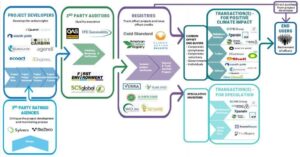
When carbon credits are made digital and tracked on a blockchain, everyone can see important details right away—like where the credit came from, who has owned it, and what kind of environmental benefit it provides. This clear, easy-to-check information helps build trust and makes carbon offset claims more believable.
A report from the Taskforce on Scaling Voluntary Carbon Markets (TSVCM) says that boosting transparency and trust is essential. This will help attract more money for climate solutions. Market participants want clear impact metrics. And this demand grows as regulators and environmental watchdogs pay more attention.
A Broader Push to Digitize Environmental Markets
The Verra-Hedera partnership shows a bigger trend in the industry. Digital measurement, reporting, and verification systems are on the rise. dMRV systems help check emissions data faster and on a larger scale. They work across various projects and locations.
A World Bank study urges governments to support the setup and use of dMRV systems by creating policies and conditions that help these systems work effectively.

Moreover, many global efforts aim to create reliable digital systems for climate markets. For instance:
- The Climate Action Data Trust (CAD Trust) is a global project led by the World Bank. It is looking into blockchain technology to improve carbon data sharing.
- Companies like ClimateCheck, Puro.Earth, and Sylvera are using AI and satellites to enhance verification accuracy.
- The Integrity Council for the Voluntary Carbon Market (ICVCM) is working on guidelines. These aim to enhance credit quality and ensure that standards can be compared easily.
Verra’s tie-up with Hedera puts this movement ahead. It leads the way in making climate finance efficient, credible, and scalable.
Next Up: A Smarter Carbon System
The digital transformation of carbon markets is just starting. However, initiatives like this are laying the groundwork for future growth. Verra and Hedera are making project submission, verification, and tracking easier. This change will cut down friction, boost data transparency, and build trust in the market.
As more organizations digitalize methodologies and more projects enter the system, stakeholders, including developers, investors, and regulators, will benefit from faster credit cycles and more accurate tracking of environmental impacts.
Mandy Rambharos, CEO of Verra, summed up the significance of the collaboration:
“This represents a significant advancement in Verra’s digitalization strategy. Integrating Hedera Guardian with the Verra Project Hub is a meaningful step toward improving the way we serve our stakeholders…”
The Verra-Hedera partnership is both a tech upgrade and a strong move to build a more open, scalable, and reliable carbon market. The initiative modernizes how teams develop, verify, and track projects, addressing both practical challenges and systemic trust issues. As such, it shows a new way to scale climate solutions in the digital age.
- READ MORE: The Energy Debate: How Bitcoin Mining, Blockchain, and Cryptocurrency Shape Our Carbon Future
The post Code Meets Climate: Verra and Hedera Team Up to Digitally Transform Carbon Markets appeared first on Carbon Credits.

EU carbon credit claims changed on 27 September 2026, the day the Directive (EU) 2024/825 began to apply across the European Union. The change is narrow. It changes how a company can talk about the credits it buys. A product can no longer be called neutral on the strength of compensation alone; however, every specific, evidenced statement about what a company measured, reduced, and funded stays fully available.

The post Promoting Improved Cooking Practices in Nigeria appeared first on Terrapass.



-
Climate Change1 year ago
Guest post: Why China is still building new coal – and when it might stop
-

 Greenhouse Gases2 years ago
嘉宾来稿:满足中国增长的用电需求 光伏加储能“比新建煤电更实惠”
-
Greenhouse Gases1 year ago
Guest post: Why China is still building new coal – and when it might stop
-

 Climate Change2 years ago
嘉宾来稿:满足中国增长的用电需求 光伏加储能“比新建煤电更实惠”
-

 Renewable Energy12 months ago
Sending Progressive Philanthropist George Soros to Prison?
-
Climate Change2 years ago
Bill Discounting Climate Change in Florida’s Energy Policy Awaits DeSantis’ Approval
-
Greenhouse Gases1 year ago
嘉宾来稿:探究火山喷发如何影响气候预测
-

 Climate Change2 years ago
Analysis: China’s CO2 falls 1% in Q2 2024 in first quarterly drop since Covid-19