

Welcome to Carbon Brief’s China Briefing.
China Briefing handpicks and explains the most important climate and energy stories from China over the past fortnight. Subscribe for free here.
Key developments
March data indicates carbon emissions peak
SURGE ENDED: Carbon dioxide (CO2) emissions in China fell 3% in March 2024, ending a 14-month surge and possibly signalling that Chinese CO2 emissions peaked in 2023, according to new analysis for Carbon Brief by Lauri Myllyvirta. The fall was driven by the record growth of solar and wind power generation, which “covered 90% of the growth in electricity demand”, and by declining construction activity. An increasing portion of electricity demand is being covered by distributed solar, which comprised 45% of last year’s solar capacity additions. Meanwhile, limited demand for steel and cement due to continued uncertainty in the real-estate sector saw a drop in emissions of 30 megatonnes of CO2 (MTCO2) from the construction sector.
-
Sign up to Carbon Brief’s free “China Briefing” email newsletter. All you need to know about the latest developments relating to China and climate change. Sent to your inbox every Thursday.
AMBITION GAP: Maintaining the record rate of clean energy installations could make a 2023 peak in CO2 emissions “possible” for China, the analysis added, as the “main driver of China’s emissions growth in recent years has been the power sector”, which has only grown 1% year-on-year. The article noted, however, that industry associations, such as China Photovoltaic Industry Association (CPIA), expect solar and wind capacity additions by 2030 to significantly exceed official targets. The analysis found the difference amounts to 1,400-1,800 gigawatts (GW), which – if the resulting clean power generation from more ambitious forecasts were to replace coal – could see a difference in CO2 emissions amounting to 10-15% of China’s current emissions. China “is already severely off track” to meet its carbon-intensity target, the analysis added. Its ability to meet this target, which is part of its international climate pledge under the Paris Agreement, “depends on clean energy growth continuing to significantly exceed the central government’s targets – or those targets being ratcheted up”, said the analysis, which was picked up by the New York Times, Reuters, Bloomberg, AFP and Straits Times, among others.
NEW ACTION PLAN: China’s state council released a new action plan for energy conservation and carbon reduction for 2024 and 2025, which pledges to reduce CO2 emissions by 130m tonnes by 2025 through reforming the “nonferrous metal industry”, according to state news agency Xinhua. Reuters also covered the story, stating that the targeted reductions in CO2 emissions is “equivalent to about 1% of the 2023 national total”.
China rebuts G7 trade accusations
G7 MEETINGS: The G7 countries’ finance ministers and central bank governors have raised a “unified voice to counter some of the concerns they had over China’s trade policies” at their meetings in Italy on 23-25 May, according to Bloomberg. The ministers plan to “continue to monitor the potential negative impacts of overcapacity and will consider taking steps to ensure a level playing field,” another Bloomberg article said. Ahead of the meeting, Reuters and Bloomberg covered comments by US treasury secretary Janet Yellen, who called for “market-driven countries” to “stand together” to counter China’s “state-driven” industrial policies, which she viewed as a “threat” to the “viability of firms around the world, including in emerging markets”. EU president Ursula von der Leyen told the Financial Times, also ahead of the G7 meeting, that she shared concerns over overcapacity, but “we want to signal it’s not about closing the market or protectionism…We want to de-risk, not decouple [from China]. And now we’re developing the toolbox.”

CHINA’S RESPONSE: China’s foreign ministry rejected the “unilateral” G7 accusation, calling it a “discriminatory practice”, reported state broadcaster CGTN. The ministry’s spokesperson, Mao Ning, said at a press conference: “The G7’s ‘Chinese overcapacity’ hype and attempt to restrict China’s new energy products are completely against the facts and the laws of economics. They are the product of protectionism and serve no one’s interest.” Separately, China “has signalled it will retaliate” to EU anti-dumping concerns, with the Ministry of Commerce announcing plans to probe imports from the EU, US and other regions of a widely used thermoplastic, according to the Financial Times. Meanwhile, the China Chamber of Commerce to the EU said on Twitter it was informed about a potential up to 25% tariff from China on vehicles with large engines, as “Beijing is ramping up threats of retaliation as a deadline looms for the EU to announce results of its probe into China’s electric-vehicle subsidies”, Bloomberg reported.
Solar sector struggles to ‘control capacity’
PRICING WOES: Chinese financial news outlet Yicai reported that, according to the China Nonferrous Metals Industry Association, “the price of high-purity polycrystalline silicon, the raw material used to make solar panels, has plunged below cost for all producers in China”. The situation “has forced some suppliers to halt production” and means that “even big players…which should have better cost controls than smaller firms, could be losing money at the moment”. Shortly afterwards, in an announcement covered by the South China Morning Post (SCMP), the CPIA called for “more mergers, acquisitions and curbs on domestic competition to control capacity” in the solar sector, following a meeting held to address falling prices and “operational pressures”.
XI ON OVERCAPACITY: According to SCMP, Chinese president Xi Jinping, in a meeting with prominent business figures and economists, said that support for the “new three” types (solar products, lithium-ion batteries and electric vehicles) must be “adapted” to local conditions, adding that the new energy industry should not be the sole focus of economic growth. A separate analysis by SCMP said China’s “overcapacity conundrum” is rooted in the economic reforms that began with its transition to a market-based economy in 1978. “Local governments have played an outsized role” in developing industrial overcapacity, it said, “prominent industry insiders have also publicly spoken on how insufficient downstream demand became a worrisome issue among authorities at city and provincial levels”.
Spotlight
Interview: China’s position on ‘international climate finance’ ahead of COP29
China’s stance on “international climate finance” – a UN-promoted mechanism designed to get developed countries to help fund developing countries address climate change – remains controversial. The country did not make a pledge to the “loss-and-damage fund” established at COP28, but has provided alternative climate funding through its South-South Climate Cooperation Fund and the Belt and Road Initiative (BRI).
Ahead of next week’s Bonn conference – where delegates are expected to negotiate climate finance – Carbon Brief has interviewed Li Shuo, head of the China climate hub at the Asia Society Policy Institute (ASPI), on China’s attitude towards contributing and its potential position at the upcoming COP29.
Below are highlights from the conversation. The full interview can be found on the Carbon Brief website.
Carbon Brief: At the COP29 climate talks [in November], countries will be negotiating a new climate finance target. China is facing growing calls to start contributing. How is it responding to this?
Li Shuo: I think we are expecting a pretty heated debate at COP29. This is indeed one of the most controversial issues…that sees very strong division between the global south and the global north. And, of course, China is in this unique position: it is still firmly in the developing country camp, but, at the same time, it has become one of the largest economies and the largest emitters in the world. So with that, you know, there’s this argument that China should shoulder more responsibility internationally, including by providing future climate finance.
The geopolitical environment is definitely not helping that transition…In addition to that, China’s domestic political and economic situation – let’s just say, it’s not at a particularly helpful moment for that transition to happen…So we see a lot of risk factors. There is a critical need for other countries and China…to align ahead of COP29.
CB: Some might argue that China is providing affordable, clean energy technology and shouldn’t be pressured to scale up climate finance. Could this be one of the arguments made at COP29?
LS: Well, I actually hope this could be one solution to the $100bn – or $1tn – NCQG [new collective quantified goal] question. I actually genuinely see that it could be a solution based on which we can find a path forward.
…The reason I say this is…in addition to China’s emission portfolio, the country also happens to be the biggest solution provider when it comes to low-carbon products. Of course, there are increasing political controversies around China’s position in this regard, in particular between the US and China. But, I think, if you were China, what you want to achieve is, of course, to make sure that you can continue to sell those low-carbon solutions to the rest of the world.
So I would argue it actually works in China’s self-interest to make sure that they can facilitate the deployment of renewable energy in the global south. And, that way, I think it helps address the geopolitical problem, the so-called overcapacity [problem]…If China can play a role in this regard, at the bare minimum, it is helping its own companies.
CB: Do you think that that would be politically viable?
LS: …I doubt the NCQG will ever be as explicit as China committing to support developing countries to buy China-made products…The decision will be made in more general terms; general enough to not agitate the US and the EU. In my mind, of course the NCQG discussion is still an ongoing one, but you might be familiar with this “onion” [structure] approach, a kind of multi-layer package. You have a core: public international finance. The controversial issue there is you will have a number, but who will be accountable for that number?…Then the second [layer] might be some sort of investment facilitation…that’s where I think China can play a role.
CB: How do you think that requests for China to contribute to climate finance could be more successful?
LS: When you talk about UNFCCC climate finance, it is an intrinsically more political debate. The core of the question is: how does China see itself in relation to the rest of the world, and in relation to other traditional donor developed countries…I think, going forward, messages that are crafted in a more inviting way will probably work better with China. But…the political environment that we have will almost prevent that conversation from happening.
CB: Could you explain what you mean by “inviting”?
LS: If your framing is ‘China needs to pay’, or ‘we believe China is ready’ or ‘China is responsible’, then I think politically this will become very difficult for China. Because a lot of the framing – even just enlarging the donor base, that phrase – if you think about it, it assumes kind of a moral high ground…Enlarging the donor base also carries this undertone that “we want more people to pay so that we can pay less”…We do believe there could be areas where China and other traditional donor countries can complement each other. They need to work out the specific areas where they share synergy.
Watch, read, listen
COAL DECLINE?: In its monthly Tipping Point newsletter, Shanghai-based media outlet the Paper explored the shrinking role of coal in mining-focused Shanxi province, plus interviewed experts on reducing its share of the energy mix.
‘NEW DIRECTION’: Dr Yixian Sun, from University of Bath, explained on Sustainable Development Television the extent to which China’s institutions are shifting to invest in renewable energy projects overseas.
CLIMATE POLITICS: Carbon Brief’s China section editor Wanyuan Song spoke to the All Things Policy podcast, hosted by research institute Takshashila Institution, about the history of China’s climate pledges.
‘YOU MAKE MONEY’: The Associated Press covered the incentives being established to drive uptake of distributed solar power in Shandong province.
$47
Per kilowatt-hour, the average price in China for the iron-based batteries used by electric vehicles, according to a survey by BloombergNEF covered by the Information. This is half of the average price of these batteries outside of China, which are almost entirely supplied by Chinese manufacturers.
New science
Widespread societal and ecological impacts from projected Tibetan Plateau lake expansion
Nature Geoscience
By the end of the century, the surface area of lakes on the Tibetan Plateau will increase by over 50% (around 20,000km2) and water levels will rise by around 10 metres, even under a low emissions scenario, according to new research. It added that, if no adaptation measures are introduced, this lake expansion will submerge more than 1,000km of roads, around 500 settlements and around 10,000km2 of land such as grasslands, wetlands and croplands.
Researchers found that the greenhouse gas emission from the food system in China – the world’s largest producer and consumer of food – accounted for 37% of the country’s total emissions in 2020, based on an assessment of meals eaten in restaurants across the provincial capitals. The study estimated the greenhouse gas emissions of 540 dishes from 36 cuisines and then designed various dietary change strategies to explicitly link food emissions to the Paris Agreement pledges. It concluded that “transitioning towards low-emission cuisines and dishes” could reduce emissions by 38-69%.
China Briefing is compiled by Wanyuan Song and Anika Patel. It is edited by Wanyuan Song and Dr Simon Evans. Please send tips and feedback to china@carbonbrief.org

The post China Briefing 30 May: March emissions drop; ‘United’ G7 stance on ‘overcapacity’; Li Shuo on climate finance appeared first on Carbon Brief.

When oil and gas shipments stopped flowing through the Strait of Hormuz at the start of the Iran war, Southeast Asian nations were left reeling as the supply crunch laid bare their acute reliance on fossil fuel imports.
As prices soared, governments in the region scrambled to introduce emergency energy-saving measures – from a four-day working week to curbs on air conditioning. Thailand revived decommissioned coal plants while the Philippines, which imports nearly all of its oil, declared a “national energy emergency”.
But the crisis has also prompted renewed resolve to find a long-term solution to their vulnerability at a time when electricity demand is booming to power the region’s growing industry, cooling needs and the mushrooming of energy-hungry data centres.
At the heart of Southeast Asian nations’ response is a longstanding infrastructure project to connect the region’s power grids by 2045 and enable cross-border trading of clean electricity through a network of underground and subsea interconnectors.
-
Southeast Asia’s fragile grids threaten billions in clean energy investment
Renewables developers need reliable electricity infrastructure and stable policies to help the region meet climate goals and surging demand for power -
UN backs push to upgrade grids slowing clean power uptake in Africa and SE Asia
The Global Grids Accelerator will help turn national and regional plans to expand electricity infrastructure into viable projects on the ground -
China keeps Indonesia’s battery dream afloat but future less certain
Chinese capital and technology turned Indonesia into the world’s top nickel supplier, but its dependence on China and the rise of nickel-free batteries could upset its battery ecosystem plans
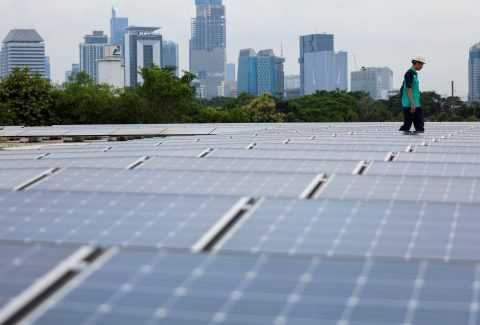
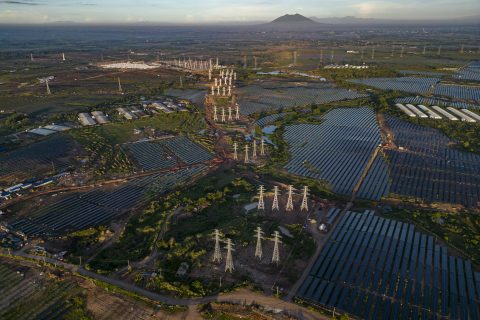
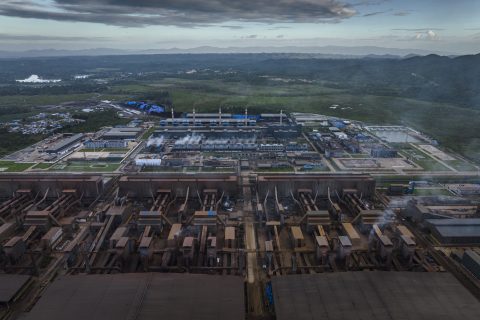
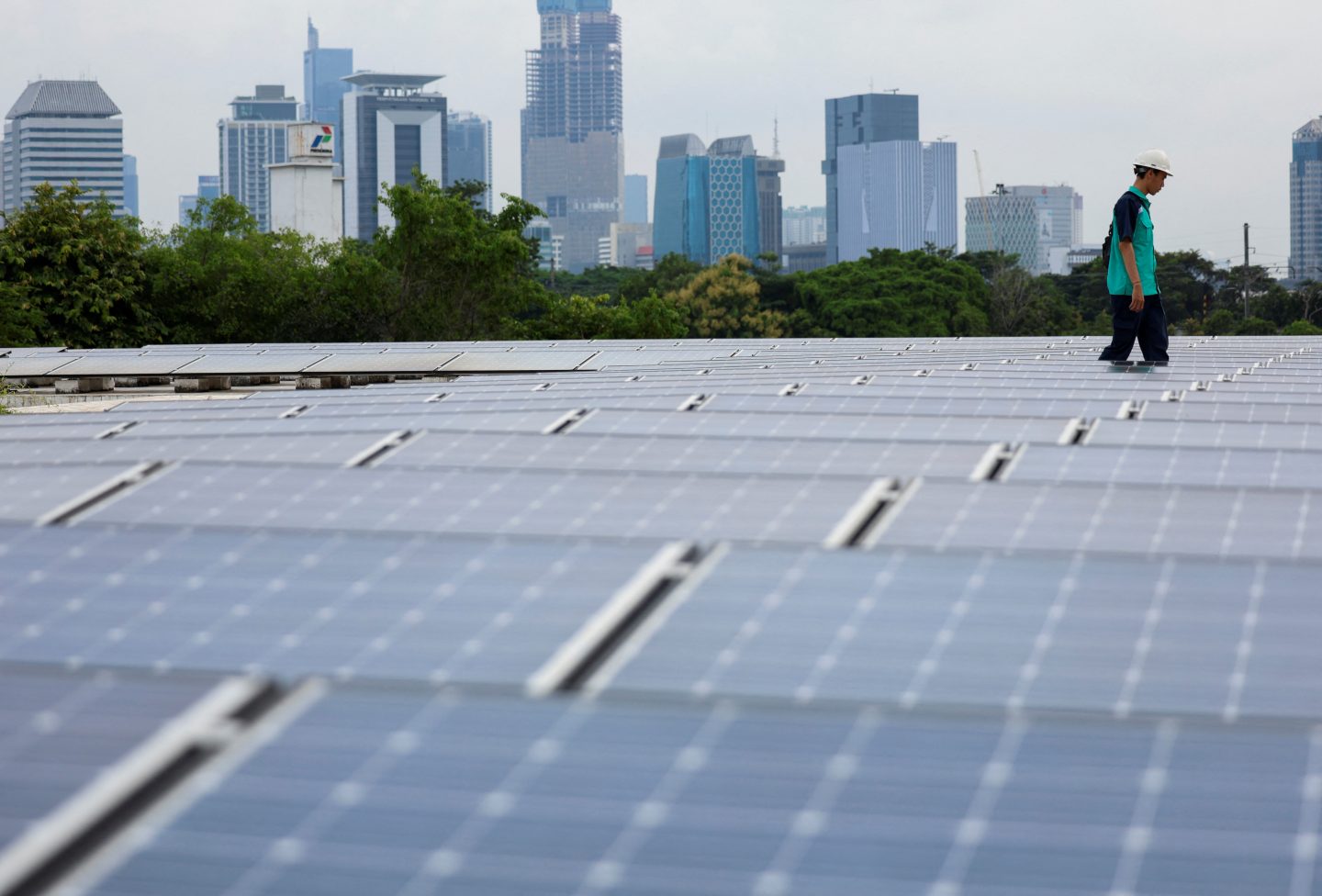
The plans will allow nations with high renewable energy generation potential to trade surplus power to their neighbours and major demand centres like Singapore, helping to integrate more renewables into the power mix and reduce reliance on fossil fuel imports.
“[It] will give us more energy security,” the Philippines’ energy secretary, Sharon Garin, told a press conference after a meeting of the Association of Southeast Asian Nations’ (ASEAN) energy ministers last week, when they discussed accelerating the delivery of the regional grid as part of measures to respond to the energy crisis.
“The Philippines is rich in solar power, Malaysia is rich in hydropower and Indonesia has geothermal: different countries have different resources. [The ASEAN Power Grid] will optimise the utilisation of renewables to the benefits of each member state,” said Garin.
But turning this decade-old political vision into a reality has been slow, held up by painstaking work to harmonise a patchwork of regulatory and legal frameworks and mobilise the private capital needed to build cross-border infrastructure.
More than $300 billion is needed to expand and modernise the region’s fragile grids to support the projected energy demand increase by 2050. This includes $27 billion required to deliver the cross-border interconnections by 2040, according to the International Energy Agency (IEA).
Every year of delay could cost the region billions of dollars in additional fuel costs and lock in new gas infrastructure for decades to come, according to analysis by global energy think-tank Ember.
The building block for energy security
With electrification high on the agenda of the COP31 climate talks in Türkiye next month, there is growing attention on the need to modernise and expand grid infrastructure to cope with growing electricity use and more renewables in the power mix.
Clean electrification and energy efficiency could deliver about a third of cumulative carbon emission reductions between 2026 and 2050, according to the International Renewable Energy Agency’s World Energy Outlook. But delivering that would require doubling annual global grid investment to $1 trillion between now and 2035.
Last month, the UN launched an initiative to accelerate investment into expanding and modernising grids in Southeast Asia and Africa.
First conceptualised in 1997, the ASEAN Power Grid has gained fresh impetus in recent years as countries turn to renewables to cut their emissions and move away from volatile fossil fuel markets.
Energy supply disruption caused by wars in Ukraine and the Middle East has strengthened the case for regional grid connections. Before this year’s conflict began, the Middle East accounted for 60% of Southeast Asia’s crude oil imports. Competition for fewer, more expensive oil and gas shipments has left Southeast Asia facing a $160 billion energy import bill this year. Based on current policies, this could rise to $400 billion by mid-century.
In the Philippines last week, energy ministers agreed on an enhanced planning framework to deliver the ASEAN Power Grid and made progress on regulatory guidelines.
Garin said ministers were considering accelerating the project’s delivery. “The first study was to connect [by] 2045 – that’s too far,” she said.
A strong business case
The economic benefits of the plan have “captured the political imagination” of leaders in the region, Robert Cooke, grids advocacy lead at the Global Renewables Alliance, told Climate Home News. “The business case is stronger than ever,” he said.
“If countries were to go about building their own separate grids, of course that would be an expensive endeavour. But the discussion around the ASEAN Power Grid includes what costs could we share in building out this grid,” added Tiza Mafira, director of the Indonesia office for the Climate Policy Initiative.
Stronger grids would help the region meet collective targets to increase the share of renewable energy in total primary energy supply from 14% to 30% and in installed power capacity from 34% to 45% by 2030.
Connecting and pooling dispersed renewable resources would also help smooth local power shortages caused by daily and seasonal variations, reducing the need for backup gas plants and battery storage.
The IEA found the ASEAN Power Grid could help unlock some of the 20 terawatts of untapped solar and wind potential across Southeast Asia – an amount around 55 times the region’s current total power capacity.
From lines on a map to shovels in the ground
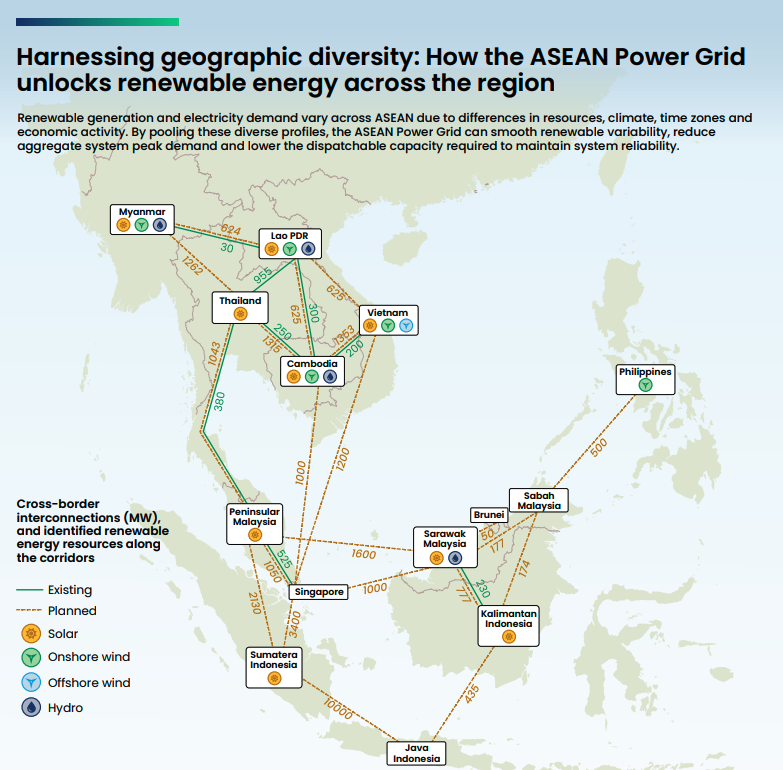
Rather than building a single unified network, the ASEAN Power Grid is developing cross-border links between neighbouring countries and smaller groups of nations.
As of 2025, nine of 18 priority interconnection projects are operational – accounting for around 10 GW of capacity with an additional 13.7 GW planned by 2040.
Source: Ember
A power line channelling up to 200 MW of clean electricity generated from hydropower in Laos to Singapore via Thailand and Malaysia has emerged as a key building block for grid-to-grid trading.
Progress on technical discussions will also help provide the clarity the private sector needs to invest in bankable projects, said Cooke.
In 2025, the Asian Development Bank and the World Bank announced a dedicated funding initiative to support the project.
“The enabling pieces are emerging,” said Monalisa Dimalanta, former chair of the Philippine Energy Regulatory Commission and the National Renewable Energy Board. “But the timelines remain unclear and a 2045 vision cannot answer today’s emergency,” she said.
“A power grid… that exists only on paper will not keep the lights on.”
Singapore: the delivery test
The implications of failing to deliver the ASEAN Power Grid are most acute in Singapore.
Constrained by space, with few renewable energy resources and dependent on gas for more than 90% of its electricity mix, Singapore h