


Carbfix has made a big move in Europe’s battle against climate change. It received the first permit for onshore carbon dioxide (CO2) storage under EU law. This project, based in Iceland, makes history by allowing the underground storage of CO2 in line with the EU’s strict climate policies. It is the first time the EU has formally approved an onshore geological storage project under its 2009 CCS Directive.
Carbfix’s storage method uses Iceland’s natural basalt rock to turn captured CO2 into solid minerals. This innovative approach supports the EU’s Green Deal, which aims to cut greenhouse gas emissions by at least 55% by 2030.
The mineral storage operator shows that carbon capture and storage (CCS) can work well on land. This sets a strong example for other European countries.
Understanding the Science Behind Carbfix’s CCS Tech
The Carbfix process is both simple and groundbreaking. First, carbon dioxide is captured from industrial sources or directly from the air. Then it is dissolved in water and injected into underground rock formations.
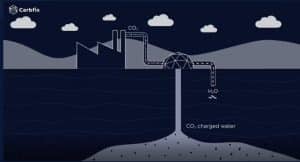
In Iceland, natural basalt rock reacts with CO2 solution. This forms solid carbonate minerals that trap carbon permanently. Carbfix’s method is different from other carbon storage methods. Instead of keeping gas trapped under rock layers, it turns gas into stone. This process removes the risk of leakage in the long run.
Key features of the project include:
-
Location: The site is in Iceland, where volcanic basalt is plentiful and ideal for mineralizing CO2.
-
Technology: The CO2 reacts with minerals in the rock to form stable solids in under two years.
-
Safety: The National Energy Authority of Iceland (Orkustofnun) checked the project to ensure it follows EU safety rules for geological storage.
Carbfix’s innovative technology has already been used in smaller pilot projects in Iceland, including at the Hellisheiði geothermal power plant. Getting a permit under the EU’s tough rules is a major step for wider use in Europe.
Highlighting the growing importance of CCS technology in Europe’s climate strategy, Carbfix CEO, Edda Sif Pind Aradóttir stated:
“With this first onshore storage permit in Europe, Iceland also retains a certain leadership role in building a new industry that is essential to both the EU’s and IPCC’s climate goals.”
Why the EU Supports Carbon Capture and Storage
The European Union is focused on cutting greenhouse gases to fight global warming. Technologies like CCS play a key role in achieving this.
The European Commission’s Industrial Carbon Management Strategy says that by 2050, the EU will store around 250 million tonnes of CO2 each year. This will be in underground storage.
Total carbon capture could reach around 450 million tonnes yearly, which includes some CO2 that is used instead of stored. This could account for 7-8% of the region’s emissions.

The EU’s climate plan encourages both public and private investment in carbon storage projects. Experts estimate that suitable sites in Europe could store up to 300 million tonnes of CO2 per year by 2030.
The European Climate Law requires net-zero emissions by 2050. This law pressures all sectors, including heavy industry, to cut or offset their emissions.
While the company is pioneering onshore CCS, most EU CCS capacity and projects focus on offshore storage, especially in the North Sea region.
By 2030, Europe might reach a storage capacity of 140 million tonnes per year. However, only about 66 million tonnes per year is expected in EU member states. Most of the onshore projects are small, mainly in Denmark and the Netherlands.

Iceland’s Carbfix project is unique as an onshore basalt mineralization site. The Carbfix permit allows storage of up to about 106,000 tonnes of CO2 annually, totaling around 3.2 million tonnes over 30 years.
It proves that onshore CO2 storage is possible within the EU’s legal framework. It opens the door for similar projects in other member countries. By proving that this kind of storage is safe and effective, Carbfix is leading the way for other innovators to follow. It also opens opportunities for generating carbon credits.
The Growing Role of Carbon Markets
With more companies and governments trying to lower emissions, the demand for carbon credits is growing. These credits allow companies to pay for carbon reductions elsewhere if they cannot cut emissions directly.
Projects like Carbfix generate carbon credits by permanently removing CO2 from the atmosphere. This makes them especially attractive to buyers seeking high-quality, verifiable carbon offsets.
Recent projections indicate the average EU carbon price could reach about €92/t CO2e in 2025. It could rise to €130/t by 2026 and €195/t by 2030.

Analysts expect the global carbon market to more than double in size by 2030, possibly reaching $100 billion. More storage projects like Carbfix are starting up that can increase the supply of high-quality carbon credits. As a result, the market will stabilize and new investment opportunities will arise.
Carbon credit markets help create a circular carbon economy. In this system, captured emissions are reused or stored permanently, preventing them from entering the atmosphere. As countries strengthen their climate commitments, demand for such credits will likely increase.
A Model for Future Projects
Carbfix could serve as a model for future carbon storage projects across Europe and beyond. Other European countries are already exploring similar opportunities. Reports say that up to 10 new onshore storage projects might start in the next five years. This is especially true in areas with volcanic or sedimentary rock formations.
To support this growth, the EU is working on clearer rules and funding support for carbon capture projects. This includes easier permitting, better carbon pricing, and more public-private partnerships. The Innovation Fund and Horizon Europe are two major EU programs supporting climate technology, including CCS.
Experts agree that CCS must grow quickly to meet climate targets. Renewable energy and energy efficiency are vital. However, technologies like Carbfix can cut emissions in tough industries, which include cement, steel, and chemicals.
The Carbfix carbon storage permit marks the beginning of a new phase in Europe’s climate journey. As the EU looks to scale up CCS efforts, the success of onshore projects will be crucial. With the right policies and technologies in place, the region could become a global leader in carbon storage innovation.
The post Carbfix Secures First EU Permit for Onshore Carbon Capture and Storage appeared first on Carbon Credits.

EU carbon credit claims changed on 27 September 2026, the day the Directive (EU) 2024/825 began to apply across the European Union. The change is narrow. It changes how a company can talk about the credits it buys. A product can no longer be called neutral on the strength of compensation alone; however, every specific, evidenced statement about what a company measured, reduced, and funded stays fully available.

The post Promoting Improved Cooking Practices in Nigeria appeared first on Terrapass.



-
Climate Change1 year ago
Guest post: Why China is still building new coal – and when it might stop
-

 Greenhouse Gases2 years ago
嘉宾来稿:满足中国增长的用电需求 光伏加储能“比新建煤电更实惠”
-
Greenhouse Gases1 year ago
Guest post: Why China is still building new coal – and when it might stop
-

 Climate Change2 years ago
嘉宾来稿:满足中国增长的用电需求 光伏加储能“比新建煤电更实惠”
-

 Renewable Energy12 months ago
Sending Progressive Philanthropist George Soros to Prison?
-
Climate Change2 years ago
Bill Discounting Climate Change in Florida’s Energy Policy Awaits DeSantis’ Approval
-
Greenhouse Gases1 year ago
嘉宾来稿:探究火山喷发如何影响气候预测
-

 Climate Change2 years ago
Analysis: China’s CO2 falls 1% in Q2 2024 in first quarterly drop since Covid-19