

Weather Guard Lightning Tech
Blade Recycling with Media Sourcery and Everpoint Services
Larry Ketchersid, CEO of Media Sourcery discusses their partnership with Everpoint Services to improve the recycling process for blades and solar panels, proving the circular economy. Their method uses innovative blockchain technology to create verifiable proof of proper recycling. By implementing this tracking method, asset owners can be certain their blades have been properly disposed of.
Sign up now for Uptime Tech News, our weekly email update on all things wind technology. This episode is sponsored by Weather Guard Lightning Tech. Learn more about Weather Guard’s StrikeTape Wind Turbine LPS retrofit. Follow the show on Facebook, YouTube, Twitter, Linkedin and visit Weather Guard on the web. And subscribe to Rosemary Barnes’ YouTube channel here. Have a question we can answer on the show? Email us!
The recycling crisis for wind turbine blades and solar panels demands better solutions as these materials pile up without proper processing and documentation.
This week we speak with Larry Ketchersid, CEO of Media Sorcery, who’s partnered with Everpoint Services to tackle renewable waste recycling. Their innovative blockchain technology creates verifiable proof that your decommissioned assets actually reach proper recycling facilities, not abandoned in fields or landfills.
Stay tuned.
Allen Hall: Alright, Larry, welcome to the program.
Thank you for having me.
So we met yesterday with Everpoint Services who is doing a quite a bit of business at the minute doing solar panel recycling and wind turbine blade recycling.
Correct. And we’ve talked about it on the podcast more recently about the efforts. To make sure that what leaves the facility is actually [00:01:00] recycled. There is a industry problem where blades leave a site and they get stacked up in some farm somewhere or some disposal site and never get chewed up or ground up and, and recycled properly.
And it’s a black eye on the industry, right?
Joel Saxum: Yeah. You get, uh, I mean, we. The wind industry has detractors. We already know this. Right? And then when you have something that’s like that, especially wind turbine blades, ’cause they’re big, uh, and it’s very visible, the problem then exacerbates itself. Right? I mean it, like you said, black eye on the industry.
But even with that happening, we still haven’t gotten all the way to solving that problem that’s, that’s existing there. But you guys are working on it.
Larry Ketchersid: We are. We are. We, we have a solution that we cut our teeth on with, uh, tracking things like COVID-19 test kits. Okay. Right. So we, we started proof of authenticity when, uh, we were in the healthcare business.
And during Covid we had a partner that became an importer of, uh, COVID kits from Korea. And what [00:02:00] people didn’t realize is if you leave the Covid kits out of the freezer, the efficacy goes down. So we had a automated workflow system that we turned into a proof of authenticity for. Tracking Covid kits from the manufacturer.
So we put little, I mean this was four or five years ago during the pandemic, we had these chemical barcodes that were temperature sensitive, and we put ’em on the, on the covid kits. So, and, and you had to scan ’em. So they weren’t really interactive sensors, but from point A to point B, you could scan ’em.
Did the, the temperature go above a certain amount for a certain period of time, which made ’em bad, yes or no? And then we just track ’em all the way through. So it, it’s very. Similar to what we’re trying to do with tracking, recycling. I mean, we use this solution to track, uh, all sorts of things, but recycling is a really obvious use case for it.
So what we try to do is we, we, we take an asset. So an asset can be a solar panel, it can be a pallet of solar panels, it can [00:03:00] be a blade, it can be a tractor trailer, full of blades, whatever the customer wants. And we take as much of the evidence about an event and the life of that asset, whether it’s.
Demolition for at the first part, transport for the second part, and then grinding or recycling for the third part, and then whatever comes after that. And, and we, we take all that evidence, uh, put it on decentralized public ledger storage so that it’s there, um, maybe not forever in some cases, but it can be forever in, in whichever cases we want.
We hash all that information. We put it on the blockchain so it’s there forever. For each one of those events, and then at the end we take that proof of authenticity and we turn it into an NFT. If we think there’s value in it, because an NFT is a, a blockchain construct for a non fungible token, so we can, we can save that as an NFT along with all the metadata.
So if there’s value in that later, [00:04:00] we’ll come back to it and we’ll have that NFT as a tradable entity. And when I say value at later, I’m talking about potential greenhouse gas emission savings for, for the way that we’re doing proof of recycling.
Allen Hall: Okay. That was a lot. I’m sorry. I wanna unwind that a little bit.
Yep. So let’s work on the process first and I’ll, we’ll figure out the NFT part here in a second. So the process is on a wind turbine, we take down the blades or take down, typically take them to the cell down and a bunch of other things. Yep. They’re sitting on the ground. You come in and you start tagging each one of these with an RFID, or is it something a little more complicated than that?
Larry Ketchersid: So we have four or five different trackers that we use depending on what we’re tracking. So for wind turbine blades, we can use one of two. We’ve got an industrial tracker. Uh, that does three different kinds of, uh, of back haul, we call it. So it can do GPS, it can do something called [00:05:00] Lower wan, which is long range wide area network.
Yep. Uh, it can use wifi if it sees wifi stations and, and that one is industrial, we, we screw it in to the fiberglass blades on, on a truck. That’s, that’s the first way that we did it. When we did, uh, Candace Wood and I from Everpoint services did one of these. 2002. 2022. Um, what we have now are sticker trackers that have 3M adhesive on the back.
Uh, they’re, they’re very, very thin. Um, I think, did I show you one yesterday? I think I showed you one yesterday. I saw one.
Allen Hall: Yes.
Larry Ketchersid: And, and we just, we can slap that on there. And we, we like using that method because when that goes through the grinder. We know it’s, we know it’s dead and it’s, it’s inexpensive enough that it, it’s cost effective to put it on each piece of a wind turbine blade.
It’s not cost effective enough to put it on every solar panel, but you can put it once they bound the solar panels together on a pallet, we, we stick it in between the top one and the middle [00:06:00] one so that the signal can still get out and when, when that one gets ground up. We’ve already associated every serial number for the pallet of solar panels to that serial number on that sticker tracker.
So we know once one of them’s ground up, we assume the whole pallet’s ground up.
Joel Saxum: That was the question I was gonna ask was, and you kind of touched on it, was around the cost. Yep. Right. So all of those things say Everpoint is gonna do a service for someone. Is that built into the bid? Like the tracking It is.
Okay. Okay. That makes sense.
Larry Ketchersid: It is. And you know, uh, the reason we work where Everpoint for a variety of reasons. One, full disclosure, my company invested in Everpoint, uh, way back in the day. Okay. ’cause we believed in what they were doing. And the reason we believe in what they’re doing is they, they want to make sure that the, the stuff that they’re taking down, the demolition work that they’re doing is going somewhere.
Right. Right. And, and they, you know, previously they would contract with people and they, you know what you don’t know, you know, what people are doing with it. You guys mentioned it at the beginning of the podcast. There’s, [00:07:00] there’s, there’s a lot of, uh, dump. Where, where stuff gets put and you know, it’s, it’s just not, it’s not the full circular economy that we’re trying to promote in our company and that Everpoint services are trying to promote as well.
Allen Hall: So now you have basically an air tag on each of the blades or a pallet of solar panels. Correct. It may be the simple way to think about it. Yep. And similar to air tags, you can actually watch as the truck pulls the blade along or the blade sections along. To where if ever it’s Everpoint’s gonna take it to be ground up or whatever happens to it on the recycling side.
So not only do you identify it at this farm where it’s been pulled down from, now you’re constantly tracking this piece of blade or these sections of blade or this whole thing to its end of life. I, I think that’s where a lot of operators are concerned about is like when it leaves my site, it kind of, I can’t track it.
I don’t know where [00:08:00] it’s going anymore. Right, right. And I’m not sure, as some OEMs have pointed out, I’m not sure where it ends up at. ’cause I have no way of following. So unless I physically follow this thing. I don’t know. So as an operator working with Everpoint, I can actually see that the blaze that are leaving my site or the solar panels that are leaving my site, I can actually see where they’re going live, so to speak.
Larry Ketchersid: That’s correct. That’s correct. And we, you know. Cool. We, we put it on a dashboard. Um, they can share it with whoever they want to, so you can see them going. Um, we had 460 pallets from this last job that we did, so the map gets a little busy, so you kind of have to separate it out, but it’s, it, it shows, it shows ’em going everywhere and, you know, occasionally.
It’s not perfect. Um, sticker tracker wouldn’t put on. Right. One fell off. We had to make some assumptions, but, but once you have that tracking, so we also have, um, trackers that we can put in trucks. [00:09:00] So we’ve got, um, cryptographic, uh, sensors that can go in the OBD diagnostic port of a truck. And when I say cryptographic, it means I, it’s on the blockchain.
I, I know that it came from this tracker. Uh, I know that this tracker’s in this truck. It’s got GPS on it. So I can also see the trucks if I want to. Sometimes that works well if the company owns their own trucks. If they’re, if they’re hiring somebody out, they probably don’t wanna be tracked, but, but it’s another option that we can use for that.
But then. So if, if a sticker falls off, and I know that I put 28 pallets on the truck and I’ve got 27 stickers, right? It’s, it’s proof enough, right? What, what we’re trying to do with proof of authenticity is show all the evidence that we have. Somebody can call BS on it and say, well, there’s one pallet missing.
Well, it, we knew it was on the truck, so.
Allen Hall: So then the goal is those stickers, those trackers go with the solar panel pallet or the wind turbine blade until it eventually gets shred and this tracker then gets [00:10:00] destroyed. But you know where that happened at. So you know, okay, there’s a shredding site, correct.
It gets destroyed there. I know that I don’t have to worry about this asset anymore, that, that, that blade goes properly taken care of. Exactly. That is the, probably the hardest part right now and probably the most risky part for any operator when they have a company come in to recycle. Is that it, to know that it got ground up or it went somewhere?
Joel Saxum: Yep. What, so, so the proof of authenticity thing though, one of the questions I have is timing. So these, these trackers are, they’re running GPS, they’re running communications, they’re, they’re sucking power. Is there solar panels on ’em? Do they have a six month battery life, or what does that look like?
Larry Ketchersid: Uh, it’s a good question.
So the sticker trackers, uh, normally only update every 15 minutes. Okay. So they can last for a year. Um, we, we have a rules engine that we use, so we put up a geofence around the work site. Right. So we had a, [00:11:00] a, a geofence around this, uh, solar panel work site, and we put a geofence around the recycling system.
So if the sticker trackers are sitting there, we don’t want ’em using batteries. So we’ll tell ’em, you don’t need to tell us stuff that often, but when we know that they’ve left the facility, we tell ’em, you know, send it to us as quick as you can so we can track ’em all the way through. And then when they get to the.
To the site if we think they’re gonna be stored. I mean, like we, we used Ocon recycling this time. We had really good communication. I was at their facility four or five times. They told us when the trucks got there, we sent a signal down to all the sticker trackers going, we know you’re there. They’re not gonna be recycling these because we had a winter storm.
You know, quit sending signals to the bad. I mean, and we, we were way within the range. If somebody’s gonna go store a bunch of solar panels for six or seven or eight months, it’ll get close. Yeah. But if, and if they’re gonna storm ’em for more than a year, we’ll use some other technology that, like the, the ones I was originally talking about, they’re called, um.
Oyster trackers from a company called Digital [00:12:00] Matter. The ones that screw in, it’s a 10 year battery. I mean, they’ll last forever. But those aren’t ones that you want ground up because those expensive, they’re expensive and, and they probably might hurt the grinder because they’re Yeah. Robust. They’re hard.
Yeah. Yeah, they’re hardy. Right
Allen Hall: on. So that changes the game. I think he does.
Larry Ketchersid: And I, I think the next part that we’re working on, which is, you know, what we wanna do is track what happens after the grinding. Right. Okay. That’s
Allen Hall: the more important part, right? Yeah. So once you grind this material up, it’s now has a downstream life.
How do you know that that material doesn’t necessarily land up in a landfill, but it’s actually used for something beneficial to society? What does that process look like? How do you track that?
Larry Ketchersid: Yeah. So that, that process we’re working on, we know how to do it right now, but it’s expensive. Right. Okay. So there’s, there are products, uh, that we looked at when we were doing, we also have used this product on medical cannabis [00:13:00] be so that people want to know which plant, if you’re taking some medical cannabis for epilepsy or lupus or whatever, you wanna know which planet it came from, what cannabinoids are in it.
So we link the plant. To the distillate, to the product sample all the way through. And there was, there’s a spray that you can spray on and you can tell the spray, um, to put a code in what’s sprayed on that’s unique to whatever you’re trying to track. And then you get what? Whoa, whoa. Back up. What? Yeah, so it’s, it’s a, it’s a chemical spray that you put on the plant and you use some kind of mass spectrometer.
And I’m gonna get way outta my realm here because I’m a software guy and, and you read it and it basically gives you a serial number from what you read off of that plant, from the
Allen Hall: bottle of spray that you apply to this plant. Yeah. I think
Larry Ketchersid: it’s probably more of a spray. Some, someone was talking to us
Joel Saxum: about this, uh, about putting it in, in fibers in turbine blades.
Yeah. Really, so,
Larry Ketchersid: so then if you take the plant and you go harvest it and you [00:14:00] do something with it, that chemical signature survives all the way through. So you can use a mass spectrometer, it’s probably a different device. I’m probably screw this up, but you can see what the serial number was to say it came from this farm and it’s this kind of plant.
So theoretically right, you could spray that on the wind turbine blade. You probably won’t wanna spray it on all of them, but maybe you spray it on one and then it gets ground down. You go, you know, look in the Gaylord box and scan all the crap and figure out which one it’s in. They take it somewhere for whatever the, the downstream usage is.
You go scan it there and you’ve got GPS coordinates for your scan. You’ve got the scan, so you’ve got further proof. The problem right now
Allen Hall: is
Larry Ketchersid: cost.
Allen Hall: Sure. But in something like a blade. Where you really wanna make sure that that blade has been recycled and is being used appropriately downstream. That seems like a pretty simple way of tracking it without getting [00:15:00] complicated with sensors and batteries and things of that sort.
Oh yeah. You could really track, you wouldn’t wanna track all of it all the time. You just went over that the process is working and eventually sample it, which I, I, I can imagine as an an OEM, uh, wind turbine blades would love to do to know that. Yes. Our company is contributing to this beneficial part of society, and we can check it and then we can blockchain it.
Larry Ketchersid: Yep. That has a lot of value. Absolutely. And I, and I think there’s, you know, and there are ways that we can get there slowly but surely, even with using sensors. So we, we’ve worked with, um, a lot of other projects where we wanna read. Um, meters and dials and everything else, right? So, so let’s say there’s a grinding facility and we set up, we, we have these sensors, uh, from a company that are called vision AI sensors.
So we put a, some machine learning in a camera, and we tell that camera, look at this dial, and I want you to record where you [00:16:00] are with your GPS, what the dials set up, what time of day it is, and everything else. So if you’re grinding, I know what you grind ground up. When you ground it up and how much you ground it up.
Right. So I got a sticker tracker on something coming in. It got ground up. I got a sensor looking at the gear. I know what it was ground up. Then maybe for now I go put a, a tracker on one of the Gaylord boxes that it came out of. Or maybe it’s a bag or whatever. And I don’t do all the bags because I don’t wanna raise the cost up so I can sneak up to the the nice little spray, which I really want to do, frankly.
’cause That’s cool. Mm-hmm. Uh, but, but you can get there and you provide as much evidence as possible. That said, uh, sticker tracker got ground up. My vision, AI sensor says the gear was set on this. I put a tag on the box or the bag. It went in the box, or the bag went to where, whatever facility or whatever it’s being used at, if it, and.
I, I’ve got, I, I can extend the end of that proof of authenticity.
Allen Hall: So then you’d have a true [00:17:00] value product. And I’m thinking of like insurance companies and all the value chain and a when, when energy company that you’d want this to happen. Safety would be involved.
Joel Saxum: I. I think about, so like you, you, you touched on it earlier, the, the value of these things in the future.
So like there’s ETFs right now on the stock market that, like KRBN is one of them that track carbon credit markets. Yep. Right, right. And it that, while that is a thing like EPA type credits in the states, there isn’t like a free market, open market capital market for it. But there is in other places, like in Europe.
Yep. It’s a, it’s a tradable thing. Right, so I know that, I mean, wind turbine blades, recycling them full circularity of a wind turbine. Great things that our industry is moving towards. But like you said earlier, Alan, it needs to be a value like it. If it, if it, if you’re not using it for something good, then what does it matter?
Right. Right. So at the end of the day, you may be solving by being able to NFT these things, like you were saying earlier, maybe solving one of the critical issues is, [00:18:00] is right now it’s not economically feasible to grind turbine blades up and truck ’em around and all this stuff. Afterwards, so people struggle with the, the business case of recycling it.
Larry Ketchersid: Right. But yeah, the, the Department of Energy, um, specifically the Oak Ridge Labs and Sandia Labs have a really good white paper comparing all of those different ways of disposing of a wind turbine blade. And they, they measure the greenhouse gas emissions and compare them to dumping them in a landfill.
Yeah, right. And, and mechanical grinding is the best, but. The, the lifecycle analysis they did stopped at, at, at that point, right? What, what we want to do, um, and we’re actually going to Oak Ridge, uh, Thursday to talk to ’em about it some more, um, is, extend that all the way to the end product. So how much, you know, what, what’s the real savings and, and there’s a cost, right?
There’s some more transport costs, there’s some more grinding costs, [00:19:00] but what’s the savings of doing something correct and good with those grinding results? In greenhouse gas emissions and then that NFT becomes valuable ’cause I can take that carbon credit or that greenhouse gas emissions savings and either use it as a scope three emission savings or an inset or an offset or, or whatever makes sense.
Allen Hall: I could see states like Texas, Oklahoma, Kansas, Iowa, Illinois, Indiana, that have a lot of wind turbines in them, Wyoming. Where they would require something like that. If you’re gonna recycle, I’m gonna ask you to recycle them and you have to post these bonds that we’ve been talking about on the podcast.
Yeah. Recycling bonds.
Joel Saxum: Yeah,
Allen Hall: that you would have to wait to verify it. The state would always want a way to verify it. How would you do that without having it on the blockchain? There world be no way to really do that. I think it’d be complicated. The blockchain and the trackers makes it the most efficient sense.
We’re talking about reducing overall cost to track this and make sure it’s done. This makes a lot of sense. So Larry,
Joel Saxum: you work with Everpoint on [00:20:00] this project and, and and, and fixing this for this market for with them. What other industries have you touched where you’ve solved kind of the same type of problems?
Larry Ketchersid: Um, well we talked about the Covid kits, uh, then that was. Thankfully short-lived, probably not as short lived as we all wanted it to be. Yeah. Um, but, but cold chain is an easy one, right? I mean, proving that something was kept at a proper temperature. Yeah. Um, the, the medical cannabis one, uh, I, I have a lot of respect for the people in the medical cannabis industry.
Um, we were, we were working with a company in Oklahoma City called Nature’s Key, run by Veterans. Had a lot of good PTSD products. Uh, if, if they could ever get off the ground and get the regulation out of the way, um, difficult that, that product has a lot of legs, but, uh, it’s, it’s a dangerous area to play in with, with some of the stuff that we do.
Um, we’re working with a company now on tracking, um, methane emissions for, uh, oil wells that should be capped and making a certificate for that proof of [00:21:00] authenticity for that’s difficult. That’s difficult. Um, and just to prove that they did what they were supposed to do. Yeah. Um, and, and feed that into carbon credits.
And, and we’ve done some carbon credit proof of authenticities as well.
Joel Saxum: Okay.
Larry Ketchersid: Um, just. We, we had a, uh, a person ask us to prove that, um, the carbon credits they wanted to buy from a hydroelectric plant in Brazil were not fiction. Wow. Um, so we did the research and put all the evidence together and put it on the blockchain, and he went around and finally sold his carbon credit.
So
Allen Hall: even think about like balsa, that’s still using wind turbine blades. The problem with that, where. It’s improperly harvested. Yeah, yeah, yeah. And tracking it, and a lot of efforts done on blade manufacturers to make sure that that piece of also actually came in a tree from that was approved to actually take down as part of a, a lumber effort.
Right. Sustainable, sustainable process. That would be,
Larry Ketchersid: that would be a cool use case. That would be really cool. That,
Allen Hall: so the, the uses for this sort of [00:22:00] technology seem to be endless in wind energy. We just haven’t really implemented it. And I bet you a lot of OEMs have no Yeah. Information about it. Have never heard of this before, but it does seem like from an operator standpoint and an OM standpoint, this can make a lot of sense because the costs have come down.
Right. I think Who doesn’t use an air tag today? Yep. Yep. Right. Everybody has an air tag into the luggage. Rolling. Where are we today? Where, yeah. My phone will constantly beeps at
Joel Saxum: me. You’re being followed by an air tank. No, no, dude. It’s mine.
Allen Hall: Yeah. Right. Yeah. So the world has changed very rapidly in that way, and tracking is the way to do it.
And, and the blockchain is the way to make sure that that information is secure and proper and Yeah. Unaltered.
Larry Ketchersid: Absolutely. Wow. Okay. And we’ve, you know, part of what we’ve done for a living at Media Sourcery is, uh, workflow automation. So, so. Yeah, this last project with Everpoint services, we, we wanted to do it without touching anything.
So the first few, we kind of manually massaged to make sure everything was working. And, and when I say everything, the creation of the NFT triggered [00:23:00] by the sticker tracker getting ground up, right? So when the, when we know that the job is done, and at this point the job is done, when the sticker trackers ground up, it may go further later.
We, we launch a process to. Automatically create all the data we need to make the NFT, we go write it to the Avalanche blockchain, and it’s in a shared wallet that media, sourcery and Everpoint services have access to right now. I mean, it’s, it’s, it’s cool. I mean it’s, uh, as a, as a geek, it, uh, it, it turns me on a lot.
Yeah.
Allen Hall: So, Larry, how do people get ahold of you to learn more about how these trackers work and what Everpoint Everpoint services is doing with them? How do they, how do they find that information?
Larry Ketchersid: We have a, uh, working demo website of all of the proof of authenticity examples@proofofauthenticity.net. Um, it also has a case study that we sent out just before this.
Um, it’s got a link to a case study that we sent out just before this conference about the solar panel [00:24:00] recycling and talks about the entire process. So that’s, that’s the best place to start.
Allen Hall: Wow. Alright. Better check that out. Proof of authenticity.net. Proof of authenticity is where you can go check that out.
Wow. I’ve learned a tremendous amount. This is fascinating. Larry, thank you so much for being on the podcast. Thanks for having me. I appreciate it.
Larry Ketchersid: Good questions.
https://weatherguardwind.com/recycling-tracking-media-sourcery-everpoint/

 What kind of people are the celebrities in music and digital media as a whole? Not an easy question to answer.
Obviously, they’re talented. Most are well educated and many have the good looks that come from good genetics.
And yes, most of these people have the intelligence to see that Donald Trump is a criminal sociopath on target to destroy the U.S. while enriching himself beyond measure.
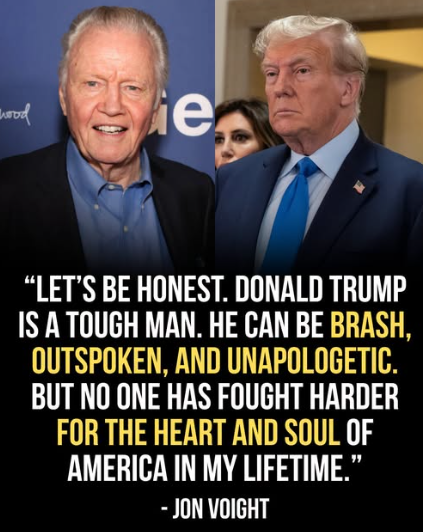
For every Jon Voight (see left) that are perhaps 1000 Robert Deniros, Bruce Springteens, and Leonardo Dicaprios.
But why are there any Jon Voights at all? The answer is unclear.
I once met a Princeton grad to whom I explained that a guy from my prep school in Philadelphia went to Princeton, and now is all over social media shouting, “Close the Borders!” and “English Only!”
My new acquaintance laughed hysterically, and said with a smile, “Yes, we have grads like this, perhaps one in a few thousand. What a waste of hundreds of thousands of dollars. You can get that level of education by dropping out of high school and driving a truck.”
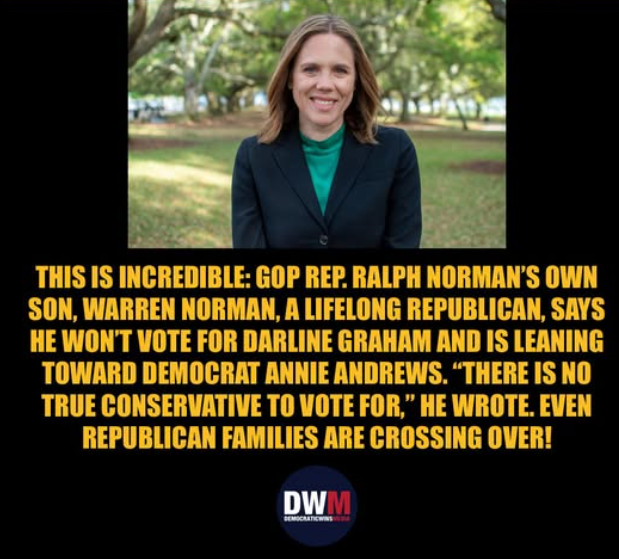 At left we see an example of a phenomenon that seems to be happening with increasing frequency: a life-long Republican saying “enough” and refusing vote for the current version of the GOP.
I applaud people who have both:
a) the intelligence to see where a party has crossed a moral line, and is now operating as a criminal enterprise.
b) the inner courage to do this, as it is hard for most people to admit they were wrong after a lifetime of kneejerk reactions, especially on a topic of such importance.
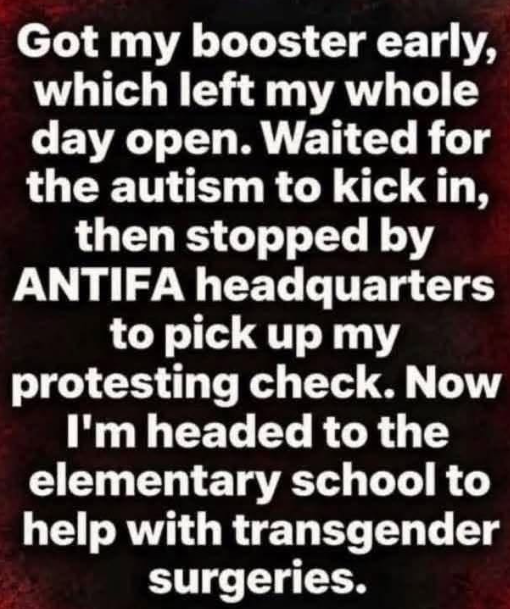 Someone commented on the meme here: “Don’t forget your jihadi prayer group meeting.”



