

More consistent refrigeration of foods as they move from one part of the supply chain to another could cut almost 2bn tonnes of greenhouse gas emissions from food loss each year, according to a new study.
Around one-third of all food produced goes to waste, producing climate-warming greenhouse gases as it rots.
New research, published in Environmental Research Letters, finds that poorly temperature-controlled food supply chains could be causing up to 620m tonnes of food losses each year.
This loss results in 1.8bn tonnes of CO2-equivalent (GtCO2e) emissions – more than three times the annual emissions of Canada.
Using more refrigeration when food is processed and transported could more than halve the food-loss emissions in south and south-east Asia, the study says.
In addition, shortening food supply chains could significantly reduce emissions and prevent food loss around the world, the study finds.
A scientist who was not involved in the research tells Carbon Brief that the results “reflect a worrying reality” on food waste, but notes that the findings are “uncertain”.
The lead author of the study says that there are caveats to some of the findings and adds that not every region can, or should, base their food supply system on refrigeration.
Wasted food
Along a supply chain that sees food grown, processed, transported and consumed, around one-third of all food goes to waste.
If it were a country, this food waste would be the third-largest source of greenhouse gas emissions in the world, according to the UN Food and Agriculture Organization.
A 2023 study also found that greenhouse gases from food loss and waste make up almost half of all food-system emissions.
Food loss refers to all of the edible parts of food that are thrown away in the early parts of the supply chain, according to a report from the UN Environment Programme.
This includes vegetables that rot in fields before being picked, crops hit by disease and meat that spoils due to lack of transport refrigeration.

Food waste, on the other hand, is discarded food that is not consumed by people at a retail, food service or household level.
Food loss and waste produces methane as it rots in landfills or dump sites. Emissions from food loss also stem from the land-use change, energy and resources required to grow the food in the first place, particularly animal products.
The new study examines whether more consistent access to refrigeration throughout the supply chain could impact food loss – and the resulting greenhouse gas emissions – for different food types around the world.
Alongside the benefits of refrigeration, the study finds that supplying foods more locally can greatly reduce food losses.
This was the most surprising finding, according to Aaron Friedman-Heiman, the lead author of the study. Friedman-Heiman, a recent graduate from the school for environment and sustainability at the University of Michigan, tells Carbon Brief:
“The thing that shocked me the most was actually how comparable shortened food supply chains were to technologically optimised food supply chains.
“We can make all these systems really efficient, but also if we just get rid of a lot of the steps, that is another kind of way of optimising these systems.”

Prof Ian Vázquez-Rowe, an engineering professor at the Pontifical Catholic University of Peru who was not involved in the research, says that the study is “thorough” and relevant, “especially in countries and households with poor refrigeration systems”. He tells Carbon Brief:
“The results are probably quite uncertain, as in most planetary-based estimations, but they reflect a worrying reality: food supply chains are inefficient, especially in emerging and developing nations, and this leads to higher amounts of food loss and waste in the agri-food sector.”
Estimating food loss
The researchers developed a model to see whether consistent access to refrigeration could impact food losses and greenhouse gas emissions for seven groups of food: seafood; fruit and vegetable; oilseeds and pulses; root and tuber crops; meat; dairy; and cereals.
The study focuses solely on food that is lost between harvesting and reaching a supermarket shelf. It does not look at food waste, which is the food discarded in shops, restaurants and households.
The researchers look at the improvements that could occur with better refrigeration throughout the food supply chain. They also look at the impact of making food more locally available, thereby shortening these supply chains.
The study focuses on seven regions around the world: Europe, “industrialised Asia” (countries such as China), Latin America, north Africa and central Asia, North America and Oceania, south and south-east Asia and sub-Saharan Africa.
For each combination of region and food type, the researchers investigate three scenarios: a “baseline” scenario, using current loss rates; an “optimised” scenario, using minimum loss rates with added refrigeration capacity; and a “short” scenario, using current loss rates across a reduced supply chain.
The chart below outlines the baseline and optimised scenarios for food loss and the resulting greenhouse gas emissions. It shows that although fruit and vegetable losses are largest in terms of weight, meat losses are the source of the largest emissions by far.

Combining refrigeration and shorter supply chains
Sub-Saharan Africa and south and south-east Asia would stand to see the biggest reductions in food loss and related greenhouse gas emissions with better refrigeration and localised supply chains, the study finds.
For example, improved refrigeration could save more than 100m tonnes of fruit and vegetables each year in south and south-east Asia. It could also reduce overall food loss in the region by 45% and more than halve the associated emissions. In sub-Saharan Africa, it could cut these emissions by two-thirds.
Globally, better refrigeration of meat could cut emissions linked to meat loss by more than 40%.
Meat accounts for more than half (2.7 gigatonnes) of food loss and waste greenhouse gas emissions – despite making up less than 10% of global food loss and waste, the study says.

The benefits of refrigeration in reducing food loss are more modest in global north countries with existing temperature-controlled food supply chains.
The study finds that, on a global level, making food supply chains more local can have a bigger impact on saving food than improving refrigeration.
Localised supply chains could reduce emissions from rotting meat in industrialised countries by more than 300m tonnes of CO2e emissions each year, the study adds.
Combining the two solutions – shorter supply chains and better refrigeration – can help to reduce food losses and slash the energy burden and emissions from refrigeration.
Other factors
Vázquez-Rowe says that the study findings are “plausible” and that they “reflect a structural problem of food systems”. But, he adds:
“There is a lack of uncertainty and sensitivity analyses, which does not allow for a full analysis of the certainty of the results they provide.”
The authors acknowledge other limitations in the study, such as not considering the emissions from refrigerators in their calculations.
Previous research indicates that refrigeration may even increase food emissions through higher energy use and the dietary shifts that refrigeration allows.
The study also does not consider various social, cultural, political, nutritional and economic factors that influence food systems.
Areas with unreliable energy systems may not want to – or may not be able to – rely more heavily on refrigeration technologies. Friedman-Heiman explains:
“If a region doesn’t have stable energy infrastructure, then the idea of basing a food system off of refrigeration is actually maybe less sustainable in terms of food loss and waste than what they currently have.”
He is hopeful researchers, policymakers and others in the food industry can use the model and further the research on a wider level. He tells Carbon Brief:
“I would love for this model to incorporate regional energy grids and what that impact might be in terms of changing the emissions equation…[alongside] pitting the food savings against the refrigeration [emissions].”
The study also acknowledges that shorter supply chains are not always feasible, depending on geographical location and the seasonality of different foods.


The post Better refrigeration could avoid almost 2bn tonnes of CO2 per year from food loss appeared first on Carbon Brief.
Better refrigeration could avoid almost 2bn tonnes of CO2 per year from food loss

Climate Change
After a week of plenty of activity and drama for Greenpeace at sea, I felt like writing to you on a much quieter theme…
Do you have a favourite book, poem or story about the ocean?
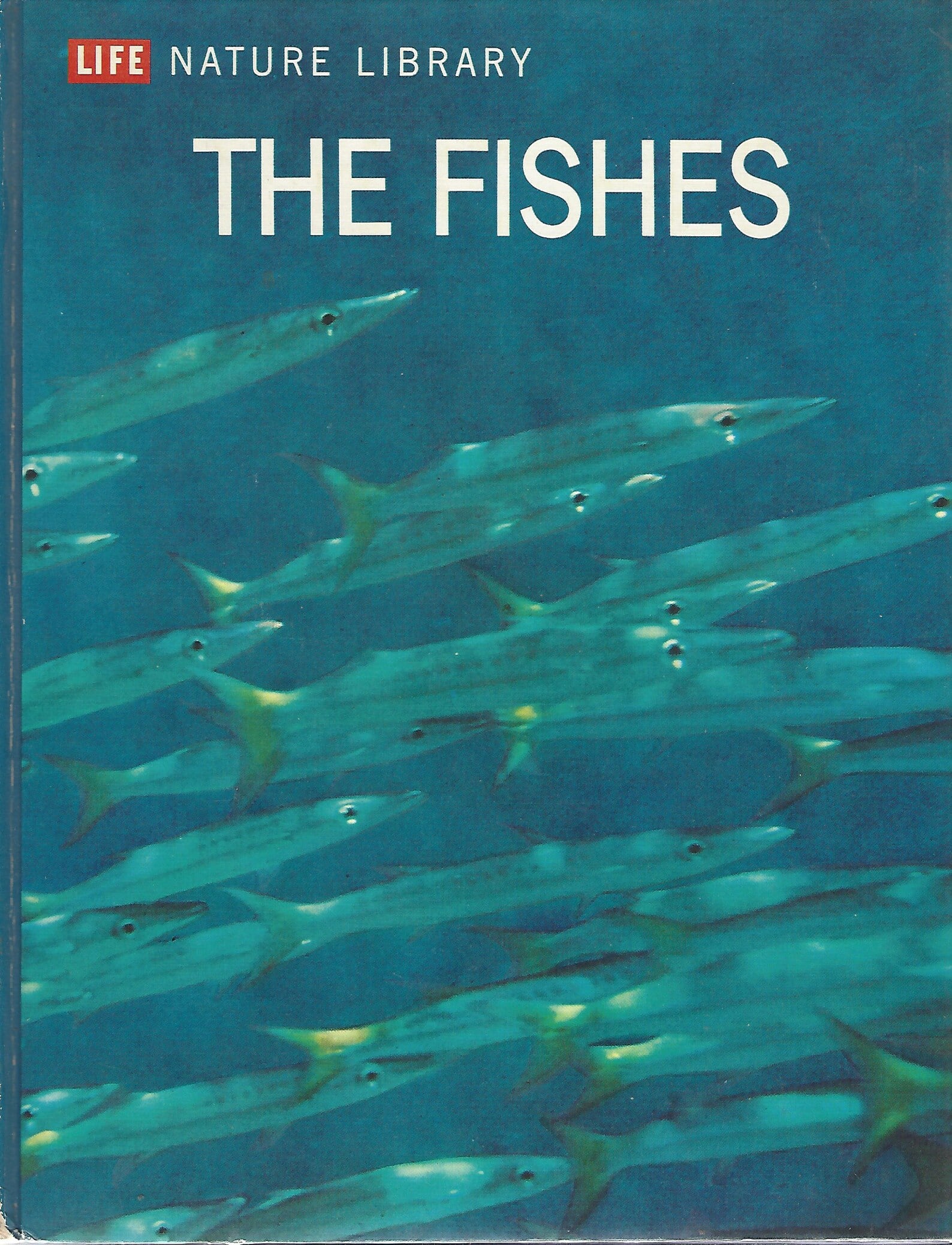
When I was very small, it was the TimeLife book of The Fishes, by F. D. Ommanney, which I remember endlessly poring over, my child’s mind gripped, in total fascination. The cover illustration showed a shoal of barracuda, mid-water and heading upwards, lit up as an iridescent blue by a column of sunlight. Oddly, it is only the cover and the illustrations of the deep sea creatures which I now remember—but I loved that book, as the weakened spine, blunted pages and dog-eared corners attested.
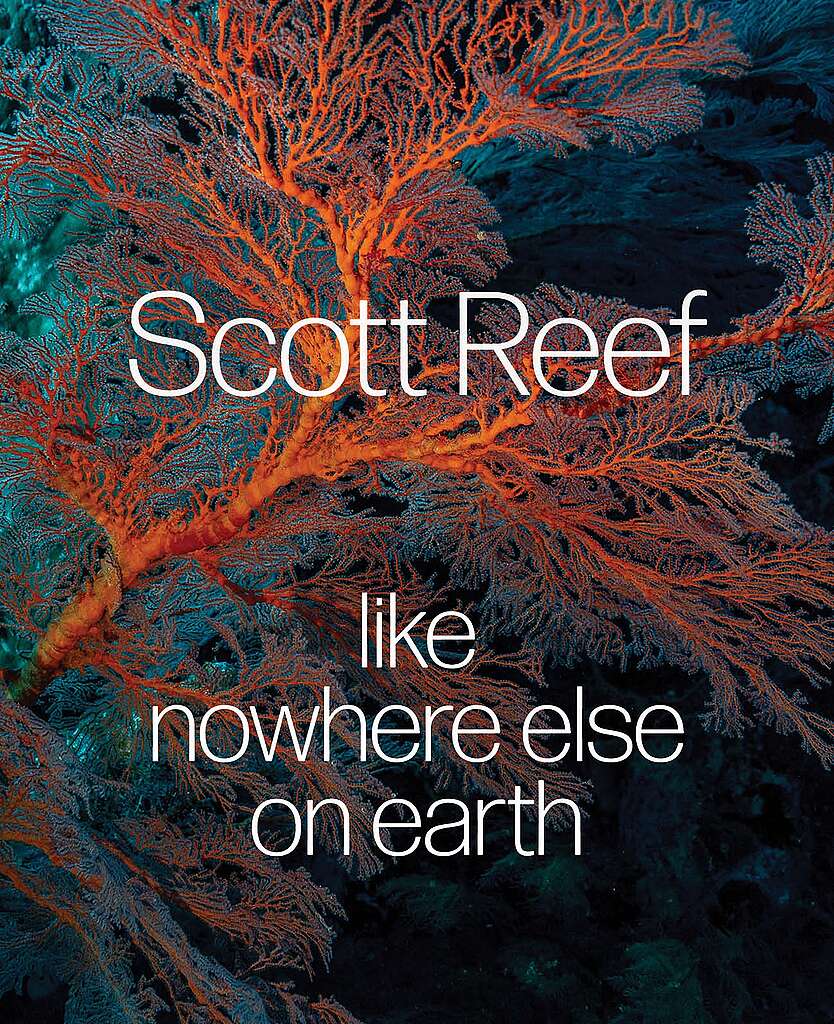
The Fishes has been on my mind recently, because I’ve been working with some dear friends on our own illustrated oceans book, to be published by Upswell Publishing. The book is called Scott Reef: Like Nowhere Else on Earth, and I want to share with you a bit of the story behind its creation.
Scott Reef is absolutely magnificent: Australia’s largest freestanding oceanic reef, brimming with life, including rare and threatened species such as a genetically distinct population of green sea turtles, pygmy blue whales and the wonderfully elegant dusky sea snake. But Scott Reef isn’t near our capital cities; it is way off the north-west coast of WA. And it is threatened with devastation by Woodside, which wants to drill up to 57 toxic wells at the Reef for its vast, dirty Browse gas project.
One of the main challenges in the fight to save Scott Reef from being turned into an industrialised gas zone by Woodside is bringing this incredible location to life for people who haven’t actually experienced it first hand. Because despite its ecological significance and dazzling beauty, ‘Scott Reef’ is also—at least not yet—exactly a household name.
To help get over this barrier, Greenpeace has enabled a number of photographers to travel to Scott Reef by boat (including the Rainbow Warrior) to document its astonishing diversity of colour and life. We then brought these images together in a remarkable photobook, produced by our talented in-house team, which we’ve been putting into the hands of as many leaders as possible—including the MPs whose decisions can determine the Reef’s future.
Back in June this year, I was sharing a copy of our in-house book at a business gathering in Perth when someone pulled me aside. Had we thought about publishing the book commercially? Apart from anything else, he wanted to buy a copy himself! He had a point. We were proud of what we’d created, but a commercially published version could reach a much wider audience and have even greater campaign impact. I immediately turned to my dear friend, Terri-ann White, who runs Upswell Publishing in WA, for advice.
Terri-ann has a huge heart and terrific vision. So many wonderful things in WA owe their existence to her doings, and, true to form, she was immediately encouraging and enthusiastic. “But,” she said, “it would add a whole new dimension if we had some words to accompany the incredible pictures.”
Fair enough, I thought. I could ask a few authors.
“And when would you like it published?” she asked.
“Ideally November,” I answered sheepishly.
Now, in publishing terms, nobody goes from idea to finished work, beautifully produced by a commercial publisher, in just four months. It. Just. Doesn’t. Happen. A book of this scale would ordinarily take nine months, I was told. But Terri-ann was undeterred. “If you can get a rapid turnaround on the writing, I will give it a shot.”
Over the following few days, I sent out 24 emails to prospective writers. To my joy and surprise 23 of them responded almost immediately with an enthusiastic yes!
Terri-ann was somewhat alarmed and perplexed when I told her the good news… we’d discussed a few authors, not more than twenty! “Impossible,” she texted. “Editing is important and you are talking about thousands of words!” But I also know Terri-ann. She does the impossible. And so, here we are… Terri-ann is going to hit that improbable deadline. Scott Reef: Like Nowhere Else on Earth will be on shelves in November.
The contributors are a wonderfully diverse bunch, united by their enthusiasm for Scott Reef — and their extraordinary speed!
It’s a brilliant mix. The book brings together national icons like Peter Garrett, Tim Winton, Mick Dodson, Janet Holmes à Court and Fiona Stanley; the intellectual heft of professors Frank Bongiorno, Jessica Meeuwig, Rick Steiner and Samantha Hepburn; the poetic vision of Prema Arasu, Berndt Sellheim and Saadiah Freeman; the field expertise and passionate first hand witnessing of Imogen Zethoven, Tooni Mahto, Ben Fitzpatrick, Geoff Bice, Olaf Meynecke, Paul Gamblin, Sarah Gittoes and Hayley Baillie; and the determination of emerging activist voices Jackson Reid and Emma Sangalli.
Their elegant words wrap themselves around the sheer wonder of the underwater world, brought to life by the work of the photographers — of whom one, Wendy Mitchell, has also contributed a wonderful essay.
Terri-ann showed me the full physical proofs this week and they are breathtaking. This book contains some of my absolute favourite images of wildlife beneath the waves -– and believe me, after almost 20 years at Greenpeace, I’ve been privileged enough to see some remarkable shots! The essays bring a whole new depth and richness to the story of Scott Reef.
If I am being honest, and maybe a bit sentimental, I hope that a four or five-year-old child somewhere in Australia will spend part of their summer holidays turning the pages of this book, wide-eyed with curiosity and awe at the beauty and strangeness of the creatures that call our oceans home.
Our shared commitment is to make sure that, as those children grow up, the wonders of Scott Reef will exist not just in the pages of the book, but out there in the wild waters off north-western Australia—alive, thriving, and every bit as extraordinary as they are today; a living wonder beneath the waves.
Pre-orders of Scott Reef: Like Nowhere Else on Earth are available here.


Q & A
Sometimes you get asked a question so often that you decide to produce a report to answer it!
We know there is strong public opposition to voter opposition to gas drilling at Scott Reef and fracking in the Kimberley in Western Australia. But I am frequently asked whether, even if people don’t want it, more gas drilling is a necessary evil to sustain WA’s prosperity?
The short answer is an unequivocal ‘No’. The longer answer is our new report, From Gas to Green: Building Western Australia’s Future State, which makes the comprehensive case that Asia’s gas market is declining — while WA has an enormous untapped opportunity to become a global leader in green industries and exports, helping drive the region’s shift away from fossil fuels. The faster that WA embarks on a decisive shift away from gas—and that includes no fracking in the Kimberley, or drilling at Scott Reef — so much the better for the state’s people, ecology and economy.