


Sustainable Aviation
What is SAF in term of renewable energy?
SAF stand for “Sustainable Aviation Fuel,” which is a type of renewable energy that is used in the aviation industry.
Sustainable Aviation Fuel is a type of biofuel that is made from sustainable sources such as agricultural and forestry waste, non-edible crops, and municipal waste. The fuel can be used in existing aircraft engines without the need for any modification, making it an attractive alternative to traditional fossil fuels. SAF can reduce the carbon emissions associated with air travel by up to 80% compared to traditional jet fuel.
SAF is gaining increasing attention as a way to help the aviation industry reduce its carbon footprint and meet climate targets. Several airlines and aircraft manufacturers have already started using SAF as part of their sustainability efforts.
Type of sustainable aviation fuel
There are several types of Sustainable Aviation Fuel (SAF) that can be used in the aviation industry.
Here are a few examples:
Hydroprocessed Esters and Fatty Acids (HEFA)
This is one of the most commonly used types of SAF. It is made by converting plant oils and animal fats into jet fuel through a refining process called hydroprocessing.
Fischer-Tropsch (FT) fuels
These fuels are made by converting biomass or natural gas into a synthetic liquid hydrocarbon. FT fuels have a high energy density and can be blended with traditional jet fuel in varying amounts.
Alcohol-to-Jet (ATJ)
This type of SAF is made by converting sugars from non-food biomass, such as wood chips or agricultural waste, into alcohols. The alcohols are then converted into jet fuel through a refining process.
Bio-methane
This type of SAF is made by capturing and refining methane gas produced from agricultural waste, landfills, and other organic waste sources.
Power-to-Liquid (PtL)
This type of SAF is made by using renewable energy sources, such as wind or solar power, to produce hydrogen gas through electrolysis. The hydrogen is then combined with carbon dioxide from the air to produce a liquid hydrocarbon fuel.
These and other types of SAF are being developed and tested by companies and organizations around the world as part of efforts to reduce the carbon footprint of air travel.

Latest development of sustainable aviation fuel
There have been several recent developments in Sustainable Aviation Fuel (SAF) that are worth noting:
Increased production
There has been a significant increase in SAF production capacity in recent years, with several new production facilities being built or planned around the world. This is helping to bring down the cost of SAF and increase its availability to airlines.
New feedstocks
Researchers are exploring new feedstocks for SAF, such as algae, which can be grown using wastewater and carbon dioxide. This could provide a more sustainable source of fuel than traditional biofuels.
Government support
Many governments around the world are providing financial incentives and regulatory support to encourage the production and use of SAF. For example, the European Union has set a target for SAF to make up 5% of jet fuel consumption by 2030.
Airlines commitment
Major airlines have made commitments to increase their use of SAF in the coming years. For example, United Airlines has pledged to purchase 1.5 billion gallons of SAF over the next 20 years, while Delta Air Lines has committed to replacing 10% of its jet fuel with SAF by 2030.
New partnerships
There have been several new partnerships between airlines, fuel producers, and other organizations to accelerate the development and adoption of SAF. For example, United Airlines has partnered with several SAF producers to help bring their fuels to market, while Boeing has partnered with a fuel cell manufacturer to develop an electric propulsion system for aircraft.
Latest Technology of sustainable aviation fuel
There are several emerging technologies that are being developed to produce Sustainable Aviation Fuel (SAF) more efficiently and sustainably.

Here are a few examples Latest Technology of sustainable aviation fuel
Waste-to-fuel
Researchers are exploring new ways to convert waste products into SAF. For example, a company called LanzaJet is using a process called gasification to convert agricultural waste into a type of SAF called Alcohol-to-Jet (ATJ) fuel.

Synthetic biology
Synthetic biology is a field of science that involves designing and engineering biological systems for specific applications. Researchers are using synthetic biology to create microorganisms that can produce SAF more efficiently and sustainably than traditional methods.
For example, a company called Synhelion is using synthetic biology to create microorganisms that can convert sunlight and carbon dioxide into SAF.

Renewable electricity
Another emerging technology for producing SAF is using renewable electricity to power the production process.
For example, a company called ZeroAvia is developing a process to produce SAF using renewable hydrogen generated from wind and solar power.\

Carbon capture and utilization
Carbon capture and utilization involves capturing carbon dioxide emissions and using them as a feedstock for the production of SAF.
This can help reduce the carbon footprint of the SAF production process. For example, a company called Carbon Clean Solutions is using carbon capture technology to produce SAF from carbon dioxide emissions.
Direct air capture: Direct air capture involves capturing carbon dioxide directly from the air and using it as a feedstock for the production of SAF. This technology is still in the early stages of development, but it has the potential to provide a truly sustainable source of SAF.
World largest sustainable aviation fuel Country
The United States is currently the largest producer and consumer of Sustainable Aviation Fuel (SAF) in the world, with several large-scale production facilities in operation and more under construction or planned. The country is home to many of the world’s leading SAF producers and has a strong commitment to developing and promoting the use of renewable energy in the aviation sector.
The US government has provided regulatory support and financial incentives to promote the production and use of SAF, including tax credits, grants, and loan guarantees for SAF producers. Additionally, several US airlines have made commitments to increase their use of SAF in the coming years, including United Airlines, Delta Air Lines, and JetBlue.
Other countries, such as the European Union, Canada, and Brazil, are also investing in SAF production and use, and are expected to increase their SAF production capacity in the coming years. The European Union, for example, has set a target for SAF to make up 5% of jet fuel consumption by 2030. However, the US currently leads the world in terms of SAF production and consumption.
Country with the highest sustainable aviation fuel (SAF) use
Several countries around the world have started using Sustainable Aviation Fuel (SAF) in commercial aviation, including:
United States: The United States is currently the largest producer and consumer of SAF in the world, with several airlines using SAF in their operations.
Norway: Norwegian airline, Avinor, has committed to using 1% SAF in all its refueling at Oslo Airport, making it the first airport in the world to offer regular supply of SAF to airlines.
Netherlands: KLM Royal Dutch Airlines has been using SAF since 2011 and aims to increase its use to 14% by 2030.
Finland: Finnair has been using SAF since 2019, with a target to use 10% SAF by 2025.
France: Air France has been using SAF since 2020, with a goal of using 2% SAF by 2025 and 5% by 2030.
Germany: Lufthansa Group has been using SAF since 2019 and aims to increase its use to 10% by 2025.
Canada: Air Canada has started using SAF in its flights from Vancouver to Montreal and plans to gradually increase its use in other flights.
These are just a few examples of countries that have started using SAF, and many other countries are also investing in SAF production and use.
Benefit for sustainable aviation fuel
There are several benefits associated with the use of Sustainable Aviation Fuel (SAF):
Reduced carbon emissions
SAF can reduce carbon emissions from aviation by up to 80% compared to conventional jet fuel. This can help reduce the carbon footprint of the aviation industry, which is a significant contributor to global greenhouse gas emissions.
Improved air quality
SAF can also help improve air quality around airports by reducing emissions of pollutants such as nitrogen oxides, particulate matter, and sulfur dioxide. This can help reduce the health impacts of air pollution on nearby communities.
Energy security
SAF can help increase energy security by providing a domestically produced and renewable source of fuel for the aviation industry. This can help reduce dependence on imported oil and enhance energy independence.
Job creation
The development and production of SAF can also create jobs in the renewable energy sector, as well as in industries that support the production and distribution of SAF, such as logistics and transportation.
Innovation and technology development
The development of SAF requires innovation and the use of new technologies, which can drive advances in science and technology and spur economic growth.
Reputation and corporate social responsibility
The use of SAF can help enhance the reputation of airlines and other organizations in the aviation industry by demonstrating a commitment to sustainability and corporate social responsibility.
Sustainable Aviation Fuel (SAF) in the Airlines
Several airlines around the world have started using Sustainable Aviation Fuel (SAF) in their operations, including:
United Airlines
United Airlines has been a leader in SAF use and has made a commitment to use 100 million gallons of SAF by 2030. The airline has used SAF on several flights, including a flight from Los Angeles to San Francisco in 2016, which was the first commercial flight using SAF in the US.
Delta Air Lines
Delta Air Lines has committed to using 10% SAF by 2030 and has used SAF on over 1,000 flights since 2016.
KLM Royal Dutch Airlines
KLM has been using SAF since 2011 and aims to use 14% SAF by 2030.
Scandinavian Airlines(SAS)
Cathay Pacific
Cathay Pacific has used SAF on select flights and plans to use SAF on all flights departing from Hong Kong.
Qantas
Qantas has used SAF on select flights and has committed to using 50% SAF on all flights departing from Los Angeles by 2026.
JetBlue
British Airways has conducted flights using SAF and is committed to using SAF in the future. To be sustainable airlines in 2019, they announced a deal with SAF producer Velocys to supply sustainable fuel
These are just a few examples of airlines that have started using SAF, and many other airlines are also investing in SAF production and use.

Future of sustainable aviation fuel
The future of Sustainable Aviation Fuel (SAF) is promising as the aviation industry seeks to reduce its carbon footprint and achieve carbon neutrality.
Here are some of the key developments and trends that are shaping the future of SAF:
Increased production
As demand for SAF grows, production is expected to increase. Several new SAF production facilities are under construction or in the planning stages, which will increase the availability and affordability of SAF.
Technological advancements
Advances in technology are making it easier and more cost-effective to produce SAF. New feedstocks and production processes are being developed that will make SAF more sustainable and economically viable.
Government support
Many governments around the world are supporting the development and use of SAF through policies and incentives. This includes tax credits, subsidies, and mandates for SAF use, which can help accelerate the adoption of SAF.
Partnerships and collaborations
Airlines, fuel producers, and other stakeholders in the aviation industry are forming partnerships and collaborations to accelerate the development and adoption of SAF. This includes collaborations on research and development, production, and distribution.
Innovation and experimentation
The aviation industry is exploring new ways to produce SAF, including through the use of waste and carbon capture technologies. This experimentation and innovation will help drive down the cost of SAF and increase its sustainability.
The future of SAF looks bright as the aviation industry takes steps to reduce its carbon footprint and transition to a more sustainable future. With increased production, technological advancements, government support, partnerships and collaborations, and innovation and experimentation, SAF is set to play a key role in decarbonizing the aviation industry in the coming years.
https://www.exaputra.com/2023/05/benefits-of-saf-sustainable-aviation.html






 Sadly, a significant number of U.S. voters believe what House Speaker Mike Johnson says here, i.e., that “God isn’t finished with America yet,” and that “We need people (from the Republican party) of character and integrity,” as if there are any.
But what is that number, roughly?
After living through the first 18 month of Trump’s second term, with all the lies, the incompetence, and the corruption, this number has dwindled to a point that the Republicans are bracing themselves for the worst.
Republicans Manipulate American’s Ignorance — and it Doesn’t Take Too Much Skill
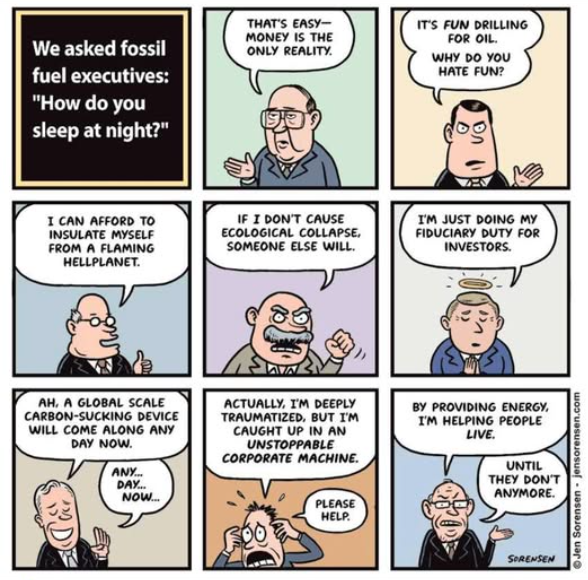
 I’m sure some of these excuses are extremely common in the minds of those making huge profits by destroying our planet.



-
Climate Change1 year ago
Guest post: Why China is still building new coal – and when it might stop
-
Greenhouse Gases1 year ago
Guest post: Why China is still building new coal – and when it might stop
-

 Greenhouse Gases2 years ago
嘉宾来稿:满足中国增长的用电需求 光伏加储能“比新建煤电更实惠”
-

 Climate Change2 years ago
嘉宾来稿:满足中国增长的用电需求 光伏加储能“比新建煤电更实惠”
-
Climate Change2 years ago
Bill Discounting Climate Change in Florida’s Energy Policy Awaits DeSantis’ Approval
-

 Renewable Energy10 months ago
Sending Progressive Philanthropist George Soros to Prison?
-
Greenhouse Gases1 year ago
嘉宾来稿:探究火山喷发如何影响气候预测
-

 Carbon Footprint2 years ago
US SEC’s Climate Disclosure Rules Spur Renewed Interest in Carbon Credits