

 Until his retirement, Rick Sikes managed the fleet of cars and trucks operating in the city of Santa Monica, CA, a municipality generally known for its progressive stance with respect to environmental stewardship. He worked hard to integrate alternative-fueled vehicles of all types: electric, yes, but also an interesting array of hydrogen, natural gas, even propane.
I interviewed Rick as the basis for a chapter of my first book, “Renewable Energy–Facts and Fantasies,” as an example of what forward-thinking cities are capable of when it comes to phasing out petroleum. I conducted the talk on a walking tour of his facility, which features huge tanks of different types of fuel, during which I asked, jokingly, “Am I in any danger here this afternoon?”
Taking me seriously, Rick replied that gas-powered vehicles are far more likely to catch fire than EVs and the rest. In fact, there are so many of them each day that most of them don’t even make the local news.
Here we are 15 years later, and now we’re starting see the propaganda that falsely claims that EVs are extremely likely to burst into flames, an assertion refuted in this recent article in AutoBlog.



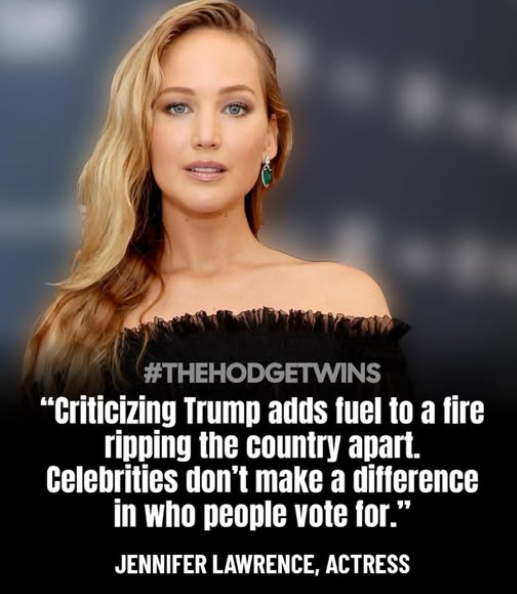 Did Jennifer Lawrence really say this? I hope not, because it’s complete stupidity.
People who didn’t criticize Hitler, Mussolini, or the dozens of other fascist dictators as they were rising to power merely ushered them into a position in which they could destroy the lives of millions of innocent lives.
 The author of the meme at left writes, “We’re the only ones.”
This is completely incorrect, not that you care about facts and truth. Over 30 countries, primarily in the Americas, offer unconditional birthright citizenship, granting citizenship to almost anyone born within their territory, regardless of their parents’ status.
 For those who struggle with elementary school arithmetic, Trump won the election (50%+ approval) out of more than 150 million votes cast, and now his approval rating is in the low 30s.
That’s ~30 million voters who regret their choices, out of the common American.
Add in the Tucker Carlsons of the world.


-
Climate Change8 months ago
Guest post: Why China is still building new coal – and when it might stop
-
Greenhouse Gases8 months ago
Guest post: Why China is still building new coal – and when it might stop
-

 Greenhouse Gases2 years ago
嘉宾来稿:满足中国增长的用电需求 光伏加储能“比新建煤电更实惠”
-
Climate Change2 years ago
Bill Discounting Climate Change in Florida’s Energy Policy Awaits DeSantis’ Approval
-

 Climate Change2 years ago
嘉宾来稿:满足中国增长的用电需求 光伏加储能“比新建煤电更实惠”
-
Climate Change Videos2 years ago
The toxic gas flares fuelling Nigeria’s climate change – BBC News
-

 Renewable Energy6 months ago
Sending Progressive Philanthropist George Soros to Prison?
-

 Carbon Footprint2 years ago
US SEC’s Climate Disclosure Rules Spur Renewed Interest in Carbon Credits