

UK governments have fallen so far short of their tree-planting targets since 2020 that they have failed to plant an area of forest nearly equivalent to the size of Birmingham, Carbon Brief analysis shows.
During the 2019 election campaign, the Conservatives committed to a UK-wide goal of creating 30,000 hectares of new woodland a year by 2025.
This pledge became part of the government’s net-zero strategy, which relies on “significant” tree-planting to make up for emissions from polluting sectors, such as aviation and farming.
Authorities in England, Scotland, Wales and Northern Ireland have all set out their own tree-planting ambitions, including annual goals between 2020 and 2025.
Every nation in the UK has repeatedly failed to meet these goals. This means that, despite the latest figures showing an increase in woodland creation over the past year, thousands of hectares of trees have gone unplanted across the UK since the original target was set.
By 2050, the unplanted trees would have removed some 8.5m tonnes of carbon dioxide (MtCO2) from the atmosphere, Carbon Brief analysis shows – roughly 2% of the UK’s annual emissions in 2023. This will need to be made up for with stronger efforts elsewhere, if the UK’s net-zero by 2050 target is to be met.
‘Abandoned’ target
Centuries of deforestation have left the UK one of the least forested nations in Europe.
Tree-planting can help the country meet its climate targets by removing CO2, as well as improving biodiversity and providing protection from flooding.
In this context, tree-planting enjoyed cross-party support in the run up to the 2019 general election, with parties vying to release the most ambitious targets.
Ultimately, the Conservatives emerged victorious from the election and pledged to raise tree-planting levels from around 13,000 hectares per year in 2018-19 to 30,000 hectares by the end of parliament, which was pegged for 2024-25. (Annual tree-planting figures are reported for the period between 1 April in one year and 31 March in the following year.)
This goal was roughly in line with guidance from government advisers the Climate Change Committee (CCC). The committee concluded that achieving 30,000 hectares a year by 2025 and then gradually raising it to 50,000 hectares a year by 2035, could increase forest cover from 13% to 18% by 2050, while removing more than 10MtCO2 from the atmosphere each year by 2050.
However, tree-planting is a devolved matter in the UK. England and the governments of Scotland, Wales and Northern Ireland each had to develop their own policies to drive afforestation following the 2019 election.
It soon became clear that the 2025 UK-wide target was slipping out of reach. Each year, data released by government body Forest Research showed nationwide tree-planting rates flatlining, rather than rising to meet the 30,000 hectares target.
The most recent dataset, released on 20 June – two weeks before another general election – shows that only 20,660 hectares of new woodlands were planted in 2023-24.
While this is a significant jump from the previous three years, it is still far short of the 30,000 hectares target for 2025, as the chart below shows.

As early as 2021, a report by the Institute for Government thinktank declared that the government’s overall tree-planting target had been “abandoned”.
A highly critical report released by MPs on the Environmental Audit Committee in 2023 concluded that it was “extremely unlikely” the goal would be met. It stated:
“We are extremely concerned by the consistently poor progress made in increasing tree-planting rates across all four of the nations in the UK.”
None of the major parties have included significant tree-planting targets in their manifestos for the upcoming election. Labour includes a vague pledge to plant “millions of trees” and “create new woodlands”, while the Conservatives say they will deliver existing commitments.
Birmingham-sized forest
The Conservatives’ ultimate goal of 30,000 hectares is only part of the story. Each nation has its own interim targets for scaling up tree-planting and each annual target missed means areas of forest that have not been planted.
The gaps between the nations’ combined annual targets and the actual area of trees planted across the UK can be seen in the chart below.
According to Carbon Brief calculations, these missed targets amount to 22,129 hectares of forest that has not been planted between 2020-21 and 2023-24. This is an area nearly the size of Birmingham, the nation’s second most populous city.

Scotland, which is home to around half the UK’s forests and most of its timber industry, set out its tree-planting goals in a 2020 update to its 2018-2032 climate change plan. This included a target of planting 12,000 hectares of woodland in 2020/21, rising gradually to 18,000 hectares in 2024-25.
England also set out a “planned trajectory” for tree-planting under its Nature for Climate Fund tree programme, which is also meant to contribute to the government’s legally binding goal of reaching 16.5% tree cover in England by 2050.
This trajectory covered government schemes pushing up English tree-planting from 673 hectares in 2020-21 to 7,500 hectares in 2024/25. (The 2020-21 target appears to be a significant underestimate, considering that in 2019-20 the rate was 2,340 hectares.)
In Wales and Northern Ireland, the devolved governments both committed to planting rates roughly in line with CCC recommendations.
For Wales, that meant “at least” 2,000 hectares a year from 2020, with a non-specific pledge that this would increase “over time”, as set out in its Woodlands for Wales strategy.
Northern Ireland set out plans to plant 9,000 hectares of new forest between 2020 and 2030, under the Forests for Future scheme. Annual goals up to 2023-24 are set out in the country’s forest service business plans, and a spokesperson from the Northern Ireland Executive says future plans will appear in an upcoming climate action plan.
(Together, the devolved administration targets add up to just 27,500 hectares in 2024-25. However, the flexibility in future targets for Wales and Northern Ireland could make up the remaining 2,500 hectares.)
The charts below show how afforestation in UK nations has compared to their targets since 2020-21.

Tree-planting rates have increased in England – boosted by schemes such as the Woodland Creation Offer, which pays farmers and landowners to plant forests on their land. Nevertheless, the government did not achieve its targets for the country.
In Scotland, tree-planting rates had been falling until last year – a trend that was attributed to cuts in its woodland creation budget, as well as labour and skills shortages. Scotland’s repeated failure to hit its afforestation targets was cited by the CCC in March as one of the reasons the Scottish National Party-led government’s climate plan was “no longer credible”.
A failure to allocate enough funds to tree-planting, expand the nation’s tree nurseries and drive demand for domestic timber have all been highlighted as barriers to the UK’s afforestation programme by MPs on the Environment, Food and Rural Affairs Committee.
A spokesperson for the Scottish government tells Carbon Brief that Scotland has “consistently created the lion’s share of UK new planting and this year is no exception”. They say that changes to the country’s forestry grant scheme and a sped-up applications process helped them to reach the highest level of planting in 34 years in 2023-24.
A Welsh government spokesperson tells Carbon Brief that while they see last year’s tree-planting as “a significant achievement, we recognise we need to continue building on this success”.
The UK Department for Environment, Food and Rural Affairs (Defra) declined to comment on the figures.
Stuart Goodall, the chief executive at the Confederation of Forest Industries (Confor), tells Carbon Brief the trade association is “extremely disappointed” that all four nations failed to meet what he calls “achievable planting targets”. He adds:
“Tree-planting is heavily regulated and grant-aided…It is vital that adequate public funds are made available and that the process of approving applications to plant is improved, especially for larger woodland creation projects.”
The UK government’s carbon budget delivery plan, published in 2023 to flesh out the strategy for achieving its upcoming climate targets, includes some pessimistic estimates for tree-planting. It sees UK-wide afforestation falling between 2021 and 2025 and continuing to remain relatively low out to 2035.
Despite these estimates, Carbon Brief understands that, on paper at least, 30,000 hectares per year by 2025 has remained the official target within government.
Extra carbon
A nationwide shortfall in tree-planting has implications for the UK’s climate targets. The government’s net-zero strategy relies on “significant afforestation” to “balance” the UK’s so-called “residual emissions” in 2050.
These are emissions for which affordable or scalable low-carbon alternatives are not expected to be available by mid-century, meaning CO2 has to be removed from the atmosphere in order to achieve “net-zero”. Examples include some of the emissions from aviation, livestock farming and the waste sector.
Trees absorb more CO2 as they grow larger. This means that while the short-term emissions saving from newly planted trees is small, it increases as the years pass.
In the CCC’s “balanced pathway” to net-zero, it estimates that afforestation over the next few decades would be removing more than 10m tonnes of CO2 (MtCO2) per year by 2050.
However, the CO2 savings from the trees planted over the past four years alone are not expected to be large.
If the devolved governments had met their tree-planting targets in full up to 2023-24, 32MtCO2 would have been removed cumulatively by 2050, according to Carbon Brief analysis. Trees planted in line with these goals would remove around 1.2MtCO2 per year by 2050.
Due to the tree-planting shortfall, some 8.5MtCO2 of removals have been lost over this period – equivalent to around 2% of the UK’s economy-wide emissions in 2023. These trees would have removed 0.23MtCO2 per year by 2050.

The shortfall in tree-planting could leave the UK more reliant on CO2 removal technologies, which are still in the early stages of deployment. (The net-zero strategy already assumes that 75-81MtCO2 will need to be removed using these technologies in 2050.)
Alternatively, the UK could make up for the shortfall by making deeper emissions cuts elsewhere – for example, by reducing demand for flights or meat-based diets.
Lydia Collas, a senior policy analyst at Green Alliance, tells Carbon Brief that a new land-use framework in England would help to link up landowners and farmers prime tree-planting areas with money and resources:
“The UK must start to take its commitments to restore nature seriously, including targets to create woodlands. To avoid missing our 2030 target to cut emissions under the Paris Agreement, we need to get back on track.”


The post Analysis: UK misses tree-planting targets by forest the ‘size of Birmingham’ appeared first on Carbon Brief.
Analysis: UK misses tree-planting targets by forest the ‘size of Birmingham’

When oil and gas shipments stopped flowing through the Strait of Hormuz at the start of the Iran war, Southeast Asian nations were left reeling as the supply crunch laid bare their acute reliance on fossil fuel imports.
As prices soared, governments in the region scrambled to introduce emergency energy-saving measures – from a four-day working week to curbs on air conditioning. Thailand revived decommissioned coal plants while the Philippines, which imports nearly all of its oil, declared a “national energy emergency”.
But the crisis has also prompted renewed resolve to find a long-term solution to their vulnerability at a time when electricity demand is booming to power the region’s growing industry, cooling needs and the mushrooming of energy-hungry data centres.
At the heart of Southeast Asian nations’ response is a longstanding infrastructure project to connect the region’s power grids by 2045 and enable cross-border trading of clean electricity through a network of underground and subsea interconnectors.
-
Southeast Asia’s fragile grids threaten billions in clean energy investment
Renewables developers need reliable electricity infrastructure and stable policies to help the region meet climate goals and surging demand for power -
UN backs push to upgrade grids slowing clean power uptake in Africa and SE Asia
The Global Grids Accelerator will help turn national and regional plans to expand electricity infrastructure into viable projects on the ground -
China keeps Indonesia’s battery dream afloat but future less certain
Chinese capital and technology turned Indonesia into the world’s top nickel supplier, but its dependence on China and the rise of nickel-free batteries could upset its battery ecosystem plans
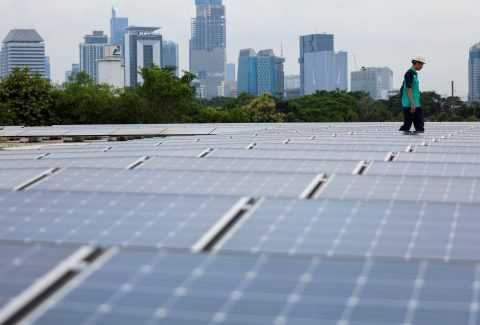
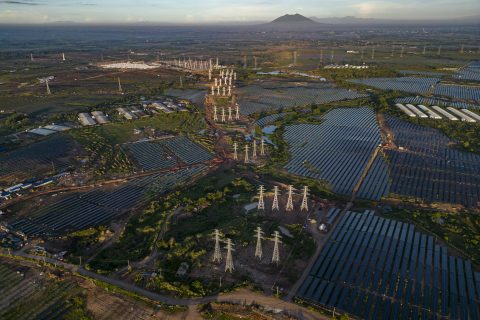
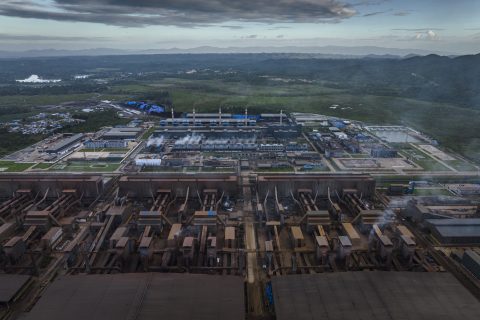
The plans will allow nations with high renewable energy generation potential to trade surplus power to their neighbours and major demand centres like Singapore, helping to integrate more renewables into the power mix and reduce reliance on fossil fuel imports.
“[It] will give us more energy security,” the Philippines’ energy secretary, Sharon Garin, told a press conference after a meeting of the Association of Southeast Asian Nations’ (ASEAN) energy ministers last week, when they discussed accelerating the delivery of the regional grid as part of measures to respond to the energy crisis.
“The Philippines is rich in solar power, Malaysia is rich in hydropower and Indonesia has geothermal: different countries have different resources. [The ASEAN Power Grid] will optimise the utilisation of renewables to the benefits of each member state,” said Garin.
But turning this decade-old political vision into a reality has been slow, held up by painstaking work to harmonise a patchwork of regulatory and legal frameworks and mobilise the private capital needed to build cross-border infrastructure.
More than $300 billion is needed to expand and modernise the region’s fragile grids to support the projected energy demand increase by 2050. This includes $27 billion required to deliver the cross-border interconnections by 2040, according to the International Energy Agency (IEA).
Every year of delay could cost the region billions of dollars in additional fuel costs and lock in new gas infrastructure for decades to come, according to analysis by global energy think-tank Ember.
The building block for energy security
With electrification high on the agenda of the COP31 climate talks in Türkiye next month, there is growing attention on the need to modernise and expand grid infrastructure to cope with growing electricity use and more renewables in the power mix.
Clean electrification and energy efficiency could deliver about a third of cumulative carbon emission reductions between 2026 and 2050, according to the International Renewable Energy Agency’s World Energy Outlook. But delivering that would require doubling annual global grid investment to $1 trillion between now and 2035.
Last month, the UN launched an initiative to accelerate investment into expanding and modernising grids in Southeast Asia and Africa.
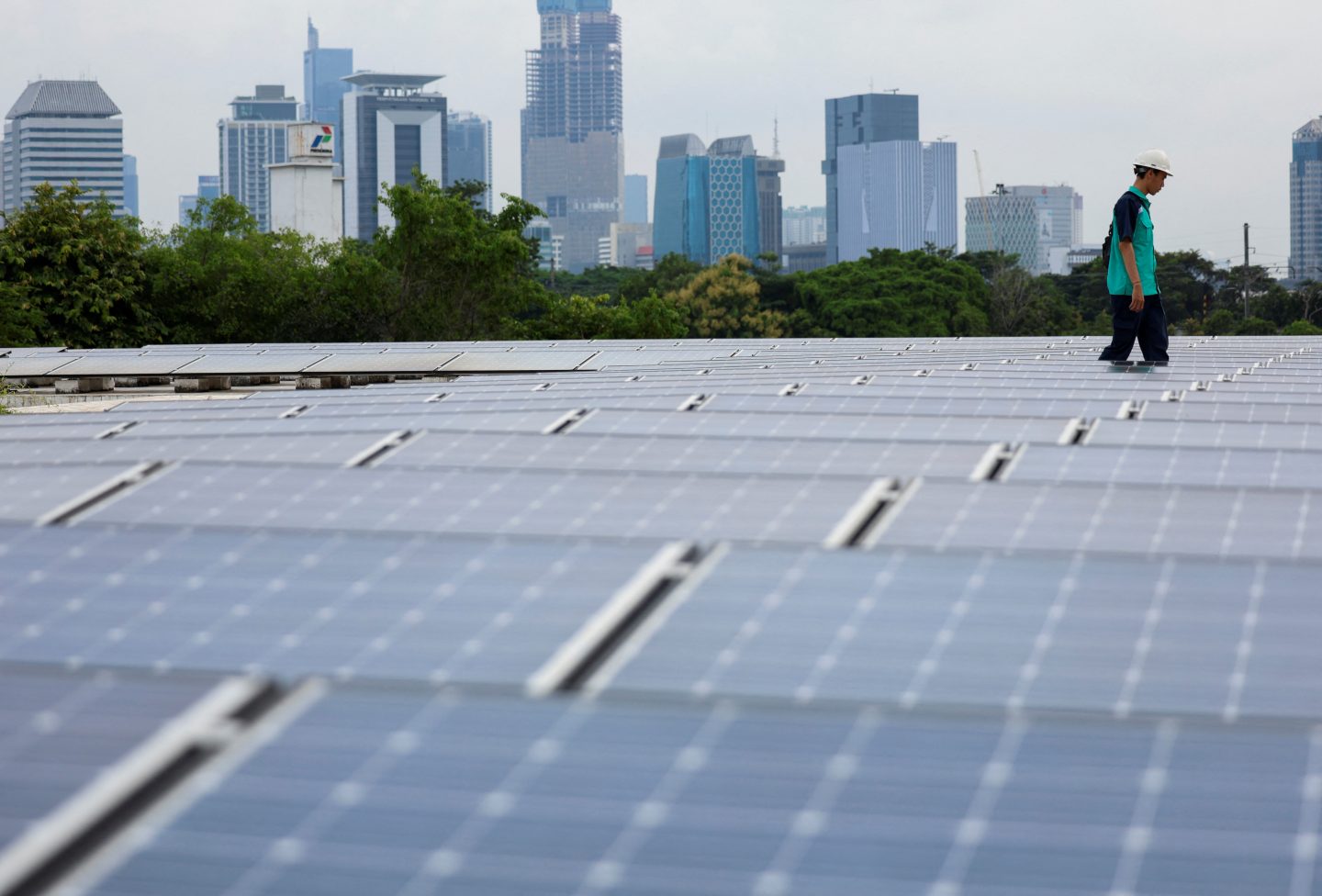
First conceptualised in 1997, the ASEAN Power Grid has gained fresh impetus in recent years as countries turn to renewables to cut their emissions and move away from volatile fossil fuel markets.
Energy supply disruption caused by wars in Ukraine and the Middle East has strengthened the case for regional grid connections. Before this year’s conflict began, the Middle East accounted for 60% of Southeast Asia’s crude oil imports. Competition for fewer, more expensive oil and gas shipments has left Southeast Asia facing a $160 billion energy import bill this year. Based on current policies, this could rise to $400 billion by mid-century.
In the Philippines last week, energy ministers agreed on an enhanced planning framework to deliver the ASEAN Power Grid and made progress on regulatory guidelines.
Garin said ministers were considering accelerating the project’s delivery. “The first study was to connect [by] 2045 – that’s too far,” she said.
A strong business case
The economic benefits of the plan have “captured the political imagination” of leaders in the region, Robert Cooke, grids advocacy lead at the Global Renewables Alliance, told Climate Home News. “The business case is stronger than ever,” he said.
“If countries were to go about building their own separate grids, of course that would be an expensive endeavour. But the discussion around the ASEAN Power Grid includes what costs could we share in building out this grid,” added Tiza Mafira, director of the Indonesia office for the Climate Policy Initiative.
Stronger grids would help the region meet collective targets to increase the share of renewable energy in total primary energy supply from 14% to 30% and in installed power capacity from 34% to 45% by 2030.
Connecting and pooling dispersed renewable resources would also help smooth local power shortages caused by daily and seasonal variations, reducing the need for backup gas plants and battery storage.
The IEA found the ASEAN Power Grid could help unlock some of the 20 terawatts of untapped solar and wind potential across Southeast Asia – an amount around 55 times the region’s current total power capacity.
From lines on a map to shovels in the ground
Rather than building a single unified network, the ASEAN Power Grid is developing cross-border links between neighbouring countries and smaller groups of nations.
As of 2025, nine of 18 priority interconnection projects are operational – accounting for around 10 GW of capacity with an additional 13.7 GW planned by 2040.
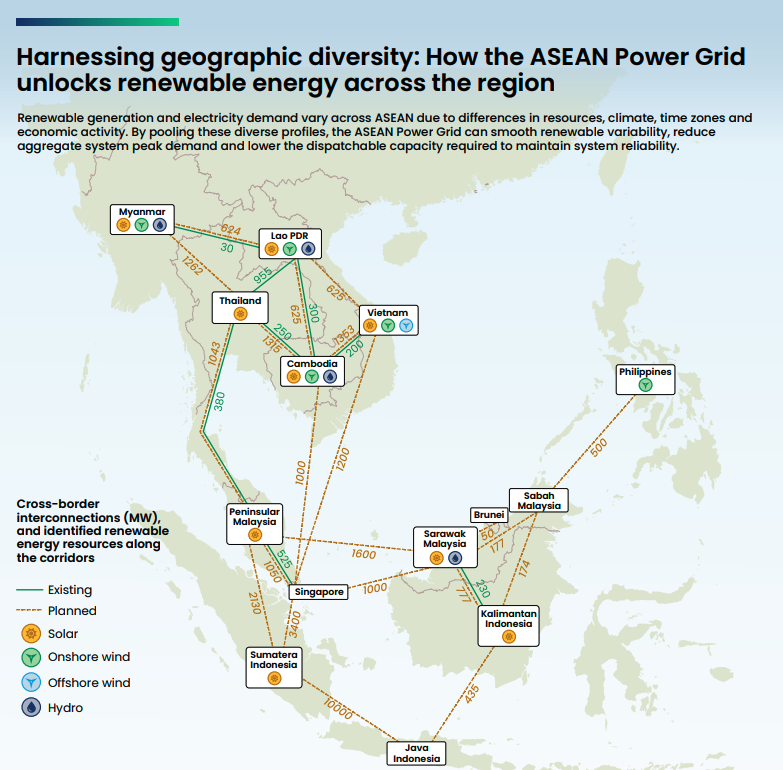
Source: Ember
A power line channelling up to 200 MW of clean electricity generated from hydropower in Laos to Singapore via Thailand and Malaysia has emerged as a key building block for grid-to-grid trading.
Progress on technical discussions will also help provide the clarity the private sector needs to invest in bankable projects, said Cooke.
In 2025, the Asian Development Bank and the World Bank announced a dedicated funding initiative to support the project.
“The enabling pieces are emerging,” said Monalisa Dimalanta, former chair of the Philippine Energy Regulatory Commission and the National Renewable Energy Board. “But the timelines remain unclear and a 2045 vision cannot answer today’s emergency,” she said.
“A power grid… that exists only on paper will not keep the lights on.”
Singapore: the delivery test
The implications of failing to deliver the ASEAN Power Grid are most acute in Singapore.
Constrained by space, with few renewable energy resources and dependent on gas for more than 90% of its electricity mix, Singapore has emerged as a leading proponent of a regional power grid as it seeks to achieve net-zero emissions by 2050.
To meet its power needs, the city-state aims to import 6 GW of low-carbon electricity by 2035, around one-third of its energy demand – a target which it is set to miss, however.
The plans