

Around 95% of countries have missed a UN deadline to submit new climate pledges for 2035, Carbon Brief analysis shows.
Just 10 of the 195 parties signed up to the landmark Paris Agreement have published their new emissions-cutting plans, known as “nationally determined contributions” (NDCs), by the 10 February deadline.
Countries missing the deadline represent 83% of global emissions and nearly 80% of the world’s economy, according to Carbon Brief analysis.
The COP30 summit in Brazil this November is being billed as a key moment for countries to increase their efforts towards achieving the goals of the Paris Agreement.
In a 6 February speech, UN climate chief Simon Stiell said the “vast majority of countries have indicated that they [will] submit new plans this year” and “taking a bit more time to ensure these plans are first-rate makes sense”.
He added that countries need to submit their plans “at the latest…by September” in order to be included in the UN’s next global “synthesis” assessment of climate action ahead of COP30.
‘Quantum leap’
Back in 2015, almost every nation on Earth adopted the Paris Agreement, a landmark climate deal aimed at keeping temperatures “well-below” 2C above pre-industrial levels, with an ambition of keeping them at 1.5C, by the end of the century.
As part of the agreement, countries committed to submitting new plans describing what they will do to cut emissions and adapt to climate change every five years. These are known as NDCs.
Countries also agreed to assess their progress towards meeting the Paris goals in a five-yearly “global stocktake” and then increase their efforts accordingly.
This “review and ratchet” step is key to achieving the goals of the Paris Agreement. This is because, when the agreement was adopted 10 years ago, it was clear that countries were far off track for meeting their goals.
They hoped this gap could be closed over time, based on future policy efforts and technologies. As such, the so-called “ratchet mechanism” requires each round of pledges to go further than the last and to represent countries’ “highest possible ambition”.
The first two rounds of NDCs took place in 2015 and 2020-21. The 10 February 2025 deadline for the third round of NDCs was confirmed as part of a “global stocktake” of climate action conducted in 2023. The deadline is nine months ahead of the start of COP30.
According to the most recent UN emissions gap report, countries remain largely off track for meeting the Paris goals, with 2035 climate pledges needing to deliver a “quantum leap in ambition” to give the world a chance of limiting global warming to 1.5C.
However, just 10 of the 195 parties to the Paris Agreement have met the UN deadline to publish 2035 climate pledges by 10 February.
Only two of the group of seven (G7) nations – the US and the UK – have come forward with new climate plans. However, the US submitted its NDC before the inauguration last month of Donald Trump, who has already begun the process of delivering his campaign promise to withdraw the nation from the Paris Agreement.
These countries, along with the other nations to meet the deadline – Brazil, the United Arab Emirates, New Zealand, Switzerland, Uruguay, Andorra, Ecuador and Saint Lucia – are visualised on the map below.

Analysis by climate research group Climate Action Tracker has found that the new 2035 NDCs of Brazil, the UAE, the US and Switzerland are “not compatible” with a pathway for limiting global warming to 1.5C.
It also found that the UK’s new NDC is “1.5C compatible”, but noted that the nation would need to increase its spending on helping other countries tackle their emissions in order to do its “fair share” towards reaching the Paris goals.
The group has not yet analysed New Zealand’s NDC, but a climate expert within the country described it as “shockingly unambitious”.
Major polluters missing
Many of the world’s largest emitters have cited technical issues, economic pressures and political uncertainty as reasons why they have not been able to meet the UN deadline.
EU officials said the bloc’s lengthy process for approving new legislation made it “basically impossible” to meet the deadline.
China has not confirmed when it will release its climate plan.
Unnamed Indian officials have said they are in “no hurry” to release the nation’s NDC and might submit it in the “second half of this year”, according to the Indian Express. They added that India’s NDC will “reflect the disappointment of the climate finance outcome at COP29 in Baku”, a “hint” that it is “unlikely to be a significant or ambitious upgrade of climate actions”.
Canada, Japan and Indonesia have all released draft versions of their 2035 climate plans, but have yet to submit them to the UN. Canada’s plan has faced criticism for setting an emissions pledge that is less ambitious than what its official climate advisors recommended.
Russia has not made any public comments about when it will release its new NDC. Its last major climate update came in 2021, when it pledged to reach net-zero emissions by 2060.
Australia has indicated it will delay the release of its NDC until after the country’s election in May, “in part due to uncertainty about the ramifications of the US presidential election”, the Guardian reported.
At the COP29 climate summit in Azerbaijan in 2024, a group including Canada, Chile, the EU, Georgia, Mexico, Norway and Switzerland pledged to release “1.5C-aligned” NDCs, but did not offer details on how this would be achieved or commit to meeting the February deadline.
History repeats
Seasoned COP watchers will note that it is the norm for the majority of countries to miss the deadline for their NDCs.
During the last round of pledges, only five countries met the February 2020 deadline, with most countries eventually publishing their pledges later in 2020 and 2021. (This was amid the Covid-19 pandemic.)
During a speech in Brazil on 6 February, UN climate chief Simon Stiell said the “vast majority of countries have indicated they will submit new plans this year” and that he believed “countries are taking this extremely seriously”, adding:
“So taking a bit more time to ensure these plans are first-rate makes sense, properly outlining how they will contribute to this effort and therefore what rewards they will reap. At the latest, though, the [UN climate change] secretariat team needs to have them on their desks by September to include them in the NDC synthesis report, which will come out before the COP.”




The post Analysis: 95% of countries miss UN deadline to submit 2035 climate pledges appeared first on Carbon Brief.
Analysis: 95% of countries miss UN deadline to submit 2035 climate pledges

Saturday, 17 October 2026
7.18 AM AWST
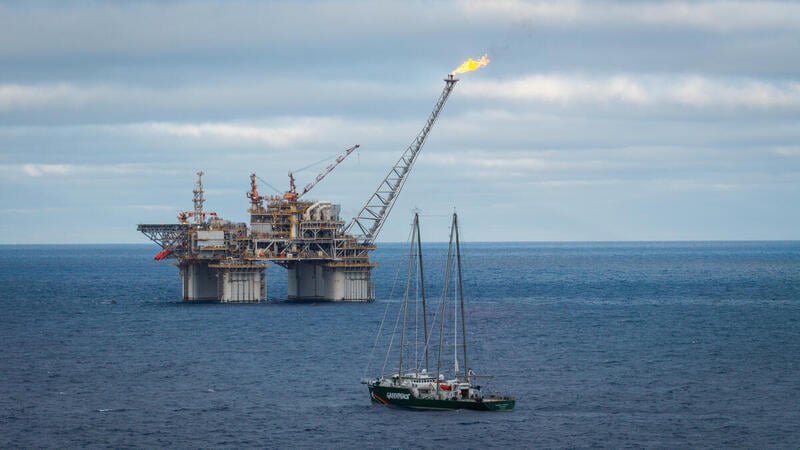
Hi folks! We’re joining you live from the Rainbow Warrior where we will be providing you with updates as our four activists continue scaling and occupying Woodside’s gas platform. The activists are peacefully protesting against Woodside’s latest gas expansion plans, the Browse project, which would see up to 57 toxic wells drilled at Scott Reef.
“Right now our activists are scaling Woodside’s massive Floating Production Unit. They are scaling the South-East pillar and the underside of the Helideck. They’ll be setting up camp soon and have plenty of provisions with them – so stick around!”
5:45 AM AWST
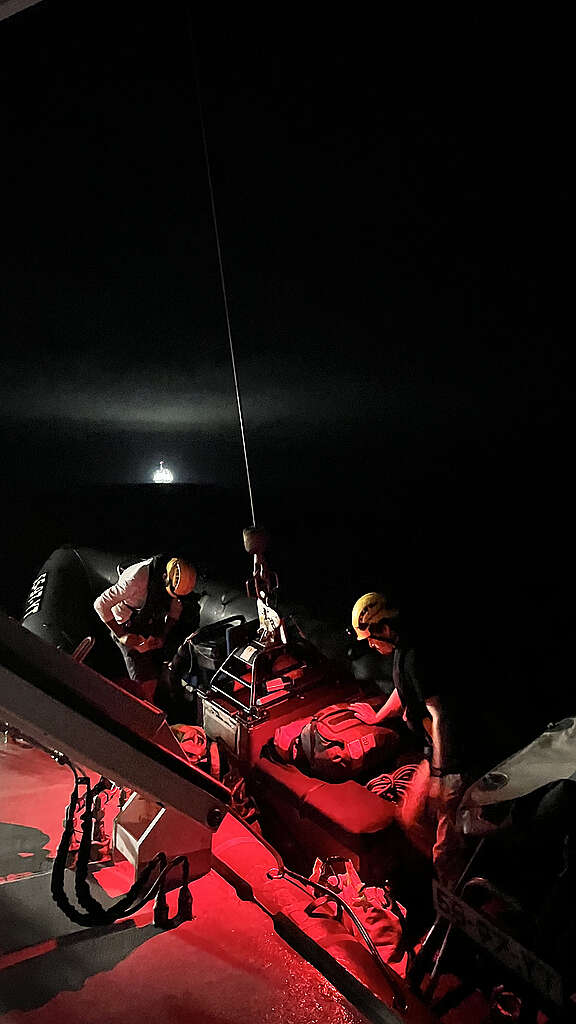
Our RHIBS are in the water! We’ve deployed our four activists and our ship crew on our small fast boats, headed to the gas platform. We’re carrying crew and equipment, plenty of food, all of our safety climbing gear, some big banners, cameras and a whole lot of heart… someone even has something to read after they get settled in.
5:26 AM AWST
Before sunrise activists prepared to launch RHIBS from the Rainbow Warrior.
Looking for a front seat view?
You can follow along with the Live Rainbow Warrior bow cam here!
Looking for more?
Follow us on Instagram for a peek behind the scenes and hear from our Rainbow Warrior crew.
Live blog: Greenpeace activists occupy Woodside gas project to save Scott Reef
Climate Change
Greenpeace activists climb and occupy Woodside’s Scarborough gas project calling on the Australian government to “Stop Woodside’s Dirty Gas” and “Save Scott Reef”
PERTH, Saturday 17 October 2026 — Four Greenpeace Australia Pacific activists are scaling and occupying a Floating Production Unit at Woodside’s Scarborough gas project off the coast of Western Australia, displaying banners reading: “Stop Woodside’s Dirty Gas. Save Scott Reef.”
- Photos and video available here and here. More will be uploaded throughout the day.
- Content and live updates will be uploaded to a live blog and to Instagram
Early this morning at 05:45 AWST, Greenpeace Australia Pacific activists launched from the Rainbow Warrior, Greenpeace’s flagship vessel, scaling and attaching themselves to a Floating Production Unit (FPU), a key piece of gas processing infrastructure at the Scarborough gas field over 200km off the coast of Exmouth.
Woodside has since confirmed it has initiated a temporary shut down of the FPU.
Greenpeace Australia Pacific is occupying the gas platform in peaceful protest of Woodside’s plans to drill for oil and gas at Scott Reef as part of its Browse proposal.
David Ritter, CEO at Greenpeace Australia Pacific, said: “Greenpeace Australia Pacific is taking action today to expose the unacceptable risk to Scott Reef posed by Woodside’s plans.
“Australians love our oceans. Woodside’s reckless Browse gas proposal would turn the magnificent Scott Reef into an industrial gas zone. Woodside wants to drill up to 57 toxic wells around Scott Reef, Australia’s largest oceanic reef, home to nesting green sea turtles, and endangered species like pygmy blue whales and the dusky sea snake; it is a place like nowhere else on Earth.
“Woodside has an alarming track record of oil spills, incidents and environmental neglect, and can’t be trusted with our oceans. From whaling in Albany in the seventies, to Woodside’s threat to Scott Reef today, there’s more than fifty years of history, of Greenpeace taking action off WA’s coasts to protect our oceans.
“There’s no future in new gas projects. Our future is in secure homegrown renewable energy, green industry and exports, where communities and places like Scott Reef are protected — there’s no future in dirty gas shipped offshore.
“The prospect of drilling for oil or gas on the Great Barrier Reef would be considered absolute madness today, but that is exactly the decision before the government: save Scott Reef or risk its destruction at the hands of a gas corporation.”
From aboard the Floating Production Unit, Dr Chris Holden, Greenpeace Australia Pacific activist said: “As a doctor, when I see new fossil fuel projects like Woodside’s Browse project being put forward, I can’t help but think about the impact this is going to have on the health of our communities and planet, and feel a sense of duty to act.
“Not only will this project do irrevocable harm to nature at Scott Reef, it will have a terrible impact on our climate, putting all of our lives at risk.
“On the Rainbow Warrior I’m carrying a copy of the 2025 Lancet countdown report, which warns that health impacts of climate change are worsening, with millions dying needlessly each year due to fossil fuel dependence, growing emissions, and failure to adequately adapt.
“With warnings like this from the leading global health professionals, our government simply can’t allow fossil fuel projects like Woodside’s Browse project to go ahead. It is their duty to do what is in the best interest of our communities.”
Almost half a million people have signed a petition calling on the government to Save Scott Reef and Woodside’s Browse gas project.
-ENDS-
Notes:
- Dial-in, SimSat and Zoom interviews with Geoff Bice, WA Campaign Lead at Greenpeace Australia Pacific, currently aboard the Rainbow Warrior, can be organised separately
Media contact:
Greenpeace Australia Pacific media team on +61 406 231 892 or +61 407 581 404
The board of the Fund for Responding to Loss and Damage (FRLD) will decide on Thursday on whether to “provisionally set aside” $20 million for Nepal to deal with some of the effects of the climate-driven flood it suffered in August.
The motion, seen by Climate Home News, has been drafted by a group of board members from both developed and developing countries and so is likely to pass easily at the fund’s first-ever extraordinary board meeting on October 22.
It invites the government of Nepal to submit a proposal for how to use the money, with the board then deciding at one of its regular board meetings whether to approve the proposal or not.
While Nepali officials have described $20 million as merely “symbolic” in the face of the $4.8 billion estimated costs of recovery and reconstruction, it would be the first time the new FRLD – agreed in 2022 months after devastating floods in Pakistan – has set aside money for a specific disaster.
Until now the fund has only taken requests through a single call for proposals, launched at COP30 in Belém last November, that gave countries six months to submit requests.
Most of the 180 projects the FRLD is currently considering are designed to help countries avoid damage from future climate disasters, for example by strengthening responses to floods in Bangladesh and Lagos.
The draft decision says Nepal’s proposal will serve as a pilot for how funding requests can be submitted outside of the fund’s current timetable. That could let governments seek funds quickly after a climate disaster strikes, rather than waiting for the next call.
This arrangement would set the fund apart from other United Nations funds designed for climate adaptation or cutting emissions like the Green Climate Fund.
Climate campaigners from Fill the Fund said the draft decision is “a real step forward” as it is “the first time this Fund has moved to respond to a specific disaster”.
Too little, too late
The FRLD was agreed by governments at COP27, set up and operationalised at COP28 in 2023 but has yet to award any money. The 180 funding requests it is currently considering would cost around $2.8 billion, but it only has $350 million to allocate.
The United Nations Secretary-General António Guterres has described the amount of money available in the fund as “ridiculously small” and Fill the Fund said $20 million “is a meaningful signal but it is a drop against an ocean of need”.
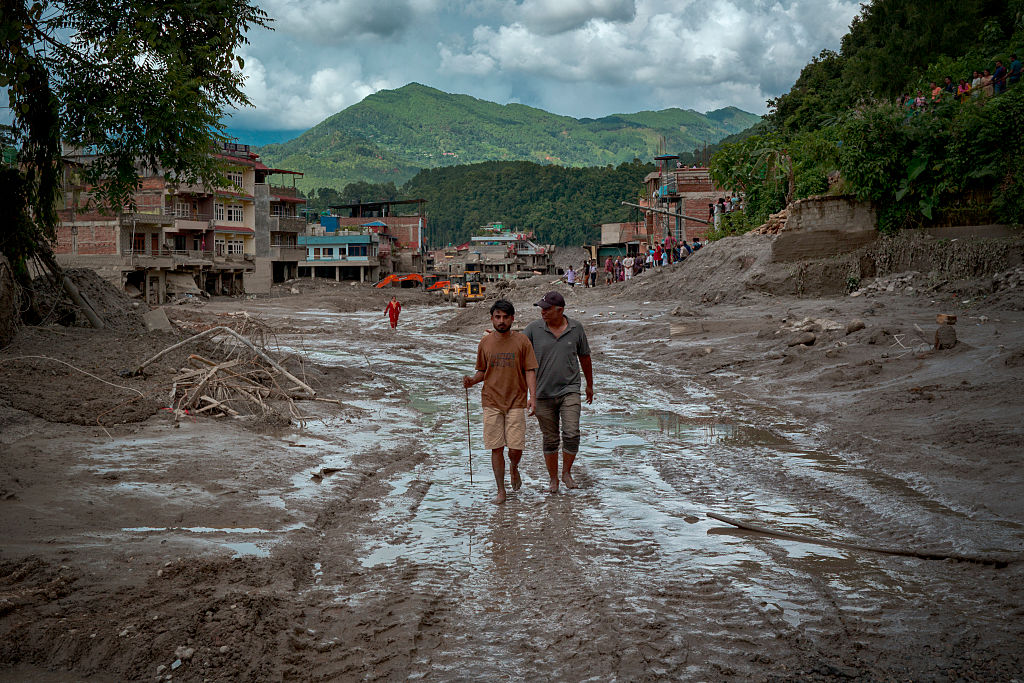
A glacial rock and ice collapse sent a torrent of water and debris through Nepal and the Chinese-administered region of Tibet on August 26. It killed more than 1,400 people, left thousands more missing and destroyed homes, bridges, roads and hydropower plants. Nepal’s finance and environment ministers quickly appealed to the FRLD board for funds, saying that “time is of the essence”.
Their call was followed swiftly by a letter from developing country FRLD board members urging the board’s co-chairs to organise an extraordinary meeting to allocate funds to Nepal.
But developed countries initially called for an informal consultation rather than a full board meeting. It took a further 45 days for the board’s co-chairs to organise an extraordinary board meeting for October 22 and to draft a motion for adoption.
Fill the Fund called for a permanent way of the fund rapid responding to disasters as “Nepal should not have required historic letters, an informal drafting group and the Fund’s first-ever extraordinary meeting simply to unlock an emergency response. The next country cannot wait two months and a bureaucratic marathon. Speed must be built in, not improvised.”
The post UN’s loss and damage fund set to give Nepal $20m for flood recovery appeared first on Climate Home News.
UN’s loss and damage fund set to give Nepal $20m for flood recovery


Is a Team of Is a Bunch of MAGA Thugs Beating the Snot Out of a Woman a New Low, or Is it What We Now Need to Expect?

