

Woodside’s Burrup Hub an irredeemable threat to WA’s oceans and marine life. It’s also the biggest fossil fuel threat in Australia and the fifth most polluting gas project in the world.
The Burrup Hub project is what Woodside calls its plan to drill the Scarborough gas field (which is already well under construction), drill the Browse gas field underneath Scott Reef and extend the life of a massive gas plant called the North West Shelf LNG Plant, which processes gas for export.
The Burrup Hub represents an irredeemable threat to Western Australia’s marine life – putting 54 threatened species and up to 12 marine parks at risk. But the destruction won’t end there – the project will emit over 6.1 billion tonnes of greenhouse gas emissions. Most of the gas from the Burrup Hub will be sold overseas.

Greenpeace Australia Pacific has been working for over 2 years to stop the Burrup Hub – it is Australia’s biggest climate threat, and poses catastrophic risks to the pristine environment of WA.
The story so far
Fossil fuel company Woodside has had its sights set on the Browse gas field for a long time. The company’s first attempt to drill it was defeated by a huge community campaign centred in the Kimberley in northern Western Australia. Then in 2019, Woodside was back – this time with a plan to pipe the Browse gas onshore to its existing LNG processing plant, extending its life until the 2070s.
The first stage of Woodside’s Burrup Hub, Scarborough, is under construction, with 30 gas wells being drilled off the coast of Exmouth, WA. Woodside has risked killing whales by deafening them with seismic blasting, dug up endangered turtle habitat, and when it is complete, Scarborough puts UNESCO-protected Ningaloo Reef within the danger zone for an oil spill.

Now, Woodside is proposing the next stage of the Burrup Hub: up to 50 more gas wells to be drilled around Scott Reef. The closest well will be just over 2km from the edge of the reef, with Woodside planning to extract gas from directly underneath the coral reef. The void left after removing the gas is likely to cause the reef to sink.
Scott Reef is a globally significant marine ecosystem, home to hundreds of species, including sea snakes, sharks, rays and sawfish. It provides critical habitat to endangered pygmy blue whales and vulnerable green turtles.
The new gas from Browse needs to be processed before it could be sent overseas. So, Woodside hopes to extend the life of its ageing North West Shelf LNG plant until the 2070s.

Woodside Has Not Won Yet
While Scarborough is currently being drilled, Woodside needs environmental approvals from Federal Environment Minister, Tanya Plibersek, and WA Environment Minister, Reece Whitby, to drill for new gas at Browse and extend the life of the North West Shelf LNG Plant.
Despite the accelerating climate crisis and Australia’s commitment to phase out of fossil fuels, projects like the Burrup Hub can still be approved because Woodside only needs to account for emissions on Australian territory. Because Woodside would sell over 80 per cent of the gas it drills from the Burrup Hub overseas (most of it royalty-free), it doesn’t need to include the emissions from gas burnt outside Australia when getting environmental approvals.
An industry source has confirmed to the media that Western Australia’s Environmental Protection Agency (EPA) has essentially written off the company’s Browse project as too dangerous to proceed. This almost never happens under our current environmental and climate laws. These revelations make clear what we’ve long known to be true—that Woodside’s disastrous Burrup Hub project, including its Browse site, is likely to be a disaster for our precious environment, our reefs and threatened species.
Almost half a million Greenpeace supporters have signed our petition calling on Minister Plibersek to rule out the project, and the chorus against the Burrup Hub project is growing stronger every year.
And here is how we win
There is a clear path to stopping mega gas projects like the Burrup Hub – using the Federal environmental protections we do have in place, which protect ‘unique plants, animals, habitats and places’, to stop Woodside’s plans.
There are also state laws in WA that protect the environment. The WA EPA has stated they have serious concerns about Browse, and their view is that it poses an ‘unacceptable’ risk to the environment.
That is why Greenpeace AP is doing everything we can to document the pristine biodiversity of Scott Reef, showing just how critical it is to protect our unique oceans and marine life.
The Environment Ministers in Perth and Canberra need to hear how much Australians value our natural environment and want it protected. Without public outcry, the only voices politicians hear is Woodside and the fossil fuel lobby, who seek to downplay and minimise the environmental threat of offshore gas drilling.
Marine scientists, NGOs and Greenpeace have examined Woodside’s proposal closely and have identified several severe threats to our environment that could convince the Minister to say ‘no’ to the Burrup Hub on environmental grounds. The risks include:
- The sinking of Scott Reef into the ocean (because the gas is extracted from underneath it) causing turtle nesting grounds to wash away;
- Underwater noise pollution impacting whale foraging and migration;
- Chemical dumping from the construction phase and production rigs poisoning plankton, fish and marine turtles;
- Artificial lighting and flaring (burning off released gas) disorientating turtle hatchlings and sea birds
- A gas and oil spill, covering Scott Reef and surrounding marine parks in condensate, creating an environmental catastrophe.
The decision of our Governments to approve or reject the Burrup Hub project will define their environmental legacy for decades to come.
Burrup Hub: Irredeemably Bad
While the federal government made a disappointing commitment to continue approving fossil gas drilling when it released its gas strategy, the Burrup Hub is in its own category of ‘bad’, because:
- Scott Reef is a pristine and idyllic coral atoll teaming with marine life and providing critical habitat for threatened species;
- The Burrup Hub’s Browse project is an enormous new and exceptionally dirty gas field;
- Most of the gas will be sold overseas, royalty-free;
- The community in WA are rallying against the project to protect our oceans; and
- The Government wants to invest in a future made in Australia using clean energy, not lock Australia into gas until 2070.
But to defeat Woodside’s expensive PR and army of lobbyists, we need to use people-power to show our Government that Australians are united behind one message: we must protect our environment from the Burrup Hub mega gas project.
What is next for Greenpeace
The news that the WA EPA agrees that Browse is a uniquely terrible idea has, quite literally, added wind in the sails of our campaign to Stop Woodside.

Right now, our new campaign vessel, the Oceania, is on its way to Western Australia, where we will be connecting with the growing community who oppose Woodside’s disastrous Burrup Hub, and amplifying their calls to stop this monstrous project.
In Canberra, we will be taking the voices of the almost half a million Australians who have signed our petition to stop the Burrup Hub directly to Parliament. We will send a message to our elected leaders, loud and clear, that Australians reject Woodside’s Burrup Hub.
Defeating the Burrup Hub would be one of the single most effective things we can do to fight for a safer climate, and a thriving environment.
Will you help?





Climate Change
GREENPEACE GAS PROTEST DAY TWO: Activists spend first night on Woodside’s Scarborough gas platform, “in this for the long haul”
- NEW footage and photos available here and on Instagram – more being uploaded today.
- Interviews available with campaigners on board the Rainbow Warrior on request.
Greenpeace Australia Pacific activists have slept overnight on Woodside’s Floating Production Unit and dropped a massive 12×14-metre banner reading “Stop Woodside’s Dirty Gas. Save Scott Reef”.
Two activists have set up temporary hanging tents on the South East pillar, while the other two returned to the Rainbow Warrior late yesterday afternoon, after fulfilling their initial role. The activists will occupy the platform for as long as possible.
The environmental advocacy group is peacefully protesting Woodside’s plans to drill for oil and gas at Scott Reef as part of its Browse proposal.
Sakyo Noda, one of the Greenpeace Australia Pacific activists, said: “As a Japanese person living in Australia, I feel incredibly passionate about stopping Australia’s gas exports to Asia.
“Despite what the gas industry tells us, Australia’s gas is not helping to decarbonise Asia. It is simply not true. We shouldn’t be allowing fossil fuel companies like Woodside to extract new fossil fuels, let alone at extraordinary places like Scott Reef”.
Aboard the Rainbow Warrior, Geoff Bice, WA Campaign Lead at Greenpeace Australia Pacific, added, “Everyone is in good spirits. We’re in it for the long haul.”
Links:
Photos and video of Scott Reef here
Audio and footage of yesterday’s press conference here
Content and live updates will be uploaded to a live blog and Instagram
In-person interviews in Perth with David Ritter, CEO of Greenpeace Australia Pacific, can be organised. Dial-in, SimSat and Zoom interviews with Geoff Bice, WA Campaign Lead at Greenpeace Australia Pacific, currently aboard the Rainbow Warrior, can be organised.
Saturday, 17 October 2026
7.18 AM AWST
Hi folks! We’re joining you live from the Rainbow Warrior where we will be providing you with updates as our four activists continue scaling and occupying Woodside’s gas platform. The activists are peacefully protesting against Woodside’s latest gas expansion plans, the Browse project, which would see up to 57 toxic wells drilled at Scott Reef.
“Right now our activists are scaling Woodside’s massive Floating Production Unit. They are scaling the South-East pillar and the underside of the Helideck. They’ll be setting up camp soon and have plenty of provisions with them – so stick around!”
5:45 AM AWST
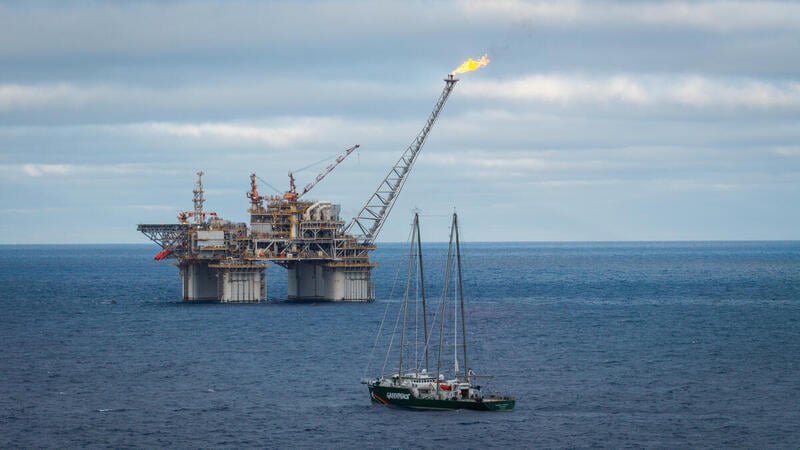
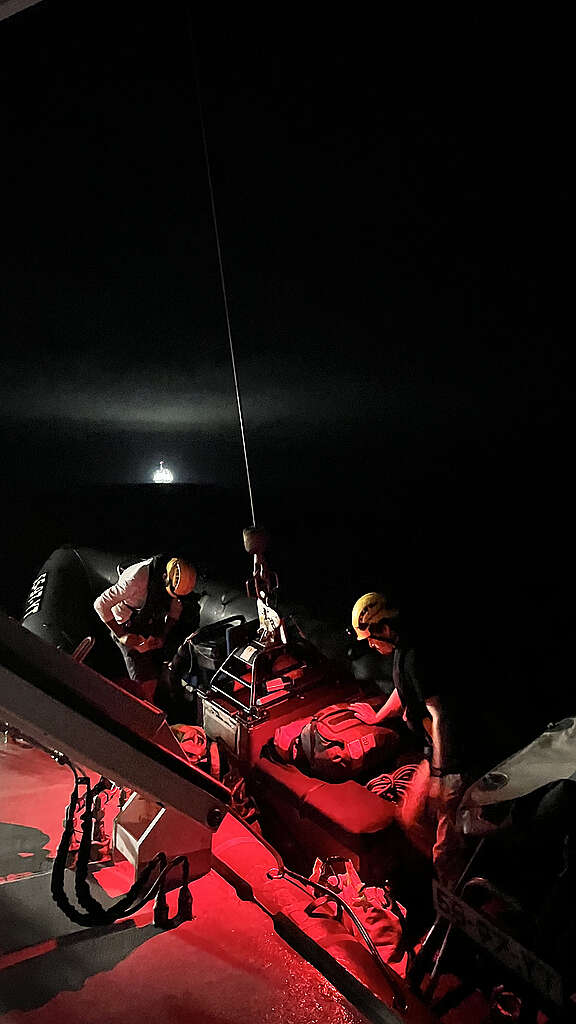
Our RHIBS are in the water! We’ve deployed our four activists and our ship crew on our small fast boats, headed to the gas platform. We’re carrying crew and equipment, plenty of food, all of our safety climbing gear, some big banners, cameras and a whole lot of heart… someone even has something to read after they get settled in.
5:26 AM AWST
Before sunrise activists prepared to launch RHIBS from the Rainbow Warrior.
Looking for a front seat view?
You can follow along with the Live Rainbow Warrior bow cam here!
Looking for more?
Follow us on Instagram for a peek behind the scenes and hear from our Rainbow Warrior crew.
Live blog: Greenpeace activists occupy Woodside gas project to save Scott Reef
Climate Change
Greenpeace activists climb and occupy Woodside’s Scarborough gas project calling on the Australian government to “Stop Woodside’s Dirty Gas” and “Save Scott Reef”
PERTH, Saturday 17 October 2026 — Four Greenpeace Australia Pacific activists are scaling and occupying a Floating Production Unit at Woodside’s Scarborough gas project off the coast of Western Australia, displaying banners reading: “Stop Woodside’s Dirty Gas. Save Scott Reef.”
- Photos and video available here and here. More will be uploaded throughout the day.
- Content and live updates will be uploaded to a live blog and to Instagram
Early this morning at 05:45 AWST, Greenpeace Australia Pacific activists launched from the Rainbow Warrior, Greenpeace’s flagship vessel, scaling and attaching themselves to a Floating Production Unit (FPU), a key piece of gas processing infrastructure at the Scarborough gas field over 200km off the coast of Exmouth.
Woodside has since confirmed it has initiated a temporary shut down of the FPU.
Greenpeace Australia Pacific is occupying the gas platform in peaceful protest of Woodside’s plans to drill for oil and gas at Scott Reef as part of its Browse proposal.
David Ritter, CEO at Greenpeace Australia Pacific, said: “Greenpeace Australia Pacific is taking action today to expose the unacceptable risk to Scott Reef posed by Woodside’s plans.
“Australians love our oceans. Woodside’s reckless Browse gas proposal would turn the magnificent Scott Reef into an industrial gas zone. Woodside wants to drill up to 57 toxic wells around Scott Reef, Australia’s largest oceanic reef, home to nesting green sea turtles, and endangered species like pygmy blue whales and the dusky sea snake; it is a place like nowhere else on Earth.
“Woodside has an alarming track record of oil spills, incidents and environmental neglect, and can’t be trusted with our oceans. From whaling in Albany in the seventies, to Woodside’s threat to Scott Reef today, there’s more than fifty years of history, of Greenpeace taking action off WA’s coasts to protect our oceans.
“There’s no future in new gas projects. Our future is in secure homegrown renewable energy, green industry and exports, where communities and places like Scott Reef are protected — there’s no future in dirty gas shipped offshore.
“The prospect of drilling for oil or gas on the Great Barrier Reef would be considered absolute madness today, but that is exactly the decision before the government: save Scott Reef or risk its destruction at the hands of a gas corporation.”
From aboard the Floating Production Unit, Dr Chris Holden, Greenpeace Australia Pacific activist said: “As a doctor, when I see new fossil fuel projects like Woodside’s Browse project being put forward, I can’t help but think about the impact this is going to have on the health of our communities and planet, and feel a sense of duty to act.
“Not only will this project do irrevocable harm to nature at Scott Reef, it will have a terrible impact on our climate, putting all of our lives at risk.
“On the Rainbow Warrior I’m carrying a copy of the 2025 Lancet countdown report, which warns that health impacts of climate change are worsening, with millions dying needlessly each year due to fossil fuel dependence, growing emissions, and failure to adequately adapt.
“With warnings like this from the leading global health professionals, our government simply can’t allow fossil fuel projects like Woodside’s Browse project to go ahead. It is their duty to do what is in the best interest of our communities.”
Almost half a million people have signed a petition calling on the government to Save Scott Reef and Woodside’s Browse gas project.
-ENDS-
Notes:
- Dial-in, SimSat and Zoom interviews with Geoff Bice, WA Campaign Lead at Greenpeace Australia Pacific, currently aboard the Rainbow Warrior, can be organised separately
Media contact:
Greenpeace Australia Pacific media team on +61 406 231 892 or +61 407 581 404

GREENPEACE GAS PROTEST DAY TWO: Activists spend first night on Woodside’s Scarborough gas platform, “in this for the long haul”

Making Billions by Harming Others

