

Disseminated on behalf of Alaska Energy Metals Corporation.
As the global energy transition accelerates, access to critical minerals is becoming just as important as innovation itself. Among these materials, nickel plays a central role. It powers electric vehicle batteries, supports energy storage systems, and remains essential for industrial applications such as stainless steel. Yet, while demand continues to climb, supply risks are growing—largely due to Indonesia’s tightening control over global nickel production.
In this shifting landscape, Alaska Energy Metals Corporation (AEMC) is advancing its Nikolai Nickel Project in interior Alaska. The project is emerging as a potential domestic anchor for U.S. nickel supply at a time when geopolitical, environmental, and market pressures are reshaping the global nickel industry.
Indonesia’s Nickel Dominance—and Its Strategic Pullback
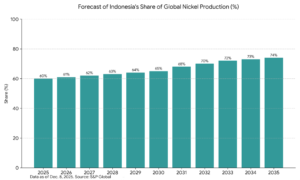
Indonesia currently dominates global nickel supply, accounting for nearly half of the world’s mined output. Over the past decade, the country expanded production rapidly, flooding the market and pushing prices lower. However, that era appears to be ending.
In January, Indonesia’s Ministry of Energy and Mineral Resources announced a sharp reduction in nickel ore production quotas. For 2026, the government set quotas at 250–260 million tonnes, down significantly from the 379 million tonnes approved for 2025. This shift represents one of the most aggressive supply controls the nickel market has seen in years.
At the same time, Indonesia changed the validity of its mining work plans (RKABs) from three years to one. As a result, the government now holds direct annual control over production levels, allowing it to adjust supply more tightly in response to prices, environmental pressures, and domestic processing capacity.
The policy pivot aims to preserve long-term reserves, stabilize prices, and push miners toward value-added processing such as nickel matte production for EV batteries. However, it also introduces uncertainty for global buyers that rely heavily on Indonesian supply.
Short-Term Surplus, Long-Term Risk
On the surface, the nickel market still appears well supplied. Analysts forecast a 261,000-tonne surplus in 2026, with global supply estimated at 3.78 million tonnes compared to demand of 3.52 million tonnes. Inventories remain elevated due to previous years of overproduction.
Yet this balance may prove fragile. Actual production in 2025 already fell short of approved quotas due to underutilized capacity and rising costs. If prices weaken further, high-cost operations could shut down, tightening supply faster than expected.
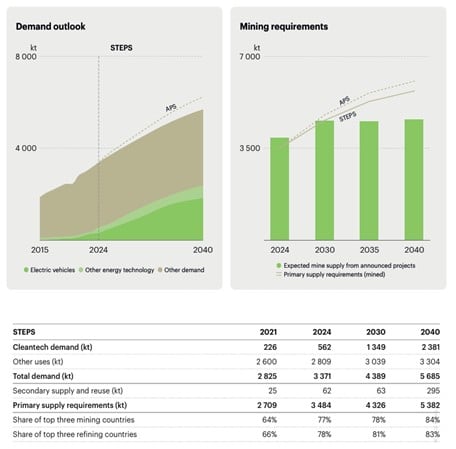
Meanwhile, demand continues to grow. The IEA projects that the use of nickel in EV batteries, renewables, and stainless steel will push nickel demand above 5.5 Mt by 2035. As Indonesia tightens output and China dominates downstream processing, Western economies face rising exposure to supply disruptions and geopolitical leverage.
Why the Nikolai Project Stands Out
Against this backdrop, the Nikolai Nickel Project represents a rare opportunity for the United States.
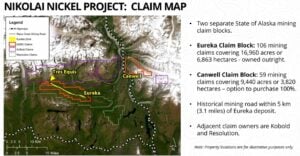
Located in interior Alaska, Nikolai hosts the Eureka deposit, now recognized as the largest nickel resource in the U.S. Beyond nickel, the deposit also contains copper, cobalt, chromium, platinum, and palladium—metals that play key roles in clean energy, defense systems, and advanced manufacturing.
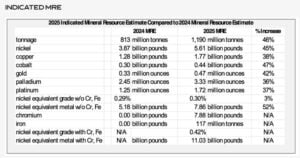
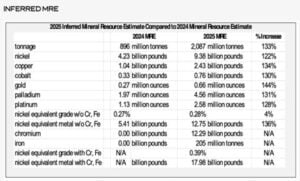
In March, AEMC released an updated 2025 Mineral Resource Estimate, which significantly upgraded the project’s scale and quality. The update increased both tonnage and metal content compared to the 2024 estimate.
Measured and Indicated Resources now include 61 billion pounds of nickel and 1.77 billion pounds of copper, representing a 46% increase. Inferred resources rose even more sharply, climbing over 120% to 9.38 billion pounds of nickel and 2.43 billion pounds of copper.
Importantly, the deposit remains open in three directions, suggesting additional expansion potential as exploration continues.
Here are the tables that show Nikolai’s 2025 mineral resource estimates:
Geology That Supports Long-Term Development
Nikolai’s geological characteristics further strengthen its strategic appeal.
The Eureka deposit features highly consistent and continuous mineralization, reducing geological risk. A higher-grade core sits near the surface, which may lower mining costs during early production phases. In addition, a low strip ratio supports efficient material movement and long-term mine planning.
Equally important, Nikolai is dominated by sulfide mineralization, rather than lateritic ore. This distinction matters. Lateritic nickel, common in Indonesia, requires energy-intensive processing and often carries a higher carbon footprint. Sulfide deposits typically allow for more straightforward processing routes with lower emissions.
Cleaner Processing and On-Site Refining Potential
To build on this advantage, AEMC is actively exploring cleaner processing pathways.
Metallurgical testing is underway at SGS Laboratories in Lakefield, Ontario, where the company has conducted extensive work using magnetic separation and flotation techniques. A processing flow sheet has already been established, and a locked-cycle test is scheduled in the near term.
The current plan aims to produce:
- A bulk nickel–copper–cobalt concentrate
- A separate iron–chromium concentrate
Further testing will determine whether copper can be separated into its own concentrate to improve overall economics. The miner planned to publish metallurgical results in November 2025.
In parallel, the company signed a memorandum of understanding with RecycLiCo U.S. Mineral Recovery. This partnership will test hydrometallurgical refining methods that could be applied directly to Nikolai concentrates. If successful, this approach may allow semi-refined or refined nickel, copper, and cobalt to be produced on site in Alaska. Such a development would reduce reliance on foreign smelters, cut transportation emissions, and strengthen domestic battery supply chains.
Alongside, AEMC has also signed an MOU with Lucid Group, Inc (NASDAQ: LCID), maker of the world’s most advanced electric vehicles.
AEMC President & CEO Gregory Beischer commented on this development,
“By developing resilient automotive supply chains, we establish commercially viable mining operations that also help strengthen the American Defense Industrial Base. Sourcing minerals domestically enables better regulatory oversight, higher environmental standards, metal source traceability, and responsible sourcing. This approach mitigates harmful environmental and human rights risks often associated with foreign mining operations and provides an opportunity to improve the livelihoods of American communities.”
Strategic Importance for U.S. Supply Chains
The United States currently relies entirely on imported nickel, making it vulnerable to supply shocks, trade restrictions, and price volatility. In this context, Nikolai represents more than an economic opportunity—it carries strategic value.
A domestic nickel source could support:
- EV battery manufacturing
- Grid-scale energy storage
- Defense and aerospace applications
- Long-term clean energy deployment
As electrification expands and renewable energy integration accelerates, reliable access to nickel will become increasingly critical. Domestic production could help ensure that clean energy growth does not come at the cost of supply insecurity.
Permitting, Planning, and Federal Support
Nikolai’s inclusion on the U.S. FAST-41 Transparency Dashboard highlights its national significance. The program aims to improve coordination and transparency for major infrastructure and resource projects, potentially streamlining future permitting processes.
Meanwhile, AEMC continues to pursue U.S. government funding, noting recent federal support awarded to other critical minerals projects in Alaska. Public funding or strategic investment could help de-risk early development stages and accelerate timelines.
The company is also conducting an internal Options Study to assess potential mine development pathways and high-level economics. While results will not be published, the work will inform a formal Preliminary Economic Assessment planned for 2026.
Investment Takeaway
As Indonesia tightens supply and demand continues to grow, the nickel market is entering a new phase—one defined less by oversupply and more by security, jurisdiction, and processing control.
In this environment, Alaska Energy Metals’ Nikolai Project stands out as a long-duration strategic asset. Its scale, location, resource growth, and alignment with U.S. supply chain priorities position it well for long-term relevance.
For investors seeking exposure to nickel beyond Indonesia and China, Nikolai offers a differentiated opportunity—one that combines commodity upside with geopolitical and strategic optionality.
- ALSO SEE: Nickel Prices Hit $18,000 in 2026 Amid Global Oversupply, US Boosts Domestic Supply Chain
Live Nickel Spot Price
Unit: USD/Tonne——Loading Chart…
DISCLAIMER
New Era Publishing Inc. and/or CarbonCredits.com (“We” or “Us”) are not securities dealers or brokers, investment advisers, or financial advisers, and you should not rely on the information herein as investment advice. Alaska Energy Metals. (“Company”) made a one-time payment of $75,000 to provide marketing services for a term of three months. None of the owners, members, directors, or employees of New Era Publishing Inc. and/or CarbonCredits.com currently hold, or have any beneficial ownership in, any shares, stocks, or options of the companies mentioned.
This article is informational only and is solely for use by prospective investors in determining whether to seek additional information. It does not constitute an offer to sell or a solicitation of an offer to buy any securities. Examples that we provide of share price increases pertaining to a particular issuer from one referenced date to another represent arbitrarily chosen time periods and are no indication whatsoever of future stock prices for that issuer and are of no predictive value.
Our stock profiles are intended to highlight certain companies for your further investigation; they are not stock recommendations or an offer or sale of the referenced securities. The securities issued by the companies we profile should be considered high-risk; if you do invest despite these warnings, you may lose your entire investment. Please do your own research before investing, including reviewing the companies’ SEDAR+ and SEC filings, press releases, and risk disclosures.
It is our policy that information contained in this profile was provided by the company, extracted from SEDAR+ and SEC filings, company websites, and other publicly available sources. We believe the sources and information are accurate and reliable but we cannot guarantee them.
CAUTIONARY STATEMENT AND FORWARD-LOOKING INFORMATION
Certain statements contained in this news release may constitute “forward-looking information” within the meaning of applicable securities laws. Forward-looking information generally can be identified by words such as “anticipate,” “expect,” “estimate,” “forecast,” “plan,” and similar expressions suggesting future outcomes or events. Forward-looking information is based on current expectations of management; however, it is subject to known and unknown risks, uncertainties, and other factors that may cause actual results to differ materially from those anticipated.These factors include, without limitation, statements relating to the Company’s exploration and development plans, the potential of its mineral projects, financing activities, regulatory approvals, market conditions, and future objectives. Forward-looking information involves numerous risks and uncertainties and actual results might differ materially from results suggested in any forward-looking information. These risks and uncertainties include, among other things, market volatility, the state of financial markets for the Company’s securities, fluctuations in commodity prices, operational challenges, and changes in business plans.
Forward-looking information is based on several key expectations and assumptions, including, without limitation, that the Company will continue with its stated business objectives and will be able to raise additional capital as required. Although management of the Company has attempted to identify important factors that could cause actual results to differ materially, there may be other factors that cause results not to be as anticipated, estimated, or intended.
There can be no assurance that such forward-looking information will prove to be accurate, as actual results and future events could differ materially. Accordingly, readers should not place undue reliance on forward-looking information. Additional information about risks and uncertainties is contained in the Company’s management’s discussion and analysis and annual information form for the year ended December 31, 2025, copies of which are available on SEDAR+ at www.sedarplus.ca.
The forward-looking information contained herein is expressly qualified in its entirety by this cautionary statement. Forward-looking information reflects management’s current beliefs and is based on information currently available to the Company. The forward-looking information is made as of the date of this news release, and the Company assumes no obligation to update or revise such information to reflect new events or circumstances except as may be required by applicable law.
The post AEMC’s Nikolai: America’s Answer to Indonesia’s Nickel Crunch appeared first on Carbon Credits.

EU carbon credit claims changed on 27 September 2026, the day the Directive (EU) 2024/825 began to apply across the European Union. The change is narrow. It changes how a company can talk about the credits it buys. A product can no longer be called neutral on the strength of compensation alone; however, every specific, evidenced statement about what a company measured, reduced, and funded stays fully available.

The post Promoting Improved Cooking Practices in Nigeria appeared first on Terrapass.



