


Introduction Economic Viability
As the world grapples with the dual challenges of climate change and the need for sustainable development, the economic viability of sustainable energy solutions has become a critical consideration.
Transitioning from traditional fossil fuel-based energy sources to sustainable alternatives can lead to long-term financial sustainability.
This article explores the economic benefits and viability of sustainable energy, highlighting its potential to drive economic growth, create jobs, and ensure long-term financial stability.
Outlook Economic Viability
1. Cost Reduction and Energy Savings:
Contrary to popular belief, sustainable energy technologies have become increasingly cost-competitive with conventional energy sources. The cost of renewable energy, such as solar and wind power, has significantly decreased over the years due to advancements in technology, economies of scale, and improved manufacturing processes. As a result, renewable energy is now often the most cost-effective option for new energy projects. Furthermore, sustainable energy solutions offer long-term energy savings, as they rely on free and abundant resources, reducing dependence on costly fossil fuels and their price fluctuations.
2. Job Creation and Economic Growth:
The transition to sustainable energy sources has the potential to generate significant economic benefits, including job creation and economic growth. According to the International Renewable Energy Agency (IRENA), the renewable energy sector employed over 12 million people worldwide in 2019, with the potential to reach 42 million jobs by 2050. Investing in renewable energy projects stimulates local economies, fosters innovation, and creates employment opportunities in manufacturing, installation, maintenance, and research and development. This job creation and economic growth contribute to long-term financial sustainability.
3. Diversification of Energy Sources and Energy Security:
Relying heavily on fossil fuels for energy production leaves economies vulnerable to price volatility and geopolitical tensions. Sustainable energy sources, on the other hand, offer a diversified and decentralized energy system, reducing dependence on imported fuels and enhancing energy security. By investing in domestic renewable energy resources, countries can reduce their exposure to global energy market fluctuations, ensuring a stable and secure energy supply for the long term.
4. Risk Mitigation and Resilience:
Climate change poses significant risks to economies, including increased frequency and severity of natural disasters, rising sea levels, and disruptions to agriculture and water resources. Sustainable energy solutions help mitigate these risks by reducing greenhouse gas emissions and minimizing the environmental impact of energy generation. By transitioning to sustainable energy, economies become more resilient, better prepared to adapt to climate change impacts, and less vulnerable to costly damages and disruptions caused by extreme weather events.
5. Financial Incentives and Support:
Governments, international organizations, and financial institutions are increasingly providing financial incentives and support for sustainable energy projects. These include tax credits, grants, low-interest loans, and feed-in tariffs. Such incentives help reduce the initial investment costs and improve the economic viability of sustainable energy solutions. Additionally, financial institutions are recognizing the value of sustainable investments, with an increasing number of funds and investors integrating environmental, social, and governance (ESG) factors into their decision-making processes. This growing support and financial backing contribute to the long-term financial sustainability of sustainable energy projects.
6. Innovation and Technological Advancements:
The pursuit of sustainable energy drives innovation and technological advancements. Ongoing research and development efforts in renewable energy technologies lead to continuous improvements in efficiency, storage capabilities, and grid integration. These advancements not only enhance the economic viability of sustainable energy but also create opportunities for new business models and emerging sectors, such as energy storage, smart grids, and electric mobility. Innovation in sustainable energy technologies ensures long-term financial sustainability by keeping energy costs low, improving performance, and fostering a competitive market.
The economic viability
The economic viability of sustainable energy is increasingly evident, with cost reductions, job creation, energy savings, and risk mitigation making it an attractive option for long-term financial sustainability. The transition to sustainable energy sources offers not only environmental benefits but also significant economic advantages, including job creation, economic growth, diversification of energy sources, risk mitigation, and financial incentives.
By embracing sustainable energy, countries can reduce their reliance on expensive fossil fuels, create jobs in the renewable energy sector, and stimulate economic growth. The declining costs of renewable energy technologies, coupled with energy savings over the long term, make sustainable energy solutions economically viable and attractive investments.
Diversifying energy sources through sustainable energy reduces
Diversifying energy sources through sustainable energy vulnerability to price fluctuations and geopolitical tensions associated with fossil fuel imports. It also enhances energy security by utilizing domestic renewable resources and promoting a decentralized energy system. This diversification ensures a stable and secure energy supply, contributing to long-term financial stability.
Moreover, sustainable energy solutions contribute to risk mitigation and resilience. By reducing greenhouse gas emissions and environmental impact, they help mitigate the risks of climate change and associated economic damages. Investing in sustainable energy technologies and infrastructure ensures that economies are better prepared to adapt to climate change impacts and reduces the costs and disruptions caused by extreme weather events.
Financial incentives and support from governments, international organizations, and financial institutions further enhance the economic viability of sustainable energy. These incentives, including tax credits, grants, and low-interest loans, lower the initial investment costs and facilitate the deployment of sustainable energy projects. The growing recognition of the value of sustainable investments by financial institutions and the integration of ESG factors in decision-making processes create additional opportunities for funding and support.
Innovation and technological advancements are integral to the economic viability of sustainable energy. Continued research and development efforts lead to improvements in efficiency, storage capabilities, and grid integration, making sustainable energy technologies more cost-effective and competitive. Innovation drives the emergence of new business models and sectors, fostering economic growth and ensuring long-term financial sustainability.
Conclusion Economic Viability
The economic viability of sustainable energy is increasingly apparent and offers numerous benefits for long-term financial sustainability.
From cost reduction and job creation to energy savings, risk mitigation, and financial incentives, sustainable energy solutions provide a pathway to economic growth, resilience, and a secure energy future. By embracing sustainable energy, countries can achieve both environmental and economic objectives, contributing to a more sustainable and prosperous future.
https://www.exaputra.com/2023/07/economic-viability-of-sustainable.html

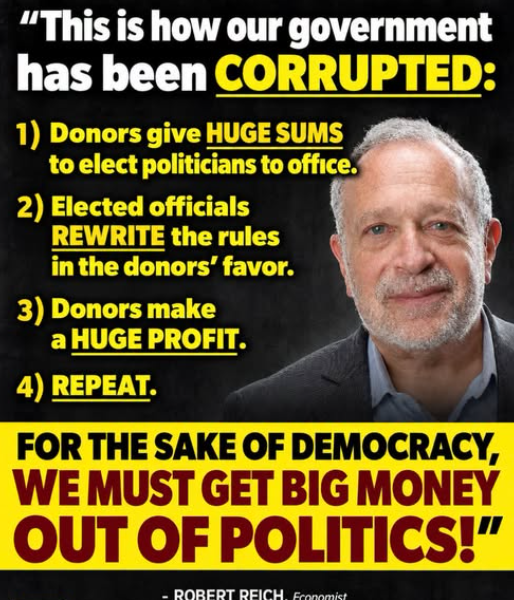 Have we hit the tipping point on climate change? For example, has the melting permafrost in the Arctic released so much methane that a runaway feedback loop has been established?
As suggested at left, an analogous question could be asked about the level corruption in the U.S. government.
Weather Guard Lightning Tech

Nordex Outsells Vestas, GE Vernova Rebuilds Wind Team
Nordex closes in on Vestas in onshore orders, GE Vernova rebuilds its wind team, Nexxis buys BladeBug, and wooden blades draw doubts.
The Uptime Wind Energy Podcast is brought to you by Weather Guard Lightning Tech, creators of the StrikeTape Ultra LPS retrofit. Subscribe to Uptime’s Substack newsletter. And check out Rosemary’s “Engineering with Rosie” Youtube channel. Have a question we can answer on the show? Email us!
Weather Guard Lightning Tech

Siemens Gamesa Builds Hornsea Blades, NEMS Invests in Perth
Siemens Gamesa starts Hornsea 3 blade production in Hull, Germany approves an Offshore Wind Act amendment, and Nexxis buys BladeBUG.
The Uptime Wind Energy Podcast is brought to you by Weather Guard Lightning Tech, creators of the StrikeTape Ultra LPS retrofit. Subscribe to Uptime’s Substack newsletter. And check out Rosemary’s “Engineering with Rosie” Youtube channel. Have a question we can answer on the show? Email us!
Episode Transcript
Uptime News Flash
September 7, 2026
Happy Monday, everyone. Well, let’s talk about the biggest wind farm on earth. It doesn’t exist yet, but its blades are being built right now. Over in Hull, England, Siemens Gamesa just started making blades for Ørsted’s Hornsea 3 offshore wind farm. That’s two point nine gigawatts, one hundred and ninety-seven turbines. Each blade is longer than a football pitch. Fourteen hundred workers build blades in that factory, turning raw materials into finished product. When complete, Hornsea 3 will power more than three million British homes. It’s the single largest offshore wind farm in the world.
And if we slide over to Germany for a moment, the German cabinet just approved an amendment to the Offshore Wind Act, the WindSeeG. It’s headed to the Bundestag next. The goal? New rules by January first, twenty twenty-seven. But the Offshore Wind Energy Foundation says the draft does not go far enough. Sixteen gigawatts of awarded projects are still waiting on final investment decisions. Sixteen — that’s quite a few. The foundation wants a new way for developers to hand back sites they can’t build, so those sites can be re-tendered quickly under conditions that actually work. Sort of a use-it-or-lose-it approach. That’s the idea.
We’ll head a little further east to India. India ranks fourth in the world for installed wind power, but probably not for long. A government official said this week that India will overtake Germany and become the world’s third-largest wind energy nation by twenty thirty — one hundred seven gigawatts of installed capacity. India added a record six gigawatts last year alone, shattering their previous record of a little over four gigawatts. And twenty-eight more gigawatts are under construction right now. Impressive.
Let’s head down to Western Australia, because a company called National Electric Motor Services, NEMS for short, is building a one million dollar facility in Perth to test and repair wind turbine generators. Right now, Australian wind farm operators ship their broken generators overseas for repairs, and that takes months. NEMS is the only authorized service center for ELIN Motoren in all of Western Australia. This is the fifth project funded through Australia’s Wind Energy Manufacturing Co-investment program. Local repair, faster turnaround, and homegrown capability — that’s all good.
And staying in Australia, Perth-based Nexxis Technology just bought a British robotics company, BladeBUG. BladeBUG is a robot that uses suction cups to crawl across wind turbine blades. Nexxis already has a robot called Magneto that uses electromagnetic adhesion to climb steel structures. If you put the two together, you can inspect almost any surface on a turbine, or about anything else. Add AI and machine vision, and you have robots that can see what human eyes might miss, from places human hands shouldn’t have to reach. It’s safer, faster, and it’s going to be a lot smarter.
One more story before we finish today. Siemens Gamesa has now installed more than 300 recyclable blades in six countries. The secret is a new resin. Unlike conventional resins, this one lets you separate the blade components at end of life, so you can separate the fabric from the resin. Cool stuff. Jonas Pagh Jensen, head of sustainability at Siemens Gamesa, says the technology is ready for full-scale use. And Siemens Gamesa has already installed 36 GreenerTower units — steel towers with 63% lower carbon emissions. So although sustainability may have faded from the headlines, it’s still in tender documents, and it’s showing up more than ever. In Denmark, the Netherlands, and France, buyers are all asking about recyclability and decarbonization before they award contracts.
So what should you be watching this week? Recyclability is no longer a nice-to-have — it’s a must-have, and it’s showing up in tender scoring. If your blades can’t be recycled at end of life, you may not win the contract to begin with. And a lot of supply chains are going local. Australia doesn’t want to ship generators overseas anymore. India is building its own turbine factories. The countries buying wind power want it built at home. For professionals in the wind industry, the competitive edge is shifting — it’s not just who can build the best turbine, it’s who can build it locally, recycle it fully, and inspect it without putting a person in a harness.



-
Climate Change1 year ago
Guest post: Why China is still building new coal – and when it might stop
-

 Greenhouse Gases2 years ago
嘉宾来稿:满足中国增长的用电需求 光伏加储能“比新建煤电更实惠”
-
Greenhouse Gases1 year ago
Guest post: Why China is still building new coal – and when it might stop
-

 Climate Change2 years ago
嘉宾来稿:满足中国增长的用电需求 光伏加储能“比新建煤电更实惠”
-

 Renewable Energy11 months ago
Sending Progressive Philanthropist George Soros to Prison?
-
Climate Change2 years ago
Bill Discounting Climate Change in Florida’s Energy Policy Awaits DeSantis’ Approval
-
Greenhouse Gases1 year ago
嘉宾来稿:探究火山喷发如何影响气候预测
-

 Carbon Footprint2 years ago
US SEC’s Climate Disclosure Rules Spur Renewed Interest in Carbon Credits