

A relatively ambitious deal to reduce the shipping industry’s 3% of global emissions now looks more likely after four days of closed-door talks in London, observers say.
The International Maritime Organization (IMO), which oversees the negotiations, said there had been “constructive discussions” and “genuine willingness within the group to make concrete further progress”.
Em Fenton, senior director at the NGO Opportunity Green who attended the talks last week, said they “demonstrated a strong spirit of solidarity in the face of blatant attempts to undermine the credibility, ambition and equity of a hard-fought multilateral agreement”.
After several years of debate, governments provisionally agreed in April 2025 on a “Net-Zero Framework” (NZF) – a series of emissions reduction targets for shipowners aimed at incentivising them to use cleaner fuels, backed up with financial rewards for meeting the targets and fees for missing them.
But in October 2025, after a high-profile intervention by US President Donald Trump and threats of US sanctions and visa restrictions, the US convinced a majority of voting nations to postpone the adoption of the NZF for a year.
UCL analysis found that, of those who expressed a view at last week’s talks, 38 were in favour of an NZF-style solution while only 17 were against. Those opposed are “consistently composed of strongly fossil fuel-aligned governments”.
An observer of the talks, who did not want to be named, said the countries opposed include the US, Russia, India, Thailand, Argentina, Ecuador and Uruguay, as well as eight oil-rich Gulf nations and shipowner-reliant Liberia and Panama. Governments that support an NZF-style deal include China, Brazil, Mexico, Türkiye, Canada, Australia, Chile, nine African nations, most European countries and small islands.
A new framework to tackle shipping emissions could be adopted if two-thirds of countries that are present and signed up to a regulation called Marpol Annex VI – endorsed by just over 100 states – vote in favour of it, as they did in April 2025.
UCL’s analysis said it was “reassuring” that governments which had taken strong positions in the media against the NZF were being more compromising in the negotiations.
Tweaks are probable
While there is majority support for the NZF, UCL said adopting it would be difficult politically. “The process from here could therefore be as much about producing what appears to be a new package, but one that broadly ends up with similar outcomes in relation to objectives,” UCL argued.
But tweaking the NZF, which resulted from years of negotiations, comes with risks, it warned. For example, changes could reduce the new system’s planned support for low-income countries, turning them against it. Fenton said compromising should not mean “abandoning the principle of justice in the maritime transition”.
UCL said the speed at which shipowners must reduce their ships’ emissions or face fees is likely to be reduced in the short-term but raised in the long-term to meet a goal of net zero emissions by mid-century.
-
Palestine: Israel’s bombing has left Gaza vulnerable to climate change
With homes, hospitals and water storage destroyed, Palestine’s government says that Gazans have little protection from climate impacts and sets conditional emissions targets -
More support needed to power Africa’s food systems with renewables, experts say
Renewable energy could help African food businesses boost productivity and competitiveness, but the upfront cost, fragmented markets and limited financing stand in the way -
Loss and damage fund urged to hold crisis meeting on Nepal
The new fund is coming under pressure from developing nations to respond quickly to climate disasters rather than just financing longer-term projects


This was a compromise put forward by NZF-supporter Brazil. However, an analysis by the the Institute of Marine Engineering, Science and Technology (IMarEST) has found that this change would lead to more overall emissions than the original NZF trajectory.
UCL has warned it could incentivise liquefied natural gas as a shipping fuel over greener options, which include hydrogen-based methanol and ammonia.
Analysis by UCL and the Rocky Mountain Institute suggests that, while a slower start to the NZF would reduce transport costs in the short term, it would increase them later due to the costs involved in switching the industry over from more polluting fuel to cleaner fuel.
NZF won’t meet emissions goals
IMarEst’s analysis finds that even in its current form – the most ambitious deal on the table – the NZF will not be sufficient for shipping to meet its emissions reduction goals.
It says that only a Pacific proposal to place a levy on ships’ total emissions – rather than just those above a certain level – would meet the industry’s targets to reduce emissions 20% between 2008 and 2030, 70% by 2040 and then reach net zero “by or around, i.e. close to 2050”. This is highly unlikely to be adopted.
Additional talks will be held from November 23-27 and from November 30-December 3 before a potentially final round of official negotiations begins on December 4.
The post London talks raise hopes for green shipping deal appeared first on Climate Home News.

Saturday, 17 October 2026
7.18 AM AWST
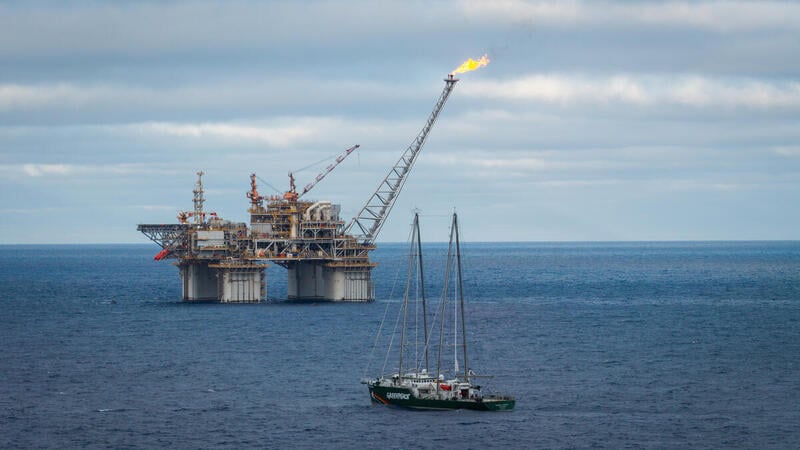
Hi folks! We’re joining you live from the Rainbow Warrior where we will be providing you with updates as our four activists continue scaling and occupying Woodside’s gas platform. The activists are peacefully protesting against Woodside’s latest gas expansion plans, the Browse project, which would see up to 57 toxic wells drilled at Scott Reef.
“Right now our activists are scaling Woodside’s massive Floating Production Unit. They are scaling the South-East pillar and the underside of the Helideck. They’ll be setting up camp soon and have plenty of provisions with them – so stick around!”
5:45 AM AWST
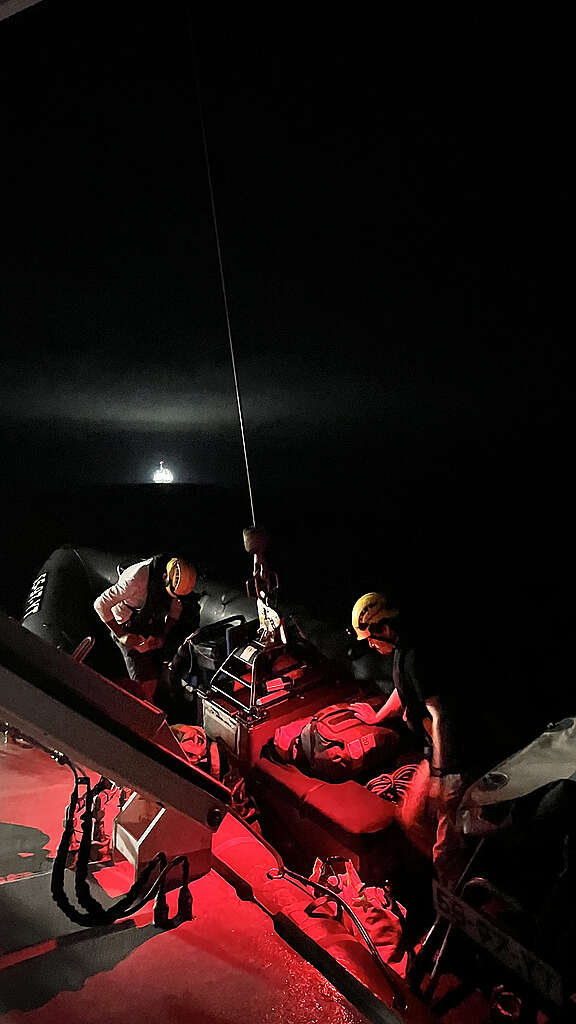
Our RHIBS are in the water! We’ve deployed our four activists and our ship crew on our small fast boats, headed to the gas platform. We’re carrying crew and equipment, plenty of food, all of our safety climbing gear, some big banners, cameras and a whole lot of heart… someone even has something to read after they get settled in.
5:26 AM AWST
Before sunrise activists prepared to launch RHIBS from the Rainbow Warrior.
Looking for a front seat view?
You can follow along with the Live Rainbow Warrior bow cam here!
Looking for more?
Follow us on Instagram for a peek behind the scenes and hear from our Rainbow Warrior crew.
Live blog: Greenpeace activists occupy Woodside gas project to save Scott Reef
Climate Change
Greenpeace activists climb and occupy Woodside’s Scarborough gas project calling on the Australian government to “Stop Woodside’s Dirty Gas” and “Save Scott Reef”
PERTH, Saturday 17 October 2026 — Four Greenpeace Australia Pacific activists are scaling and occupying a Floating Production Unit at Woodside’s Scarborough gas project off the coast of Western Australia, displaying banners reading: “Stop Woodside’s Dirty Gas. Save Scott Reef.”
- Photos and video available here and here. More will be uploaded throughout the day.
- Content and live updates will be uploaded to a live blog and to Instagram
Early this morning at 05:45 AWST, Greenpeace Australia Pacific activists launched from the Rainbow Warrior, Greenpeace’s flagship vessel, scaling and attaching themselves to a Floating Production Unit (FPU), a key piece of gas processing infrastructure at the Scarborough gas field over 200km off the coast of Exmouth.
Woodside has since confirmed it has initiated a temporary shut down of the FPU.
Greenpeace Australia Pacific is occupying the gas platform in peaceful protest of Woodside’s plans to drill for oil and gas at Scott Reef as part of its Browse proposal.
David Ritter, CEO at Greenpeace Australia Pacific, said: “Greenpeace Australia Pacific is taking action today to expose the unacceptable risk to Scott Reef posed by Woodside’s plans.
“Australians love our oceans. Woodside’s reckless Browse gas proposal would turn the magnificent Scott Reef into an industrial gas zone. Woodside wants to drill up to 57 toxic wells around Scott Reef, Australia’s largest oceanic reef, home to nesting green sea turtles, and endangered species like pygmy blue whales and the dusky sea snake; it is a place like nowhere else on Earth.
“Woodside has an alarming track record of oil spills, incidents and environmental neglect, and can’t be trusted with our oceans. From whaling in Albany in the seventies, to Woodside’s threat to Scott Reef today, there’s more than fifty years of history, of Greenpeace taking action off WA’s coasts to protect our oceans.
“There’s no future in new gas projects. Our future is in secure homegrown renewable energy, green industry and exports, where communities and places like Scott Reef are protected — there’s no future in dirty gas shipped offshore.
“The prospect of drilling for oil or gas on the Great Barrier Reef would be considered absolute madness today, but that is exactly the decision before the government: save Scott Reef or risk its destruction at the hands of a gas corporation.”
From aboard the Floating Production Unit, Dr Chris Holden, Greenpeace Australia Pacific activist said: “As a doctor, when I see new fossil fuel projects like Woodside’s Browse project being put forward, I can’t help but think about the impact this is going to have on the health of our communities and planet, and feel a sense of duty to act.
“Not only will this project do irrevocable harm to nature at Scott Reef, it will have a terrible impact on our climate, putting all of our lives at risk.
“On the Rainbow Warrior I’m carrying a copy of the 2025 Lancet countdown report, which warns that health impacts of climate change are worsening, with millions dying needlessly each year due to fossil fuel dependence, growing emissions, and failure to adequately adapt.
“With warnings like this from the leading global health professionals, our government simply can’t allow fossil fuel projects like Woodside’s Browse project to go ahead. It is their duty to do what is in the best interest of our communities.”
Almost half a million people have signed a petition calling on the government to Save Scott Reef and Woodside’s Browse gas project.
-ENDS-
Notes:
- Dial-in, SimSat and Zoom interviews with Geoff Bice, WA Campaign Lead at Greenpeace Australia Pacific, currently aboard the Rainbow Warrior, can be organised separately
Media contact:
Greenpeace Australia Pacific media team on +61 406 231 892 or +61 407 581 404
The board of the Fund for Responding to Loss and Damage (FRLD) will decide on Thursday on whether to “provisionally set aside” $20 million for Nepal to deal with some of the effects of the climate-driven flood it suffered in August.
The motion, seen by Climate Home News, has been drafted by a group of board members from both developed and developing countries and so is likely to pass easily at the fund’s first-ever extraordinary board meeting on October 22.
It invites the government of Nepal to submit a proposal for how to use the money, with the board then deciding at one of its regular board meetings whether to approve the proposal or not.
While Nepali officials have described $20 million as merely “symbolic” in the face of the $4.8 billion estimated costs of recovery and reconstruction, it would be the first time the new FRLD – agreed in 2022 months after devastating floods in Pakistan – has set aside money for a specific disaster.
Until now the fund has only taken requests through a single call for proposals, launched at COP30 in Belém last November, that gave countries six months to submit requests.
Most of the 180 projects the FRLD is currently considering are designed to help countries avoid damage from future climate disasters, for example by strengthening responses to floods in Bangladesh and Lagos.
The draft decision says Nepal’s proposal will serve as a pilot for how funding requests can be submitted outside of the fund’s current timetable. That could let governments seek funds quickly after a climate disaster strikes, rather than waiting for the next call.
This arrangement would set the fund apart from other United Nations funds designed for climate adaptation or cutting emissions like the Green Climate Fund.
Climate campaigners from Fill the Fund said the draft decision is “a real step forward” as it is “the first time this Fund has moved to respond to a specific disaster”.
Too little, too late
The FRLD was agreed by governments at COP27, set up and operationalised at COP28 in 2023 but has yet to award any money. The 180 funding requests it is currently considering would cost around $2.8 billion, but it only has $350 million to allocate.
The United Nations Secretary-General António Guterres has described the amount of money available in the fund as “ridiculously small” and Fill the Fund said $20 million “is a meaningful signal but it is a drop against an ocean of need”.
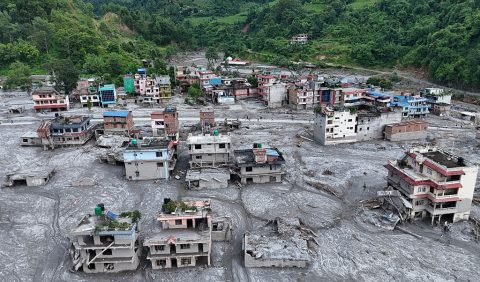
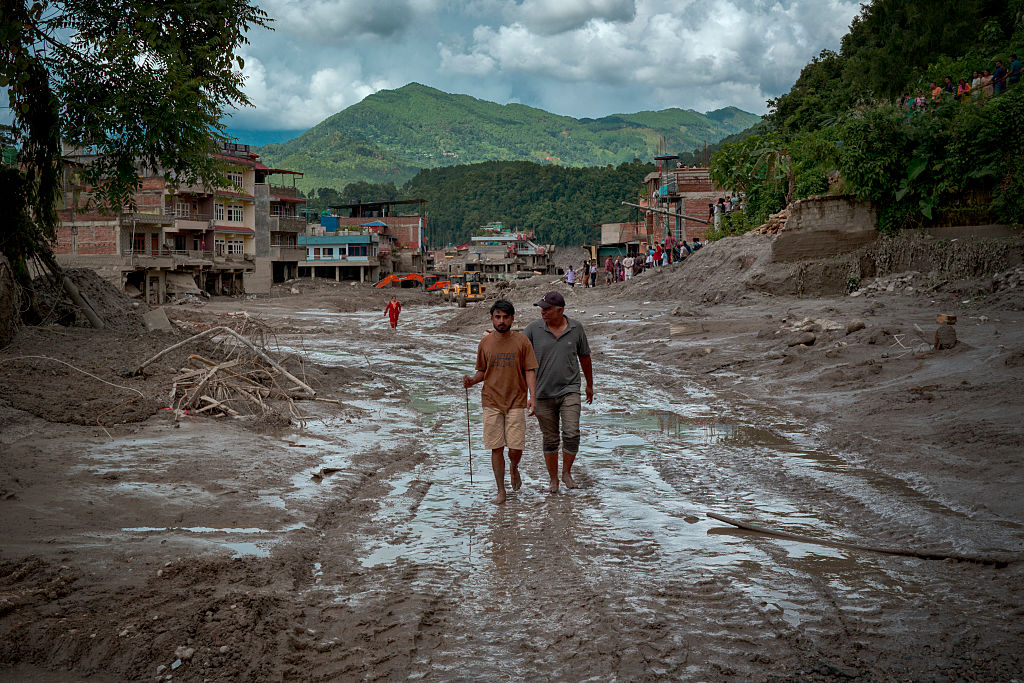
A glacial rock and ice collapse sent a torrent of water and debris through Nepal and the Chinese-administered region of Tibet on August 26. It killed more than 1,400 people, left thousands more missing and destroyed homes, bridges, roads and hydropower plants. Nepal’s finance and environment ministers quickly appealed to the FRLD board for funds, saying that “time is of the essence”.
Their call was followed swiftly by a letter from developing country FRLD board members urging the board’s co-chairs to organise an extraordinary meeting to allocate funds to Nepal.
But developed countries initially called for an informal consultation rather than a full board meeting. It took a further 45 days for the board’s co-chairs to organise an extraordinary board meeting for October 22 and to draft a motion for adoption.
Fill the Fund called for a permanent way of the fund rapid responding to disasters as “Nepal should not have required historic letters, an informal drafting group and the Fund’s first-ever extraordinary meeting simply to unlock an emergency response. The next country cannot wait two months and a bureaucratic marathon. Speed must be built in, not improvised.”
The post UN’s loss and damage fund set to give Nepal $20m for flood recovery appeared first on Climate Home News.
UN’s loss and damage fund set to give Nepal $20m for flood recovery


Is a Team of Is a Bunch of MAGA Thugs Beating the Snot Out of a Woman a New Low, or Is it What We Now Need to Expect?

Live blog: Greenpeace activists occupy Woodside gas project to save Scott Reef
Greenpeace activists climb and occupy Woodside’s Scarborough gas project calling on the Australian government to “Stop Woodside’s Dirty Gas” and “Save Scott Reef”
-
Climate Change1 year ago
Guest post: Why China is still building new coal – and when it might stop
-

 Greenhouse Gases2 years ago
嘉宾来稿:满足中国增长的用电需求 光伏加储能“比新建煤电更实惠”
-
Greenhouse Gases1 year ago
Guest post: Why China is still building new coal – and when it might stop
-

 Climate Change2 years ago
嘉宾来稿:满足中国增长的用电需求 光伏加储能“比新建煤电更实惠”
-

 Renewable Energy12 months ago
Sending Progressive Philanthropist George Soros to Prison?
-
Climate Change2 years ago
Bill Discounting Climate Change in Florida’s Energy Policy Awaits DeSantis’ Approval
-
Greenhouse Gases1 year ago
嘉宾来稿:探究火山喷发如何影响气候预测
-

 Climate Change2 years ago
Analysis: China’s CO2 falls 1% in Q2 2024 in first quarterly drop since Covid-19