

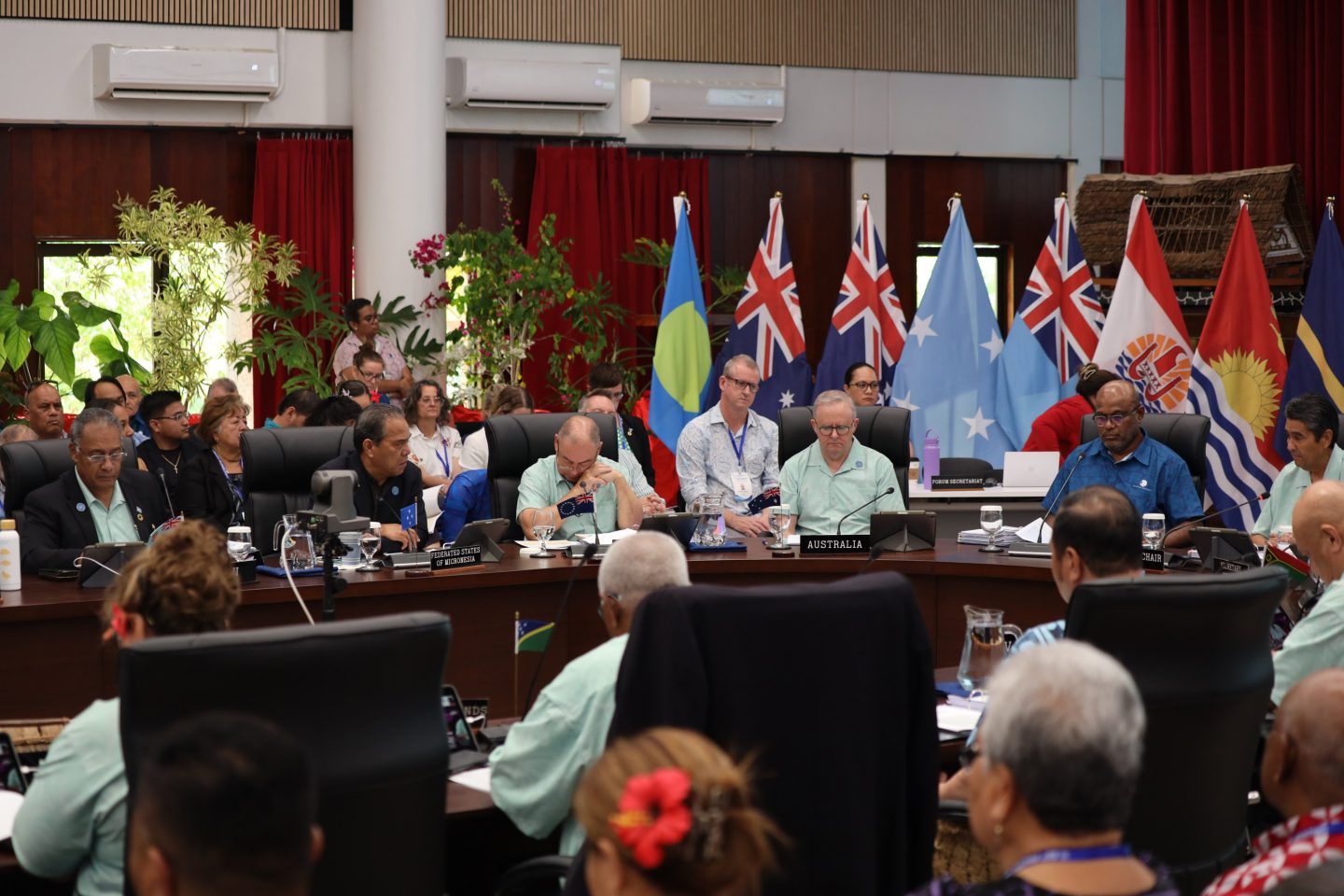
At a key leaders’ summit in Palau, Pacific island nations burdened by worsening climate change impacts and costly fossil fuel imports called for November’s COP31 climate summit to deliver finance to help the region transition to renewable energy and build more resilient communities.
Heads of government from the 18-member Pacific Islands Forum (PIF) – which includes COP31 co-president Australia – met in Palau’s capital Koror for a week-long summit, where they demanded access to climate finance, ocean action and a regional boost for renewables at COP31.
Palau’s president Surangel Whipps Jr. said during a plenary session that the Pacific must focus on delivering climate and ocean commitments. “It will require greater regional leadership, stronger regional coordination and, above all, unity of purpose,” he said.
The meeting, which ended last Friday, was marked by the absence of some leaders – among them the heads of state of the Solomon Islands, Vanuatu and Fiji, which will host a preparatory session for COP31 in October (referred to as the pre-COP31). There were also tensions over Taiwan’s participation, with China objecting to its presence as an observer.
The forum’s final declaration, published after it ended and signed by all its members, reaffirms that climate change is the “single greatest threat to the security, livelihoods and wellbeing of Pacific peoples”, and notes “the importance of a focused, high-level declaration” at the pre-COP31 to build “political momentum towards COP31”.
-
Palestine: Israel’s bombing has left Gaza vulnerable to climate change
With homes, hospitals and water storage destroyed, Palestine’s government says that Gazans have little protection from climate impacts and sets conditional emissions targets -
More support needed to power Africa’s food systems with renewables, experts say
Renewable energy could help African food businesses boost productivity and competitiveness, but the upfront cost, fragmented markets and limited financing stand in the way -
Loss and damage fund urged to hold crisis meeting on Nepal
The new fund is coming under pressure from developing nations to respond quickly to climate disasters rather than just financing longer-term projects



Australia and Pacific islands have invited world leaders to attend the pre-COP31 gathering, which will be held in Fiji and Tuvalu from October 5 to 8. While usually a technical meeting for negotiators, the island nations aim to issue a political declaration at the gathering calling for strong outcomes in Türkiye.
Chris Bowen, Australia’s climate minister and COP31 president of negotiations, said in a speech during the Pacific forum that his country is “determined to use COP31 to progress the agenda to make it easier for countries to access the climate finance they need”.
“We won’t miss the opportunity to ensure COP31 is a Pacific COP. Not just because of the location of pre-COP but because of the agenda we are shaping through the Action Agenda at COP31,” he said.
The Action Agenda is a large portfolio of climate initiatives and coalitions uniting governments, businesses and civil society outside of the formal negotiations on everything from health to methane emissions.
Renewable energy investment plan
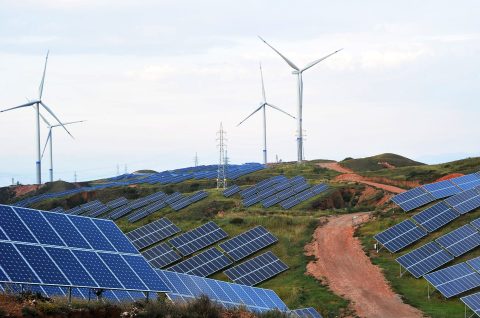
Announced a year ago, the island nations launched a $14-billion investment plan for a “100% Renewable Blue Pacific” at the forum in Palau. The plan lists strategic projects that would reduce the region’s high dependence on fossil fuel imports, whose soaring costs have become a major burden since the Iran war.
The projects include a $52-million programme managed by Australia to develop off-grid renewables in remote communities across the Pacific, as well as a $100-million blended finance fund aimed at supporting private-sector investments in wind and solar, among others.
Currently, some countries in the Pacific are spending up to a quarter of their GDP importing diesel to power electricity generation, according to a new report by the University of New South Wales in Australia. The investment plan launched at the forum aims to reduce these costs by adding 2.2 gigawatts of renewable generation and around 9 gigawatt hours of electricity storage.
To channel funds into the region, the plan also highlights the role of the recently established Pacific Resilience Facility (PRF), a regional fund that seeks to swiftly disburse funds to climate-vulnerable communities at the local level. Bowen said he would promote the facility to world leaders attending COP31 and “ask for their support”.
Call to transition away from fossil fuels
Separately, the forum endorsed the Belau Declaration which emphasises the need to keep the 1.5C Paris Agreement temperature goal alive. A UN report last week showed that overshooting this limit is now inevitable, but deep emissions cuts could still bring global temperatures back down by the end of the century.
Pacific nations expect to rally support for this declaration at the pre-COP, with Fiji’s climate minister Lynda Tabuya saying in a statement: “Palau is where we build the political mandate. Pre-COP is where we take it to the world.”
The political declaration also says that countries must accelerate the global transition away from fossil fuels “towards a renewable energy future”, and calls for greater recognition of the importance of ocean health in addressing climate change.
UN sets out narrow path back to 1.5C warming after inevitable overshoot
As part of the forum’s outcomes in Palau, countries also noted Tuvalu’s efforts to host the second global conference on transitioning away from fossil fuels, which will gather government representatives in April next year to follow up on this year’s inaugural conference in Santa Marta, Colombia.
Speaking to journalists at the forum, Vanuatu’s climate minister Ralph Regenvanu questioned Australia’s role in talks about phasing out fossil fuels at COP31, adding that “the very least a country like Australia should be doing is stopping future expansion, and it’s not doing that”. During the PIF, the country approved the extension of a major mine that digs and exports coal for steel-making, giving it permission to keep producing until 2055.
Rising seas trigger “development emergency”
As leaders met in one of the world’s regions most threatened by sea-level rise, UN Secretary-General António Guterres released a new report warning that rising seas are now “one of the most profound threats to populations around the world in developed and developing states alike”.
Presenting the report at UN headquarters in New York, Assistant Secretary-General for Economic Development Navid Hanif said rising sea levels are not a “future risk any more” but an accelerating “development emergency” that could hinder progress in vulnerable regions like the Pacific and least developed countries.
The report warns that seas are rising “faster than at any point in recorded history”, with 2024 setting a new record of 5.9 millimetres. This has been driven by human-induced climate change mainly through a process known as thermal expansion – where rising heat causes the ocean to expand – as well as the melting of ice sheets.
Pacific islands seek backing for new regional fund ahead of COP31
The report notes that about 1.2 billion people around the world are exposed to coastal flooding, and says some low-lying islands in Vanuatu, the Solomon Islands and Fiji are already facing forced relocations. Globally, rising seas could cost more than $1 trillion every year by 2050, it adds.
“We cannot stop sea level rise this century but we can determine how much worse it becomes. About half a metre of sea level rise is already locked in in this century because of warming that has already occurred, but beyond that our choices matter enormously,” Hanif told journalists.
Bill Hare, CEO of think-tank Climate Analytics, said the report was a “wake-up call” to the leaders of high-emitting countries that their failure to cut carbon emissions is “creating major risks for the future alongside the impacts we can already observe around us”.
Guterres is set to host a high-level meeting on addressing the threat of sea level rise this month during the UN General Assembly, where countries are expected to adopt a declaration that calls for stronger action, expanded access to finance and “ongoing dialogue” to tackle the issue.
The post At regional summit, Pacific islands ask for COP31 support for clean energy and finance appeared first on Climate Home News.
At regional summit, Pacific islands ask for COP31 support for clean energy and finance

Dozens of countries – from big emerging economies to the world’s poorest nations – are calling for the UN’s new carbon market to reassess climate integrity rules, in a push that campaigners and researchers have blamed on industry lobbying.
At COP31 talks on the Paris Agreement Crediting Mechanism (PACM) this weekend, the Like-Minded Developing Countries – a group that includes Saudi Arabia, India and China – the Least Developed Countries (LDCs) and landlocked developing countries raised concerns about the requirements project developers must meet, according to sources familiar with the closed-door discussions.
They warned about the cumulative weight of those requirements developed under Article 6 of the Paris Agreement as barriers to implementation. Several countries, including Singapore and some Latin American states, said rules must keep projects financially viable, while South Korea asked for proportionate requirements, the sources said.
Their demands closely track arguments from carbon market industry groups, which claim PACM’s conservative approach to counting emission reductions is so strict that few projects will ever come to fruition.
Industry and NGOs lobby to weaken UN carbon credit rules in “coordinated” push
In a letter published ahead of COP31, the lobby groups asked governments to “raise implementation concerns” and to request that the Supervisory Body – the UN body that oversees the market – assess the “combined impact” of its rules on the feasibility of projects.
The letter was signed by the International Emissions Trading Association (IETA), a business group whose members include fossil fuel giants Shell, BP, Saudi Aramco and Chevron, along with the Project Developer Forum and the Wildlife Conservation Society, which develops forest conservation programmes.
Draft text reflects industry demands
Those demands are reflected in the first draft of the COP31 decision on the mechanism, published late on Saturday. To guard against over-crediting, PACM’s rules deliberately err on the side of issuing fewer credits when emissions cuts from projects are uncertain.
The document asks the Supervisory Body to look at how these cautious assumptions add up across its rules and what that means for the number of credits, project costs and prices. The aim, it says, is to avoid “excessive compounding of conservative adjustments”.
Other parts of the draft tell the body not to make its rules too cautious or too rigid. That includes efforts to guard against the risk that carbon captured by a project is later released. Most of these passages add that environmental integrity must be maintained.
Risk of another ‘failure’
“Weakening the rules is not climate ambition – it is a license to pollute,” said Erika Lennon, a senior attorney at the Center for International Environmental Law (CIEL). “As we are on the brink of permanently breaching 1.5C, we cannot afford to turn the carbon market into another loophole for polluters,” she added.
Axel Michaelowa, research director at Perspectives Climate Research, said that if attempts to weaken the rules succeed, it could lead to another failure of an international carbon market. Demand for credits rests on trust, he said, and the slightest doubt over integrity erodes buyers’ willingness to pay.
Calls to revise requirements “must be supported by scientific evidence, not unsupported claims of under-crediting – especially when these assumptions come from private actors whose revenues depend on the volume of transacted credits rather than real mitigation outcomes,” Michaelowa said.
The EU, Switzerland and Senegal are among a handful of countries pushing back against demands to re-assess the market rules, according to the sources, and are opposing requests to weigh up the profitability of projects or to lower standards.

Cookstove credits in focus
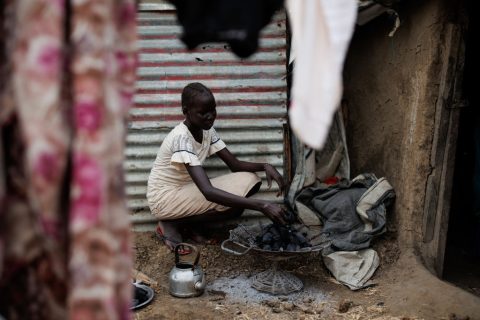
At the centre of the fight are new methodologies for projects that aim to cut emissions by distributing cleaner cookstoves – one of the carbon market’s most popular credit types and also one of its most criticised for overstating climate benefits. A 2024 study in Nature Sustainability found cookstove projects had been over-credited roughly tenfold.
Under the rules adopted by the Supervisory Body in October, cookstove project developers are required to set aside part of their credits in a buffer pool, in case the forests they claim to save later burn or are cleared.
The body rejected an exemption from this requirement sought by developers, corporate buyers, some conservation groups and the UN Environment Programme, in what critics called a coordinated lobbying campaign, as reported by Climate Home News.
Industry groups and some countries have seized on the cookstove methodologies to warn against excessively stringent requirements, which they say undercount emission reductions and deter developers. The LDCs told negotiators that developers had found some approved methodologies, including on clean cooking, difficult to apply.
Industry group calls for revisions
Industry representatives attacked the Supervisory Body’s approach in interventions that sources in the room described as very aggressive.
In a subsequent Linkedin post, IETA’s Andrea Bonzanni accused the regulator of following an unscientific approach that would deliver systematic under-crediting. He called on environmental integrity standards to be amended and rulebooks to be revised.
The mechanism “has had a false start”, he said, but countries in Antalya have a chance to agree on clear guidance that puts it back on track. “Unless the mechanism becomes workable across countries and activity types, its impact on the atmosphere risks remaining marginal,” he added.
IETA did not respond to a request for comment.
-
UN carbon market forces cookstove projects to protect against forest loss
Despite lobbying for an exemption, the UN regulator has for the first time made cookstove projects cover the risk that the trees they save are later destroyed -
Most “zombie credits” locked out of new UN carbon market after China and India snub
Fears of a flood of environmentally-dubious carbon credits have faded, with most old projects not able to transition to new UN market
Campaigners and researchers have pushed back on the claims. Arguing there is currently no evidence of under-crediting in the UN market, they stressed that more credits do not necessarily mean more emissions reductions if the rules underpinning them are not grounded on science.
“Having a Paris Agreement carbon crediting mechanism that cheats the atmosphere completely misses the point,” said Isa Mulder, a policy expert at Carbon Market Watch. “Countries should not allow Article 6 to become just another dangerous distraction from real, urgent climate action.”
The draft of the rules is an early version and will be negotiated during the COP31 summit’s final days. Under the Paris Agreement rules, the Supervisory Body must follow guidance that governments give through COP decisions.
The post Countries take up industry push to loosen UN carbon market rules at COP31 appeared first on Climate Home News.
Countries take up industry push to loosen UN carbon market rules at COP31
Mohamed Adow is director of Power Shift Africa.
International Energy Agency chief Fatih Birol celebrates the electricity demands of AI and electric cars, but the revolution must be about more than luxuries for the rich. It must bring clean, affordable power to the hundreds of millions still living without it.
The world is entering the age of electrification. But while wealthy countries focus on powering AI data centres, electric cars and other energy-hungry technologies, hundreds of millions of people across Africa and the developing world still lack access to electricity.
The real promise of the electricity revolution is not simply meeting the growing demands of those who already have plenty, but bringing clean, affordable power to those who have none.
So the decision by Türkiye and Australia to make electrification a flagship initiative at COP31 should be welcomed. Their proposed 35 by 35 goal, increasing electricity’s share of global final energy consumption to 35 per cent by 2035, could accelerate this transformation.
But who is this revolution actually for? Birol has celebrated the arrival of the electricity age, identifying AI data centres, electric transport and air conditioning as three major drivers of growing electricity demand.
-
Can AI data centres help power underserved African communities?
Three African countries join a pledge for sustainable AI at COP31, but the jury is still out on whether the energy-hungry industry can bring benefits for all -
COP31’s electrification pledge wins support, with caveats on clean power and finance
At least 14 countries have endorsed the voluntary pledge so far, but island nations warn it must not distract from the shift away from fossil fuels

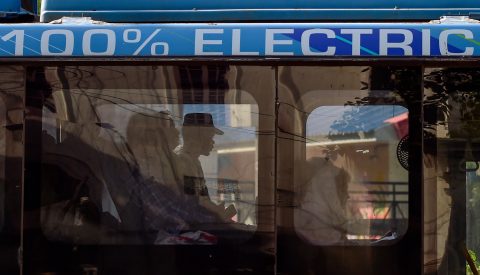
These technologies are reshaping the global energy system. But it is extraordinary that a discussion about the world’s electricity future can focus on infrastructure and services for the rich while overlooking those who still have no electric power at all.
For wealthy countries, electrification may mean powering AI or replacing petrol cars with electric ones. For millions across Africa and the developing world, it means something more fundamental: being able to turn on a light, refrigerate food and run a hospital or a business.
The electrification revolution cannot simply meet the growing energy demands of those who already have plenty. It must deliver electricity to those who have none.
A dirty energy goal?
There is another serious flaw in the COP31 proposal. It promotes electrification without ensuring that additional electricity comes from renewable sources or replaces fossil fuels.
Electrification is not automatically decarbonisation. A factory switching from coal to renewable electricity is a climate achievement. But building new gas-fired power stations to meet rising demand can increase electrification while prolonging fossil fuel dependence.
At COP28 in Dubai, governments agreed to transition away from fossil fuels. COP31 should be taking that commitment forward, not creating a target that could be achieved without delivering it.
For wealthy economies, electrification largely means replacing existing technologies. Petrol cars become electric vehicles. Gas boilers become heat pumps.
For Africa, the challenge is different. More than 600 million Africans still lack electricity. We are not simply replacing one energy system with another. In many places, we are building one that does not yet exist.
How clean energy can boost business for Africa’s food producers
The electricity needed to power another data centre in a wealthy country should not count as a greater achievement than electricity powering a rural African hospital for the first time. Yet a global target focused purely on consumption makes no distinction between the two.
Africa possesses 60% of the world’s best solar resources, yet receives just 2% of global clean energy investment. That imbalance illustrates how far we remain from an equitable energy transition.
The 35 by 35 target could be achieved through rapid electrification in major economies while hundreds of millions of Africans remain without power. That might count as success on a global spreadsheet, but it would represent a failure of climate justice.
Money matters
Perhaps the most troubling weakness of the pledge is its failure to answer the question that matters most for developing countries: who will pay?
Africa does not lack renewable energy potential. It lacks affordable investment. High borrowing costs make clean energy projects far more expensive than comparable investments in wealthy economies.
The launch of the Electrify Now Finance Coalition at COP31 is welcome. But creating another coalition is not the same as delivering affordable finance at the scale required. Developing countries cannot embrace ambitious global targets without the means to achieve them.
Made in Nigeria: The race to build an African solar industry from scratch
If Türkiye and Australia want 35 by 35 to become a defining achievement of COP31, they must strengthen it.
The goal must prioritise renewable electricity and the displacement of fossil fuels. It must put universal electricity access at its heart and include credible financing for developing countries.
The twenty-first century will increasingly be built around electricity. But success cannot simply mean wealthy countries having more electric cars and bigger data centres while hundreds of millions across the Global South remain in the dark.
The real measure of the electricity revolution is not just how much power the world consumes, but who gets access to it, where it comes from and whose lives it transforms.
The post COP31’s electricity goal must be about more than AI and luxuries for the rich appeared first on Climate Home News.
https://www.climatechangenews.com/2026/11/16/cop31s-electricity-goal-must-be-about-more-than-ai-and-luxuries-for-the-rich/
Climate Change
‘Everything on the table’: COP31 draft text recognises climate harm, but stronger action needed to phase out fossil fuels
In response to the COP31 cover decision draft text, Dr Simon Bradshaw, COP31 Lead at Greenpeace Australia Pacific, said:
“This first draft of a headline decision from COP31 recognises the escalating climate harms being inflicted on communities around the world and that countries must achieve far deeper and faster cuts to emissions if we’re to keep the goal of limiting warming to 1.5°C alive — a survival line for the Pacific. It also welcomes the landmark ICJ ruling on climate change.
“The draft calls on countries to accelerate the phase out of coal, oil and gas, including an immediate transition away from fossil fuels in power generation. It stops short of linking the flagship COP31 electrification pledge to the urgent need to phase out fossil fuels.
“Overall, this is some of the strongest language we’ve seen in a draft COP decision. The question now is how much of it will survive the tough days of negotiations ahead. With four days to go, there is everything on the table here in Antalya. Governments, including Australia, must not lose sight of the urgent and brutal impacts of climate change today, the opportunities of a future beyond fossil fuels, and walk away with a strong cover decision, not a cover up decision.”



-
Climate Change1 year ago
Guest post: Why China is still building new coal – and when it might stop
-
Greenhouse Gases1 year ago
Guest post: Why China is still building new coal – and when it might stop
-

 Renewable Energy1 year ago
Sending Progressive Philanthropist George Soros to Prison?
-
Greenhouse Gases1 year ago
嘉宾来稿:探究火山喷发如何影响气候预测
-

 Climate Change2 years ago
Analysis: China’s CO2 falls 1% in Q2 2024 in first quarterly drop since Covid-19
-

 Climate Change1 year ago
嘉宾来稿:探究火山喷发如何影响气候预测
-

 Green Living2 years ago
Our Picks for the Top 2024 Black Friday and Cyber Week Sales From Sustainable Brands
-
Renewable Energy1 year ago
US Grid Strain, Possible Allete Sale